ALZEHIMER’S DISEASE
Evaluator: Mr L Anand Presenter: Shruti Shirke
[Asso professor, CON AIIMS BBSR] M.Sc Neuroscience Nursing
INCIDENCE OF ALZHEIMER'S DISEASE
 According to World Alzheimer's Report 2015
 An estimated 5.8 million Americans of all ages have Alzheimer's.
 An estimated 5.8 million Americans of all ages are living
with Alzheimer's dementia in 2019.
 This number includes an estimated 5.6 million people age
65 and older and approximately 200,000 individuals under age 65
who have younger-onset Alzheimer's.
The most common type of dementia is Alzheimer's disease (AD),
which accounts for 50-70% of prevalent neurodegenerative
dementia cases (Winblad et al., 2016)
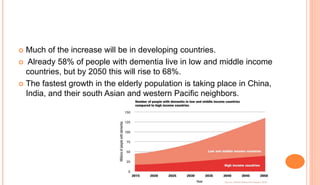
 Much of the increase will be in developing countries.
 Already 58% of people with dementia live in low and middle income
countries, but by 2050 this will rise to 68%.
 The fastest growth in the elderly population is taking place in China,
India, and their south Asian and western Pacific neighbors.
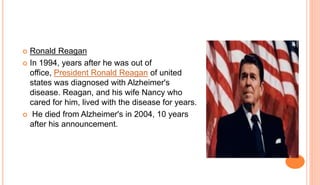
 Ronald Reagan
 In 1994, years after he was out of
office, President Ronald Reagan of united
states was diagnosed with Alzheimer's
disease. Reagan, and his wife Nancy who
cared for him, lived with the disease for years.
 He died from Alzheimer's in 2004, 10 years
after his announcement.
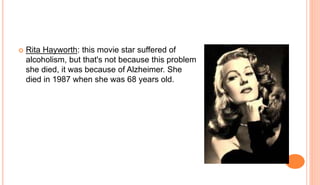
 Rita Hayworth: this movie star suffered of
alcoholism, but that's not because this problem
she died, it was because of Alzheimer. She
died in 1987 when she was 68 years old.
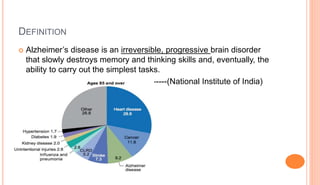
DEFINITION
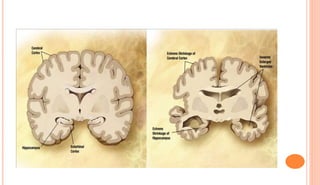
 Alzheimer’s disease is an irreversible, progressive brain disorder
that slowly destroys memory and thinking skills and, eventually, the
ability to carry out the simplest tasks.
-------(National Institute of India)
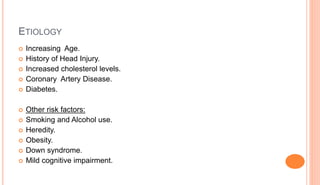
ETIOLOGY
 Increasing Age.
 History of Head Injury.
 Increased cholesterol levels.
 Coronary Artery Disease.
 Diabetes.
 Other risk factors:
 Smoking and Alcohol use.
 Heredity.
 Obesity.
 Down syndrome.
 Mild cognitive impairment.
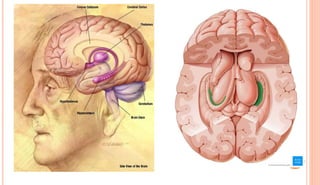
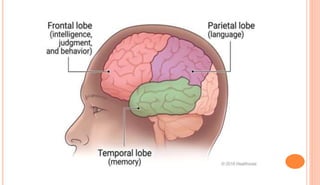
PATHOPHYSIOLOGY
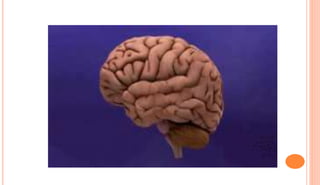
 Mechanisms and secrets of Alzheimer's disease- exploring the
brain.mp4
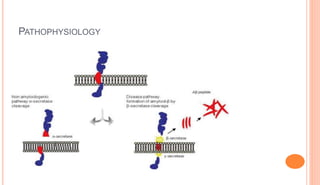
PATHOPHYSIOLOGY
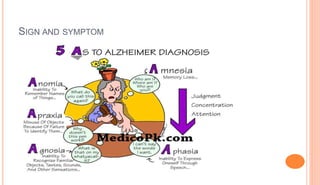
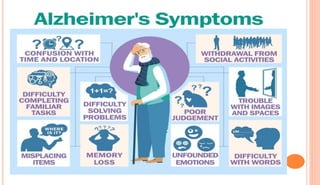
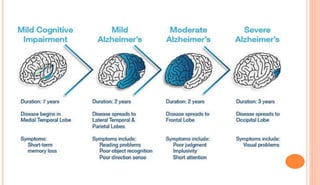
SIGN AND SYMPTOM
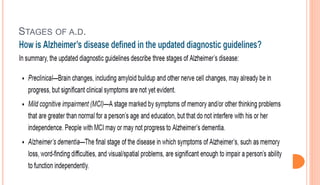
STAGES OF A.D.
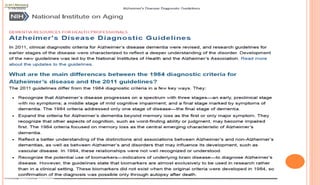
DIAGNOSIS
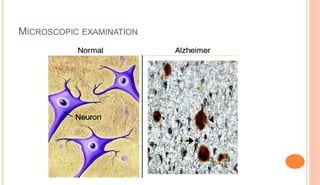
MICROSCOPIC EXAMINATION
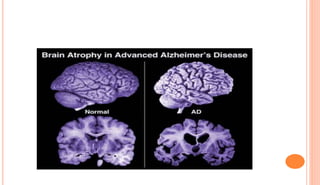
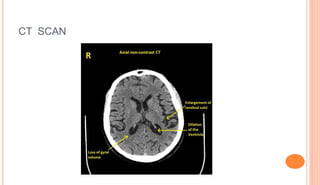
CT SCAN
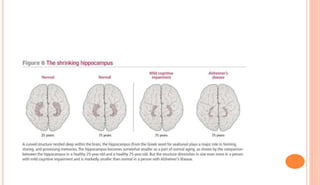
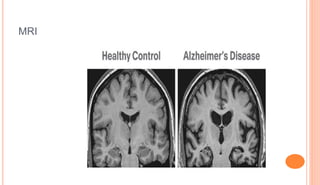
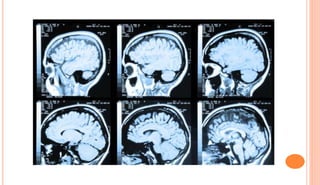
MRI
 Health History
 Your doctor will do a physical exam and ask questions about your past and
current health. He’ll want to know:
 Your symptoms, including any trouble you have with everyday tasks
 Other medical conditions you have now or had before
 Medications you take
 Your personal history, like your marital status, living conditions,
employment, sexual history, and important life events
 Your mental state. The doctor will ask you a series of questions that help
him figure out if you’re having a mental health problem, like depression.
 Family history, including any illnesses that seem to run in the family
PHYSICAL AND NEUROLOGICAL EXAM
assess overall neurological health by testing the following:
 Reflexes
 Muscle tone and strength
 Ability to get up from a chair and walk across the room
 Sense of sight and hearing
 Coordination
 Balance
NEUROPSYCHOLOGICAL TESTING
 Psychologists or neuropsychologists (psychologists with specialized
training in brain disorders) may administer comprehensive
neuropsychological tests, either as interviews or as paper-and-
pencil tests.
 These tests, which take several hours, are used to determine what
areas of cognitive function are impaired and what areas are still
intact.
 They assess memory, reasoning, writing, vision-motor coordination,
comprehension, and the ability to express ideas.
 A doctor may also give other tests to identify depression and other
mood problems.
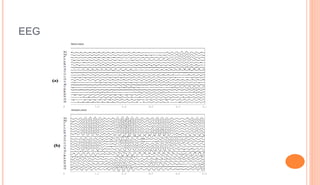
EEG
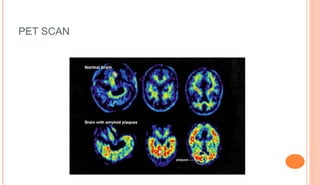
PET SCAN
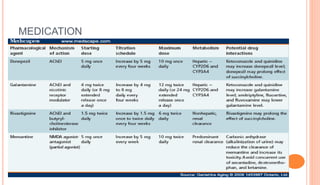
MEDICATION
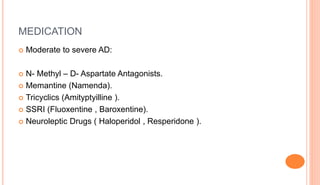
MEDICATION
 Moderate to severe AD:
 N- Methyl – D- Aspartate Antagonists.
 Memantine (Namenda).
 Tricyclics (Amityptyilline ).
 SSRI (Fluoxentine , Baroxentine).
 Neuroleptic Drugs ( Haloperidol , Resperidone ).
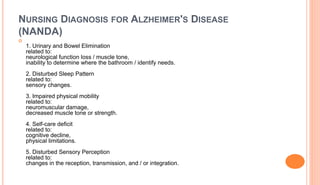
NURSING DIAGNOSIS FOR ALZHEIMER'S DISEASE
(NANDA)

1. Urinary and Bowel Elimination
related to:
neurological function loss / muscle tone,
inability to determine where the bathroom / identify needs.
2. Disturbed Sleep Pattern
related to:
sensory changes.
3. Impaired physical mobility
related to:
neuromuscular damage,
decreased muscle tone or strength.
4. Self-care deficit
related to:
cognitive decline,
physical limitations.
5. Disturbed Sensory Perception
related to:
changes in the reception, transmission, and / or integration.
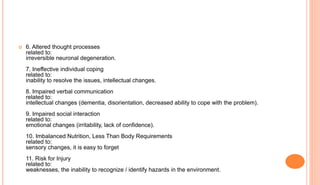
 6. Altered thought processes
related to:
irreversible neuronal degeneration.
7. Ineffective individual coping
related to:
inability to resolve the issues, intellectual changes.
8. Impaired verbal communication
related to:
intellectual changes (dementia, disorientation, decreased ability to cope with the problem).
9. Impaired social interaction
related to:
emotional changes (irritability, lack of confidence).
10. Imbalanced Nutrition, Less Than Body Requirements
related to:
sensory changes, it is easy to forget
11. Risk for Injury
related to:
weaknesses, the inability to recognize / identify hazards in the environment.
Alzehimer’s disease

Alzehimer’s disease

  • 1.
    ALZEHIMER’S DISEASE Evaluator: MrL Anand Presenter: Shruti Shirke [Asso professor, CON AIIMS BBSR] M.Sc Neuroscience Nursing
  • 2.
    INCIDENCE OF ALZHEIMER'SDISEASE  According to World Alzheimer's Report 2015  An estimated 5.8 million Americans of all ages have Alzheimer's.  An estimated 5.8 million Americans of all ages are living with Alzheimer's dementia in 2019.  This number includes an estimated 5.6 million people age 65 and older and approximately 200,000 individuals under age 65 who have younger-onset Alzheimer's. The most common type of dementia is Alzheimer's disease (AD), which accounts for 50-70% of prevalent neurodegenerative dementia cases (Winblad et al., 2016)
  • 3.
     Much ofthe increase will be in developing countries.  Already 58% of people with dementia live in low and middle income countries, but by 2050 this will rise to 68%.  The fastest growth in the elderly population is taking place in China, India, and their south Asian and western Pacific neighbors.
  • 5.
     Ronald Reagan In 1994, years after he was out of office, President Ronald Reagan of united states was diagnosed with Alzheimer's disease. Reagan, and his wife Nancy who cared for him, lived with the disease for years.  He died from Alzheimer's in 2004, 10 years after his announcement.
  • 6.
     Rita Hayworth:this movie star suffered of alcoholism, but that's not because this problem she died, it was because of Alzheimer. She died in 1987 when she was 68 years old.
  • 7.
    DEFINITION  Alzheimer’s diseaseis an irreversible, progressive brain disorder that slowly destroys memory and thinking skills and, eventually, the ability to carry out the simplest tasks. -------(National Institute of India)
  • 11.
    ETIOLOGY  Increasing Age. History of Head Injury.  Increased cholesterol levels.  Coronary Artery Disease.  Diabetes.  Other risk factors:  Smoking and Alcohol use.  Heredity.  Obesity.  Down syndrome.  Mild cognitive impairment.
  • 12.
    PATHOPHYSIOLOGY  Mechanisms andsecrets of Alzheimer's disease- exploring the brain.mp4
  • 13.
  • 15.
  • 17.
  • 19.
  • 20.
  • 23.
  • 24.
  • 27.
     Health History Your doctor will do a physical exam and ask questions about your past and current health. He’ll want to know:  Your symptoms, including any trouble you have with everyday tasks  Other medical conditions you have now or had before  Medications you take  Your personal history, like your marital status, living conditions, employment, sexual history, and important life events  Your mental state. The doctor will ask you a series of questions that help him figure out if you’re having a mental health problem, like depression.  Family history, including any illnesses that seem to run in the family
  • 28.
    PHYSICAL AND NEUROLOGICALEXAM assess overall neurological health by testing the following:  Reflexes  Muscle tone and strength  Ability to get up from a chair and walk across the room  Sense of sight and hearing  Coordination  Balance
  • 30.
    NEUROPSYCHOLOGICAL TESTING  Psychologistsor neuropsychologists (psychologists with specialized training in brain disorders) may administer comprehensive neuropsychological tests, either as interviews or as paper-and- pencil tests.  These tests, which take several hours, are used to determine what areas of cognitive function are impaired and what areas are still intact.  They assess memory, reasoning, writing, vision-motor coordination, comprehension, and the ability to express ideas.  A doctor may also give other tests to identify depression and other mood problems.
  • 32.
  • 33.
  • 35.
  • 36.
    MEDICATION  Moderate tosevere AD:  N- Methyl – D- Aspartate Antagonists.  Memantine (Namenda).  Tricyclics (Amityptyilline ).  SSRI (Fluoxentine , Baroxentine).  Neuroleptic Drugs ( Haloperidol , Resperidone ).
  • 41.
    NURSING DIAGNOSIS FORALZHEIMER'S DISEASE (NANDA)  1. Urinary and Bowel Elimination related to: neurological function loss / muscle tone, inability to determine where the bathroom / identify needs. 2. Disturbed Sleep Pattern related to: sensory changes. 3. Impaired physical mobility related to: neuromuscular damage, decreased muscle tone or strength. 4. Self-care deficit related to: cognitive decline, physical limitations. 5. Disturbed Sensory Perception related to: changes in the reception, transmission, and / or integration.
  • 42.
     6. Alteredthought processes related to: irreversible neuronal degeneration. 7. Ineffective individual coping related to: inability to resolve the issues, intellectual changes. 8. Impaired verbal communication related to: intellectual changes (dementia, disorientation, decreased ability to cope with the problem). 9. Impaired social interaction related to: emotional changes (irritability, lack of confidence). 10. Imbalanced Nutrition, Less Than Body Requirements related to: sensory changes, it is easy to forget 11. Risk for Injury related to: weaknesses, the inability to recognize / identify hazards in the environment.