ALZHEIMER’S DISEASE
DR. RESU NEHA REDDY
FINAL YEAR PG
CASE STUDY
A 75-year-old man was brought with a h/o progressive
functional decline, so much so that he now needs to be
looked-after all the time. He misplaces his daily need
articles, forgets what he said few minutes ago, is unable
to perform simple calculations, mixes up what
happened today and what happened yesterday, has
poor control of emotions, but vision, hearing and other
sensations are well preserved, and there is no gross
ataxia.
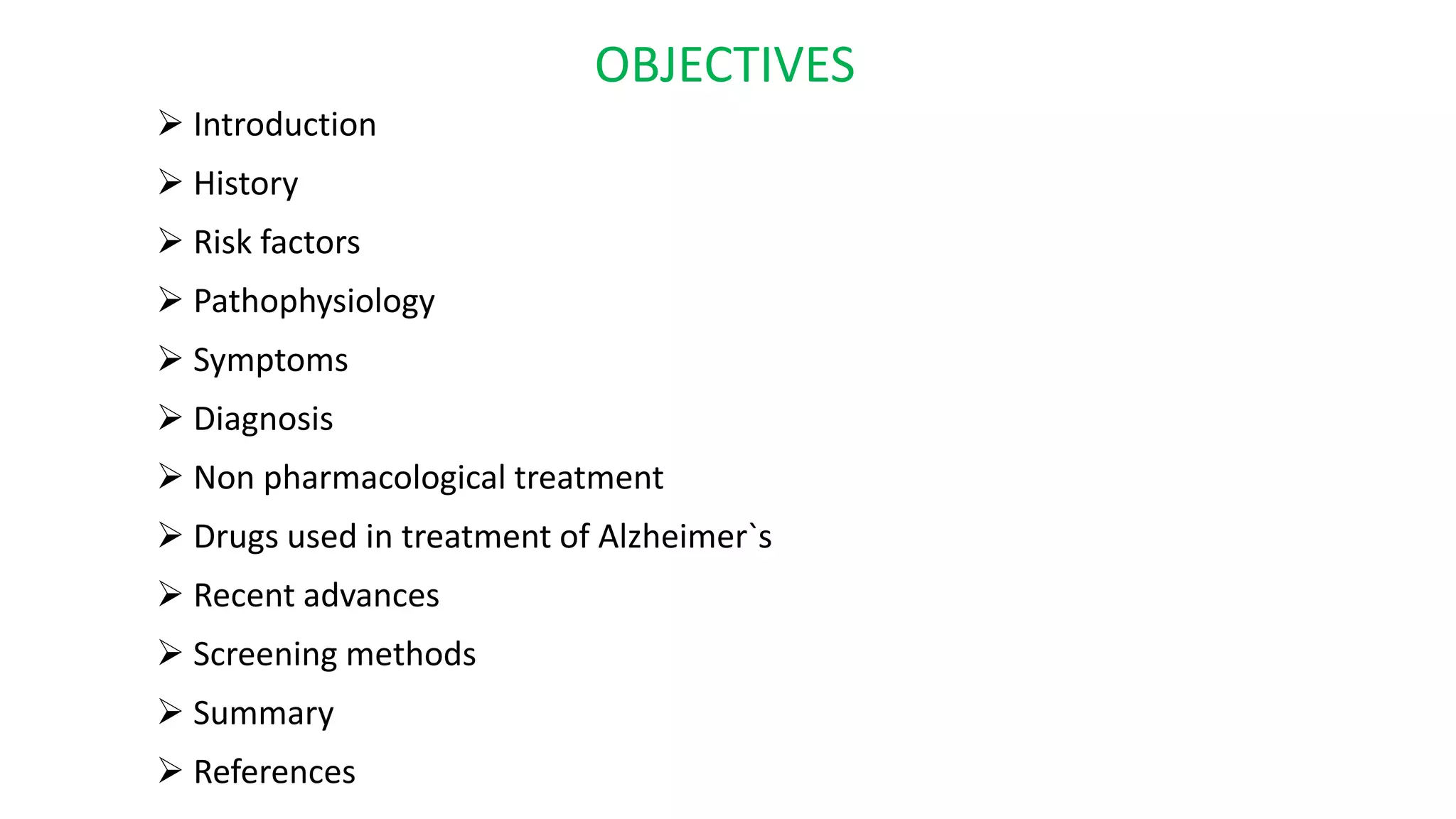
OBJECTIVES
 Introduction
 History
 Risk factors
 Pathophysiology
 Symptoms
 Diagnosis
 Non pharmacological treatment
 Drugs used in treatment of Alzheimer`s
 Recent advances
 Screening methods
 Summary
 References
INTRODUCTION
 Alzheimer's disease (AD) is a progressive, neurodegenerative disorder in elderly (≥ 60
years)
 Characterized by
 Memory loss (92%)
 Confusion (71%)
 Short attention span (63%)
 Declining sense of direction (53%)
 Personality changes (31%)
 ≈1 in 8 > 65 years
46.8 million
Prevalence of Alzheimer`s Disease
Deaths per million persons in 2012
Prevalence of Alzheimer`s Disease
INDIA
> 4 million people (3rd Highest case load in the World)
China > U.S > India
India's dementia and Alzheimer's ≈ 7.5 million by the end of 2030
Alzheimer`s Disease
TOM FEARS BETTY ROBINSON BILL QUACKENBUSH RONALD REAGAN
β
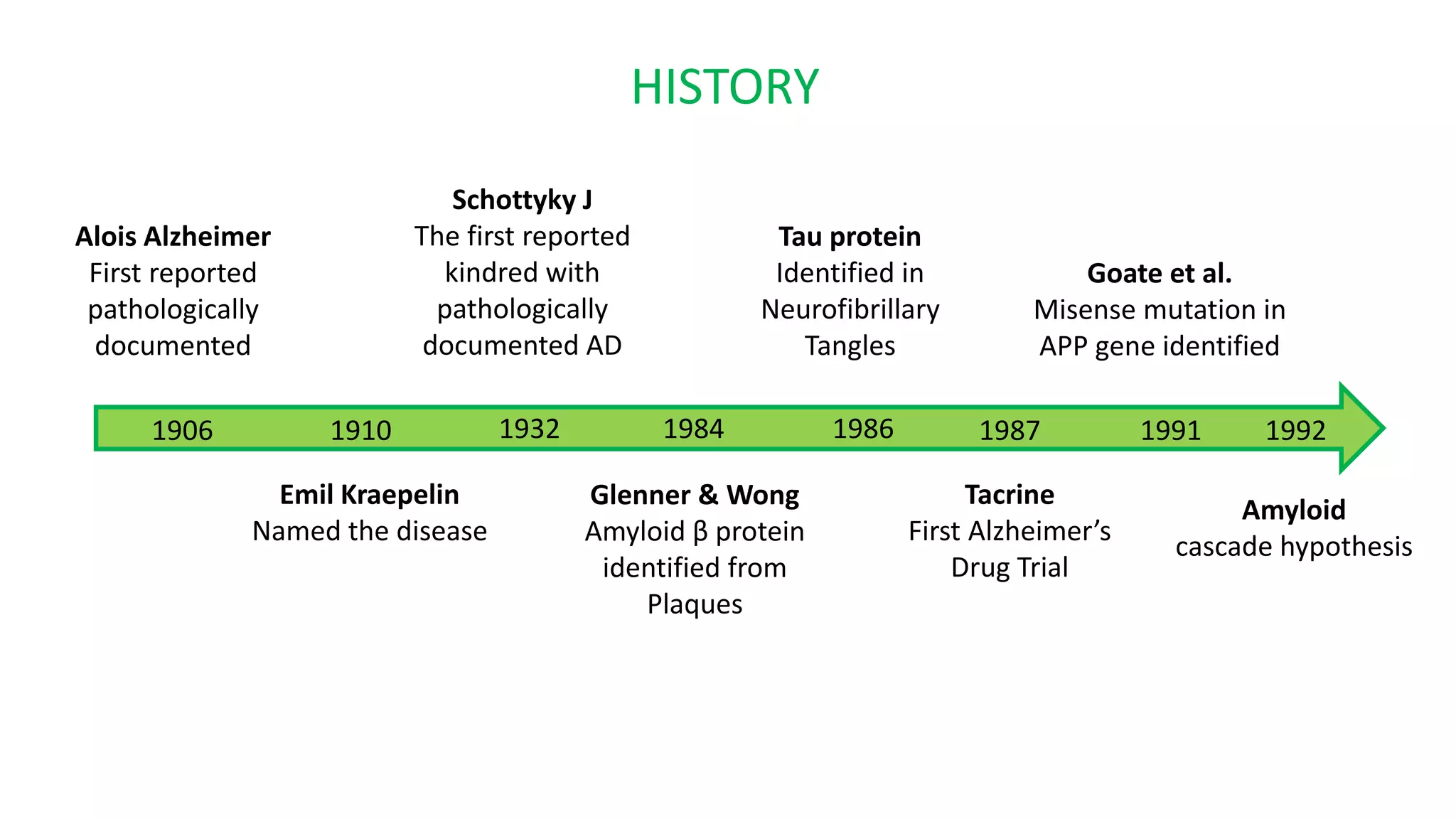
HISTORY
Alzheimers disease was first described by German Physician Dr Alois
Alzheimer in 1906
Alois Alzheimer Auguste Deter
HISTORY
Alois Alzheimer
First reported
pathologically
documented
Emil Kraepelin
Named the disease
Schottyky J
The first reported
kindred with
pathologically
documented AD
1906 1910 1984
Glenner & Wong
Amyloid β protein
identified from
Plaques
1986
Goate et al.
Misense mutation in
APP gene identified
1932 1987 1991
Tau protein
Identified in
Neurofibrillary
Tangles
1992
Tacrine
First Alzheimer’s
Drug Trial
Amyloid
cascade hypothesis
HISTORY
PSEN1 E280A
Mutation
reported
PSEN1 E280A
Increases Aβ42
deposition
Clinical Features of
EOAD pE280A
Presenilin-1
mutation
1995 1996 1999
 Alzheimer’s vaccine
successful in mice
PSEN-1 is catalytic
unit of γ-Secretase
20001997 2002
Aβ25-35 induces
apoptosis via OS
mechanism
DNA Damage does
not correlate with
Aβ/ NFT in E280A
FAD
HISTORY
Proposed Clinical stages
 Asymptomatic MCI
 Symptomatic MCI
 MCI
 Dementia
Fibrillar Aβ begins
to accumulate in
carriers at a mean
age of 28 years
2011 2012 2014
Passive Aβ
immunization
started
API
Alzheimer’s
Prevention
Initiative Launched
MRI anomalies &
Aβ1-42
overproduction in
CSF & plasma
CA 1 neuronal loss
related with
epilepsy
2004
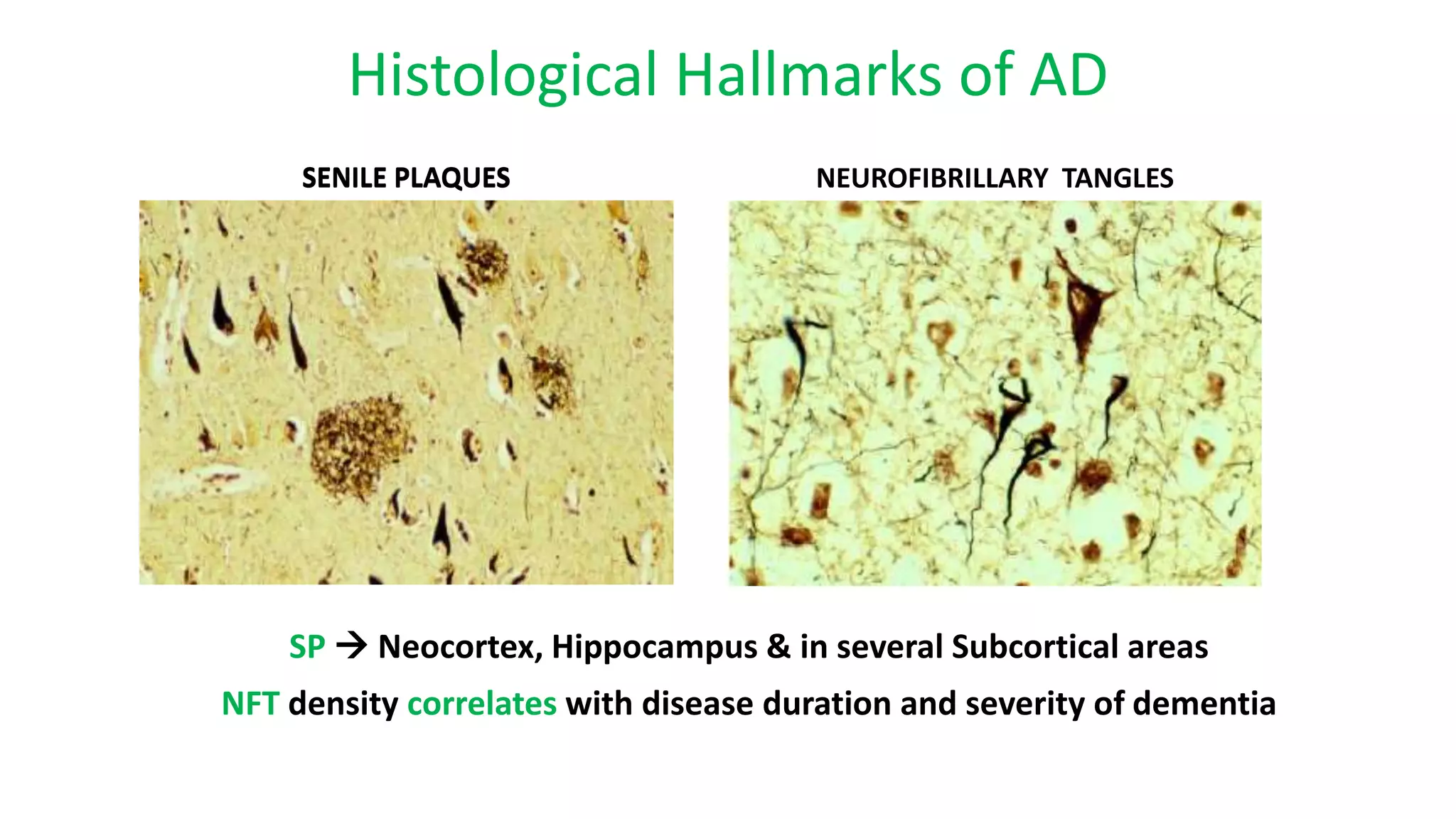
Histological Hallmarks of AD
SENILE PLAQUES NEUROFIBRILLARY TANGLES
SP  Neocortex, Hippocampus & in several Subcortical areas
NFT density correlates with disease duration and severity of dementia
SENILE PLAQUES
Gross appearance of brain of AD
Cross section of brain of AD
Vulnerable Neurons in AD
• Basal forebrain cholinergic system (Nucleus basalis)
• Monoaminergic system
• Hippocampus (CA1 and CA2 pyramidal cells)
• Amygdala
• Entorhinal cortex
• Neocortex
Effects of neuronal death in AD
• Hippocampus & Enthorhinal cortex  Memory and learning
• Cortex & Basal forebrain cholinergic systems  Memory and attention
• Amygdala & other deep nuclei  Behavior and emotions
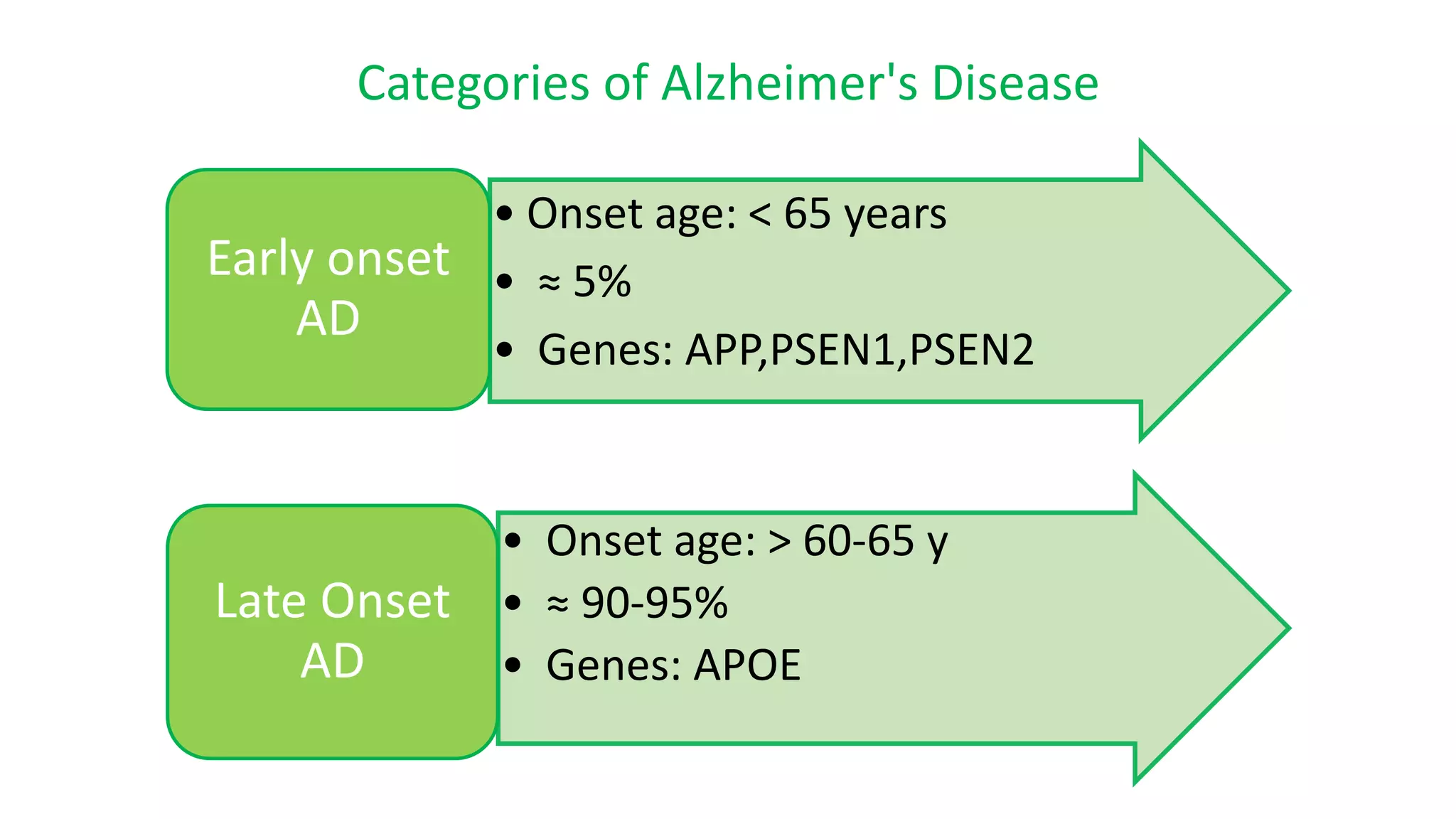
• Onset age: < 65 years
• ≈ 5%
• Genes: APP,PSEN1,PSEN2
Early onset
AD
• Onset age: > 60-65 y
• ≈ 90-95%
• Genes: APOE
Late Onset
AD
Categories of Alzheimer's Disease
Risk Factors for Alzheimer`s Disease
1) AGE
2) SEX
Females are more effected
< 65
65-75
> 85
75-84
Risk Factors for Alzheimer`s Disease
3) HEREDITY
EARLY ONSET
 Alterations on chromosome 1, 14 and 21
 Mutation on chromosome 14  PRESENILIN 1 (PSEN1)
 Mutation on chromosome 1  PRESENILIN 2 (PSEN2)
 PSEN1 & 2 encode for membrane protein involved for APP
 Mutations  activity of γ-secretase  βAP formation
 APP is encoded on chromosome 21
 Mutation on APP gene  overproduction of βAP
Risk Factors for Alzheimer`s Disease
3) HEREDITY
LATE ONSET
 Due to apo-lipoprotein E (apoE) gene
 Gene responsible for production of apoE gene – chromosome 19
 Inheritance of apoE4 allele posses genetic risk
Degree of risk depends on:
Number of copies of apoE4 genes
Age
Ethnicity
Risk Factors for Alzheimer`s Disease
4) Race & Ethnicity
 African-Americans: 2 times greater risk
 Hispanics: 1.5 times greater risk
 Cardiovascular risk factors more common
 Lower levels of education, socioeconomic status
Risk Factors for Alzheimer`s Disease
5) Other factors
• Smoking
• Obesity
• Head injury
• Low educational levels
• Environmental factors – Aluminum, Mercury & Viruses
• Vascular disease – Stroke
• Diabetes
• Hypertension
• Hypercholesterolemia
• Down’s syndrome
Pathogenesis of Alzheimer’s Disease
 βAP aggregation & deposition  plaque formation
 Hyperphosphorylation of Tau protein  NFT development
 Inflammatory processes
 Dysfunction of neurovasculature
 Oxidative stress
 Mitochondrial dysfunction
Pathogenesis of Alzheimer’s Disease
AMYLOID CASCADE HYPOTHESIS
Pathogenesis of Alzheimer’s Disease
AMYLOID CASCADE HYPOTHESIS
Pathogenesis of Alzheimer’s Disease
AMYLOID CASCADE HYPOTHESIS
Pathogenesis of Alzheimer’s Disease
AMYLOID CASCADE HYPOTHESIS
Pathogenesis of Alzheimer’s Disease
AMYLOID CASCADE HYPOTHESIS
Pathogenesis of Alzheimer’s Disease
AMYLOID CASCADE HYPOTHESIS
Pathogenesis of Alzheimer’s Disease
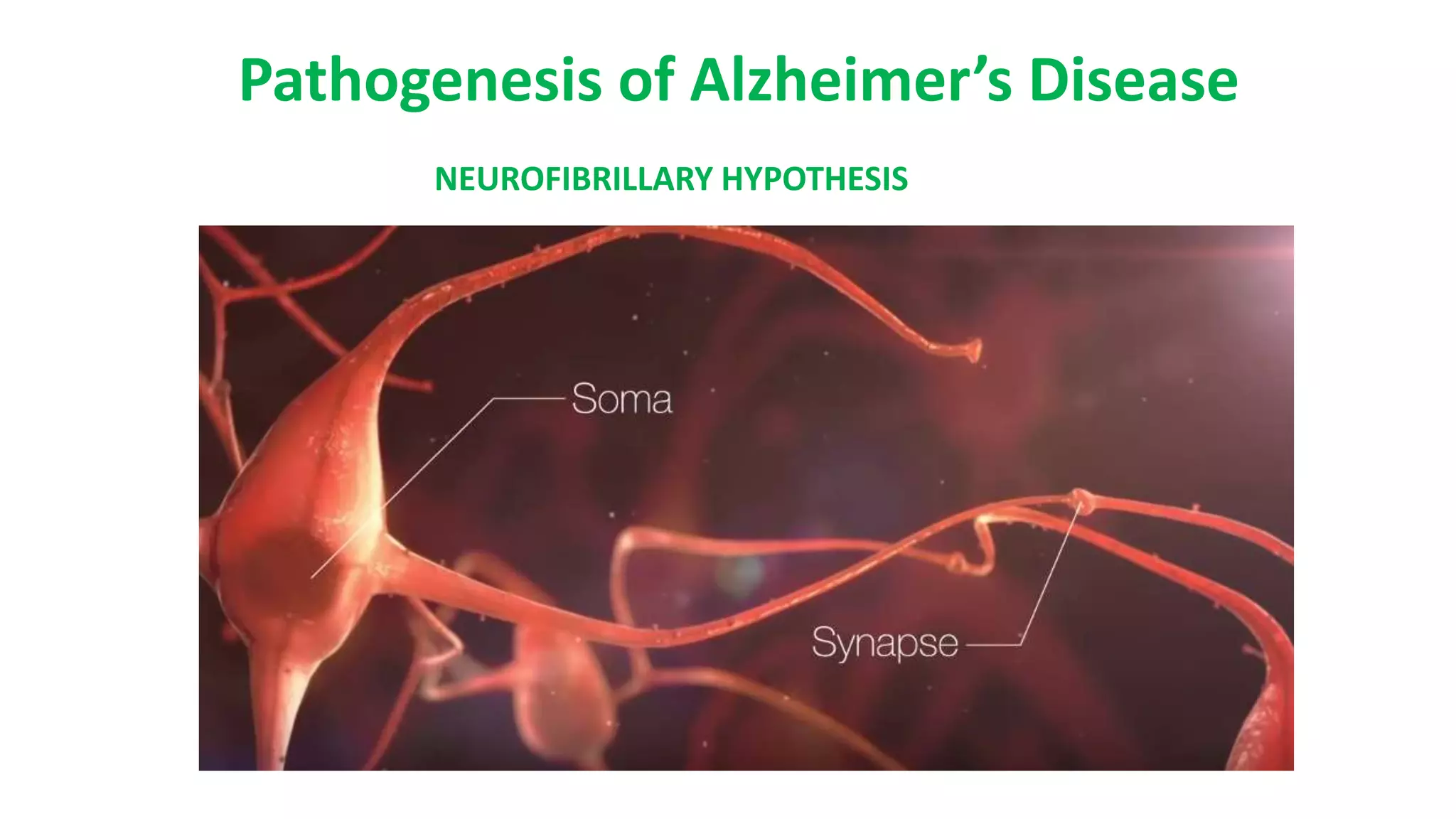
NEUROFIBRILLARY HYPOTHESIS
Pathogenesis of Alzheimer’s Disease
NEUROFIBRILLARY HYPOTHESIS
Pathogenesis of Alzheimer’s Disease
NEUROFIBRILLARY HYPOTHESIS
Pathogenesis of Alzheimer’s Disease
NEUROFIBRILLARY HYPOTHESIS
Pathogenesis of Alzheimer’s Disease
NEUROFIBRILLARY HYPOTHESIS
Pathogenesis of Alzheimer’s Disease
NEUROFIBRILLARY HYPOTHESIS
Pathogenesis of Alzheimer’s Disease
NEUROFIBRILLARY HYPOTHESIS
Pathogenesis of Alzheimer’s Disease
 INFLAMMATORY MEDIATORS:
 Brain amyloid deposition is associated with local inflammatory and
immunologic alleviations.
 It is associated with release of Nitric oxide, cytokines, other radical species &
complement factors that injure neurons and promote inflammation.
 CHOLINERGIC HYPOTHESIS:
 Loss of cholinergic activity correlates with AD severity.
 In late AD, number of cholinergic neurons are decreased, loss of nicotinic
receptors in hippocampus and cortex.
Pathogenesis of Alzheimer’s Disease
 OTHER NEUROTRANSMITTER ABNORMALITIES:
 Glutamate & other excitatory amino acid NTs act as potential neurotoxins for AD
 If glutamate remains in synapse for a long period of timedestroys nerve cells
 Blocking of NMDA receptors decreases the glutamate activity in synapse –
decreases cellular injury in AD
Pathogenesis of Alzheimer’s Disease
 BRAIN VASCULAR DISEASE & HIGH CHOLESTROL:
 ApoE lipoprotein carries cholesterol in blood through brain.
 ApoE4 is associated with increased deposition of βAP.
 Increased cholesterol in brain neurons  alter membrane functioning  leads
to plaque formation  Alzheimer’s disease.
Symptoms of Alzheimer`s Disease
Stages of Alzheimer’s Disease
Stages Mild Moderate Severe
Symptoms • Recent memory loss
• Language problems
• Mood and
personality changes
• Diminished
Judgment
• Increased memory loss
• Behavioral &
personality changes
• Unable to learn or
recall new information
• Wandering, Agitation &
Aggression
• Confusion about time &
place
• Require assistance
with ADLs
• Loss of recognition of
familiar people or places
• Total loss of verbal skills
• Unstable gait
• Incontinence
• Motor disturbances
• Bedridden
• Dysphagia
• Poor / No ADLs
• LTC placement
ADL = Activities of Daily Living
LTC = Long-Term Care
Death due to Alzheimer’s disease
 Life expectancy  Reduced
 Following diagnosis  3 – 10 years
 < 3% of people live > 14 years
 Pneumonia & Dehydration  Death
Diagnosis of Alzheimer’s Disease
Cognitive testing:
Mini- Mental Status Examination
Cutoff = 24/30
SCORE DIAGNOSIS
27 – 30 Normal
21 – 26 Mild cognitive impairment
11 – 20 Moderate cognitive impairment
0 – 10 Severe
Diagnosis of Alzheimer’s Disease
Laboratory tests:
Circulatory miRNA
Inflammatory biomarkers
Brain imaging:
CT scan
MRI
SPECT
PiB PET – Florbetapir
CSF Examination
Brain imaging
No medications or supplements  Decrease risk of AD
No treatments stop or reverse AD progression
Though, temporarily improve symptoms
Non Pharmacological Approaches
Cognitive/ Emotion-oriented Interventions:
Reminiscence Therapy
Simulated Presence Therapy (SPT)
Validation Therapy
Reality Orientation Therapy
Sensory Stimulation Interventions:
Acupuncture
Aromatherapy
Light Therapy
Massage & Touch Therapy
Music Therapy
Snoezelen Multisensory Nerve Stimulation
Transcutaneous Electrical Nerve Stimulation (TENS)
Brain Training
 Crosswords
 Learning a new language
 Reading a book
 Undertaking further education
 Can intensive computerised training stop progress of cognitive decline and
onset of dementia?  Studies ongoing
Physical Activity
 Still no randomised trials available yet
 People who exercise  Slower loss of brain tissue
 People who exercise regularly are less likely to have vascular disease
which ↑’s risk of AD
 Reduce - stress, anxiety and depression
 3 types of exercise program – sustained aerobic exercise, weight training
and flexibility and balance training
Diet in AD
 A recent study looked at 3 different diets:
1. Mediterranean diet
2. DASH diet (Dietary Approaches to Stop Hypertension)
3. MIND diet (Mediterranean-DASH Intervention for Neurodegenerative Delay)
 Natural plant-based foods, berries and green leafy vegetables, limited
saturated fats  Benefit brain health
TARGETS OF
DRUG ACTION
FOR AD
.
.
.
.
Drugs used in Alzheimer’s disease
Experimental Drugs
(Role under evaluation)
Approved Drugs
(Role well established)
Cholinesterase
Inhibitors
NMDA
Antagonists
• Donepezil
• Rivastigmine
• Galantamine
• Memantine
Nicotinic
Receptor
Agonists
• 4 OH-GTS-21
Antioxidants
• Ginkgo biloba
• Vitamin E
• Melatonin
PPAR γ Agonist
• Pioglitazone
Gamma
Secretase
Inhibitor
• Semagacestat
5HT-6
Antagonist
• SB-271046
Statins
• Simvastatin
• Pravastatin
Others
• Heavy metal chelators
• Estrogens
• Anti-inflammatory drugs
TACRINE
DONEPEZIL
RIVASTIGMINE
GALANTAMINE
•CHOLINESTERASE INHIBITORS
Cholinergic Hypothesis
 Role
– Ach is an important neurotransmitter in brain  Memory
 Impact
– Loss of ACh in AD  Impairment of memory
 Treatment approach
– Enhancement of cholinergic function may stabilize or improve cognitive
function  Behavior and daily functioning
Tacrine
• Aminoacridine
• Dose dependent effect: 40 mg-160 mg/day
• Half life : 3 - 5 hrs
• Metabolized by CYP450
• Adverse effects:
• Nausea, vomiting, diarrhoea
• Hepatotoxicity
• No longer actively marketed
Donepezil
• Long t ½ – 70 hrs
• Dose = 5 -10 mg daily
• Several controlled trials  modest benefits in cognition and behaviour
• Not hepatotoxic
• Adverse effects: Nausea, diarrhoea, vomiting, fatigue, muscle cramps, bradycardia
• Generally safe & well tolerated
Rivastigmine
• Inhibits both AChE & BChE
• Higher affinity for brain AChE than peripheral
• Half-life of 2 hours
• Dosing BD of 3 - 12 mg/day
• Patch 9.5 mg/24 hr available
• Metabolism independent of hepatic CYP450 system
• GI adverse events are common, including weight loss
Galantamine
• Galantamine has a dual mechanism of action
– Competitive inhibition of AChE
– Allosteric modulation of presynaptic and postsynaptic nicotinic receptors
• Galantamine improves major aspects of AD
(eg: cognition, behavior, function)
• Generally safe and well tolerated
Dual Mechanism of Action
Postsynaptic
nerve terminal
M receptor N receptor
Presynaptic nerve
terminal
Galantamine
 ACh and other
neurotransmitters
M receptor N receptor
ACh
• Choline
• Acetic acid
Galantamine
N = nicotinic
M = muscarinic
ACh = acetylcholine
AChE Inhibitors: Pharmacokinetic
Characteristics
AChE Inhibitors
Dual AChE/
BuChE Inhibitor
Characteristic Donepezil Galantamine Rivastigmine
Plasma half-life (hour)
Brain half-life
~70
70
~6
6
~1
12
Elimination
pathway Liver
50% kidney
50% liver Kidney
Metabolism by
2D6/3A4 isoenzymes Yes Yes Minimal
NMDA receptor antagonists
 Glutamate  Excitatory
neurotransmitter in brain
 Acts on post synaptic NMDA receptors
 Glutaminergic overstimulation may
result in neuronal damage
(excitotoxicity)
 Dementia and pathogenesis of
Alzheimer`s disease
Memantine
• NMDA receptor antagonist approved  Moderate to severe AD
• Uncompetitive
• Low affinity
• Voltage dependent
• Interacts with Mg2+ binding site of channel to prevent excessive
excitation while sparing normal functions
Memantine (Pharmacokinetics)
• 100 % bioavailability
• T ½ = 60-80 hrs
• Rapidly crosses BBB
• Little metabolism, 75% -90% excreted unchanged in urine
• Minimal drug interactions and food interaction
• Starting dose – 5 mg OD , recommended target dose is 20 mg/day
Memantine (Adverse effects)
• Dizziness
• Headache
• Confusion
• Constipation
• Agitation
EXPERIMENTAL DRUGS
(ROLE UNDER EVALUATION)
GAMMA SECRETASE INHIBITORS
 SEMAGACESTAT  Candidate drug
↓ Plasma and CSF A- Concentration
 IDENTITY -1 Trial Phase 3 started in March 2008
 Interrupting Alzheimer's Dementia By Evaluating Treatment Of Amyloid
Pathology
GAMMA SECRETASE INHIBITORS
 IDENTITY - 2 trial started in September 2008
 Did not slow disease progression
 Worsened cognition and the ability to perform ADL
 ↑ risk of skin cancer, rash and hair discolouration
 Eli Lily halted the development
ANTIOXIDANTS
 Recent research  Link between antioxidant intake and decreased
incidence of Alzheimers
Curcumin
Ginko biloba
Vitamins
Green tea
Curcumin (Turmeric)
 Anti-oxidant, anti-inflammatory & anti-aggregation
 It binds Aβ and reduces amyloid plaque burden in mice
 Preliminary results show reduced rate of cognitive decline in normal
healthy elderly receiving curcumin compared to placebo – only short
time frame (6 months) and small numbers – larger studies needed.
 Limited studies in AD patients have so far failed to show any benefit
clinically.
GINKO BILOBA
 Ancient use in China and Japan as a tonic
 Poor circulation
 Inner ear disorders
 Absent-mindedness
 Dementia
 Depression
 Hypertension in the elderly
 Impotence in men
 Chinese used leaves and nuts
GINGKO BILOBA
FLAVINOIDS TERPENOIDS
REDUCE FREE RADICALS
BILOBALIDESGINGKOLIDES
INHIBITS PLATELET
ACTIVATING FACTOR
(PAF)
REDUCE INFLAMMATION
PROTECTS NERVE
CELLS AND
REGENERATES MOTOR
NERVE CELLS
Physiologic Mode of Action Cont’d
 Acts by releasing NO & PGI2
 ↑ blood flow  ↑oxygen & nutrient delivery tissues  Brain
 ↓ blood viscosity
 ↑ in the release of neurotransmitters
 Antioxidant activity
 Prevention of free radical damage
Side effects
 Hemorrhage
 Hematoma
 Hyphema (bleeding in eye)
 In all trials < 0.5% reported minor
side effects including headaches, GI
distress and allergic skin reactions.
Vitamins
 Insufficient evidence  low levels of vit B12 in elderly ↑ risk for
dementia or that supplements improve performance
 Again, studies looking at folate supplementation have been inconsistent
 In 2014 a group of Oxford University researchers  involving 22,000
people and concluded that taking B vitamins and folate doesn’t slow
mental decline as we age, nor is it likely to prevent AD
Vitamins
 Vitamin D  Anti-oxidant and anti-inflammatory properties
 not clear  Vit D deficiency  Cognition
 Early laboratory evidence that Vitamin D receptor may help regulate
clearance of Aβ from the brain
 No firm scientific evidence yet that Vit D supplementation will have
positive effect on cognition
 Vitamins E, C & A – all powerful anti-oxidants
 Epidemiological studies  low intake ↑ dementia risk, but inconsistent
association
 Multiple clinical trials  Did not alter cognitive outcomes in MCI, AD or
healthy elderly but results still debated
Vitamins
Fish oil
 Omega-3 fatty acids found in fish oil and nuts – Neuroprotective
 Studies have failed to show any improvement in cognition
 In elderly without AD – inconclusive evidence
 Further large –scale studies needed
PPAR  agonists
 PPAR  agonists inhibit inflammatory
gene expression , alter Amyloid 
homeostasis & exhibit neuroprotective
effects
 15-30 mg Pioglitazone daily
 Improved agitation & regional cerebral
blood flow in parietal lobe
 Cognitive and functional
improvement
PPARγ activation
Modulate the microglial
response to amyloid
deposition
Increases Aβ phagocytosis
Decreases cytokine release
Neuroprotective effects
Statins
 Higher Cholesterol risk factor for AD
 Lovastatin prevented death of nerve cells in animal experiments
 Results of various studies not promising
 No difference between drug and control in terms of dementia,
cognitive function and neuropsychological tests
Estrogens
 AD more common in postmenopausal women
 Estrogen
 Modulate ApoE gene
 ↑ APP metabolism
 Protects against oxidative stress
 ↑Cerebral blood flow
 Prevent neuronal atrophy
 Clinical trials are inconclusive
NSAIDS
 Inhibit COX enzymes
 ↓Production of cytokines & microglial activation
 ↓ Platelet aggregation
 ↓ iNOS
 ↓ Beta secretase
 Large number of therapeutic trials of NSAID’s in AD (1993-2004)
 Ibuprofen, Indomethacin, Naproxen, Celecoxib , Rofecoxib & Prednisolone
 All were negative
Heavy metal chelators
 Amyloid beta plaques bind copper and zinc & removal of these metal
ions promotes dissolution of Plaques
 Levels of iron & zinc abnormally ↑ in brain in AD
 Desferrioxamine : ↓ dementia in a trial
 Clioquinal: Regression of Amyloid plaques in animal models of AD
Nicotinic receptor agonists
 α4β2 & 7 nAChR types localized in areas of brain
 Long term memory & Learning
7 nAChR agonist :
 4 OH-GTS21
 Protective action on cholinergic neurons
 Antiamnestic effect
 EVP-6124: Currently in phase2
5-HT6 receptor antagonists
 5HT6 receptor (functionally excitatory)  Co-localized with GABAergic
neurons  overall inhibition of brain activity
 In parallel with this, 5HT6 antagonists are hypothesized to improve
cognition, learning, and memory
 Latrepirdine, Idalopirdine & Intepirdine  Novel treatments for AD
 Phase III trials have failed to demonstrate efficacy
 Reduce appetite & produce weight loss
NOOTROPICS
Piracetam
Aniracetam
Blocks Ca channels
Inhibit AChE
Antioxidants
Synaptic &
mitochondrial
responsiveness
Improved Learning & Memory
Burdens of Aβ
Synaptic dysfunction
Inflammation
Apoptosis
Oxidative stress
Neuroprotective Potential
Anti-Alzheimer’s activity
Immunization For Alzheimers Disease?
 Transgenic animals were immunized with A42
 Either before the onset of AD-type neuropathologies (at 6 weeks of
age) or at an older age (11 months)
 When amyloid- déposition and several of the subsequent
neuropathological changes were well established
Immunization for Alzheimers disease?
 Immunization of the Young animals essentially prevented the
development of  -amyloid plaque formation, neuritic dystrophy and
astrogliosis.
 Treatment of the older animals also markedly reduced the extent and
progression of these AD-like neuropathologies.
 Hence the possibilty that immunization with amyloid-b may be effective
in preventing and treating AD
Anti-Amyloid strategies - Immunotherapy
 Initial studies - Injecting animals with Aβ → good Ab response → cleared amyloid
plaques from brain
 Human studies prematurely ceased (2002) → development of brain inflammation
(Meningoencephalitis) in 6%
 BUT- Evidence  Removed amyloid plaque from the brain
 Idea of active immunisation not abandoned – several pharmaceutical companies
early phases of developing new active vaccines
Passive immunization
Monoclonal antibodies
How to avoid meningoencephalitis symptoms ?
Mechanism Of Action - BAPINEUZUMAB
Monoclonal antibodies
 Several mAb’s have been studied  Bapineuzumab and Gantenerumab
 Stopped prematurely  Lack of perceived efficacy
 Subgroups did show benefits leading to further studies
 Lack of efficacy  Underdosing
 Recently restarted studies  Gantenerumab in the same patient group
 Larger doses
Monoclonal antibodies
 Several active ongoing studies
 Some early positive results– Solanezumab, Crenezumab & Adecanumab
 Phase 3 Solanezumab: failed to meet primary endpoints and slow cognitive decline in
AD patients. Trials of this drug are now continuing in prodromal AD patients (the A4
study) – higher doses extending for 3 years
 Phase 3 Adecanumab studies will run until 2022
 Phase 3 Crenezumab studies are still recruiting worldwide
Most patients reported Adverse Effects
94 % Bapineuzumab
90 % Placebo
90 % mild to moderate
in severity
Back pain 12.1% vs 5.5% Weight loss 6.5% vs 1.8%
Anxiety 11.3% vs 3.6% Paranoia 6.5% vs 0.9%
Vomiting 9.7% vs 3.6% Skin laceration 5.6 % vs 2.7%
Vasogenic Edema 9.7% vs 0% Gait disturbance 5.6% vs 1.8%
Hypertension 8.1% vs 3.6% Muscle spasms 5.6 % vs 0.9%
AEs >2 times as often as placebo rate and seen in >5% of bapineuzumab patients
Safety Results
Anti-amyloid strategies
Reducing production
BACE inhibitors such as Lanabecestat
prevent the production of beta-
amyloid.
Methylthioninium Chloride (Methylene Blue)
 First drug targeting Tau
 Derived from the dye used to stain NFT’s
 Inhibits Tau aggregation
 Phase 2 study showed cognitive benefits
 Phase 3 trial for mild-moderate AD - finished February 2016 – failed to slow cognitive or
functional
 30% drop-out due to side-effects
 2nd generation compound (TRx0237) currently in Phase 3 trials for AD
Tau Therapies
 Mouse and primate models of AD show amyloid plaques
 Respond to anti-amyloid therapy
 But no tau pathology like human AD
 Aged dogs develop AD  Aβ and NFT’s
 Tau immunisations  Animal models  Reduction Tau & clinical benefits
 Small number of Tau immunotherapies  phase 1 and 2 testing
 Initial reports No serious adverse effects (still very early)
Tau Therapies
 Mouse and primate models of AD show amyloid plaques
 Respond to anti-amyloid therapy
 But no tau pathology like human AD
 Aged dogs develop AD  Aβ and NFT’s
 Tau immunisations  Animal models  Reduction Tau & clinical benefits
 Small number of Tau immunotherapies  phase 1 and 2 testing
 Initial reports No serious adverse effects (still very early)
Tau Therapies
• Lithium inhibits chemical changes in Tau  NFT’s
• Studies on Lithium (Mixed)  Benefit with very low doses in MCI
 Worsening confusion (Studies needed)
External Ca2+ ER Ca2+
Lithium Lithium
NMDA
antagonism
IMP
inhibition
Lowered Intracellular
Ca2+ intrusion from
External stores
Reduced IP3
Lowered Intracellular
Ca2+ intrusion from
Internal stores
Vascular disease and Alzheimer’s
 Larger, longer randomised controlled trials
 Finnish Geriatric Intervention Study to Prevent Cognitive Impairment and Disability
(FINGER study) →preventive study
 Combination of diet, exercise, cognitive training and vascular risk factor monitoring
in an “at risk” population.
 Early 2 year results look promising
 Now expanding to UK, Singapore, China and USA
 Alzheimer’s Prevention Initiative (API) international consortium
 Research in 5000 members  Colombia,South America
 Study on asymptomatic individuals  carry the PS1 mutation
 Using the monoclonal antibody Crenezumab vs. placebo
 This is a five year study and is still recruiting
Glycogen synthase kinase 3 beta (GSK3β)  GSK3β activity
 increased Aβ production & deposits,
 Tau hyperphosphorylation
synaptic damage in AD patients & animal models
(VDAC- Voltage-dependent anion-selective channel)
GSK3β INHIBITORS
Glycogen synthase kinase 3 beta (GSK3β)  GSK3β activity
 increased Aβ production & deposits,
 Tau hyperphosphorylation
synaptic damage in AD patients & animal models
(VDAC- Voltage-dependent anion-selective channel)
GSK3β INHIBITORS
Screening in Alzheimer’s Disease
Passive Avoidance Methods
Active Avoidance Methods
Discrimination Learning
Conditioned Response
a) Step down test in Mice & Rat
b) Step through test in rodents
c) Uphill avoidance tests in rats
d) Scopalamine induced amnesia in mice
e) Ibotenic acid-induced impairment of
memory
a) Runway avoidance in rats & mice
b) Shuttle box avoidance test
c) Jumping avoidance test
a) Spatial habituation learning
b) Spatial discrimination test in rodents
c) Spatial learning test in water maze
d) Olfactory learning in rats
a) Conditioned nictitating
membrane response in
rabbits
SUMMARY
 AD - Most debilitating diseases affecting the old age.
 Pathology - Amyloid beta protein & Tau protein.
 No cure – Delay progression
 Approved drugs – AChE & NMDA receptor inhibitors.
WORLD ALZHEIMER’S DAY
SEPTEMBER 21ST
2019 Theme – ENDING STIGMA
“Even though helpful
medication exists, there’s
still no cure,
and we have to keep
fighting
References
1) Goodman & Gilman’s The Pharmacological Basis of Therapeutics 13th ed.
2) Bertram G Katzung Basic & Clinical Pharmacology 14th ed.
3) Rang & Dale’s Pharmacology 9th ed.
4) Lippincott’s Illustrated Reviews Pharmacology 5th ed.
5) KD Tripati Essentials of Medical Pharmacology 7th ed.
6) R S Satoskar Pharmacology and Pharmacotherapeutics 25th ed
7) Sharma & Sharma’s Principles of Pharmacology 3rd ed.
8) Dr S K Srivastava Pharmacology for MBBS 1st ed.
9) M.N.Ghosh fundamentals of experimental pharmacology 6th ed.
10) Bikash medhi & ajay Prakash Practival manual of exp. & clinical pharmacology
11) S K Gupta Drug Screening Methods 3rd ed.
12) N.S. Parmar Screening Methods in Pharmacology 4th reprint
13) Alzheimer’s Disease: Genes Sapeck Agrawal Gaithersburg, MD, USA DOI //dx.doi.org/10.13070/mm.en.7.2226
THANK YOU…

Alzheimer's disease

  • 1.
    ALZHEIMER’S DISEASE DR. RESUNEHA REDDY FINAL YEAR PG
  • 2.
    CASE STUDY A 75-year-oldman was brought with a h/o progressive functional decline, so much so that he now needs to be looked-after all the time. He misplaces his daily need articles, forgets what he said few minutes ago, is unable to perform simple calculations, mixes up what happened today and what happened yesterday, has poor control of emotions, but vision, hearing and other sensations are well preserved, and there is no gross ataxia.
  • 3.
    OBJECTIVES  Introduction  History Risk factors  Pathophysiology  Symptoms  Diagnosis  Non pharmacological treatment  Drugs used in treatment of Alzheimer`s  Recent advances  Screening methods  Summary  References
  • 4.
    INTRODUCTION  Alzheimer's disease(AD) is a progressive, neurodegenerative disorder in elderly (≥ 60 years)  Characterized by  Memory loss (92%)  Confusion (71%)  Short attention span (63%)  Declining sense of direction (53%)  Personality changes (31%)  ≈1 in 8 > 65 years
  • 5.
    46.8 million Prevalence ofAlzheimer`s Disease
  • 6.
    Deaths per millionpersons in 2012
  • 7.
    Prevalence of Alzheimer`sDisease INDIA > 4 million people (3rd Highest case load in the World) China > U.S > India India's dementia and Alzheimer's ≈ 7.5 million by the end of 2030
  • 8.
    Alzheimer`s Disease TOM FEARSBETTY ROBINSON BILL QUACKENBUSH RONALD REAGAN β
  • 9.
    HISTORY Alzheimers disease wasfirst described by German Physician Dr Alois Alzheimer in 1906 Alois Alzheimer Auguste Deter
  • 10.
    HISTORY Alois Alzheimer First reported pathologically documented EmilKraepelin Named the disease Schottyky J The first reported kindred with pathologically documented AD 1906 1910 1984 Glenner & Wong Amyloid β protein identified from Plaques 1986 Goate et al. Misense mutation in APP gene identified 1932 1987 1991 Tau protein Identified in Neurofibrillary Tangles 1992 Tacrine First Alzheimer’s Drug Trial Amyloid cascade hypothesis
  • 11.
    HISTORY PSEN1 E280A Mutation reported PSEN1 E280A IncreasesAβ42 deposition Clinical Features of EOAD pE280A Presenilin-1 mutation 1995 1996 1999  Alzheimer’s vaccine successful in mice PSEN-1 is catalytic unit of γ-Secretase 20001997 2002 Aβ25-35 induces apoptosis via OS mechanism DNA Damage does not correlate with Aβ/ NFT in E280A FAD
  • 12.
    HISTORY Proposed Clinical stages Asymptomatic MCI  Symptomatic MCI  MCI  Dementia Fibrillar Aβ begins to accumulate in carriers at a mean age of 28 years 2011 2012 2014 Passive Aβ immunization started API Alzheimer’s Prevention Initiative Launched MRI anomalies & Aβ1-42 overproduction in CSF & plasma CA 1 neuronal loss related with epilepsy 2004
  • 13.
    Histological Hallmarks ofAD SENILE PLAQUES NEUROFIBRILLARY TANGLES SP  Neocortex, Hippocampus & in several Subcortical areas NFT density correlates with disease duration and severity of dementia SENILE PLAQUES
  • 14.
  • 15.
    Cross section ofbrain of AD
  • 16.
    Vulnerable Neurons inAD • Basal forebrain cholinergic system (Nucleus basalis) • Monoaminergic system • Hippocampus (CA1 and CA2 pyramidal cells) • Amygdala • Entorhinal cortex • Neocortex
  • 17.
    Effects of neuronaldeath in AD • Hippocampus & Enthorhinal cortex  Memory and learning • Cortex & Basal forebrain cholinergic systems  Memory and attention • Amygdala & other deep nuclei  Behavior and emotions
  • 18.
    • Onset age:< 65 years • ≈ 5% • Genes: APP,PSEN1,PSEN2 Early onset AD • Onset age: > 60-65 y • ≈ 90-95% • Genes: APOE Late Onset AD Categories of Alzheimer's Disease
  • 19.
    Risk Factors forAlzheimer`s Disease 1) AGE 2) SEX Females are more effected < 65 65-75 > 85 75-84
  • 20.
    Risk Factors forAlzheimer`s Disease 3) HEREDITY EARLY ONSET  Alterations on chromosome 1, 14 and 21  Mutation on chromosome 14  PRESENILIN 1 (PSEN1)  Mutation on chromosome 1  PRESENILIN 2 (PSEN2)  PSEN1 & 2 encode for membrane protein involved for APP  Mutations  activity of γ-secretase  βAP formation  APP is encoded on chromosome 21  Mutation on APP gene  overproduction of βAP
  • 21.
    Risk Factors forAlzheimer`s Disease 3) HEREDITY LATE ONSET  Due to apo-lipoprotein E (apoE) gene  Gene responsible for production of apoE gene – chromosome 19  Inheritance of apoE4 allele posses genetic risk Degree of risk depends on: Number of copies of apoE4 genes Age Ethnicity
  • 24.
    Risk Factors forAlzheimer`s Disease 4) Race & Ethnicity  African-Americans: 2 times greater risk  Hispanics: 1.5 times greater risk  Cardiovascular risk factors more common  Lower levels of education, socioeconomic status
  • 25.
    Risk Factors forAlzheimer`s Disease 5) Other factors • Smoking • Obesity • Head injury • Low educational levels • Environmental factors – Aluminum, Mercury & Viruses • Vascular disease – Stroke • Diabetes • Hypertension • Hypercholesterolemia • Down’s syndrome
  • 26.
    Pathogenesis of Alzheimer’sDisease  βAP aggregation & deposition  plaque formation  Hyperphosphorylation of Tau protein  NFT development  Inflammatory processes  Dysfunction of neurovasculature  Oxidative stress  Mitochondrial dysfunction
  • 27.
  • 28.
  • 29.
  • 30.
  • 31.
    Pathogenesis of Alzheimer’sDisease AMYLOID CASCADE HYPOTHESIS
  • 32.
    Pathogenesis of Alzheimer’sDisease AMYLOID CASCADE HYPOTHESIS
  • 33.
    Pathogenesis of Alzheimer’sDisease AMYLOID CASCADE HYPOTHESIS
  • 34.
    Pathogenesis of Alzheimer’sDisease AMYLOID CASCADE HYPOTHESIS
  • 35.
    Pathogenesis of Alzheimer’sDisease AMYLOID CASCADE HYPOTHESIS
  • 36.
    Pathogenesis of Alzheimer’sDisease AMYLOID CASCADE HYPOTHESIS
  • 38.
    Pathogenesis of Alzheimer’sDisease NEUROFIBRILLARY HYPOTHESIS
  • 39.
    Pathogenesis of Alzheimer’sDisease NEUROFIBRILLARY HYPOTHESIS
  • 40.
    Pathogenesis of Alzheimer’sDisease NEUROFIBRILLARY HYPOTHESIS
  • 41.
    Pathogenesis of Alzheimer’sDisease NEUROFIBRILLARY HYPOTHESIS
  • 42.
    Pathogenesis of Alzheimer’sDisease NEUROFIBRILLARY HYPOTHESIS
  • 44.
    Pathogenesis of Alzheimer’sDisease NEUROFIBRILLARY HYPOTHESIS
  • 45.
    Pathogenesis of Alzheimer’sDisease NEUROFIBRILLARY HYPOTHESIS
  • 47.
    Pathogenesis of Alzheimer’sDisease  INFLAMMATORY MEDIATORS:  Brain amyloid deposition is associated with local inflammatory and immunologic alleviations.  It is associated with release of Nitric oxide, cytokines, other radical species & complement factors that injure neurons and promote inflammation.  CHOLINERGIC HYPOTHESIS:  Loss of cholinergic activity correlates with AD severity.  In late AD, number of cholinergic neurons are decreased, loss of nicotinic receptors in hippocampus and cortex.
  • 48.
    Pathogenesis of Alzheimer’sDisease  OTHER NEUROTRANSMITTER ABNORMALITIES:  Glutamate & other excitatory amino acid NTs act as potential neurotoxins for AD  If glutamate remains in synapse for a long period of timedestroys nerve cells  Blocking of NMDA receptors decreases the glutamate activity in synapse – decreases cellular injury in AD
  • 49.
    Pathogenesis of Alzheimer’sDisease  BRAIN VASCULAR DISEASE & HIGH CHOLESTROL:  ApoE lipoprotein carries cholesterol in blood through brain.  ApoE4 is associated with increased deposition of βAP.  Increased cholesterol in brain neurons  alter membrane functioning  leads to plaque formation  Alzheimer’s disease.
  • 50.
  • 51.
  • 52.
  • 53.
  • 54.
  • 55.
  • 56.
  • 57.
    Stages of Alzheimer’sDisease Stages Mild Moderate Severe Symptoms • Recent memory loss • Language problems • Mood and personality changes • Diminished Judgment • Increased memory loss • Behavioral & personality changes • Unable to learn or recall new information • Wandering, Agitation & Aggression • Confusion about time & place • Require assistance with ADLs • Loss of recognition of familiar people or places • Total loss of verbal skills • Unstable gait • Incontinence • Motor disturbances • Bedridden • Dysphagia • Poor / No ADLs • LTC placement ADL = Activities of Daily Living LTC = Long-Term Care
  • 58.
    Death due toAlzheimer’s disease  Life expectancy  Reduced  Following diagnosis  3 – 10 years  < 3% of people live > 14 years  Pneumonia & Dehydration  Death
  • 59.
    Diagnosis of Alzheimer’sDisease Cognitive testing: Mini- Mental Status Examination Cutoff = 24/30 SCORE DIAGNOSIS 27 – 30 Normal 21 – 26 Mild cognitive impairment 11 – 20 Moderate cognitive impairment 0 – 10 Severe
  • 60.
    Diagnosis of Alzheimer’sDisease Laboratory tests: Circulatory miRNA Inflammatory biomarkers Brain imaging: CT scan MRI SPECT PiB PET – Florbetapir CSF Examination
  • 61.
  • 63.
    No medications orsupplements  Decrease risk of AD No treatments stop or reverse AD progression Though, temporarily improve symptoms
  • 64.
  • 65.
    Non Pharmacological Approaches Cognitive/Emotion-oriented Interventions: Reminiscence Therapy Simulated Presence Therapy (SPT) Validation Therapy Reality Orientation Therapy Sensory Stimulation Interventions: Acupuncture Aromatherapy Light Therapy Massage & Touch Therapy Music Therapy Snoezelen Multisensory Nerve Stimulation Transcutaneous Electrical Nerve Stimulation (TENS)
  • 66.
    Brain Training  Crosswords Learning a new language  Reading a book  Undertaking further education  Can intensive computerised training stop progress of cognitive decline and onset of dementia?  Studies ongoing
  • 67.
    Physical Activity  Stillno randomised trials available yet  People who exercise  Slower loss of brain tissue  People who exercise regularly are less likely to have vascular disease which ↑’s risk of AD  Reduce - stress, anxiety and depression  3 types of exercise program – sustained aerobic exercise, weight training and flexibility and balance training
  • 68.
    Diet in AD A recent study looked at 3 different diets: 1. Mediterranean diet 2. DASH diet (Dietary Approaches to Stop Hypertension) 3. MIND diet (Mediterranean-DASH Intervention for Neurodegenerative Delay)  Natural plant-based foods, berries and green leafy vegetables, limited saturated fats  Benefit brain health
  • 72.
  • 73.
    Drugs used inAlzheimer’s disease Experimental Drugs (Role under evaluation) Approved Drugs (Role well established) Cholinesterase Inhibitors NMDA Antagonists • Donepezil • Rivastigmine • Galantamine • Memantine Nicotinic Receptor Agonists • 4 OH-GTS-21 Antioxidants • Ginkgo biloba • Vitamin E • Melatonin PPAR γ Agonist • Pioglitazone Gamma Secretase Inhibitor • Semagacestat 5HT-6 Antagonist • SB-271046 Statins • Simvastatin • Pravastatin Others • Heavy metal chelators • Estrogens • Anti-inflammatory drugs
  • 74.
  • 75.
    Cholinergic Hypothesis  Role –Ach is an important neurotransmitter in brain  Memory  Impact – Loss of ACh in AD  Impairment of memory  Treatment approach – Enhancement of cholinergic function may stabilize or improve cognitive function  Behavior and daily functioning
  • 77.
    Tacrine • Aminoacridine • Dosedependent effect: 40 mg-160 mg/day • Half life : 3 - 5 hrs • Metabolized by CYP450 • Adverse effects: • Nausea, vomiting, diarrhoea • Hepatotoxicity • No longer actively marketed
  • 78.
    Donepezil • Long t½ – 70 hrs • Dose = 5 -10 mg daily • Several controlled trials  modest benefits in cognition and behaviour • Not hepatotoxic • Adverse effects: Nausea, diarrhoea, vomiting, fatigue, muscle cramps, bradycardia • Generally safe & well tolerated
  • 79.
    Rivastigmine • Inhibits bothAChE & BChE • Higher affinity for brain AChE than peripheral • Half-life of 2 hours • Dosing BD of 3 - 12 mg/day • Patch 9.5 mg/24 hr available • Metabolism independent of hepatic CYP450 system • GI adverse events are common, including weight loss
  • 80.
    Galantamine • Galantamine hasa dual mechanism of action – Competitive inhibition of AChE – Allosteric modulation of presynaptic and postsynaptic nicotinic receptors • Galantamine improves major aspects of AD (eg: cognition, behavior, function) • Generally safe and well tolerated
  • 81.
    Dual Mechanism ofAction Postsynaptic nerve terminal M receptor N receptor Presynaptic nerve terminal Galantamine  ACh and other neurotransmitters M receptor N receptor ACh • Choline • Acetic acid Galantamine N = nicotinic M = muscarinic ACh = acetylcholine
  • 82.
    AChE Inhibitors: Pharmacokinetic Characteristics AChEInhibitors Dual AChE/ BuChE Inhibitor Characteristic Donepezil Galantamine Rivastigmine Plasma half-life (hour) Brain half-life ~70 70 ~6 6 ~1 12 Elimination pathway Liver 50% kidney 50% liver Kidney Metabolism by 2D6/3A4 isoenzymes Yes Yes Minimal
  • 83.
    NMDA receptor antagonists Glutamate  Excitatory neurotransmitter in brain  Acts on post synaptic NMDA receptors  Glutaminergic overstimulation may result in neuronal damage (excitotoxicity)  Dementia and pathogenesis of Alzheimer`s disease
  • 85.
    Memantine • NMDA receptorantagonist approved  Moderate to severe AD • Uncompetitive • Low affinity • Voltage dependent • Interacts with Mg2+ binding site of channel to prevent excessive excitation while sparing normal functions
  • 86.
    Memantine (Pharmacokinetics) • 100% bioavailability • T ½ = 60-80 hrs • Rapidly crosses BBB • Little metabolism, 75% -90% excreted unchanged in urine • Minimal drug interactions and food interaction • Starting dose – 5 mg OD , recommended target dose is 20 mg/day
  • 87.
    Memantine (Adverse effects) •Dizziness • Headache • Confusion • Constipation • Agitation
  • 88.
  • 90.
    GAMMA SECRETASE INHIBITORS SEMAGACESTAT  Candidate drug ↓ Plasma and CSF A- Concentration  IDENTITY -1 Trial Phase 3 started in March 2008  Interrupting Alzheimer's Dementia By Evaluating Treatment Of Amyloid Pathology
  • 91.
    GAMMA SECRETASE INHIBITORS IDENTITY - 2 trial started in September 2008  Did not slow disease progression  Worsened cognition and the ability to perform ADL  ↑ risk of skin cancer, rash and hair discolouration  Eli Lily halted the development
  • 92.
    ANTIOXIDANTS  Recent research Link between antioxidant intake and decreased incidence of Alzheimers Curcumin Ginko biloba Vitamins Green tea
  • 93.
    Curcumin (Turmeric)  Anti-oxidant,anti-inflammatory & anti-aggregation  It binds Aβ and reduces amyloid plaque burden in mice  Preliminary results show reduced rate of cognitive decline in normal healthy elderly receiving curcumin compared to placebo – only short time frame (6 months) and small numbers – larger studies needed.  Limited studies in AD patients have so far failed to show any benefit clinically.
  • 94.
    GINKO BILOBA  Ancientuse in China and Japan as a tonic  Poor circulation  Inner ear disorders  Absent-mindedness  Dementia  Depression  Hypertension in the elderly  Impotence in men  Chinese used leaves and nuts
  • 95.
    GINGKO BILOBA FLAVINOIDS TERPENOIDS REDUCEFREE RADICALS BILOBALIDESGINGKOLIDES INHIBITS PLATELET ACTIVATING FACTOR (PAF) REDUCE INFLAMMATION PROTECTS NERVE CELLS AND REGENERATES MOTOR NERVE CELLS
  • 96.
    Physiologic Mode ofAction Cont’d  Acts by releasing NO & PGI2  ↑ blood flow  ↑oxygen & nutrient delivery tissues  Brain  ↓ blood viscosity  ↑ in the release of neurotransmitters  Antioxidant activity  Prevention of free radical damage
  • 97.
    Side effects  Hemorrhage Hematoma  Hyphema (bleeding in eye)  In all trials < 0.5% reported minor side effects including headaches, GI distress and allergic skin reactions.
  • 98.
    Vitamins  Insufficient evidence low levels of vit B12 in elderly ↑ risk for dementia or that supplements improve performance  Again, studies looking at folate supplementation have been inconsistent  In 2014 a group of Oxford University researchers  involving 22,000 people and concluded that taking B vitamins and folate doesn’t slow mental decline as we age, nor is it likely to prevent AD
  • 99.
    Vitamins  Vitamin D Anti-oxidant and anti-inflammatory properties  not clear  Vit D deficiency  Cognition  Early laboratory evidence that Vitamin D receptor may help regulate clearance of Aβ from the brain  No firm scientific evidence yet that Vit D supplementation will have positive effect on cognition
  • 100.
     Vitamins E,C & A – all powerful anti-oxidants  Epidemiological studies  low intake ↑ dementia risk, but inconsistent association  Multiple clinical trials  Did not alter cognitive outcomes in MCI, AD or healthy elderly but results still debated Vitamins
  • 101.
    Fish oil  Omega-3fatty acids found in fish oil and nuts – Neuroprotective  Studies have failed to show any improvement in cognition  In elderly without AD – inconclusive evidence  Further large –scale studies needed
  • 102.
    PPAR  agonists PPAR  agonists inhibit inflammatory gene expression , alter Amyloid  homeostasis & exhibit neuroprotective effects  15-30 mg Pioglitazone daily  Improved agitation & regional cerebral blood flow in parietal lobe  Cognitive and functional improvement PPARγ activation Modulate the microglial response to amyloid deposition Increases Aβ phagocytosis Decreases cytokine release Neuroprotective effects
  • 103.
    Statins  Higher Cholesterolrisk factor for AD  Lovastatin prevented death of nerve cells in animal experiments  Results of various studies not promising  No difference between drug and control in terms of dementia, cognitive function and neuropsychological tests
  • 104.
    Estrogens  AD morecommon in postmenopausal women  Estrogen  Modulate ApoE gene  ↑ APP metabolism  Protects against oxidative stress  ↑Cerebral blood flow  Prevent neuronal atrophy  Clinical trials are inconclusive
  • 105.
    NSAIDS  Inhibit COXenzymes  ↓Production of cytokines & microglial activation  ↓ Platelet aggregation  ↓ iNOS  ↓ Beta secretase  Large number of therapeutic trials of NSAID’s in AD (1993-2004)  Ibuprofen, Indomethacin, Naproxen, Celecoxib , Rofecoxib & Prednisolone  All were negative
  • 106.
    Heavy metal chelators Amyloid beta plaques bind copper and zinc & removal of these metal ions promotes dissolution of Plaques  Levels of iron & zinc abnormally ↑ in brain in AD  Desferrioxamine : ↓ dementia in a trial  Clioquinal: Regression of Amyloid plaques in animal models of AD
  • 107.
    Nicotinic receptor agonists α4β2 & 7 nAChR types localized in areas of brain  Long term memory & Learning 7 nAChR agonist :  4 OH-GTS21  Protective action on cholinergic neurons  Antiamnestic effect  EVP-6124: Currently in phase2
  • 108.
    5-HT6 receptor antagonists 5HT6 receptor (functionally excitatory)  Co-localized with GABAergic neurons  overall inhibition of brain activity  In parallel with this, 5HT6 antagonists are hypothesized to improve cognition, learning, and memory  Latrepirdine, Idalopirdine & Intepirdine  Novel treatments for AD  Phase III trials have failed to demonstrate efficacy  Reduce appetite & produce weight loss
  • 111.
    NOOTROPICS Piracetam Aniracetam Blocks Ca channels InhibitAChE Antioxidants Synaptic & mitochondrial responsiveness Improved Learning & Memory Burdens of Aβ Synaptic dysfunction Inflammation Apoptosis Oxidative stress Neuroprotective Potential Anti-Alzheimer’s activity
  • 112.
    Immunization For AlzheimersDisease?  Transgenic animals were immunized with A42  Either before the onset of AD-type neuropathologies (at 6 weeks of age) or at an older age (11 months)  When amyloid- déposition and several of the subsequent neuropathological changes were well established
  • 113.
    Immunization for Alzheimersdisease?  Immunization of the Young animals essentially prevented the development of  -amyloid plaque formation, neuritic dystrophy and astrogliosis.  Treatment of the older animals also markedly reduced the extent and progression of these AD-like neuropathologies.  Hence the possibilty that immunization with amyloid-b may be effective in preventing and treating AD
  • 114.
  • 115.
    Anti-Amyloid strategies -Immunotherapy  Initial studies - Injecting animals with Aβ → good Ab response → cleared amyloid plaques from brain  Human studies prematurely ceased (2002) → development of brain inflammation (Meningoencephalitis) in 6%  BUT- Evidence  Removed amyloid plaque from the brain  Idea of active immunisation not abandoned – several pharmaceutical companies early phases of developing new active vaccines
  • 116.
    Passive immunization Monoclonal antibodies Howto avoid meningoencephalitis symptoms ?
  • 117.
    Mechanism Of Action- BAPINEUZUMAB
  • 118.
    Monoclonal antibodies  SeveralmAb’s have been studied  Bapineuzumab and Gantenerumab  Stopped prematurely  Lack of perceived efficacy  Subgroups did show benefits leading to further studies  Lack of efficacy  Underdosing  Recently restarted studies  Gantenerumab in the same patient group  Larger doses
  • 119.
    Monoclonal antibodies  Severalactive ongoing studies  Some early positive results– Solanezumab, Crenezumab & Adecanumab  Phase 3 Solanezumab: failed to meet primary endpoints and slow cognitive decline in AD patients. Trials of this drug are now continuing in prodromal AD patients (the A4 study) – higher doses extending for 3 years  Phase 3 Adecanumab studies will run until 2022  Phase 3 Crenezumab studies are still recruiting worldwide
  • 120.
    Most patients reportedAdverse Effects 94 % Bapineuzumab 90 % Placebo 90 % mild to moderate in severity Back pain 12.1% vs 5.5% Weight loss 6.5% vs 1.8% Anxiety 11.3% vs 3.6% Paranoia 6.5% vs 0.9% Vomiting 9.7% vs 3.6% Skin laceration 5.6 % vs 2.7% Vasogenic Edema 9.7% vs 0% Gait disturbance 5.6% vs 1.8% Hypertension 8.1% vs 3.6% Muscle spasms 5.6 % vs 0.9% AEs >2 times as often as placebo rate and seen in >5% of bapineuzumab patients Safety Results
  • 121.
    Anti-amyloid strategies Reducing production BACEinhibitors such as Lanabecestat prevent the production of beta- amyloid.
  • 122.
    Methylthioninium Chloride (MethyleneBlue)  First drug targeting Tau  Derived from the dye used to stain NFT’s  Inhibits Tau aggregation  Phase 2 study showed cognitive benefits  Phase 3 trial for mild-moderate AD - finished February 2016 – failed to slow cognitive or functional  30% drop-out due to side-effects  2nd generation compound (TRx0237) currently in Phase 3 trials for AD
  • 123.
    Tau Therapies  Mouseand primate models of AD show amyloid plaques  Respond to anti-amyloid therapy  But no tau pathology like human AD  Aged dogs develop AD  Aβ and NFT’s  Tau immunisations  Animal models  Reduction Tau & clinical benefits  Small number of Tau immunotherapies  phase 1 and 2 testing  Initial reports No serious adverse effects (still very early)
  • 124.
    Tau Therapies  Mouseand primate models of AD show amyloid plaques  Respond to anti-amyloid therapy  But no tau pathology like human AD  Aged dogs develop AD  Aβ and NFT’s  Tau immunisations  Animal models  Reduction Tau & clinical benefits  Small number of Tau immunotherapies  phase 1 and 2 testing  Initial reports No serious adverse effects (still very early)
  • 125.
    Tau Therapies • Lithiuminhibits chemical changes in Tau  NFT’s • Studies on Lithium (Mixed)  Benefit with very low doses in MCI  Worsening confusion (Studies needed) External Ca2+ ER Ca2+ Lithium Lithium NMDA antagonism IMP inhibition Lowered Intracellular Ca2+ intrusion from External stores Reduced IP3 Lowered Intracellular Ca2+ intrusion from Internal stores
  • 126.
    Vascular disease andAlzheimer’s  Larger, longer randomised controlled trials  Finnish Geriatric Intervention Study to Prevent Cognitive Impairment and Disability (FINGER study) →preventive study  Combination of diet, exercise, cognitive training and vascular risk factor monitoring in an “at risk” population.  Early 2 year results look promising  Now expanding to UK, Singapore, China and USA
  • 127.
     Alzheimer’s PreventionInitiative (API) international consortium  Research in 5000 members  Colombia,South America  Study on asymptomatic individuals  carry the PS1 mutation  Using the monoclonal antibody Crenezumab vs. placebo  This is a five year study and is still recruiting
  • 128.
    Glycogen synthase kinase3 beta (GSK3β)  GSK3β activity  increased Aβ production & deposits,  Tau hyperphosphorylation synaptic damage in AD patients & animal models (VDAC- Voltage-dependent anion-selective channel) GSK3β INHIBITORS
  • 129.
    Glycogen synthase kinase3 beta (GSK3β)  GSK3β activity  increased Aβ production & deposits,  Tau hyperphosphorylation synaptic damage in AD patients & animal models (VDAC- Voltage-dependent anion-selective channel) GSK3β INHIBITORS
  • 130.
    Screening in Alzheimer’sDisease Passive Avoidance Methods Active Avoidance Methods Discrimination Learning Conditioned Response a) Step down test in Mice & Rat b) Step through test in rodents c) Uphill avoidance tests in rats d) Scopalamine induced amnesia in mice e) Ibotenic acid-induced impairment of memory a) Runway avoidance in rats & mice b) Shuttle box avoidance test c) Jumping avoidance test a) Spatial habituation learning b) Spatial discrimination test in rodents c) Spatial learning test in water maze d) Olfactory learning in rats a) Conditioned nictitating membrane response in rabbits
  • 131.
    SUMMARY  AD -Most debilitating diseases affecting the old age.  Pathology - Amyloid beta protein & Tau protein.  No cure – Delay progression  Approved drugs – AChE & NMDA receptor inhibitors.
  • 132.
    WORLD ALZHEIMER’S DAY SEPTEMBER21ST 2019 Theme – ENDING STIGMA
  • 133.
    “Even though helpful medicationexists, there’s still no cure, and we have to keep fighting
  • 134.
    References 1) Goodman &Gilman’s The Pharmacological Basis of Therapeutics 13th ed. 2) Bertram G Katzung Basic & Clinical Pharmacology 14th ed. 3) Rang & Dale’s Pharmacology 9th ed. 4) Lippincott’s Illustrated Reviews Pharmacology 5th ed. 5) KD Tripati Essentials of Medical Pharmacology 7th ed. 6) R S Satoskar Pharmacology and Pharmacotherapeutics 25th ed 7) Sharma & Sharma’s Principles of Pharmacology 3rd ed. 8) Dr S K Srivastava Pharmacology for MBBS 1st ed. 9) M.N.Ghosh fundamentals of experimental pharmacology 6th ed. 10) Bikash medhi & ajay Prakash Practival manual of exp. & clinical pharmacology 11) S K Gupta Drug Screening Methods 3rd ed. 12) N.S. Parmar Screening Methods in Pharmacology 4th reprint 13) Alzheimer’s Disease: Genes Sapeck Agrawal Gaithersburg, MD, USA DOI //dx.doi.org/10.13070/mm.en.7.2226
  • 135.