AGROBACTERIUM
TRANSFORMATION
Introduction To Genetic Transformation
• It is the process of transferring foreign gene.
• Natural process seen in bacteria.
• Two methods
1. Direct Method
2.Indirect Method
Continue…
• Direct method involves Electroporation,
Microprojectile etc.
• Indirect method i.e. Agrobacterium mediated gene
transformation
General Introduction Of Agrobacterium
• Round shaped gram negative bacteria.
• Mostly found in soil
• It causes disease in plants such as crown gall and
hairy roots mostly in dicot plants
Classification of agrobacterium
• On basis of pathogenicity
I. Agrobacterium tumefaciens- crown gall
II. Agrobacterium rhyzogenes- hairy root
III. Agrobacterium radiobacter- avirulent
History
• Smith and Townsend(1907)- said bacteria cause
crown gall disease
• Brown and stonier(1958)- proposed not whole
bacteria but some parts of it cause disease
• Zenen (1974)- noted virulent strain agrobacterium
tumefaciens
• Chilton (1977)- reported Ti and Ri plasmids
Ti-plasmid
• The ability of bacteria to cause disease is associated
with Ti-plasmid
• It is a large plasmid (grater than 200kb) that carries
gene involved in infective process
• Part of plasmid is incorporated into plant
chromosomal DNA
Continue…
• this segment ,called T-DNA is 25-30kb in size
• Contains eight genes that are expressed in plant
cell and responsible for cancerous properties of
host cell
• Also direct synthesis of opines
• In short, Agrobacterium transform the cell for its
own purposes
The Ri plasmid
• Ri plasmids are present in agrobacterium
rhizogenes
• Ri and Ti plasmid are very similar except transfer
of T-DNA from an Ri plasmid to plant result in hairy
root disease typified
Vector for transformation
• Agrobacterium serve as a vector to transform
plant cells
• The bacteria can be manipulated in such a way
that specific DNA sequences, along with antibiotic
resistance genes, promoter sequences, and
reporter genes, can be spliced into the T-DNA
region of the plasmid and transferred to the plant
genome
.
Manipulation of plasmid
• Large size of plasmid makes manipulation of
interested gene very difficult (unique restriction site
is impossibility)
• Novel strategies have developed like
I. Binary vector strategy
II. Co-integration strategy
Basic protocol for agrobacterium
mediated transformation
• Identify suitable plant
• Transformation with agrobacterium
• Kill the agrobacterium
• Selection
• Regeneration
Methods of agrobacterium gene transfer
• Infection through wound
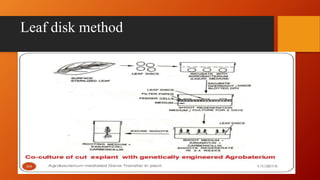
• Co-cultivation with tissue ex-plants
• In planta transformation
Infection through wound
• If agrobacterium that contains engineered ti-
plasmid are introduced by infection of wound in
stem then only cells with resulting crown gall will
posses the cloned gene
• This is of little value because introduction of new
gene into every cell of plant is needed
.
Leaf disk method
In planta transformation
• Imbibition of seeds in fresh culture of
Agrobacterium
• T-DNA become incorporated into plant genome
• Agrobacterium enter the seedlings during
germination
Killing the agrobacterium
• Mostly timentin is used to get rid of agrobacterium
• After 2 days of incubation , plant tissue is rinsed in
solution of timentin
• Also a combination of cefotaxime and timentin can
be used
Selection and regeneration
• Kanamycin, cytokinin and auxins are also added
in the medium
• Kanamycin allows only transformed plant cells to
divide
• Cytokinin induce shoot formation
• Auxins induces formation of roots
Advantages
• Natural mean of gene transfer more acceptable to
those who feel natural is best
• Capable of infecting intact plant, tissue or organ
• Stability of transferred gene is excellent ,found to be
stable over many generations
Continue…
• Natural genetic engineer, manipulate host plant cell
effectively and efficiently
• Genes for oncogenes and opine synthesis are
easy to remove to generate disarmed t-DNA vector
• Relatively large length DNA fragments can be
transformed
Continue…
• Growing transformed roots at high density in liquid
culture has been explored as potential mean of
obtaining large amount of proteins from genes
cloned in plants
Limitations
• Time consuming
• Dicots are easy to transformed such as tomato,
potato ,peas but more difficult to obtain same result
with monocots
• Monocots lack efficient regeneration system
• Have low wound response (release of
acetosyringone)
Continue…
• This has been frustrating because monocots
contains more important plants as barley rice and
maize
• Despite limitations efficient method has devised to
transform monocots ,use of immature embryos as
ex-plant
thank you

agrobacterium transformation

  • 1.
  • 2.
    Introduction To GeneticTransformation • It is the process of transferring foreign gene. • Natural process seen in bacteria. • Two methods 1. Direct Method 2.Indirect Method
  • 3.
    Continue… • Direct methodinvolves Electroporation, Microprojectile etc. • Indirect method i.e. Agrobacterium mediated gene transformation
  • 4.
    General Introduction OfAgrobacterium • Round shaped gram negative bacteria. • Mostly found in soil • It causes disease in plants such as crown gall and hairy roots mostly in dicot plants
  • 6.
    Classification of agrobacterium •On basis of pathogenicity I. Agrobacterium tumefaciens- crown gall II. Agrobacterium rhyzogenes- hairy root III. Agrobacterium radiobacter- avirulent
  • 7.
    History • Smith andTownsend(1907)- said bacteria cause crown gall disease • Brown and stonier(1958)- proposed not whole bacteria but some parts of it cause disease • Zenen (1974)- noted virulent strain agrobacterium tumefaciens • Chilton (1977)- reported Ti and Ri plasmids
  • 8.
    Ti-plasmid • The abilityof bacteria to cause disease is associated with Ti-plasmid • It is a large plasmid (grater than 200kb) that carries gene involved in infective process • Part of plasmid is incorporated into plant chromosomal DNA
  • 9.
    Continue… • this segment,called T-DNA is 25-30kb in size • Contains eight genes that are expressed in plant cell and responsible for cancerous properties of host cell • Also direct synthesis of opines • In short, Agrobacterium transform the cell for its own purposes
  • 10.
    The Ri plasmid •Ri plasmids are present in agrobacterium rhizogenes • Ri and Ti plasmid are very similar except transfer of T-DNA from an Ri plasmid to plant result in hairy root disease typified
  • 11.
    Vector for transformation •Agrobacterium serve as a vector to transform plant cells • The bacteria can be manipulated in such a way that specific DNA sequences, along with antibiotic resistance genes, promoter sequences, and reporter genes, can be spliced into the T-DNA region of the plasmid and transferred to the plant genome
  • 12.
  • 13.
    Manipulation of plasmid •Large size of plasmid makes manipulation of interested gene very difficult (unique restriction site is impossibility) • Novel strategies have developed like I. Binary vector strategy II. Co-integration strategy
  • 16.
    Basic protocol foragrobacterium mediated transformation • Identify suitable plant • Transformation with agrobacterium • Kill the agrobacterium • Selection • Regeneration
  • 17.
    Methods of agrobacteriumgene transfer • Infection through wound • Co-cultivation with tissue ex-plants • In planta transformation
  • 18.
    Infection through wound •If agrobacterium that contains engineered ti- plasmid are introduced by infection of wound in stem then only cells with resulting crown gall will posses the cloned gene • This is of little value because introduction of new gene into every cell of plant is needed
  • 20.
  • 21.
  • 22.
    In planta transformation •Imbibition of seeds in fresh culture of Agrobacterium • T-DNA become incorporated into plant genome • Agrobacterium enter the seedlings during germination
  • 23.
    Killing the agrobacterium •Mostly timentin is used to get rid of agrobacterium • After 2 days of incubation , plant tissue is rinsed in solution of timentin • Also a combination of cefotaxime and timentin can be used
  • 24.
    Selection and regeneration •Kanamycin, cytokinin and auxins are also added in the medium • Kanamycin allows only transformed plant cells to divide • Cytokinin induce shoot formation • Auxins induces formation of roots
  • 25.
    Advantages • Natural meanof gene transfer more acceptable to those who feel natural is best • Capable of infecting intact plant, tissue or organ • Stability of transferred gene is excellent ,found to be stable over many generations
  • 26.
    Continue… • Natural geneticengineer, manipulate host plant cell effectively and efficiently • Genes for oncogenes and opine synthesis are easy to remove to generate disarmed t-DNA vector • Relatively large length DNA fragments can be transformed
  • 27.
    Continue… • Growing transformedroots at high density in liquid culture has been explored as potential mean of obtaining large amount of proteins from genes cloned in plants
  • 28.
    Limitations • Time consuming •Dicots are easy to transformed such as tomato, potato ,peas but more difficult to obtain same result with monocots • Monocots lack efficient regeneration system • Have low wound response (release of acetosyringone)
  • 29.
    Continue… • This hasbeen frustrating because monocots contains more important plants as barley rice and maize • Despite limitations efficient method has devised to transform monocots ,use of immature embryos as ex-plant
  • 30.