User Stories Applied:
For Agile Software Development
               –
 Ch 8. Estimating User Stories

      Chen Jing Fung @iii
          2011/6/20
             Ref: How to write, gather ideas,
                     http://fungsiong.blogspot.com/
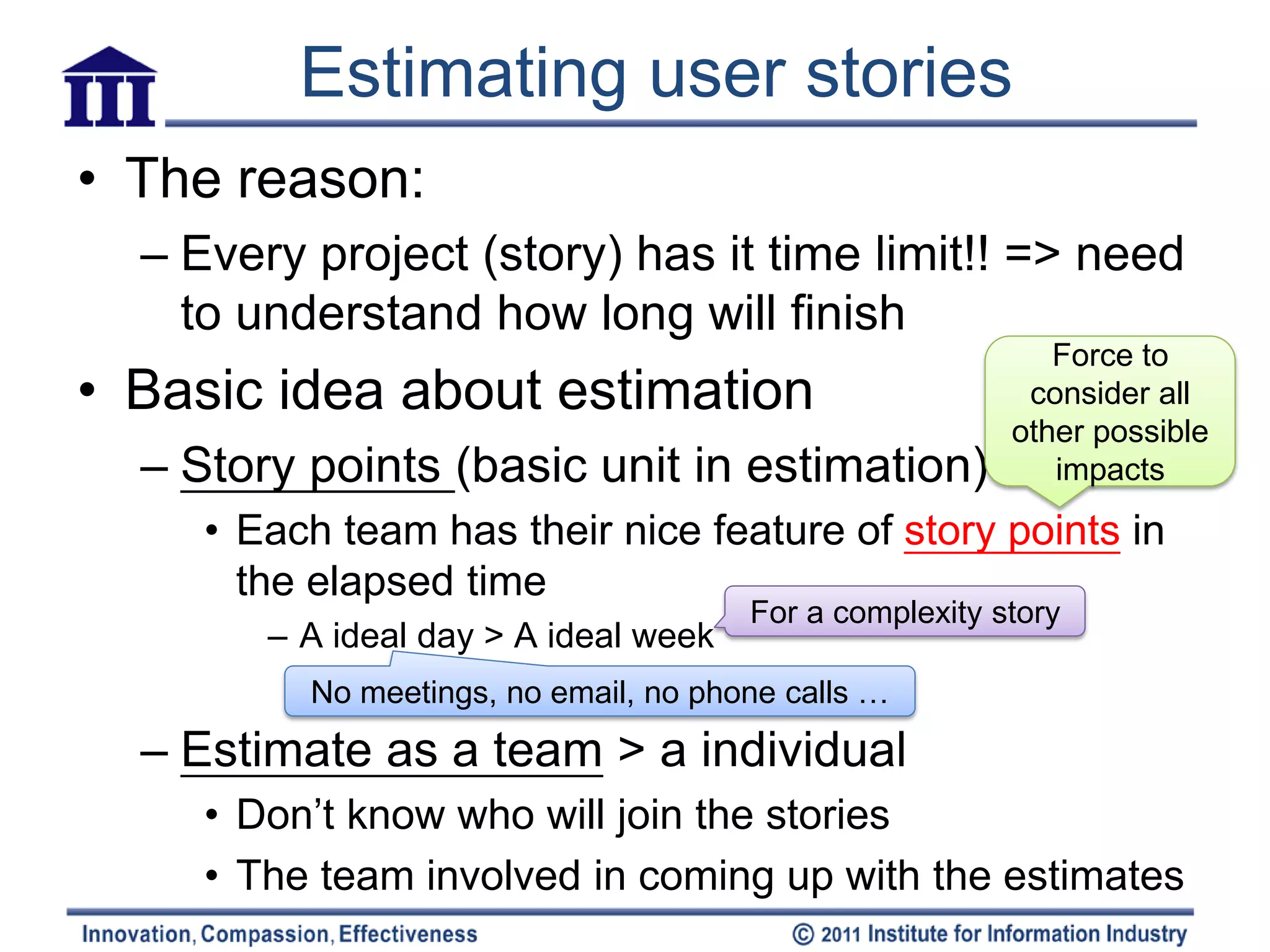
Estimating user stories
• The reason:
  – Every project (story) has it time limit!! => need
    to understand how long will finish
                                                            Force to
• Basic idea about estimation                             consider all
                                                         other possible
  – Story points (basic unit in estimation)                 impacts

     • Each team has their nice feature of story points in
       the elapsed time
                                       For a complexity story
        – A ideal day > A ideal week
          No meetings, no email, no phone calls …
  – Estimate as a team > a individual
     • Don’t know who will join the stories
     • The team involved in coming up with the estimates
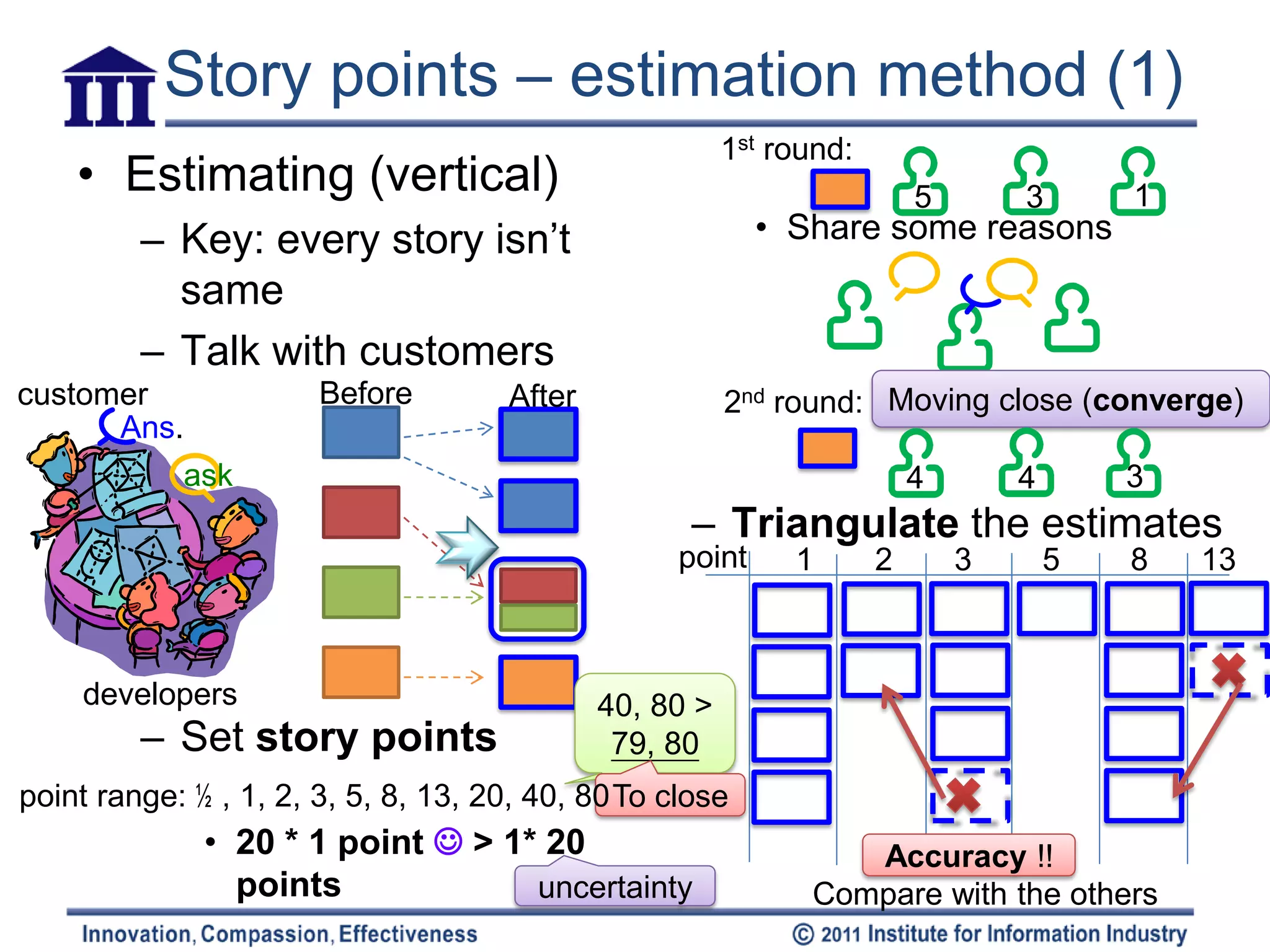
Story points – estimation method (1)
                                                        1st round:
    • Estimating (vertical)                                              5       3       1
         – Key: every story isn’t                          • Share some reasons
           same
         – Talk with customers
customer               Before        After              2nd round: Moving close (converge)
      Ans.
            ask                                                          4       4       3
                                                    – Triangulate the estimates
                                                   point     1       2       3       5   8   13


    developers                               40, 80 >
         – Set story points                   79, 80
point range: ½ , 1, 2, 3, 5, 8, 13, 20, 40, 80 To close
              • 20 * 1 point  > 1* 20                           Accuracy !!
                points             uncertainty                Compare with the others
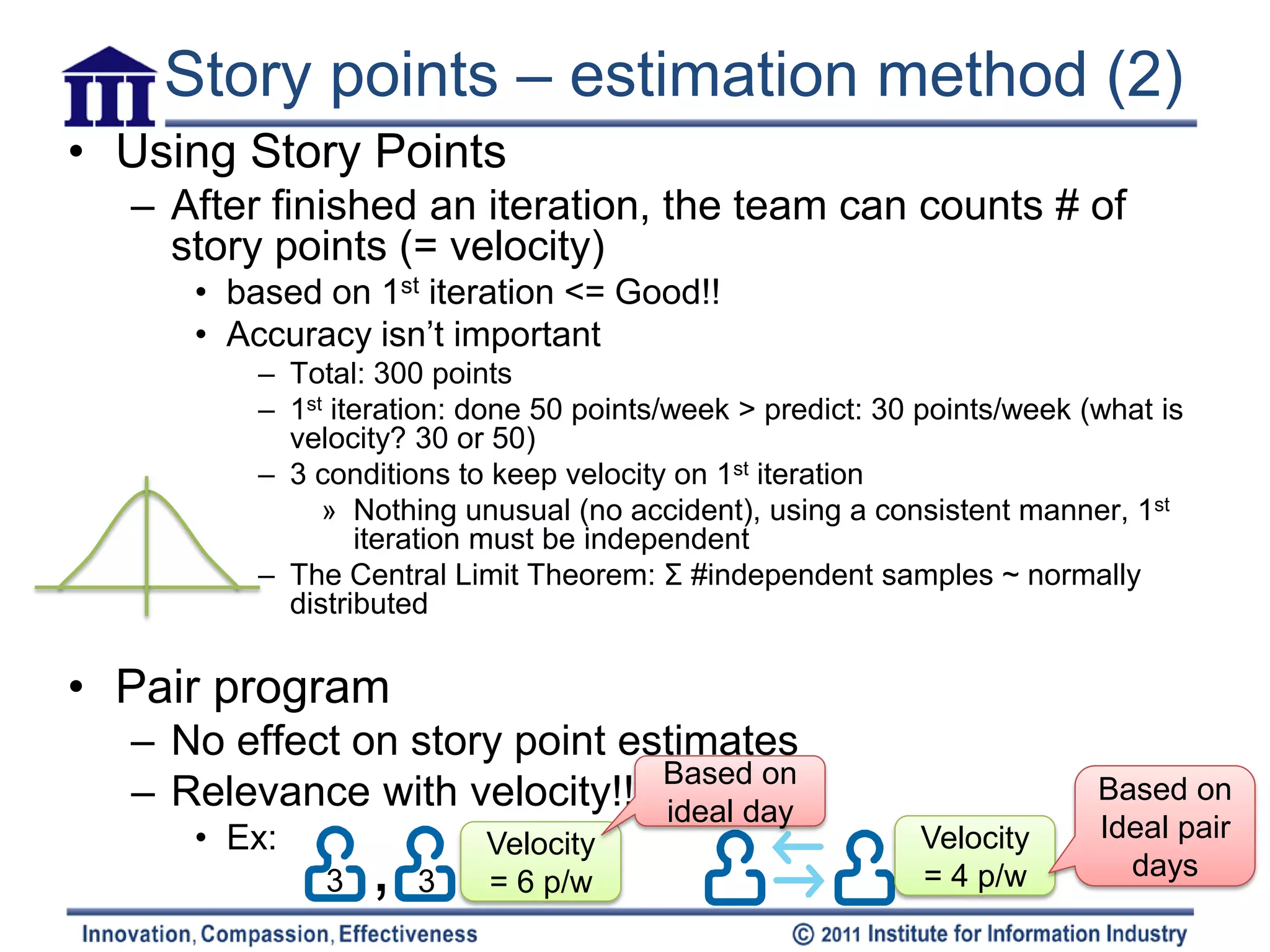
Story points – estimation method (2)
• Using Story Points
  – After finished an iteration, the team can counts # of
    story points (= velocity)
     • based on 1st iteration <= Good!!
     • Accuracy isn’t important
         – Total: 300 points
         – 1st iteration: done 50 points/week > predict: 30 points/week (what is
           velocity? 30 or 50)
         – 3 conditions to keep velocity on 1st iteration
              » Nothing unusual (no accident), using a consistent manner, 1st
                 iteration must be independent
         – The Central Limit Theorem: Σ #independent samples ~ normally
           distributed

• Pair program
  – No effect on story point estimates
                               Based on
  – Relevance with velocity!! ideal day                                  Based on
     • Ex:                                                 Velocity      Ideal pair
                          Velocity
              3   ,   3   = 6 p/w                          = 4 p/w         days
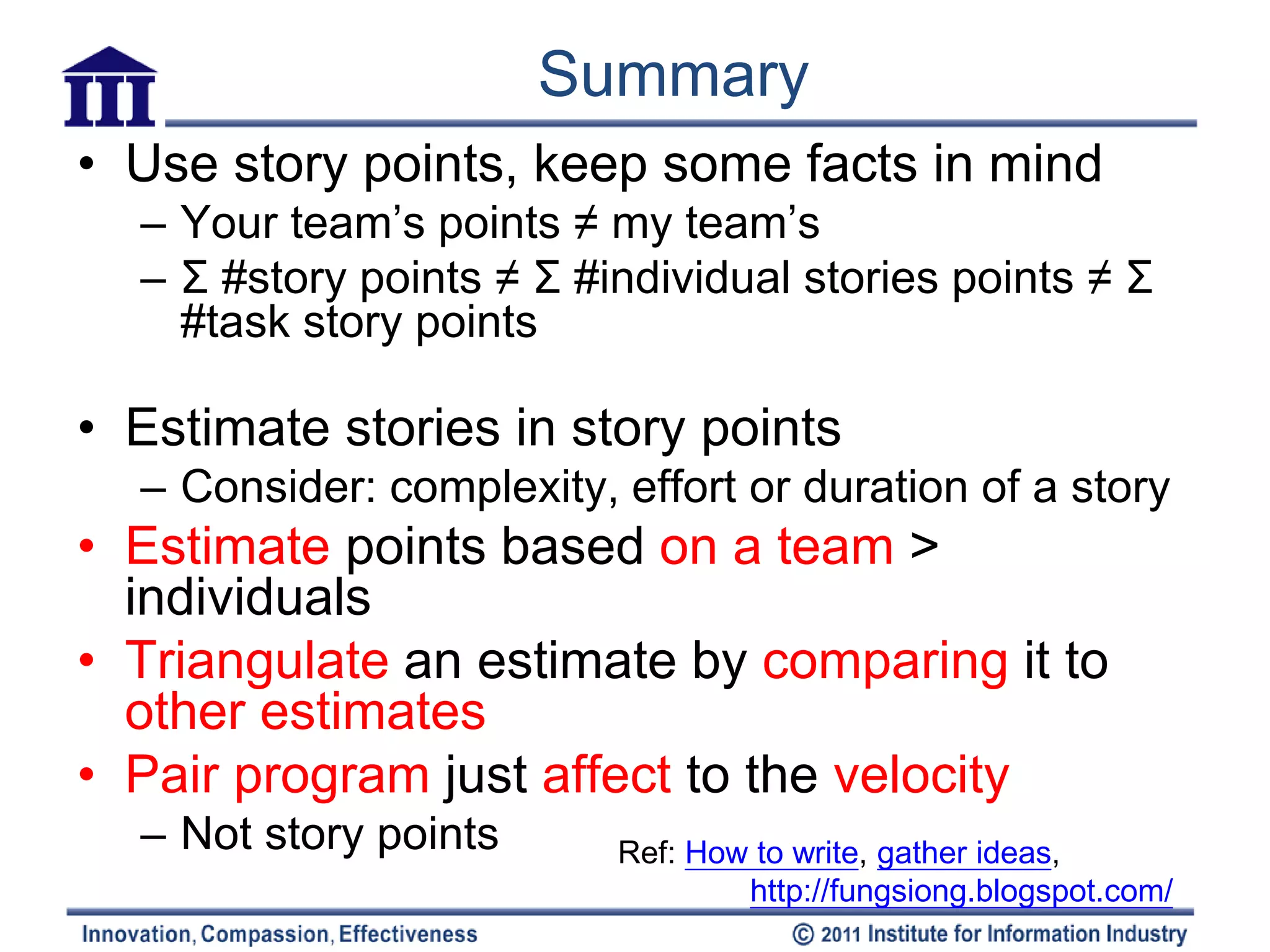
Summary
• Use story points, keep some facts in mind
  – Your team’s points ≠ my team’s
  – Σ #story points ≠ Σ #individual stories points ≠ Σ
    #task story points

• Estimate stories in story points
  – Consider: complexity, effort or duration of a story
• Estimate points based on a team >
  individuals
• Triangulate an estimate by comparing it to
  other estimates
• Pair program just affect to the velocity
  – Not story points      Ref: How to write, gather ideas,
                                  http://fungsiong.blogspot.com/

Agile estimating user stories

  • 1.
    User Stories Applied: ForAgile Software Development – Ch 8. Estimating User Stories Chen Jing Fung @iii 2011/6/20 Ref: How to write, gather ideas, http://fungsiong.blogspot.com/
  • 2.
    Estimating user stories •The reason: – Every project (story) has it time limit!! => need to understand how long will finish Force to • Basic idea about estimation consider all other possible – Story points (basic unit in estimation) impacts • Each team has their nice feature of story points in the elapsed time For a complexity story – A ideal day > A ideal week No meetings, no email, no phone calls … – Estimate as a team > a individual • Don’t know who will join the stories • The team involved in coming up with the estimates
  • 3.
    Story points –estimation method (1) 1st round: • Estimating (vertical) 5 3 1 – Key: every story isn’t • Share some reasons same – Talk with customers customer Before After 2nd round: Moving close (converge) Ans. ask 4 4 3 – Triangulate the estimates point 1 2 3 5 8 13 developers 40, 80 > – Set story points 79, 80 point range: ½ , 1, 2, 3, 5, 8, 13, 20, 40, 80 To close • 20 * 1 point  > 1* 20 Accuracy !! points uncertainty Compare with the others
  • 4.
    Story points –estimation method (2) • Using Story Points – After finished an iteration, the team can counts # of story points (= velocity) • based on 1st iteration <= Good!! • Accuracy isn’t important – Total: 300 points – 1st iteration: done 50 points/week > predict: 30 points/week (what is velocity? 30 or 50) – 3 conditions to keep velocity on 1st iteration » Nothing unusual (no accident), using a consistent manner, 1st iteration must be independent – The Central Limit Theorem: Σ #independent samples ~ normally distributed • Pair program – No effect on story point estimates Based on – Relevance with velocity!! ideal day Based on • Ex: Velocity Ideal pair Velocity 3 , 3 = 6 p/w = 4 p/w days
  • 5.
    Summary • Use storypoints, keep some facts in mind – Your team’s points ≠ my team’s – Σ #story points ≠ Σ #individual stories points ≠ Σ #task story points • Estimate stories in story points – Consider: complexity, effort or duration of a story • Estimate points based on a team > individuals • Triangulate an estimate by comparing it to other estimates • Pair program just affect to the velocity – Not story points Ref: How to write, gather ideas, http://fungsiong.blogspot.com/