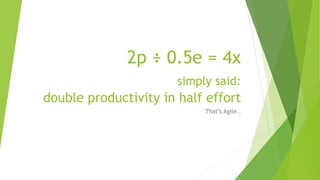
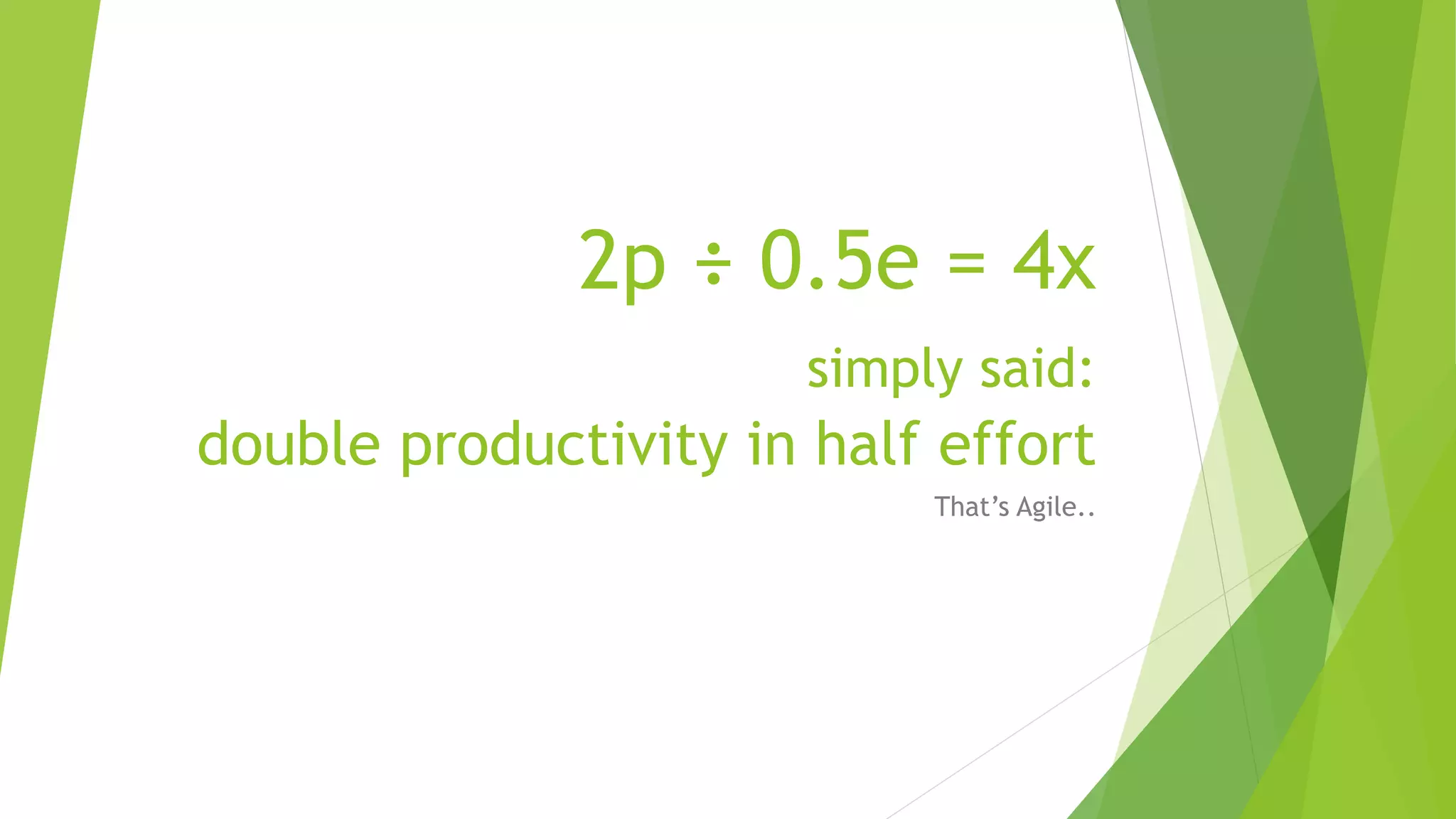
2p ÷ 0.5e = 4x
simply said:
double productivity in half effort
That’s Agile..
Topic: Agile Planning and Estimation
Agenda:
 Importance of Planning and Planning Levels
 Bird’s Eye view of The Agile Lifecycle and Agile Team
 Agile Planning and Estimating Principles
 Levels of Agile Requirements, Estimating and Sizing Units
 Estimation Methods and How to Size points
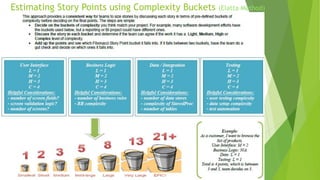
 Complexity Bucket method
 Sample and Examples
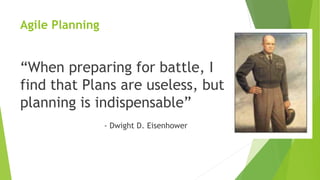
Agile Planning
“When preparing for battle, I
find that Plans are useless, but
planning is indispensable”
- Dwight D. Eisenhower
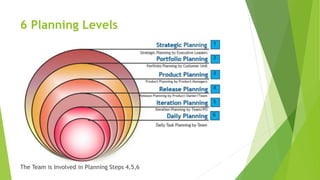
6 Planning Levels
The Team is Involved in Planning Steps 4,5,6
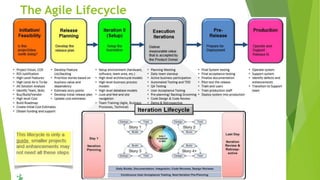
The Agile Lifecycle
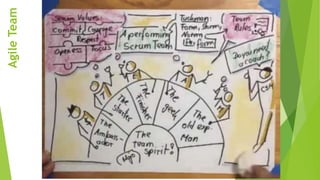
AgileTeam
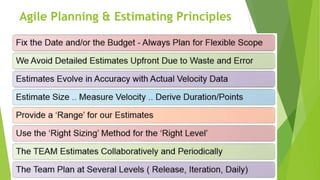
Agile Planning & Estimating Principles
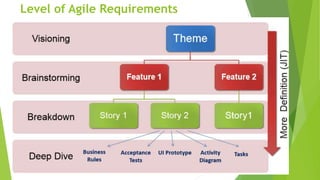
Level of Agile Requirements
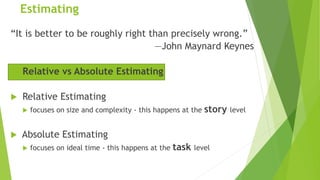
Estimating
“It is better to be roughly right than precisely wrong.”
—John Maynard Keynes
Relative vs Absolute Estimating
 Relative Estimating
 focuses on size and complexity - this happens at the story level
 Absolute Estimating
 focuses on ideal time - this happens at the task level
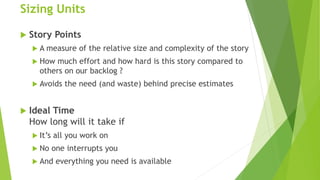
Sizing Units
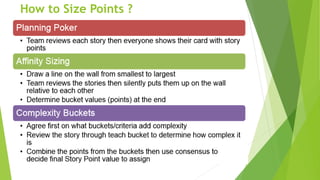
 Story Points
 A measure of the relative size and complexity of the story
 How much effort and how hard is this story compared to
others on our backlog ?
 Avoids the need (and waste) behind precise estimates
 Ideal Time
How long will it take if
 It’s all you work on
 No one interrupts you
 And everything you need is available
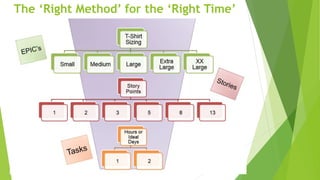
The ‘Right Method’ for the ‘Right Time’
How to Size Points ?
Estimating Story Points using Complexity Buckets (Elatta Method)
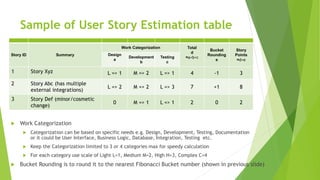
Sample of User Story Estimation table
 Work Categorization
 Categorization can be based on specific needs e.g. Design, Development, Testing, Documentation
or it could be User Interface, Business Logic, Database, Integration, Testing etc.
 Keep the Categorization limited to 3 or 4 categories max for speedy calculation
 For each category use scale of Light L=1, Medium M=2, High H=3, Complex C=4
 Bucket Rounding is to round it to the nearest Fibonacci Bucket number (shown in previous slide)
Story ID Summary
Work Categorization Total
d
=a+b+c
Bucket
Rounding
e
Story
Points
=d+e
Design
a
Development
b
Testing
c
1 Story Xyz L => 1 M => 2 L => 1 4 -1 3
2 Story Abc (has multiple
external integrations)
L => 2 M => 2 L => 3 7 +1 8
3 Story Def (minor/cosmetic
change)
0 M => 1 L => 1 2 0 2
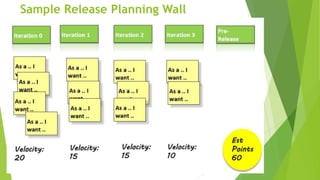
Sample Release Planning Wall
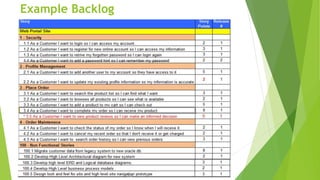
Example Backlog
References
 Mike Cohn’s video on Agile Estimating (available on youtube)
 Sally Elatta’s video on Agile Estimating and Planning (available on youtube)
Let’s get started..
Manish Agrawal
eManish@gmail.com
eManish

Agile Planning and Estimation

  • 1.
    2p ÷ 0.5e= 4x simply said: double productivity in half effort That’s Agile..
  • 2.
    Topic: Agile Planningand Estimation Agenda:  Importance of Planning and Planning Levels  Bird’s Eye view of The Agile Lifecycle and Agile Team  Agile Planning and Estimating Principles  Levels of Agile Requirements, Estimating and Sizing Units  Estimation Methods and How to Size points  Complexity Bucket method  Sample and Examples
  • 3.
    Agile Planning “When preparingfor battle, I find that Plans are useless, but planning is indispensable” - Dwight D. Eisenhower
  • 4.
    6 Planning Levels TheTeam is Involved in Planning Steps 4,5,6
  • 5.
  • 6.
  • 7.
    Agile Planning &Estimating Principles
  • 8.
    Level of AgileRequirements
  • 9.
    Estimating “It is betterto be roughly right than precisely wrong.” —John Maynard Keynes Relative vs Absolute Estimating  Relative Estimating  focuses on size and complexity - this happens at the story level  Absolute Estimating  focuses on ideal time - this happens at the task level
  • 10.
    Sizing Units  StoryPoints  A measure of the relative size and complexity of the story  How much effort and how hard is this story compared to others on our backlog ?  Avoids the need (and waste) behind precise estimates  Ideal Time How long will it take if  It’s all you work on  No one interrupts you  And everything you need is available
  • 11.
    The ‘Right Method’for the ‘Right Time’
  • 12.
    How to SizePoints ?
  • 13.
    Estimating Story Pointsusing Complexity Buckets (Elatta Method)
  • 14.
    Sample of UserStory Estimation table  Work Categorization  Categorization can be based on specific needs e.g. Design, Development, Testing, Documentation or it could be User Interface, Business Logic, Database, Integration, Testing etc.  Keep the Categorization limited to 3 or 4 categories max for speedy calculation  For each category use scale of Light L=1, Medium M=2, High H=3, Complex C=4  Bucket Rounding is to round it to the nearest Fibonacci Bucket number (shown in previous slide) Story ID Summary Work Categorization Total d =a+b+c Bucket Rounding e Story Points =d+e Design a Development b Testing c 1 Story Xyz L => 1 M => 2 L => 1 4 -1 3 2 Story Abc (has multiple external integrations) L => 2 M => 2 L => 3 7 +1 8 3 Story Def (minor/cosmetic change) 0 M => 1 L => 1 2 0 2
  • 15.
  • 16.
  • 17.
    References  Mike Cohn’svideo on Agile Estimating (available on youtube)  Sally Elatta’s video on Agile Estimating and Planning (available on youtube)
  • 18.
    Let’s get started.. ManishAgrawal eManish@gmail.com eManish

Editor's Notes

  • #11 Elapsed Time vs Ideal Time e.g. Basket ball match 40 min. game but runs for 2 hrs