1
BY:
Dr, WALAA SALAH
MANAA
SPECIALEST OF PEDIATRIC
‫ـستشفى‬‫م‬‫ـفر‬‫ك‬ ‫ـيات‬‫م‬‫ح‬‫ـيخ‬‫ش‬‫ال‬
Approach to Child with AFP
2
4
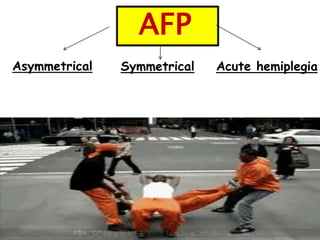
Asymmetrical Symmetrical Acute hemiplegia
5
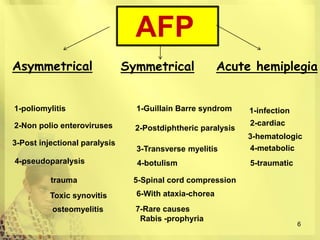
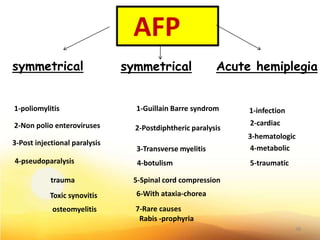
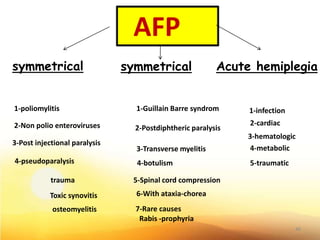
AFP
Asymmetrical
2-Non polio enteroviruses
1-poliomylitis
3-Post injectional paralysis
4-pseudoparalysis
trauma
Toxic synovitis
osteomyelitis
Symmetrical
1-Guillain Barre syndrom
2-Postdiphtheric paralysis
4-botulism
3-Transverse myelitis
5-Spinal cord compression
6-With ataxia-chorea
7-Rare causes
Rabis -prophyria
Acute hemiplegia
1-infection
2-cardiac
3-hematologic
4-metabolic
5-traumatic
6
AFP
7
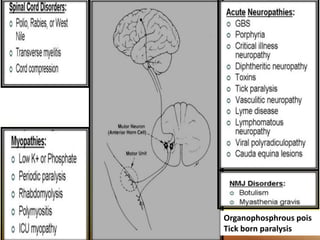
Organophosphrous pois
Tick born paralysis
8
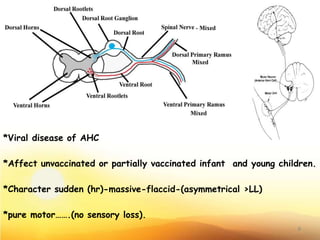
*Viral disease of AHC
*Affect unvaccinated or partially vaccinated infant and young children.
*Character sudden (hr)-massive-flaccid-(asymmetrical >LL)
*pure motor…….(no sensory loss).
9
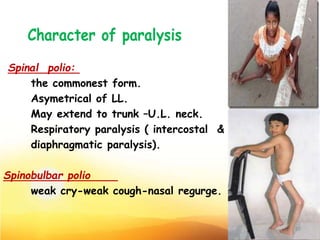
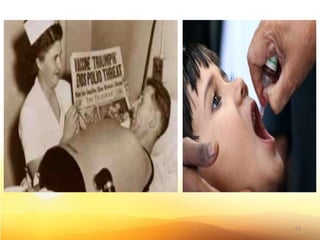
Spinal polio:
the commonest form.
Asymetrical of LL.
May extend to trunk –U.L. neck.
Respiratory paralysis ( intercostal &
diaphragmatic paralysis).
Spinobulbar polio
weak cry-weak cough-nasal regurge.
10
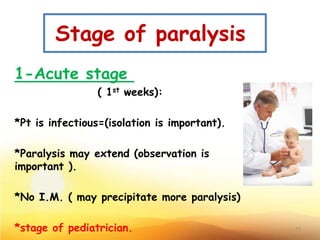
Stage of paralysis
1-Acute stage
( 1st weeks):
*Pt is infectious=(isolation is important).
*Paralysis may extend (observation is
important ).
*No I.M. ( may precipitate more paralysis)
*stage of pediatrician. 11
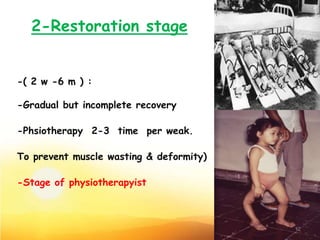
2-Restoration stage
-( 2 w -6 m ) :
-Gradual but incomplete recovery
-Phsiotherapy 2-3 time per weak.
To prevent muscle wasting & deformity)
-Stage of physiotherapyist
12
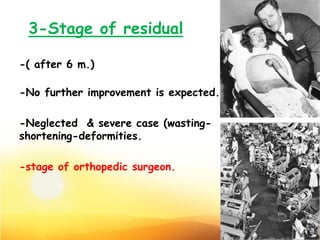
3-Stage of residual
-( after 6 m.)
-No further improvement is expected.
-Neglected & severe case (wasting-
shortening-deformities.
-stage of orthopedic surgeon.
13
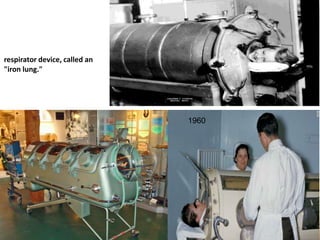
1960
respirator device, called an
"iron lung."
14
15
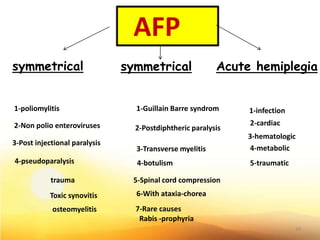
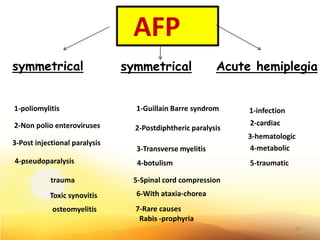
symmetrical
2-Non polio enteroviruses
1-poliomylitis
3-Post injectional paralysis
4-pseudoparalysis
trauma
Toxic synovitis
osteomyelitis
symmetrical
1-Guillain Barre syndrom
2-Postdiphtheric paralysis
4-botulism
3-Transverse myelitis
5-Spinal cord compression
6-With ataxia-chorea
7-Rare causes
Rabis -prophyria
Acute hemiplegia
1-infection
2-cardiac
3-hematologic
4-metabolic
5-traumatic
16
AFP
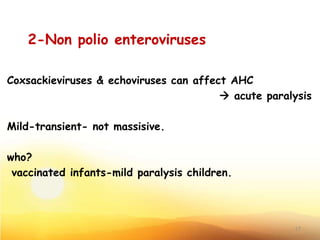
2-Non polio enteroviruses
Coxsackieviruses & echoviruses can affect AHC
 acute paralysis
Mild-transient- not massisive.
who?
vaccinated infants-mild paralysis children.
17
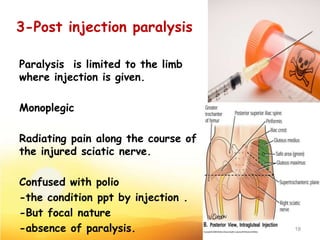
3-Post injection paralysis
Paralysis is limited to the limb
where injection is given.
Monoplegic
Radiating pain along the course of
the injured sciatic nerve.
Confused with polio
-the condition ppt by injection .
-But focal nature
-absence of paralysis. 18
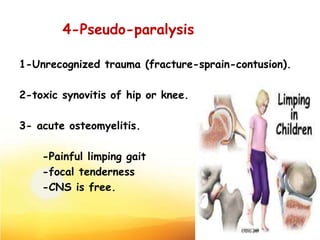
4-Pseudo-paralysis
1-Unrecognized trauma (fracture-sprain-contusion).
2-toxic synovitis of hip or knee.
3- acute osteomyelitis.
-Painful limping gait
-focal tenderness
-CNS is free.
19
symmetrical
2-Non polio enteroviruses
1-poliomylitis
3-Post injectional paralysis
4-pseudoparalysis
trauma
Toxic synovitis
osteomyelitis
symmetrical
1-Guillain Barre syndrom
2-Postdiphtheric paralysis
4-botulism
3-Transverse myelitis
5-Spinal cord compression
6-With ataxia-chorea
7-Rare causes
Rabis -prophyria
Acute hemiplegia
1-infection
2-cardiac
3-hematologic
4-metabolic
5-traumatic
20
AFP
21
22
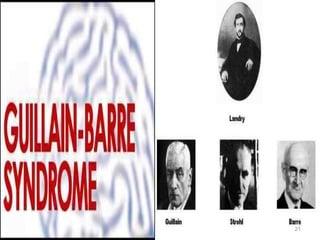
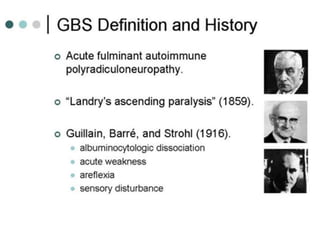
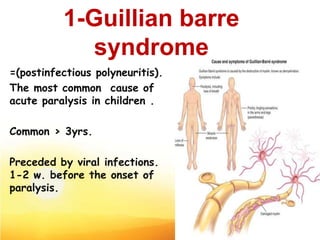
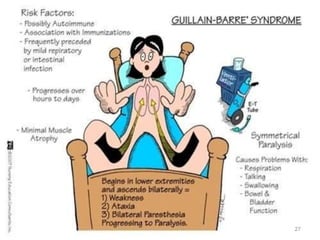
1-Guillian barre
syndrome
=(postinfectious polyneuritis).
The most common cause of
acute paralysis in children .
Common > 3yrs.
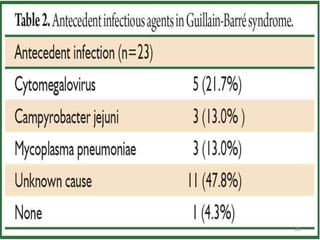
Preceded by viral infections.
1-2 w. before the onset of
paralysis.
23
Character of paralysis
Start in LL few days ascend to trunk- UL
=tetraplegia.
-Affected limb is flaccid + lost tendon reflex.
-Respiratory paralysis may occur & if ,pt may
need mechanical ventilations for weeks.
-Bulbar paralysis 50 % & if, aspiration and
pneumonia.
-Atypical descending paralysis may occur…DD
with botulism
24
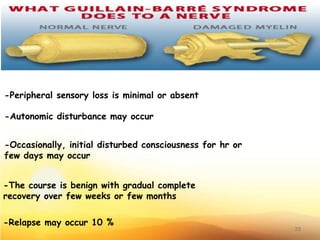
-Peripheral sensory loss is minimal or absent
-Autonomic disturbance may occur
-Occasionally, initial disturbed consciousness for hr or
few days may occur
-The course is benign with gradual complete
recovery over few weeks or few months
-Relapse may occur 10 %
25
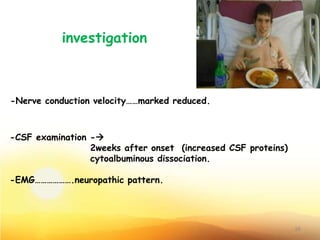
investigation
-Nerve conduction velocity……marked reduced.
-CSF examination -
2weeks after onset (increased CSF proteins)
cytoalbuminous dissociation.
-EMG……………….neuropathic pattern.
26
27
28
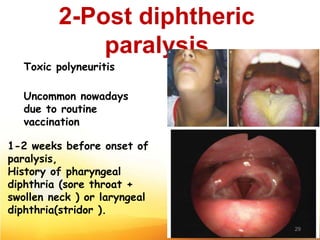
2-Post diphtheric
paralysis
Toxic polyneuritis
Uncommon nowadays
due to routine
vaccination
1-2 weeks before onset of
paralysis,
History of pharyngeal
diphthria (sore throat +
swollen neck ) or laryngeal
diphthria(stridor ).
29
Character of paralysis
Descending
Ocular & bulbar  1-2 w peripheral paralysis
Purely motor & transient.
Course is benign recovery occur
over few weeks
Mimic GBS but ?
Initial bulbar involvement + absence
of sensory involvement
30
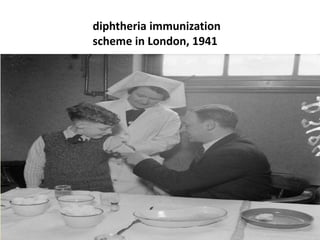
diphtheria immunization
scheme in London, 1941
31
32
3-
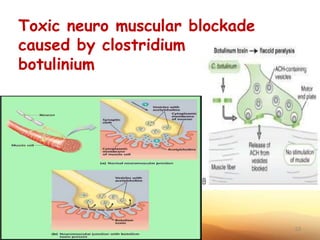
Toxic neuro muscular blockade
caused by clostridium
botulinium
33
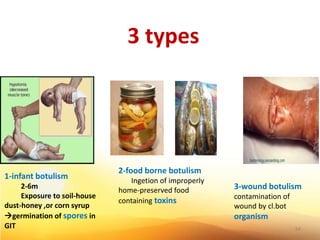
3 types
1-infant botulism
2-6m
Exposure to soil-house
dust-honey ,or corn syrup
germination of spores in
GIT
2-food borne botulism
Ingetion of improperly
home-preserved food
containing toxins
3-wound botulism
contamination of
wound by cl.bot
organism
34
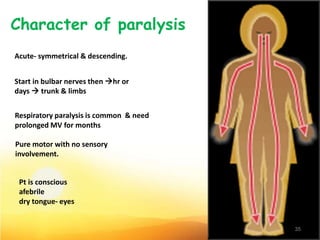
Acute- symmetrical & descending.
Start in bulbar nerves then hr or
days  trunk & limbs
Respiratory paralysis is common & need
prolonged MV for months
Pure motor with no sensory
involvement.
Pt is conscious
afebrile
dry tongue- eyes
35
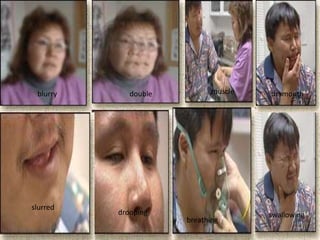
drymouth
slurred
double
breathing
swallowingdrooping
blurry muscle
36
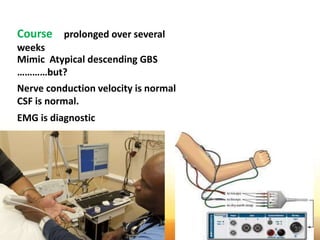
Course prolonged over several
weeks
Mimic Atypical descending GBS
…………but?
Nerve conduction velocity is normal
CSF is normal.
EMG is diagnostic
37
symmetrical
2-Non polio enteroviruses
1-poliomylitis
3-Post injectional paralysis
4-pseudoparalysis
trauma
Toxic synovitis
osteomyelitis
symmetrical
1-Guillain Barre syndrom
2-Postdiphtheric paralysis
4-botulism
3-Transverse myelitis
5-Spinal cord compression
6-With ataxia-chorea
7-Rare causes
Rabis -prophyria
Acute hemiplegia
1-infection
2-cardiac
3-hematologic
4-metabolic
5-traumatic
38
AFP
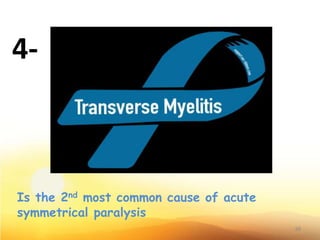
Is the 2nd most common cause of acute
symmetrical paralysis
39
4-
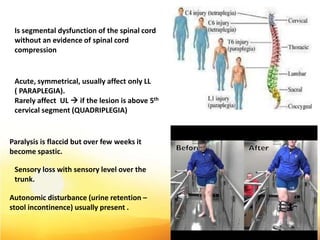
Is segmental dysfunction of the spinal cord
without an evidence of spinal cord
compression
Acute, symmetrical, usually affect only LL
( PARAPLEGIA).
Rarely affect UL  if the lesion is above 5th
cervical segment (QUADRIPLEGIA)
Paralysis is flaccid but over few weeks it
become spastic.
Sensory loss with sensory level over the
trunk.
Autonomic disturbance (urine retention –
stool incontinence) usually present .
40
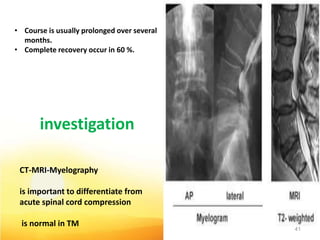
• Course is usually prolonged over several
months.
• Complete recovery occur in 60 %.
CT-MRI-Myelography
is important to differentiate from
acute spinal cord compression
is normal in TM
41
investigation
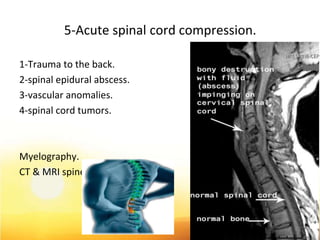
5-Acute spinal cord compression.
1-Trauma to the back.
2-spinal epidural abscess.
3-vascular anomalies.
4-spinal cord tumors.
Myelography.
CT & MRI spine
42
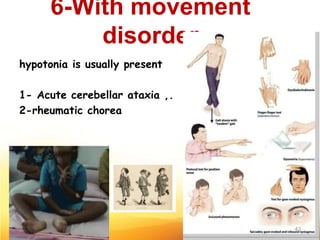
6-With movement
disorder
hypotonia is usually present
1- Acute cerebellar ataxia ,.
2-rheumatic chorea
43
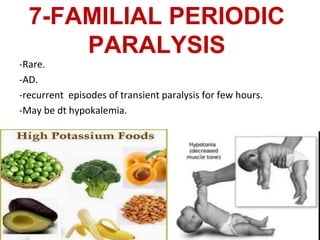
7-FAMILIAL PERIODIC
PARALYSIS
-Rare.
-AD.
-recurrent episodes of transient paralysis for few hours.
-May be dt hypokalemia.
44
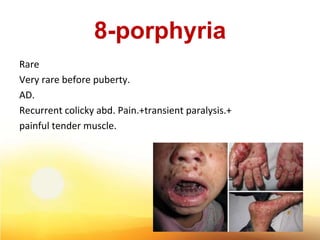
8-porphyria
Rare
Very rare before puberty.
AD.
Recurrent colicky abd. Pain.+transient paralysis.+
painful tender muscle.
45
symmetrical
2-Non polio enteroviruses
1-poliomylitis
3-Post injectional paralysis
4-pseudoparalysis
trauma
Toxic synovitis
osteomyelitis
symmetrical
1-Guillain Barre syndrom
2-Postdiphtheric paralysis
4-botulism
3-Transverse myelitis
5-Spinal cord compression
6-With ataxia-chorea
7-Rare causes
Rabis -prophyria
Acute hemiplegia
1-infection
2-cardiac
3-hematologic
4-metabolic
5-traumatic
46
AFP
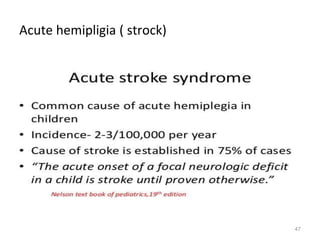
Acute hemipligia ( strock)
47
AFP

AFP

  • 1.
    1 BY: Dr, WALAA SALAH MANAA SPECIALESTOF PEDIATRIC ‫ـستشفى‬‫م‬‫ـفر‬‫ك‬ ‫ـيات‬‫م‬‫ح‬‫ـيخ‬‫ش‬‫ال‬ Approach to Child with AFP
  • 2.
  • 3.
  • 4.
  • 5.
    Asymmetrical 2-Non polio enteroviruses 1-poliomylitis 3-Postinjectional paralysis 4-pseudoparalysis trauma Toxic synovitis osteomyelitis Symmetrical 1-Guillain Barre syndrom 2-Postdiphtheric paralysis 4-botulism 3-Transverse myelitis 5-Spinal cord compression 6-With ataxia-chorea 7-Rare causes Rabis -prophyria Acute hemiplegia 1-infection 2-cardiac 3-hematologic 4-metabolic 5-traumatic 6 AFP
  • 6.
  • 7.
  • 8.
    *Viral disease ofAHC *Affect unvaccinated or partially vaccinated infant and young children. *Character sudden (hr)-massive-flaccid-(asymmetrical >LL) *pure motor…….(no sensory loss). 9
  • 9.
    Spinal polio: the commonestform. Asymetrical of LL. May extend to trunk –U.L. neck. Respiratory paralysis ( intercostal & diaphragmatic paralysis). Spinobulbar polio weak cry-weak cough-nasal regurge. 10
  • 10.
    Stage of paralysis 1-Acutestage ( 1st weeks): *Pt is infectious=(isolation is important). *Paralysis may extend (observation is important ). *No I.M. ( may precipitate more paralysis) *stage of pediatrician. 11
  • 11.
    2-Restoration stage -( 2w -6 m ) : -Gradual but incomplete recovery -Phsiotherapy 2-3 time per weak. To prevent muscle wasting & deformity) -Stage of physiotherapyist 12
  • 12.
    3-Stage of residual -(after 6 m.) -No further improvement is expected. -Neglected & severe case (wasting- shortening-deformities. -stage of orthopedic surgeon. 13
  • 13.
  • 14.
  • 15.
    symmetrical 2-Non polio enteroviruses 1-poliomylitis 3-Postinjectional paralysis 4-pseudoparalysis trauma Toxic synovitis osteomyelitis symmetrical 1-Guillain Barre syndrom 2-Postdiphtheric paralysis 4-botulism 3-Transverse myelitis 5-Spinal cord compression 6-With ataxia-chorea 7-Rare causes Rabis -prophyria Acute hemiplegia 1-infection 2-cardiac 3-hematologic 4-metabolic 5-traumatic 16 AFP
  • 16.
    2-Non polio enteroviruses Coxsackieviruses& echoviruses can affect AHC  acute paralysis Mild-transient- not massisive. who? vaccinated infants-mild paralysis children. 17
  • 17.
    3-Post injection paralysis Paralysisis limited to the limb where injection is given. Monoplegic Radiating pain along the course of the injured sciatic nerve. Confused with polio -the condition ppt by injection . -But focal nature -absence of paralysis. 18
  • 18.
    4-Pseudo-paralysis 1-Unrecognized trauma (fracture-sprain-contusion). 2-toxicsynovitis of hip or knee. 3- acute osteomyelitis. -Painful limping gait -focal tenderness -CNS is free. 19
  • 19.
    symmetrical 2-Non polio enteroviruses 1-poliomylitis 3-Postinjectional paralysis 4-pseudoparalysis trauma Toxic synovitis osteomyelitis symmetrical 1-Guillain Barre syndrom 2-Postdiphtheric paralysis 4-botulism 3-Transverse myelitis 5-Spinal cord compression 6-With ataxia-chorea 7-Rare causes Rabis -prophyria Acute hemiplegia 1-infection 2-cardiac 3-hematologic 4-metabolic 5-traumatic 20 AFP
  • 20.
  • 21.
  • 22.
    1-Guillian barre syndrome =(postinfectious polyneuritis). Themost common cause of acute paralysis in children . Common > 3yrs. Preceded by viral infections. 1-2 w. before the onset of paralysis. 23
  • 23.
    Character of paralysis Startin LL few days ascend to trunk- UL =tetraplegia. -Affected limb is flaccid + lost tendon reflex. -Respiratory paralysis may occur & if ,pt may need mechanical ventilations for weeks. -Bulbar paralysis 50 % & if, aspiration and pneumonia. -Atypical descending paralysis may occur…DD with botulism 24
  • 24.
    -Peripheral sensory lossis minimal or absent -Autonomic disturbance may occur -Occasionally, initial disturbed consciousness for hr or few days may occur -The course is benign with gradual complete recovery over few weeks or few months -Relapse may occur 10 % 25
  • 25.
    investigation -Nerve conduction velocity……markedreduced. -CSF examination - 2weeks after onset (increased CSF proteins) cytoalbuminous dissociation. -EMG……………….neuropathic pattern. 26
  • 26.
  • 27.
  • 28.
    2-Post diphtheric paralysis Toxic polyneuritis Uncommonnowadays due to routine vaccination 1-2 weeks before onset of paralysis, History of pharyngeal diphthria (sore throat + swollen neck ) or laryngeal diphthria(stridor ). 29
  • 29.
    Character of paralysis Descending Ocular& bulbar  1-2 w peripheral paralysis Purely motor & transient. Course is benign recovery occur over few weeks Mimic GBS but ? Initial bulbar involvement + absence of sensory involvement 30
  • 30.
  • 31.
  • 32.
    Toxic neuro muscularblockade caused by clostridium botulinium 33
  • 33.
    3 types 1-infant botulism 2-6m Exposureto soil-house dust-honey ,or corn syrup germination of spores in GIT 2-food borne botulism Ingetion of improperly home-preserved food containing toxins 3-wound botulism contamination of wound by cl.bot organism 34
  • 34.
    Acute- symmetrical &descending. Start in bulbar nerves then hr or days  trunk & limbs Respiratory paralysis is common & need prolonged MV for months Pure motor with no sensory involvement. Pt is conscious afebrile dry tongue- eyes 35
  • 35.
  • 36.
    Course prolonged overseveral weeks Mimic Atypical descending GBS …………but? Nerve conduction velocity is normal CSF is normal. EMG is diagnostic 37
  • 37.
    symmetrical 2-Non polio enteroviruses 1-poliomylitis 3-Postinjectional paralysis 4-pseudoparalysis trauma Toxic synovitis osteomyelitis symmetrical 1-Guillain Barre syndrom 2-Postdiphtheric paralysis 4-botulism 3-Transverse myelitis 5-Spinal cord compression 6-With ataxia-chorea 7-Rare causes Rabis -prophyria Acute hemiplegia 1-infection 2-cardiac 3-hematologic 4-metabolic 5-traumatic 38 AFP
  • 38.
    Is the 2ndmost common cause of acute symmetrical paralysis 39 4-
  • 39.
    Is segmental dysfunctionof the spinal cord without an evidence of spinal cord compression Acute, symmetrical, usually affect only LL ( PARAPLEGIA). Rarely affect UL  if the lesion is above 5th cervical segment (QUADRIPLEGIA) Paralysis is flaccid but over few weeks it become spastic. Sensory loss with sensory level over the trunk. Autonomic disturbance (urine retention – stool incontinence) usually present . 40
  • 40.
    • Course isusually prolonged over several months. • Complete recovery occur in 60 %. CT-MRI-Myelography is important to differentiate from acute spinal cord compression is normal in TM 41 investigation
  • 41.
    5-Acute spinal cordcompression. 1-Trauma to the back. 2-spinal epidural abscess. 3-vascular anomalies. 4-spinal cord tumors. Myelography. CT & MRI spine 42
  • 42.
    6-With movement disorder hypotonia isusually present 1- Acute cerebellar ataxia ,. 2-rheumatic chorea 43
  • 43.
    7-FAMILIAL PERIODIC PARALYSIS -Rare. -AD. -recurrent episodesof transient paralysis for few hours. -May be dt hypokalemia. 44
  • 44.
    8-porphyria Rare Very rare beforepuberty. AD. Recurrent colicky abd. Pain.+transient paralysis.+ painful tender muscle. 45
  • 45.
    symmetrical 2-Non polio enteroviruses 1-poliomylitis 3-Postinjectional paralysis 4-pseudoparalysis trauma Toxic synovitis osteomyelitis symmetrical 1-Guillain Barre syndrom 2-Postdiphtheric paralysis 4-botulism 3-Transverse myelitis 5-Spinal cord compression 6-With ataxia-chorea 7-Rare causes Rabis -prophyria Acute hemiplegia 1-infection 2-cardiac 3-hematologic 4-metabolic 5-traumatic 46 AFP
  • 46.