Staff	
  Development	
  in	
  Secondary	
  
 Schools	
  –	
  some	
  considera6ons	
  
  Lower	
  Mainland	
  Secondary	
  Literacy	
  
               Consultants	
  
     facilitated	
  by	
  Faye	
  Brownlie	
  
     BCELC	
  Webcast,	
  Nov.	
  26/09	
  (bcelc.ca)	
  
                 Faye	
  Brownlie	
  
     BCELC	
  Webcast,	
  Nov.	
  12/09	
  (bcelc.ca)	
  
           Linda	
  Kaser,	
  Judy	
  Halbert	
  
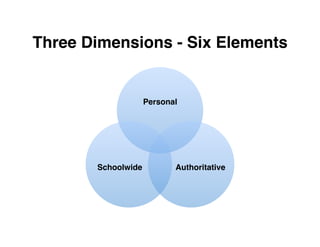
Three Dimensions - Six Elements!


                 Personal!


       Schoolwide!       Authoritative!
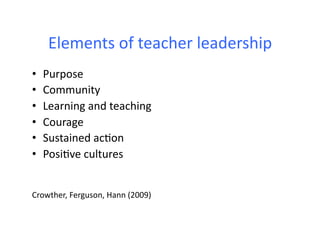
Elements	
  of	
  teacher	
  leadership	
  
•    Purpose	
  
•    Community	
  
•    Learning	
  and	
  teaching	
  
•    Courage	
  
•    Sustained	
  ac6on	
  
•    Posi6ve	
  cultures	


Crowther,	
  Ferguson,	
  Hann	
  (2009)	
  
Essential Lesson Components


•    Essen6al	
  ques6on/learning	
  inten6on/a	
  big	
  idea	
  
•    Open-­‐ended	
  strategies:	
  	
  connect-­‐process-­‐transform	
  
•    Differen6a6on	
  –	
  choice,	
  choice,	
  choice	
  
•    Assessment	
  for	
  learning	
  
•    Gradual	
  release	
  of	
  responsibility	
  

•  AXend	
  to	
  your	
  kids!	
  	
  Don’t	
  just	
  deliver!	
  
What	
  counts?	
  
•  Repe66on	
  over	
  6me-­‐leave	
  with	
  a	
  plan	
  and	
  return	
  and	
  
   discuss	
  the	
  plan	
  
•  Applica6on	
  –	
  in	
  class	
  work	
  
•  Teams	
  –	
  too	
  expensive	
  working	
  1:1	
  –	
  and	
  no	
  team	
  
   support	
  when	
  you	
  leave	
  
•  Demo	
  –	
  co-­‐teaching	
  –	
  observing	
  &	
  feedback	
  –	
  leaving	
  
   with	
  a	
  plan	
  
•  Reflec6on	
  –	
  descrip6ve	
  feedback	
  ques6ons	
  
•  Simplicity/manageability/op6ons	
  
•  Interac6on/movement/conversa6on	
  
•  Theory	
  into	
  prac6ce	
  
What	
  counts?	
  
•  Examine	
  the	
  teaching!	
  
•  Build	
  capacity	
  
•  Build	
  a	
  collabora6ve	
  culture	
  
Don’ts	
  
•  Just	
  assign	
  
•  Skip	
  guided	
  prac6ce	
  
•  Avoid	
  giving	
  feedback	
  
•  Ask	
  comprehension	
  ques6ons	
  
•  Assign	
  closed	
  vocabulary	
  tasks	
  	
  
•  Forget	
  about	
  what	
  you	
  believe	
  counts	
  in	
  teaching	
  
   –	
  your	
  mental	
  model	
  
•  Forget	
  to	
  form	
  a	
  rela6onship	
  with	
  your	
  students	
  
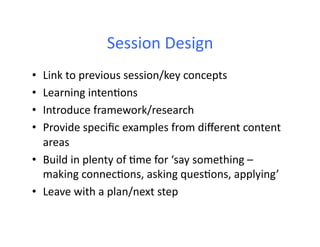
Session	
  Design	
  
•  Link	
  to	
  previous	
  session/key	
  concepts	
  
•  Learning	
  inten6ons	
  
•  Introduce	
  framework/research	
  
•  Provide	
  specific	
  examples	
  from	
  different	
  content	
  
   areas	
  
•  Build	
  in	
  plenty	
  of	
  6me	
  for	
  ‘say	
  something	
  –	
  
   making	
  connec6ons,	
  asking	
  ques6ons,	
  applying’	
  
•  Leave	
  with	
  a	
  plan/next	
  step	
  
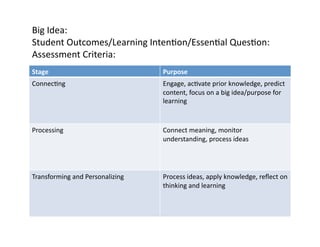
Big	
  Idea:	
  
Student	
  Outcomes/Learning	
  Inten6on/Essen6al	
  Ques6on:	
  
Assessment	
  Criteria:	
  
Stage	
                                    Purpose	
  
Connec6ng	
                                Engage,	
  ac6vate	
  prior	
  knowledge,	
  predict	
  
                                           content,	
  focus	
  on	
  a	
  big	
  idea/purpose	
  for	
  
                                           learning	


Processing	
                               Connect	
  meaning,	
  monitor	
  
                                           understanding,	
  process	
  ideas	


Transforming	
  and	
  Personalizing	
     Process	
  ideas,	
  apply	
  knowledge,	
  reflect	
  on	
  
                                           thinking	
  and	
  learning	
  
Structures	
  
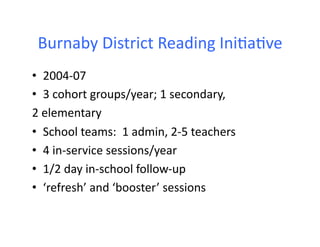
Burnaby	
  District	
  Reading	
  Ini6a6ve	
  
•  2004-­‐07	
  
•  3	
  cohort	
  groups/year;	
  1	
  secondary,	
  
2	
  elementary	
  
•  School	
  teams:	
  	
  1	
  admin,	
  2-­‐5	
  teachers	
  
•  4	
  in-­‐service	
  sessions/year	
  
•  1/2	
  day	
  in-­‐school	
  follow-­‐up	
  
•  ‘refresh’	
  and	
  ‘booster’	
  sessions	
  
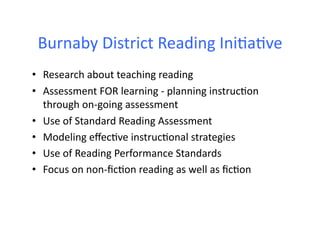
Burnaby	
  District	
  Reading	
  Ini6a6ve	
  
•  Research	
  about	
  teaching	
  reading	
  
•  Assessment	
  FOR	
  learning	
  -­‐	
  planning	
  instruc6on	
  
   through	
  on-­‐going	
  assessment	
  
•  Use	
  of	
  Standard	
  Reading	
  Assessment	
  
•  Modeling	
  effec6ve	
  instruc6onal	
  strategies	
  
•  Use	
  of	
  Reading	
  Performance	
  Standards	
  
•  Focus	
  on	
  non-­‐fic6on	
  reading	
  as	
  well	
  as	
  fic6on	
  
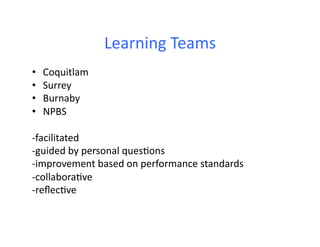
Learning	
  Teams	
  
•    Coquitlam	
  
•    Surrey	
  
•    Burnaby	
  
•    NPBS	
  

-­‐facilitated	
  
-­‐guided	
  by	
  personal	
  ques6ons	
  
-­‐improvement	
  based	
  on	
  performance	
  standards	
  
-­‐collabora6ve	
  
-­‐reflec6ve	
  
And	
  so,	
  in	
  your	
  world…	
  

•  What’s	
  working?	
  
•  What	
  can	
  be	
  polished?	
  	
  What	
  ideas	
  can	
  you	
  
   adapt	
  from	
  the	
  stories	
  you	
  have	
  heard	
  today?	
  
•  What’s	
  next?	
  	
  What	
  ac6ons	
  will	
  you	
  take	
  as	
  a	
  
   result	
  of	
  this	
  6me	
  of	
  shared	
  stories?	
  

Adolescent learning network

  • 1.
    Staff  Development  in  Secondary   Schools  –  some  considera6ons   Lower  Mainland  Secondary  Literacy   Consultants   facilitated  by  Faye  Brownlie   BCELC  Webcast,  Nov.  26/09  (bcelc.ca)   Faye  Brownlie   BCELC  Webcast,  Nov.  12/09  (bcelc.ca)   Linda  Kaser,  Judy  Halbert  
  • 2.
    Three Dimensions -Six Elements! Personal! Schoolwide! Authoritative!
  • 3.
    Elements  of  teacher  leadership   •  Purpose   •  Community   •  Learning  and  teaching   •  Courage   •  Sustained  ac6on   •  Posi6ve  cultures   Crowther,  Ferguson,  Hann  (2009)  
  • 4.
    Essential Lesson Components •  Essen6al  ques6on/learning  inten6on/a  big  idea   •  Open-­‐ended  strategies:    connect-­‐process-­‐transform   •  Differen6a6on  –  choice,  choice,  choice   •  Assessment  for  learning   •  Gradual  release  of  responsibility   •  AXend  to  your  kids!    Don’t  just  deliver!  
  • 5.
    What  counts?   • Repe66on  over  6me-­‐leave  with  a  plan  and  return  and   discuss  the  plan   •  Applica6on  –  in  class  work   •  Teams  –  too  expensive  working  1:1  –  and  no  team   support  when  you  leave   •  Demo  –  co-­‐teaching  –  observing  &  feedback  –  leaving   with  a  plan   •  Reflec6on  –  descrip6ve  feedback  ques6ons   •  Simplicity/manageability/op6ons   •  Interac6on/movement/conversa6on   •  Theory  into  prac6ce  
  • 6.
    What  counts?   • Examine  the  teaching!   •  Build  capacity   •  Build  a  collabora6ve  culture  
  • 7.
    Don’ts   •  Just  assign   •  Skip  guided  prac6ce   •  Avoid  giving  feedback   •  Ask  comprehension  ques6ons   •  Assign  closed  vocabulary  tasks     •  Forget  about  what  you  believe  counts  in  teaching   –  your  mental  model   •  Forget  to  form  a  rela6onship  with  your  students  
  • 8.
    Session  Design   • Link  to  previous  session/key  concepts   •  Learning  inten6ons   •  Introduce  framework/research   •  Provide  specific  examples  from  different  content   areas   •  Build  in  plenty  of  6me  for  ‘say  something  –   making  connec6ons,  asking  ques6ons,  applying’   •  Leave  with  a  plan/next  step  
  • 9.
    Big  Idea:   Student  Outcomes/Learning  Inten6on/Essen6al  Ques6on:   Assessment  Criteria:   Stage   Purpose   Connec6ng   Engage,  ac6vate  prior  knowledge,  predict   content,  focus  on  a  big  idea/purpose  for   learning   Processing   Connect  meaning,  monitor   understanding,  process  ideas   Transforming  and  Personalizing   Process  ideas,  apply  knowledge,  reflect  on   thinking  and  learning  
  • 10.
  • 11.
    Burnaby  District  Reading  Ini6a6ve   •  2004-­‐07   •  3  cohort  groups/year;  1  secondary,   2  elementary   •  School  teams:    1  admin,  2-­‐5  teachers   •  4  in-­‐service  sessions/year   •  1/2  day  in-­‐school  follow-­‐up   •  ‘refresh’  and  ‘booster’  sessions  
  • 12.
    Burnaby  District  Reading  Ini6a6ve   •  Research  about  teaching  reading   •  Assessment  FOR  learning  -­‐  planning  instruc6on   through  on-­‐going  assessment   •  Use  of  Standard  Reading  Assessment   •  Modeling  effec6ve  instruc6onal  strategies   •  Use  of  Reading  Performance  Standards   •  Focus  on  non-­‐fic6on  reading  as  well  as  fic6on  
  • 13.
    Learning  Teams   •  Coquitlam   •  Surrey   •  Burnaby   •  NPBS   -­‐facilitated   -­‐guided  by  personal  ques6ons   -­‐improvement  based  on  performance  standards   -­‐collabora6ve   -­‐reflec6ve  
  • 14.
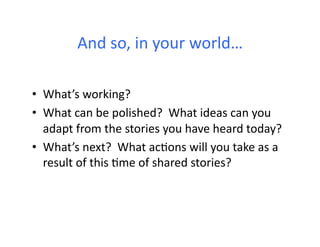
    And  so,  in  your  world…   •  What’s  working?   •  What  can  be  polished?    What  ideas  can  you   adapt  from  the  stories  you  have  heard  today?   •  What’s  next?    What  ac6ons  will  you  take  as  a   result  of  this  6me  of  shared  stories?