© 2011 Pearson Education, Inc.
Adaptations of Marine Organisms
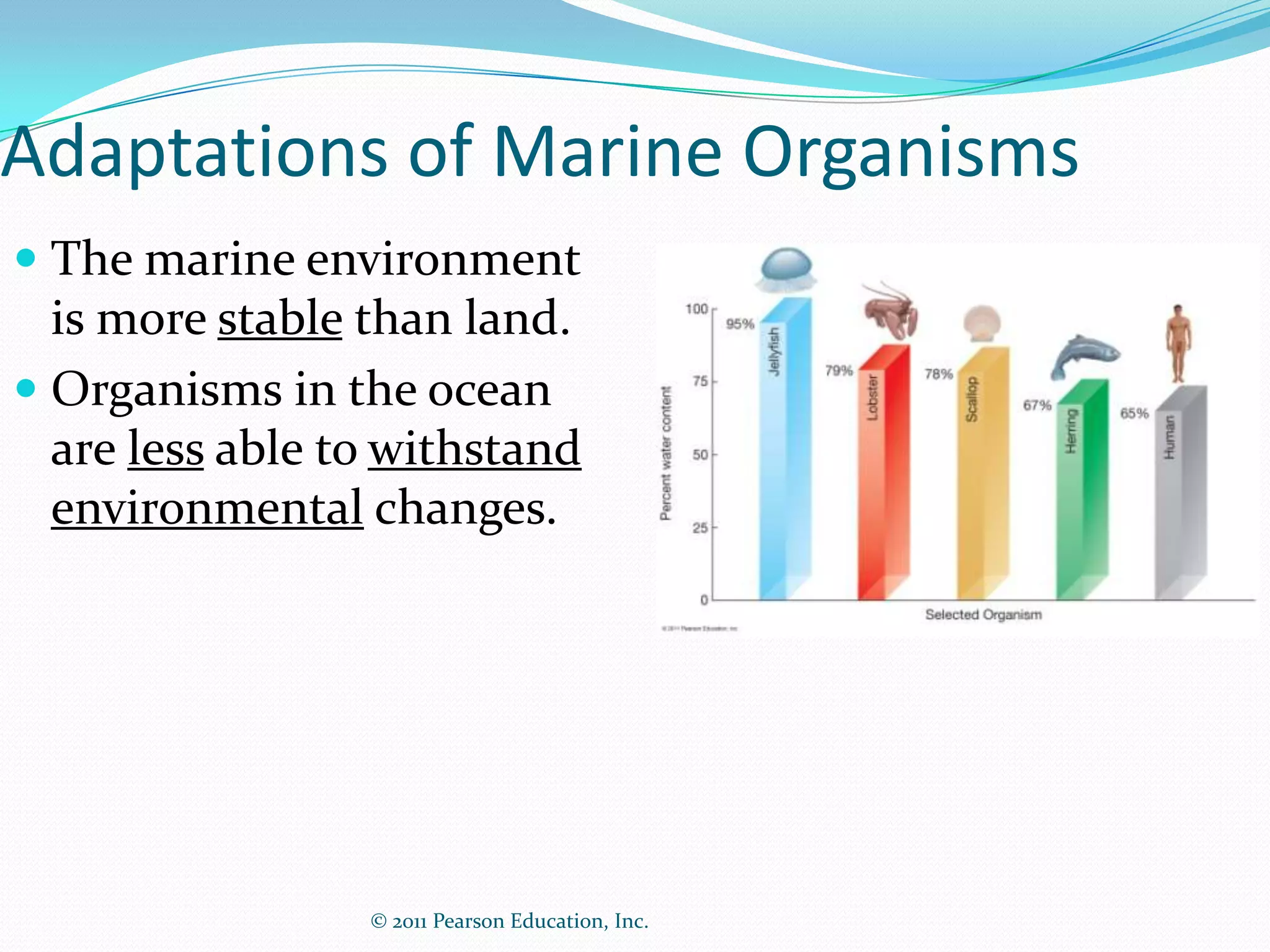
 The marine environment
is more stable than land.
 Organisms in the ocean
are less able to withstand
environmental changes.
© 2011 Pearson Education, Inc.
Adaptations of Marine Organisms
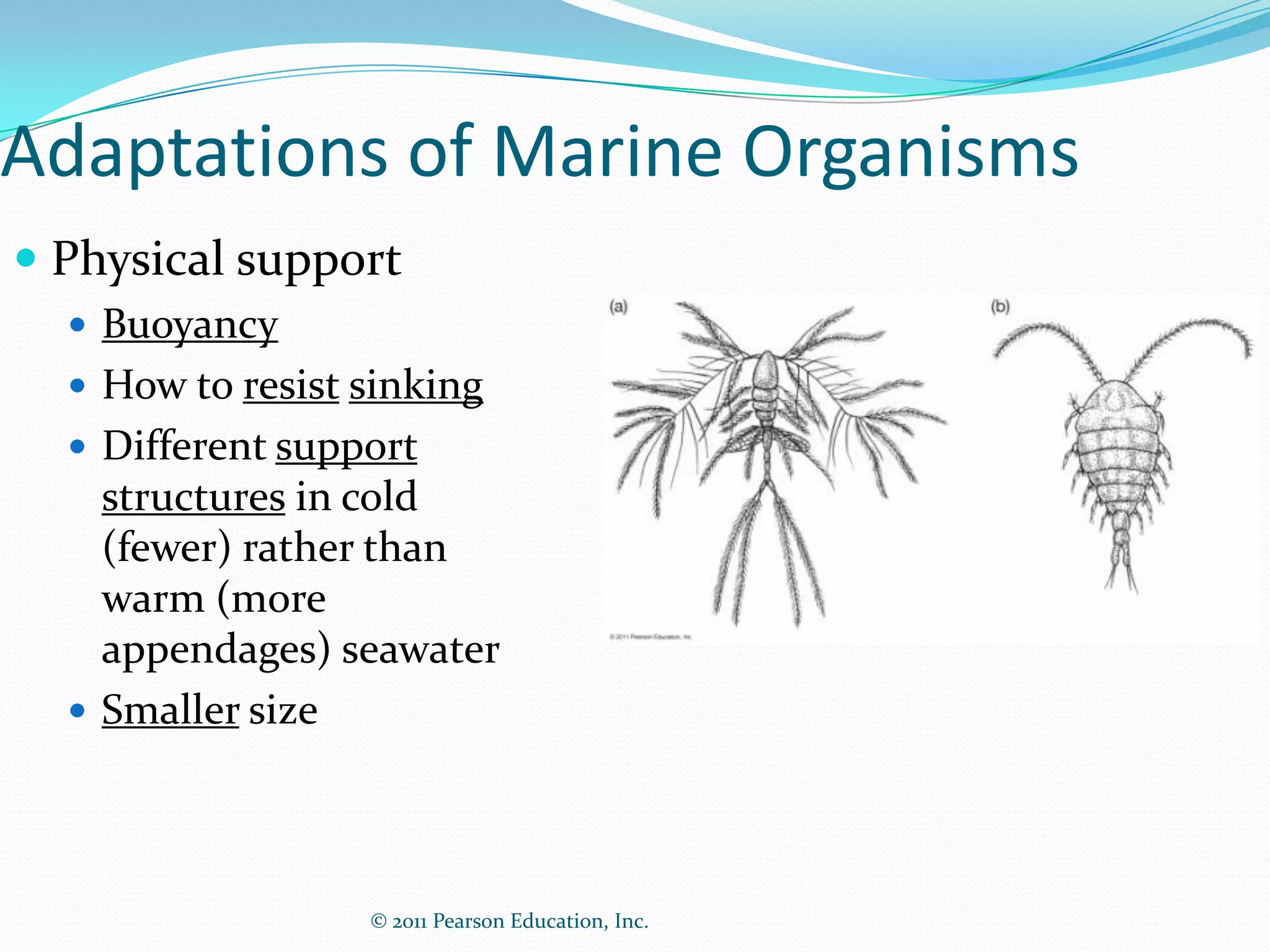
 Physical support
 Buoyancy
 How to resist sinking
 Different support
structures in cold
(fewer) rather than
warm (more
appendages) seawater
 Smaller size
© 2011 Pearson Education, Inc.
Adaptations of Marine Organisms
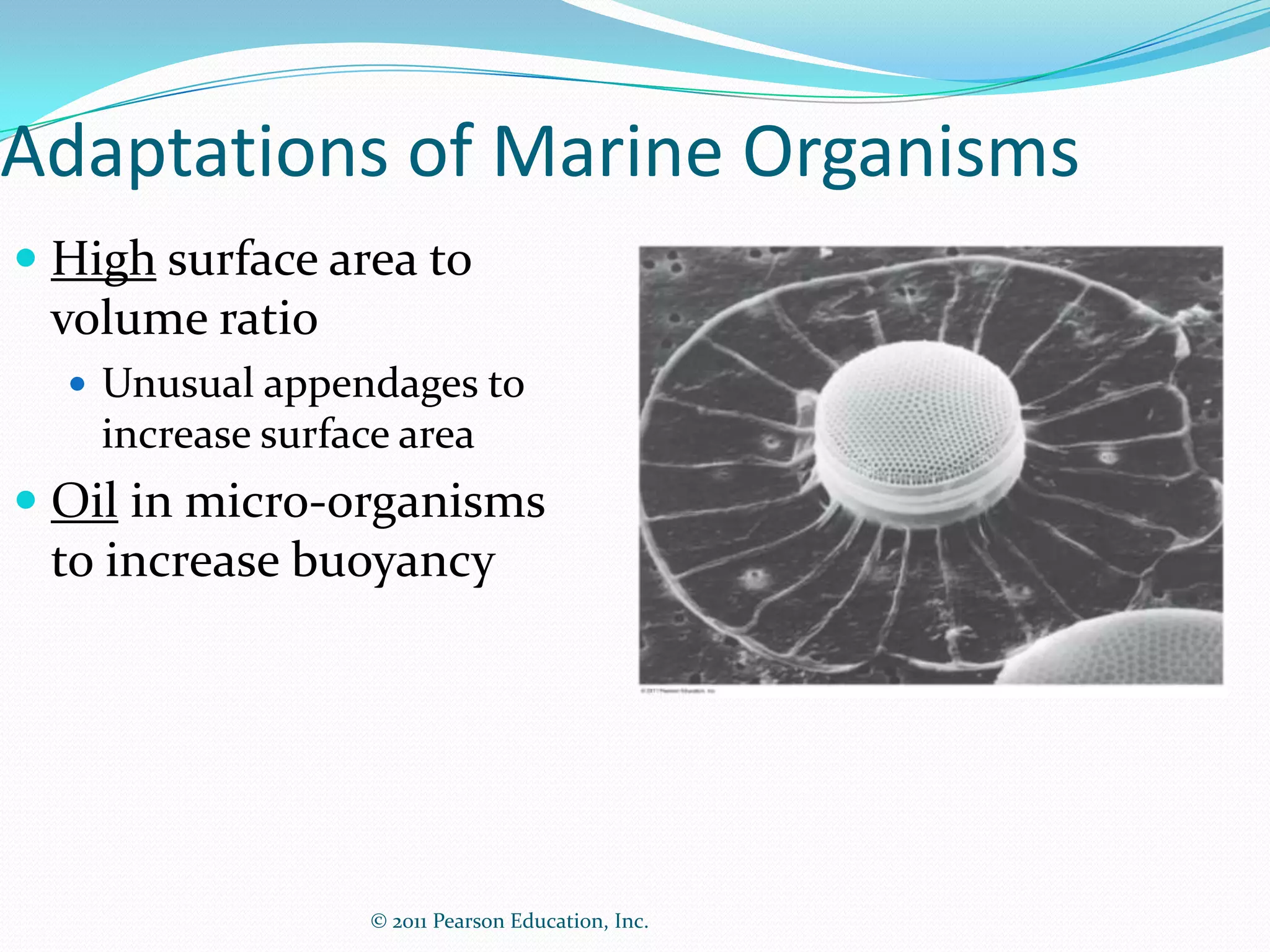
 High surface area to
volume ratio
 Unusual appendages to
increase surface area
 Oil in micro-organisms
to increase buoyancy
© 2011 Pearson Education, Inc.
Viscosity and Streamlining Adaptations
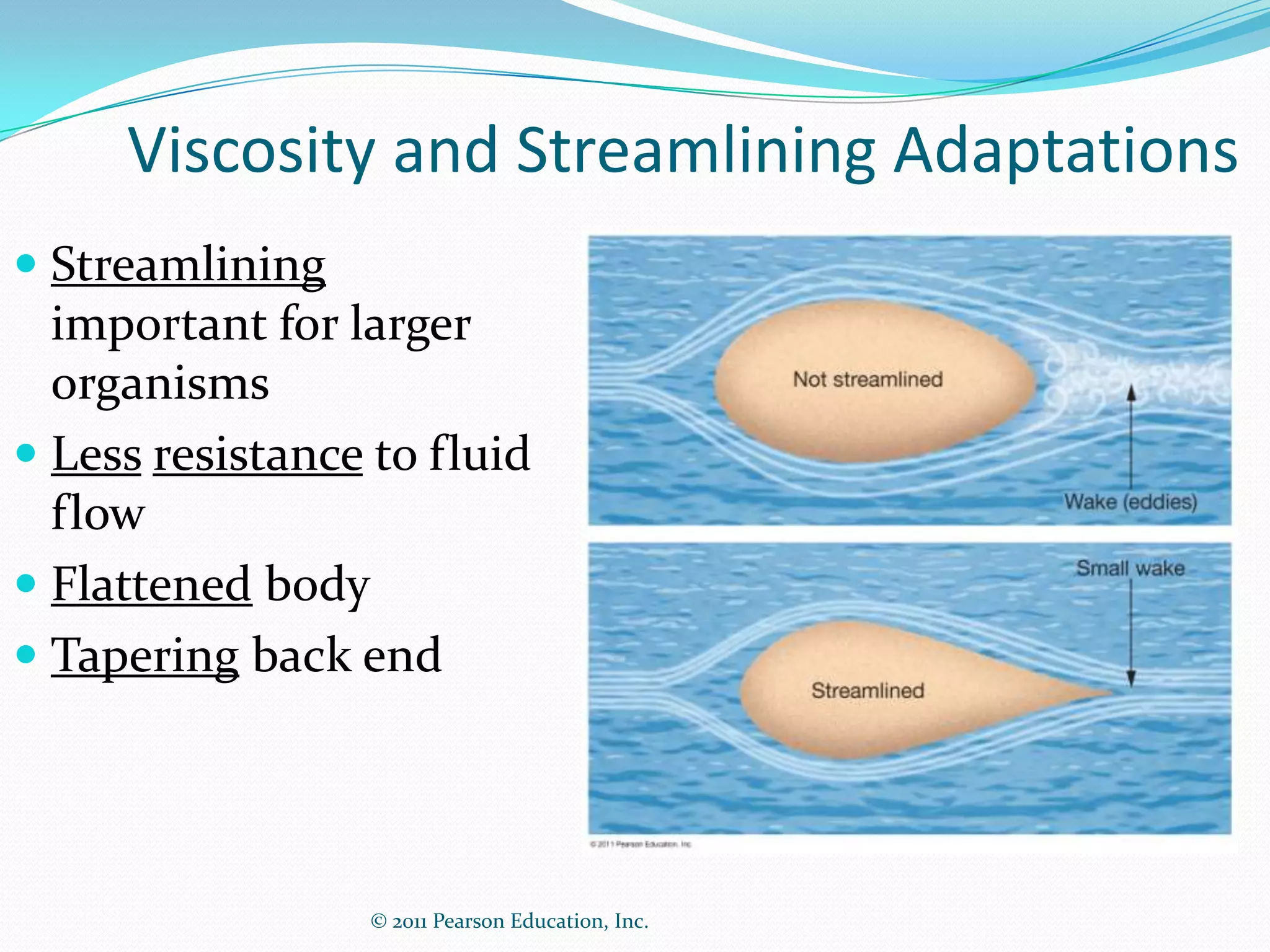
 Streamlining
important for larger
organisms
 Less resistance to fluid
flow
 Flattened body
 Tapering back end
© 2011 Pearson Education, Inc.
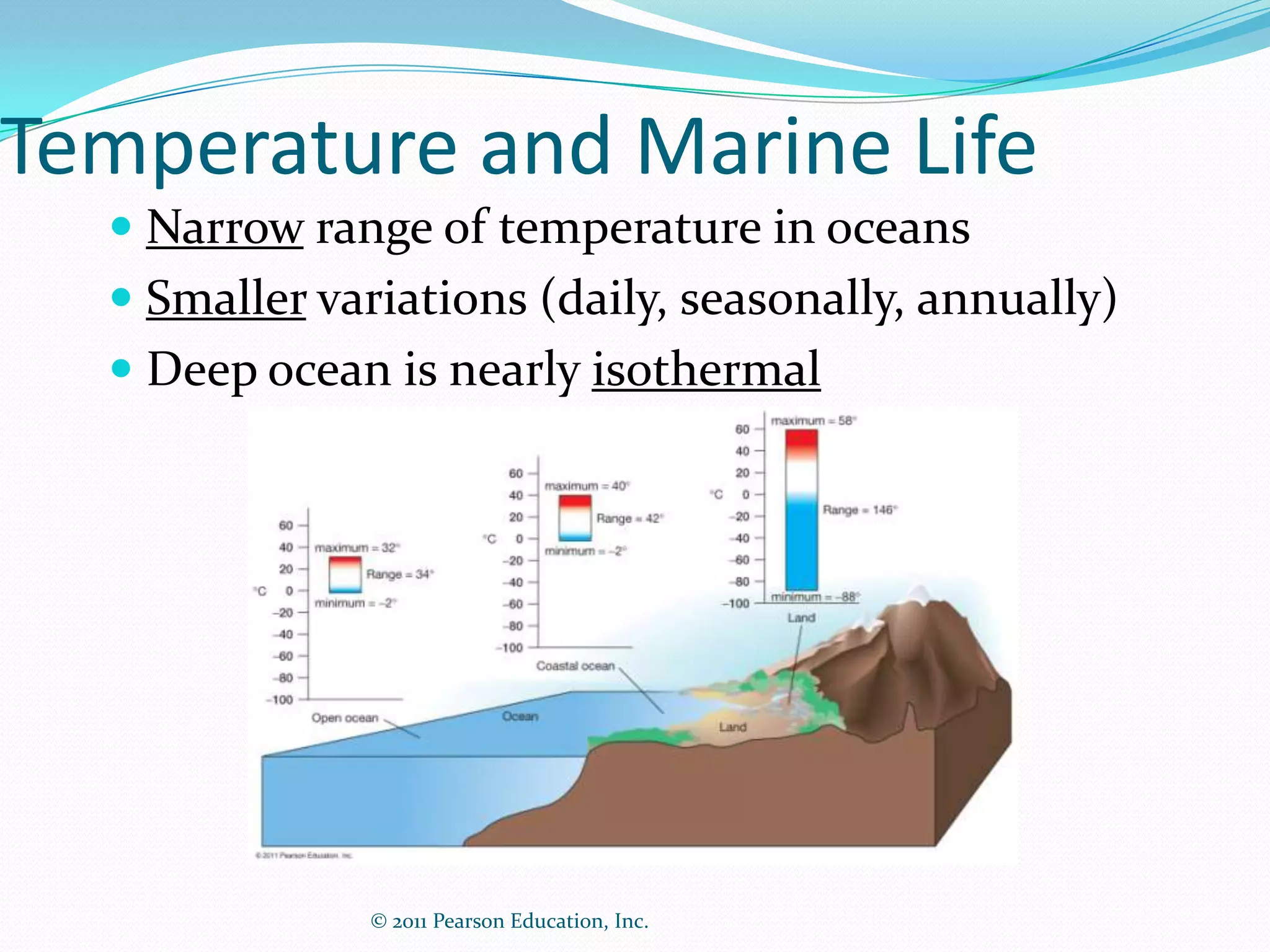
Temperature and Marine Life
 Narrow range of temperature in oceans
 Smaller variations (daily, seasonally, annually)
 Deep ocean is nearly isothermal
© 2011 Pearson Education, Inc.
Ocean Temperature
 More stable than land for four reasons:
 Higher heat capacity of water
 Ocean warming reduced by evaporation
 Solar radiation penetrates deeply into ocean layers
 Ocean mixing
© 2011 Pearson Education, Inc.
Cold vs. Warm Water Species
 Smaller in cooler seawater
 More appendages in warmer seawater
 Tropical organisms grow faster, live shorter, reproduce
more often
 More species in warmer seawater
 More biomass in cooler seawater (upwelling)
© 2011 Pearson Education, Inc.
Temperature and Marine Organisms
 Stenothermal
 Organisms withstand small variation in temperature
 Typically live in open ocean
 Eurythermal
 Organisms withstand large variation in temperature
 Typically live in coastal waters
© 2011 Pearson Education, Inc.
Salinity and Marine Organisms
 Stenohaline
 Organisms withstand only small variation in salinity
 Typically live in open ocean
 Euryhaline
 Organisms withstand large variation in salinity
 Typically live in coastal waters, e.g., estuaries
© 2011 Pearson Education, Inc.
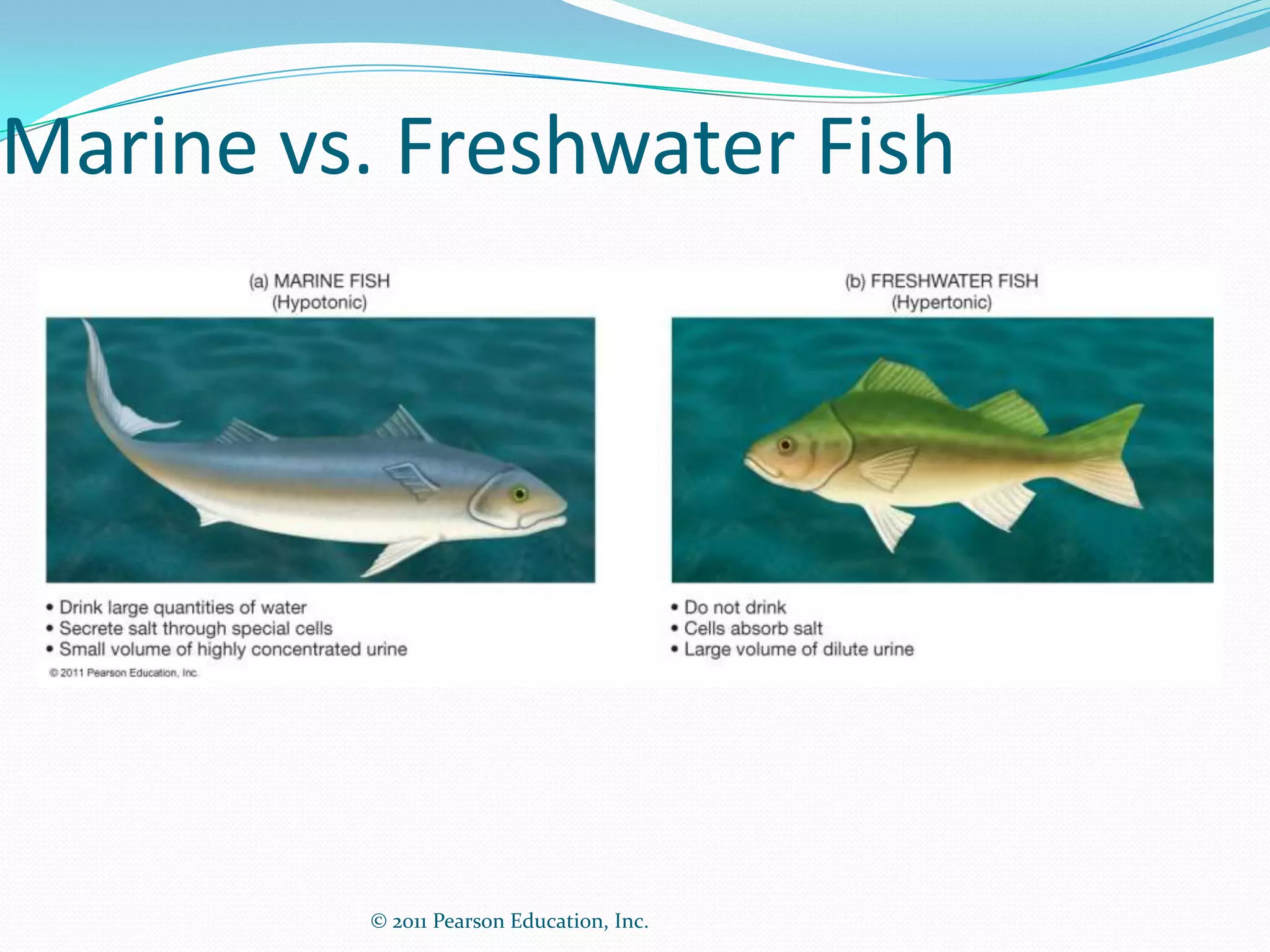
Marine vs. Freshwater Fish

Adaptations of marine organisms

  • 1.
    © 2011 PearsonEducation, Inc. Adaptations of Marine Organisms  The marine environment is more stable than land.  Organisms in the ocean are less able to withstand environmental changes.
  • 2.
    © 2011 PearsonEducation, Inc. Adaptations of Marine Organisms  Physical support  Buoyancy  How to resist sinking  Different support structures in cold (fewer) rather than warm (more appendages) seawater  Smaller size
  • 3.
    © 2011 PearsonEducation, Inc. Adaptations of Marine Organisms  High surface area to volume ratio  Unusual appendages to increase surface area  Oil in micro-organisms to increase buoyancy
  • 4.
    © 2011 PearsonEducation, Inc. Viscosity and Streamlining Adaptations  Streamlining important for larger organisms  Less resistance to fluid flow  Flattened body  Tapering back end
  • 5.
    © 2011 PearsonEducation, Inc. Temperature and Marine Life  Narrow range of temperature in oceans  Smaller variations (daily, seasonally, annually)  Deep ocean is nearly isothermal
  • 6.
    © 2011 PearsonEducation, Inc. Ocean Temperature  More stable than land for four reasons:  Higher heat capacity of water  Ocean warming reduced by evaporation  Solar radiation penetrates deeply into ocean layers  Ocean mixing
  • 7.
    © 2011 PearsonEducation, Inc. Cold vs. Warm Water Species  Smaller in cooler seawater  More appendages in warmer seawater  Tropical organisms grow faster, live shorter, reproduce more often  More species in warmer seawater  More biomass in cooler seawater (upwelling)
  • 8.
    © 2011 PearsonEducation, Inc. Temperature and Marine Organisms  Stenothermal  Organisms withstand small variation in temperature  Typically live in open ocean  Eurythermal  Organisms withstand large variation in temperature  Typically live in coastal waters
  • 9.
    © 2011 PearsonEducation, Inc. Salinity and Marine Organisms  Stenohaline  Organisms withstand only small variation in salinity  Typically live in open ocean  Euryhaline  Organisms withstand large variation in salinity  Typically live in coastal waters, e.g., estuaries
  • 10.
    © 2011 PearsonEducation, Inc. Marine vs. Freshwater Fish