Oceanography
1. Define water vapor.
 A cloud droplet.
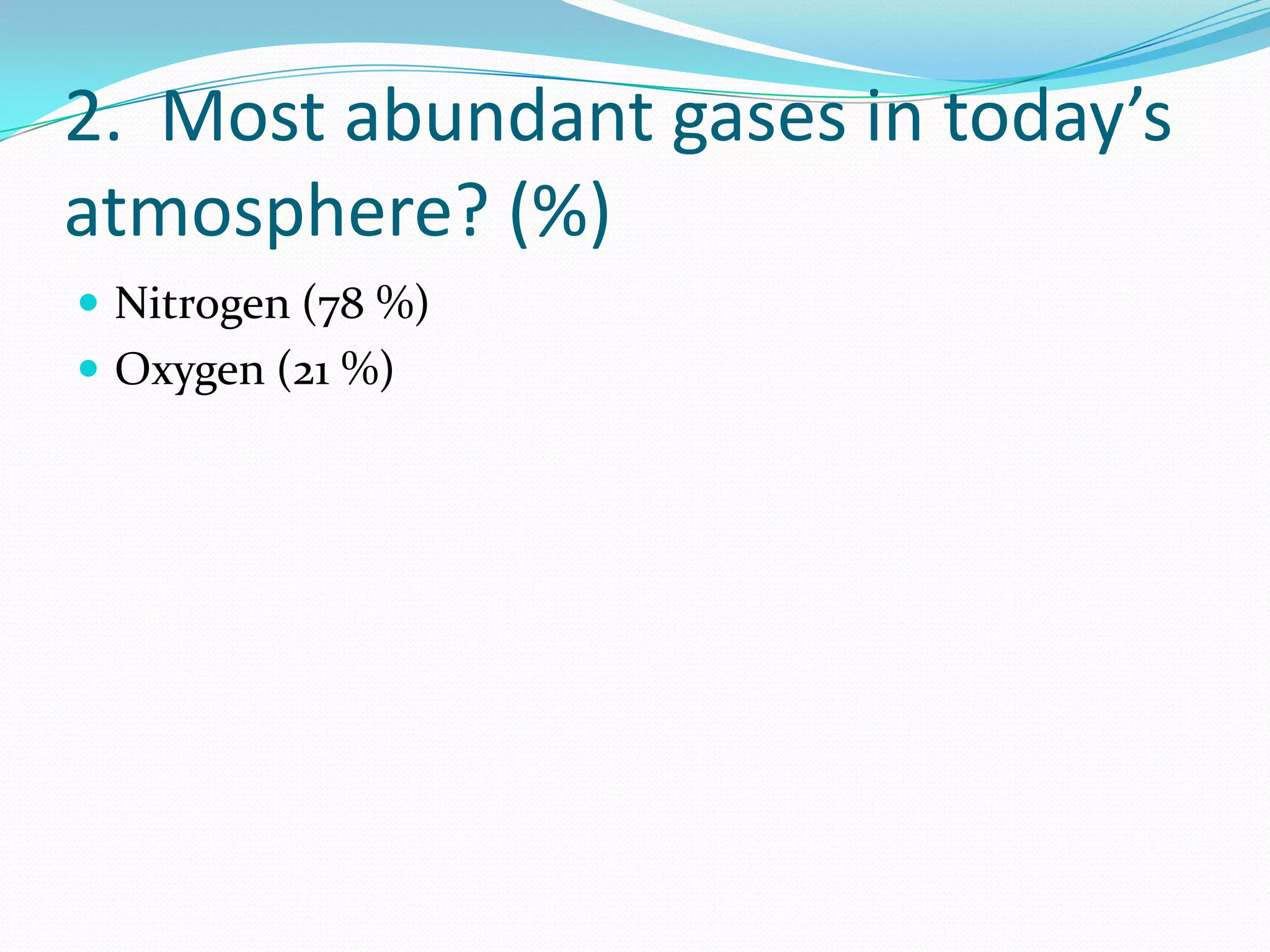
2. Most abundant gases in today’s
atmosphere? (%)
 Nitrogen (78 %)
 Oxygen (21 %)
3. Most abundant gas in the
stratosphere?
 Ozone
4. Why does the temperature in
the stratosphere increase?
 Absorbtion of ultraviolet radiation by ozone.
5. Formal name of a “stormy and
puffy” cloud?
 Cumulonimbus.
6. Freezing point of water in
Celsius?
 0 (zero)
7. Define “Latent Heat.”
 “hidden” heat. Energy released or radiated during a
 phase change of water without changing the
 temperature.
8. Solar energy reaches the Earth
by…
 radiation
9. What part of the
electromagnetic spectrum do we
“see?”
 Visible light.
10. In general, where is the best
place to see the aurora borealis?
 at the magnetic north pole.
11. Instrument to measure
“relative humidity?”
 psychrometer
12. Define: Dew Point
 The temperature to which air must be cooled in order
 to become saturated.
13. Give characteristics of…
 Cirrostratus
 Cumulus
 Altostratus
 Stratus
14. Condensation nuclei?
 Microscopic dust or ice where water vapor can
 condense on to form a water droplet.
15. What is the standard unit are
air pressure?
 millibars
16. Instrument that measures air
pressure?
 barometer
17. Describe offshore (seabreeze)
winds.
 Heat rises over land, cool air sinks, convection current
  causes winds to blow from the sea.
18. What is the main reason that
causes sea and land breezes?
 Temperature differences. Heat capacity.
19. Describe a mountain breeze
(orographic lifting).
 Warm air rises on the windward side of a mountain.
 Cool air interacts with warm moist air to form clouds.
 Dry air sinks on the leeward side.
20. If wind is blowing SLOWER than the
rotation of Earth, what direction would
the wind “appear” to the observer?
 west
21. What latitudinal areas would
have low air pressure?
 Equator (Doldrums)
 60 degrees (Polar Easterlies)
22. Describe the following air
masses: cP, cT, mP, mT.
 cP – Dry and cool.
 cT – Dry and warm
 mP – Moist and cool.
 mT – Moist and warm.
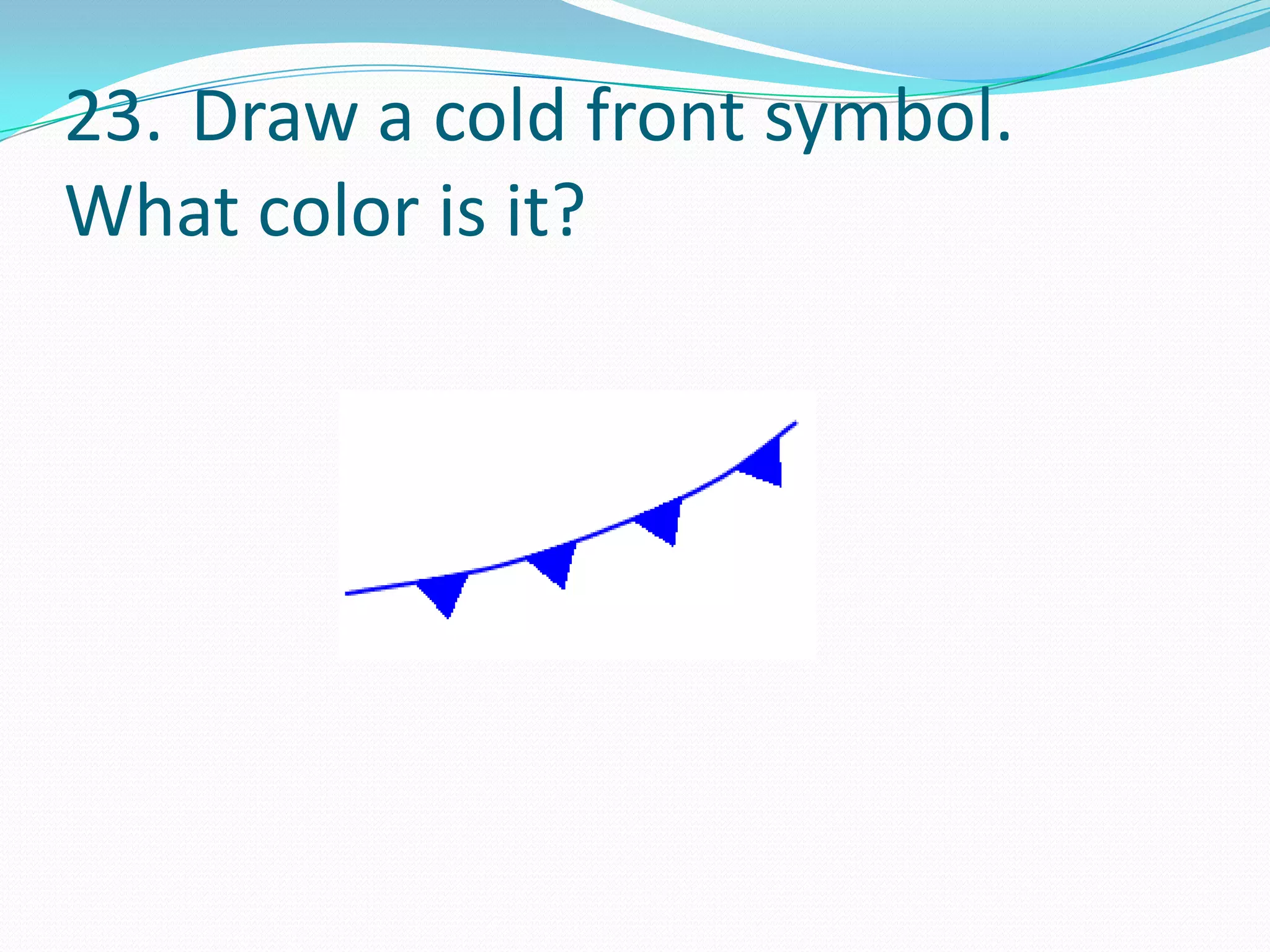
23. Draw a cold front symbol.
What color is it?
24. Name and describe the 3 stages of the
Thunderstorm cycle. Note when updraft
and downdrafts occur!
 Cumulus – updraft, all upward movement.
 Mature – downdrafts & downdrafts. Severe weather
 Dissipation – downdrafts. Severe weather is
 diminished.
25. What is “Lightning?”
 A discharge on electricity from or within a
 thunderstorm.
26. Where is “Tornado Alley?”
 In the Central Plains of the United States.
27. What is need to “fuel” and
hurricane?
 Moisture, preferably over water. Once it hits land,
 energy is diminished.
28. Describe the following: tropical
disturbance, tropical depression, tropical
storm, and typhoon.
 Tropical Disturbance – first indication of a hurricane
  formation. Sustained winds. Unorganized.
 Tropical Depression– thunderstorms begin to take
  circular shape. Winds are less than 39 mph.
 Tropical Storm – Just before a storm becomes a fully
  developed hurricane. Winds are 39 – 73 mph.
 Typhoon – Hurricanes in the Western North Pacific.
29. What part of a hurricane has the
strongest winds (use cardinal direction)?
 Northern side
30. What part of Earth do most
hurricanes form?
 Equator
31. Define heat capacity. Which has a
higher heat capacity? The oceans or
continents?
 Describes how quickly or slowly a substance retains
  heat.
 Oceans has a high heat capacity. It has the ability to
  retain heat longer.
32. Name the formal names of the
seasons.
 Autumnal Equinox
 Winter Solstice
 Vernal Equinox
 Summer Solstice
33. How are clouds formed?
 Warm moist air + Cool moist air + condensation
  nuclei.
 3 ways:
a. Warm air rising
b. Orographic Lifting
c. Fronts
34. Compare and contrast the general
temperatures in the equator and the poles.
 Equator = warm (sun hits it directly)
 Poles = cool (sun hits it indirectly)
35. What happens to the temperature
as you increase in elevation?
 It decreases 4 degrees Celsius/1000 meters.
36. What is the scale used to measure
tornado intensity?
 Fujita Enhanced Tornado Scale: F0 – F5
37. Define wind shear.
 A sudden change in wind speed & direction with
 height.
38. What is the scale used to
measure hurricane intensity?
 Saffir-Simpson Scale (Categories 1 – 5).
39. Define a hurricane.
 An intense tropical weather system with a well
  defined circulation and maximum sustained winds of
  74 mph (64 knots) or higher.
 In the western Pacific, hurricanes are called
  "typhoons.“
 In the Indian Ocean, they are called "cyclones."
40. What is a storm surge?
 Storm surge is an abnormal rise of water
 generated by a storm, over and above the predicted
 astronomical tide.

Test Review – Air in Motion (Meteorology)

  • 1.
  • 2.
    1. Define watervapor.  A cloud droplet.
  • 3.
    2. Most abundantgases in today’s atmosphere? (%)  Nitrogen (78 %)  Oxygen (21 %)
  • 4.
    3. Most abundantgas in the stratosphere?  Ozone
  • 5.
    4. Why doesthe temperature in the stratosphere increase?  Absorbtion of ultraviolet radiation by ozone.
  • 6.
    5. Formal nameof a “stormy and puffy” cloud?  Cumulonimbus.
  • 7.
    6. Freezing pointof water in Celsius?  0 (zero)
  • 8.
    7. Define “LatentHeat.”  “hidden” heat. Energy released or radiated during a phase change of water without changing the temperature.
  • 9.
    8. Solar energyreaches the Earth by…  radiation
  • 10.
    9. What partof the electromagnetic spectrum do we “see?”  Visible light.
  • 11.
    10. In general,where is the best place to see the aurora borealis?  at the magnetic north pole.
  • 12.
    11. Instrument tomeasure “relative humidity?”  psychrometer
  • 13.
    12. Define: DewPoint  The temperature to which air must be cooled in order to become saturated.
  • 14.
    13. Give characteristicsof…  Cirrostratus  Cumulus  Altostratus  Stratus
  • 15.
    14. Condensation nuclei? Microscopic dust or ice where water vapor can condense on to form a water droplet.
  • 16.
    15. What isthe standard unit are air pressure?  millibars
  • 17.
    16. Instrument thatmeasures air pressure?  barometer
  • 18.
    17. Describe offshore(seabreeze) winds.  Heat rises over land, cool air sinks, convection current causes winds to blow from the sea.
  • 19.
    18. What isthe main reason that causes sea and land breezes?  Temperature differences. Heat capacity.
  • 20.
    19. Describe amountain breeze (orographic lifting).  Warm air rises on the windward side of a mountain.  Cool air interacts with warm moist air to form clouds.  Dry air sinks on the leeward side.
  • 21.
    20. If windis blowing SLOWER than the rotation of Earth, what direction would the wind “appear” to the observer?  west
  • 22.
    21. What latitudinalareas would have low air pressure?  Equator (Doldrums)  60 degrees (Polar Easterlies)
  • 23.
    22. Describe thefollowing air masses: cP, cT, mP, mT.  cP – Dry and cool.  cT – Dry and warm  mP – Moist and cool.  mT – Moist and warm.
  • 24.
    23. Draw acold front symbol. What color is it?
  • 25.
    24. Name anddescribe the 3 stages of the Thunderstorm cycle. Note when updraft and downdrafts occur!  Cumulus – updraft, all upward movement.  Mature – downdrafts & downdrafts. Severe weather  Dissipation – downdrafts. Severe weather is diminished.
  • 26.
    25. What is“Lightning?”  A discharge on electricity from or within a thunderstorm.
  • 27.
    26. Where is“Tornado Alley?”  In the Central Plains of the United States.
  • 28.
    27. What isneed to “fuel” and hurricane?  Moisture, preferably over water. Once it hits land, energy is diminished.
  • 29.
    28. Describe thefollowing: tropical disturbance, tropical depression, tropical storm, and typhoon.  Tropical Disturbance – first indication of a hurricane formation. Sustained winds. Unorganized.  Tropical Depression– thunderstorms begin to take circular shape. Winds are less than 39 mph.  Tropical Storm – Just before a storm becomes a fully developed hurricane. Winds are 39 – 73 mph.  Typhoon – Hurricanes in the Western North Pacific.
  • 30.
    29. What partof a hurricane has the strongest winds (use cardinal direction)?  Northern side
  • 31.
    30. What partof Earth do most hurricanes form?  Equator
  • 32.
    31. Define heatcapacity. Which has a higher heat capacity? The oceans or continents?  Describes how quickly or slowly a substance retains heat.  Oceans has a high heat capacity. It has the ability to retain heat longer.
  • 33.
    32. Name theformal names of the seasons.  Autumnal Equinox  Winter Solstice  Vernal Equinox  Summer Solstice
  • 34.
    33. How areclouds formed?  Warm moist air + Cool moist air + condensation nuclei.  3 ways: a. Warm air rising b. Orographic Lifting c. Fronts
  • 35.
    34. Compare andcontrast the general temperatures in the equator and the poles.  Equator = warm (sun hits it directly)  Poles = cool (sun hits it indirectly)
  • 36.
    35. What happensto the temperature as you increase in elevation?  It decreases 4 degrees Celsius/1000 meters.
  • 37.
    36. What isthe scale used to measure tornado intensity?  Fujita Enhanced Tornado Scale: F0 – F5
  • 38.
    37. Define windshear.  A sudden change in wind speed & direction with height.
  • 39.
    38. What isthe scale used to measure hurricane intensity?  Saffir-Simpson Scale (Categories 1 – 5).
  • 40.
    39. Define ahurricane.  An intense tropical weather system with a well defined circulation and maximum sustained winds of 74 mph (64 knots) or higher.  In the western Pacific, hurricanes are called "typhoons.“  In the Indian Ocean, they are called "cyclones."
  • 41.
    40. What isa storm surge?  Storm surge is an abnormal rise of water generated by a storm, over and above the predicted astronomical tide.