ADVERSE DRUG REACTIONS
(ADRs)
BY
DR.O.O.OGUNLEYE
 WHO
– response to a drug that is noxious and
unintended and that occurs at doses used
in humans for prophylaxis, diagnosis, or
therapy of disease, or for the modification
of physiologic function
– Excludes:
• therapeutic failures,
• overdose,
• drug abuse,
• noncompliance,
• medication errors
Definition
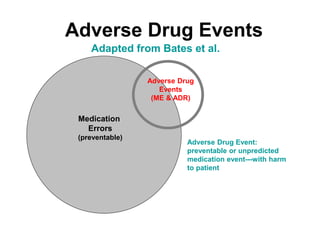
Adapted from Bates et al.
Adverse Drug Events
Medication
Errors
(preventable)
Adverse Drug Event:
preventable or unpredicted
medication event---with harm
to patient
Adverse Drug
Events
(ME & ADR)
The first Appearance of Thalidomide
'Thalidomide Babies'
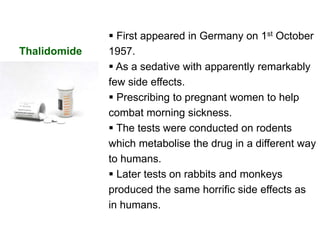
 First appeared in Germany on 1st October
1957.
 As a sedative with apparently remarkably
few side effects.
 Prescribing to pregnant women to help
combat morning sickness.
 The tests were conducted on rodents
which metabolise the drug in a different way
to humans.
 Later tests on rabbits and monkeys
produced the same horrific side effects as
in humans.
Thalidomide
 Towards the end of the fifties, children began to be
born with shocking disabilities.
 Probably the most renowned is Phocomelia, the
name given to the flipper-like limbs which appeared
on the children of women who took thalidomide.
 Babies effected by this tragedy were given the
name Thalidomide Babies.
Why drugs can cause tragedy?
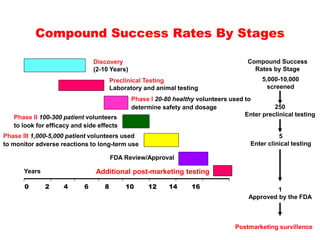
Compound Success Rates By Stages
0 2 4 6 8 10 12 14 16
Years
Discovery
(2-10 Years)
Preclinical Testing
Laboratory and animal testing
Phase I 20-80 healthy volunteers used to
determine safety and dosage
Phase II 100-300 patient volunteers
to look for efficacy and side effects
Phase III 1,000-5,000 patient volunteers used
to monitor adverse reactions to long-term use
FDA Review/Approval
Additional post-marketing testing
Compound Success
Rates by Stage
5,000-10,000
screened
250
Enter preclinical testing
5
Enter clinical testing
1
Approved by the FDA
Postmarketing survillence
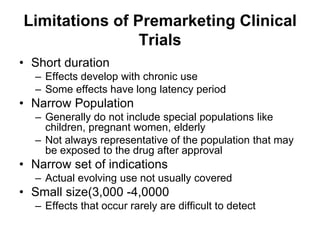
Limitations of Premarketing Clinical
Trials
• Short duration
– Effects develop with chronic use
– Some effects have long latency period
• Narrow Population
– Generally do not include special populations like
children, pregnant women, elderly
– Not always representative of the population that may
be exposed to the drug after approval
• Narrow set of indications
– Actual evolving use not usually covered
• Small size(3,000 -4,0000
– Effects that occur rarely are difficult to detect
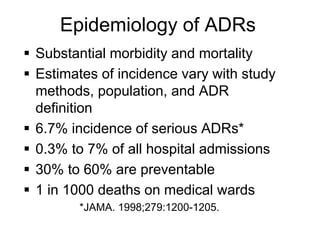
 Substantial morbidity and mortality
 Estimates of incidence vary with study
methods, population, and ADR
definition
 6.7% incidence of serious ADRs*
 0.3% to 7% of all hospital admissions
 30% to 60% are preventable
 1 in 1000 deaths on medical wards
*JAMA. 1998;279:1200-1205.
Epidemiology of ADRs
Classification
• Onset
• Severity
• Type
• Onset of Event
– Acute
• Within 60 mins
– Sub acute
• 1 to 24 hours
– Latent
• > 2 days
• Severity of Reaction
– Mild
• Bothersome but requires no change in therapy
– Moderate
• Requires change in therapy, additional therapy or
hospitalization
– Severe
• Disabling or life threatening
• Serious Adverse Drug Reactions (FDA)
– Results in death
– Life threatening
– Requires hospitalization
– Prolong hospitalization
– Cause disability
– Cause congenital anomaly
– Requires intervention to prevent permanent
injury
Type A( Augmented/Predictable)
• Extension of pharmacologic effect
• Often predictable and dose dependent
• Responsible for at least 2/3rd of ADRs
• Rarely life threatening, though could
produce significant disability
• Examples include:
– Propranolol and bradycardia
– Anticholinergics and dry mouth
– Hemorrhage due to anticoagulants
Type B( Bizarre/Unpredictable)
• Idiosyncratic or immunologic/allergic reactions
• Rare and unpredictable
• Constitutes the most serious and potentially life
threatening ADRs
• A major cause of important drug induced
disease
• Example:
– Chloramphenicol and Aplastic anemia
– Acute hepatic necrosis due to halothane
– Anaphylaxis due to penicillin
Type C (Chronic )
• Associated with long term use
• Involves dose accumulation
• Examples:
– Phenacetin and Interstitial nephritis
– Antimalaria and ocular toxicity
– Iatrogenic cushion's syndrome due to
prednisolone
– Colonic dysfunction due to laxatives
Type D (Delayed)
• Delayed effect (dose independent)
• Occurs remotely from treatment either in
children of treated patients or in the patients
years after treatment
• Examples:
– Second cancers in those treated with alkylating
agents for Hodgkin's lymphoma
– Craniofacial malformations in children whose mothers
had taken isotretinoin
– Clear cell carcinoma of vagina in daughter of whose
mother took diethylstibesterol in pregnancy
– Teratogenicity (Fetal Hydantoin syndrome)
Type E (End of Treatment Effects)
• Effects occurring when a drug is stopped
especially when stopped suddenly
• So called ‘withdrawal effects’
• Example
– Unstable angina after beta adrenoceptor antagonist is
stopped suddenly
– Adrenocortical insufficiency after glucocorticoid e.g
prednisolone is stopped suddenly
– Withdrawal seizures following stoppage of
anticonvulsants like phenytoin and phenobarbital
Common causes of ADR
• Anitibiotics
• Antineoplastics
• Anticoagulants
• Cardiovascular drugs
• Hypoglycemics
• Antihypertensives
• NSAIDs/ Anagesics
• Diagnostics
• CNS drugs
ADR Risk factors
• Age: Children and Elderly
• Multiple medications
• Multiple co morbid conditions
• Inappropriate medication prescribing, use or
monitoring
• End organ dysfunction
• Altered physiology
• Prior history of ADR
• Extent (dose) and duration of exposure
• Genetic predisposition
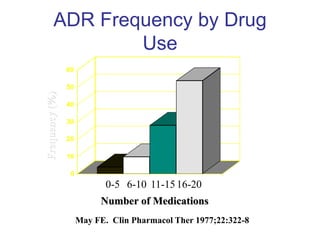
ADR Frequency by Drug
Use
0
10
20
30
40
50
60
0-5 6-10 11-1516-20
Number of Medications
Frequency
(%)
May FE. Clin Pharmacol Ther 1977;22:322-8
Detection of ADRs
• Subjective Reports
– Patient’s complaints
• Objective Reports
– Direct observation of events
– Abnormal findings
• Physical examinations
• Laboratory tests
• Diagnostic procedures
ADR Detection
• Medication order screening
– Abrupt medication discontinuation
– Abrupt dosage reduction
– Orders for special tests or serum drug concentration
– Orders for ‘triggers’ or ‘tracer’ substances
• Spontaneous reporting
• Medication utilization review
– Computerized screening
– Chart review and concurrent audit
Preliminary Assessments
• Preliminary description of events
– Who is involved?
– What is the most likely causative agent?
• Is it an exacerbation of a pre existing condition?
• Alternative explanations/Differential diagnosis
– When did the event take place?
– Where did the event occur?
– How has the event been managed thus far?
• Determination of urgency
– What is the patient’s current clinical status?
– How severe is the reaction?
• Appropriate triage
– Acute (ER, ICU, Poision control)
Important Patient/Disease factors
• Demography
– Age ,Race, Ethnicity, Gender, Height, Weight
• Medical History
– Concurrent conditions or special circumstances
• E.g dehydration, autoimmune condition, HIV infection,
pregnancy, breast feeding
– Recent procedures or surgeries and any resultant
complications
• E.g. contrast materials, radiation treatment, hypotension,
shock, renal insufficiency
Important Patient/Disease factors
• End organ function
• Review of systems
• Laboratory tests and diagnostics
• Social History
– Tobacco, Alcohol, Substance abuse, Physical activity,
Environmental or Occupational hazards or exposures.
• Pertinent family history
• Nutritional status
– Special diets, Malnutrition, Weight loss
Medication Factors
• Medication History
– Prescription medication
– Non Prescription medication
– Alternatives and Investigational therapies
– Medication use within past 6 months
– Allergies or intolerance
– History of medication reactions
– Adherence to prescribed regimen
– Cumulative medication dosages
Medication Factors
• Medication
– Indication, Dose, Diluents, Volume
• Administration
– Route, Method, Site , Schedule, Rate, Duration
• Formulation
– Pharmaceutical excipients
• Colorings, flavorings, preservatives
– Other products
• DEHP, latex
Medication Factors
• Pharmacology
• Pharmacokinetics
• Pharmacodynamics
• Adverse effects profiles
• Interactions
– Drug-drug
– Drug-nutrient
– Drug-lab test interference
• Cross-allegenicity or Cross reactivity
ADR Information
• Incidence and Prevalence
• Mechanism and Pathogenesis
• Clinical presentation and diagnosis
• Time course
• Dose relationship
• Reversibility
• Cross reactivity/Cross allegenicity
• Treatment and Prognosis
ADR Information Resources
• Primary
– Spontaneous reports or unpublished data
– Anecdotal and descriptive reports
– Observational studies
– Experimental and other studies (Meta
analysis, Clinical Trials)
• Secondary
– MEDLAR data bases( e.g. Medline)
– International Pharmaceutical abstracts
• Tertiary
– Reference books
– Review articles
Causality Assessment
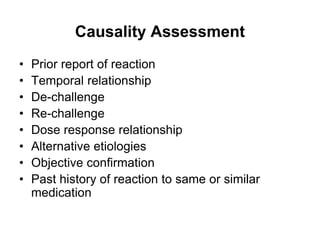
• Prior report of reaction
• Temporal relationship
• De-challenge
• Re-challenge
• Dose response relationship
• Alternative etiologies
• Objective confirmation
• Past history of reaction to same or similar
medication
Causality Assessment
• Standardized case causality assessment
has become a routine at
pharmacovigilance centre around the
world.
• Decrease the ambiguity of the data and
prevention of erroneous conclusion
• It neither eliminates nor quantifies
uncertainty but, at best, categorizes it in a
semi quantitative way
• What it can do?
- Decrease disagreement between
accessor.
- Classify uncertainty
- Mark individual case reports
- Improve the scientific basis of
assessment
What it can not do
- Give and accurate quantitative
measurement of the likelihood of a
relationship.
- Distinguish valid form invalid cases
- Quantify the contribution of a drug to the
development of an adverse event
- Change uncertainty to certainty
Methods
There were several method that can be use
to make a causality assessment of ADRs
reports.
• The literature (9 points of consideration –
Morges, Switzerland , 1981)
• Probability calculation (Bayes’ Theorem)
• Aetiological – Diagnostic Systems
(Bénchiou’s group method)
• French imputation systems
Methods contd
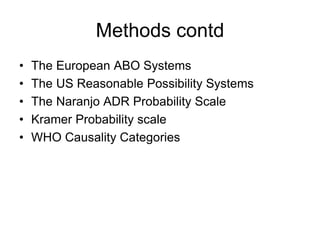
• The European ABO Systems
• The US Reasonable Possibility Systems
• The Naranjo ADR Probability Scale
• Kramer Probability scale
• WHO Causality Categories
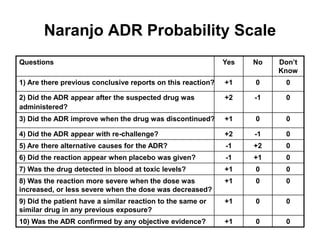
Naranjo ADR Probability Scale
Questions Yes No Don’t
Know
1) Are there previous conclusive reports on this reaction? +1 0 0
2) Did the ADR appear after the suspected drug was
administered?
+2 -1 0
3) Did the ADR improve when the drug was discontinued? +1 0 0
4) Did the ADR appear with re-challenge? +2 -1 0
5) Are there alternative causes for the ADR? -1 +2 0
6) Did the reaction appear when placebo was given? -1 +1 0
7) Was the drug detected in blood at toxic levels? +1 0 0
8) Was the reaction more severe when the dose was
increased, or less severe when the dose was decreased?
+1 0 0
9) Did the patient have a similar reaction to the same or
similar drug in any previous exposure?
+1 0 0
10) Was the ADR confirmed by any objective evidence? +1 0 0
The score :-
> 8 = Highly probable
5-8 = probable
1-4 = possible
0 = doubtful
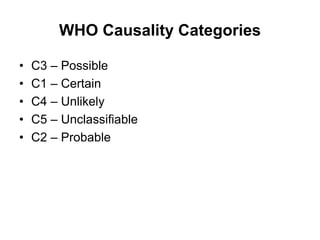
WHO Causality Categories
• C3 – Possible
• C1 – Certain
• C4 – Unlikely
• C5 – Unclassifiable
• C2 – Probable
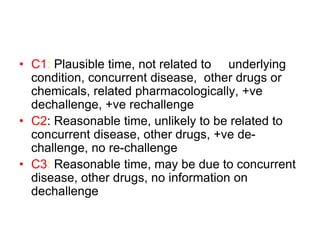
• C1: Plausible time, not related to underlying
condition, concurrent disease, other drugs or
chemicals, related pharmacologically, +ve
dechallenge, +ve rechallenge
• C2: Reasonable time, unlikely to be related to
concurrent disease, other drugs, +ve de-
challenge, no re-challenge
• C3: Reasonable time, may be due to concurrent
disease, other drugs, no information on
dechallenge
• C4: Improbable temporal relationship, other
confounding factors such as drugs, chemicals,
underlying disease
• C5: Insufficient information to analyse the report
Definitions
• Dechallenge – withdrawing the drug (s) and
recording the outcome – improved or not
improved
• Rechallenge – giving one drug again under the
same conditions as before and recording the
outcome – recurrence or no recurrence.
Yellow forms
Discontinue the offending agent if:
• it can be safely stopped
• the event is life-threatening or intolerable
• there is a reasonable alternative
• continuing the medication will further exacerbate the
patient’s condition
–Continue the medication (modified as needed)
if:
• it is medically necessary
• there is no reasonable alternative
• the problem is mild and will resolve with time
Management Options
–Discontinue non-essential medications
–Administer appropriate treatment
• e.g., atropine, benztropine, dextrose, antihistamines,
epinephrine, naloxone, phenytoin, phytonadione,
protamine, sodium polystyrene sulfonate, digibind,
flumazenil, corticosteroids, glucagon
–Provide supportive or palliative care
• e.g., hydration, glucocorticoids, warm / cold
compresses, analgesics or antipruritics
–Consider rechallenge or desensitization
Management Options
• Patient’s progress
• Course of event
• Delayed reactions
• Response to treatment
• Specific monitoring parameters
Follow-up and Re-evaluation
 Medical record
• Description
• Management
• Outcome
 Reporting responsibility
• Food and Drug Administration (NAFDAC)
• post-marketing surveillance
• particular interest in serious reactions involving
new chemical entities
• Pharmaceutical manufacturers
• Publishing in the medical literature
Documentation and Reporting
 Product name and manufacturer
 Patient demographics
 Description of adverse event and outcome
 Date of onset
 Drug start and stop dates/times
 Dose, frequency, and method
 Relevant lab test results or other objective
evidence
 De-challenge and re-challenge information
 Confounding variables
Components of an ADR Report
Prevention of ADR
• Never use any drug unless there is good
indication. If the patient is pregnant do not
use the drug unless the need is
imperative.
• Allergy and idiosyncrasy are important
causes of ADRs. Ask if the patient had
previous reactions.
• Ask if the patient is already taking other
drugs including self medication
Prevention of ADR
• Age, hepatic and renal disease may impair
clearance of drugs so smaller doses may
be needed. Genetic factors may also
predispose to certain ADRs
• Prescribe as few drugs as possible and
give clear instructions
Prevention of ADR
• Where possible use familiar drugs. With
new drugs be particularly alert for ADRs
and unexpected event.
• If serious ADRs are liable to occur warn
the patient
ALLEGIC DRUG REACTIONS
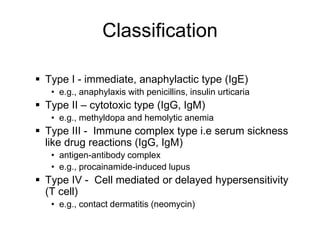
Classification
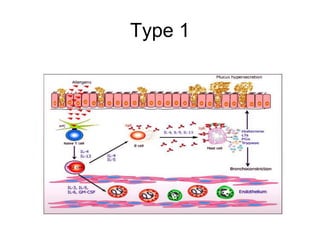
 Type I - immediate, anaphylactic type (IgE)
• e.g., anaphylaxis with penicillins, insulin urticaria
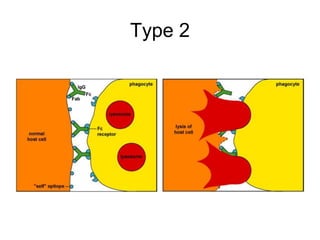
 Type II – cytotoxic type (IgG, IgM)
• e.g., methyldopa and hemolytic anemia
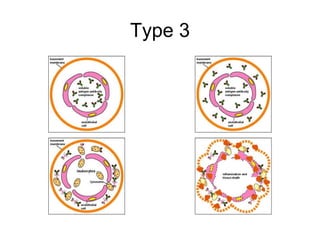
 Type III - Immune complex type i.e serum sickness
like drug reactions (IgG, IgM)
• antigen-antibody complex
• e.g., procainamide-induced lupus
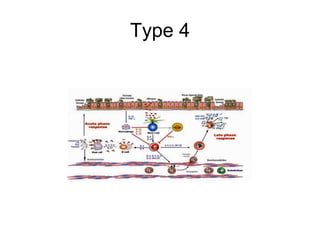
 Type IV - Cell mediated or delayed hypersensitivity
(T cell)
• e.g., contact dermatitis (neomycin)
Type 1
Type 2
Type 3
Type 4
Pharmacovigilance
 What is Pharmacovigilance?
 Proactive monitoring and reporting on the
quality, safety and efficacy of drugs
 Assessment of the risks and benefits of
marketed medicines
 Monitoring the impact of any corrective
actions taken
 Providing information to consumers,
practitioners and regulators on the effective
use of drugs
 Designing programmes and procedures for
collecting and analyzing reports from patients
and clinicians
THANK YOU!!!!!

ADVERSE DRUG REACTIONS_LASUCOM LECTURE.ppt

  • 1.
  • 2.
     WHO – responseto a drug that is noxious and unintended and that occurs at doses used in humans for prophylaxis, diagnosis, or therapy of disease, or for the modification of physiologic function – Excludes: • therapeutic failures, • overdose, • drug abuse, • noncompliance, • medication errors Definition
  • 3.
    Adapted from Bateset al. Adverse Drug Events Medication Errors (preventable) Adverse Drug Event: preventable or unpredicted medication event---with harm to patient Adverse Drug Events (ME & ADR)
  • 4.
    The first Appearanceof Thalidomide 'Thalidomide Babies'
  • 6.
     First appearedin Germany on 1st October 1957.  As a sedative with apparently remarkably few side effects.  Prescribing to pregnant women to help combat morning sickness.  The tests were conducted on rodents which metabolise the drug in a different way to humans.  Later tests on rabbits and monkeys produced the same horrific side effects as in humans. Thalidomide
  • 7.
     Towards theend of the fifties, children began to be born with shocking disabilities.  Probably the most renowned is Phocomelia, the name given to the flipper-like limbs which appeared on the children of women who took thalidomide.  Babies effected by this tragedy were given the name Thalidomide Babies.
  • 8.
    Why drugs cancause tragedy?
  • 9.
    Compound Success RatesBy Stages 0 2 4 6 8 10 12 14 16 Years Discovery (2-10 Years) Preclinical Testing Laboratory and animal testing Phase I 20-80 healthy volunteers used to determine safety and dosage Phase II 100-300 patient volunteers to look for efficacy and side effects Phase III 1,000-5,000 patient volunteers used to monitor adverse reactions to long-term use FDA Review/Approval Additional post-marketing testing Compound Success Rates by Stage 5,000-10,000 screened 250 Enter preclinical testing 5 Enter clinical testing 1 Approved by the FDA Postmarketing survillence
  • 10.
    Limitations of PremarketingClinical Trials • Short duration – Effects develop with chronic use – Some effects have long latency period • Narrow Population – Generally do not include special populations like children, pregnant women, elderly – Not always representative of the population that may be exposed to the drug after approval • Narrow set of indications – Actual evolving use not usually covered • Small size(3,000 -4,0000 – Effects that occur rarely are difficult to detect
  • 11.
     Substantial morbidityand mortality  Estimates of incidence vary with study methods, population, and ADR definition  6.7% incidence of serious ADRs*  0.3% to 7% of all hospital admissions  30% to 60% are preventable  1 in 1000 deaths on medical wards *JAMA. 1998;279:1200-1205. Epidemiology of ADRs
  • 12.
  • 13.
    • Onset ofEvent – Acute • Within 60 mins – Sub acute • 1 to 24 hours – Latent • > 2 days
  • 14.
    • Severity ofReaction – Mild • Bothersome but requires no change in therapy – Moderate • Requires change in therapy, additional therapy or hospitalization – Severe • Disabling or life threatening
  • 15.
    • Serious AdverseDrug Reactions (FDA) – Results in death – Life threatening – Requires hospitalization – Prolong hospitalization – Cause disability – Cause congenital anomaly – Requires intervention to prevent permanent injury
  • 16.
    Type A( Augmented/Predictable) •Extension of pharmacologic effect • Often predictable and dose dependent • Responsible for at least 2/3rd of ADRs • Rarely life threatening, though could produce significant disability • Examples include: – Propranolol and bradycardia – Anticholinergics and dry mouth – Hemorrhage due to anticoagulants
  • 17.
    Type B( Bizarre/Unpredictable) •Idiosyncratic or immunologic/allergic reactions • Rare and unpredictable • Constitutes the most serious and potentially life threatening ADRs • A major cause of important drug induced disease • Example: – Chloramphenicol and Aplastic anemia – Acute hepatic necrosis due to halothane – Anaphylaxis due to penicillin
  • 18.
    Type C (Chronic) • Associated with long term use • Involves dose accumulation • Examples: – Phenacetin and Interstitial nephritis – Antimalaria and ocular toxicity – Iatrogenic cushion's syndrome due to prednisolone – Colonic dysfunction due to laxatives
  • 19.
    Type D (Delayed) •Delayed effect (dose independent) • Occurs remotely from treatment either in children of treated patients or in the patients years after treatment • Examples: – Second cancers in those treated with alkylating agents for Hodgkin's lymphoma – Craniofacial malformations in children whose mothers had taken isotretinoin – Clear cell carcinoma of vagina in daughter of whose mother took diethylstibesterol in pregnancy – Teratogenicity (Fetal Hydantoin syndrome)
  • 20.
    Type E (Endof Treatment Effects) • Effects occurring when a drug is stopped especially when stopped suddenly • So called ‘withdrawal effects’ • Example – Unstable angina after beta adrenoceptor antagonist is stopped suddenly – Adrenocortical insufficiency after glucocorticoid e.g prednisolone is stopped suddenly – Withdrawal seizures following stoppage of anticonvulsants like phenytoin and phenobarbital
  • 21.
    Common causes ofADR • Anitibiotics • Antineoplastics • Anticoagulants • Cardiovascular drugs • Hypoglycemics • Antihypertensives • NSAIDs/ Anagesics • Diagnostics • CNS drugs
  • 22.
    ADR Risk factors •Age: Children and Elderly • Multiple medications • Multiple co morbid conditions • Inappropriate medication prescribing, use or monitoring • End organ dysfunction • Altered physiology • Prior history of ADR • Extent (dose) and duration of exposure • Genetic predisposition
  • 23.
    ADR Frequency byDrug Use 0 10 20 30 40 50 60 0-5 6-10 11-1516-20 Number of Medications Frequency (%) May FE. Clin Pharmacol Ther 1977;22:322-8
  • 24.
    Detection of ADRs •Subjective Reports – Patient’s complaints • Objective Reports – Direct observation of events – Abnormal findings • Physical examinations • Laboratory tests • Diagnostic procedures
  • 25.
    ADR Detection • Medicationorder screening – Abrupt medication discontinuation – Abrupt dosage reduction – Orders for special tests or serum drug concentration – Orders for ‘triggers’ or ‘tracer’ substances • Spontaneous reporting • Medication utilization review – Computerized screening – Chart review and concurrent audit
  • 26.
    Preliminary Assessments • Preliminarydescription of events – Who is involved? – What is the most likely causative agent? • Is it an exacerbation of a pre existing condition? • Alternative explanations/Differential diagnosis – When did the event take place? – Where did the event occur? – How has the event been managed thus far?
  • 27.
    • Determination ofurgency – What is the patient’s current clinical status? – How severe is the reaction? • Appropriate triage – Acute (ER, ICU, Poision control)
  • 28.
    Important Patient/Disease factors •Demography – Age ,Race, Ethnicity, Gender, Height, Weight • Medical History – Concurrent conditions or special circumstances • E.g dehydration, autoimmune condition, HIV infection, pregnancy, breast feeding – Recent procedures or surgeries and any resultant complications • E.g. contrast materials, radiation treatment, hypotension, shock, renal insufficiency
  • 29.
    Important Patient/Disease factors •End organ function • Review of systems • Laboratory tests and diagnostics • Social History – Tobacco, Alcohol, Substance abuse, Physical activity, Environmental or Occupational hazards or exposures. • Pertinent family history • Nutritional status – Special diets, Malnutrition, Weight loss
  • 30.
    Medication Factors • MedicationHistory – Prescription medication – Non Prescription medication – Alternatives and Investigational therapies – Medication use within past 6 months – Allergies or intolerance – History of medication reactions – Adherence to prescribed regimen – Cumulative medication dosages
  • 31.
    Medication Factors • Medication –Indication, Dose, Diluents, Volume • Administration – Route, Method, Site , Schedule, Rate, Duration • Formulation – Pharmaceutical excipients • Colorings, flavorings, preservatives – Other products • DEHP, latex
  • 32.
    Medication Factors • Pharmacology •Pharmacokinetics • Pharmacodynamics • Adverse effects profiles • Interactions – Drug-drug – Drug-nutrient – Drug-lab test interference • Cross-allegenicity or Cross reactivity
  • 33.
    ADR Information • Incidenceand Prevalence • Mechanism and Pathogenesis • Clinical presentation and diagnosis • Time course • Dose relationship • Reversibility • Cross reactivity/Cross allegenicity • Treatment and Prognosis
  • 34.
    ADR Information Resources •Primary – Spontaneous reports or unpublished data – Anecdotal and descriptive reports – Observational studies – Experimental and other studies (Meta analysis, Clinical Trials) • Secondary – MEDLAR data bases( e.g. Medline) – International Pharmaceutical abstracts
  • 35.
    • Tertiary – Referencebooks – Review articles
  • 36.
    Causality Assessment • Priorreport of reaction • Temporal relationship • De-challenge • Re-challenge • Dose response relationship • Alternative etiologies • Objective confirmation • Past history of reaction to same or similar medication
  • 37.
    Causality Assessment • Standardizedcase causality assessment has become a routine at pharmacovigilance centre around the world. • Decrease the ambiguity of the data and prevention of erroneous conclusion • It neither eliminates nor quantifies uncertainty but, at best, categorizes it in a semi quantitative way
  • 38.
    • What itcan do? - Decrease disagreement between accessor. - Classify uncertainty - Mark individual case reports - Improve the scientific basis of assessment
  • 39.
    What it cannot do - Give and accurate quantitative measurement of the likelihood of a relationship. - Distinguish valid form invalid cases - Quantify the contribution of a drug to the development of an adverse event - Change uncertainty to certainty
  • 40.
    Methods There were severalmethod that can be use to make a causality assessment of ADRs reports. • The literature (9 points of consideration – Morges, Switzerland , 1981) • Probability calculation (Bayes’ Theorem) • Aetiological – Diagnostic Systems (Bénchiou’s group method) • French imputation systems
  • 41.
    Methods contd • TheEuropean ABO Systems • The US Reasonable Possibility Systems • The Naranjo ADR Probability Scale • Kramer Probability scale • WHO Causality Categories
  • 42.
    Naranjo ADR ProbabilityScale Questions Yes No Don’t Know 1) Are there previous conclusive reports on this reaction? +1 0 0 2) Did the ADR appear after the suspected drug was administered? +2 -1 0 3) Did the ADR improve when the drug was discontinued? +1 0 0 4) Did the ADR appear with re-challenge? +2 -1 0 5) Are there alternative causes for the ADR? -1 +2 0 6) Did the reaction appear when placebo was given? -1 +1 0 7) Was the drug detected in blood at toxic levels? +1 0 0 8) Was the reaction more severe when the dose was increased, or less severe when the dose was decreased? +1 0 0 9) Did the patient have a similar reaction to the same or similar drug in any previous exposure? +1 0 0 10) Was the ADR confirmed by any objective evidence? +1 0 0
  • 43.
    The score :- >8 = Highly probable 5-8 = probable 1-4 = possible 0 = doubtful
  • 44.
    WHO Causality Categories •C3 – Possible • C1 – Certain • C4 – Unlikely • C5 – Unclassifiable • C2 – Probable
  • 45.
    • C1: Plausibletime, not related to underlying condition, concurrent disease, other drugs or chemicals, related pharmacologically, +ve dechallenge, +ve rechallenge • C2: Reasonable time, unlikely to be related to concurrent disease, other drugs, +ve de- challenge, no re-challenge • C3: Reasonable time, may be due to concurrent disease, other drugs, no information on dechallenge
  • 46.
    • C4: Improbabletemporal relationship, other confounding factors such as drugs, chemicals, underlying disease • C5: Insufficient information to analyse the report
  • 47.
    Definitions • Dechallenge –withdrawing the drug (s) and recording the outcome – improved or not improved • Rechallenge – giving one drug again under the same conditions as before and recording the outcome – recurrence or no recurrence.
  • 48.
  • 50.
    Discontinue the offendingagent if: • it can be safely stopped • the event is life-threatening or intolerable • there is a reasonable alternative • continuing the medication will further exacerbate the patient’s condition –Continue the medication (modified as needed) if: • it is medically necessary • there is no reasonable alternative • the problem is mild and will resolve with time Management Options
  • 51.
    –Discontinue non-essential medications –Administerappropriate treatment • e.g., atropine, benztropine, dextrose, antihistamines, epinephrine, naloxone, phenytoin, phytonadione, protamine, sodium polystyrene sulfonate, digibind, flumazenil, corticosteroids, glucagon –Provide supportive or palliative care • e.g., hydration, glucocorticoids, warm / cold compresses, analgesics or antipruritics –Consider rechallenge or desensitization Management Options
  • 52.
    • Patient’s progress •Course of event • Delayed reactions • Response to treatment • Specific monitoring parameters Follow-up and Re-evaluation
  • 53.
     Medical record •Description • Management • Outcome  Reporting responsibility • Food and Drug Administration (NAFDAC) • post-marketing surveillance • particular interest in serious reactions involving new chemical entities • Pharmaceutical manufacturers • Publishing in the medical literature Documentation and Reporting
  • 54.
     Product nameand manufacturer  Patient demographics  Description of adverse event and outcome  Date of onset  Drug start and stop dates/times  Dose, frequency, and method  Relevant lab test results or other objective evidence  De-challenge and re-challenge information  Confounding variables Components of an ADR Report
  • 55.
    Prevention of ADR •Never use any drug unless there is good indication. If the patient is pregnant do not use the drug unless the need is imperative. • Allergy and idiosyncrasy are important causes of ADRs. Ask if the patient had previous reactions. • Ask if the patient is already taking other drugs including self medication
  • 56.
    Prevention of ADR •Age, hepatic and renal disease may impair clearance of drugs so smaller doses may be needed. Genetic factors may also predispose to certain ADRs • Prescribe as few drugs as possible and give clear instructions
  • 57.
    Prevention of ADR •Where possible use familiar drugs. With new drugs be particularly alert for ADRs and unexpected event. • If serious ADRs are liable to occur warn the patient
  • 58.
  • 59.
    Classification  Type I- immediate, anaphylactic type (IgE) • e.g., anaphylaxis with penicillins, insulin urticaria  Type II – cytotoxic type (IgG, IgM) • e.g., methyldopa and hemolytic anemia  Type III - Immune complex type i.e serum sickness like drug reactions (IgG, IgM) • antigen-antibody complex • e.g., procainamide-induced lupus  Type IV - Cell mediated or delayed hypersensitivity (T cell) • e.g., contact dermatitis (neomycin)
  • 60.
  • 61.
  • 62.
  • 63.
  • 64.
    Pharmacovigilance  What isPharmacovigilance?  Proactive monitoring and reporting on the quality, safety and efficacy of drugs  Assessment of the risks and benefits of marketed medicines  Monitoring the impact of any corrective actions taken  Providing information to consumers, practitioners and regulators on the effective use of drugs  Designing programmes and procedures for collecting and analyzing reports from patients and clinicians
  • 65.