ACLS
FOR DUMMIES (PARAMEDICS)
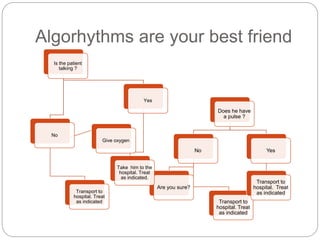
Algorhythms are your best friend
Does he have
a pulse ?
No
Are you sure?
Transport to
hospital. Treat
as indicated
Yes
Transport to
hospital. Treat
as indicated
Is the patient
talking ?
No
Give oxygen
Transport to
hospital. Treat
as indicated
Yes
Take him to the
hospital. Treat
as indicated.
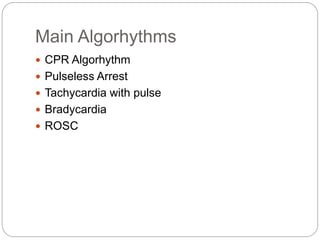
Main Algorhythms
 CPR Algorhythm
 Pulseless Arrest
 Tachycardia with pulse
 Bradycardia
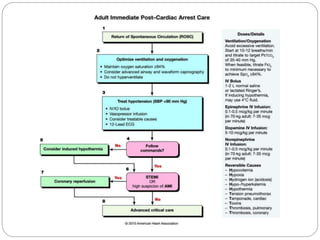
 ROSC
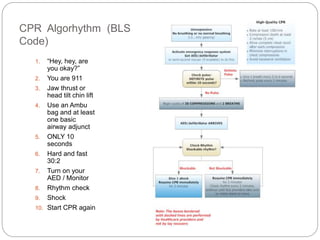
CPR Algorhythm (BLS
Code)
1. “Hey, hey, are
you okay?”
2. You are 911
3. Jaw thrust or
head tilt chin lift
4. Use an Ambu
bag and at least
one basic
airway adjunct
5. ONLY 10
seconds
6. Hard and fast
30:2
7. Turn on your
AED / Monitor
8. Rhythm check
9. Shock
10. Start CPR again
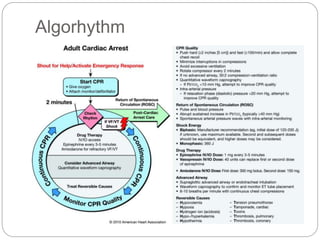
Algorhythm
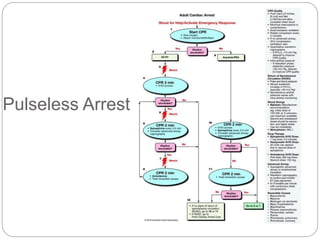
Pulseless Arrest
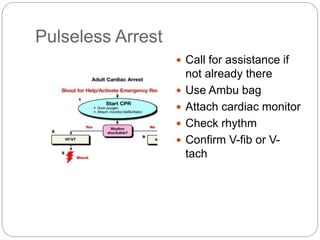
Pulseless Arrest
 Call for assistance if
not already there
 Use Ambu bag
 Attach cardiac monitor
 Check rhythm
 Confirm V-fib or V-
tach
Pulseless Arrest
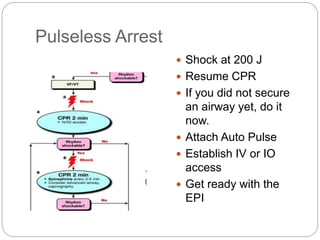
 Shock at 200 J
 Resume CPR
 If you did not secure
an airway yet, do it
now.
 Attach Auto Pulse
 Establish IV or IO
access
 Get ready with the
EPI
Pulseless Arrest
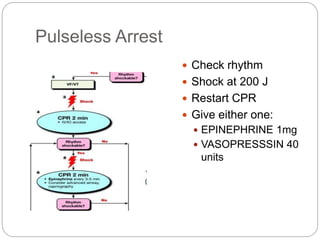
 Check rhythm
 Shock at 200 J
 Restart CPR
 Give either one:
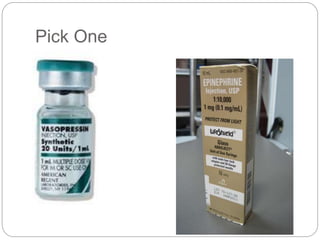
 EPINEPHRINE 1mg
 VASOPRESSSIN 40
units
Pick One
Pulseless Arrest
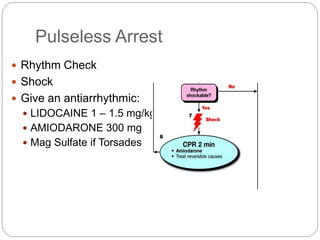
 Rhythm Check
 Shock
 Give an antiarrhythmic:
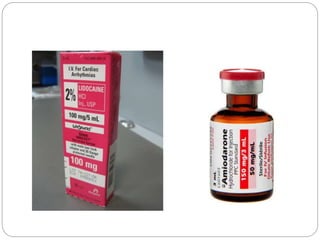
 LIDOCAINE 1 – 1.5 mg/kg
 AMIODARONE 300 mg
 Mag Sulfate if Torsades
Pulseless Arrest
 Package patient
 Initiate transport
 Reconfirm airway
 Continue to give EPINEPHRINE q 3 -5 minutes
 Repeat antiarrhythmics:
 LIDOCAINE (0.5- 0.75 mg / kg ) half first dose
 AMIODARONE (150 mg) half first dose
 If you get a pulse back with one of these drugs, set up
a drip.
Pulseless Arrest
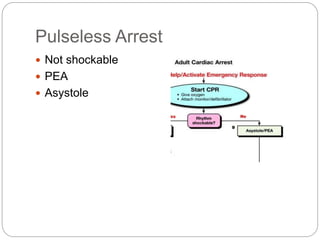
 Not shockable
 PEA
 Asystole
Pulseless Arrest
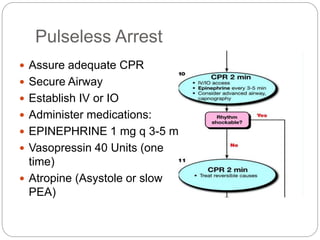
 Assure adequate CPR
 Secure Airway
 Establish IV or IO
 Administer medications:
 EPINEPHRINE 1 mg q 3-5 min
 Vasopressin 40 Units (one
time)
 Atropine (Asystole or slow
PEA)
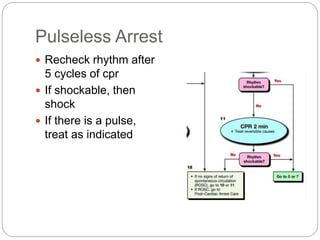
Pulseless Arrest
 Recheck rhythm after
5 cycles of cpr
 If shockable, then
shock
 If there is a pulse,
treat as indicated
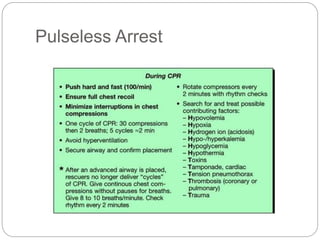
Pulseless Arrest
Pulseless Arrest
 If patient is intubated, do continuous
compressions
 Recheck tube placement often
 Document tube placement confirmations
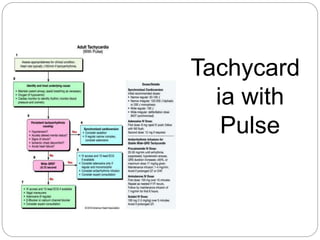
Tachycard
ia with
Pulse
Is there a pulse?
Is he stable or unstable?
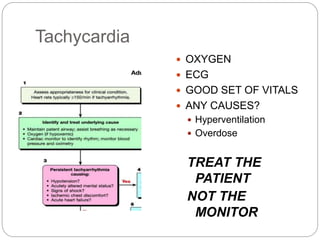
Tachycardia
 OXYGEN
 ECG
 GOOD SET OF VITALS
 ANY CAUSES?
 Hyperventilation
 Overdose
TREAT THE
PATIENT
NOT THE
MONITOR
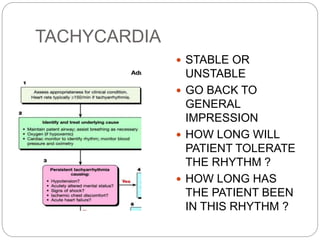
TACHYCARDIA
 STABLE OR
UNSTABLE
 GO BACK TO
GENERAL
IMPRESSION
 HOW LONG WILL
PATIENT TOLERATE
THE RHYTHM ?
 HOW LONG HAS
THE PATIENT BEEN
IN THIS RHYTHM ?
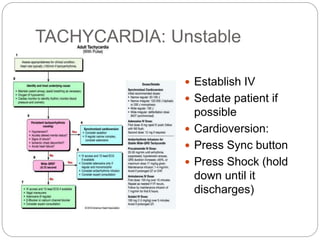
TACHYCARDIA: Unstable
 Establish IV
 Sedate patient if
possible
 Cardioversion:
 Press Sync button
 Press Shock (hold
down until it
discharges)
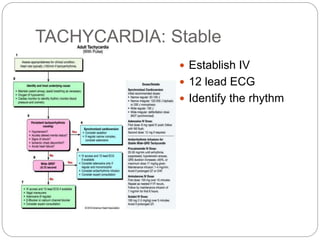
TACHYCARDIA: Stable
 Establish IV
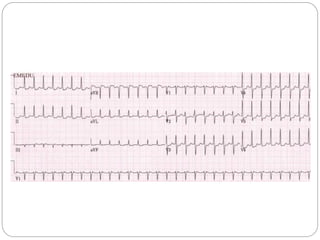
 12 lead ECG
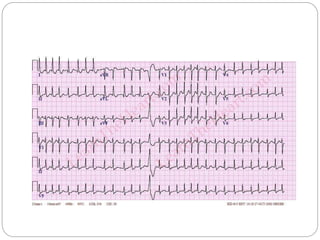
 Identify the rhythm
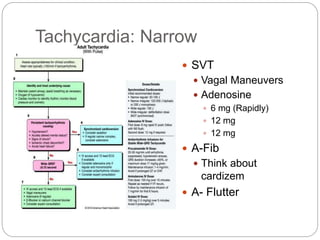
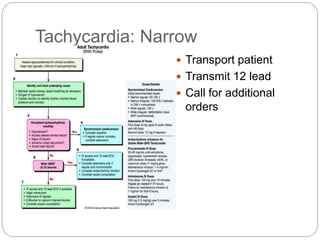
Tachycardia: Narrow
 SVT
 Vagal Maneuvers
 Adenosine
 6 mg (Rapidly)
 12 mg
 12 mg
 A-Fib
 Think about
cardizem
 A- Flutter
Tachycardia: Narrow
 Transport patient
 Transmit 12 lead
 Call for additional
orders
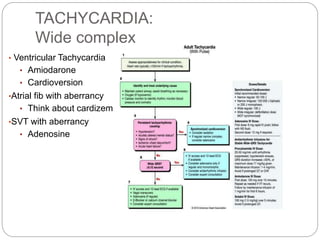
TACHYCARDIA:
Wide complex
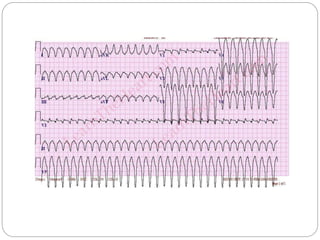
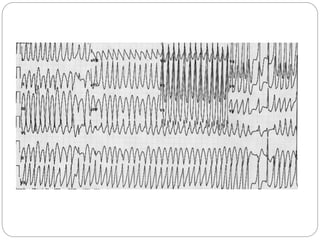
• Ventricular Tachycardia
• Amiodarone
• Cardioversion
•Atrial fib with aberrancy
• Think about cardizem
•SVT with aberrancy
• Adenosine
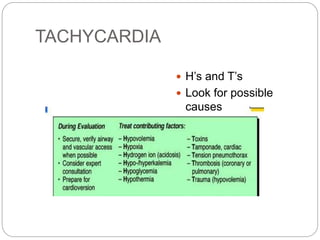
TACHYCARDIA
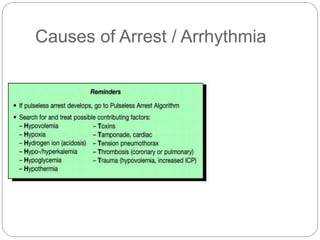
 H’s and T’s
 Look for possible
causes
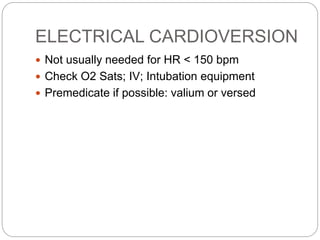
ELECTRICAL CARDIOVERSION
 Not usually needed for HR < 150 bpm
 Check O2 Sats; IV; Intubation equipment
 Premedicate if possible: valium or versed
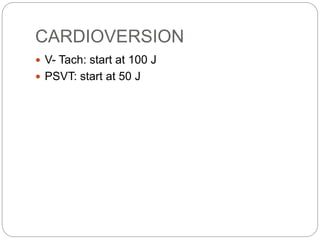
CARDIOVERSION
 V- Tach: start at 100 J
 PSVT: start at 50 J
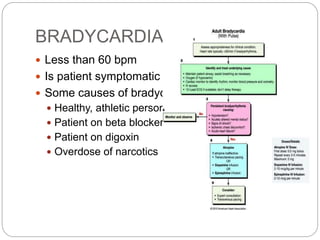
BRADYCARDIA
 Less than 60 bpm
 Is patient symptomatic ?
 Some causes of bradycardia
 Healthy, athletic person
 Patient on beta blockers
 Patient on digoxin
 Overdose of narcotics
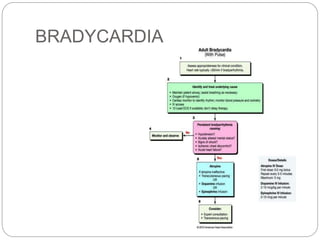
BRADYCARDIA
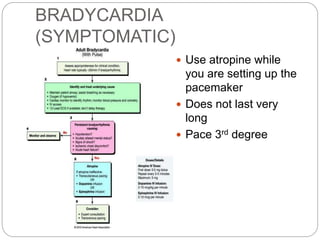
BRADYCARDIA
(SYMPTOMATIC)
 Use atropine while
you are setting up the
pacemaker
 Does not last very
long
 Pace 3rd degree
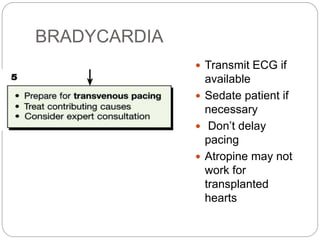
BRADYCARDIA
 Transmit ECG if
available
 Sedate patient if
necessary
 Don’t delay
pacing
 Atropine may not
work for
transplanted
hearts
Causes of Arrest / Arrhythmia
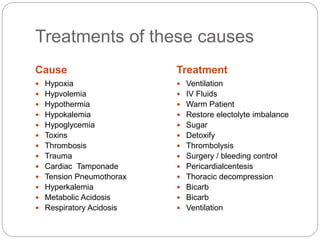
Treatments of these causes
Cause Treatment
 Hypoxia
 Hypvolemia
 Hypothermia
 Hypokalemia
 Hypoglycemia
 Toxins
 Thrombosis
 Trauma
 Cardiac Tamponade
 Tension Pneumothorax
 Hyperkalemia
 Metabolic Acidosis
 Respiratory Acidosis
 Ventilation
 IV Fluids
 Warm Patient
 Restore electolyte imbalance
 Sugar
 Detoxify
 Thrombolysis
 Surgery / bleeding control
 Pericardialcentesis
 Thoracic decompression
 Bicarb
 Bicarb
 Ventilation
HOW TO WORK MEGACODES IN
CLASS
 Use all help available
 If you are working with a partner and you have a
helper
 Person 1 - Airway
 Person 2- Monitor then IV / drugs
 Person 3 (1st responder or bystander)- Chest
compressions
 Be serious
 Use the ‘event’ button on LP 12
Amiodarone 3 Ways:
 For VF/Pulseless V-Tach
 V-Tach or wide complex regular
 Maintenance Drip
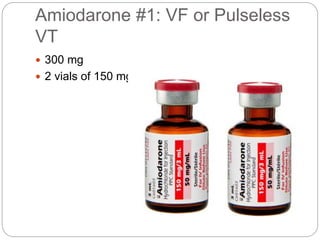
Amiodarone #1: VF or Pulseless
VT
 300 mg
 2 vials of 150 mg
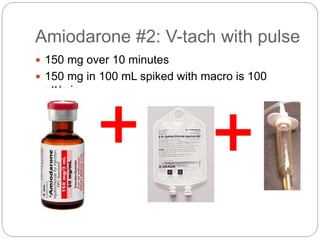
Amiodarone #2: V-tach with pulse
 150 mg over 10 minutes
 150 mg in 100 mL spiked with macro is 100
gtt/min
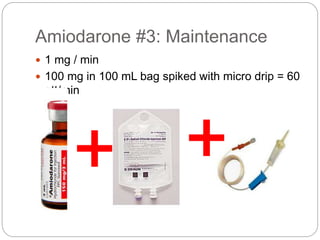
Amiodarone #3: Maintenance
 1 mg / min
 100 mg in 100 mL bag spiked with micro drip = 60
gtt/min

Acls 2011

  • 1.
  • 2.
    Algorhythms are yourbest friend Does he have a pulse ? No Are you sure? Transport to hospital. Treat as indicated Yes Transport to hospital. Treat as indicated Is the patient talking ? No Give oxygen Transport to hospital. Treat as indicated Yes Take him to the hospital. Treat as indicated.
  • 3.
    Main Algorhythms  CPRAlgorhythm  Pulseless Arrest  Tachycardia with pulse  Bradycardia  ROSC
  • 4.
    CPR Algorhythm (BLS Code) 1.“Hey, hey, are you okay?” 2. You are 911 3. Jaw thrust or head tilt chin lift 4. Use an Ambu bag and at least one basic airway adjunct 5. ONLY 10 seconds 6. Hard and fast 30:2 7. Turn on your AED / Monitor 8. Rhythm check 9. Shock 10. Start CPR again
  • 5.
  • 6.
  • 7.
    Pulseless Arrest  Callfor assistance if not already there  Use Ambu bag  Attach cardiac monitor  Check rhythm  Confirm V-fib or V- tach
  • 8.
    Pulseless Arrest  Shockat 200 J  Resume CPR  If you did not secure an airway yet, do it now.  Attach Auto Pulse  Establish IV or IO access  Get ready with the EPI
  • 9.
    Pulseless Arrest  Checkrhythm  Shock at 200 J  Restart CPR  Give either one:  EPINEPHRINE 1mg  VASOPRESSSIN 40 units
  • 10.
  • 11.
    Pulseless Arrest  RhythmCheck  Shock  Give an antiarrhythmic:  LIDOCAINE 1 – 1.5 mg/kg  AMIODARONE 300 mg  Mag Sulfate if Torsades
  • 13.
    Pulseless Arrest  Packagepatient  Initiate transport  Reconfirm airway  Continue to give EPINEPHRINE q 3 -5 minutes  Repeat antiarrhythmics:  LIDOCAINE (0.5- 0.75 mg / kg ) half first dose  AMIODARONE (150 mg) half first dose  If you get a pulse back with one of these drugs, set up a drip.
  • 14.
    Pulseless Arrest  Notshockable  PEA  Asystole
  • 15.
    Pulseless Arrest  Assureadequate CPR  Secure Airway  Establish IV or IO  Administer medications:  EPINEPHRINE 1 mg q 3-5 min  Vasopressin 40 Units (one time)  Atropine (Asystole or slow PEA)
  • 16.
    Pulseless Arrest  Recheckrhythm after 5 cycles of cpr  If shockable, then shock  If there is a pulse, treat as indicated
  • 17.
  • 18.
    Pulseless Arrest  Ifpatient is intubated, do continuous compressions  Recheck tube placement often  Document tube placement confirmations
  • 19.
  • 20.
    Is there apulse?
  • 21.
    Is he stableor unstable?
  • 22.
    Tachycardia  OXYGEN  ECG GOOD SET OF VITALS  ANY CAUSES?  Hyperventilation  Overdose TREAT THE PATIENT NOT THE MONITOR
  • 23.
    TACHYCARDIA  STABLE OR UNSTABLE GO BACK TO GENERAL IMPRESSION  HOW LONG WILL PATIENT TOLERATE THE RHYTHM ?  HOW LONG HAS THE PATIENT BEEN IN THIS RHYTHM ?
  • 24.
    TACHYCARDIA: Unstable  EstablishIV  Sedate patient if possible  Cardioversion:  Press Sync button  Press Shock (hold down until it discharges)
  • 25.
    TACHYCARDIA: Stable  EstablishIV  12 lead ECG  Identify the rhythm
  • 27.
    Tachycardia: Narrow  SVT Vagal Maneuvers  Adenosine  6 mg (Rapidly)  12 mg  12 mg  A-Fib  Think about cardizem  A- Flutter
  • 29.
    Tachycardia: Narrow  Transportpatient  Transmit 12 lead  Call for additional orders
  • 30.
    TACHYCARDIA: Wide complex • VentricularTachycardia • Amiodarone • Cardioversion •Atrial fib with aberrancy • Think about cardizem •SVT with aberrancy • Adenosine
  • 33.
    TACHYCARDIA  H’s andT’s  Look for possible causes
  • 34.
    ELECTRICAL CARDIOVERSION  Notusually needed for HR < 150 bpm  Check O2 Sats; IV; Intubation equipment  Premedicate if possible: valium or versed
  • 35.
    CARDIOVERSION  V- Tach:start at 100 J  PSVT: start at 50 J
  • 36.
    BRADYCARDIA  Less than60 bpm  Is patient symptomatic ?  Some causes of bradycardia  Healthy, athletic person  Patient on beta blockers  Patient on digoxin  Overdose of narcotics
  • 37.
  • 38.
    BRADYCARDIA (SYMPTOMATIC)  Use atropinewhile you are setting up the pacemaker  Does not last very long  Pace 3rd degree
  • 39.
    BRADYCARDIA  Transmit ECGif available  Sedate patient if necessary  Don’t delay pacing  Atropine may not work for transplanted hearts
  • 40.
    Causes of Arrest/ Arrhythmia
  • 42.
    Treatments of thesecauses Cause Treatment  Hypoxia  Hypvolemia  Hypothermia  Hypokalemia  Hypoglycemia  Toxins  Thrombosis  Trauma  Cardiac Tamponade  Tension Pneumothorax  Hyperkalemia  Metabolic Acidosis  Respiratory Acidosis  Ventilation  IV Fluids  Warm Patient  Restore electolyte imbalance  Sugar  Detoxify  Thrombolysis  Surgery / bleeding control  Pericardialcentesis  Thoracic decompression  Bicarb  Bicarb  Ventilation
  • 43.
    HOW TO WORKMEGACODES IN CLASS  Use all help available  If you are working with a partner and you have a helper  Person 1 - Airway  Person 2- Monitor then IV / drugs  Person 3 (1st responder or bystander)- Chest compressions  Be serious  Use the ‘event’ button on LP 12
  • 44.
    Amiodarone 3 Ways: For VF/Pulseless V-Tach  V-Tach or wide complex regular  Maintenance Drip
  • 45.
    Amiodarone #1: VFor Pulseless VT  300 mg  2 vials of 150 mg
  • 46.
    Amiodarone #2: V-tachwith pulse  150 mg over 10 minutes  150 mg in 100 mL spiked with macro is 100 gtt/min
  • 47.
    Amiodarone #3: Maintenance 1 mg / min  100 mg in 100 mL bag spiked with micro drip = 60 gtt/min