ADVANCED CARDIAC LIFE
SUPPORT(ACLS) –
Dr. Sushma Saroa
Dr. S K Bansal
Dr. Vani Bhageria
Cantonment General Hospital
Advanced cardiac life support or advanced
cardiovascular life support (ACLS) refers
to a set of clinical interventions for the
urgent treatment of cardiac arrest, stroke
and other life-threatening medical
emergencies, as well as the knowledge
and skills to deploy those interventions.
The ACLS guidelines were first published in
1974 by the American Heart Association
and were updated in every five years and
publishes as set of recommendations and
educational materials.
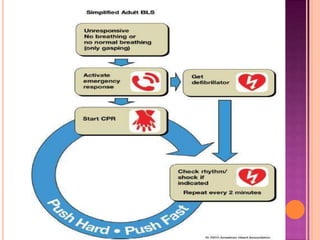
IMPORTANCE OF BLS IN ACLS
•BLS Basic life support makes up the core
foundation of ACLS
•Bystandard chest compression .
•The widespread availability of AED
•Early Defibrillation
Only qualified health care providers can
provide ACLS, as it requires the ability
 To manage the person's airway,
 To initiate IV access,
 To read and interpret ECG
 To understand emergency pharmacology
 Airway
 Breathing
 Circulation
 Differential diagnosis
Head tilt
Chin lift
Jaw thurst
AIRWAY
 Initially provide rescue breaths using an
ambu bag and a mask at full flow of oxygen
 Continuously assess airway patency while
giving breaths .
 If ventilation is not adequate consider an
advanced airway device.(ETT, LMA, laryngeal
tube )
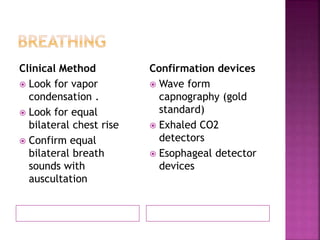
Clinical Method
 Look for vapor
condensation .
 Look for equal
bilateral chest rise
 Confirm equal
bilateral breath
sounds with
auscultation
Confirmation devices
 Wave form
capnography (gold
standard)
 Exhaled CO2
detectors
 Esophageal detector
devices
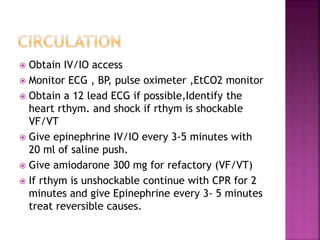
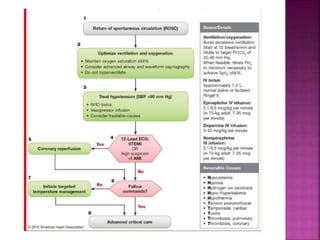
 Obtain IV/IO access
 Monitor ECG , BP, pulse oximeter ,EtCO2 monitor
 Obtain a 12 lead ECG if possible,Identify the
heart rthym. and shock if rthym is shockable
VF/VT
 Give epinephrine IV/IO every 3-5 minutes with
20 ml of saline push.
 Give amiodarone 300 mg for refactory (VF/VT)
 If rthym is unshockable continue with CPR for 2
minutes and give Epinephrine every 3- 5 minutes
treat reversible causes.
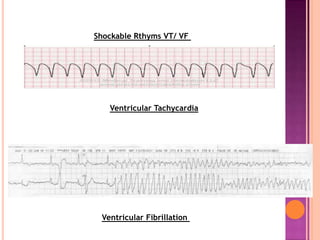
Shockable Rthyms VT/ VF
Ventricular Tachycardia
Ventricular Fibrillation
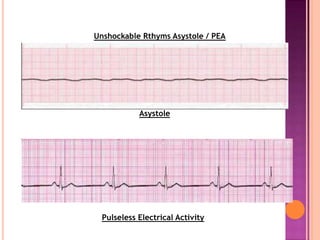
Unshockable Rthyms Asystole / PEA
Asystole
Pulseless Electrical Activity
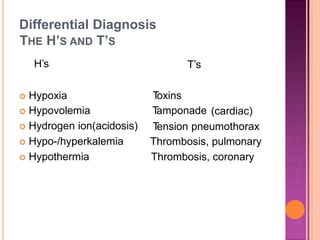
Differential Diagnosis
THE H’S
H’s
T’SAND
T’s
 Hypoxia
 Hypovolemia
 Hydrogen ion(acidosis)
 Hypo-/hyperkalemia
 Hypothermia
Toxins
Tamponade (cardiac)
Tension pneumothorax
Thrombosis, pulmonary
Thrombosis, coronary
ACTION IN TIME CAN SAVE A LIFE!!!
THANK YOU

Acls update-160228152124

  • 1.
    ADVANCED CARDIAC LIFE SUPPORT(ACLS)– Dr. Sushma Saroa Dr. S K Bansal Dr. Vani Bhageria Cantonment General Hospital
  • 2.
    Advanced cardiac lifesupport or advanced cardiovascular life support (ACLS) refers to a set of clinical interventions for the urgent treatment of cardiac arrest, stroke and other life-threatening medical emergencies, as well as the knowledge and skills to deploy those interventions.
  • 3.
    The ACLS guidelineswere first published in 1974 by the American Heart Association and were updated in every five years and publishes as set of recommendations and educational materials.
  • 4.
    IMPORTANCE OF BLSIN ACLS •BLS Basic life support makes up the core foundation of ACLS •Bystandard chest compression . •The widespread availability of AED •Early Defibrillation
  • 5.
    Only qualified healthcare providers can provide ACLS, as it requires the ability  To manage the person's airway,  To initiate IV access,  To read and interpret ECG  To understand emergency pharmacology
  • 8.
     Airway  Breathing Circulation  Differential diagnosis
  • 9.
  • 10.
     Initially providerescue breaths using an ambu bag and a mask at full flow of oxygen  Continuously assess airway patency while giving breaths .  If ventilation is not adequate consider an advanced airway device.(ETT, LMA, laryngeal tube )
  • 11.
    Clinical Method  Lookfor vapor condensation .  Look for equal bilateral chest rise  Confirm equal bilateral breath sounds with auscultation Confirmation devices  Wave form capnography (gold standard)  Exhaled CO2 detectors  Esophageal detector devices
  • 12.
     Obtain IV/IOaccess  Monitor ECG , BP, pulse oximeter ,EtCO2 monitor  Obtain a 12 lead ECG if possible,Identify the heart rthym. and shock if rthym is shockable VF/VT  Give epinephrine IV/IO every 3-5 minutes with 20 ml of saline push.  Give amiodarone 300 mg for refactory (VF/VT)  If rthym is unshockable continue with CPR for 2 minutes and give Epinephrine every 3- 5 minutes treat reversible causes.
  • 13.
    Shockable Rthyms VT/VF Ventricular Tachycardia Ventricular Fibrillation
  • 14.
    Unshockable Rthyms Asystole/ PEA Asystole Pulseless Electrical Activity
  • 15.
    Differential Diagnosis THE H’S H’s T’SAND T’s Hypoxia  Hypovolemia  Hydrogen ion(acidosis)  Hypo-/hyperkalemia  Hypothermia Toxins Tamponade (cardiac) Tension pneumothorax Thrombosis, pulmonary Thrombosis, coronary
  • 17.
    ACTION IN TIMECAN SAVE A LIFE!!! THANK YOU