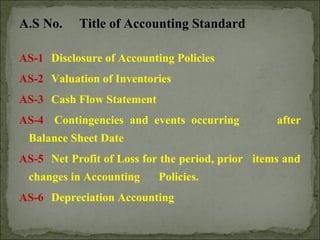
A.S No. Title of Accounting Standard
AS-1 Disclosure of Accounting Policies
AS-2 Valuation of Inventories
AS-3 Cash Flow Statement
AS-4 Contingencies and events occurring after
Balance Sheet Date
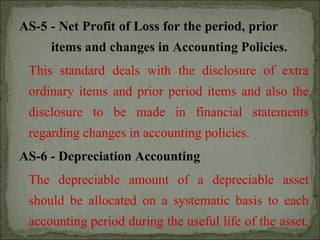
AS-5 Net Profit of Loss for the period, prior items and
changes in Accounting Policies.
AS-6 Depreciation Accounting
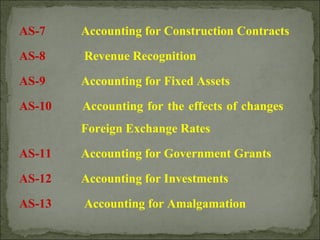
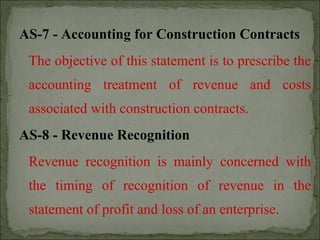
AS-7 Accounting for Construction Contracts
AS-8 Revenue Recognition
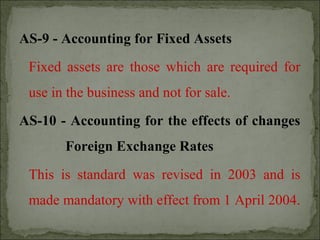
AS-9 Accounting for Fixed Assets
AS-10 Accounting for the effects of changes
Foreign Exchange Rates
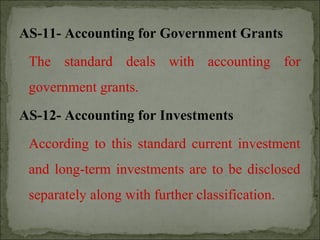
AS-11 Accounting for Government Grants
AS-12 Accounting for Investments
AS-13 Accounting for Amalgamation
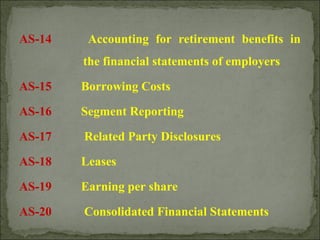
AS-14 Accounting for retirement benefits in
the financial statements of employers
AS-15 Borrowing Costs
AS-16 Segment Reporting
AS-17 Related Party Disclosures
AS-18 Leases
AS-19 Earning per share
AS-20 Consolidated Financial Statements
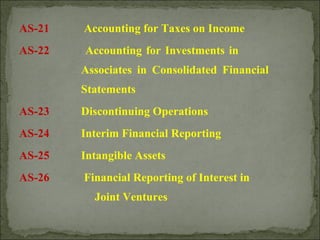
AS-21 Accounting for Taxes on Income
AS-22 Accounting for Investments in
Associates in Consolidated Financial
Statements
AS-23 Discontinuing Operations
AS-24 Interim Financial Reporting
AS-25 Intangible Assets
AS-26 Financial Reporting of Interest in
Joint Ventures
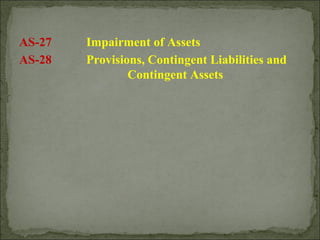
AS-27 Impairment of Assets
AS-28 Provisions, Contingent Liabilities and
Contingent Assets
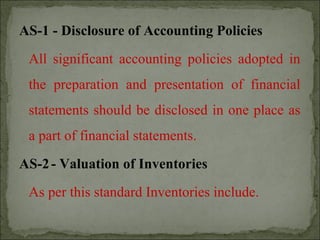
AS-1 - Disclosure of Accounting Policies
All significant accounting policies adopted in
the preparation and presentation of financial
statements should be disclosed in one place as
a part of financial statements.
AS-2- Valuation of Inventories
As per this standard Inventories include.
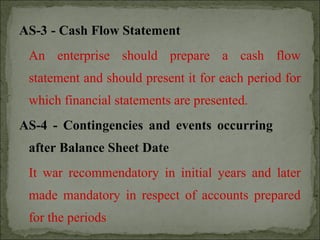
AS-3 - Cash Flow Statement
An enterprise should prepare a cash flow
statement and should present it for each period for
which financial statements are presented.
AS-4 - Contingencies and events occurring
after Balance Sheet Date
It war recommendatory in initial years and later
made mandatory in respect of accounts prepared
for the periods
AS-5 - Net Profit of Loss for the period, prior
items and changes in Accounting Policies.
This standard deals with the disclosure of extra
ordinary items and prior period items and also the
disclosure to be made in financial statements
regarding changes in accounting policies.
AS-6 - Depreciation Accounting
The depreciable amount of a depreciable asset
should be allocated on a systematic basis to each
accounting period during the useful life of the asset.
AS-7 - Accounting for Construction Contracts
The objective of this statement is to prescribe the
accounting treatment of revenue and costs
associated with construction contracts.
AS-8 - Revenue Recognition
Revenue recognition is mainly concerned with
the timing of recognition of revenue in the
statement of profit and loss of an enterprise.
AS-9 - Accounting for Fixed Assets
Fixed assets are those which are required for
use in the business and not for sale.
AS-10 - Accounting for the effects of changes
Foreign Exchange Rates
This is standard was revised in 2003 and is
made mandatory with effect from 1 April 2004.
AS-11- Accounting for Government Grants
The standard deals with accounting for
government grants.
AS-12- Accounting for Investments
According to this standard current investment
and long-term investments are to be disclosed
separately along with further classification.
AS-14- Accounting for Amalgamation
This standard is related with the accounting for
amalgamation and treatment of resultant of
goodwill or capital reserve.
AS-15- Accounting for retirement benefits in
the financial statements of employers
The standard deals with accounting for retirement
benefits in the financial statements of employees.
AS-16- Borrowing Costs
This standard should be applied in accounting
for borrowing costs.
AS-17- Segment Reporting
The purpose of segment information is to help
users of financial statements in better
understanding and make more informed
judgements about the enterprise as a whole.
AS-18- Related Party Disclosures
The objective of this statement is to establish
requirements for disclosure of related party
relationships and transaction between a reporting
enterprise and its related parties.
AS-19- Leases
The objectives of this statement is to prescribe, for
lessees and lessors, the appropriate accounting
policies and disclosure in relation to finance leases
and operating leases.
AS-20- Earning per share
The focus of this statement is on the
denominator of the earning per share.
AS-21- Consolidated Financial Statements
The standard is also applied in accounting for
investments in subsidiaries in the separate
financial statements of a parent.
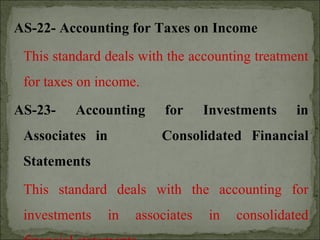
AS-22- Accounting for Taxes on Income
This standard deals with the accounting treatment
for taxes on income.
AS-23- Accounting for Investments in
Associates in Consolidated Financial
Statements
This standard deals with the accounting for
investments in associates in consolidated
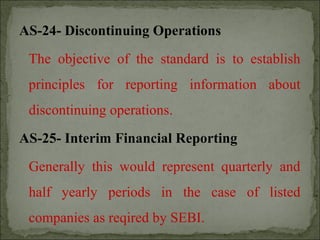
AS-24- Discontinuing Operations
The objective of the standard is to establish
principles for reporting information about
discontinuing operations.
AS-25- Interim Financial Reporting
Generally this would represent quarterly and
half yearly periods in the case of listed
companies as reqired by SEBI.
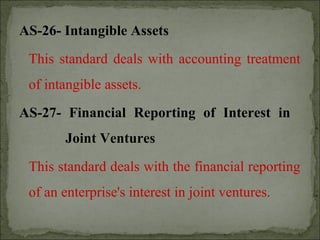
AS-26- Intangible Assets
This standard deals with accounting treatment
of intangible assets.
AS-27- Financial Reporting of Interest in
Joint Ventures
This standard deals with the financial reporting
of an enterprise's interest in joint ventures.
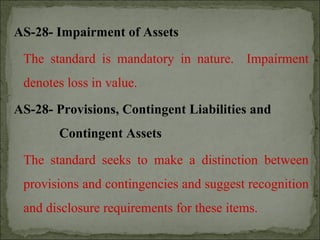
AS-28- Impairment of Assets
The standard is mandatory in nature. Impairment
denotes loss in value.
AS-28- Provisions, Contingent Liabilities and
Contingent Assets
The standard seeks to make a distinction between
provisions and contingencies and suggest recognition
and disclosure requirements for these items.

accounting standard

  • 2.
    A.S No. Titleof Accounting Standard AS-1 Disclosure of Accounting Policies AS-2 Valuation of Inventories AS-3 Cash Flow Statement AS-4 Contingencies and events occurring after Balance Sheet Date AS-5 Net Profit of Loss for the period, prior items and changes in Accounting Policies. AS-6 Depreciation Accounting
  • 3.
    AS-7 Accounting forConstruction Contracts AS-8 Revenue Recognition AS-9 Accounting for Fixed Assets AS-10 Accounting for the effects of changes Foreign Exchange Rates AS-11 Accounting for Government Grants AS-12 Accounting for Investments AS-13 Accounting for Amalgamation
  • 4.
    AS-14 Accounting forretirement benefits in the financial statements of employers AS-15 Borrowing Costs AS-16 Segment Reporting AS-17 Related Party Disclosures AS-18 Leases AS-19 Earning per share AS-20 Consolidated Financial Statements
  • 5.
    AS-21 Accounting forTaxes on Income AS-22 Accounting for Investments in Associates in Consolidated Financial Statements AS-23 Discontinuing Operations AS-24 Interim Financial Reporting AS-25 Intangible Assets AS-26 Financial Reporting of Interest in Joint Ventures
  • 6.
    AS-27 Impairment ofAssets AS-28 Provisions, Contingent Liabilities and Contingent Assets
  • 7.
    AS-1 - Disclosureof Accounting Policies All significant accounting policies adopted in the preparation and presentation of financial statements should be disclosed in one place as a part of financial statements. AS-2- Valuation of Inventories As per this standard Inventories include.
  • 8.
    AS-3 - CashFlow Statement An enterprise should prepare a cash flow statement and should present it for each period for which financial statements are presented. AS-4 - Contingencies and events occurring after Balance Sheet Date It war recommendatory in initial years and later made mandatory in respect of accounts prepared for the periods
  • 9.
    AS-5 - NetProfit of Loss for the period, prior items and changes in Accounting Policies. This standard deals with the disclosure of extra ordinary items and prior period items and also the disclosure to be made in financial statements regarding changes in accounting policies. AS-6 - Depreciation Accounting The depreciable amount of a depreciable asset should be allocated on a systematic basis to each accounting period during the useful life of the asset.
  • 10.
    AS-7 - Accountingfor Construction Contracts The objective of this statement is to prescribe the accounting treatment of revenue and costs associated with construction contracts. AS-8 - Revenue Recognition Revenue recognition is mainly concerned with the timing of recognition of revenue in the statement of profit and loss of an enterprise.
  • 11.
    AS-9 - Accountingfor Fixed Assets Fixed assets are those which are required for use in the business and not for sale. AS-10 - Accounting for the effects of changes Foreign Exchange Rates This is standard was revised in 2003 and is made mandatory with effect from 1 April 2004.
  • 12.
    AS-11- Accounting forGovernment Grants The standard deals with accounting for government grants. AS-12- Accounting for Investments According to this standard current investment and long-term investments are to be disclosed separately along with further classification.
  • 13.
    AS-14- Accounting forAmalgamation This standard is related with the accounting for amalgamation and treatment of resultant of goodwill or capital reserve. AS-15- Accounting for retirement benefits in the financial statements of employers The standard deals with accounting for retirement benefits in the financial statements of employees.
  • 14.
    AS-16- Borrowing Costs Thisstandard should be applied in accounting for borrowing costs. AS-17- Segment Reporting The purpose of segment information is to help users of financial statements in better understanding and make more informed judgements about the enterprise as a whole.
  • 15.
    AS-18- Related PartyDisclosures The objective of this statement is to establish requirements for disclosure of related party relationships and transaction between a reporting enterprise and its related parties. AS-19- Leases The objectives of this statement is to prescribe, for lessees and lessors, the appropriate accounting policies and disclosure in relation to finance leases and operating leases.
  • 16.
    AS-20- Earning pershare The focus of this statement is on the denominator of the earning per share. AS-21- Consolidated Financial Statements The standard is also applied in accounting for investments in subsidiaries in the separate financial statements of a parent.
  • 17.
    AS-22- Accounting forTaxes on Income This standard deals with the accounting treatment for taxes on income. AS-23- Accounting for Investments in Associates in Consolidated Financial Statements This standard deals with the accounting for investments in associates in consolidated
  • 18.
    AS-24- Discontinuing Operations Theobjective of the standard is to establish principles for reporting information about discontinuing operations. AS-25- Interim Financial Reporting Generally this would represent quarterly and half yearly periods in the case of listed companies as reqired by SEBI.
  • 19.
    AS-26- Intangible Assets Thisstandard deals with accounting treatment of intangible assets. AS-27- Financial Reporting of Interest in Joint Ventures This standard deals with the financial reporting of an enterprise's interest in joint ventures.
  • 20.
    AS-28- Impairment ofAssets The standard is mandatory in nature. Impairment denotes loss in value. AS-28- Provisions, Contingent Liabilities and Contingent Assets The standard seeks to make a distinction between provisions and contingencies and suggest recognition and disclosure requirements for these items.