Abrasive Jet
Machining
(AJM)
UPENDRA KUMAR MALLA
What is AJM ?
• Abrasive Jet Machining (AJM), also known as
micro-abrasive blasting, is a mechanical energy
based unconventional machining process used to
remove unwanted material from a given workpiece.
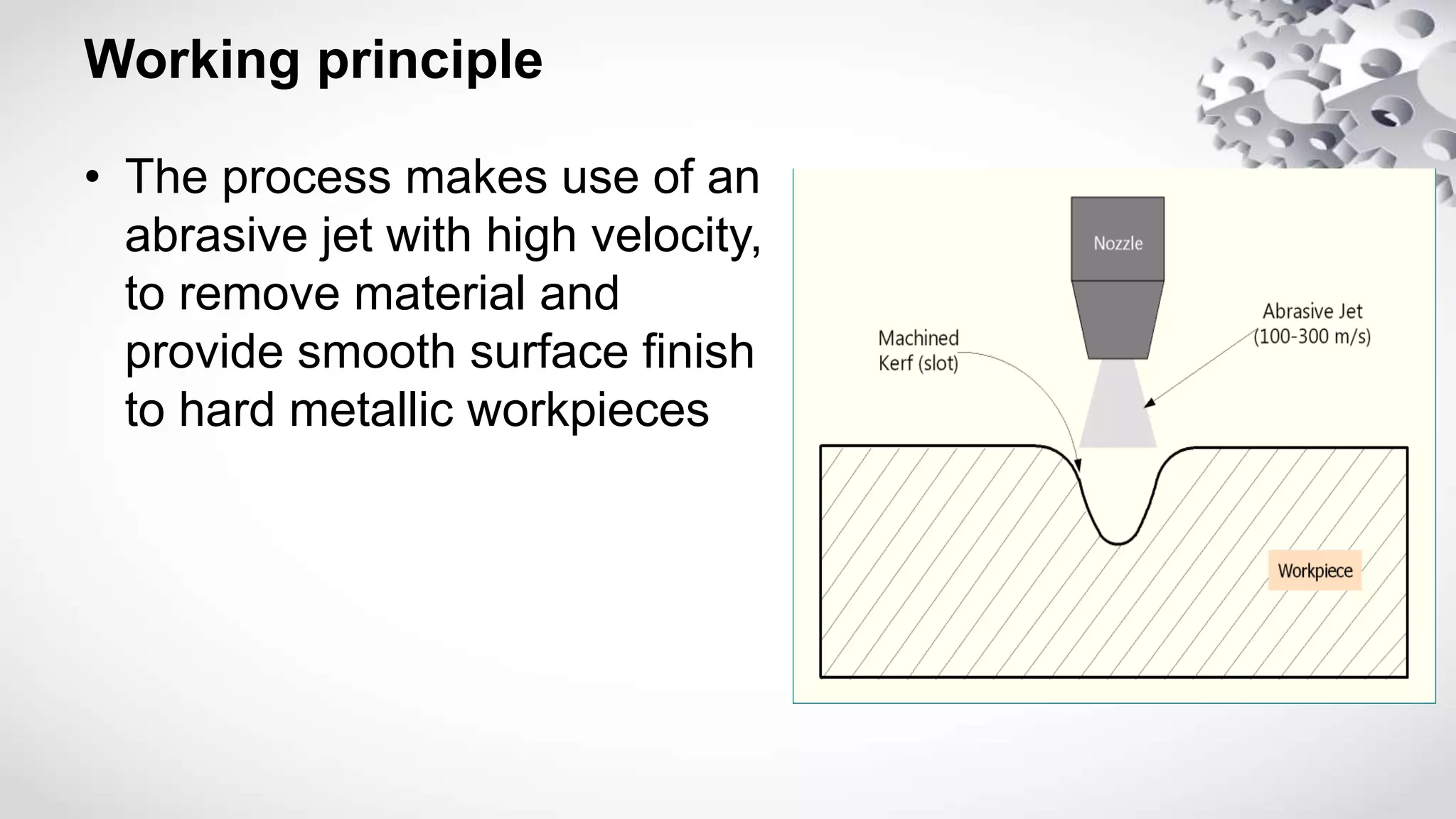
Working principle
• The process makes use of an
abrasive jet with high velocity,
to remove material and
provide smooth surface finish
to hard metallic workpieces
Working principle
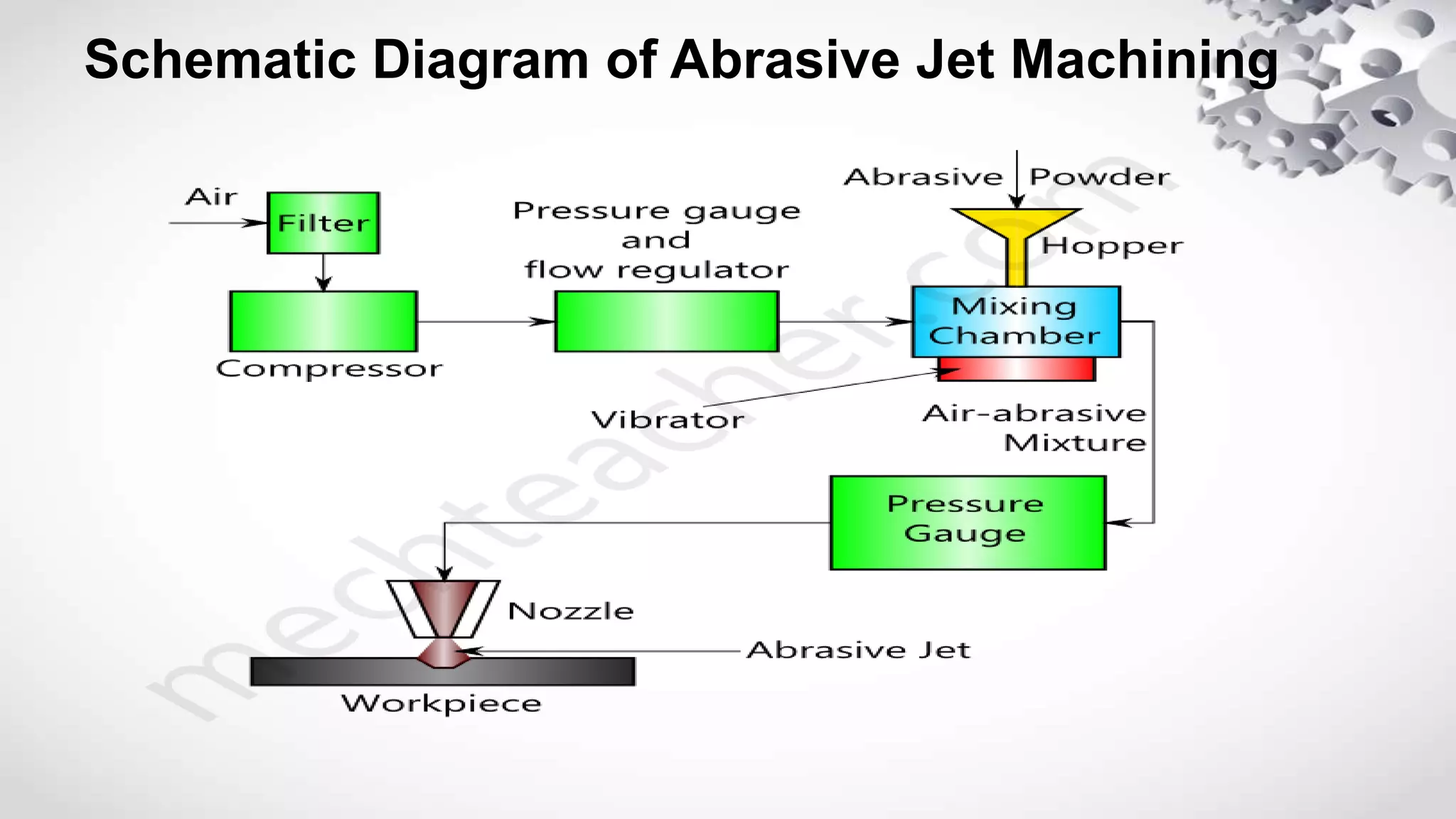
Schematic Diagram of Abrasive Jet Machining
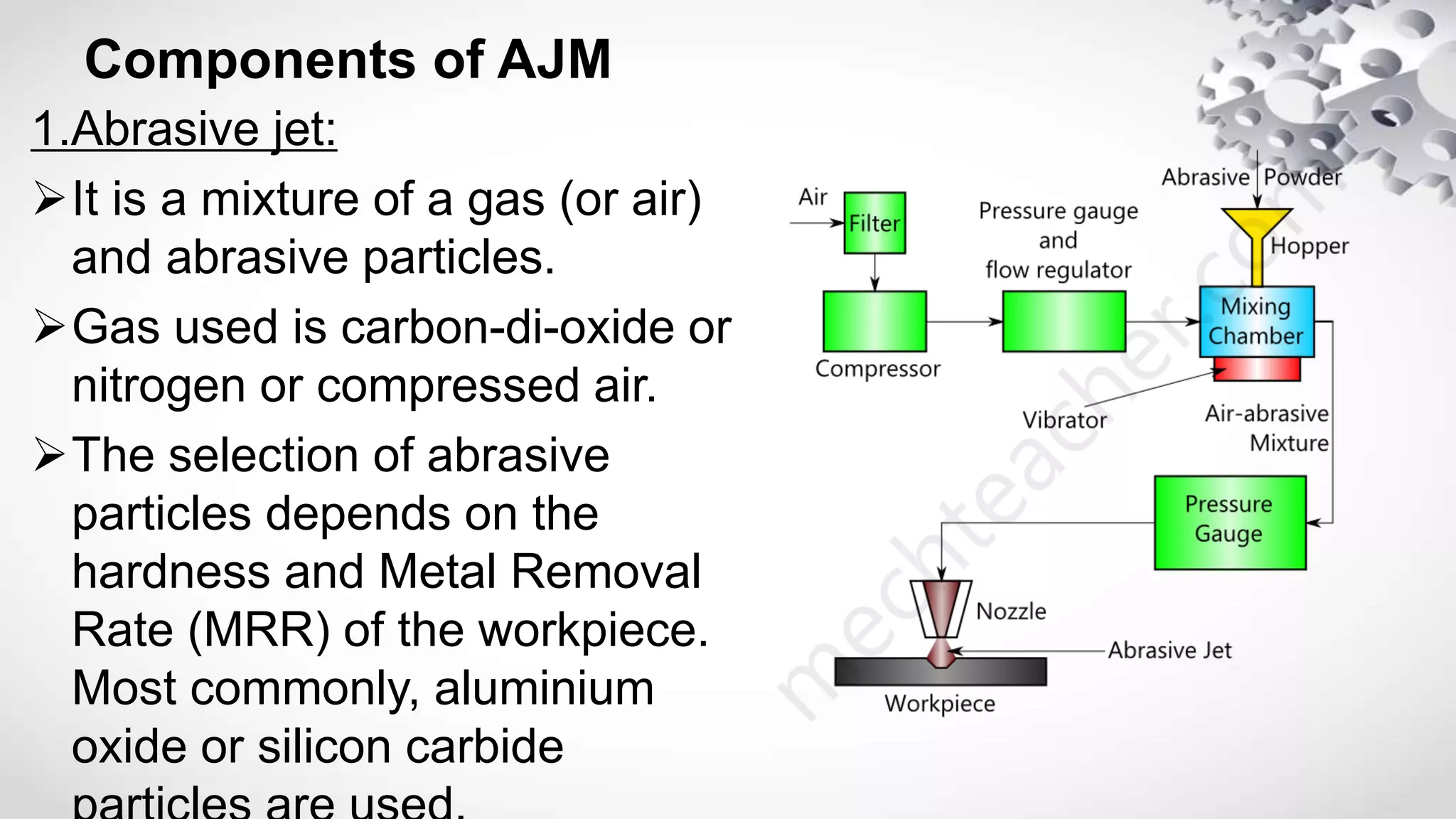
Components of AJM
1.Abrasive jet:
It is a mixture of a gas (or air)
and abrasive particles.
Gas used is carbon-di-oxide or
nitrogen or compressed air.
The selection of abrasive
particles depends on the
hardness and Metal Removal
Rate (MRR) of the workpiece.
Most commonly, aluminium
oxide or silicon carbide
Components of AJM
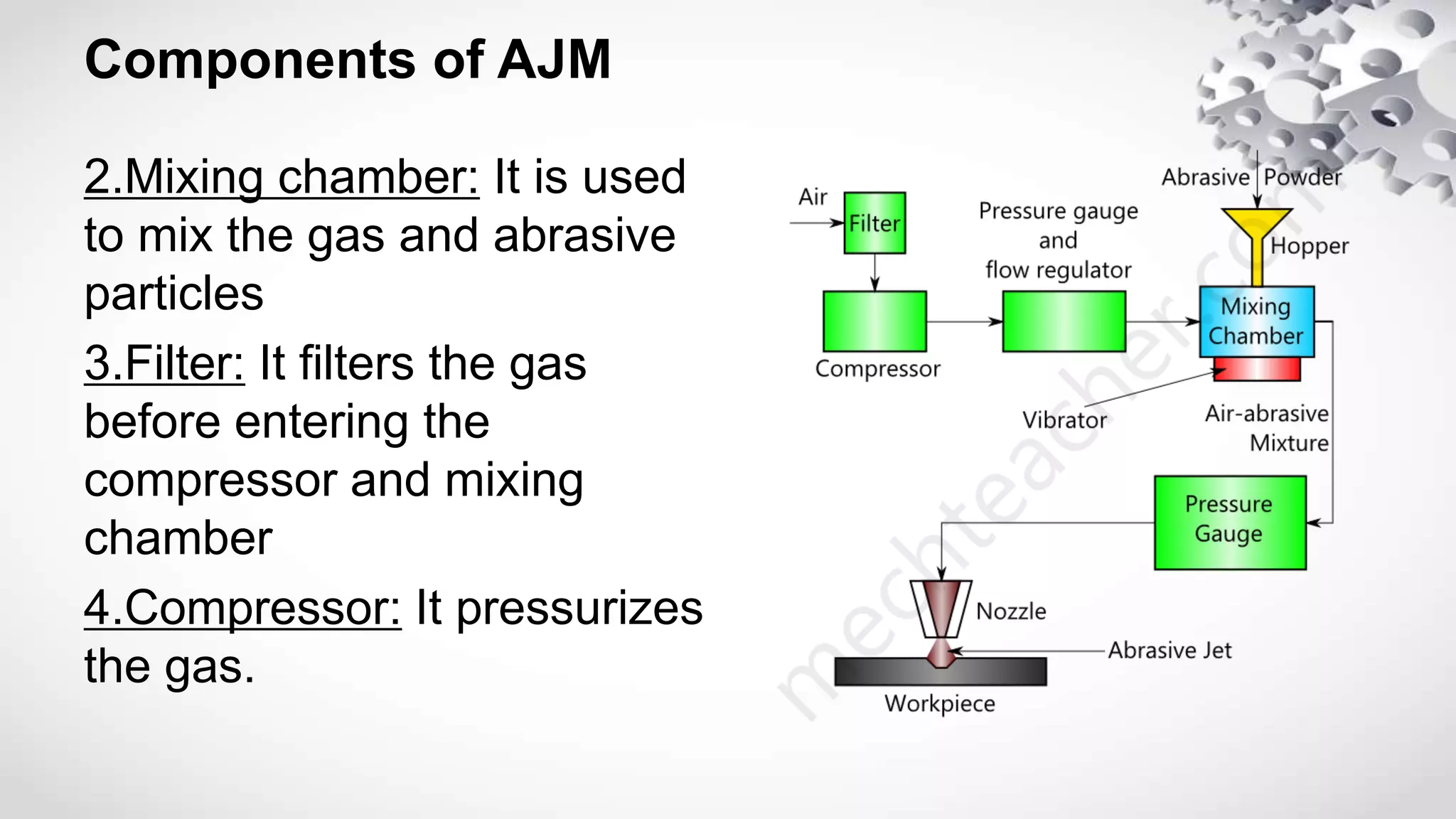
2.Mixing chamber: It is used
to mix the gas and abrasive
particles
3.Filter: It filters the gas
before entering the
compressor and mixing
chamber
4.Compressor: It pressurizes
the gas.
Components of AJM
5.Hopper: Hopper is used for
feeding the abrasive powder.
6.Pressure gauges and flow
regulators: They are used to
control the pressure and regulate
the flow rate of abrasive jet.
7.Vibrator: It is provided below
the mixing chamber. It controls
the abrasive powder feed rate in
the mixing chamber.
Components of AJM
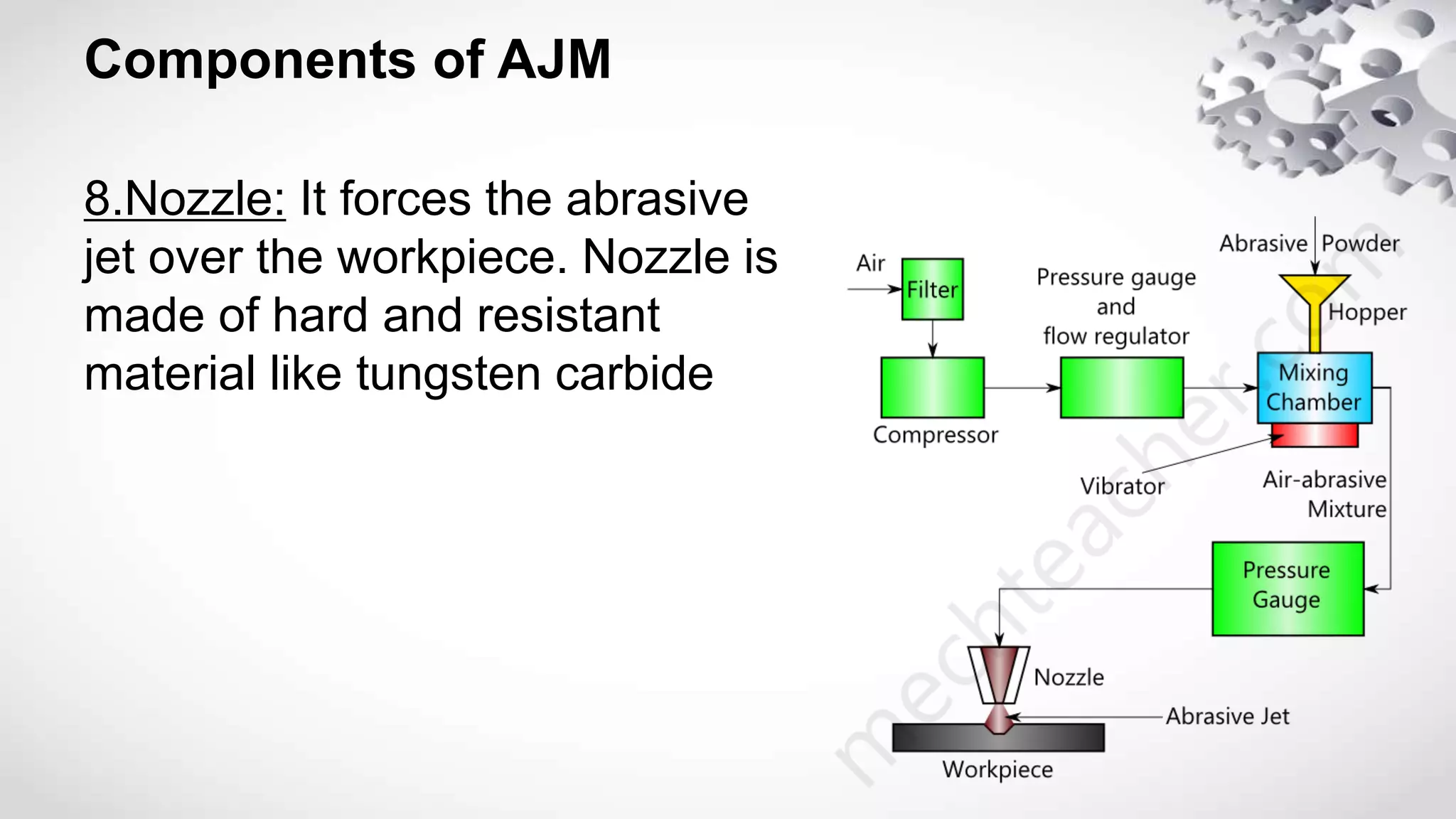
8.Nozzle: It forces the abrasive
jet over the workpiece. Nozzle is
made of hard and resistant
material like tungsten carbide
Operations performed using AJM
• Drilling
• Boring
• Surface finishing
• Cutting
• Cleaning
• Deburring
• Etching
• Trimming
• Milling
Advantages Disadvantages
1. Metal removal rate is low
2. In certain circumstances,
abrasive particles might
settle over the workpiece.
3. Nozzle life is less. Nozzle
should be maintained
periodically.
4. Abrasive Jet Machining
cannot be used to
machine soft materials.
1. Surface of the workpiece
is cleaned automatically.
2. Smooth surface finish can
be obtained.
3. Equipment cost is low.
4. Hard materials and
materials of high strength
can be easily machined.
Thanks for watching
Please Like ,Share and Follow
UPENDRA KUMAR MALLA

Abrasive jet machining (ajm)

  • 1.
  • 2.
    What is AJM? • Abrasive Jet Machining (AJM), also known as micro-abrasive blasting, is a mechanical energy based unconventional machining process used to remove unwanted material from a given workpiece.
  • 3.
    Working principle • Theprocess makes use of an abrasive jet with high velocity, to remove material and provide smooth surface finish to hard metallic workpieces
  • 4.
  • 5.
    Schematic Diagram ofAbrasive Jet Machining
  • 6.
    Components of AJM 1.Abrasivejet: It is a mixture of a gas (or air) and abrasive particles. Gas used is carbon-di-oxide or nitrogen or compressed air. The selection of abrasive particles depends on the hardness and Metal Removal Rate (MRR) of the workpiece. Most commonly, aluminium oxide or silicon carbide
  • 7.
    Components of AJM 2.Mixingchamber: It is used to mix the gas and abrasive particles 3.Filter: It filters the gas before entering the compressor and mixing chamber 4.Compressor: It pressurizes the gas.
  • 8.
    Components of AJM 5.Hopper:Hopper is used for feeding the abrasive powder. 6.Pressure gauges and flow regulators: They are used to control the pressure and regulate the flow rate of abrasive jet. 7.Vibrator: It is provided below the mixing chamber. It controls the abrasive powder feed rate in the mixing chamber.
  • 9.
    Components of AJM 8.Nozzle:It forces the abrasive jet over the workpiece. Nozzle is made of hard and resistant material like tungsten carbide
  • 10.
    Operations performed usingAJM • Drilling • Boring • Surface finishing • Cutting • Cleaning • Deburring • Etching • Trimming • Milling
  • 11.
    Advantages Disadvantages 1. Metalremoval rate is low 2. In certain circumstances, abrasive particles might settle over the workpiece. 3. Nozzle life is less. Nozzle should be maintained periodically. 4. Abrasive Jet Machining cannot be used to machine soft materials. 1. Surface of the workpiece is cleaned automatically. 2. Smooth surface finish can be obtained. 3. Equipment cost is low. 4. Hard materials and materials of high strength can be easily machined.
  • 12.
    Thanks for watching PleaseLike ,Share and Follow UPENDRA KUMAR MALLA