1
Introduction to theEndocrine System
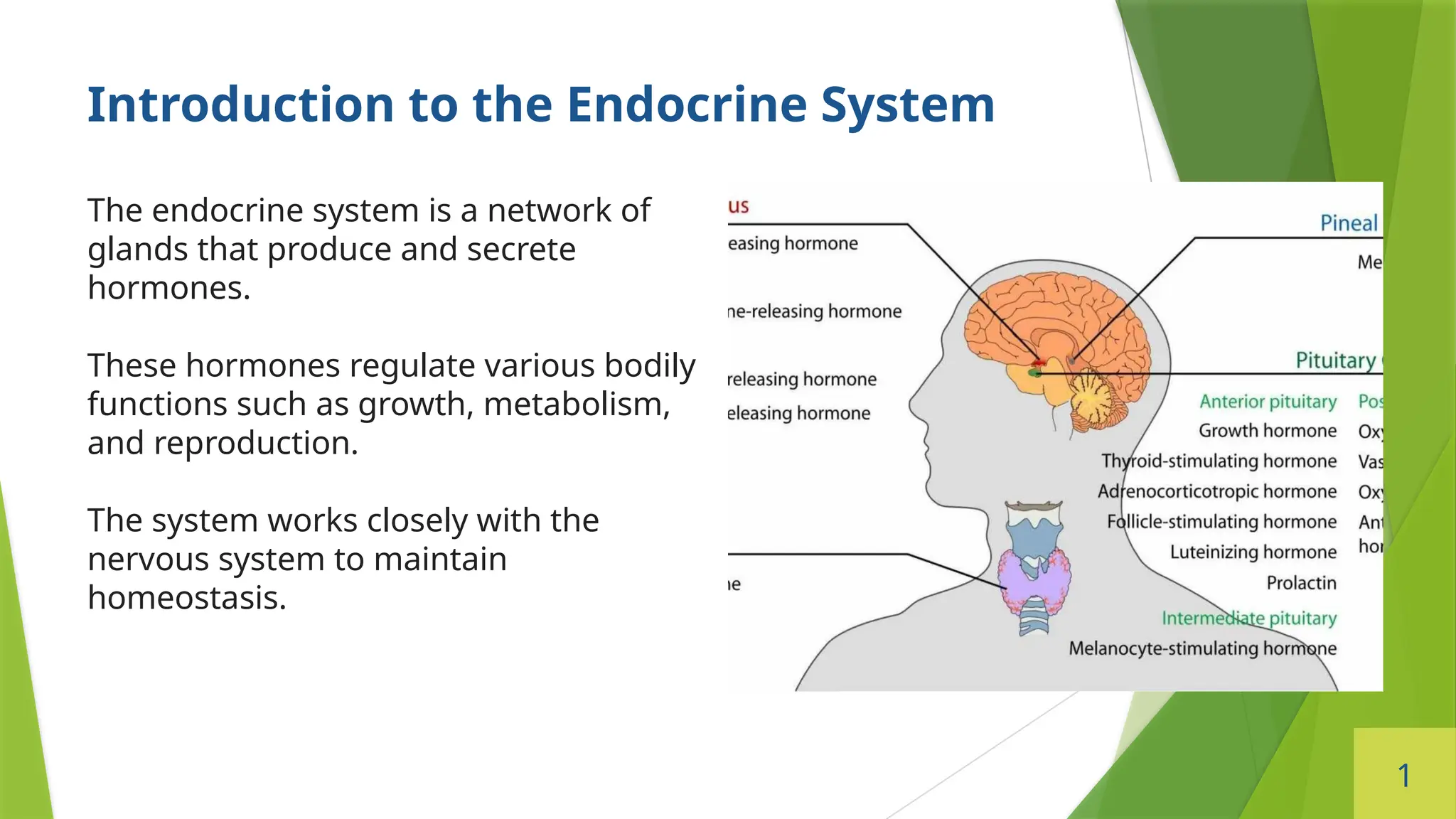
The endocrine system is a network of
glands that produce and secrete
hormones.
These hormones regulate various bodily
functions such as growth, metabolism,
and reproduction.
The system works closely with the
nervous system to maintain
homeostasis.
3.
2
Major Endocrine Glands
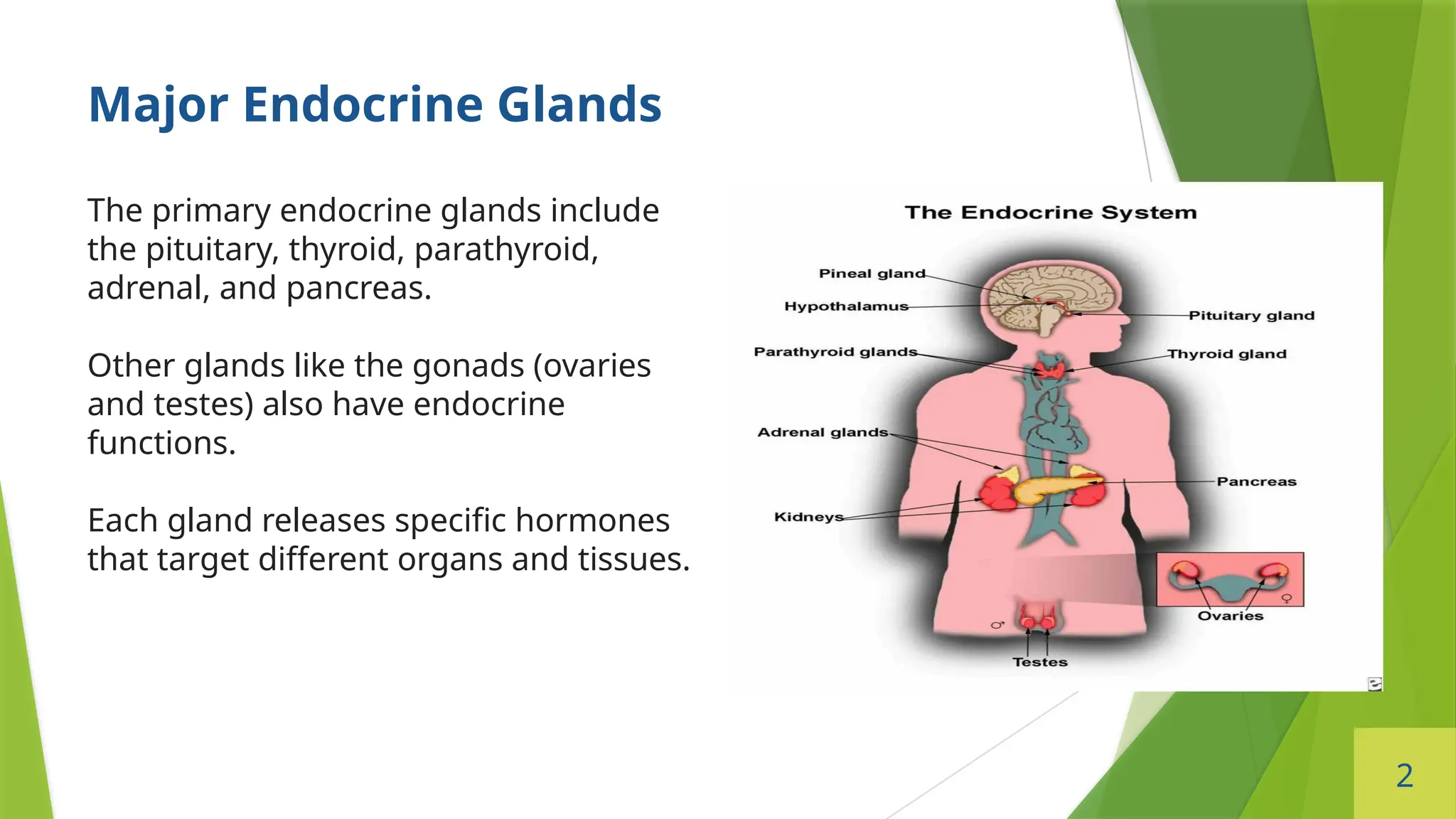
Theprimary endocrine glands include
the pituitary, thyroid, parathyroid,
adrenal, and pancreas.
Other glands like the gonads (ovaries
and testes) also have endocrine
functions.
Each gland releases specific hormones
that target different organs and tissues.
4.
3
Hormones and TheirFunctions
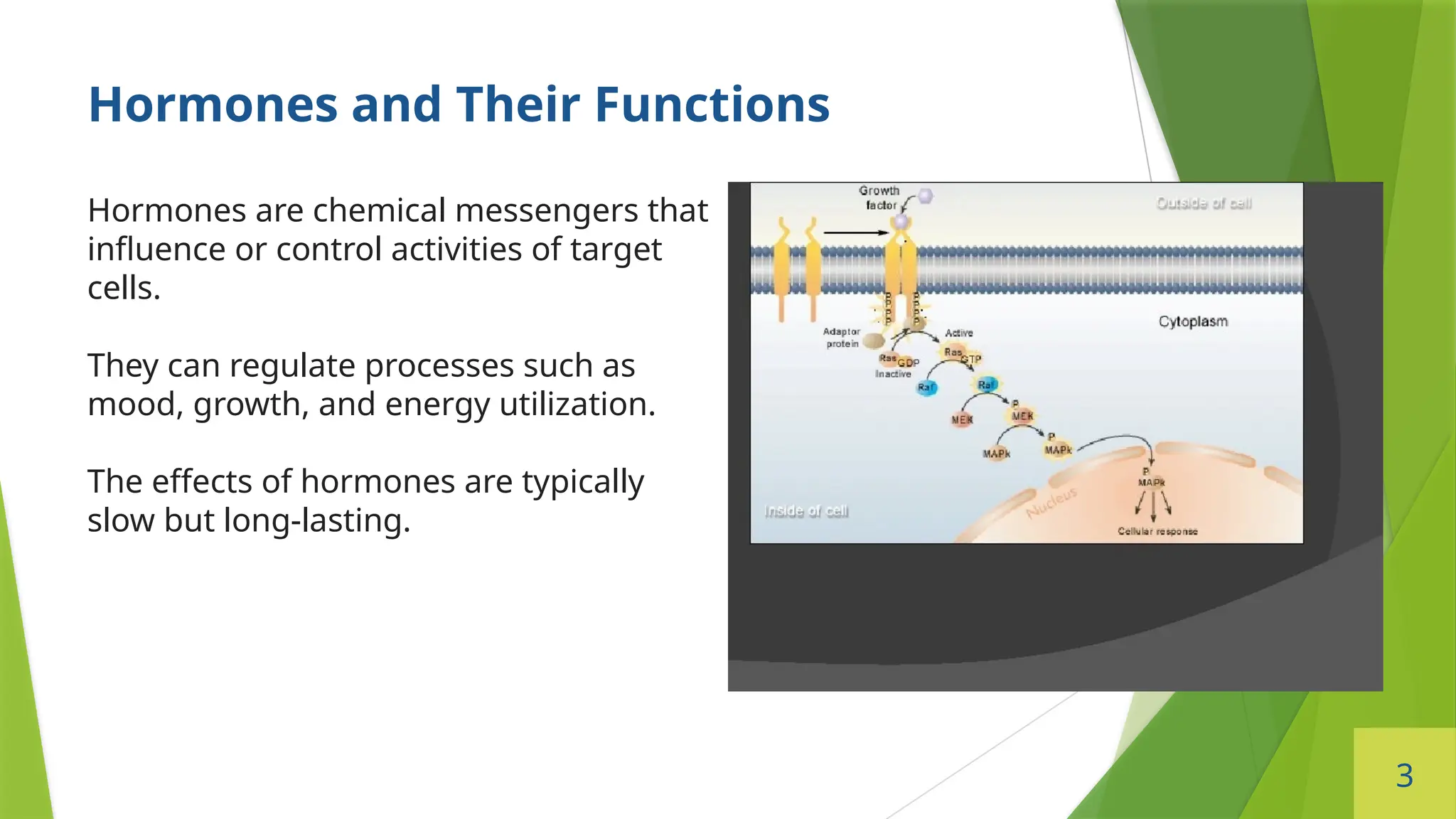
Hormones are chemical messengers that
influence or control activities of target
cells.
They can regulate processes such as
mood, growth, and energy utilization.
The effects of hormones are typically
slow but long-lasting.
5.
4
The Pituitary Gland
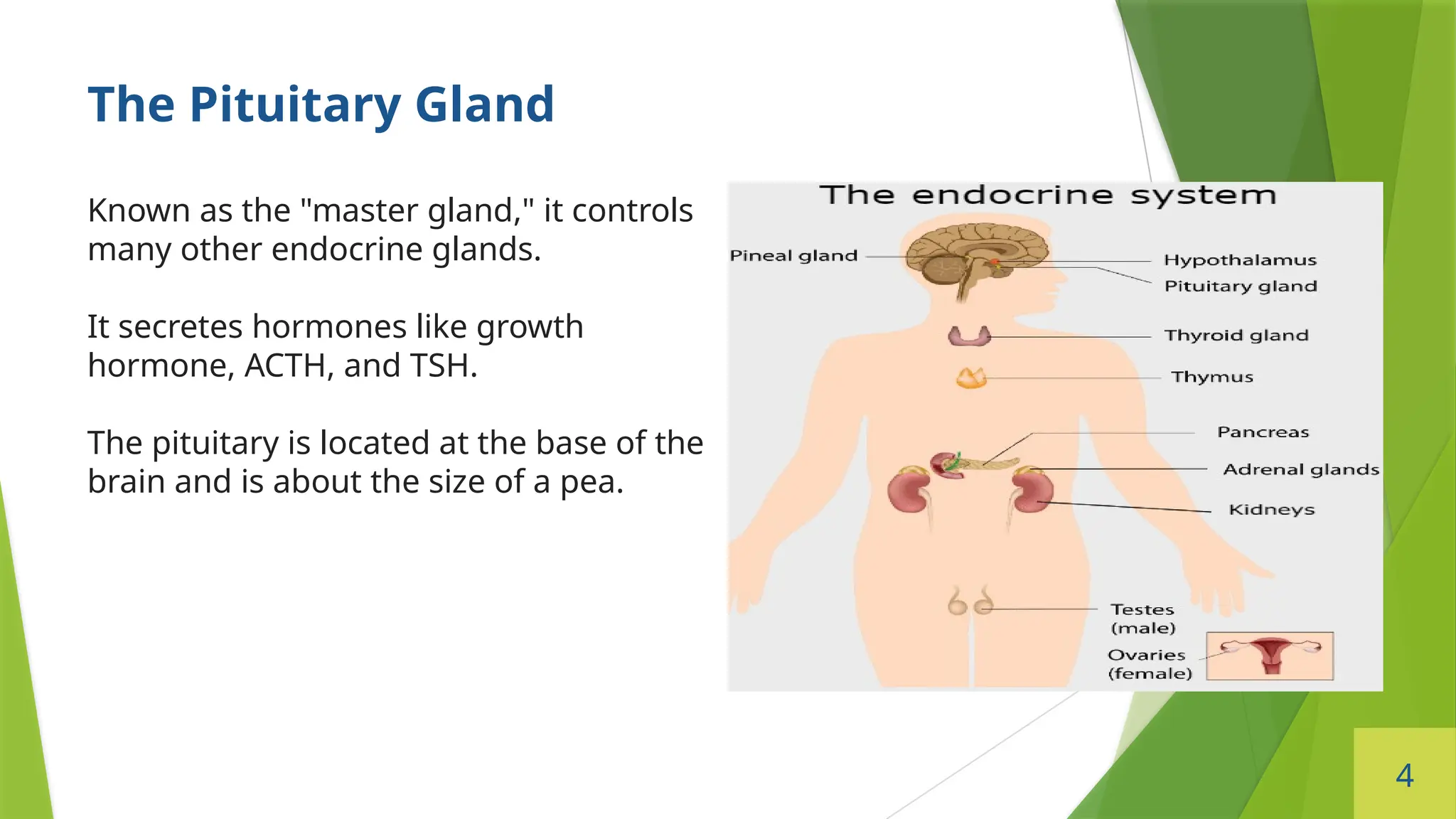
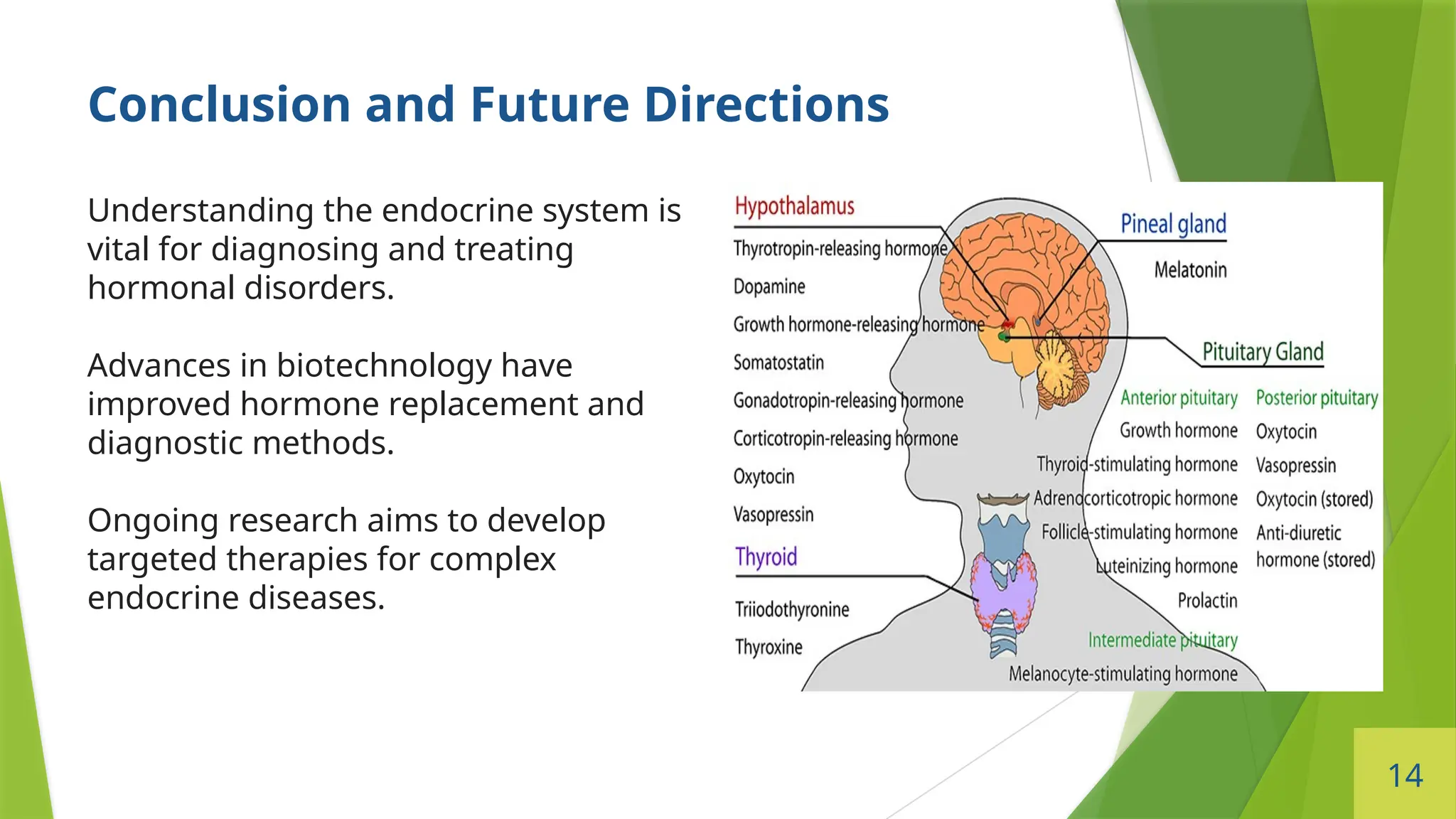
Knownas the "master gland," it controls
many other endocrine glands.
It secretes hormones like growth
hormone, ACTH, and TSH.
The pituitary is located at the base of the
brain and is about the size of a pea.
6.
5
The Thyroid Gland
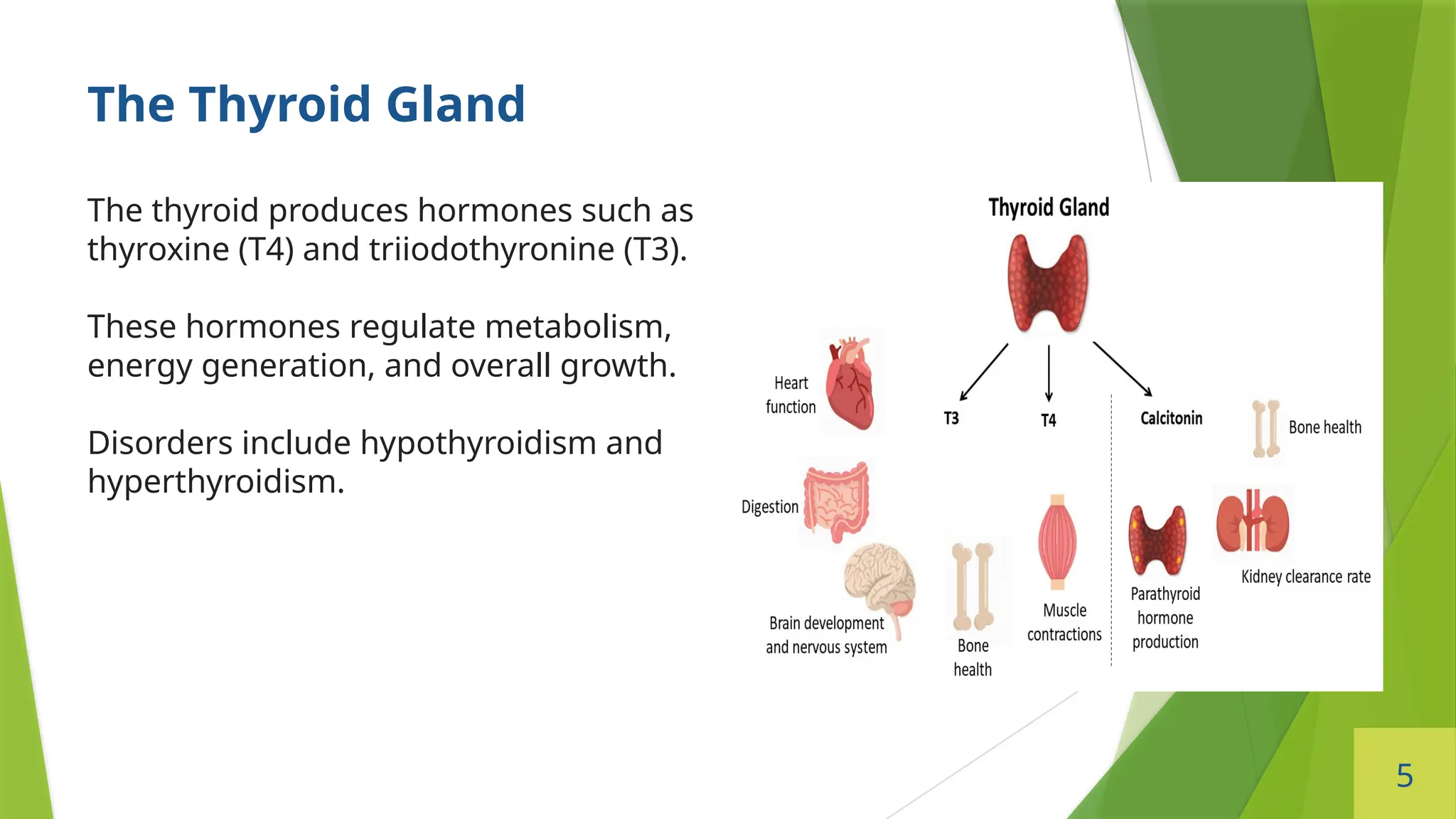
Thethyroid produces hormones such as
thyroxine (T4) and triiodothyronine (T3).
These hormones regulate metabolism,
energy generation, and overall growth.
Disorders include hypothyroidism and
hyperthyroidism.
7.
6
The Parathyroid Glands
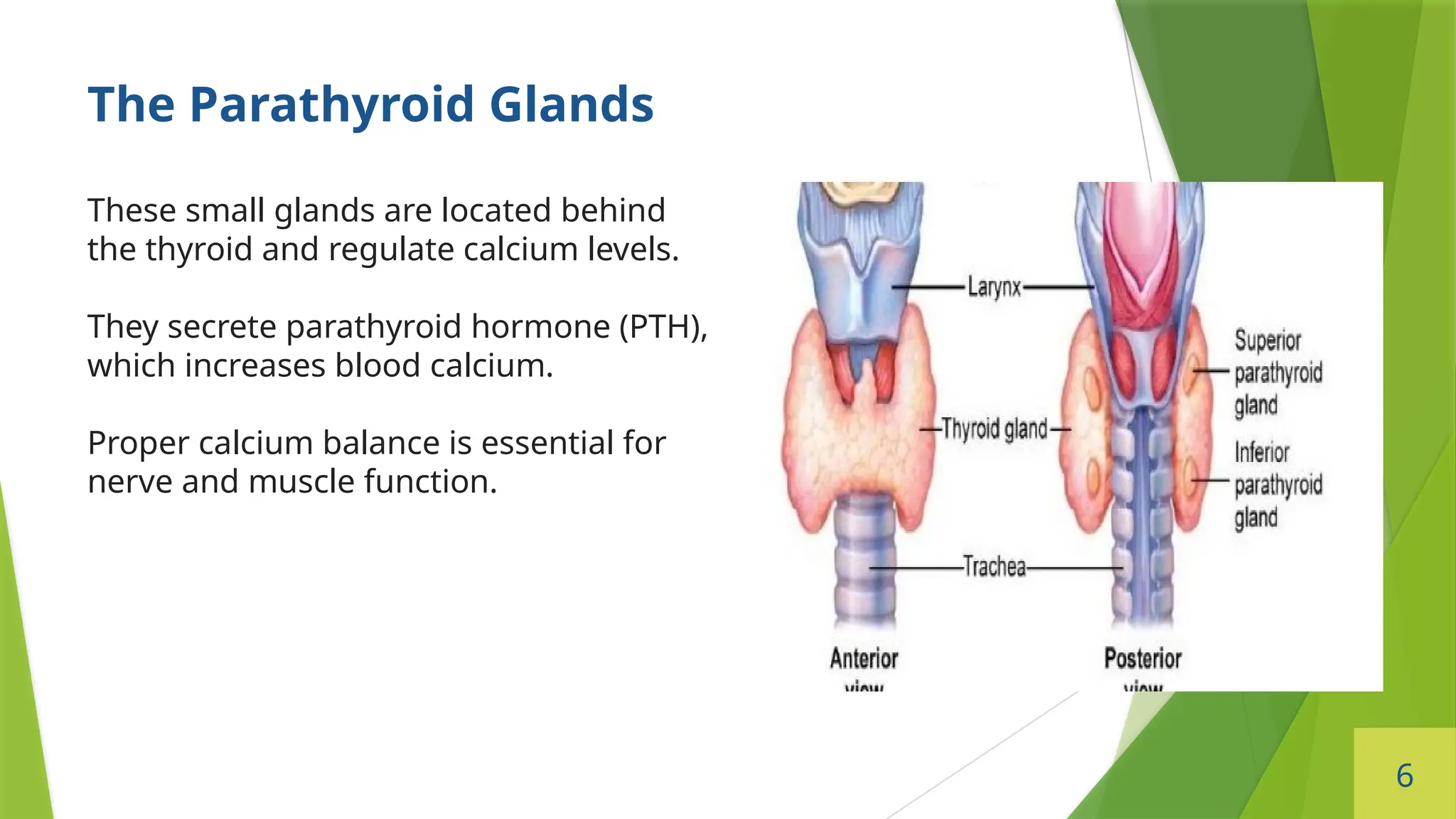
Thesesmall glands are located behind
the thyroid and regulate calcium levels.
They secrete parathyroid hormone (PTH),
which increases blood calcium.
Proper calcium balance is essential for
nerve and muscle function.
8.
7
The Adrenal Glands
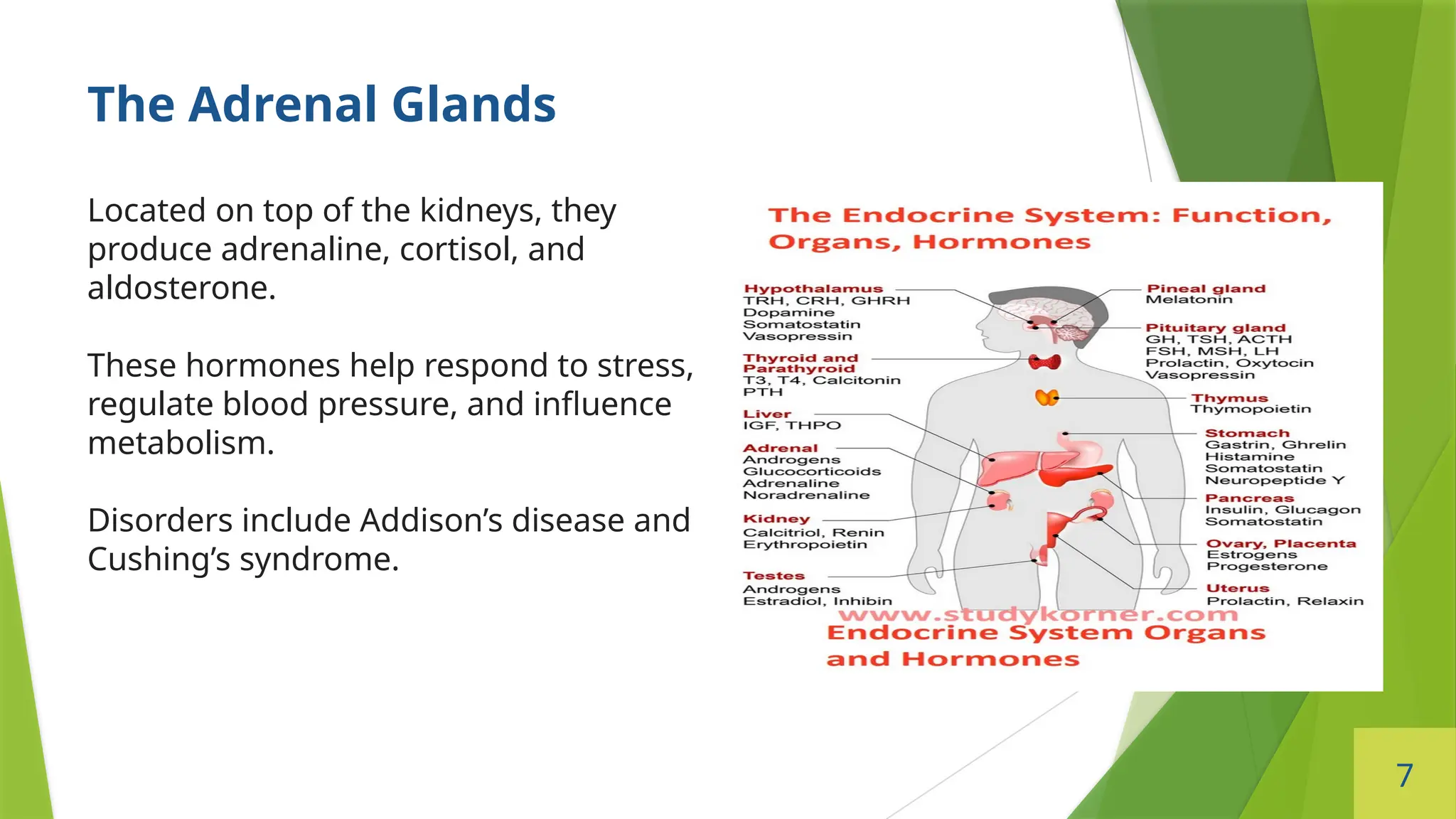
Locatedon top of the kidneys, they
produce adrenaline, cortisol, and
aldosterone.
These hormones help respond to stress,
regulate blood pressure, and influence
metabolism.
Disorders include Addison’s disease and
Cushing’s syndrome.
9.
8
The Pancreas andIts Endocrine Role
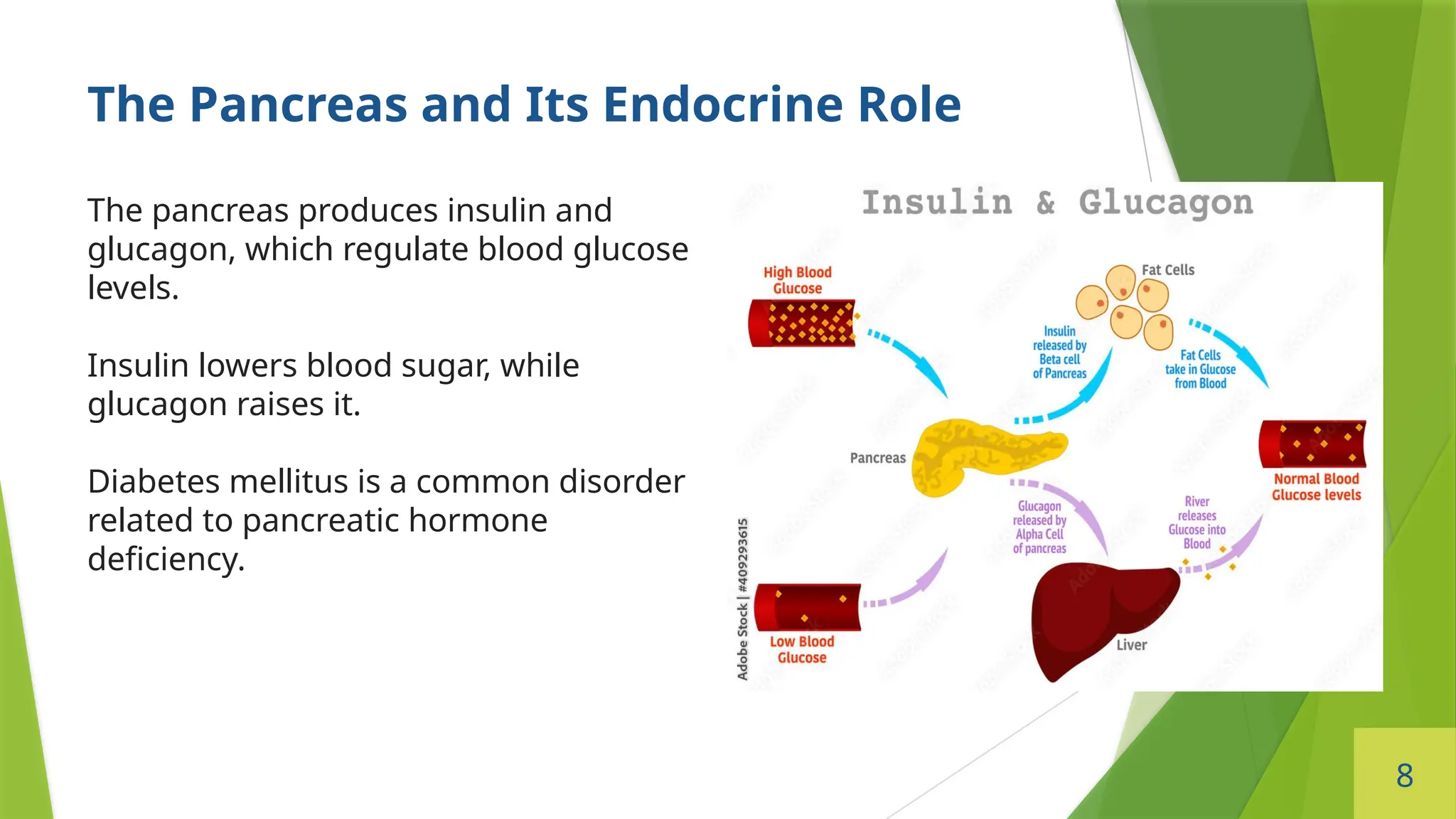
The pancreas produces insulin and
glucagon, which regulate blood glucose
levels.
Insulin lowers blood sugar, while
glucagon raises it.
Diabetes mellitus is a common disorder
related to pancreatic hormone
deficiency.
10.
9
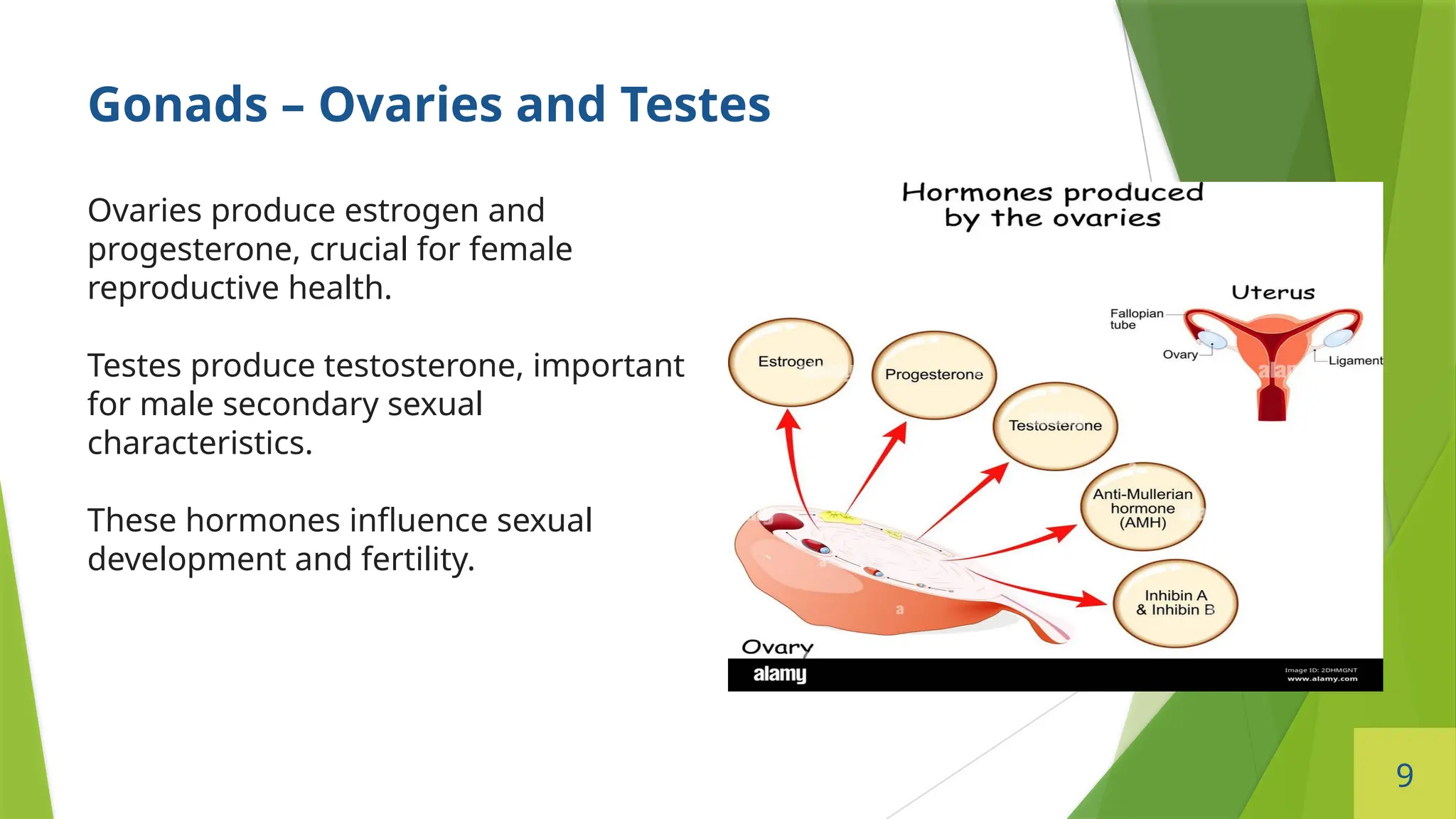
Gonads – Ovariesand Testes
Ovaries produce estrogen and
progesterone, crucial for female
reproductive health.
Testes produce testosterone, important
for male secondary sexual
characteristics.
These hormones influence sexual
development and fertility.
11.
10
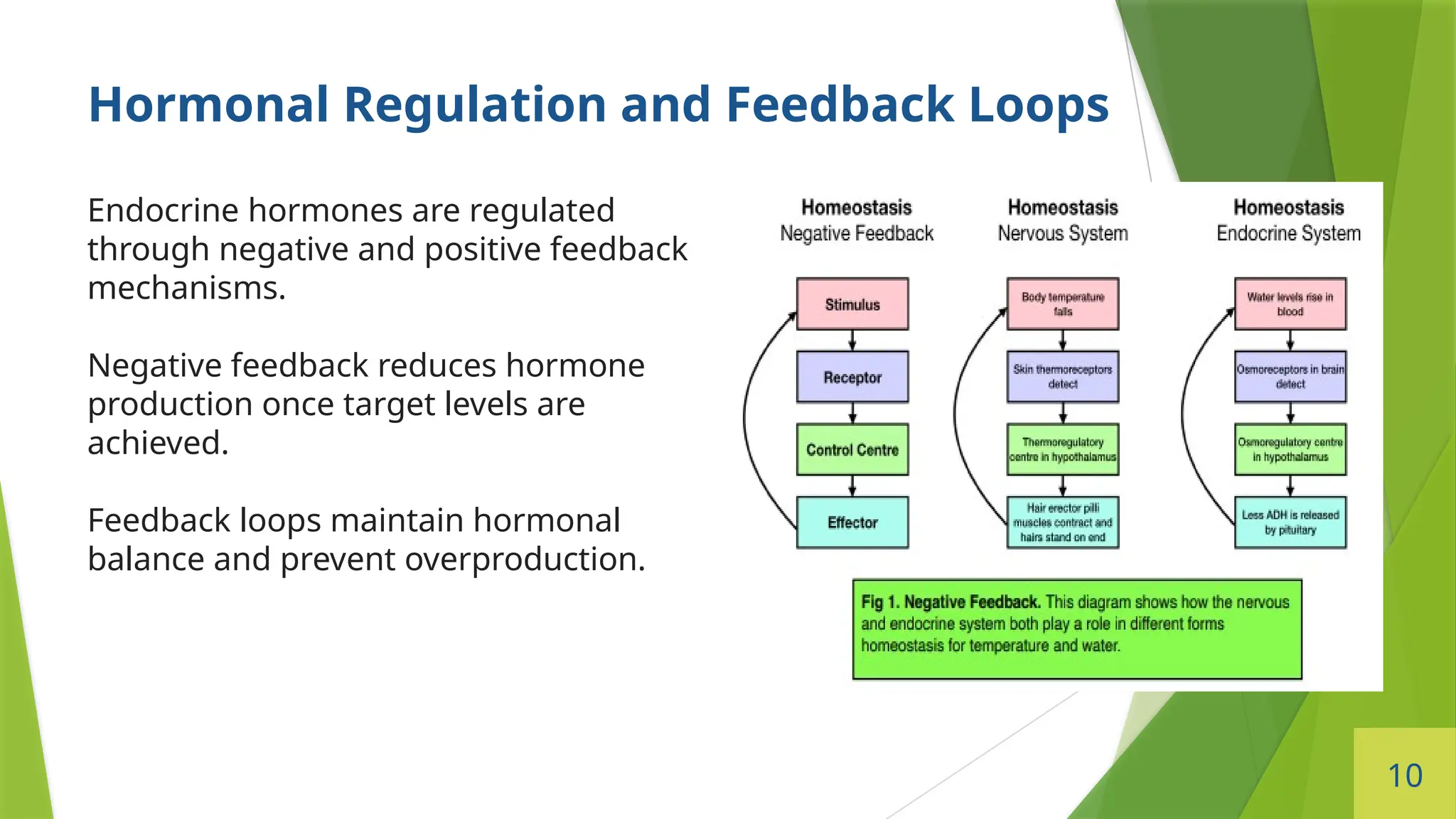
Hormonal Regulation andFeedback Loops
Endocrine hormones are regulated
through negative and positive feedback
mechanisms.
Negative feedback reduces hormone
production once target levels are
achieved.
Feedback loops maintain hormonal
balance and prevent overproduction.
12.
11
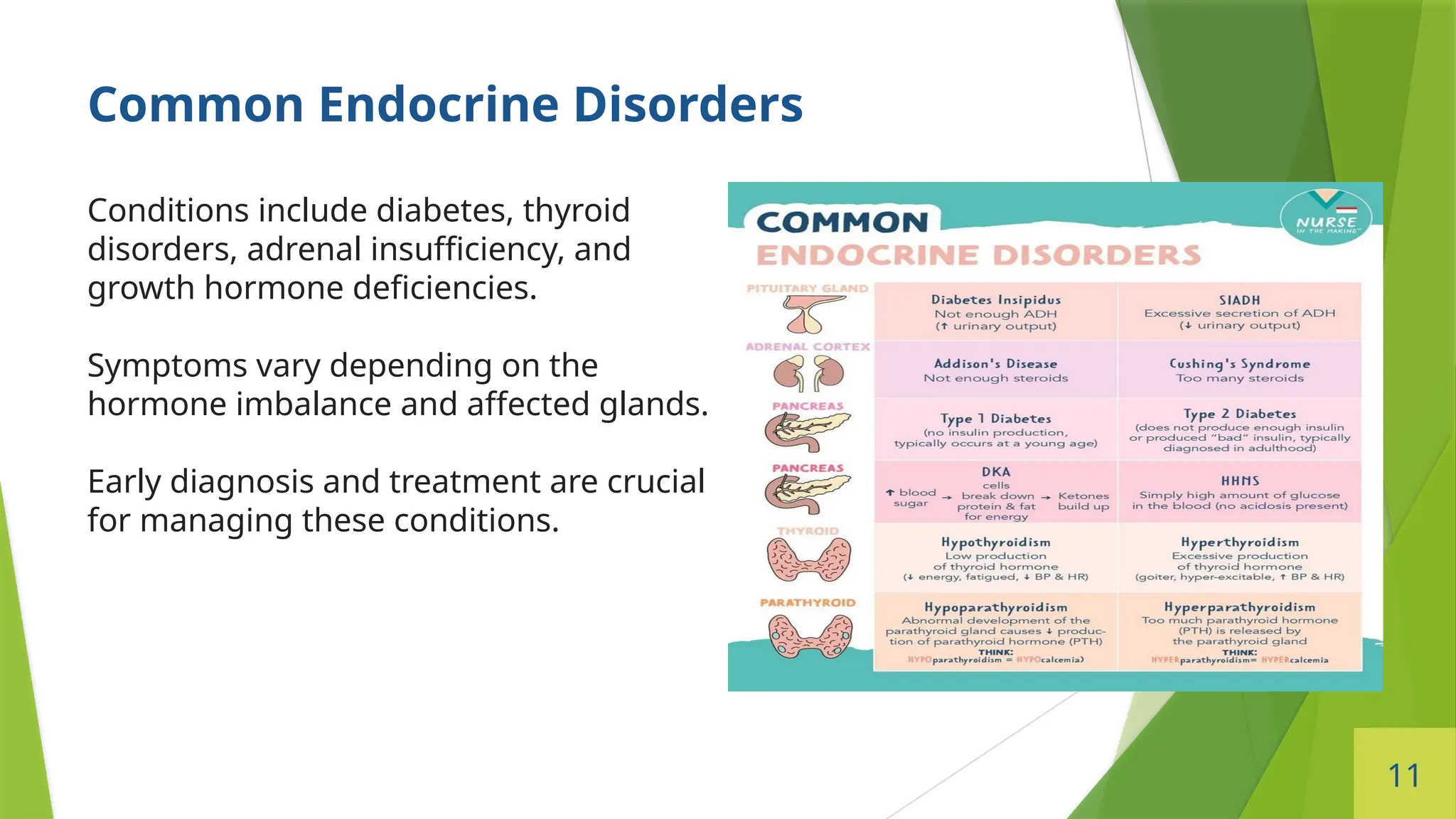
Common Endocrine Disorders
Conditionsinclude diabetes, thyroid
disorders, adrenal insufficiency, and
growth hormone deficiencies.
Symptoms vary depending on the
hormone imbalance and affected glands.
Early diagnosis and treatment are crucial
for managing these conditions.
13.
13
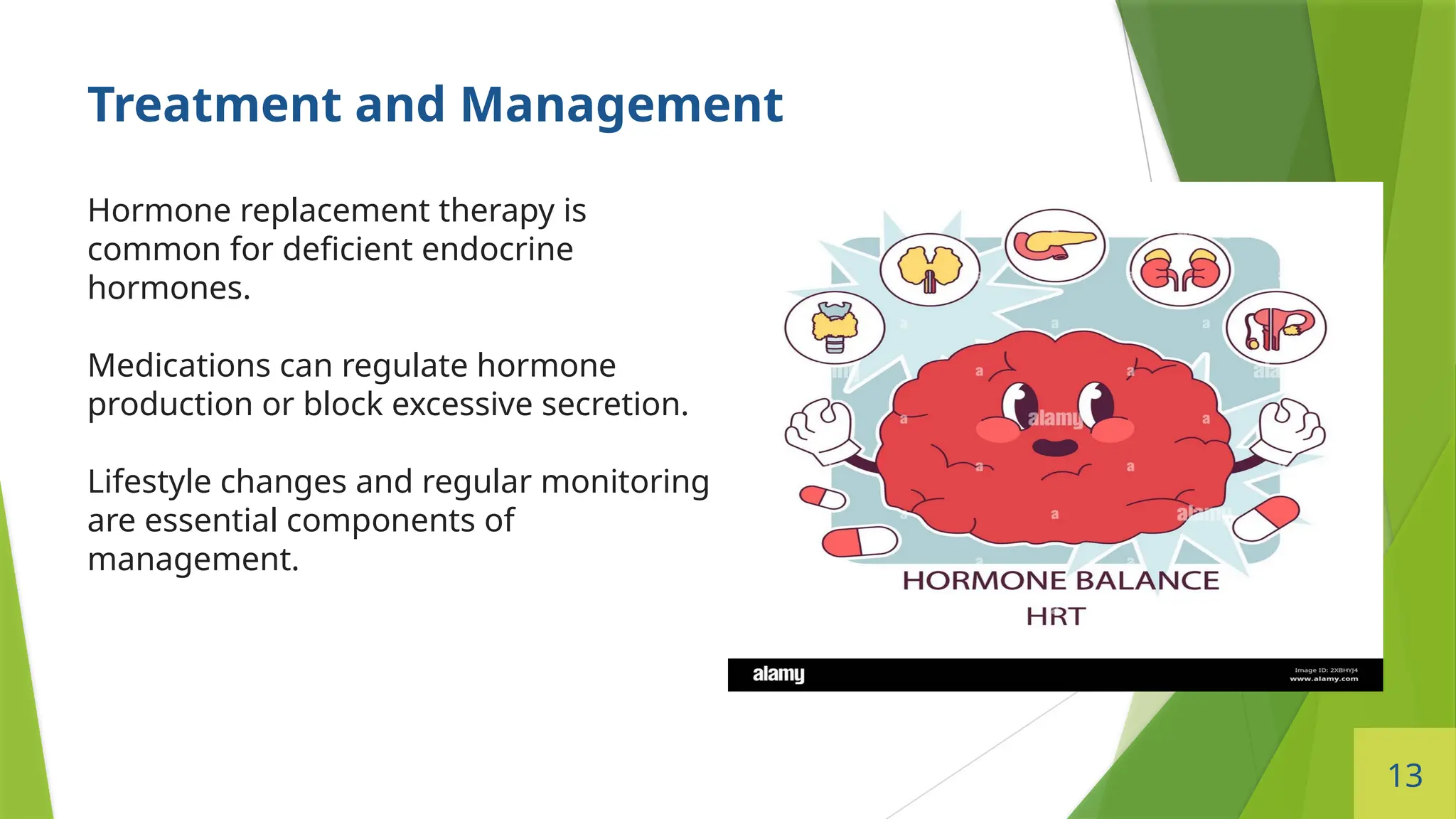
Treatment and Management
Hormonereplacement therapy is
common for deficient endocrine
hormones.
Medications can regulate hormone
production or block excessive secretion.
Lifestyle changes and regular monitoring
are essential components of
management.
14.
14
Conclusion and FutureDirections
Understanding the endocrine system is
vital for diagnosing and treating
hormonal disorders.
Advances in biotechnology have
improved hormone replacement and
diagnostic methods.
Ongoing research aims to develop
targeted therapies for complex
endocrine diseases.