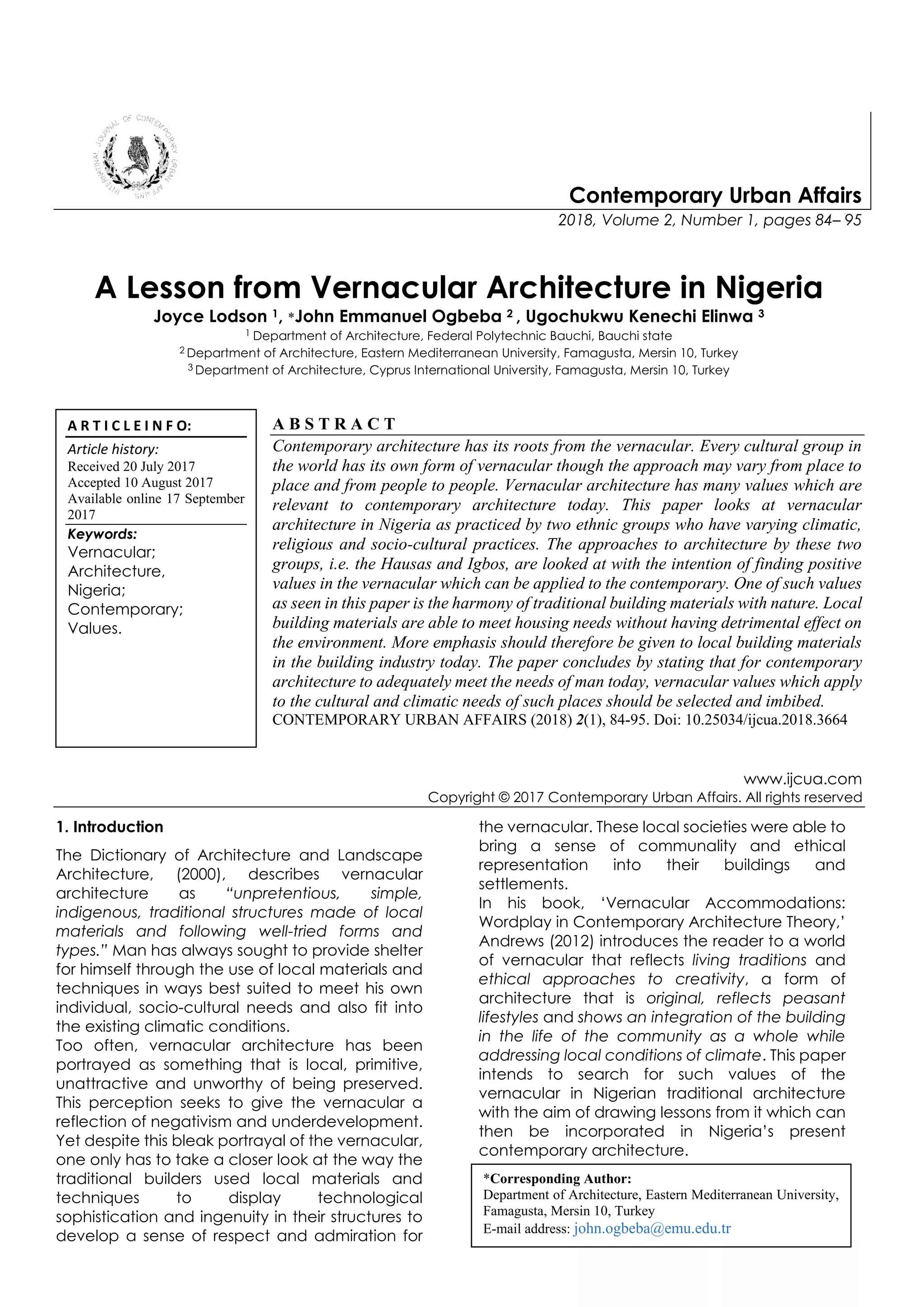
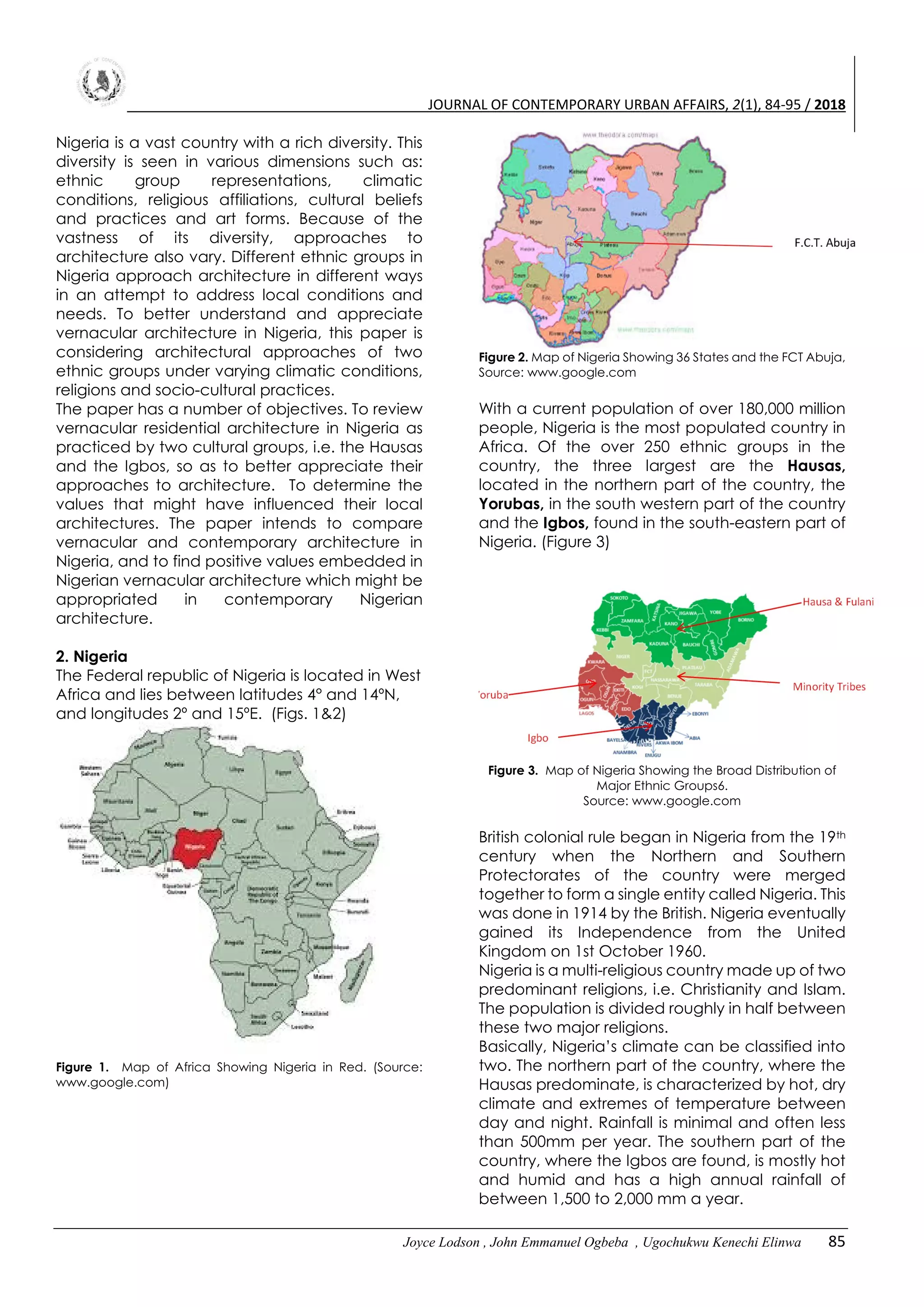
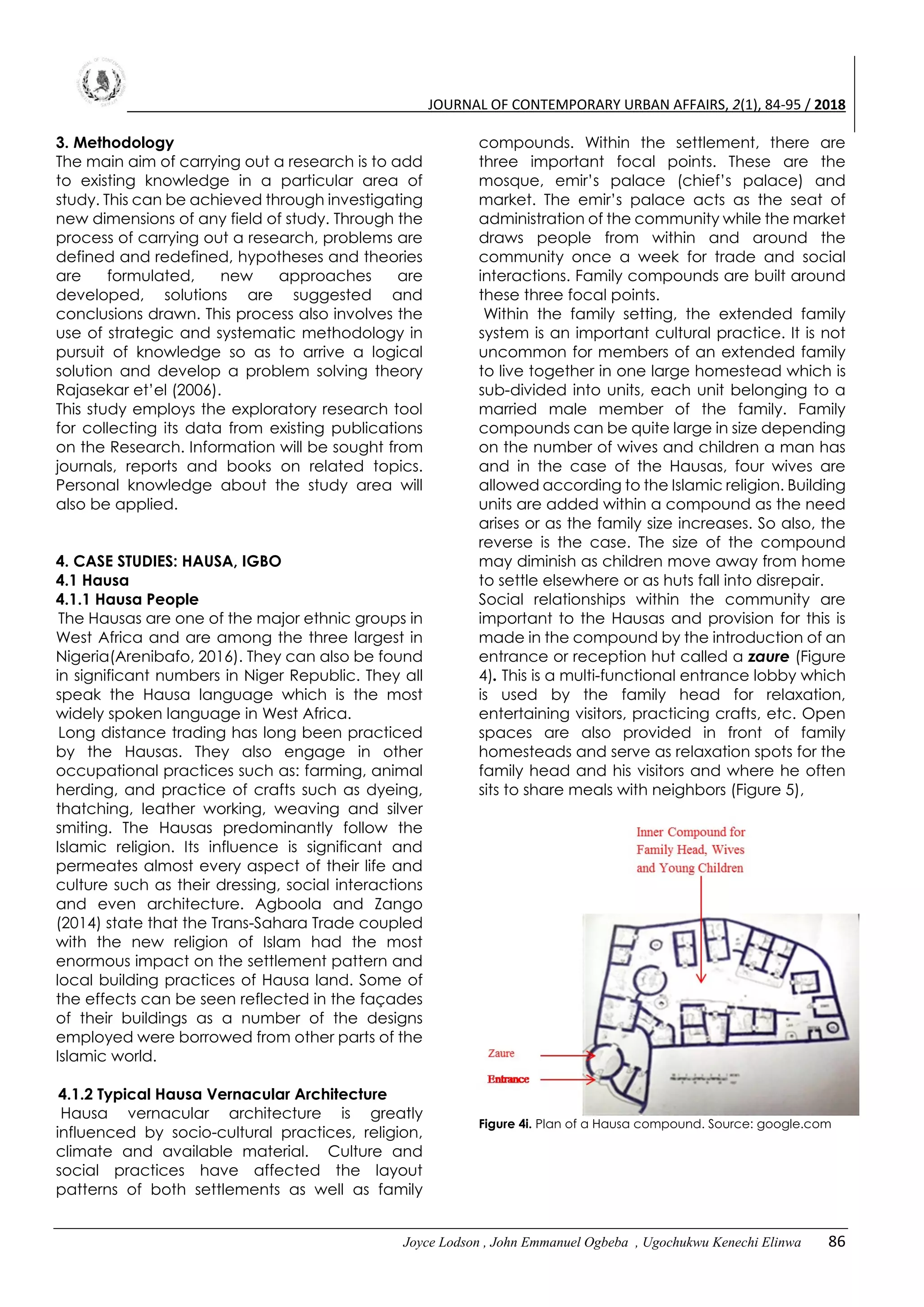
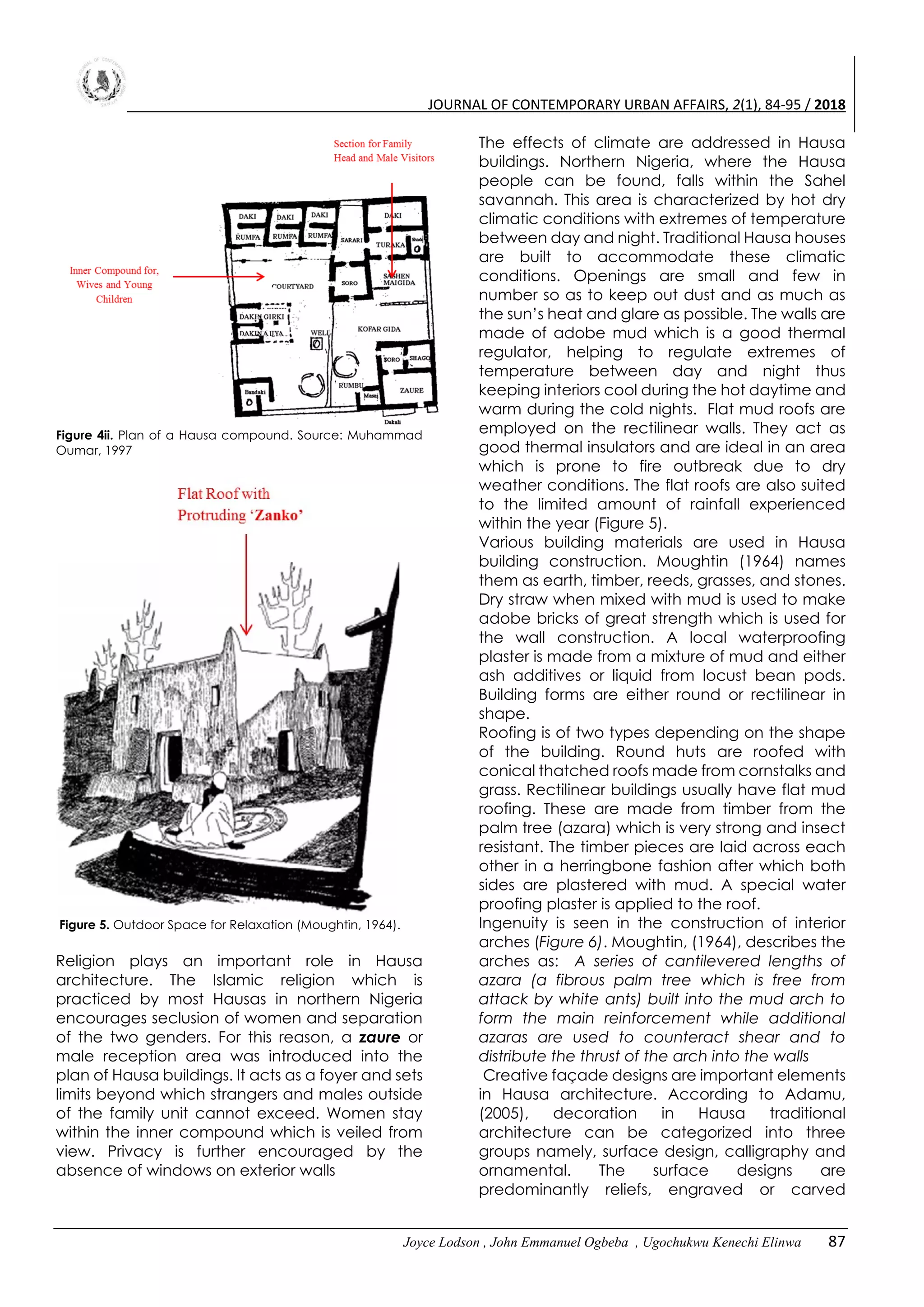
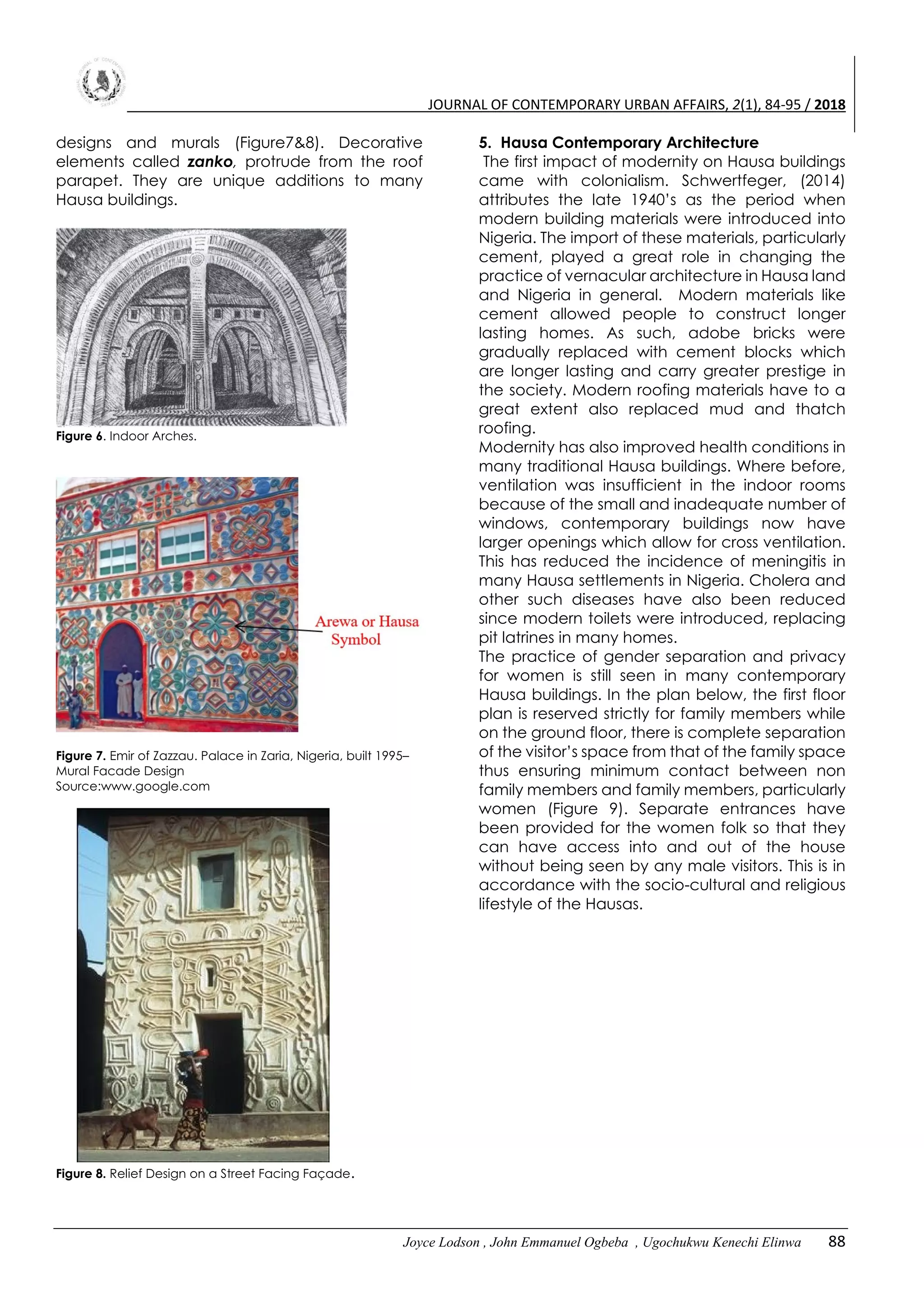
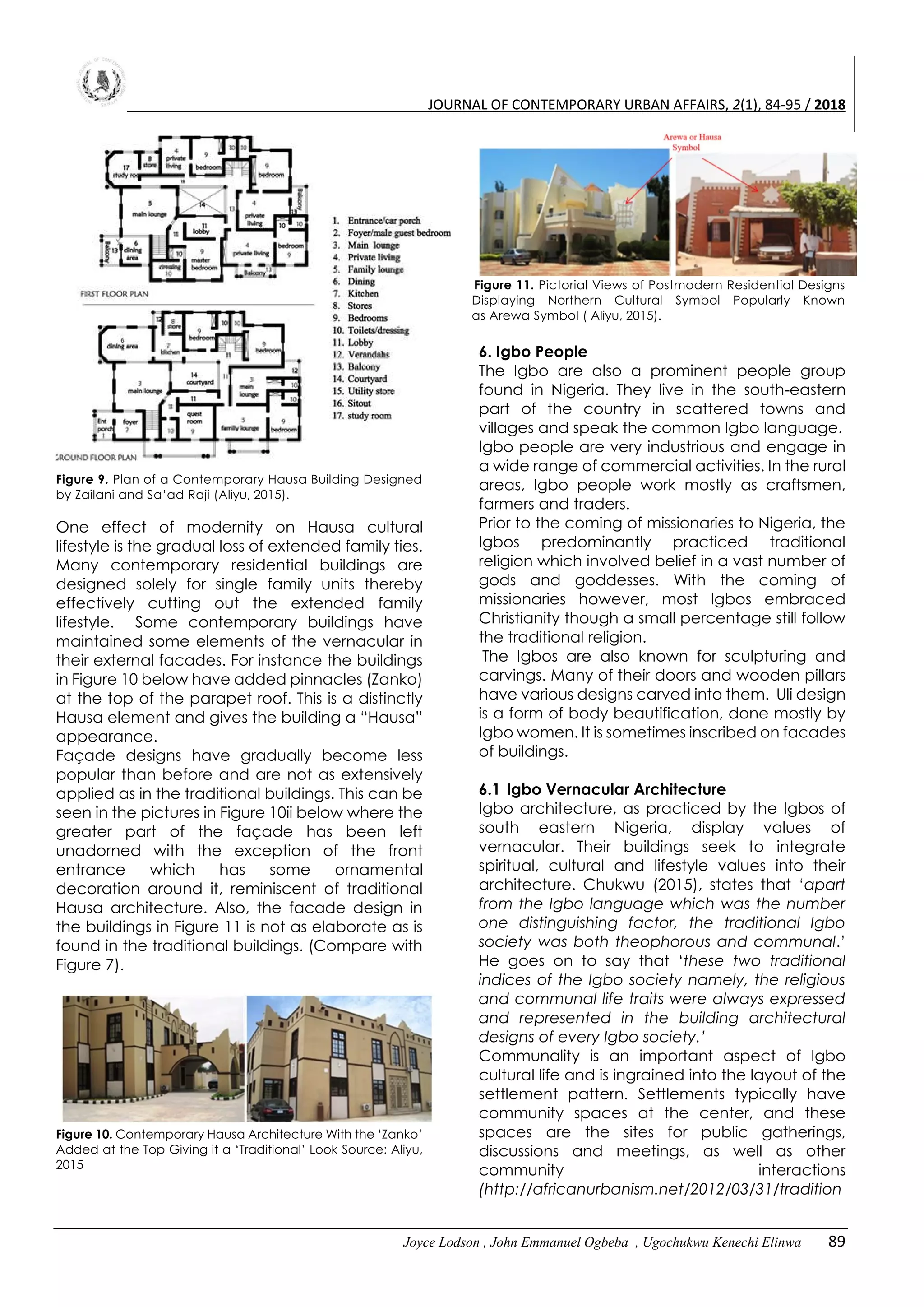
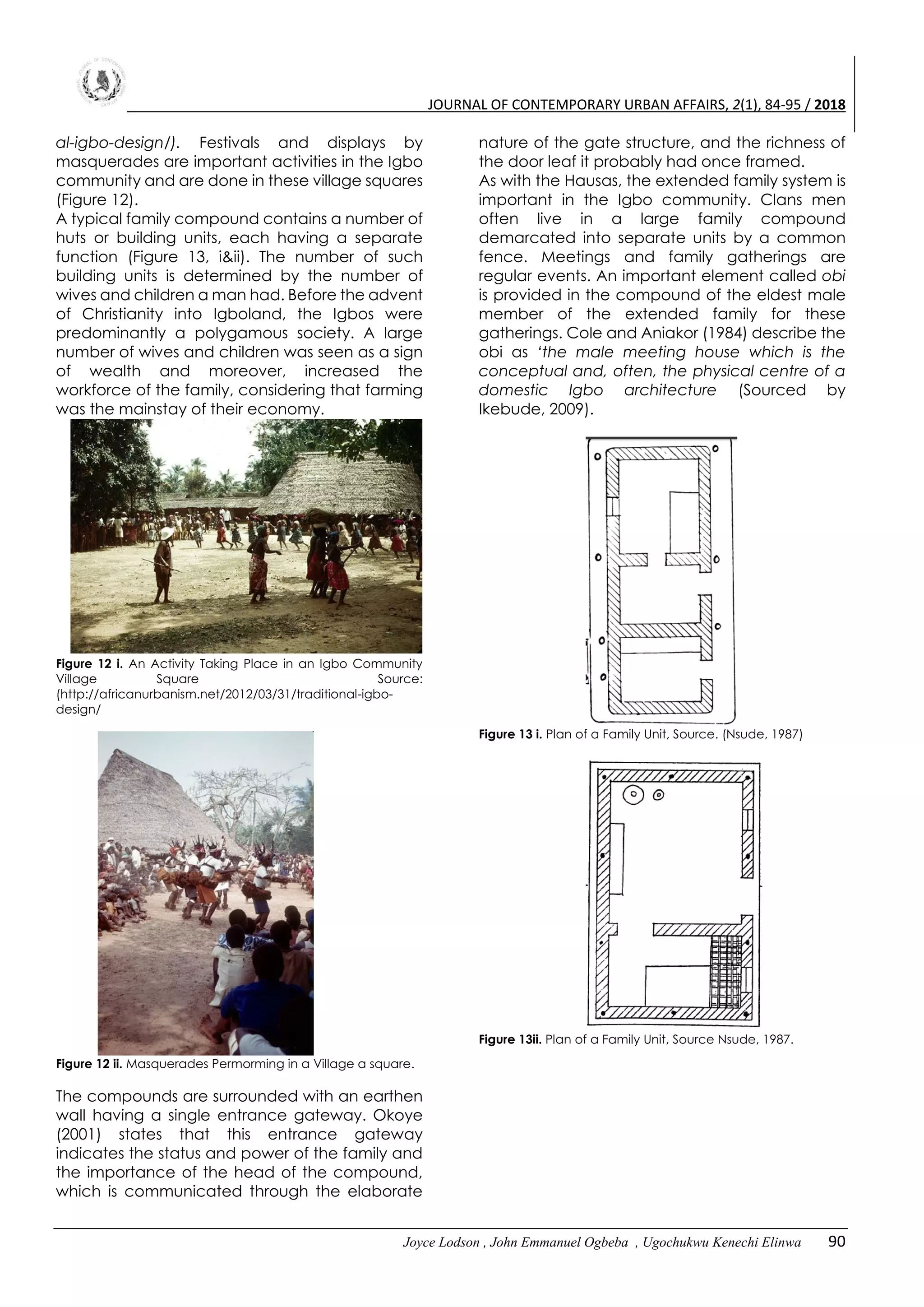
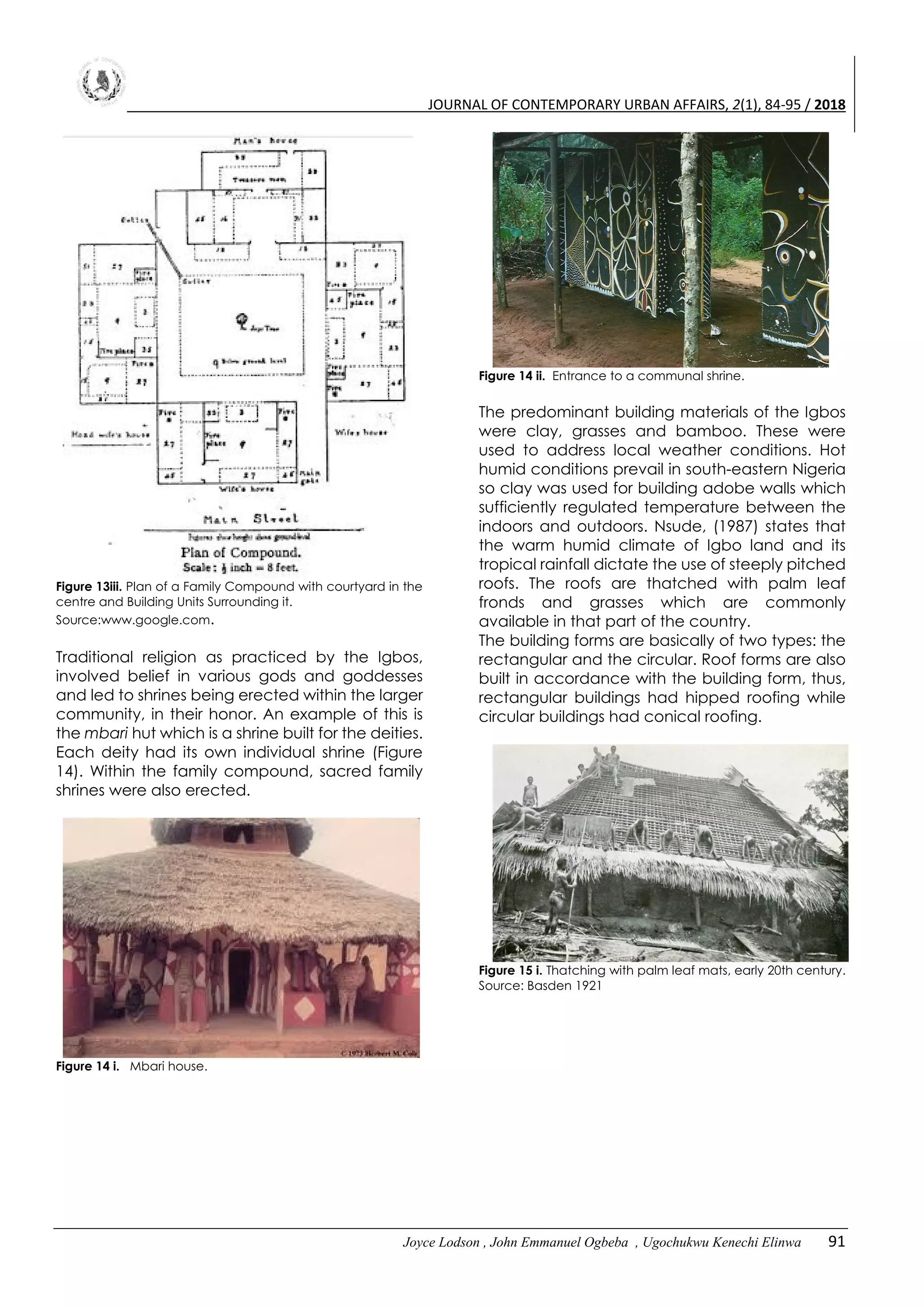
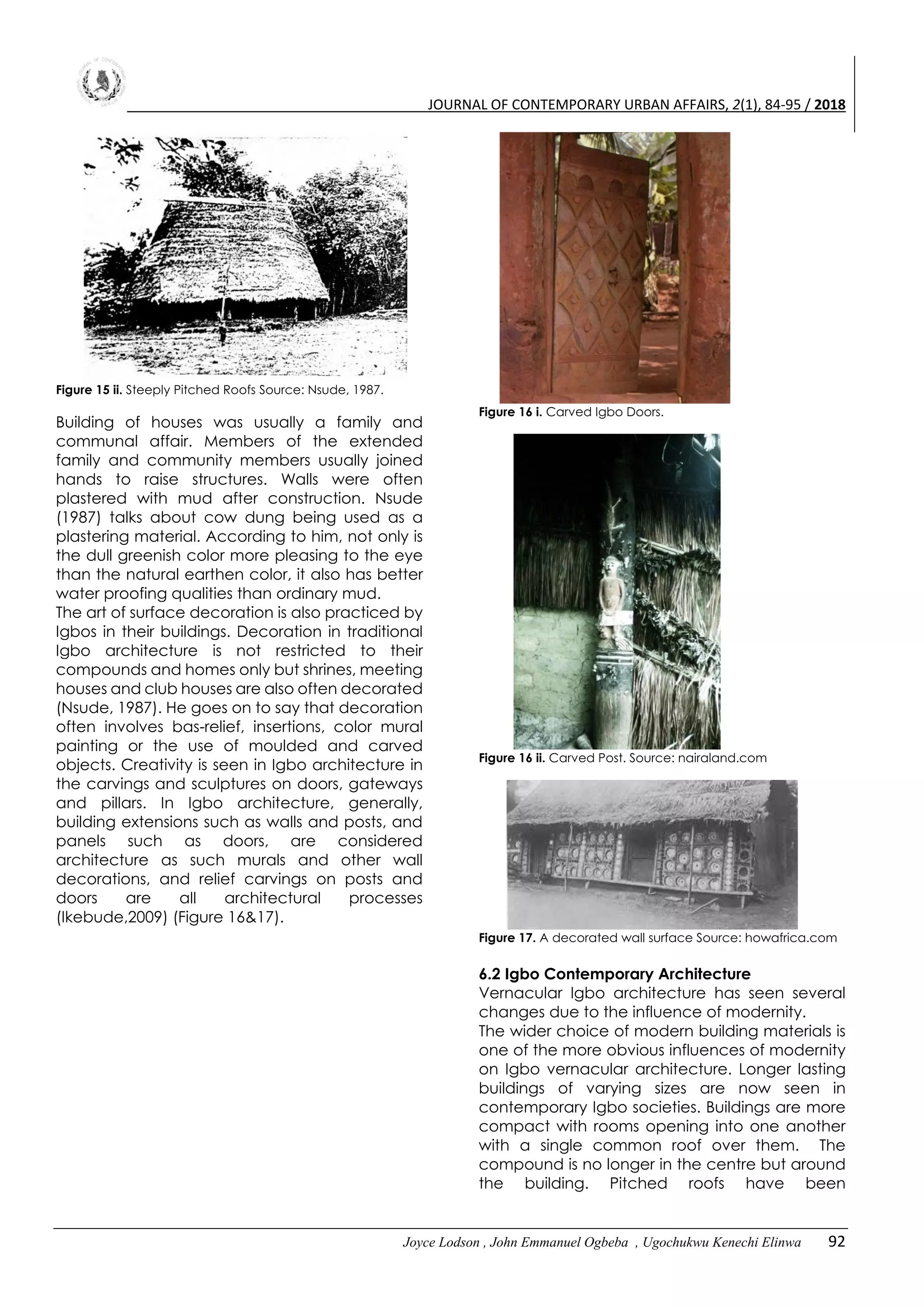
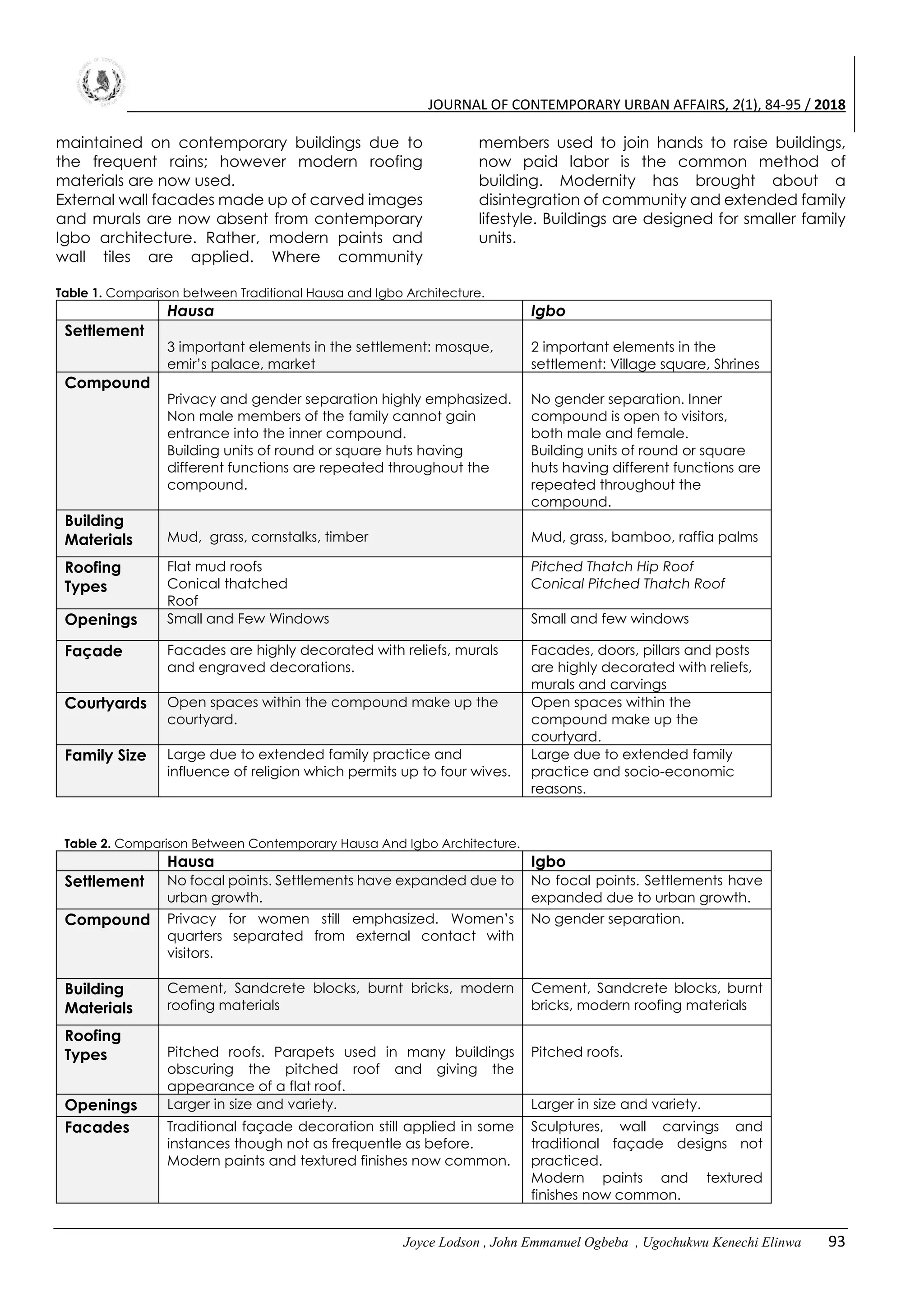
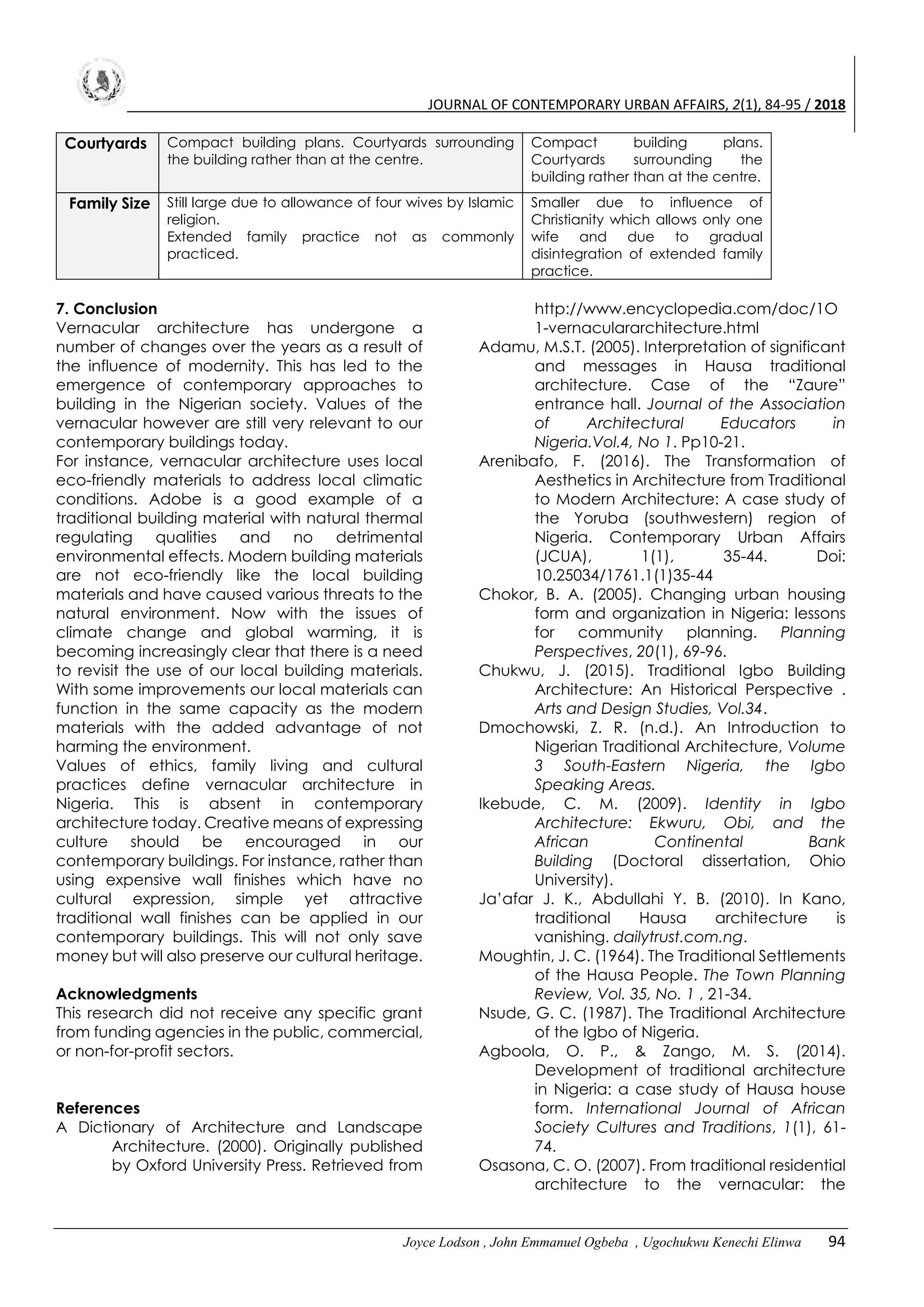
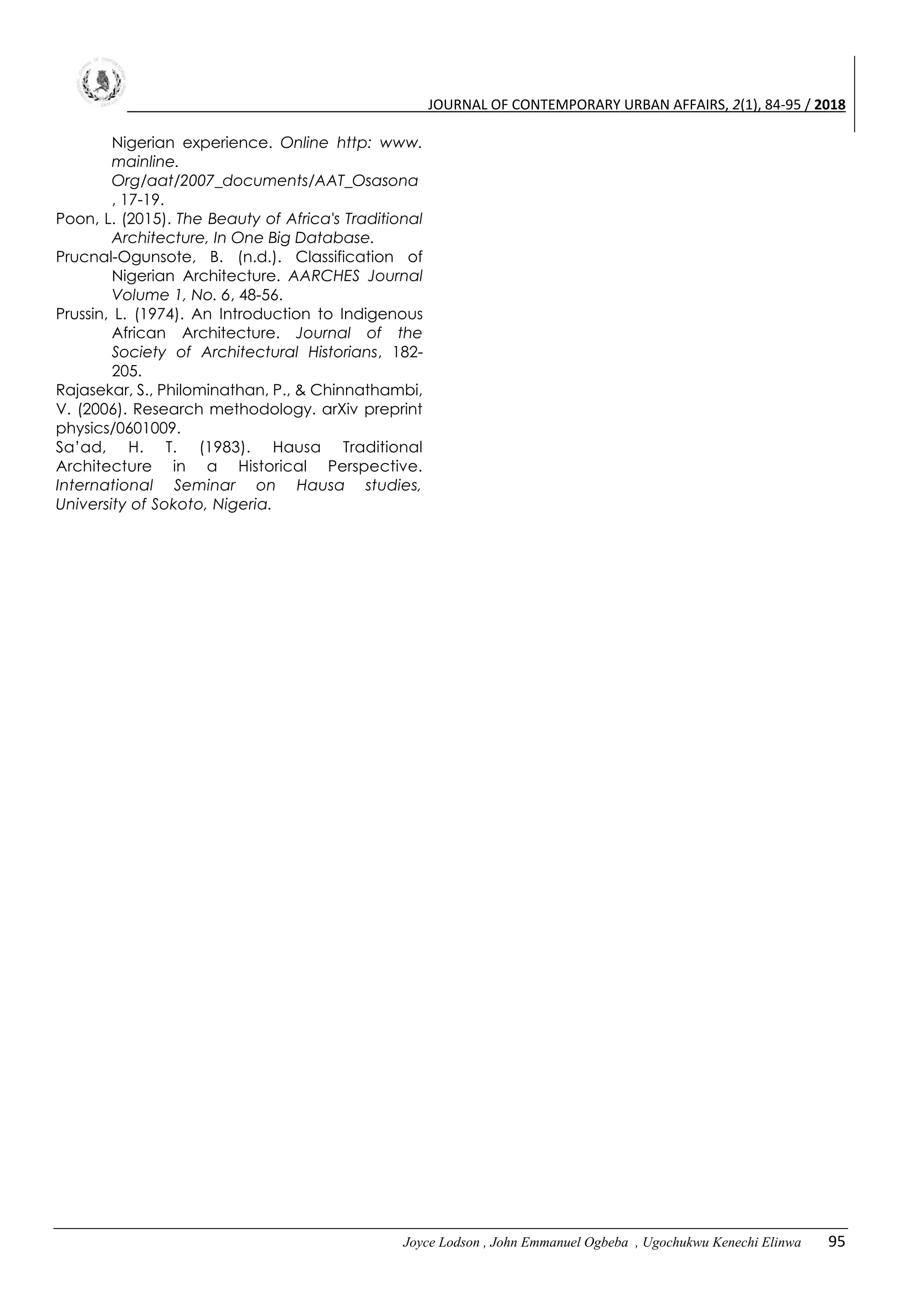
This paper examines vernacular architecture in Nigeria, focusing on the Hausas and Igbos, to uncover valuable lessons for contemporary architecture. It asserts that local building materials and traditional practices offer relevant insights for today's architectural needs while addressing cultural and climatic contexts. The study promotes incorporating vernacular values to enhance the sustainability and relevance of modern Nigerian architecture.