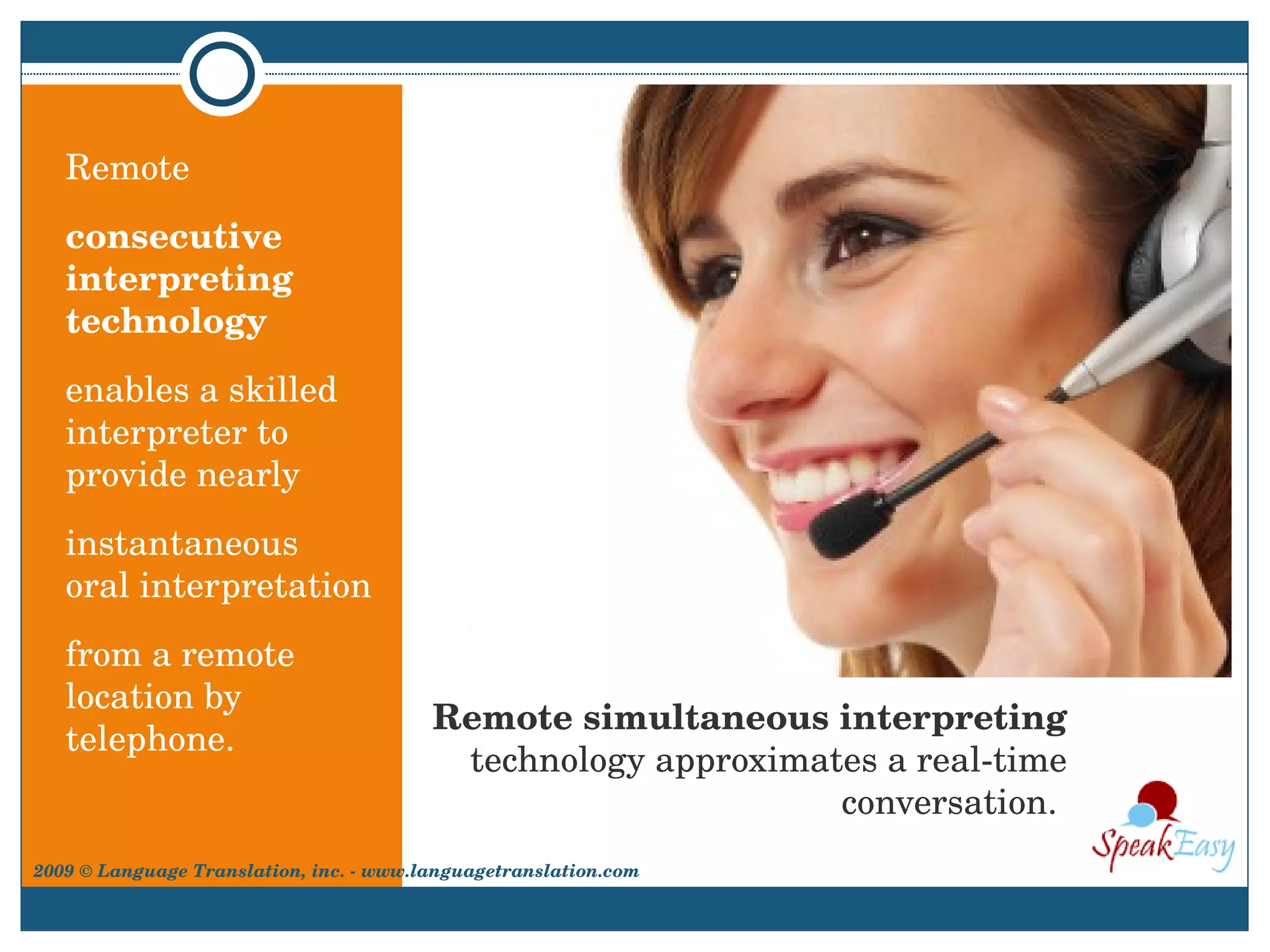
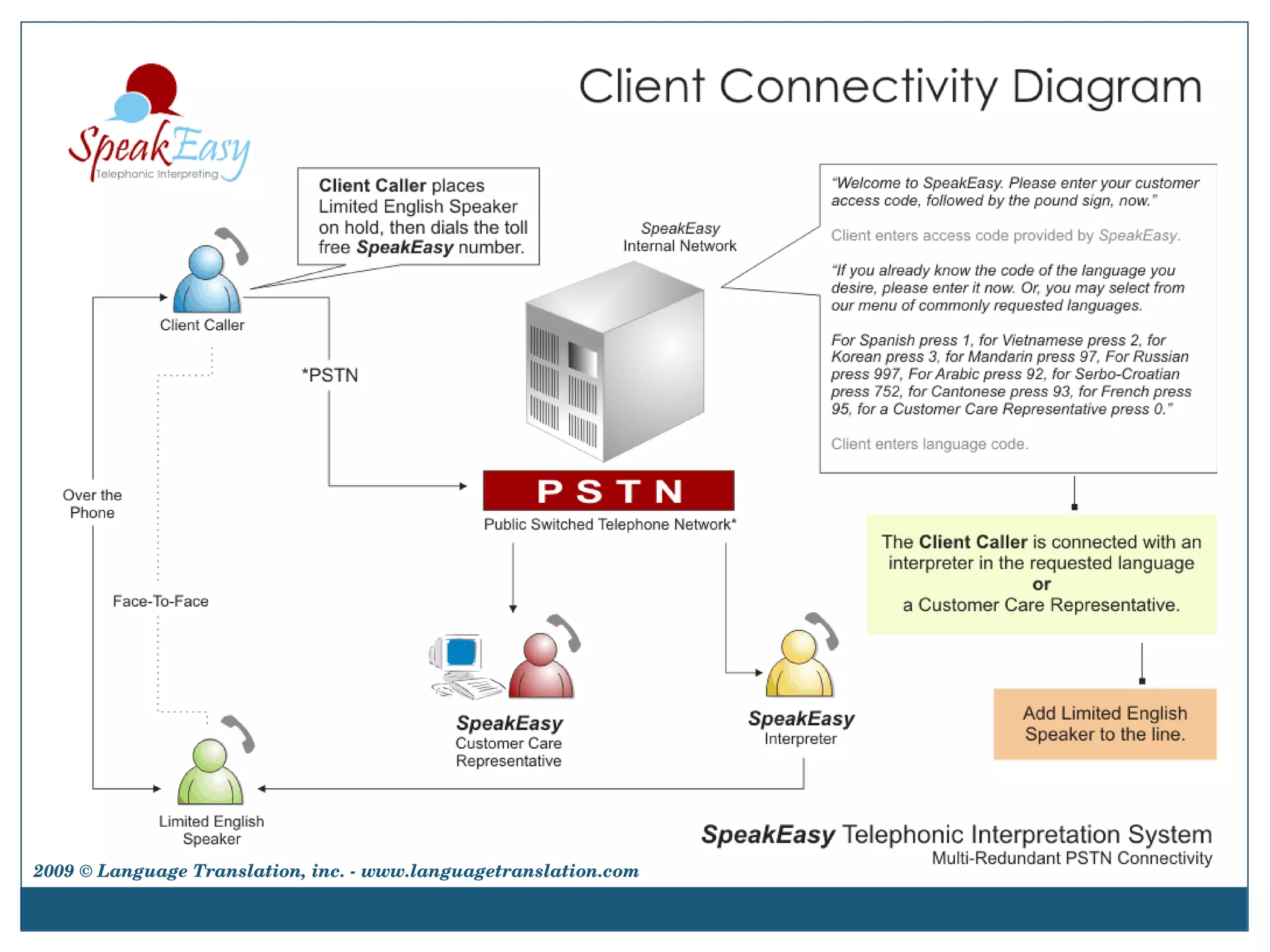
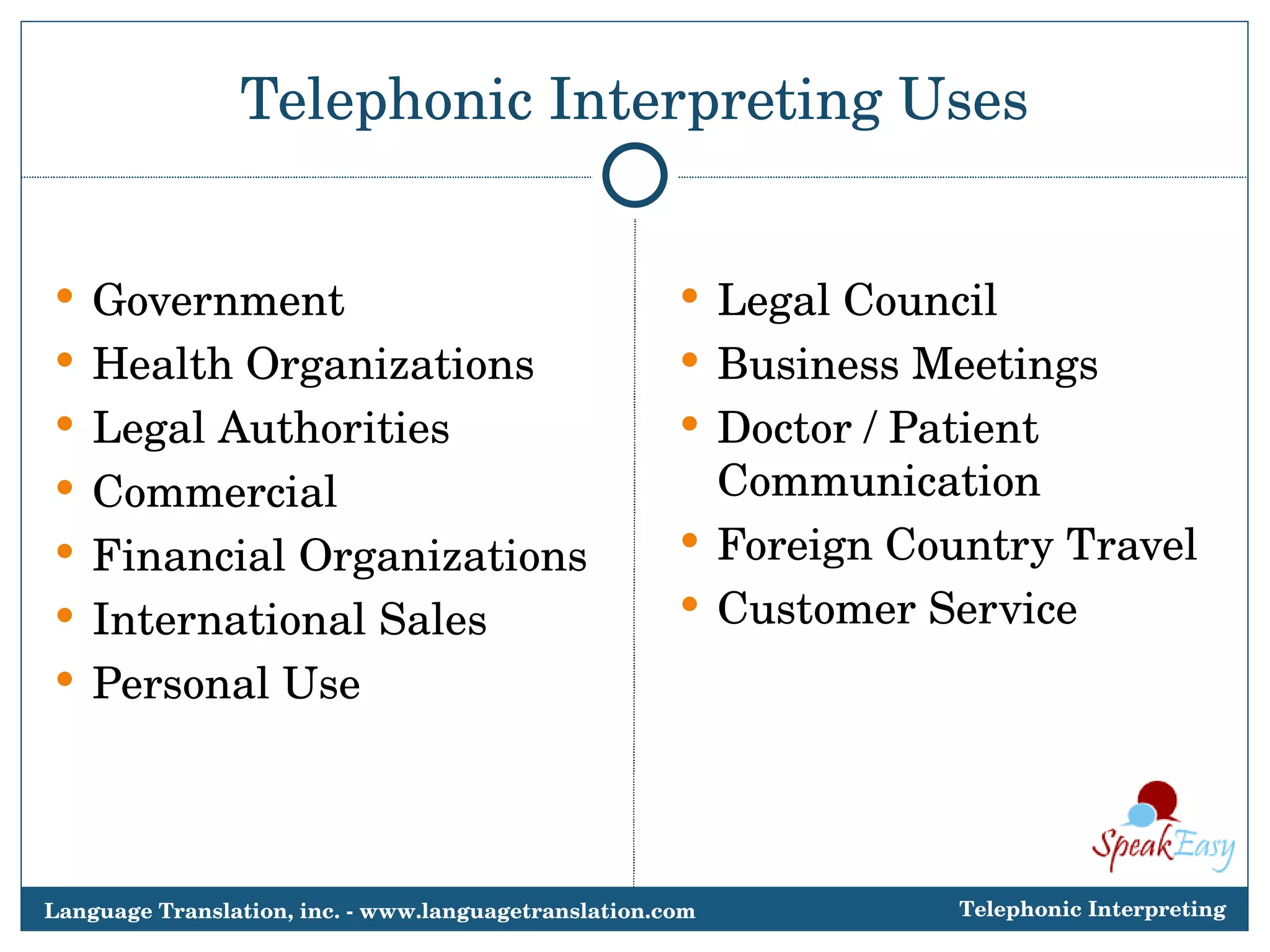
Telephonic interpreting provides interpretation services over the phone between individuals who do not speak the same language. It works through remote simultaneous or consecutive interpreting technology which allows an interpreter to communicate in real-time from a remote location via phone. Effective telephonic interpreting requires skilled interpreters with language proficiency, subject expertise, and the ability to manage technical issues that may arise from communicating remotely over the phone. While it has advantages like low cost and quick access to interpreters, telephonic interpreting also has limitations compared to in-person interpretation like inability to see body language.



![Professional Profile with graphics [pdf format]](https://cdn.slidesharecdn.com/ss_thumbnails/fe20258d-fd89-4534-b4a6-d11fa38a9ce2-150402113615-conversion-gate01-thumbnail.jpg?width=640&height=640&fit=bounds)


