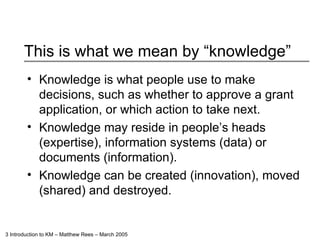
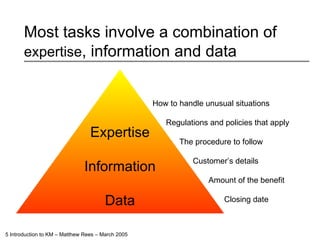
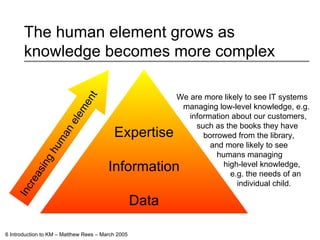
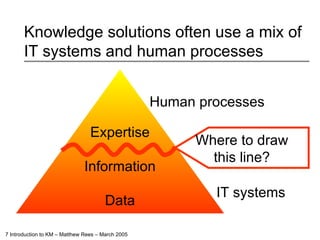
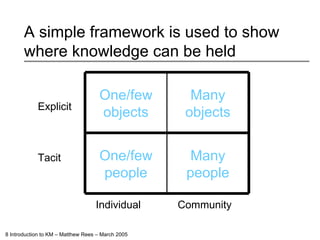
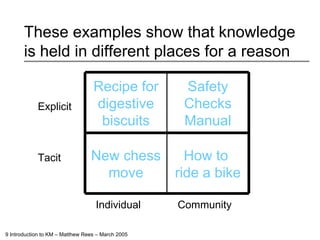
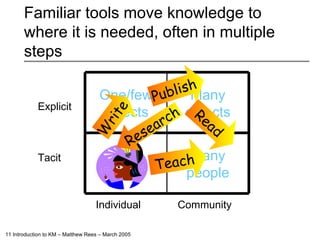
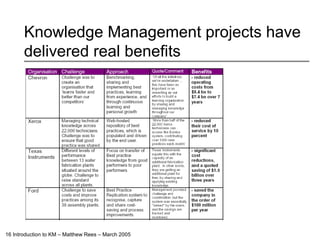
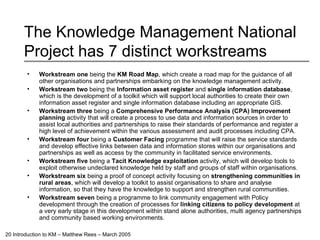
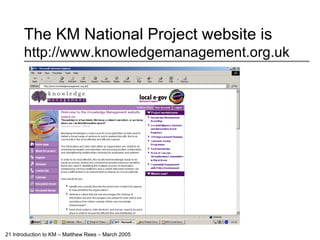
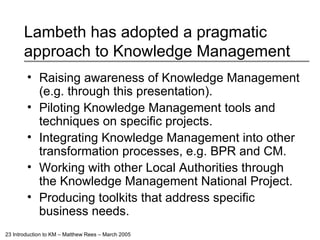
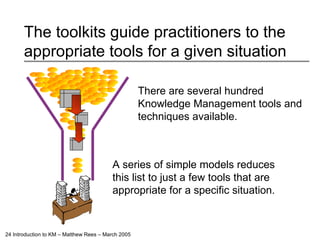
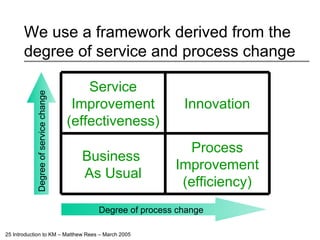
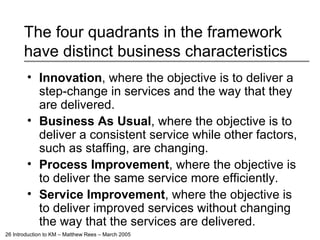
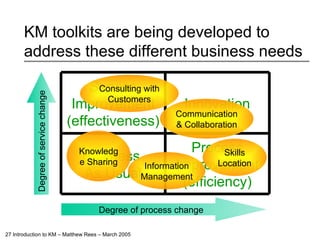
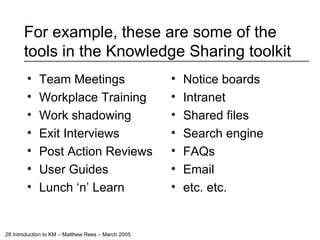

This document provides an introduction to knowledge management. It defines knowledge and how it can reside in people's heads, information systems, or documents. It discusses how knowledge can be managed directly through tools and techniques or indirectly by fostering an environment where knowledge activities are encouraged. It also describes how knowledge management builds upon information management and provides several benefits, including addressing information overload and preventing poor decision making. Finally, it discusses Lambeth's pragmatic approach to knowledge management and the development of toolkits to guide practitioners to appropriate tools.


