 Ammonia is constantly liberated in the
metabolism of amino acids & other
nitrogenous compounds.
 At physiological pH, ammonia exists as NH4
+
ions.
 Amino acids – by transdeamination.
 Biogenic amines.
 Amino group of purines & Pyrimidine
catabolism.
 By action of intestinal bacteria (urease) on
urea.
 There is a regular & constant production of
NH3 from various tissues, its concentration
in the circulation is low (10-20mg/dl).
 Body has an efficient mechanism for NH3
transport & its utilization for urea cycle.
 The transport of ammonia between various
tissues & the liver mostly occurs in the form
of glutamate or alanine & not as free NH3.
 Alanine is important for NH3 transport from
muscle to liver by glucose - alanine cycle.
 Glutamine is a storehouse of NH3.
 It is present in highest concentration (8 mg/dl
in adults) in blood among the amino acids.
 Glutamine serves as a storage & transport
form of NH3.
 Synthesis mostly occurs in liver, brain &
muscle.
 Glutamine is freely diffusible in tissues, hence
easily transported.
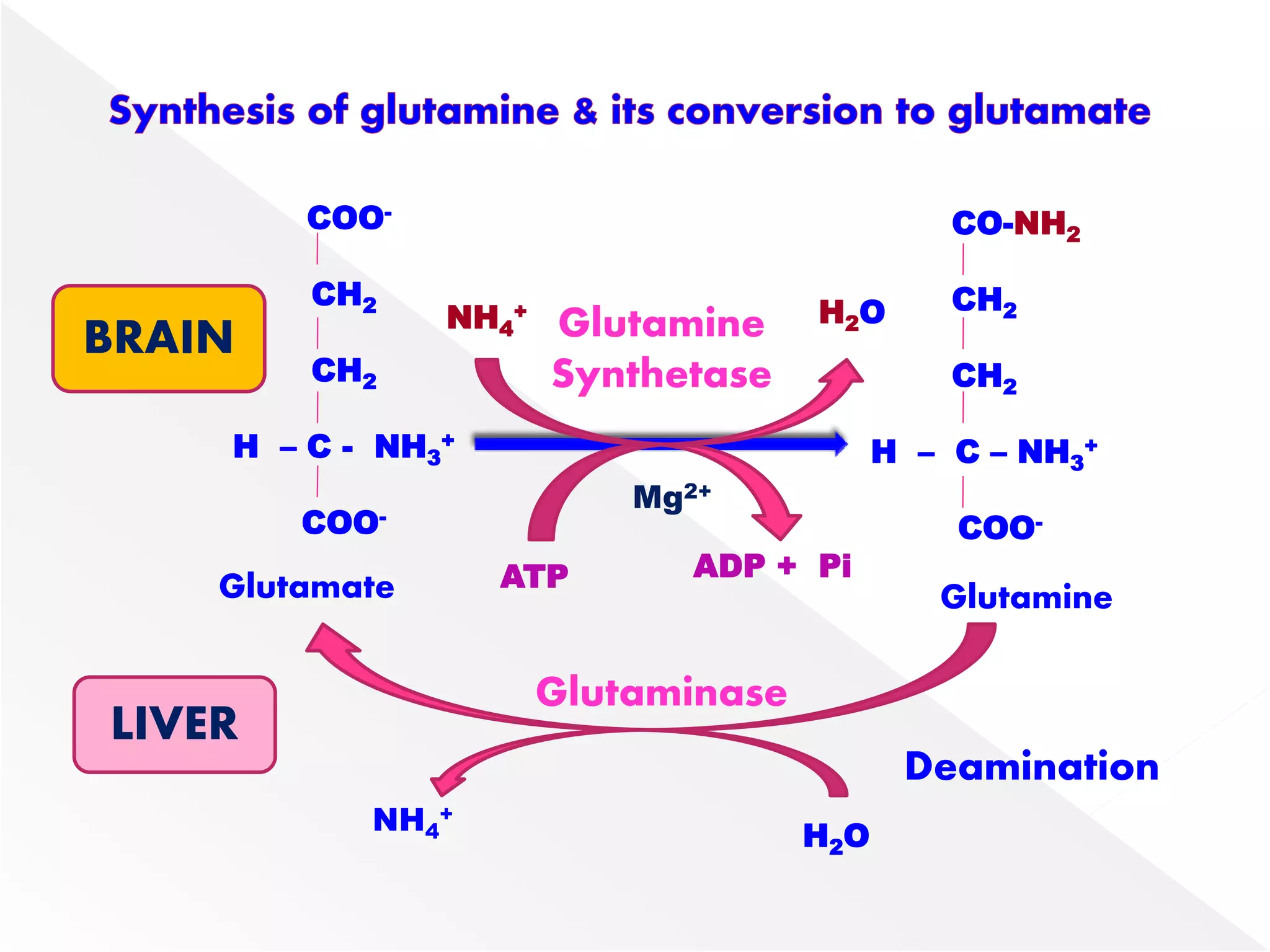
 Glutamine synthase (mitochondrial enzyme) is
responsible for synthesis of glutamine from
glutamate & ammonia, requires ATP & Mg2+.
 Glutamine can be deaminated by hydrolysis
to release ammonia by glutaminase.
 Glutaminase found in kidney & intestinal cells.
COO-
CH2
CH2
H – C - NH3
+
COO-
CO-NH2
CH2
CH2
H – C – NH3
+
COO-
NH4
+ H2OGlutamine
Synthetase
ATP ADP + Pi
Mg2+
Glutamate Glutamine
Glutaminase
H2O
NH4
+
LIVER
BRAIN
Deamination
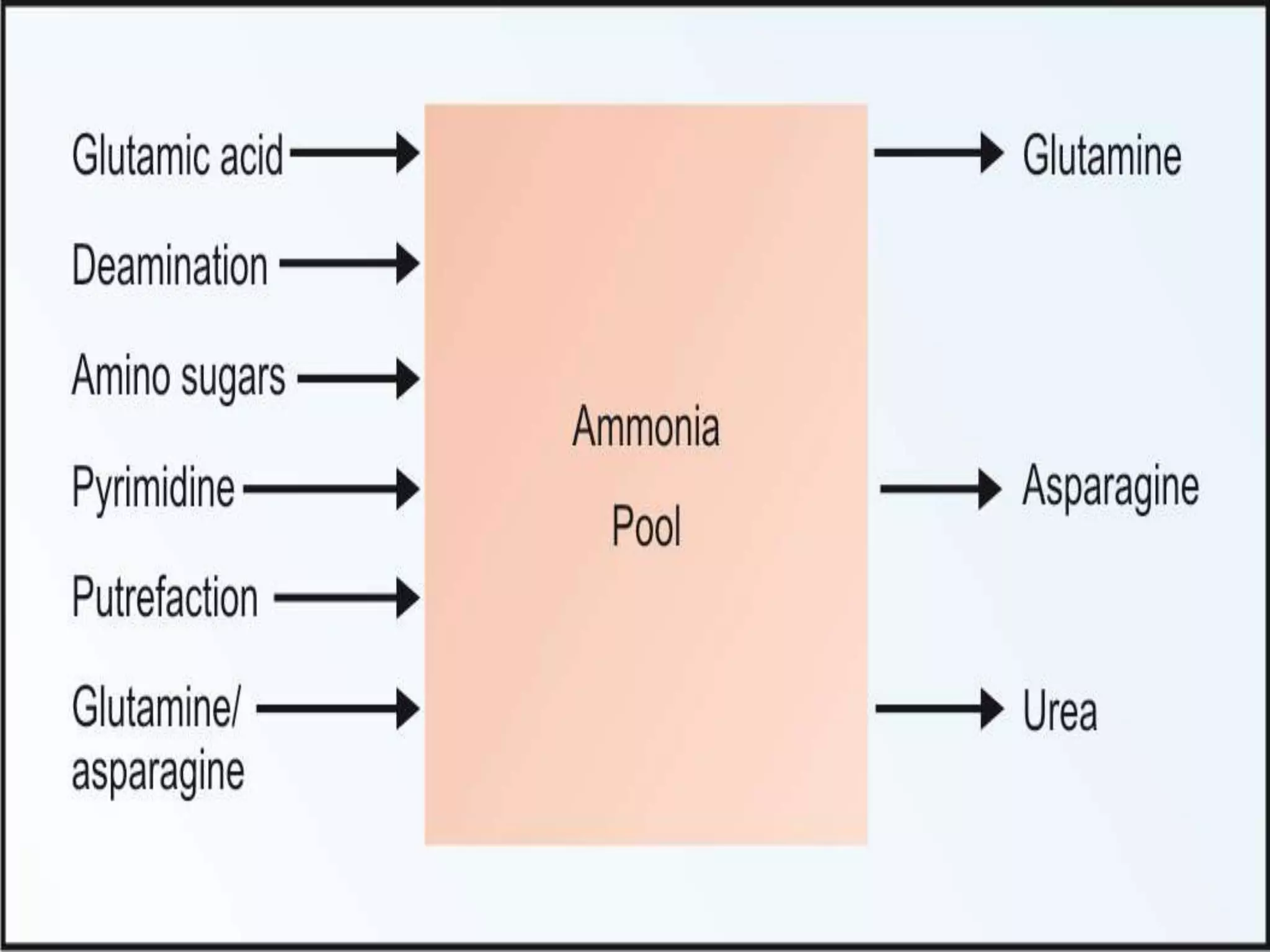
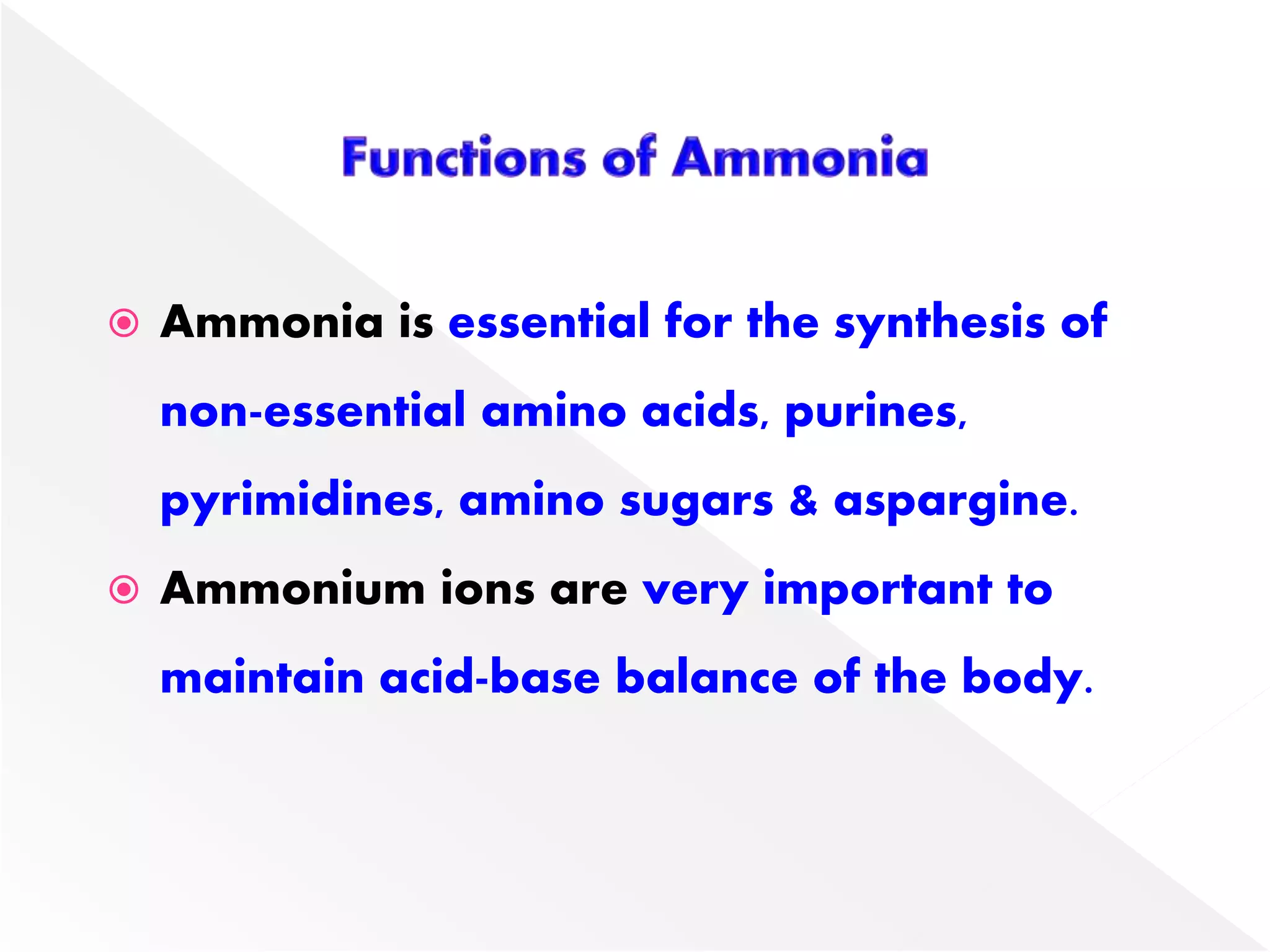
 Ammonia is essential for the synthesis of
non-essential amino acids, purines,
pyrimidines, amino sugars & aspargine.
 Ammonium ions are very important to
maintain acid-base balance of the body.
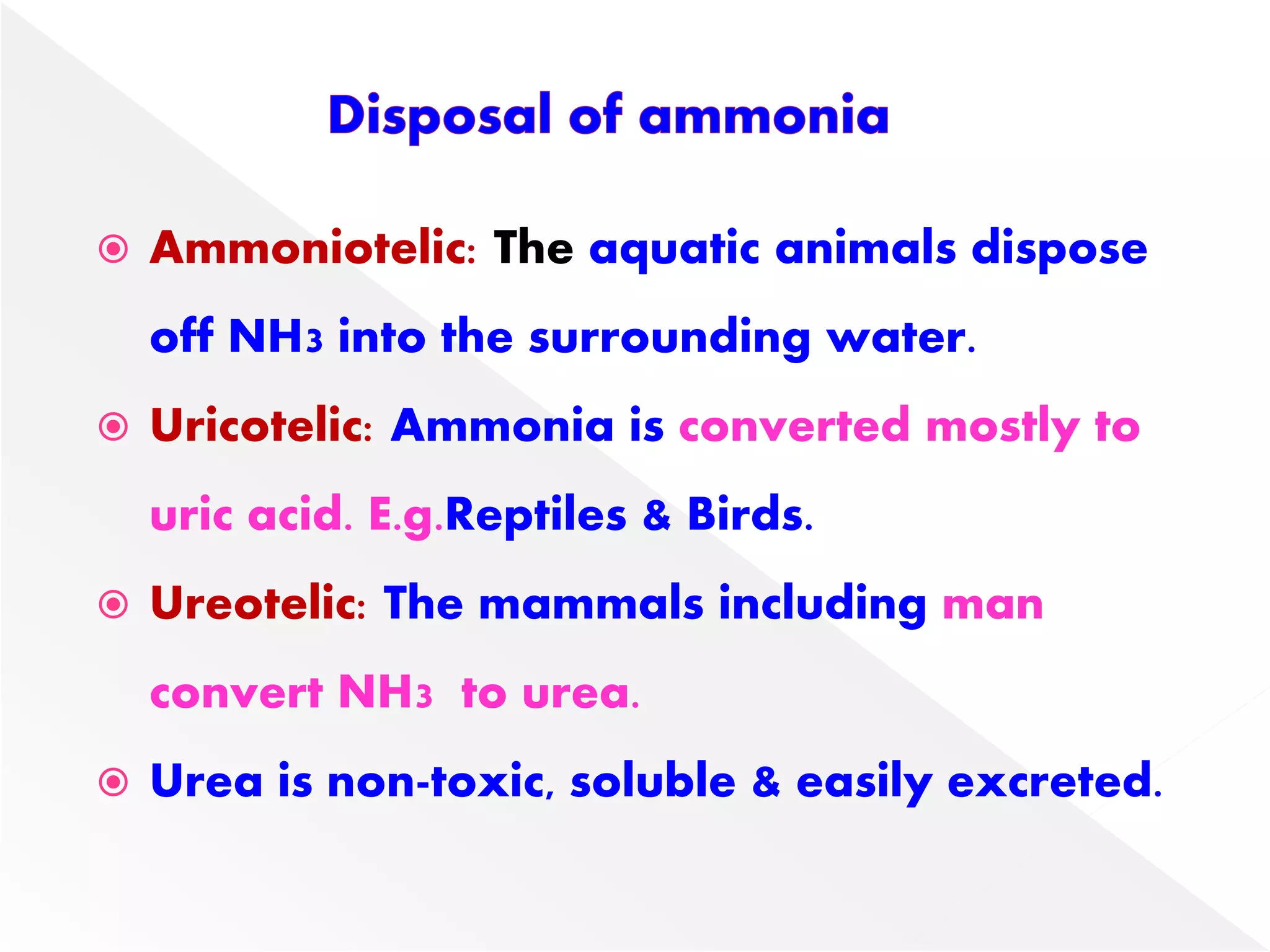
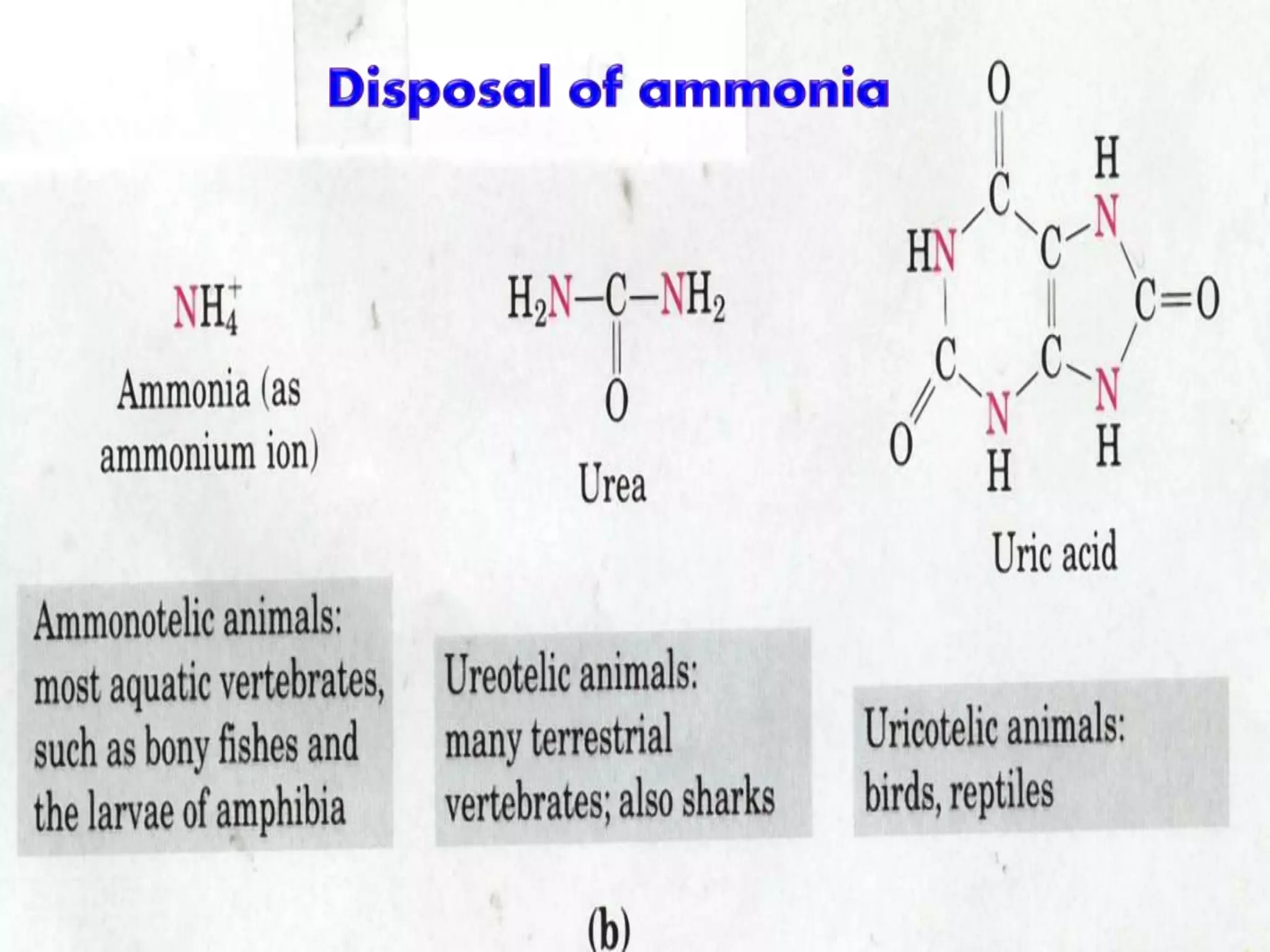
 Ammoniotelic: The aquatic animals dispose
off NH3 into the surrounding water.
 Uricotelic: Ammonia is converted mostly to
uric acid. E.g.Reptiles & Birds.
 Ureotelic: The mammals including man
convert NH3 to urea.
 Urea is non-toxic, soluble & easily excreted.
 Elevation of blood ammonia concentration is
harmful to the Brain.
 Ammonia accumulation results in slurring of
speech & blurring of the vision & cause tremors.
 It may lead to coma, finally death, if not
corrected.
 Increased levels of ammonia in blood.
 It may be genetic or acquired.
 Impairment in urea synthesis due to a defect
in any one of the five enzymes in urea cycle.
 Acquired hyperammonemia may be due to
hepatitis, alcoholism, where urea synthesis
becomes defective, hence NH3 accumulates.
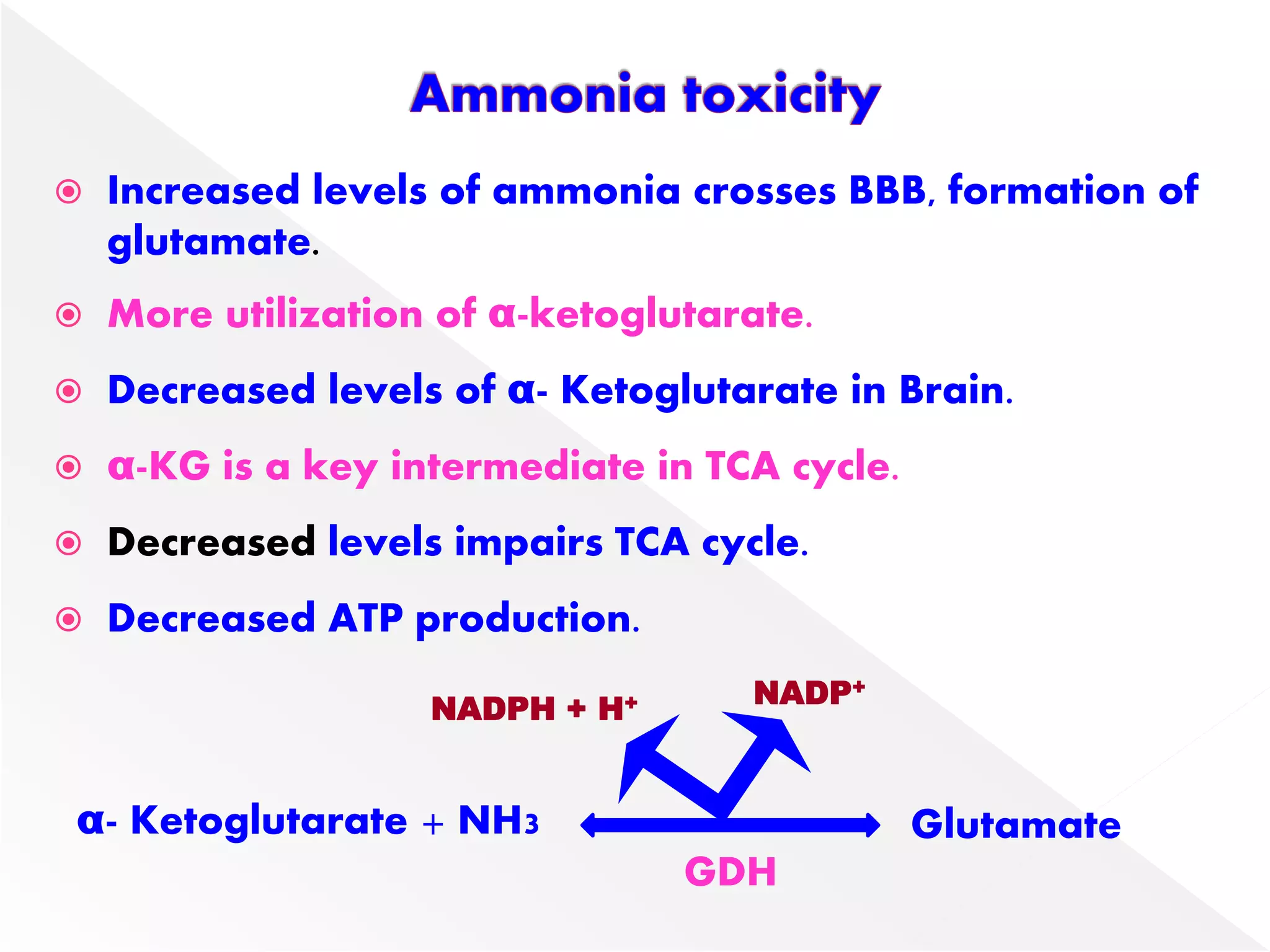
 Increased levels of ammonia crosses BBB, formation of
glutamate.
 More utilization of α-ketoglutarate.
 Decreased levels of α- Ketoglutarate in Brain.
 α-KG is a key intermediate in TCA cycle.
 Decreased levels impairs TCA cycle.
 Decreased ATP production.
Glutamate
NADPH + H+ NADP+
GDH
α- Ketoglutarate + NH3
 Increased levels of ammonia results in
 Slurring of speech
 Blurring of the vision
 Convulsions
 Nausea, Vomiting
 Neurological Deficits
 Mental Retardation
 Coma & Death.
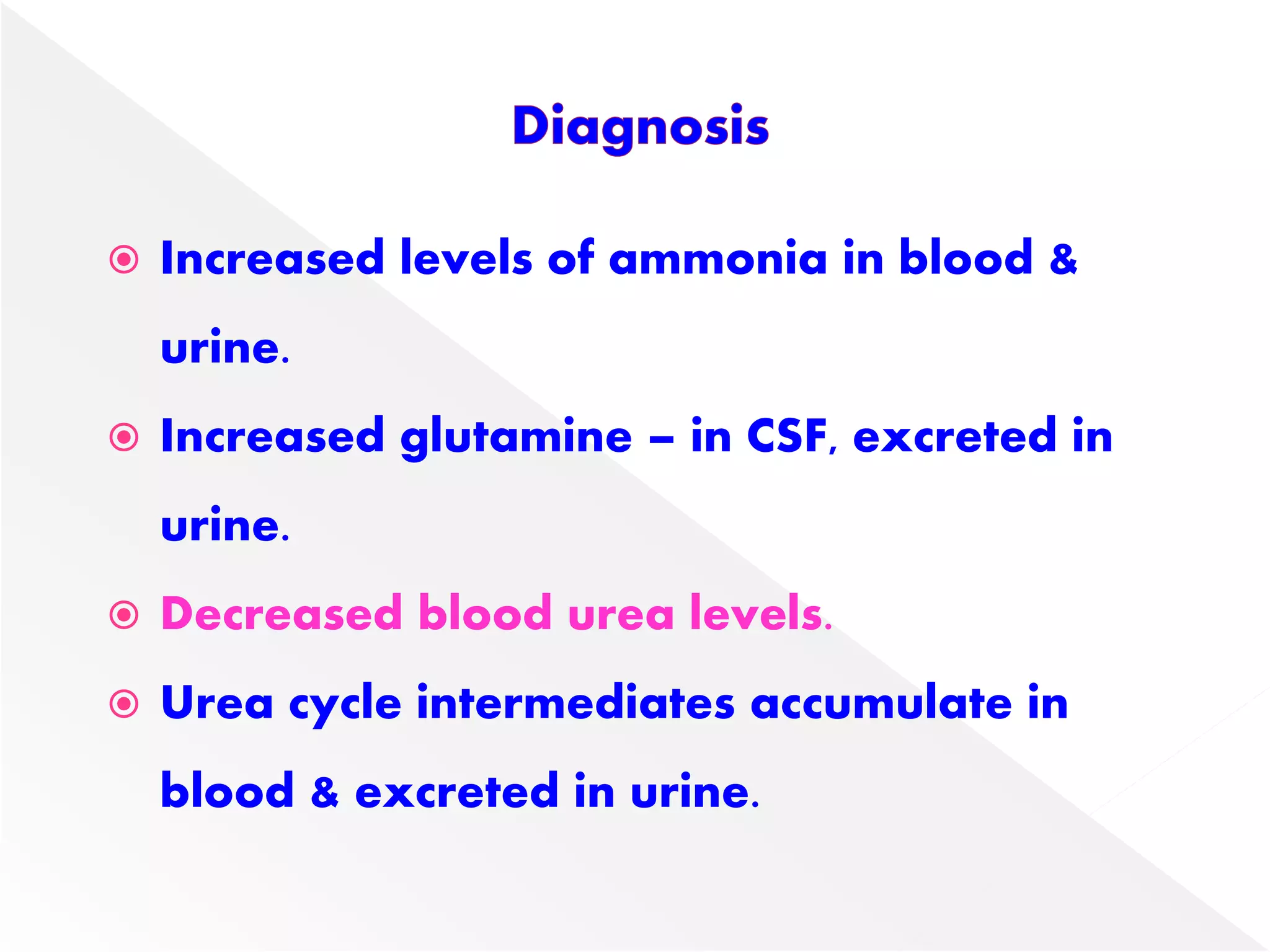
 Increased levels of ammonia in blood &
urine.
 Increased glutamine – in CSF, excreted in
urine.
 Decreased blood urea levels.
 Urea cycle intermediates accumulate in
blood & excreted in urine.
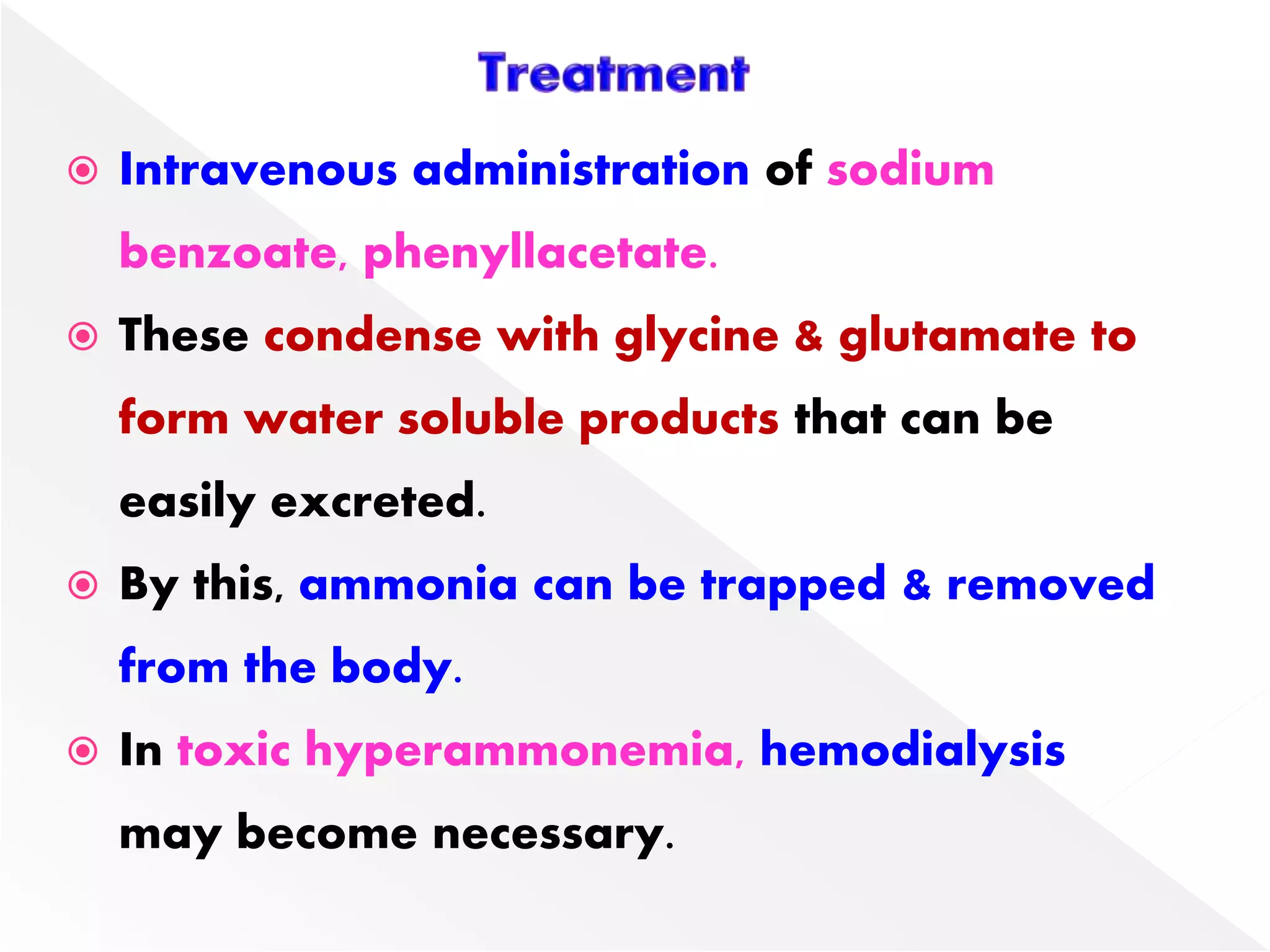
 Intravenous administration of sodium
benzoate, phenyllacetate.
 These condense with glycine & glutamate to
form water soluble products that can be
easily excreted.
 By this, ammonia can be trapped & removed
from the body.
 In toxic hyperammonemia, hemodialysis
may become necessary.
 Textbook of Biochemistry-u Satyanarayana
 Textbook of Biochemistry-DM Vasudevan
AMMONIA METABOLISM

AMMONIA METABOLISM

  • 2.
     Ammonia isconstantly liberated in the metabolism of amino acids & other nitrogenous compounds.  At physiological pH, ammonia exists as NH4 + ions.
  • 3.
     Amino acids– by transdeamination.  Biogenic amines.  Amino group of purines & Pyrimidine catabolism.  By action of intestinal bacteria (urease) on urea.
  • 5.
     There isa regular & constant production of NH3 from various tissues, its concentration in the circulation is low (10-20mg/dl).  Body has an efficient mechanism for NH3 transport & its utilization for urea cycle.
  • 6.
     The transportof ammonia between various tissues & the liver mostly occurs in the form of glutamate or alanine & not as free NH3.  Alanine is important for NH3 transport from muscle to liver by glucose - alanine cycle.
  • 7.
     Glutamine isa storehouse of NH3.  It is present in highest concentration (8 mg/dl in adults) in blood among the amino acids.  Glutamine serves as a storage & transport form of NH3.  Synthesis mostly occurs in liver, brain & muscle.
  • 8.
     Glutamine isfreely diffusible in tissues, hence easily transported.  Glutamine synthase (mitochondrial enzyme) is responsible for synthesis of glutamine from glutamate & ammonia, requires ATP & Mg2+.  Glutamine can be deaminated by hydrolysis to release ammonia by glutaminase.  Glutaminase found in kidney & intestinal cells.
  • 9.
    COO- CH2 CH2 H – C- NH3 + COO- CO-NH2 CH2 CH2 H – C – NH3 + COO- NH4 + H2OGlutamine Synthetase ATP ADP + Pi Mg2+ Glutamate Glutamine Glutaminase H2O NH4 + LIVER BRAIN Deamination
  • 10.
     Ammonia isessential for the synthesis of non-essential amino acids, purines, pyrimidines, amino sugars & aspargine.  Ammonium ions are very important to maintain acid-base balance of the body.
  • 11.
     Ammoniotelic: Theaquatic animals dispose off NH3 into the surrounding water.  Uricotelic: Ammonia is converted mostly to uric acid. E.g.Reptiles & Birds.  Ureotelic: The mammals including man convert NH3 to urea.  Urea is non-toxic, soluble & easily excreted.
  • 13.
     Elevation ofblood ammonia concentration is harmful to the Brain.  Ammonia accumulation results in slurring of speech & blurring of the vision & cause tremors.  It may lead to coma, finally death, if not corrected.
  • 14.
     Increased levelsof ammonia in blood.  It may be genetic or acquired.  Impairment in urea synthesis due to a defect in any one of the five enzymes in urea cycle.  Acquired hyperammonemia may be due to hepatitis, alcoholism, where urea synthesis becomes defective, hence NH3 accumulates.
  • 15.
     Increased levelsof ammonia crosses BBB, formation of glutamate.  More utilization of α-ketoglutarate.  Decreased levels of α- Ketoglutarate in Brain.  α-KG is a key intermediate in TCA cycle.  Decreased levels impairs TCA cycle.  Decreased ATP production. Glutamate NADPH + H+ NADP+ GDH α- Ketoglutarate + NH3
  • 16.
     Increased levelsof ammonia results in  Slurring of speech  Blurring of the vision  Convulsions  Nausea, Vomiting  Neurological Deficits  Mental Retardation  Coma & Death.
  • 17.
     Increased levelsof ammonia in blood & urine.  Increased glutamine – in CSF, excreted in urine.  Decreased blood urea levels.  Urea cycle intermediates accumulate in blood & excreted in urine.
  • 18.
     Intravenous administrationof sodium benzoate, phenyllacetate.  These condense with glycine & glutamate to form water soluble products that can be easily excreted.  By this, ammonia can be trapped & removed from the body.  In toxic hyperammonemia, hemodialysis may become necessary.
  • 19.
     Textbook ofBiochemistry-u Satyanarayana  Textbook of Biochemistry-DM Vasudevan