7 Phases of
Architectural
Design
armb
The Architecture Design
process…
From its inception through to completion,
the development of an architectural project
is an extremely lengthy process, with many
external influences, regulations, and forces
to consider as well the various contributing
internal elements of the design team.
Why do we need a set of
architectural design phases, and are
they even important?
01 – Pre-design phase
02 – Schematic design and programming phase
03 – Design development phase
7 Phases of Architectural Design
04 – Construction drawings and documents phase
05 – Building permit phase
06 – Bidding and negotiation phase
07 – Contract documents and administration phase
The pre-design
phase
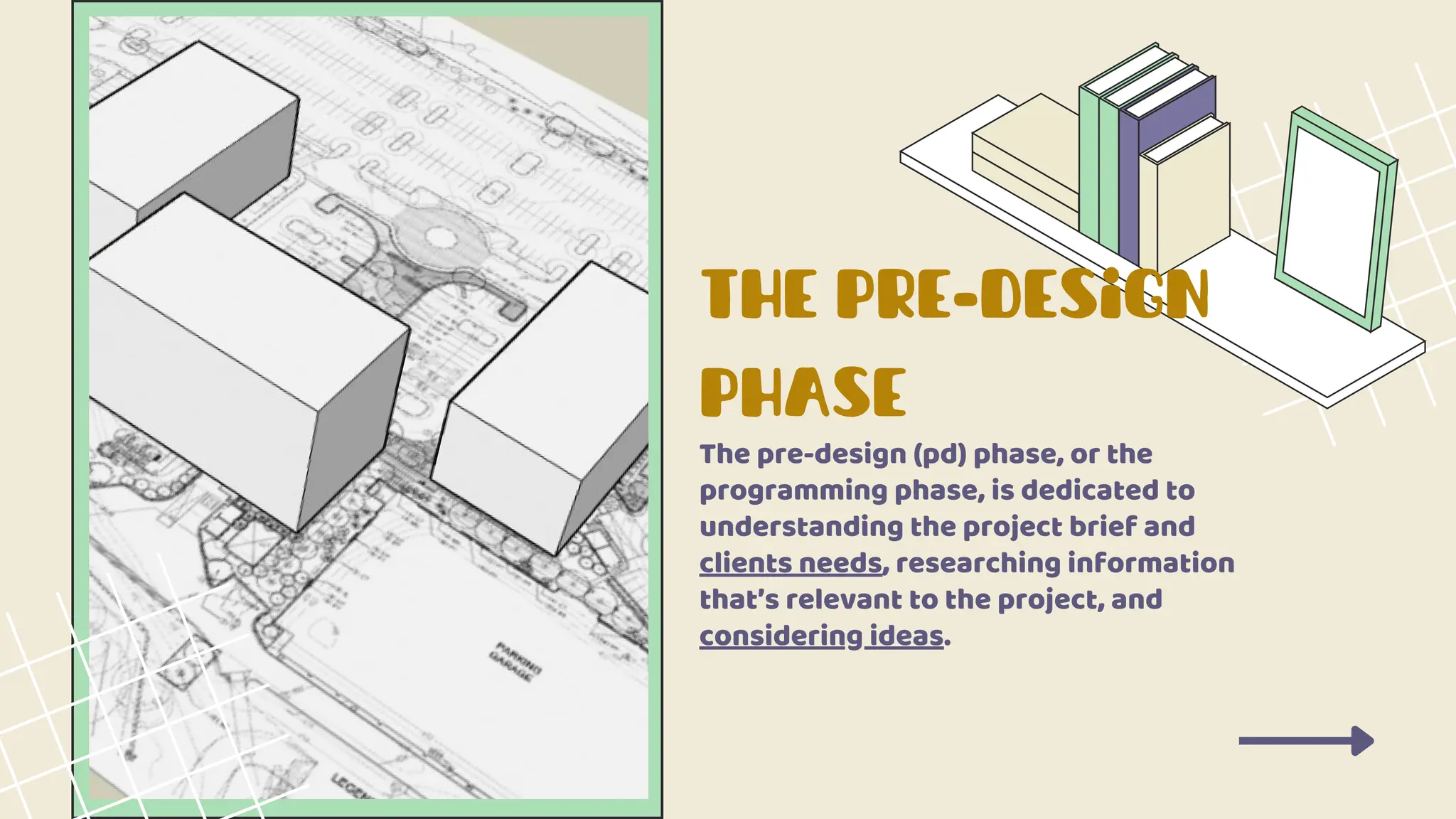
The pre-design (pd) phase, or the
programming phase, is dedicated to
understanding the project brief and
clients needs, researching information
that’s relevant to the project, and
considering ideas.
02 –
Schematic
design and
programming
phase
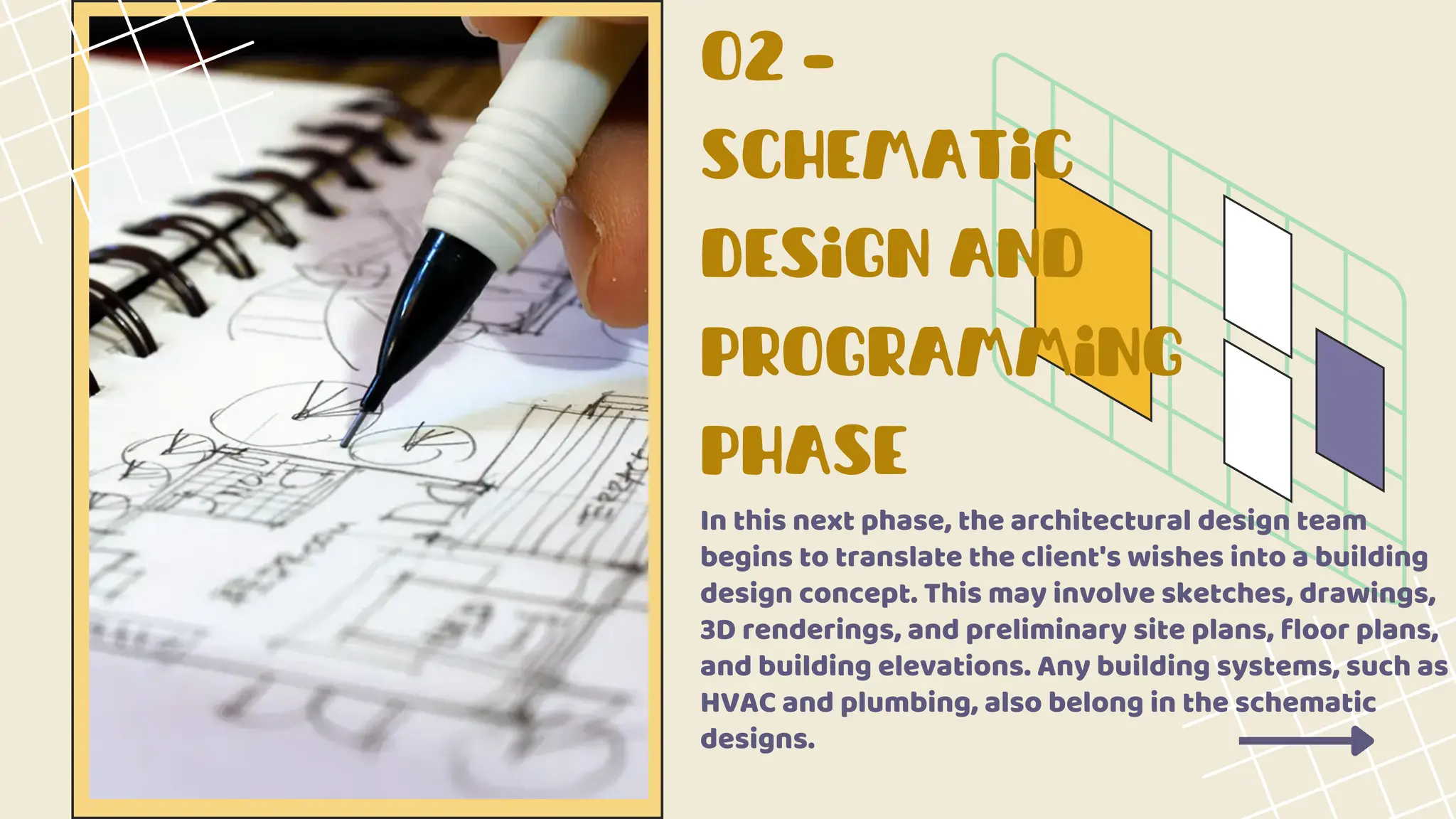
In this next phase, the architectural design team
begins to translate the client's wishes into a building
design concept. This may involve sketches, drawings,
3D renderings, and preliminary site plans, floor plans,
and building elevations. Any building systems, such as
HVAC and plumbing, also belong in the schematic
designs.
03 – Design
development
phase
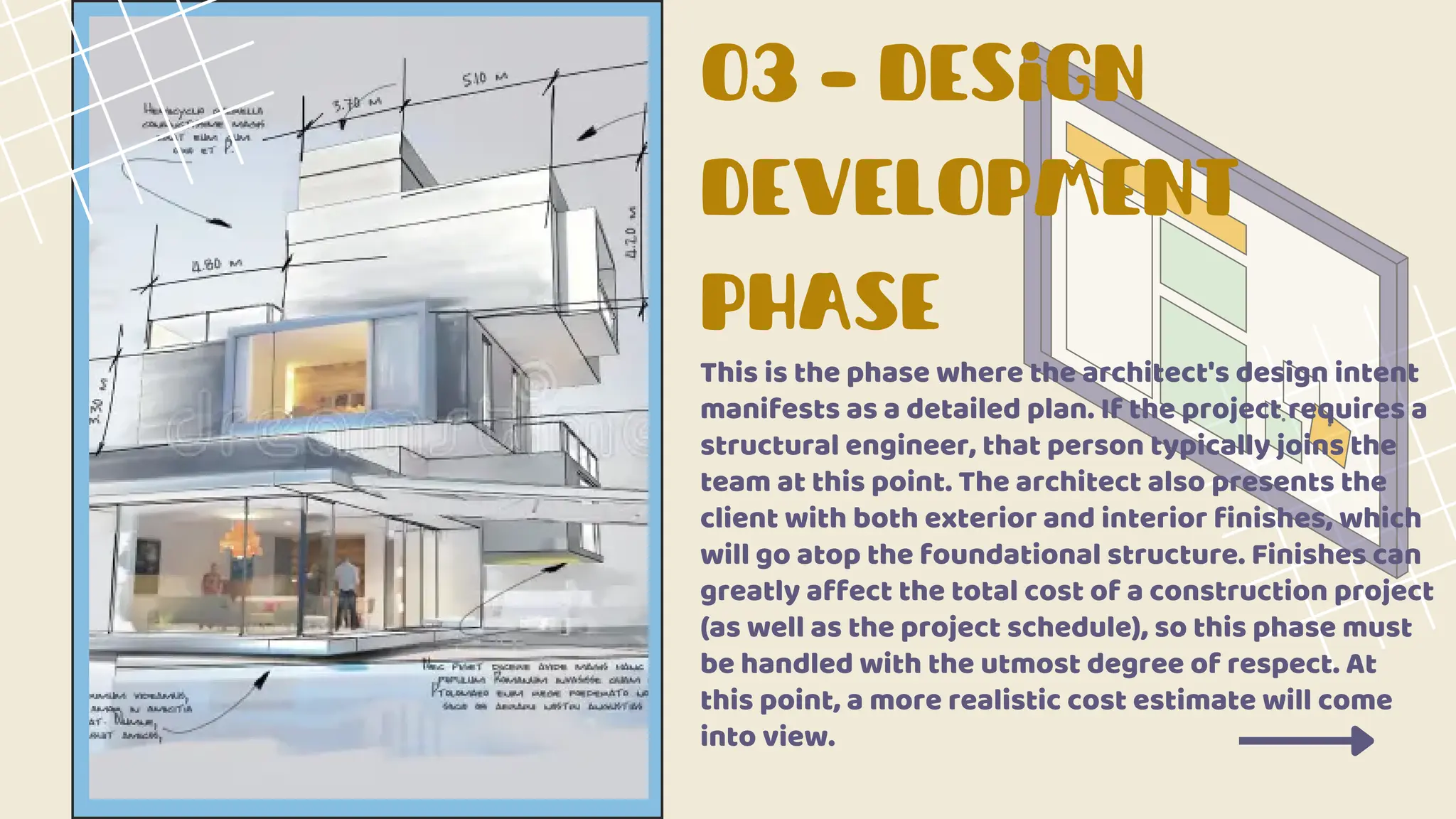
This is the phase where the architect's design intent
manifests as a detailed plan. If the project requires a
structural engineer, that person typically joins the
team at this point. The architect also presents the
client with both exterior and interior finishes, which
will go atop the foundational structure. Finishes can
greatly affect the total cost of a construction project
(as well as the project schedule), so this phase must
be handled with the utmost degree of respect. At
this point, a more realistic cost estimate will come
into view.
04 – Construction
drawings and
documents phase
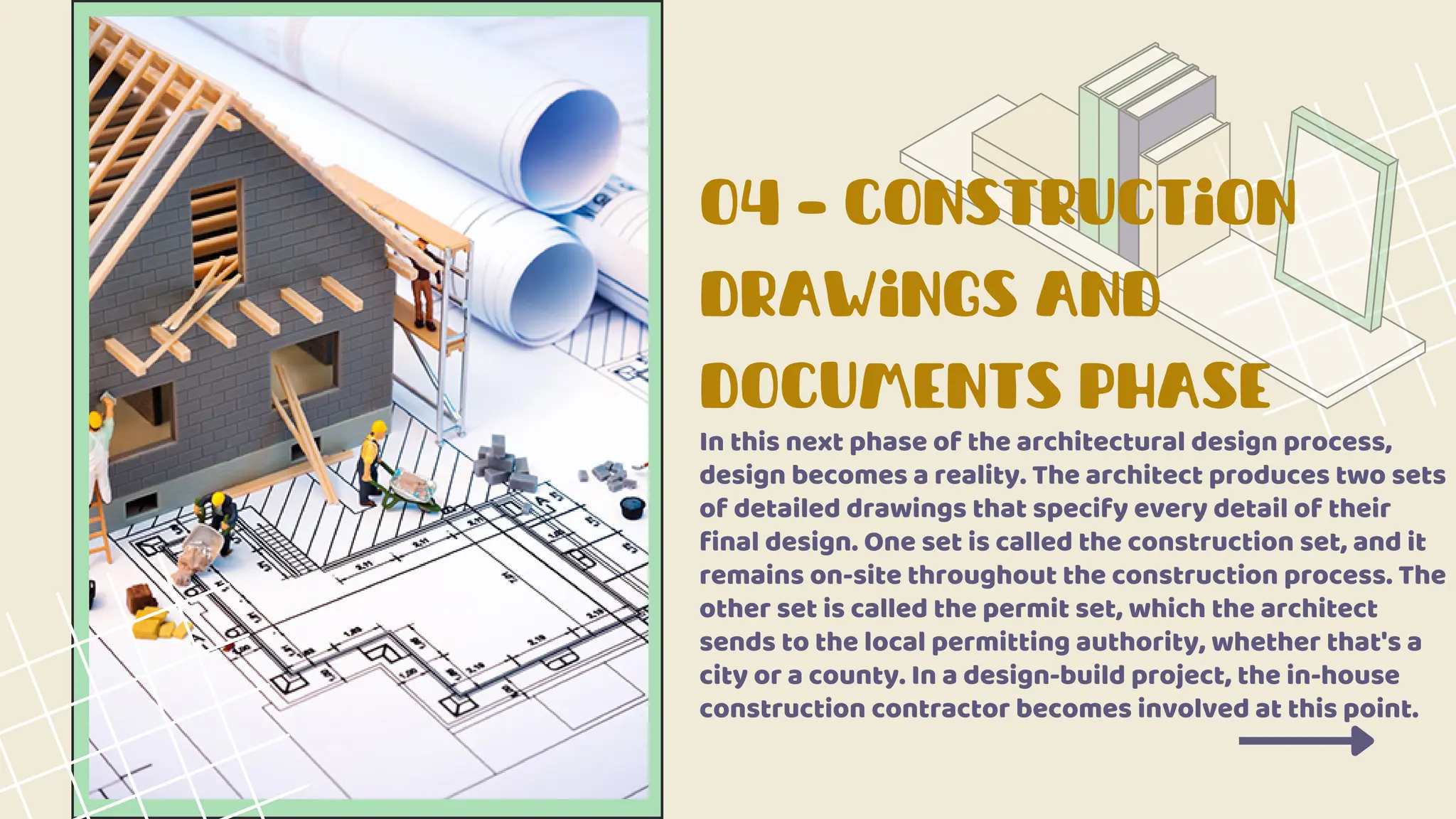
In this next phase of the architectural design process,
design becomes a reality. The architect produces two sets
of detailed drawings that specify every detail of their
final design. One set is called the construction set, and it
remains on-site throughout the construction process. The
other set is called the permit set, which the architect
sends to the local permitting authority, whether that's a
city or a county. In a design-build project, the in-house
construction contractor becomes involved at this point.
05 – Building
permit phase
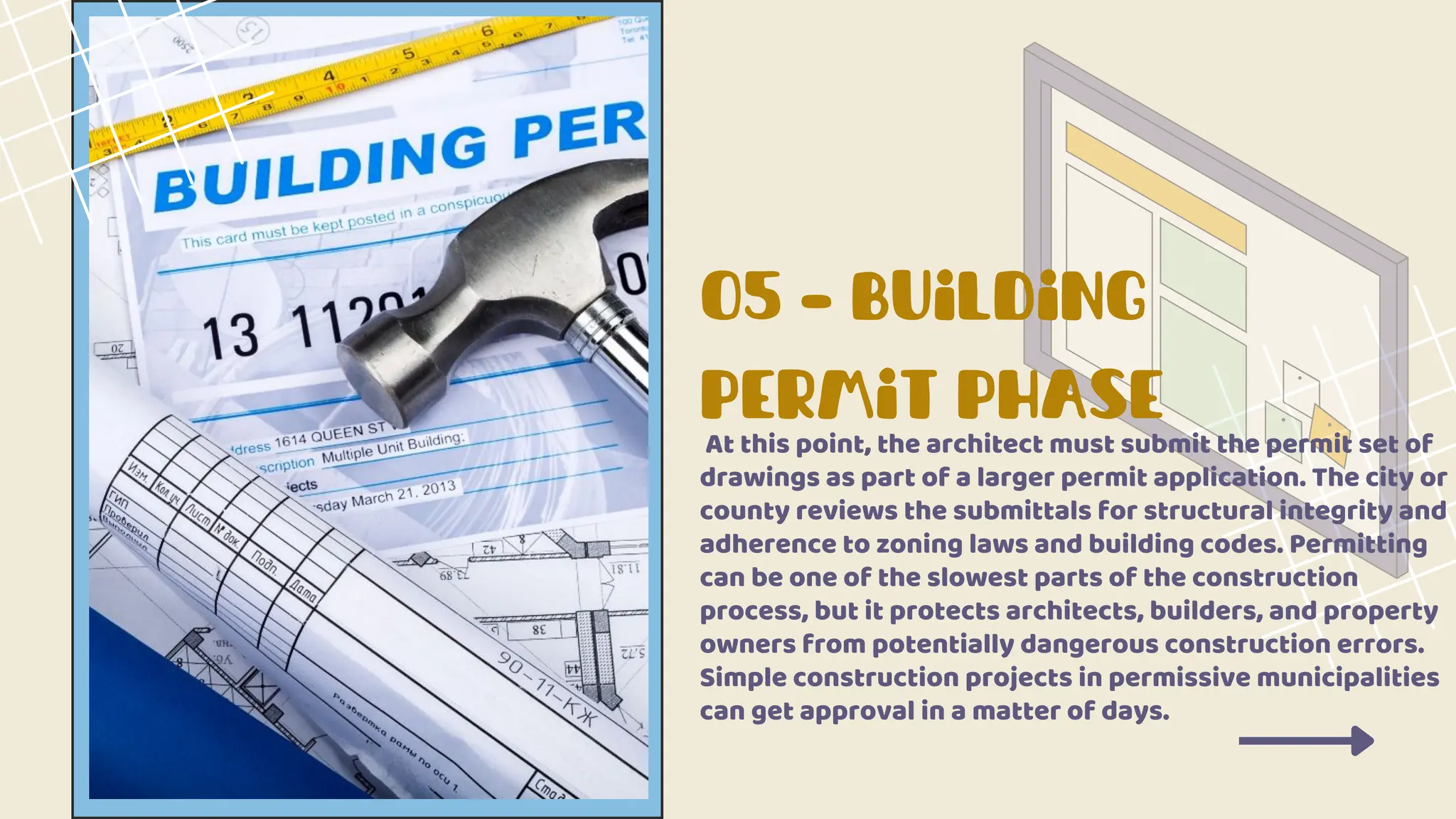
At this point, the architect must submit the permit set of
drawings as part of a larger permit application. The city or
county reviews the submittals for structural integrity and
adherence to zoning laws and building codes. Permitting
can be one of the slowest parts of the construction
process, but it protects architects, builders, and property
owners from potentially dangerous construction errors.
Simple construction projects in permissive municipalities
can get approval in a matter of days.
06 – Bidding and
negotiation phase
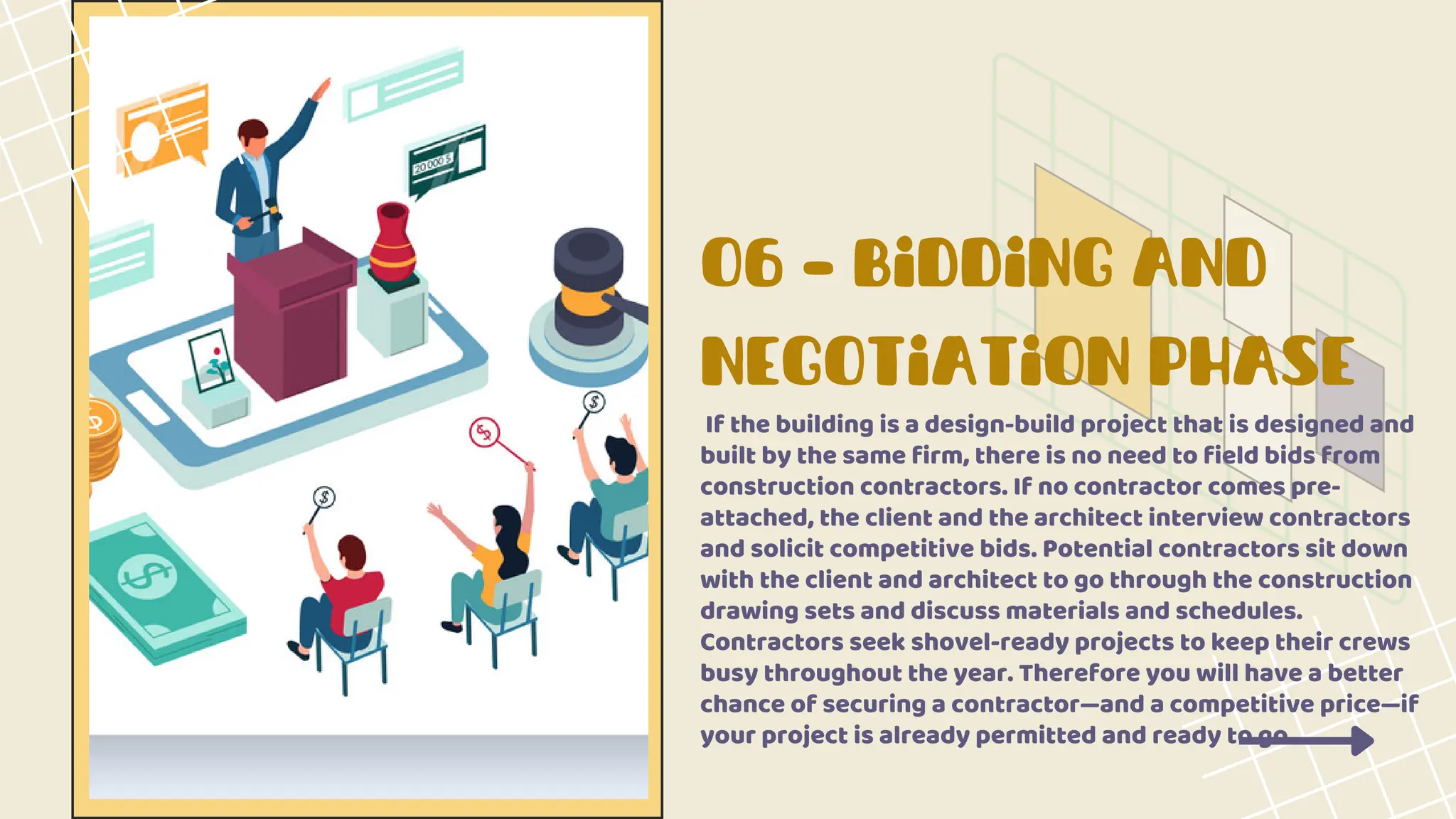
If the building is a design-build project that is designed and
built by the same firm, there is no need to field bids from
construction contractors. If no contractor comes pre-
attached, the client and the architect interview contractors
and solicit competitive bids. Potential contractors sit down
with the client and architect to go through the construction
drawing sets and discuss materials and schedules.
Contractors seek shovel-ready projects to keep their crews
busy throughout the year. Therefore you will have a better
chance of securing a contractor—and a competitive price—if
your project is already permitted and ready to go.
07 – Contract
documents and
administration
phase
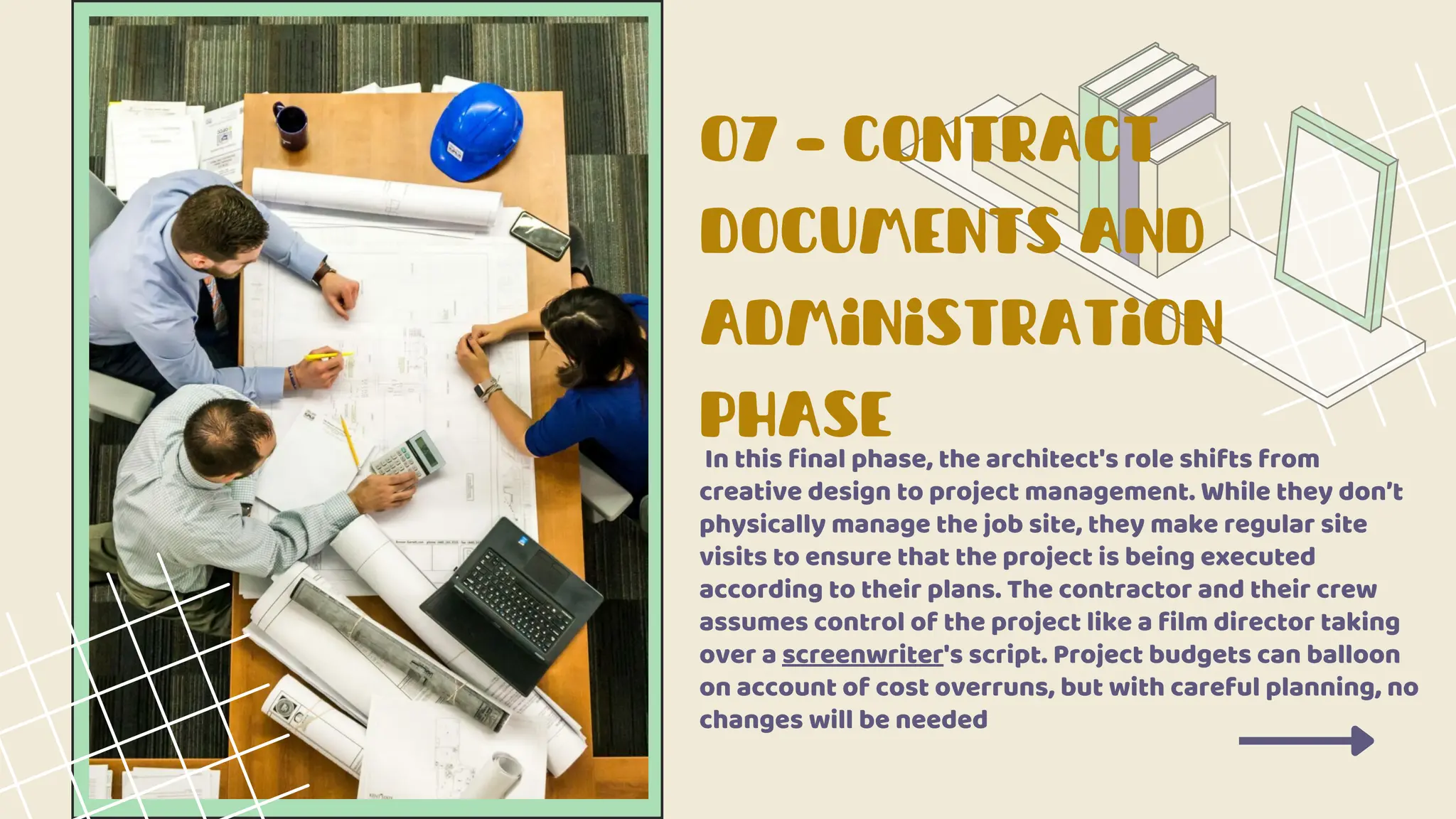
In this final phase, the architect's role shifts from
creative design to project management. While they don’t
physically manage the job site, they make regular site
visits to ensure that the project is being executed
according to their plans. The contractor and their crew
assumes control of the project like a film director taking
over a screenwriter's script. Project budgets can balloon
on account of cost overruns, but with careful planning, no
changes will be needed
summary
To summarize, a typical order of architectural design phases,
as often taught in architecture schools and practiced in many
architectural firms, consists of the following stages:
Pre-Design or Preliminary Phase
1.
Programming: Identify the needs, desires, and
functions that the building must support.
Feasibility Studies: Evaluate the project’s viability,
including potential site evaluations.
Site Analysis: Understand the characteristics of the
project’s physical location, such as sun path, wind
patterns, topography, views, and surrounding context.
Schematic Design (SD)
2.
Develop preliminary design concepts.
Create rough sketches and basic layouts.
Initial discussions about materials, systems, and
structure.
Preliminary cost estimation.
Design Development (DD)
3.
Refine and detail the schematic design.
Detailed drawings and other documents are produced.
Choose specific materials and systems.
Update cost estimation based on more detailed design.
summary
Construction Documents (CD)
4.
Produce detailed drawings and specifications that will
guide the contractors in construction.
These documents are used for bidding and construction,
and they’re legally binding.
Bidding or Negotiation
5.
The project owner (or their representative) seeks bids or
negotiates with contractors.
The architect might assist in evaluating bids or proposals.
Construction Administration (CA)
6.
The architect monitors the construction process to ensure
it aligns with the design intent.
Address any issues or questions that arise during
construction.
Review and approve (or reject) contractor payments based
on work progress.
Post-Construction
7.
Building Commissioning: This ensures that building
systems are designed, installed, and calibrated to operate
as intended.
Post-Occupancy Evaluation (POE): Feedback is gathered
from the building’s users to understand what works and
what doesn’t in the completed building.

7 Design Phases in Architectural Design Process

  • 1.
  • 2.
    The Architecture Design process… Fromits inception through to completion, the development of an architectural project is an extremely lengthy process, with many external influences, regulations, and forces to consider as well the various contributing internal elements of the design team.
  • 3.
    Why do weneed a set of architectural design phases, and are they even important?
  • 4.
    01 – Pre-designphase 02 – Schematic design and programming phase 03 – Design development phase 7 Phases of Architectural Design 04 – Construction drawings and documents phase 05 – Building permit phase 06 – Bidding and negotiation phase 07 – Contract documents and administration phase
  • 5.
    The pre-design phase The pre-design(pd) phase, or the programming phase, is dedicated to understanding the project brief and clients needs, researching information that’s relevant to the project, and considering ideas.
  • 6.
    02 – Schematic design and programming phase Inthis next phase, the architectural design team begins to translate the client's wishes into a building design concept. This may involve sketches, drawings, 3D renderings, and preliminary site plans, floor plans, and building elevations. Any building systems, such as HVAC and plumbing, also belong in the schematic designs.
  • 7.
    03 – Design development phase Thisis the phase where the architect's design intent manifests as a detailed plan. If the project requires a structural engineer, that person typically joins the team at this point. The architect also presents the client with both exterior and interior finishes, which will go atop the foundational structure. Finishes can greatly affect the total cost of a construction project (as well as the project schedule), so this phase must be handled with the utmost degree of respect. At this point, a more realistic cost estimate will come into view.
  • 8.
    04 – Construction drawingsand documents phase In this next phase of the architectural design process, design becomes a reality. The architect produces two sets of detailed drawings that specify every detail of their final design. One set is called the construction set, and it remains on-site throughout the construction process. The other set is called the permit set, which the architect sends to the local permitting authority, whether that's a city or a county. In a design-build project, the in-house construction contractor becomes involved at this point.
  • 9.
    05 – Building permitphase At this point, the architect must submit the permit set of drawings as part of a larger permit application. The city or county reviews the submittals for structural integrity and adherence to zoning laws and building codes. Permitting can be one of the slowest parts of the construction process, but it protects architects, builders, and property owners from potentially dangerous construction errors. Simple construction projects in permissive municipalities can get approval in a matter of days.
  • 10.
    06 – Biddingand negotiation phase If the building is a design-build project that is designed and built by the same firm, there is no need to field bids from construction contractors. If no contractor comes pre- attached, the client and the architect interview contractors and solicit competitive bids. Potential contractors sit down with the client and architect to go through the construction drawing sets and discuss materials and schedules. Contractors seek shovel-ready projects to keep their crews busy throughout the year. Therefore you will have a better chance of securing a contractor—and a competitive price—if your project is already permitted and ready to go.
  • 11.
    07 – Contract documentsand administration phase In this final phase, the architect's role shifts from creative design to project management. While they don’t physically manage the job site, they make regular site visits to ensure that the project is being executed according to their plans. The contractor and their crew assumes control of the project like a film director taking over a screenwriter's script. Project budgets can balloon on account of cost overruns, but with careful planning, no changes will be needed
  • 12.
    summary To summarize, atypical order of architectural design phases, as often taught in architecture schools and practiced in many architectural firms, consists of the following stages: Pre-Design or Preliminary Phase 1. Programming: Identify the needs, desires, and functions that the building must support. Feasibility Studies: Evaluate the project’s viability, including potential site evaluations. Site Analysis: Understand the characteristics of the project’s physical location, such as sun path, wind patterns, topography, views, and surrounding context. Schematic Design (SD) 2. Develop preliminary design concepts. Create rough sketches and basic layouts. Initial discussions about materials, systems, and structure. Preliminary cost estimation. Design Development (DD) 3. Refine and detail the schematic design. Detailed drawings and other documents are produced. Choose specific materials and systems. Update cost estimation based on more detailed design.
  • 13.
    summary Construction Documents (CD) 4. Producedetailed drawings and specifications that will guide the contractors in construction. These documents are used for bidding and construction, and they’re legally binding. Bidding or Negotiation 5. The project owner (or their representative) seeks bids or negotiates with contractors. The architect might assist in evaluating bids or proposals. Construction Administration (CA) 6. The architect monitors the construction process to ensure it aligns with the design intent. Address any issues or questions that arise during construction. Review and approve (or reject) contractor payments based on work progress. Post-Construction 7. Building Commissioning: This ensures that building systems are designed, installed, and calibrated to operate as intended. Post-Occupancy Evaluation (POE): Feedback is gathered from the building’s users to understand what works and what doesn’t in the completed building.