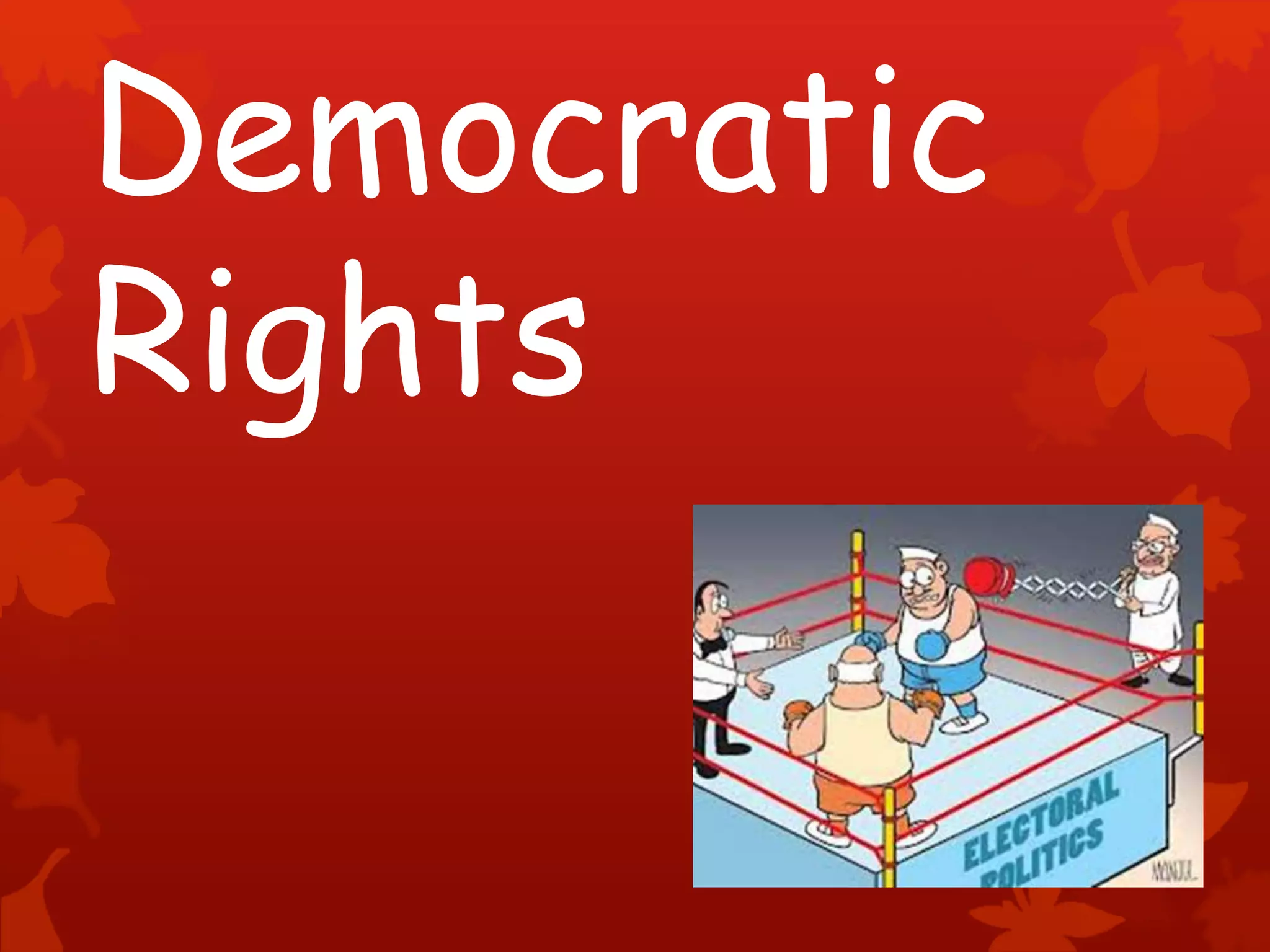
Democratic
Rights
What do you mean by rights?
While living in society, citizens
requires certain facilities for their
development. The facilities and
opportunities provided by the society
for the development of citizen’s
personality are known as Rights
Write down any three
characteristics of rights.
The three characteristics of
rights are:
(1) A right is a claim of the
individual against society.
(2)Rights are not unlimited.
(3) Rights imply duties.
(4) Rights keep on Changing.
What do you understand by
‘moral rights’
Moral Rights are those rights which
are based on morality- they have no
legal sanction behind them and their
violation does not lead to any any
punishment. It is the moral right of the
parents to get respect from their
children but if the children do not
respect them and don’t look after them
in old age, the parent cannot go to a
court of seek obedience from them.
What do mean by Legal
rights?
Legal Rights are those rights which are
recognised and enforced by the state.
Their disobedience is liable to
punishment. Right to life, liberty and
property are legal rights. If any
individual or an officer tries to deprive
the citizens of these rights, the
citizen can move the courts for the
protection of these rights.
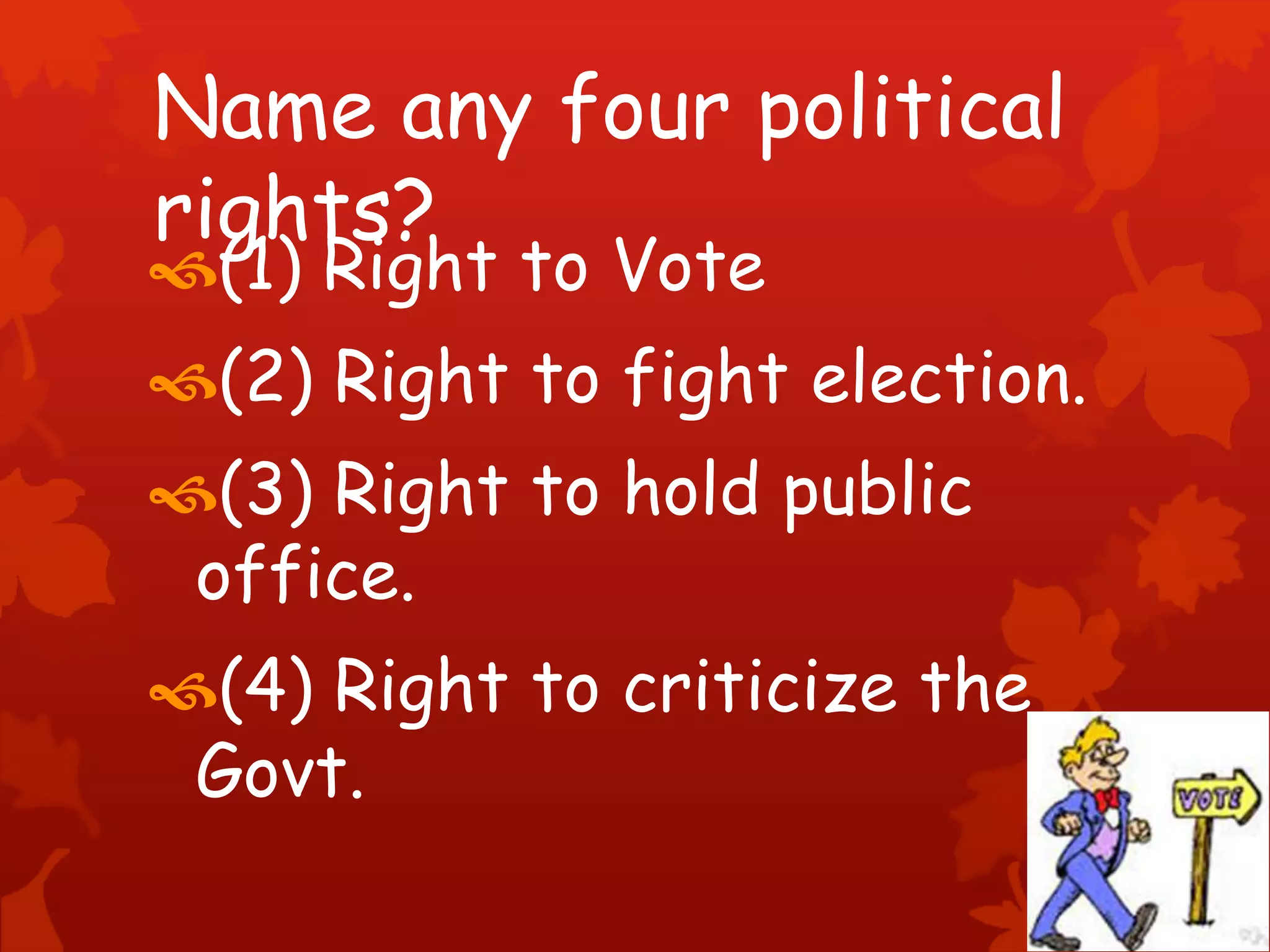
Name any four political
rights?
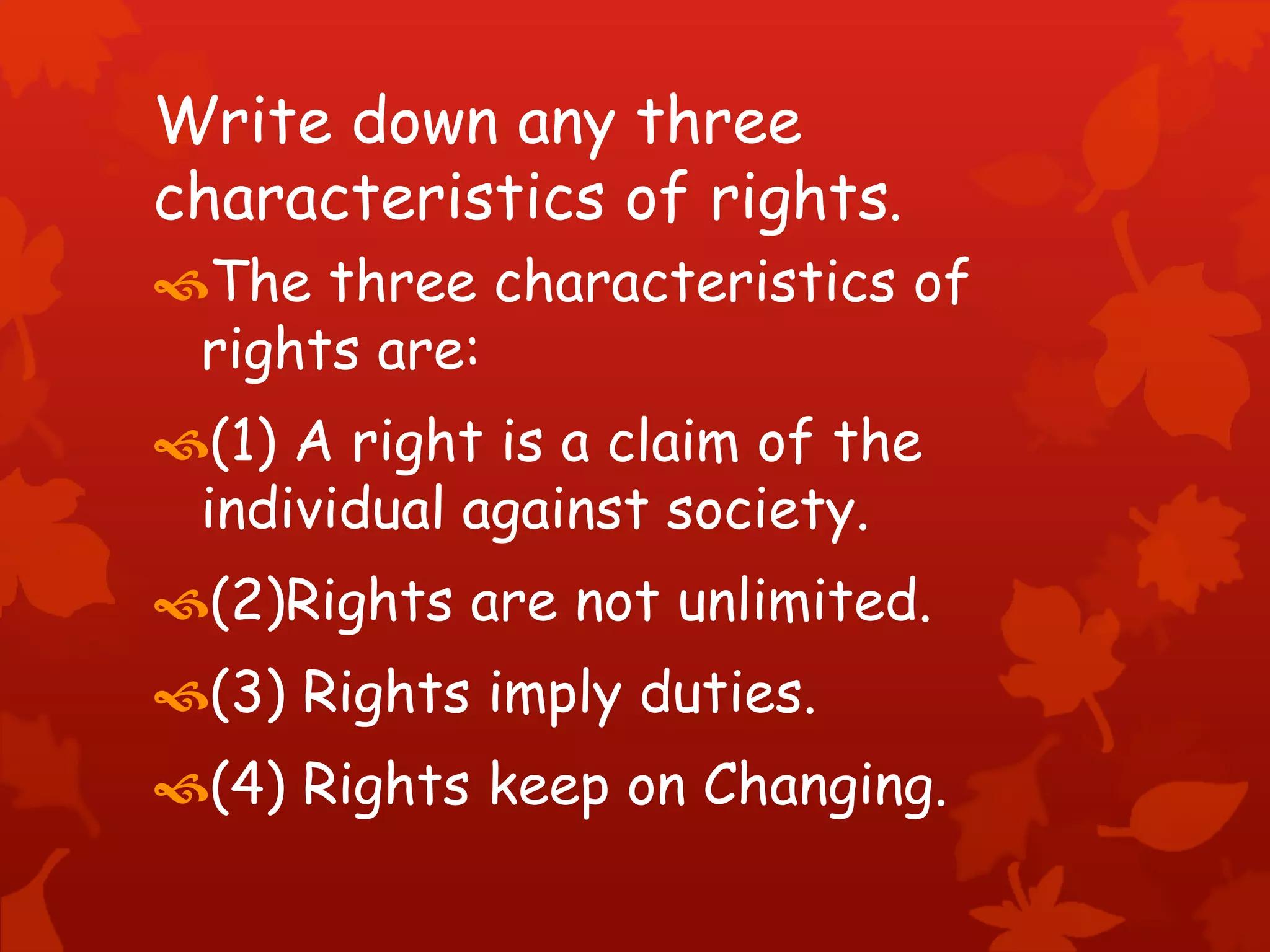
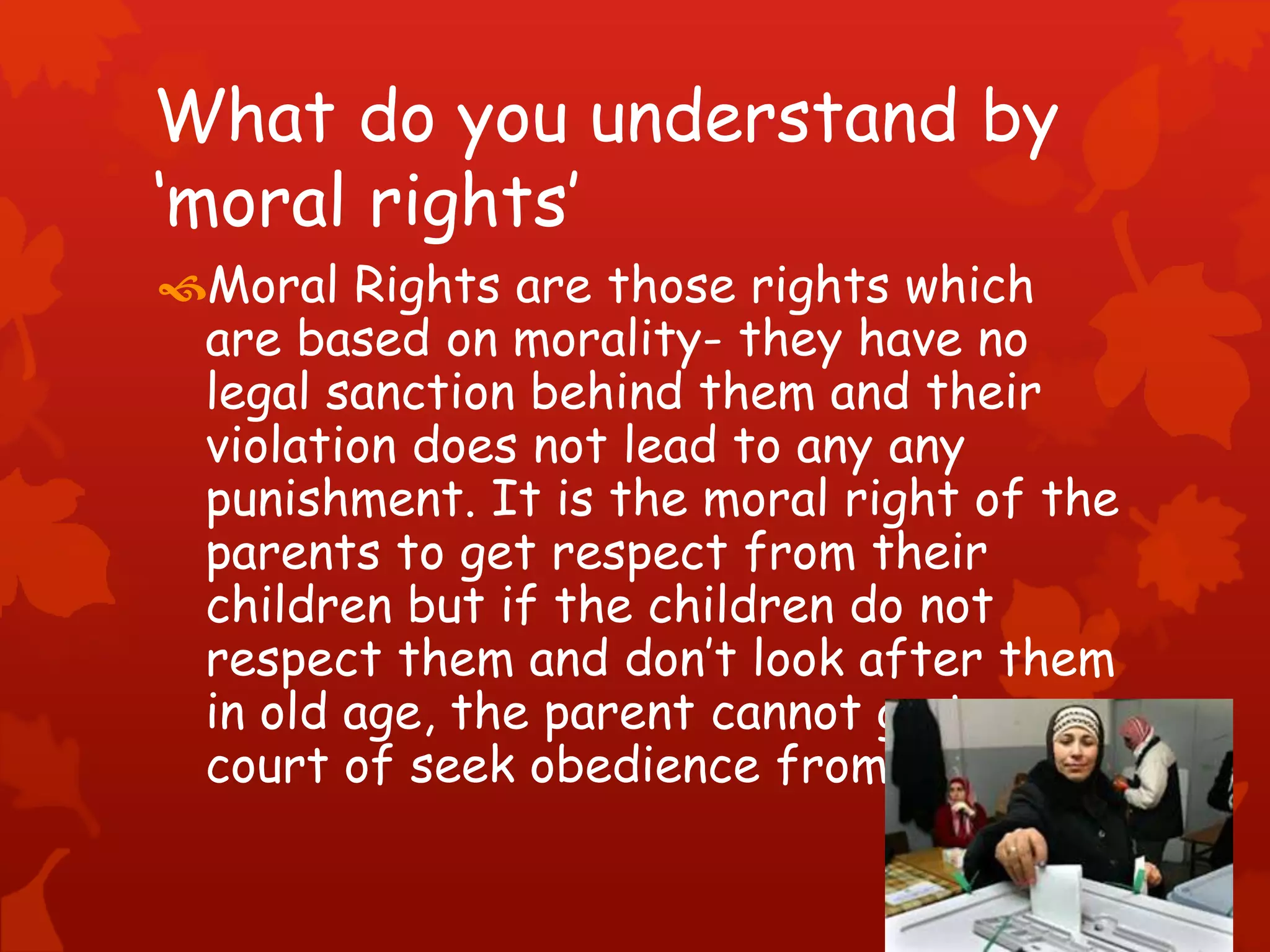
(1) Right to Vote
(2) Right to fight election.
(3) Right to hold public
office.
(4) Right to criticize the
Govt.
What do you mean by
Fundamental rights?
Rights are called fundamental because
they are basis human rights which are
considered necessary for the
development of the personality of an
individual. They are included in the
constitution of the country so that
every citizen can enjoy them and no
one is able to encroach upon them.
“The right to freedom is a
cluster of six freedoms”.
Explain. The right to freedom is a cluster of several rights.
Article 19 guarantees the following freedoms to all the
citizens:
 (1)Freedom of speech and expression.
 (2)Freedom to from Associations or Unions.
 (3)Freedom to move freely throughout the territory of
India.
 (4)Freedom to assemble peacefully without arms.
 (5)Freedom to reside and settle in any part of India.
 (6)Freedom to practice any profession or to carry on
any occupation, trade or business.
Write Economic Rights of
the citizens.
(1)Right to work
(2)Right to adequate wages
(3)Right to fixed hours of work
(4)Right to leisure and recreation
(5)Right to social security
Explain the Right to Equality
given in the constitution of
India.
 Right to equality implies:
 (1)Equality before law: It means that every citizen is
equal in the eyes of law.
 (2)Prohibition of discrimination against against any
citizen on grounds of religion, race, creed, caste, sex
and place of birth.
 (3)Equality of opportunities in all matters of
appointment to any public office.
 (4)Untochability has been abolished and its practice in
any form is forbidden by law.
 (5)Abolition of titles, except those of academic or
military distinction.
This presentation
is brought to you
by:
Nishtha
Class 9th –B
Roll no. 14
Thank you

Democratic rights class IX

  • 1.
  • 2.
    What do youmean by rights? While living in society, citizens requires certain facilities for their development. The facilities and opportunities provided by the society for the development of citizen’s personality are known as Rights
  • 3.
    Write down anythree characteristics of rights. The three characteristics of rights are: (1) A right is a claim of the individual against society. (2)Rights are not unlimited. (3) Rights imply duties. (4) Rights keep on Changing.
  • 4.
    What do youunderstand by ‘moral rights’ Moral Rights are those rights which are based on morality- they have no legal sanction behind them and their violation does not lead to any any punishment. It is the moral right of the parents to get respect from their children but if the children do not respect them and don’t look after them in old age, the parent cannot go to a court of seek obedience from them.
  • 5.
    What do meanby Legal rights? Legal Rights are those rights which are recognised and enforced by the state. Their disobedience is liable to punishment. Right to life, liberty and property are legal rights. If any individual or an officer tries to deprive the citizens of these rights, the citizen can move the courts for the protection of these rights.
  • 6.
    Name any fourpolitical rights? (1) Right to Vote (2) Right to fight election. (3) Right to hold public office. (4) Right to criticize the Govt.
  • 7.
    What do youmean by Fundamental rights? Rights are called fundamental because they are basis human rights which are considered necessary for the development of the personality of an individual. They are included in the constitution of the country so that every citizen can enjoy them and no one is able to encroach upon them.
  • 8.
    “The right tofreedom is a cluster of six freedoms”. Explain. The right to freedom is a cluster of several rights. Article 19 guarantees the following freedoms to all the citizens:  (1)Freedom of speech and expression.  (2)Freedom to from Associations or Unions.  (3)Freedom to move freely throughout the territory of India.  (4)Freedom to assemble peacefully without arms.  (5)Freedom to reside and settle in any part of India.  (6)Freedom to practice any profession or to carry on any occupation, trade or business.
  • 9.
    Write Economic Rightsof the citizens. (1)Right to work (2)Right to adequate wages (3)Right to fixed hours of work (4)Right to leisure and recreation (5)Right to social security
  • 10.
    Explain the Rightto Equality given in the constitution of India.  Right to equality implies:  (1)Equality before law: It means that every citizen is equal in the eyes of law.  (2)Prohibition of discrimination against against any citizen on grounds of religion, race, creed, caste, sex and place of birth.  (3)Equality of opportunities in all matters of appointment to any public office.  (4)Untochability has been abolished and its practice in any form is forbidden by law.  (5)Abolition of titles, except those of academic or military distinction.
  • 11.
    This presentation is broughtto you by: Nishtha Class 9th –B Roll no. 14
  • 12.