Thinking
& for
Learners
JANNETH V. OBISPO
“The function of education
is to teach one to think
intensively and to think
critically. Intelligence plus
character—that is the goal
of true education.”
Martin Luther King, Jr.
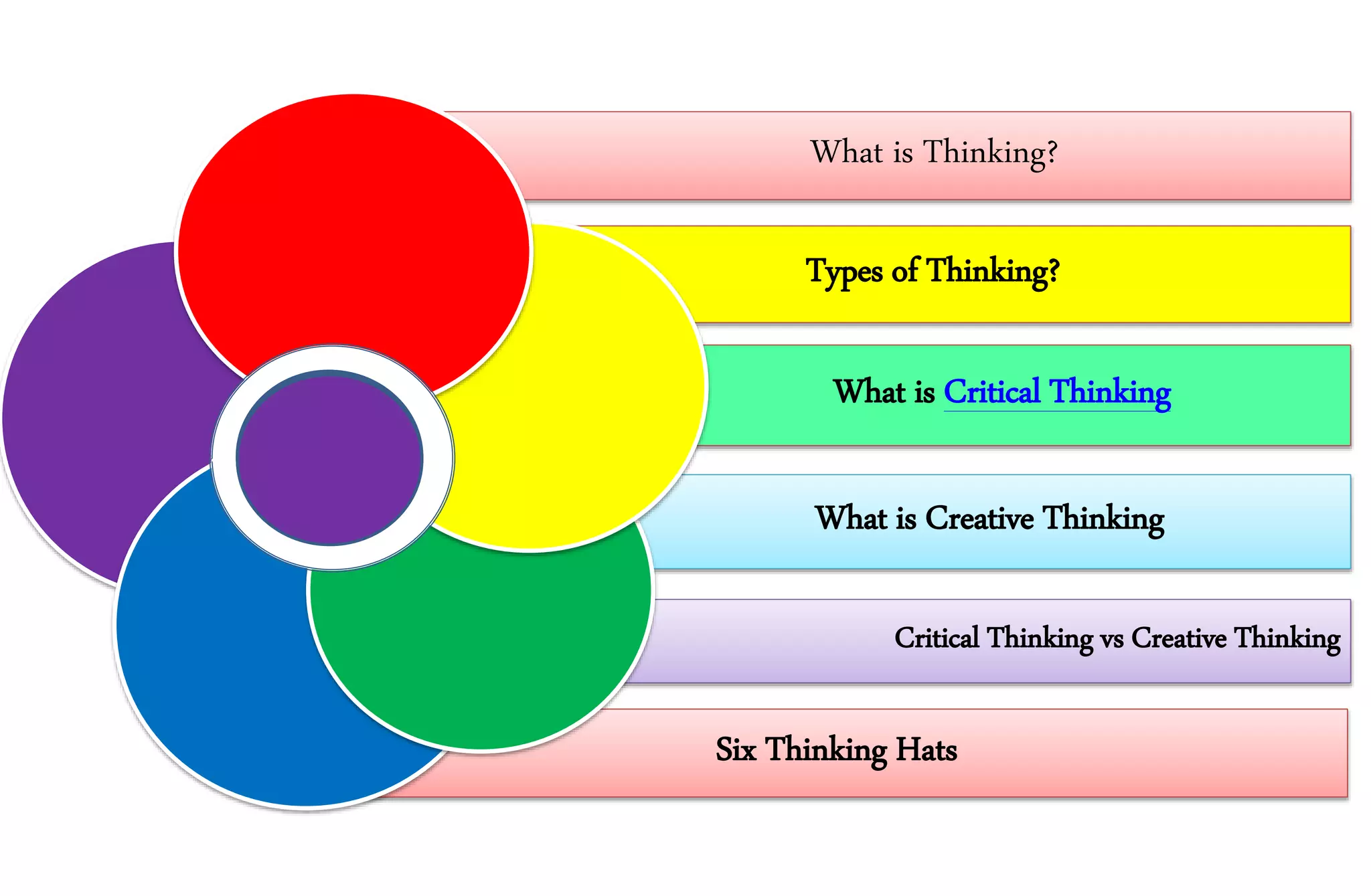
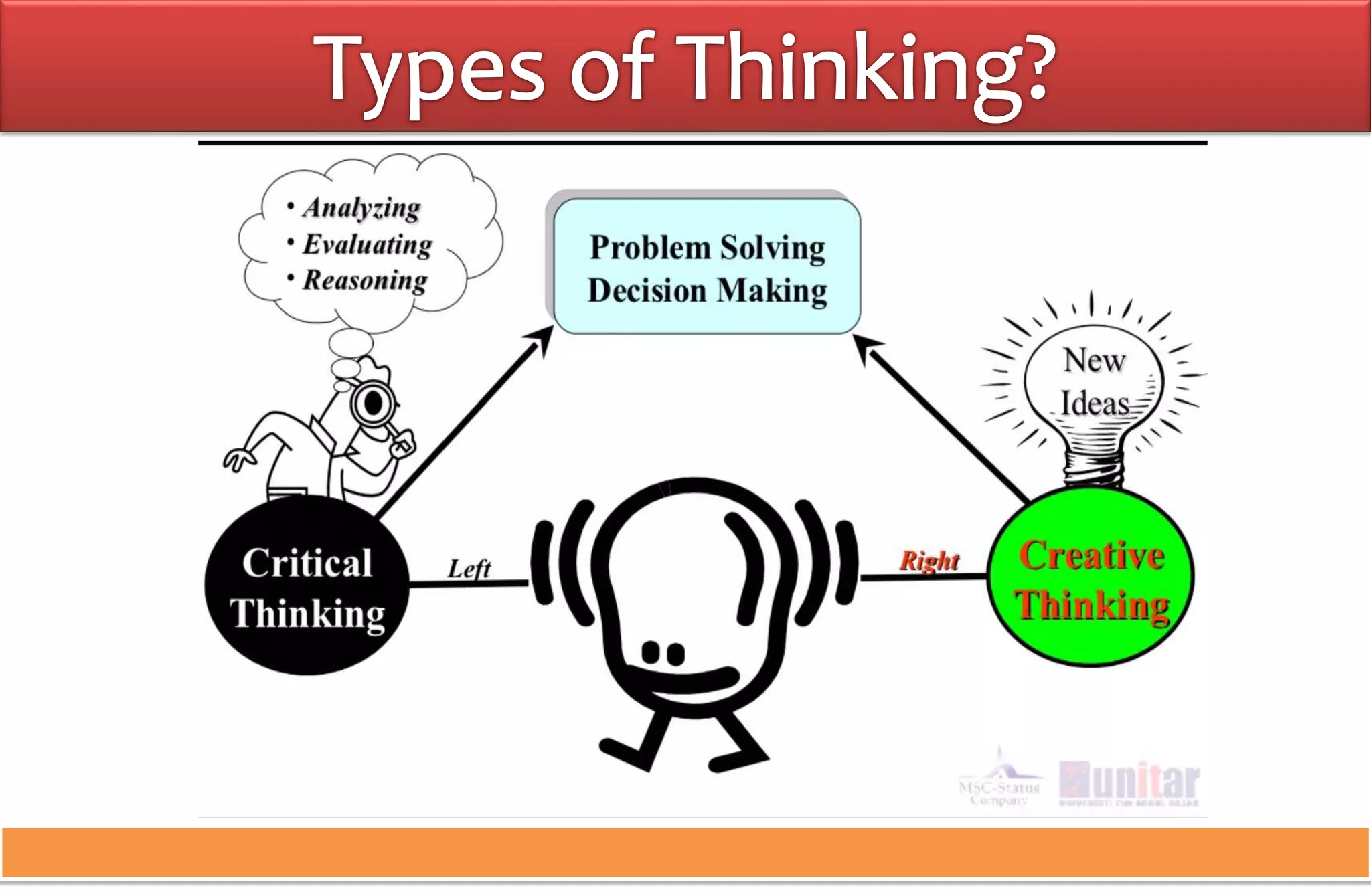
Types of Thinking?
What is Critical Thinking
What is Creative Thinking
Critical Thinking vs Creative Thinking
Six Thinking Hats
What is Thinking?
Mechanism
of the Brain
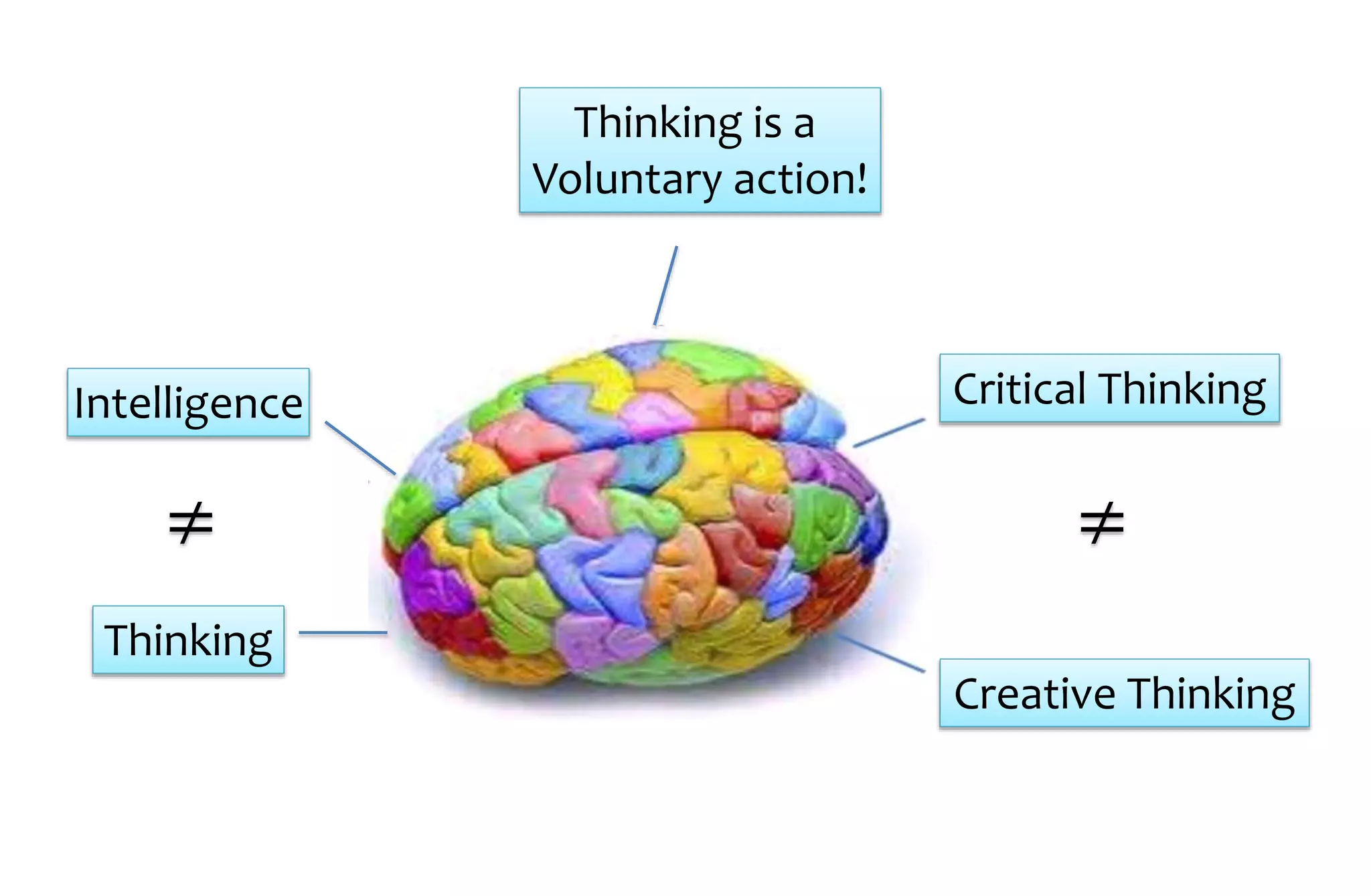
Thinking is a
Voluntary action!
Intelligence
Thinking
Critical Thinking
Creative Thinking
≠ ≠
As you start asking questions and seek answers, you are in fact thinking.
Why she doesn’t like me?
Why he doesn’t like me?
As you start asking questions and seek answers, you are in fact thinking.
Thinking is a
purposeful organized
cognitive process that
we use to make sense
of our world.
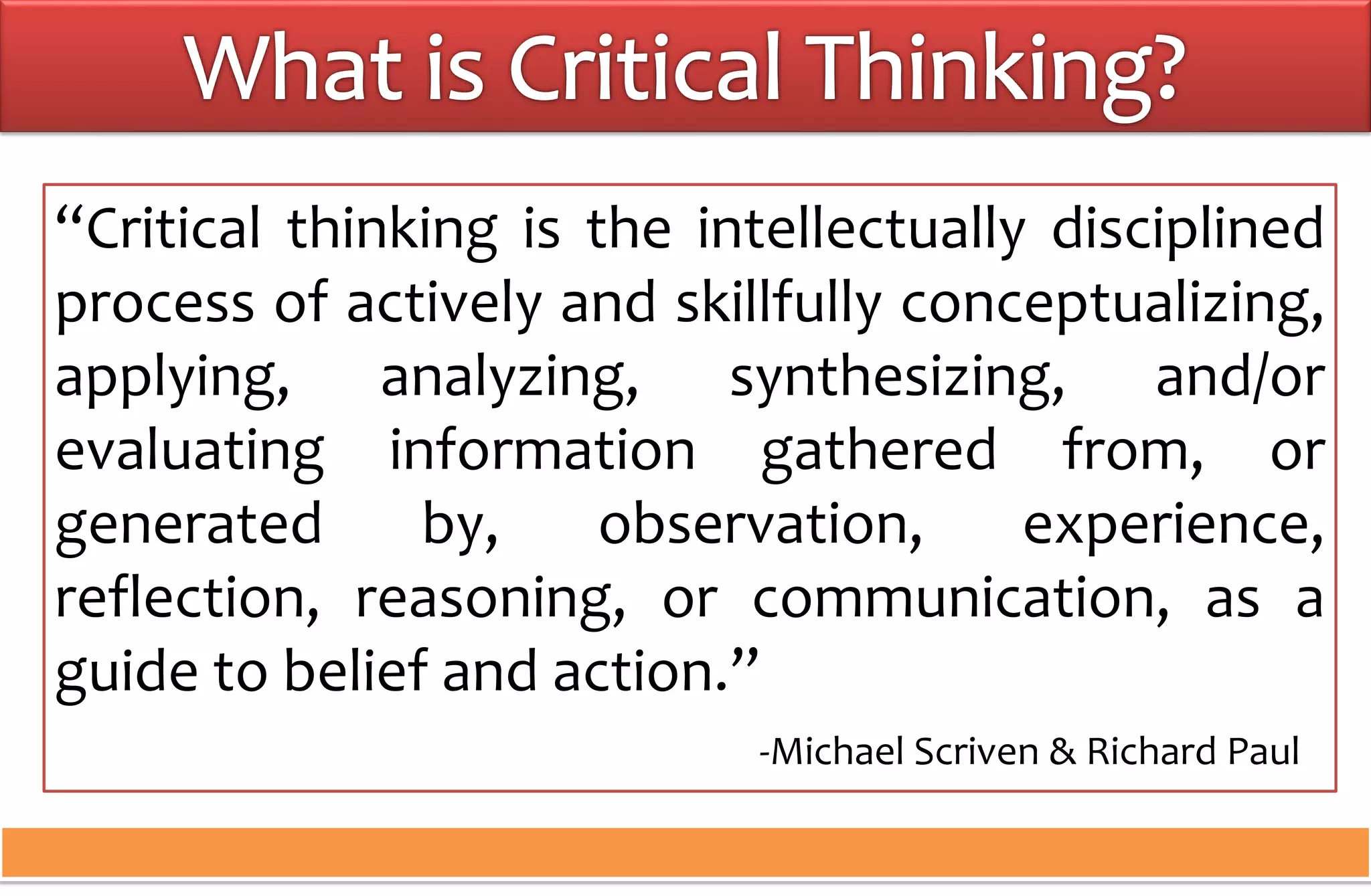
“Critical thinking is the intellectually disciplined
process of actively and skillfully conceptualizing,
applying, analyzing, synthesizing, and/or
evaluating information gathered from, or
generated by, observation, experience,
reflection, reasoning, or communication, as a
guide to belief and action.”
-Michael Scriven & Richard Paul
Are you OPEN-MINDED about other peoples’ view?
Are you HONEST to yourself (or others) when you are wrong?
Do you have the COURAGE and PASSION to take initiative and
Confront problems and meet challenges?
Are you AWARE of your own biases and preconceptions?
Do you WELCOME CRITICISM from other people?
Do you have INDEPENDENT opinions?
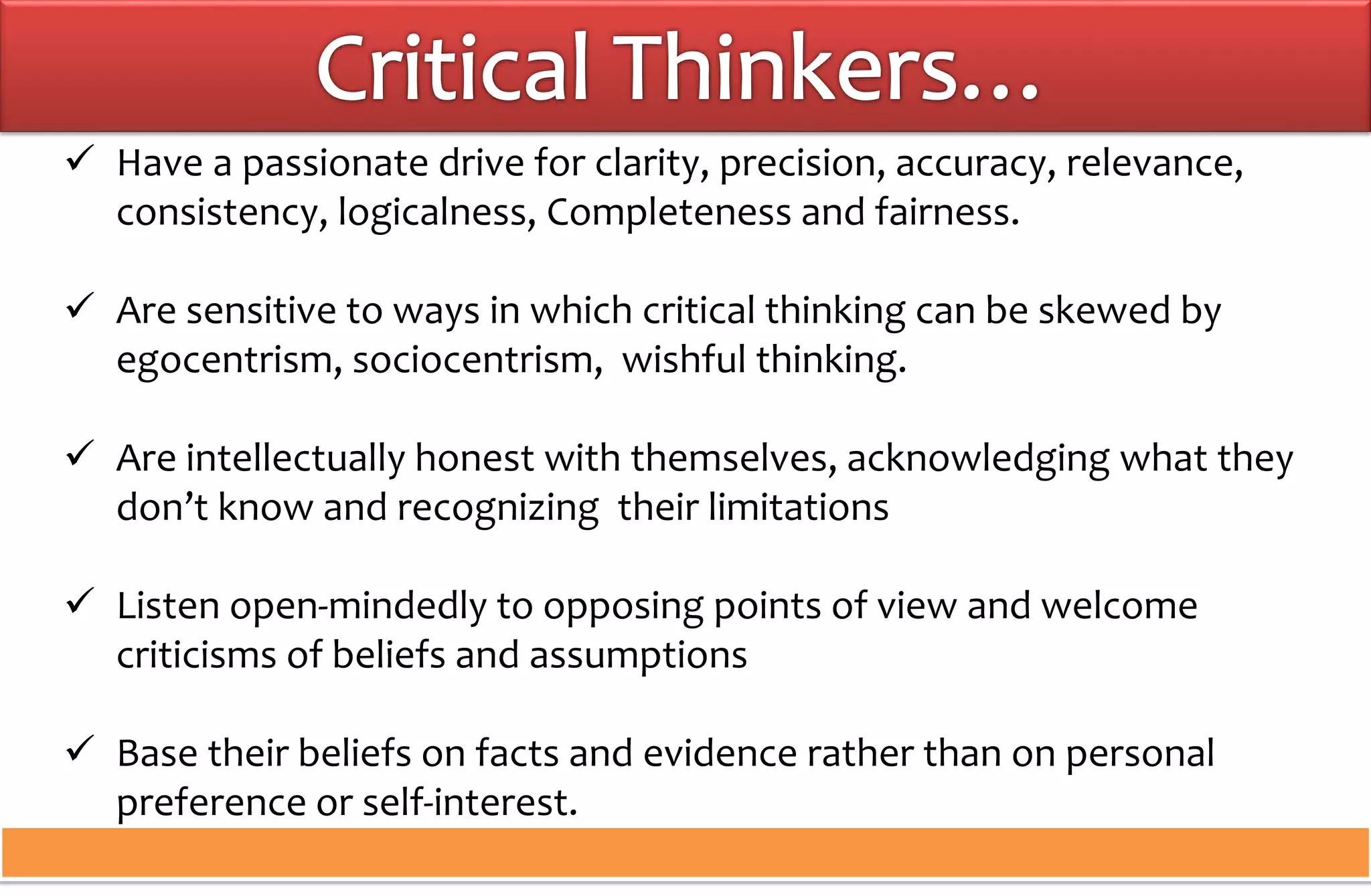
 Have a passionate drive for clarity, precision, accuracy, relevance,
consistency, logicalness, Completeness and fairness.
 Are sensitive to ways in which critical thinking can be skewed by
egocentrism, sociocentrism, wishful thinking.
 Are intellectually honest with themselves, acknowledging what they
don’t know and recognizing their limitations
 Listen open-mindedly to opposing points of view and welcome
criticisms of beliefs and assumptions
 Base their beliefs on facts and evidence rather than on personal
preference or self-interest.
 Are aware of the biases and preconceptions that shape the way they
perceive the world.
 Think independently and are not afraid to disagree with group opinion.
 Are able to get to the heart of an issue or problem without being
distracted by details.
 Have the intellectual courage to face and assess fairly ideas that
challenge even their most basic beliefs
 Love truth and curious about a wide range of issues
 Have the intellectual perseverance to pursue insights or truths, despite
obstacles or difficulties.
What is Creativity?
Creativity is a form of
energy starting from
“Nothing”
and generating great,
original and unique values
Edward de Bono
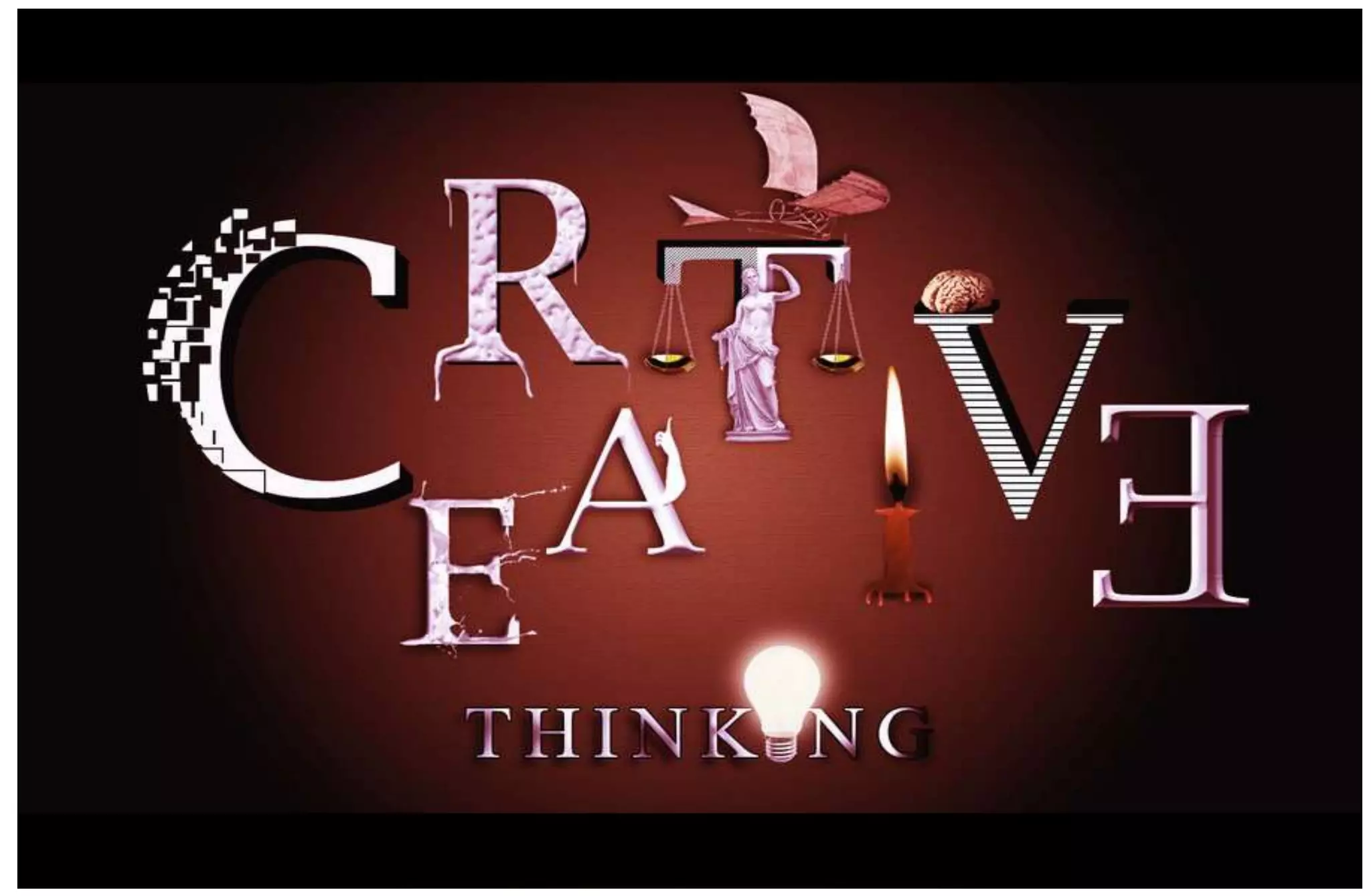
Creative thinking
CREATIVE THINKING ACTIVITY
Now say the colors of the word you can see…FAST!
YELLOWBLACKREDGREENREDBLUEGREENBLACKYELLOW
CREATIVE PROCESS AT WORK
• Music
• Art
• Dance
• Inventions – airplane, telephone
• Innovations – Apple iPhone, Gateway (Dell personal
computers)
• Creative problem solving – using a knife/letter opener to
tighten a screw when a screwdriver is not available
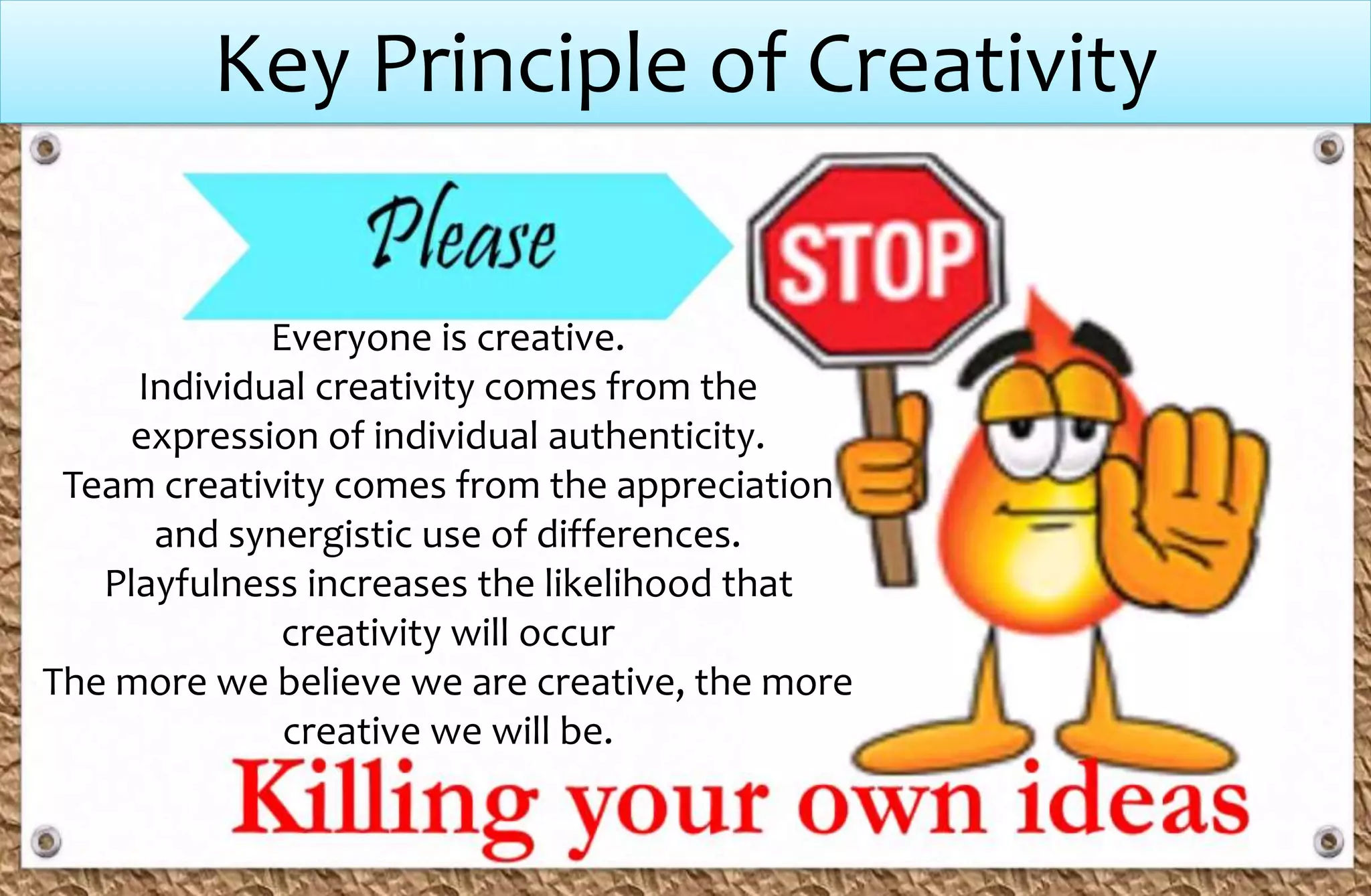
Key Principle of Creativity
Everyone is creative.
Individual creativity comes from the
expression of individual authenticity.
Team creativity comes from the appreciation
and synergistic use of differences.
Playfulness increases the likelihood that
creativity will occur
The more we believe we are creative, the more
creative we will be.
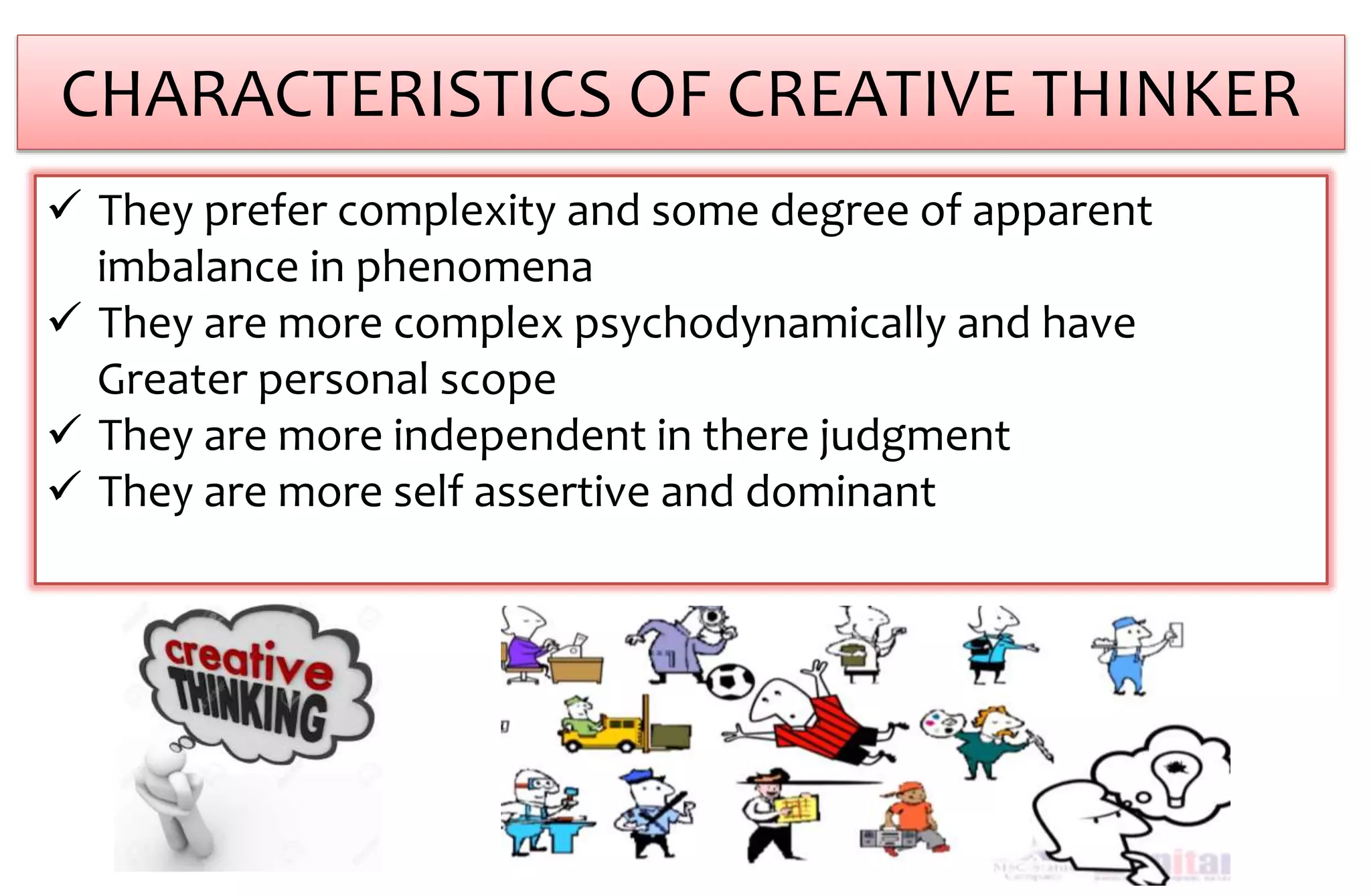
CHARACTERISTICS OF CREATIVE THINKER
 They prefer complexity and some degree of apparent
imbalance in phenomena
 They are more complex psychodynamically and have
Greater personal scope
 They are more independent in there judgment
 They are more self assertive and dominant
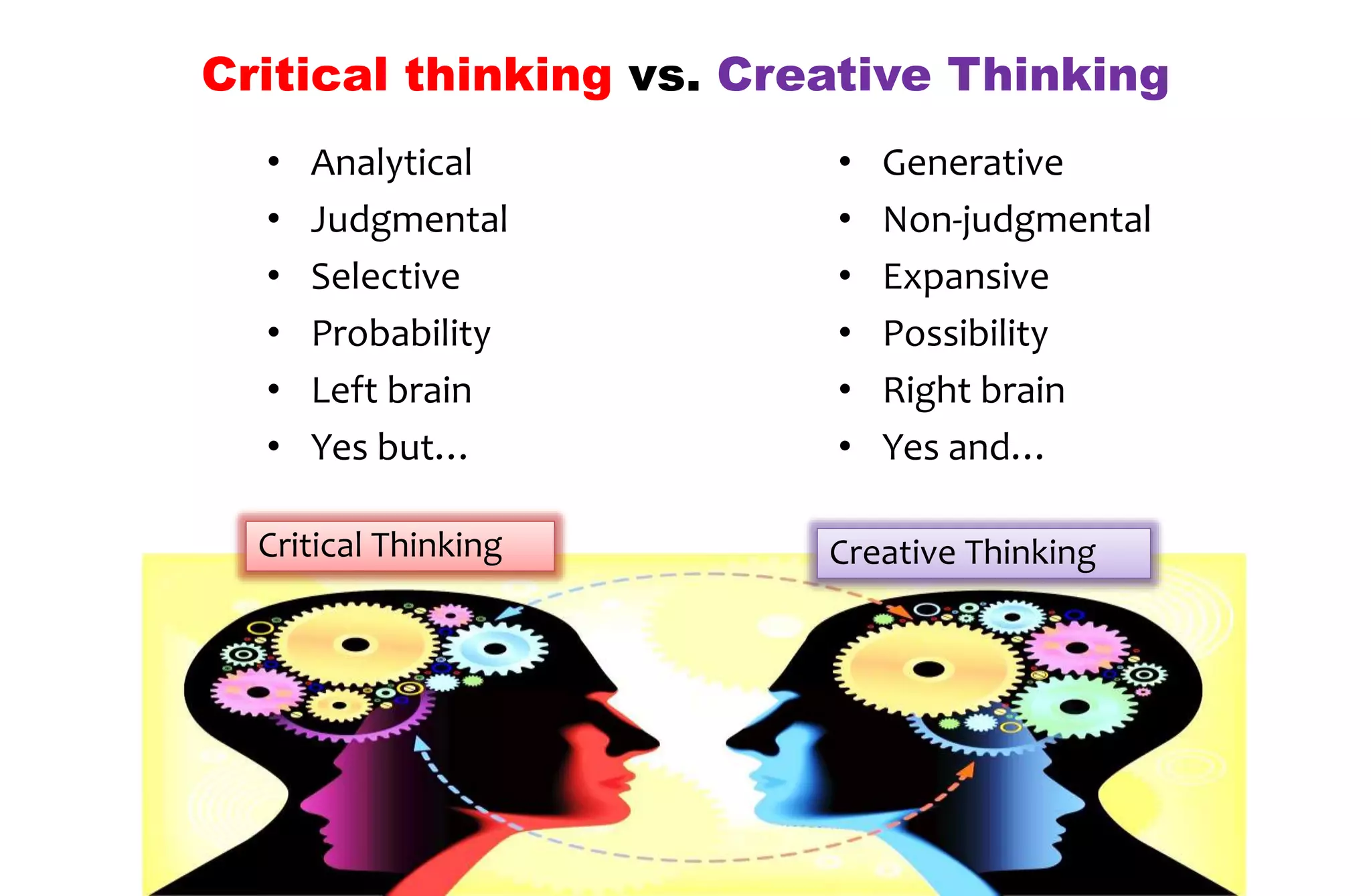
Critical thinking vs. Creative Thinking
Critical Thinking
• Analytical
• Judgmental
• Selective
• Probability
• Left brain
• Yes but…
Creative Thinking
• Generative
• Non-judgmental
• Expansive
• Possibility
• Right brain
• Yes and…
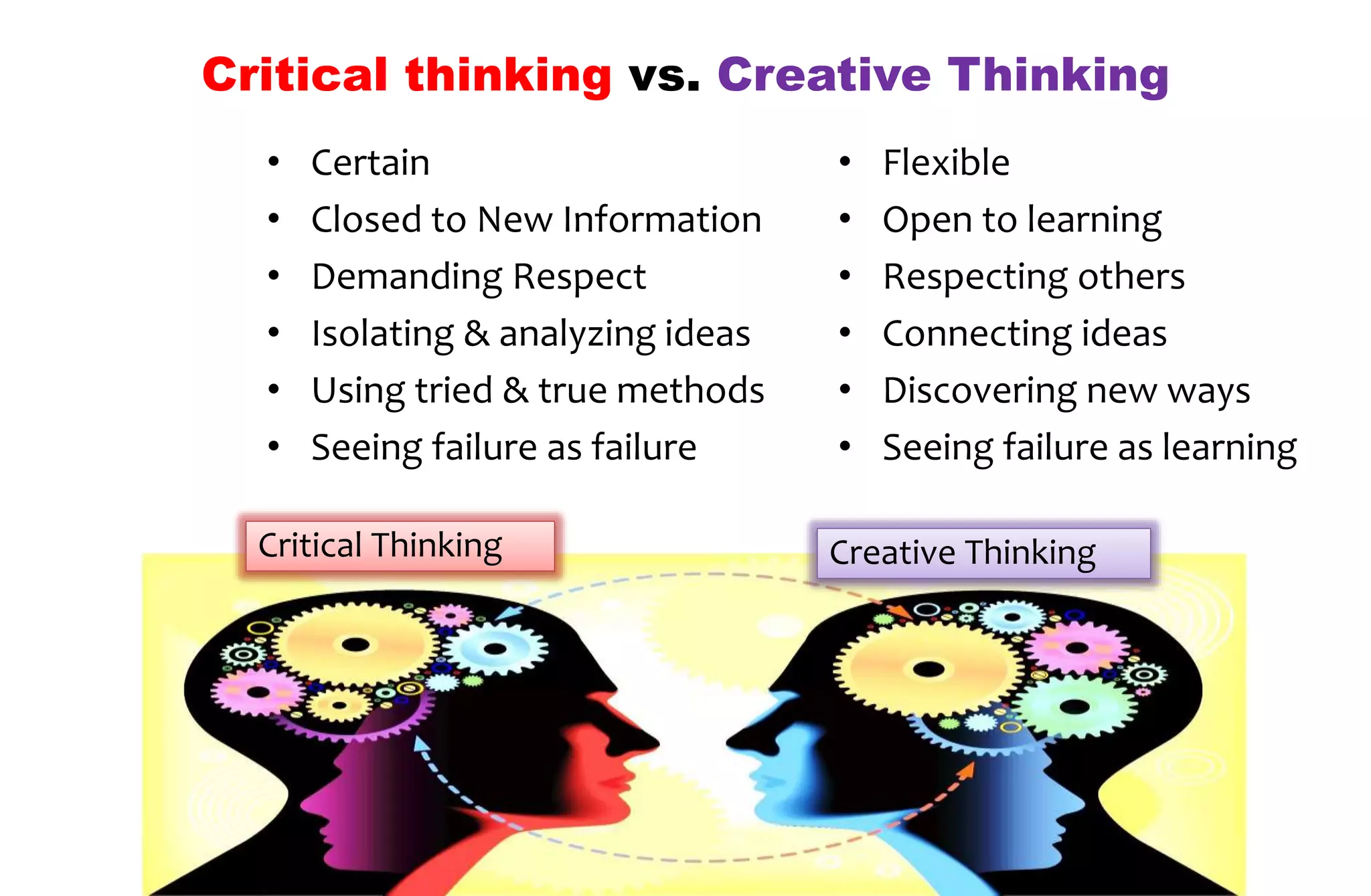
Critical thinking vs. Creative Thinking
Critical Thinking
• Certain
• Closed to New Information
• Demanding Respect
• Isolating & analyzing ideas
• Using tried & true methods
• Seeing failure as failure
Creative Thinking
• Flexible
• Open to learning
• Respecting others
• Connecting ideas
• Discovering new ways
• Seeing failure as learning
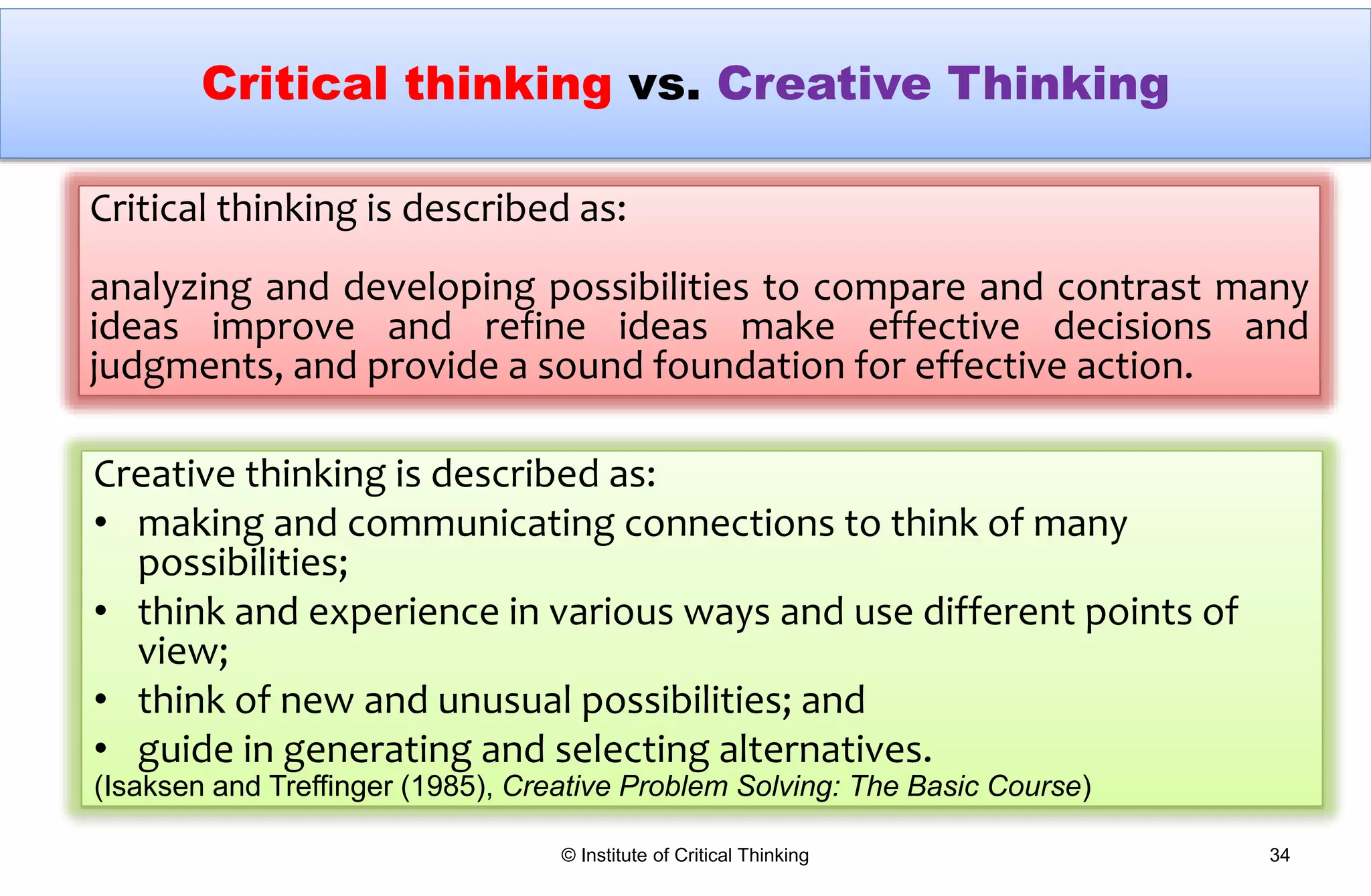
Creative thinking is described as:
• making and communicating connections to think of many
possibilities;
• think and experience in various ways and use different points of
view;
• think of new and unusual possibilities; and
• guide in generating and selecting alternatives.
© Institute of Critical Thinking 34
(Isaksen and Treffinger (1985), Creative Problem Solving: The Basic Course)
Critical thinking vs. Creative Thinking
Critical thinking is described as:
analyzing and developing possibilities to compare and contrast many
ideas improve and refine ideas make effective decisions and
judgments, and provide a sound foundation for effective action.
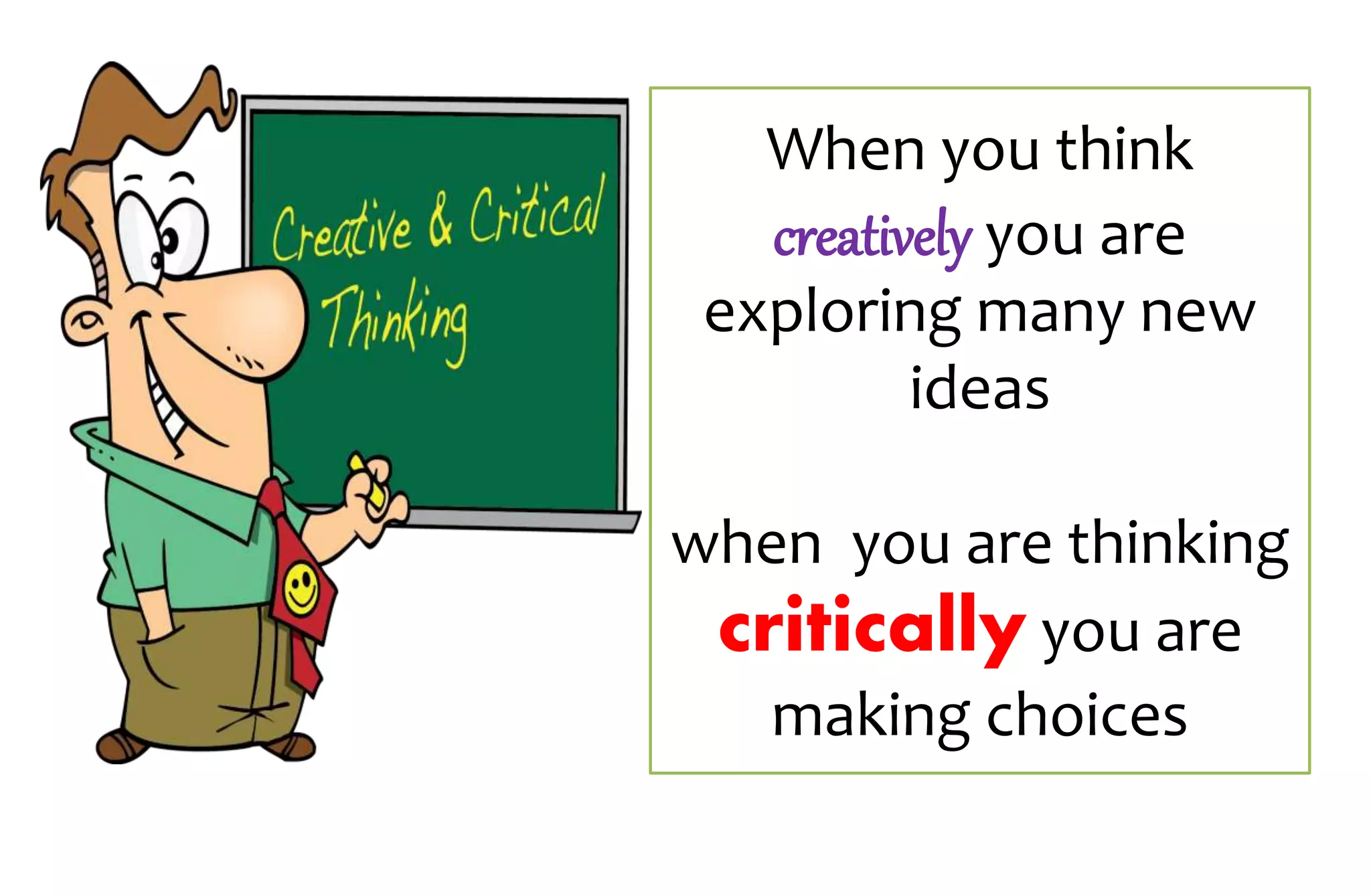
When you think
creatively you are
exploring many new
ideas
when you are thinking
critically you are
making choices
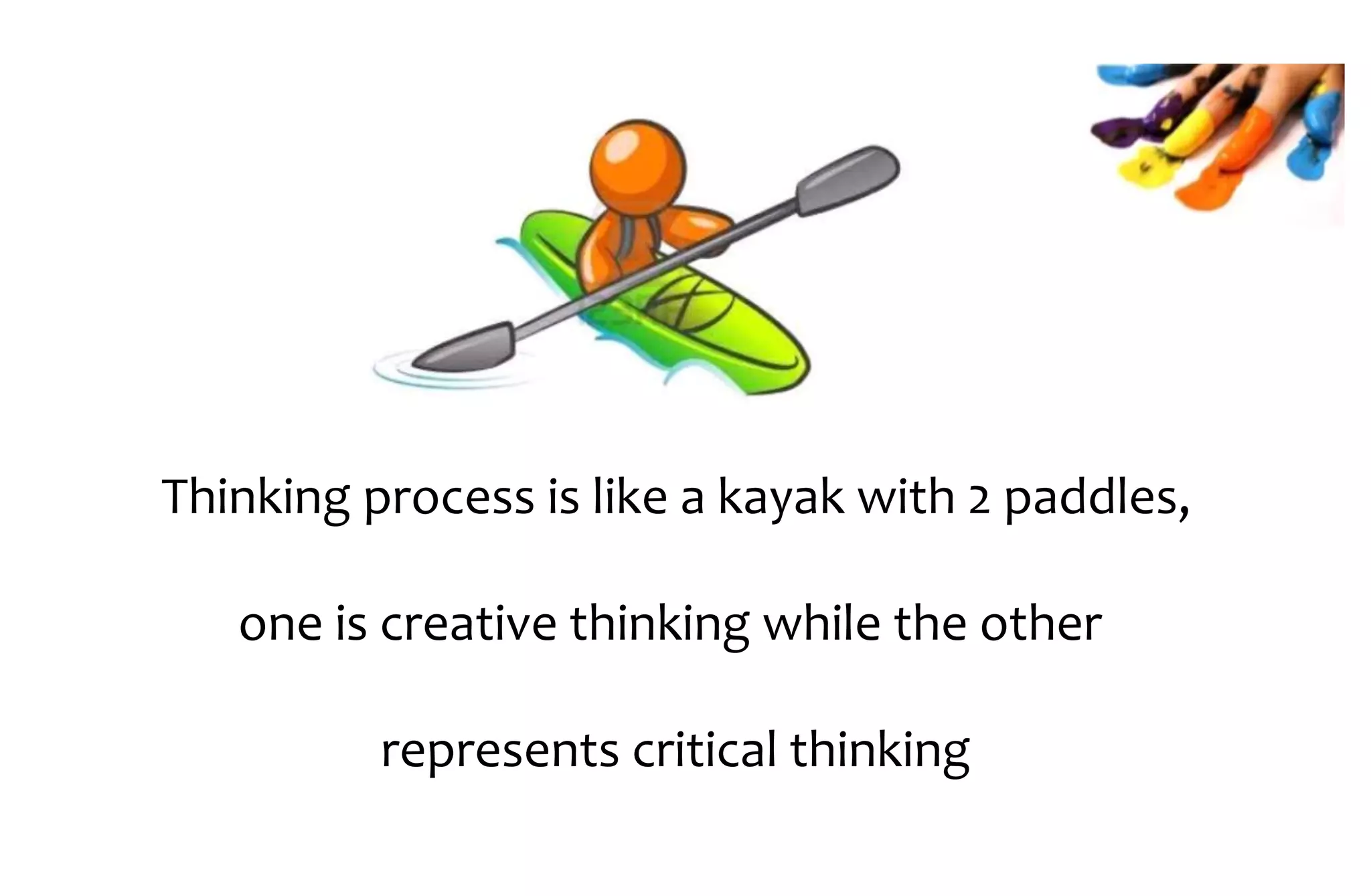
Thinking process is like a kayak with 2 paddles,
one is creative thinking while the other
represents critical thinking
THE SIX THINKING HATS
Critical thinking vs. creative thinking

Critical thinking vs. creative thinking

  • 1.
  • 2.
    “The function ofeducation is to teach one to think intensively and to think critically. Intelligence plus character—that is the goal of true education.” Martin Luther King, Jr.
  • 3.
    Types of Thinking? Whatis Critical Thinking What is Creative Thinking Critical Thinking vs Creative Thinking Six Thinking Hats What is Thinking?
  • 4.
  • 5.
    Thinking is a Voluntaryaction! Intelligence Thinking Critical Thinking Creative Thinking ≠ ≠
  • 6.
    As you startasking questions and seek answers, you are in fact thinking. Why she doesn’t like me? Why he doesn’t like me?
  • 7.
    As you startasking questions and seek answers, you are in fact thinking. Thinking is a purposeful organized cognitive process that we use to make sense of our world.
  • 17.
    “Critical thinking isthe intellectually disciplined process of actively and skillfully conceptualizing, applying, analyzing, synthesizing, and/or evaluating information gathered from, or generated by, observation, experience, reflection, reasoning, or communication, as a guide to belief and action.” -Michael Scriven & Richard Paul
  • 19.
    Are you OPEN-MINDEDabout other peoples’ view? Are you HONEST to yourself (or others) when you are wrong? Do you have the COURAGE and PASSION to take initiative and Confront problems and meet challenges? Are you AWARE of your own biases and preconceptions? Do you WELCOME CRITICISM from other people? Do you have INDEPENDENT opinions?
  • 20.
     Have apassionate drive for clarity, precision, accuracy, relevance, consistency, logicalness, Completeness and fairness.  Are sensitive to ways in which critical thinking can be skewed by egocentrism, sociocentrism, wishful thinking.  Are intellectually honest with themselves, acknowledging what they don’t know and recognizing their limitations  Listen open-mindedly to opposing points of view and welcome criticisms of beliefs and assumptions  Base their beliefs on facts and evidence rather than on personal preference or self-interest.
  • 21.
     Are awareof the biases and preconceptions that shape the way they perceive the world.  Think independently and are not afraid to disagree with group opinion.  Are able to get to the heart of an issue or problem without being distracted by details.  Have the intellectual courage to face and assess fairly ideas that challenge even their most basic beliefs  Love truth and curious about a wide range of issues  Have the intellectual perseverance to pursue insights or truths, despite obstacles or difficulties.
  • 24.
    What is Creativity? Creativityis a form of energy starting from “Nothing” and generating great, original and unique values
  • 25.
  • 26.
  • 28.
    Now say thecolors of the word you can see…FAST! YELLOWBLACKREDGREENREDBLUEGREENBLACKYELLOW
  • 29.
    CREATIVE PROCESS ATWORK • Music • Art • Dance • Inventions – airplane, telephone • Innovations – Apple iPhone, Gateway (Dell personal computers) • Creative problem solving – using a knife/letter opener to tighten a screw when a screwdriver is not available
  • 30.
    Key Principle ofCreativity Everyone is creative. Individual creativity comes from the expression of individual authenticity. Team creativity comes from the appreciation and synergistic use of differences. Playfulness increases the likelihood that creativity will occur The more we believe we are creative, the more creative we will be.
  • 31.
    CHARACTERISTICS OF CREATIVETHINKER  They prefer complexity and some degree of apparent imbalance in phenomena  They are more complex psychodynamically and have Greater personal scope  They are more independent in there judgment  They are more self assertive and dominant
  • 32.
    Critical thinking vs.Creative Thinking Critical Thinking • Analytical • Judgmental • Selective • Probability • Left brain • Yes but… Creative Thinking • Generative • Non-judgmental • Expansive • Possibility • Right brain • Yes and…
  • 33.
    Critical thinking vs.Creative Thinking Critical Thinking • Certain • Closed to New Information • Demanding Respect • Isolating & analyzing ideas • Using tried & true methods • Seeing failure as failure Creative Thinking • Flexible • Open to learning • Respecting others • Connecting ideas • Discovering new ways • Seeing failure as learning
  • 34.
    Creative thinking isdescribed as: • making and communicating connections to think of many possibilities; • think and experience in various ways and use different points of view; • think of new and unusual possibilities; and • guide in generating and selecting alternatives. © Institute of Critical Thinking 34 (Isaksen and Treffinger (1985), Creative Problem Solving: The Basic Course) Critical thinking vs. Creative Thinking Critical thinking is described as: analyzing and developing possibilities to compare and contrast many ideas improve and refine ideas make effective decisions and judgments, and provide a sound foundation for effective action.
  • 35.
    When you think creativelyyou are exploring many new ideas when you are thinking critically you are making choices
  • 38.
    Thinking process islike a kayak with 2 paddles, one is creative thinking while the other represents critical thinking
  • 39.
  • 40.
  • 41.
  • 42.
  • 43.
  • 44.
  • 45.