Light, Shadows and
Reflections
Learning Outcomes
• To explain the light, sources of light, luminous and
non-luminous bodies
• To discuss the mirror and different materials,
reflection and types of reflection
• To explain the idea of shadow
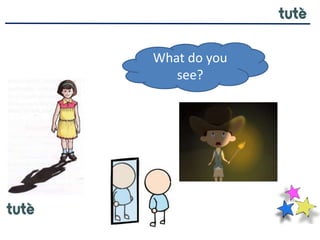
What do you
see?
What is Light?
Light is a form of energy which helps us to see
objects
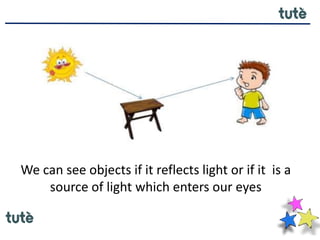
We can see objects if it reflects light or if it is a
source of light which enters our eyes
How does Light travel?
Light travels in a straight line in the form of
rays.
RECTILINEAR PROPAGATION OF LIGHT
Let us look at the
sources of Light
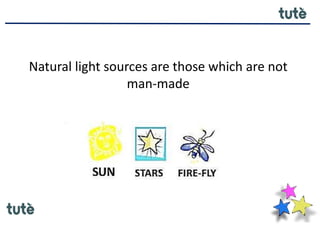
Natural light sources are those which are not
man-made
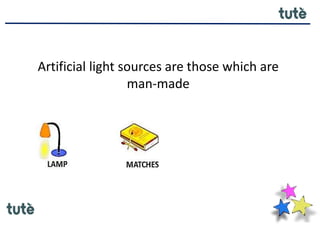
Artificial light sources are those which are
man-made
Luminous and Non-
Luminous Bodies
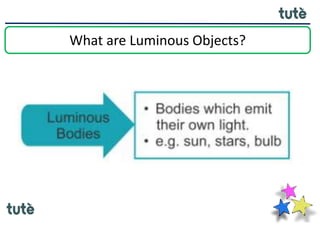
What are Luminous Objects?
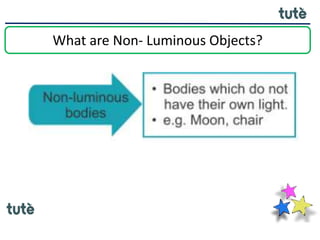
What are Non- Luminous Objects?
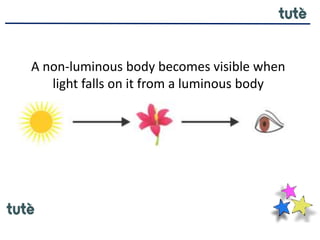
A non-luminous body becomes visible when
light falls on it from a luminous body
Learning Outcomes
• To explain the light, sources of light, luminous and
non-luminous bodies
• To discuss the mirror and different materials,
reflection and types of reflection
• To explain the idea of shadow
How confident do you feel?
Learning Outcomes
• To explain the light, sources of light, luminous and
non-luminous bodies
• To discuss the mirror and different materials,
reflection and types of reflection
• To explain the idea of shadow
How confident do you feel?
Mirror and Different
Materials
What is Mirror?
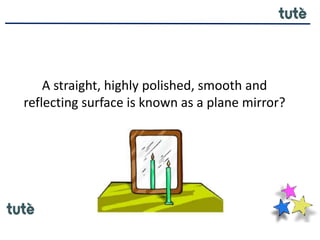
A straight, highly polished, smooth and
reflecting surface is known as a plane mirror?
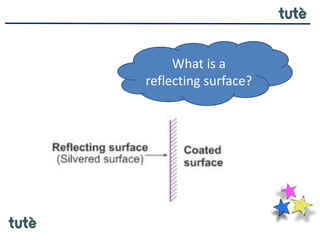
What is a
reflecting surface?
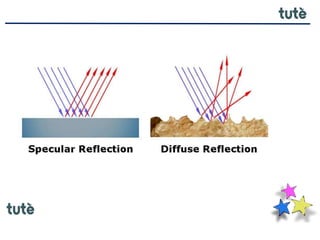
What is Reflection?
It is the phenomenon of light bouncing back
after striking a smooth polished surface.
What is Reflection?
It is the phenomenon of light bouncing back
after striking a smooth polished surface.
Due to reflection of light, we are able to see
images of objects in a mirror
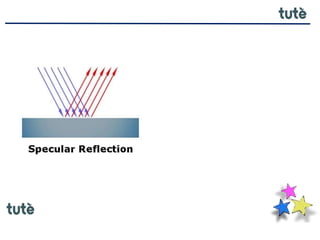
Let us define Reflection
and understand types
of reflection
Based on whether an object
allows light to pass through
them they are
classified into:
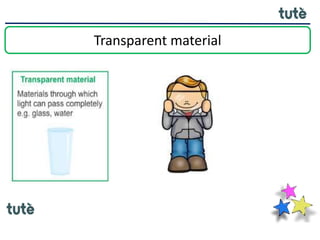
Transparent material
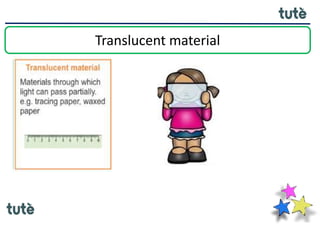
Translucent material
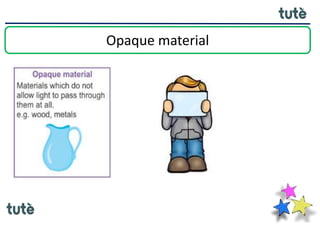
Opaque material
Learning Outcomes
• To explain the light, sources of light, luminous and
non-luminous bodies
• To discuss the mirror and different materials,
reflection and types of reflection
• To explain the idea of shadow
How confident do you feel?
Learning Outcomes
• To explain the light, sources of light, luminous and
non-luminous bodies
• To discuss the mirror and different materials,
reflection and types of reflection
• To explain the idea of shadow
How confident do you feel?
Shadow
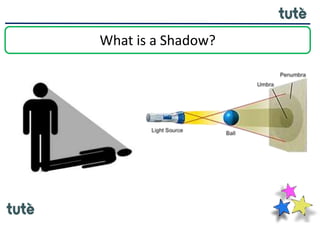
What is a Shadow?
What is a Shadow?
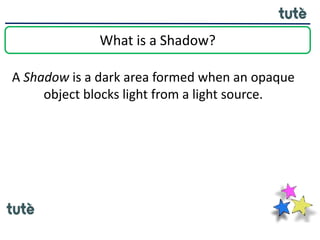
A Shadow is a dark area formed when an opaque
object blocks light from a light source.
What is a Shadow?
A Shadow is a dark area formed when an opaque
object blocks light from a light source.
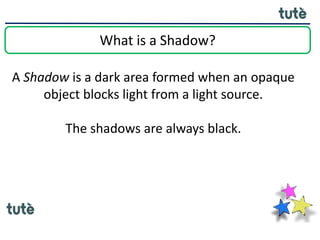
The shadows are always black.
What is a Shadow?
A Shadow is a dark area formed when an opaque
object blocks light from a light source.
The shadows are always black.
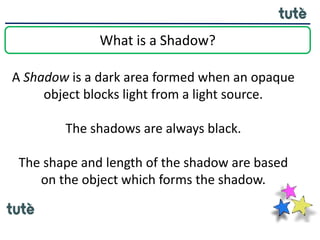
The shape and length of the shadow are based
on the object which forms the shadow.
Learning Outcomes
• To explain the light, sources of light, luminous and
non-luminous bodies
• To discuss the mirror and different materials,
reflection and types of reflection
• To explain the idea of shadow
How confident do you feel?
Learning Outcomes
• To explain the light, sources of light, luminous and
non-luminous bodies
• To discuss the mirror and different materials,
reflection and types of reflection
• To explain the idea of shadow
How confident do you feel?
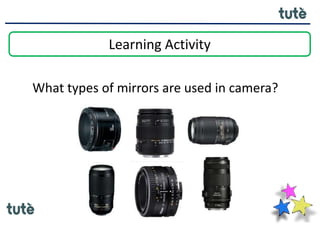
Learning Activity
What types of mirrors are used in camera?
5th-icse - light and shadows - science.

5th-icse - light and shadows - science.

  • 1.
  • 2.
    Learning Outcomes • Toexplain the light, sources of light, luminous and non-luminous bodies • To discuss the mirror and different materials, reflection and types of reflection • To explain the idea of shadow
  • 3.
  • 4.
    What is Light? Lightis a form of energy which helps us to see objects
  • 5.
    We can seeobjects if it reflects light or if it is a source of light which enters our eyes
  • 6.
    How does Lighttravel? Light travels in a straight line in the form of rays. RECTILINEAR PROPAGATION OF LIGHT
  • 7.
    Let us lookat the sources of Light
  • 8.
    Natural light sourcesare those which are not man-made
  • 9.
    Artificial light sourcesare those which are man-made
  • 10.
  • 11.
  • 12.
    What are Non-Luminous Objects?
  • 13.
    A non-luminous bodybecomes visible when light falls on it from a luminous body
  • 14.
    Learning Outcomes • Toexplain the light, sources of light, luminous and non-luminous bodies • To discuss the mirror and different materials, reflection and types of reflection • To explain the idea of shadow How confident do you feel?
  • 15.
    Learning Outcomes • Toexplain the light, sources of light, luminous and non-luminous bodies • To discuss the mirror and different materials, reflection and types of reflection • To explain the idea of shadow How confident do you feel?
  • 16.
  • 17.
  • 18.
    A straight, highlypolished, smooth and reflecting surface is known as a plane mirror?
  • 19.
  • 20.
    What is Reflection? Itis the phenomenon of light bouncing back after striking a smooth polished surface.
  • 21.
    What is Reflection? Itis the phenomenon of light bouncing back after striking a smooth polished surface. Due to reflection of light, we are able to see images of objects in a mirror
  • 22.
    Let us defineReflection and understand types of reflection
  • 25.
    Based on whetheran object allows light to pass through them they are classified into:
  • 26.
  • 27.
  • 28.
  • 29.
    Learning Outcomes • Toexplain the light, sources of light, luminous and non-luminous bodies • To discuss the mirror and different materials, reflection and types of reflection • To explain the idea of shadow How confident do you feel?
  • 30.
    Learning Outcomes • Toexplain the light, sources of light, luminous and non-luminous bodies • To discuss the mirror and different materials, reflection and types of reflection • To explain the idea of shadow How confident do you feel?
  • 31.
  • 32.
    What is aShadow?
  • 33.
    What is aShadow? A Shadow is a dark area formed when an opaque object blocks light from a light source.
  • 34.
    What is aShadow? A Shadow is a dark area formed when an opaque object blocks light from a light source. The shadows are always black.
  • 35.
    What is aShadow? A Shadow is a dark area formed when an opaque object blocks light from a light source. The shadows are always black. The shape and length of the shadow are based on the object which forms the shadow.
  • 36.
    Learning Outcomes • Toexplain the light, sources of light, luminous and non-luminous bodies • To discuss the mirror and different materials, reflection and types of reflection • To explain the idea of shadow How confident do you feel?
  • 37.
    Learning Outcomes • Toexplain the light, sources of light, luminous and non-luminous bodies • To discuss the mirror and different materials, reflection and types of reflection • To explain the idea of shadow How confident do you feel?
  • 38.
    Learning Activity What typesof mirrors are used in camera?

Editor's Notes

  • #2 An overview of the content of the lesson Must be in the form of a question where appropriate Students should be able to answer the question at the end - either fully, partly or in a way that demonstrates they understand what gaps in their knowledge they need to address Verbs such as to understand / to know / to gain confidence / to learn Ask students to give the question a go and point out that, at the end of the lesson, they should be able to answer fully
  • #3 An overview of the content of the lesson Must be in the form of a question where appropriate Students should be able to answer the question at the end - either fully, partly or in a way that demonstrates they understand what gaps in their knowledge they need to address Verbs such as to understand / to know / to gain confidence / to learn Ask students to give the question a go and point out that, at the end of the lesson, they should be able to answer fully
  • #4 An overview of the content of the lesson Must be in the form of a question where appropriate Students should be able to answer the question at the end - either fully, partly or in a way that demonstrates they understand what gaps in their knowledge they need to address Verbs such as to understand / to know / to gain confidence / to learn Ask students to give the question a go and point out that, at the end of the lesson, they should be able to answer fully
  • #5 An overview of the content of the lesson Must be in the form of a question where appropriate Students should be able to answer the question at the end - either fully, partly or in a way that demonstrates they understand what gaps in their knowledge they need to address Verbs such as to understand / to know / to gain confidence / to learn Ask students to give the question a go and point out that, at the end of the lesson, they should be able to answer fully
  • #6 An overview of the content of the lesson Must be in the form of a question where appropriate Students should be able to answer the question at the end - either fully, partly or in a way that demonstrates they understand what gaps in their knowledge they need to address Verbs such as to understand / to know / to gain confidence / to learn Ask students to give the question a go and point out that, at the end of the lesson, they should be able to answer fully
  • #7 An overview of the content of the lesson Must be in the form of a question where appropriate Students should be able to answer the question at the end - either fully, partly or in a way that demonstrates they understand what gaps in their knowledge they need to address Verbs such as to understand / to know / to gain confidence / to learn Ask students to give the question a go and point out that, at the end of the lesson, they should be able to answer fully
  • #8 An overview of the content of the lesson Must be in the form of a question where appropriate Students should be able to answer the question at the end - either fully, partly or in a way that demonstrates they understand what gaps in their knowledge they need to address Verbs such as to understand / to know / to gain confidence / to learn Ask students to give the question a go and point out that, at the end of the lesson, they should be able to answer fully
  • #9 An overview of the content of the lesson Must be in the form of a question where appropriate Students should be able to answer the question at the end - either fully, partly or in a way that demonstrates they understand what gaps in their knowledge they need to address Verbs such as to understand / to know / to gain confidence / to learn Ask students to give the question a go and point out that, at the end of the lesson, they should be able to answer fully
  • #10 An overview of the content of the lesson Must be in the form of a question where appropriate Students should be able to answer the question at the end - either fully, partly or in a way that demonstrates they understand what gaps in their knowledge they need to address Verbs such as to understand / to know / to gain confidence / to learn Ask students to give the question a go and point out that, at the end of the lesson, they should be able to answer fully
  • #11 An overview of the content of the lesson Must be in the form of a question where appropriate Students should be able to answer the question at the end - either fully, partly or in a way that demonstrates they understand what gaps in their knowledge they need to address Verbs such as to understand / to know / to gain confidence / to learn Ask students to give the question a go and point out that, at the end of the lesson, they should be able to answer fully
  • #12 An overview of the content of the lesson Must be in the form of a question where appropriate Students should be able to answer the question at the end - either fully, partly or in a way that demonstrates they understand what gaps in their knowledge they need to address Verbs such as to understand / to know / to gain confidence / to learn Ask students to give the question a go and point out that, at the end of the lesson, they should be able to answer fully
  • #13 An overview of the content of the lesson Must be in the form of a question where appropriate Students should be able to answer the question at the end - either fully, partly or in a way that demonstrates they understand what gaps in their knowledge they need to address Verbs such as to understand / to know / to gain confidence / to learn Ask students to give the question a go and point out that, at the end of the lesson, they should be able to answer fully
  • #14 An overview of the content of the lesson Must be in the form of a question where appropriate Students should be able to answer the question at the end - either fully, partly or in a way that demonstrates they understand what gaps in their knowledge they need to address Verbs such as to understand / to know / to gain confidence / to learn Ask students to give the question a go and point out that, at the end of the lesson, they should be able to answer fully
  • #15 An overview of the content of the lesson Must be in the form of a question where appropriate Students should be able to answer the question at the end - either fully, partly or in a way that demonstrates they understand what gaps in their knowledge they need to address Verbs such as to understand / to know / to gain confidence / to learn Ask students to give the question a go and point out that, at the end of the lesson, they should be able to answer fully
  • #16 An overview of the content of the lesson Must be in the form of a question where appropriate Students should be able to answer the question at the end - either fully, partly or in a way that demonstrates they understand what gaps in their knowledge they need to address Verbs such as to understand / to know / to gain confidence / to learn Ask students to give the question a go and point out that, at the end of the lesson, they should be able to answer fully
  • #17 An overview of the content of the lesson Must be in the form of a question where appropriate Students should be able to answer the question at the end - either fully, partly or in a way that demonstrates they understand what gaps in their knowledge they need to address Verbs such as to understand / to know / to gain confidence / to learn Ask students to give the question a go and point out that, at the end of the lesson, they should be able to answer fully
  • #18 An overview of the content of the lesson Must be in the form of a question where appropriate Students should be able to answer the question at the end - either fully, partly or in a way that demonstrates they understand what gaps in their knowledge they need to address Verbs such as to understand / to know / to gain confidence / to learn Ask students to give the question a go and point out that, at the end of the lesson, they should be able to answer fully
  • #19 An overview of the content of the lesson Must be in the form of a question where appropriate Students should be able to answer the question at the end - either fully, partly or in a way that demonstrates they understand what gaps in their knowledge they need to address Verbs such as to understand / to know / to gain confidence / to learn Ask students to give the question a go and point out that, at the end of the lesson, they should be able to answer fully
  • #20 An overview of the content of the lesson Must be in the form of a question where appropriate Students should be able to answer the question at the end - either fully, partly or in a way that demonstrates they understand what gaps in their knowledge they need to address Verbs such as to understand / to know / to gain confidence / to learn Ask students to give the question a go and point out that, at the end of the lesson, they should be able to answer fully
  • #21 An overview of the content of the lesson Must be in the form of a question where appropriate Students should be able to answer the question at the end - either fully, partly or in a way that demonstrates they understand what gaps in their knowledge they need to address Verbs such as to understand / to know / to gain confidence / to learn Ask students to give the question a go and point out that, at the end of the lesson, they should be able to answer fully
  • #22 An overview of the content of the lesson Must be in the form of a question where appropriate Students should be able to answer the question at the end - either fully, partly or in a way that demonstrates they understand what gaps in their knowledge they need to address Verbs such as to understand / to know / to gain confidence / to learn Ask students to give the question a go and point out that, at the end of the lesson, they should be able to answer fully
  • #23 An overview of the content of the lesson Must be in the form of a question where appropriate Students should be able to answer the question at the end - either fully, partly or in a way that demonstrates they understand what gaps in their knowledge they need to address Verbs such as to understand / to know / to gain confidence / to learn Ask students to give the question a go and point out that, at the end of the lesson, they should be able to answer fully
  • #24 An overview of the content of the lesson Must be in the form of a question where appropriate Students should be able to answer the question at the end - either fully, partly or in a way that demonstrates they understand what gaps in their knowledge they need to address Verbs such as to understand / to know / to gain confidence / to learn Ask students to give the question a go and point out that, at the end of the lesson, they should be able to answer fully
  • #25 An overview of the content of the lesson Must be in the form of a question where appropriate Students should be able to answer the question at the end - either fully, partly or in a way that demonstrates they understand what gaps in their knowledge they need to address Verbs such as to understand / to know / to gain confidence / to learn Ask students to give the question a go and point out that, at the end of the lesson, they should be able to answer fully
  • #26 An overview of the content of the lesson Must be in the form of a question where appropriate Students should be able to answer the question at the end - either fully, partly or in a way that demonstrates they understand what gaps in their knowledge they need to address Verbs such as to understand / to know / to gain confidence / to learn Ask students to give the question a go and point out that, at the end of the lesson, they should be able to answer fully
  • #27 An overview of the content of the lesson Must be in the form of a question where appropriate Students should be able to answer the question at the end - either fully, partly or in a way that demonstrates they understand what gaps in their knowledge they need to address Verbs such as to understand / to know / to gain confidence / to learn Ask students to give the question a go and point out that, at the end of the lesson, they should be able to answer fully
  • #28 An overview of the content of the lesson Must be in the form of a question where appropriate Students should be able to answer the question at the end - either fully, partly or in a way that demonstrates they understand what gaps in their knowledge they need to address Verbs such as to understand / to know / to gain confidence / to learn Ask students to give the question a go and point out that, at the end of the lesson, they should be able to answer fully
  • #29 An overview of the content of the lesson Must be in the form of a question where appropriate Students should be able to answer the question at the end - either fully, partly or in a way that demonstrates they understand what gaps in their knowledge they need to address Verbs such as to understand / to know / to gain confidence / to learn Ask students to give the question a go and point out that, at the end of the lesson, they should be able to answer fully
  • #30 An overview of the content of the lesson Must be in the form of a question where appropriate Students should be able to answer the question at the end - either fully, partly or in a way that demonstrates they understand what gaps in their knowledge they need to address Verbs such as to understand / to know / to gain confidence / to learn Ask students to give the question a go and point out that, at the end of the lesson, they should be able to answer fully
  • #31 An overview of the content of the lesson Must be in the form of a question where appropriate Students should be able to answer the question at the end - either fully, partly or in a way that demonstrates they understand what gaps in their knowledge they need to address Verbs such as to understand / to know / to gain confidence / to learn Ask students to give the question a go and point out that, at the end of the lesson, they should be able to answer fully
  • #32 An overview of the content of the lesson Must be in the form of a question where appropriate Students should be able to answer the question at the end - either fully, partly or in a way that demonstrates they understand what gaps in their knowledge they need to address Verbs such as to understand / to know / to gain confidence / to learn Ask students to give the question a go and point out that, at the end of the lesson, they should be able to answer fully
  • #33 An overview of the content of the lesson Must be in the form of a question where appropriate Students should be able to answer the question at the end - either fully, partly or in a way that demonstrates they understand what gaps in their knowledge they need to address Verbs such as to understand / to know / to gain confidence / to learn Ask students to give the question a go and point out that, at the end of the lesson, they should be able to answer fully
  • #34 An overview of the content of the lesson Must be in the form of a question where appropriate Students should be able to answer the question at the end - either fully, partly or in a way that demonstrates they understand what gaps in their knowledge they need to address Verbs such as to understand / to know / to gain confidence / to learn Ask students to give the question a go and point out that, at the end of the lesson, they should be able to answer fully
  • #35 An overview of the content of the lesson Must be in the form of a question where appropriate Students should be able to answer the question at the end - either fully, partly or in a way that demonstrates they understand what gaps in their knowledge they need to address Verbs such as to understand / to know / to gain confidence / to learn Ask students to give the question a go and point out that, at the end of the lesson, they should be able to answer fully
  • #36 An overview of the content of the lesson Must be in the form of a question where appropriate Students should be able to answer the question at the end - either fully, partly or in a way that demonstrates they understand what gaps in their knowledge they need to address Verbs such as to understand / to know / to gain confidence / to learn Ask students to give the question a go and point out that, at the end of the lesson, they should be able to answer fully
  • #37 An overview of the content of the lesson Must be in the form of a question where appropriate Students should be able to answer the question at the end - either fully, partly or in a way that demonstrates they understand what gaps in their knowledge they need to address Verbs such as to understand / to know / to gain confidence / to learn Ask students to give the question a go and point out that, at the end of the lesson, they should be able to answer fully
  • #38 An overview of the content of the lesson Must be in the form of a question where appropriate Students should be able to answer the question at the end - either fully, partly or in a way that demonstrates they understand what gaps in their knowledge they need to address Verbs such as to understand / to know / to gain confidence / to learn Ask students to give the question a go and point out that, at the end of the lesson, they should be able to answer fully
  • #39 An overview of the content of the lesson Must be in the form of a question where appropriate Students should be able to answer the question at the end - either fully, partly or in a way that demonstrates they understand what gaps in their knowledge they need to address Verbs such as to understand / to know / to gain confidence / to learn Ask students to give the question a go and point out that, at the end of the lesson, they should be able to answer fully