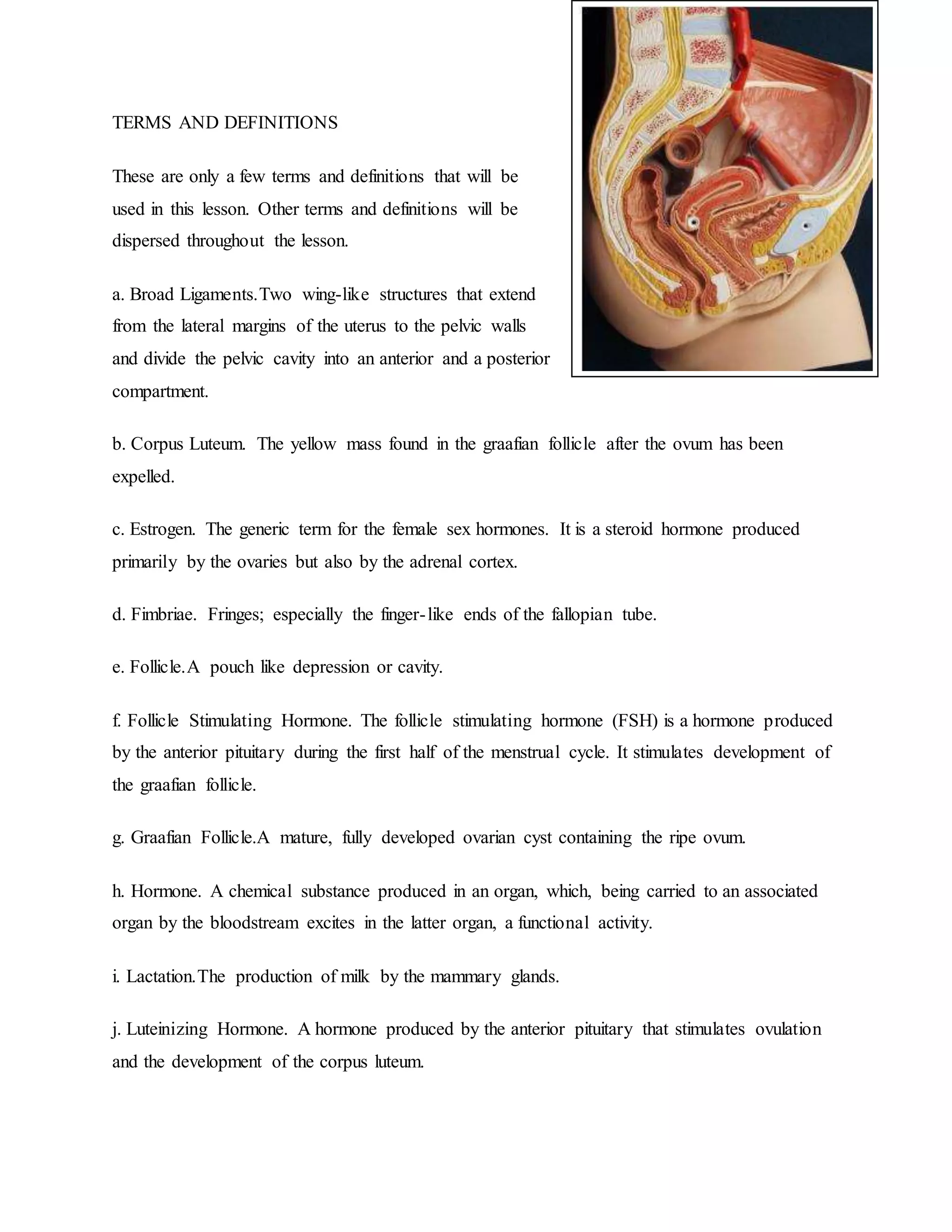
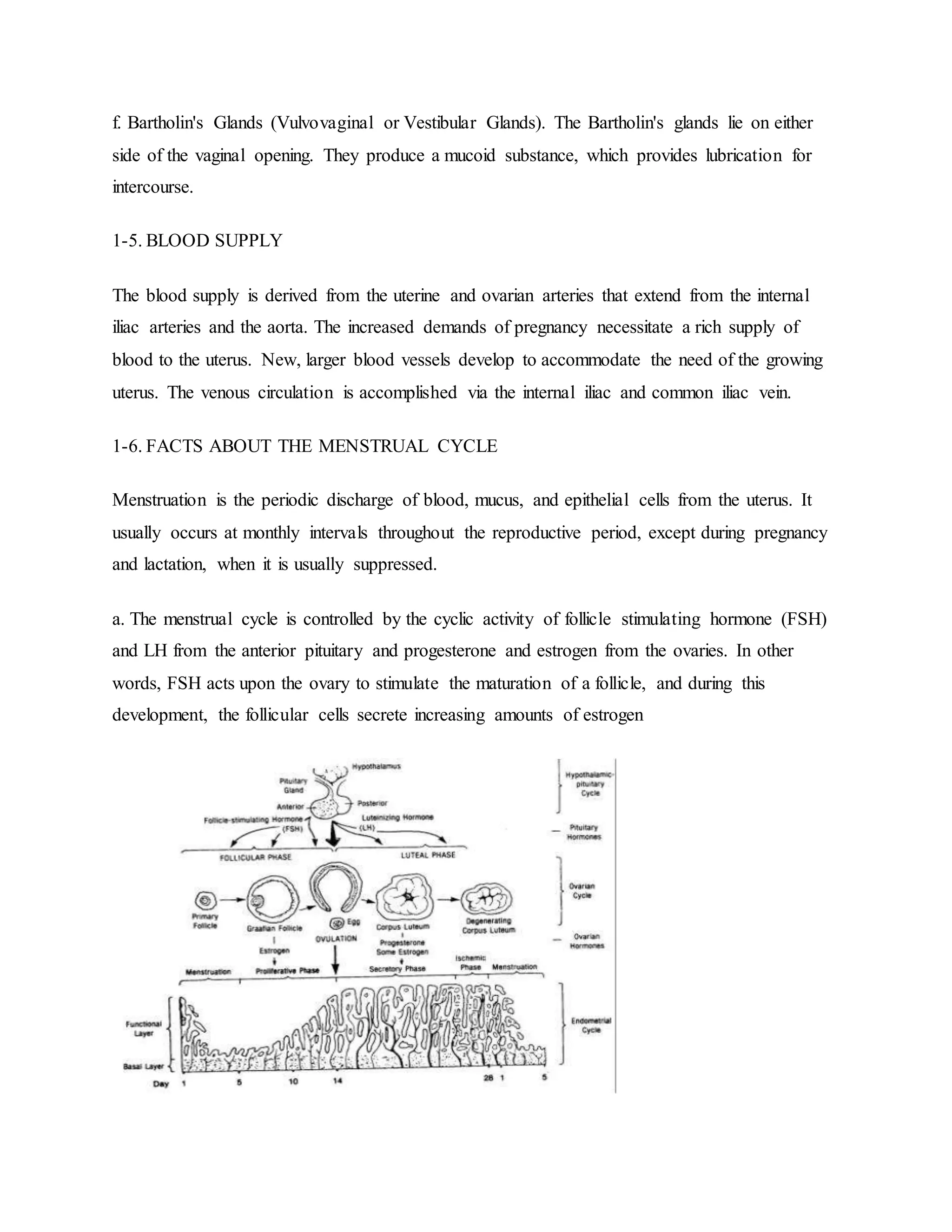
This document provides information about dysfunctional uterine bleeding (DUB) and anemia. It begins by defining DUB as heavy or irregular bleeding that is not caused by an anatomical abnormality. It then explains that most DUB is associated with anovulatory bleeding when ovulation does not occur, disrupting hormone levels and leading to bleeding. The document discusses various patterns of bleeding that should prompt seeing a doctor. It also notes that DUB is usually painless and diagnosis involves ruling out other causes through testing. The document then provides details on the anatomy and normal hormone cycles involved in menstruation. It explains how anovulation can lead to bleeding and discusses anemia, its causes, signs, and objectives for managing patients with an