PEM
ANOREXIANERVOSA
BULIMIA
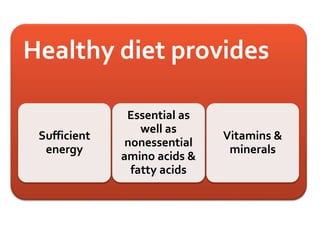
Healthy diet provides
Sufficient
energy
Essential as
well as
nonessential
amino acids &
fatty acids
Vitamins &
minerals
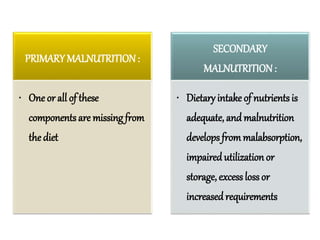
PRIMARY MALNUTRITION:
• One or all of these
components are missing from
the diet
SECONDARY
MALNUTRITION:
• Dietary intake of nutrients is
adequate, and malnutrition
develops frommalabsorption,
impaired utilizationor
storage, excess loss or
increased requirements
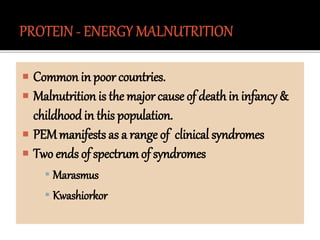
 Common in poor countries.
 Malnutrition is the major cause of deathin infancy &
childhood in this population.
 PEMmanifests as a range of clinical syndromes
 Two ends of spectrumof syndromes
â–Ş Marasmus
â–Ş Kwashiorkor
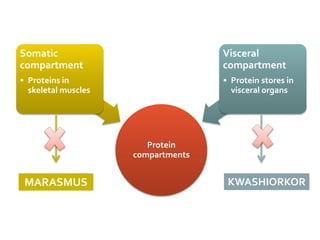
Protein
compartments
Somatic
compartment
• Proteins in
skeletal muscles
Visceral
compartment
• Protein stores in
visceral organs
MARASMUS KWASHIORKOR
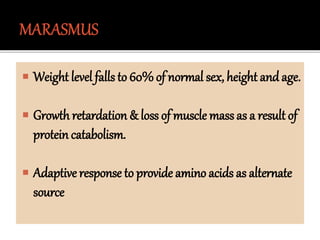
 Weight level falls to 60%of normal sex, height andage.
 Growth retardation & loss of muscle mass as a result of
protein catabolism.
 Adaptive response to provide amino acids as alternate
source
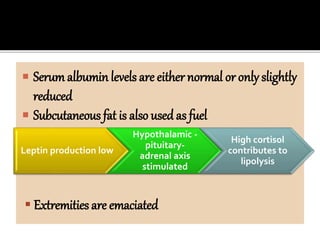
 Serumalbumin levels are either normal or only slightly
reduced
 Subcutaneous fat is also used as fuel
Leptin production low
Hypothalamic -
pituitary-
adrenal axis
stimulated
High cortisol
contributes to
lipolysis
ď‚§ Extremities are emaciated
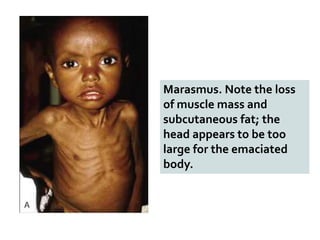
Marasmus. Note the loss
of muscle mass and
subcutaneous fat; the
head appears to be too
large for the emaciated
body.
 Anemia and manifestations of multivitamin
deficiencies
 Immune deficiency particularly of T cell mediated
immunity.
 Concurrent infections
 Protein deprivation greater
 Children who have been weaned too early
 Prevalence high in impoverished countries
 Less severe forms world wide
ď‚§ Chronic diarrheal states
ď‚§ Chronic protein loss
 Hypoalbuminemia gives rise to generalised or
dependant edema
 Masks true loss of weight
 Weight of children with severe Kwashiorkor 60-80 % of
normal
 Sparing of subcutaneous fat & muscle mass
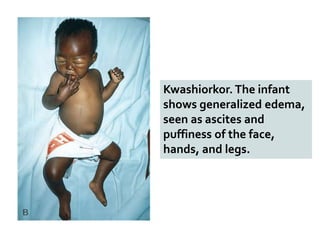
Kwashiorkor. The infant
shows generalized edema,
seen as ascites and
puffiness of the face,
hands, and legs.
 Alternating zones of hyperpigmentation, desquamation &
hypopigmentation
 “Flaky paint” appearance
 Hair : alternating pale & dark color,staightening, loose
attachment to scalp
 Fatty liver
 Vitamin deficiencies & Secondary infections
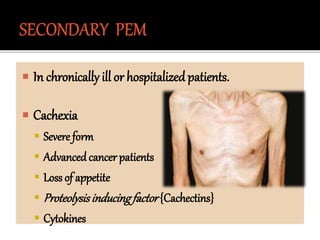
 In chronically ill or hospitalized patients.
 Cachexia
ď‚§ Severe form
ď‚§ Advancedcancer patients
ď‚§ Loss of appetite
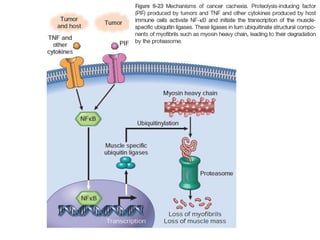
ď‚§ Proteolysisinducingfactor{Cachectins}
ď‚§ Cytokines
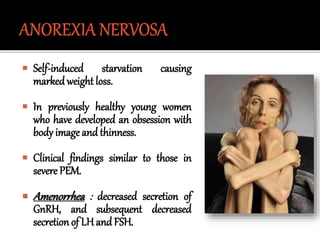
 Self-induced starvation causing
marked weight loss.
 In previously healthy young women
who have developed an obsession with
body image and thinness.
 Clinical findings similar to those in
severe PEM.
 Amenorrhea : decreased secretion of
GnRH, and subsequent decreased
secretion of LH and FSH.
 Decreasedthyroidhormonerelease:
ď‚§ Cold intolerance
ď‚§ Bradycardia
ď‚§ Constipation
ď‚§ Changes in the skinand hair
 Dehydration and electrolyte abnormalities
 Bonedensityis decreased(lowestrogenlevel)
 Anemia, lymphopenia, hypoalbuminemia
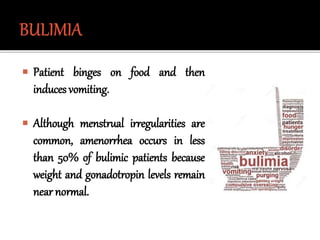
 Patient binges on food and then
induces vomiting.
 Although menstrual irregularities are
common, amenorrhea occurs in less
than 50% of bulimic patients because
weight and gonadotropin levels remain
near normal.
I. Electrolyte imbalances (hypokalemia), which
predispose the patient to cardiac arrhythmias
II. Pulmonary aspiration of gastric contents;
III. Esophageal and gastric rupture.
undernutrition

undernutrition

  • 1.
  • 2.
    Healthy diet provides Sufficient energy Essentialas well as nonessential amino acids & fatty acids Vitamins & minerals
  • 3.
    PRIMARY MALNUTRITION: • Oneor all of these components are missing from the diet SECONDARY MALNUTRITION: • Dietary intake of nutrients is adequate, and malnutrition develops frommalabsorption, impaired utilizationor storage, excess loss or increased requirements
  • 4.
     Common inpoor countries.  Malnutrition is the major cause of deathin infancy & childhood in this population.  PEMmanifests as a range of clinical syndromes  Two ends of spectrumof syndromes ▪ Marasmus ▪ Kwashiorkor
  • 5.
    Protein compartments Somatic compartment • Proteins in skeletalmuscles Visceral compartment • Protein stores in visceral organs MARASMUS KWASHIORKOR
  • 6.
     Weight levelfalls to 60%of normal sex, height andage.  Growth retardation & loss of muscle mass as a result of protein catabolism.  Adaptive response to provide amino acids as alternate source
  • 7.
     Serumalbumin levelsare either normal or only slightly reduced  Subcutaneous fat is also used as fuel Leptin production low Hypothalamic - pituitary- adrenal axis stimulated High cortisol contributes to lipolysis  Extremities are emaciated
  • 8.
    Marasmus. Note theloss of muscle mass and subcutaneous fat; the head appears to be too large for the emaciated body.
  • 9.
     Anemia andmanifestations of multivitamin deficiencies  Immune deficiency particularly of T cell mediated immunity.  Concurrent infections
  • 10.
     Protein deprivationgreater  Children who have been weaned too early  Prevalence high in impoverished countries  Less severe forms world wide  Chronic diarrheal states  Chronic protein loss
  • 11.
     Hypoalbuminemia givesrise to generalised or dependant edema  Masks true loss of weight  Weight of children with severe Kwashiorkor 60-80 % of normal  Sparing of subcutaneous fat & muscle mass
  • 12.
    Kwashiorkor. The infant showsgeneralized edema, seen as ascites and puffiness of the face, hands, and legs.
  • 13.
     Alternating zonesof hyperpigmentation, desquamation & hypopigmentation  “Flaky paint” appearance  Hair : alternating pale & dark color,staightening, loose attachment to scalp  Fatty liver  Vitamin deficiencies & Secondary infections
  • 14.
     In chronicallyill or hospitalized patients.  Cachexia  Severe form  Advancedcancer patients  Loss of appetite  Proteolysisinducingfactor{Cachectins}  Cytokines
  • 16.
     Self-induced starvationcausing marked weight loss.  In previously healthy young women who have developed an obsession with body image and thinness.  Clinical findings similar to those in severe PEM.  Amenorrhea : decreased secretion of GnRH, and subsequent decreased secretion of LH and FSH.
  • 17.
     Decreasedthyroidhormonerelease:  Coldintolerance  Bradycardia  Constipation  Changes in the skinand hair  Dehydration and electrolyte abnormalities  Bonedensityis decreased(lowestrogenlevel)  Anemia, lymphopenia, hypoalbuminemia
  • 18.
     Patient bingeson food and then induces vomiting.  Although menstrual irregularities are common, amenorrhea occurs in less than 50% of bulimic patients because weight and gonadotropin levels remain near normal.
  • 19.
    I. Electrolyte imbalances(hypokalemia), which predispose the patient to cardiac arrhythmias II. Pulmonary aspiration of gastric contents; III. Esophageal and gastric rupture.