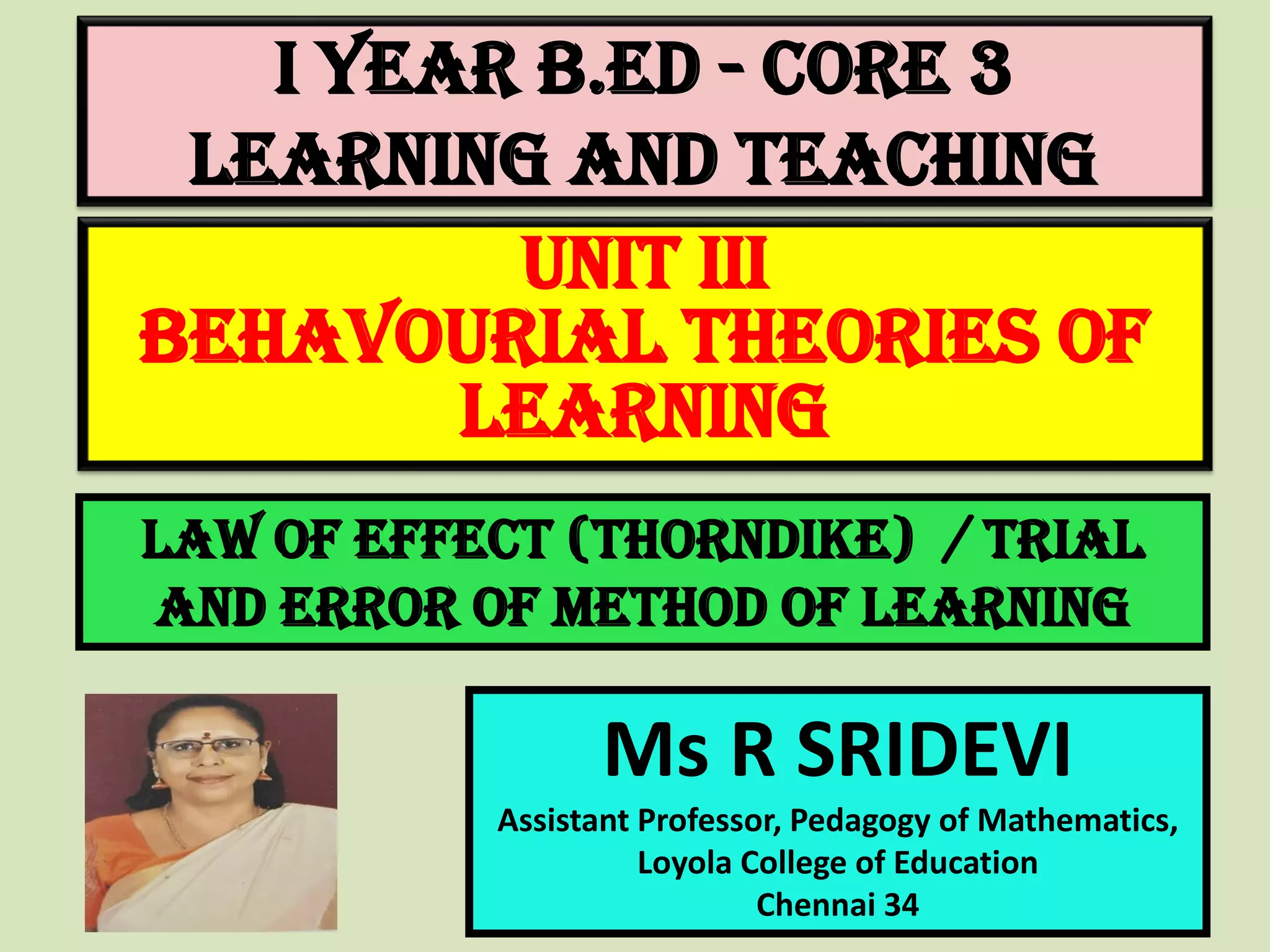
I Year B.Ed - CORE 3
LEARNING AND TEACHING
Ms R SRIDEVI
Assistant Professor, Pedagogy of Mathematics,
Loyola College of Education
Chennai 34
UNIT III
BEHAVOURIAL THEORIES OF
LEARNING
Law of effect (Thorndike) / Trial
and Error of Method of Learning
The questions and allotment of marks
are as described below:
• Type of course : Full course
• Type of Questions : Essay type
• Questions : 10
• To answer : 7
• Marks : Each carries 10 marks
• Total marks : 70 ( 7 x 10 )
• Maximum word : 600 words / 5 sides
for each question
• Time : 3 hrs
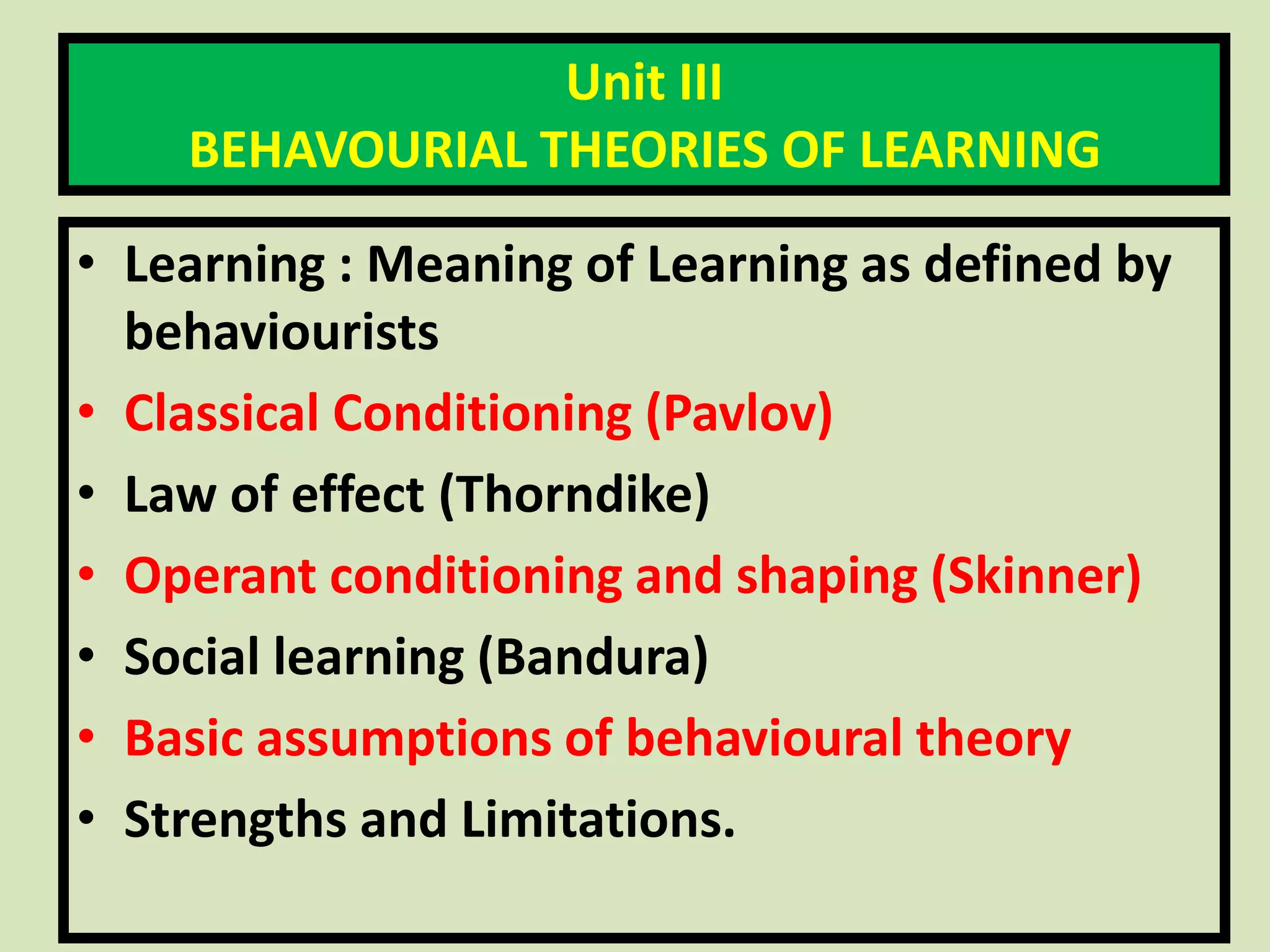
Unit III
BEHAVOURIAL THEORIES OF LEARNING
• Learning : Meaning of Learning as defined by
behaviourists
• Classical Conditioning (Pavlov)
• Law of effect (Thorndike)
• Operant conditioning and shaping (Skinner)
• Social learning (Bandura)
• Basic assumptions of behavioural theory
• Strengths and Limitations.
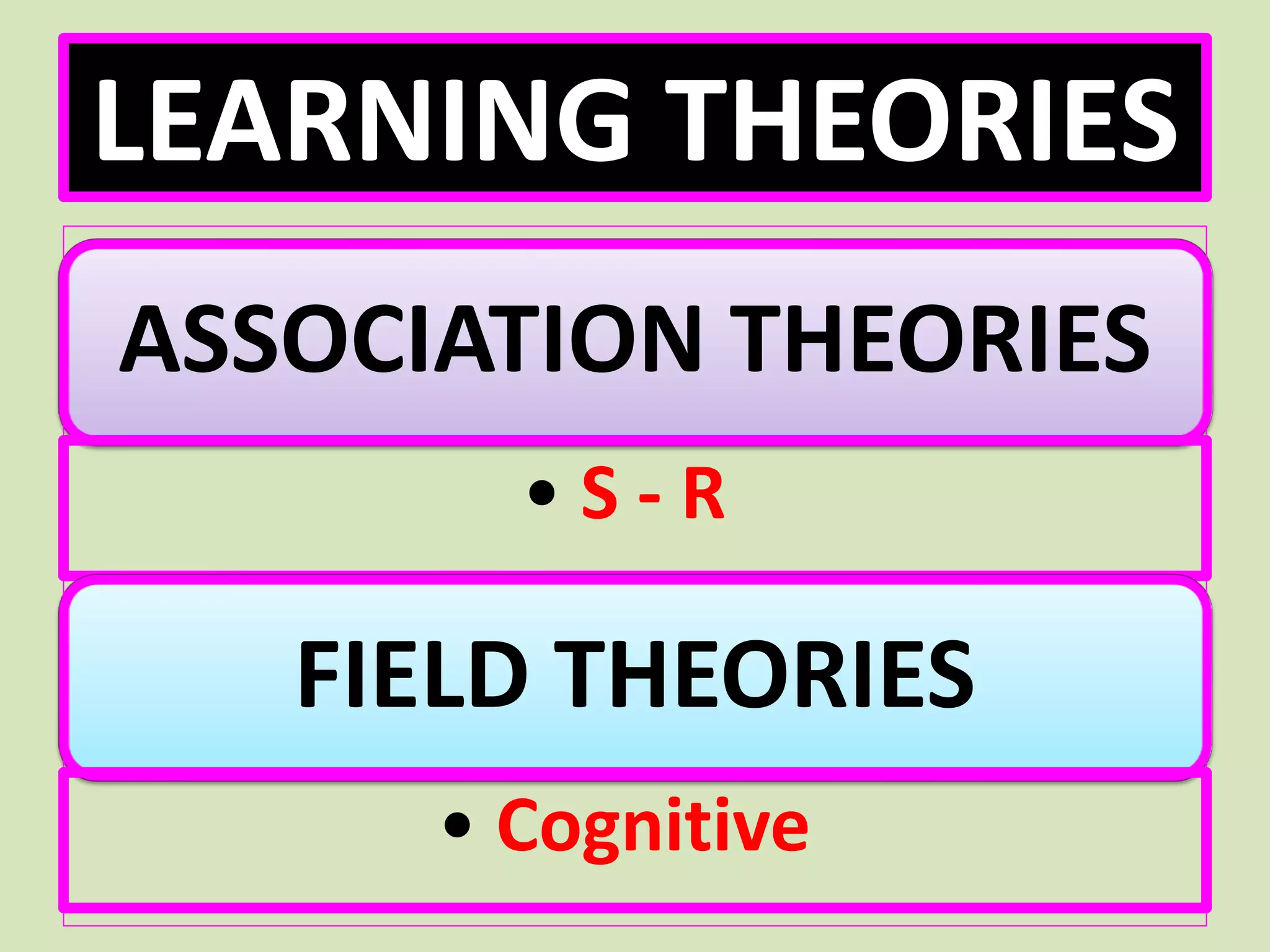
LEARNING THEORIES
ASSOCIATION THEORIES
• S - R
FIELD THEORIES
• Cognitive
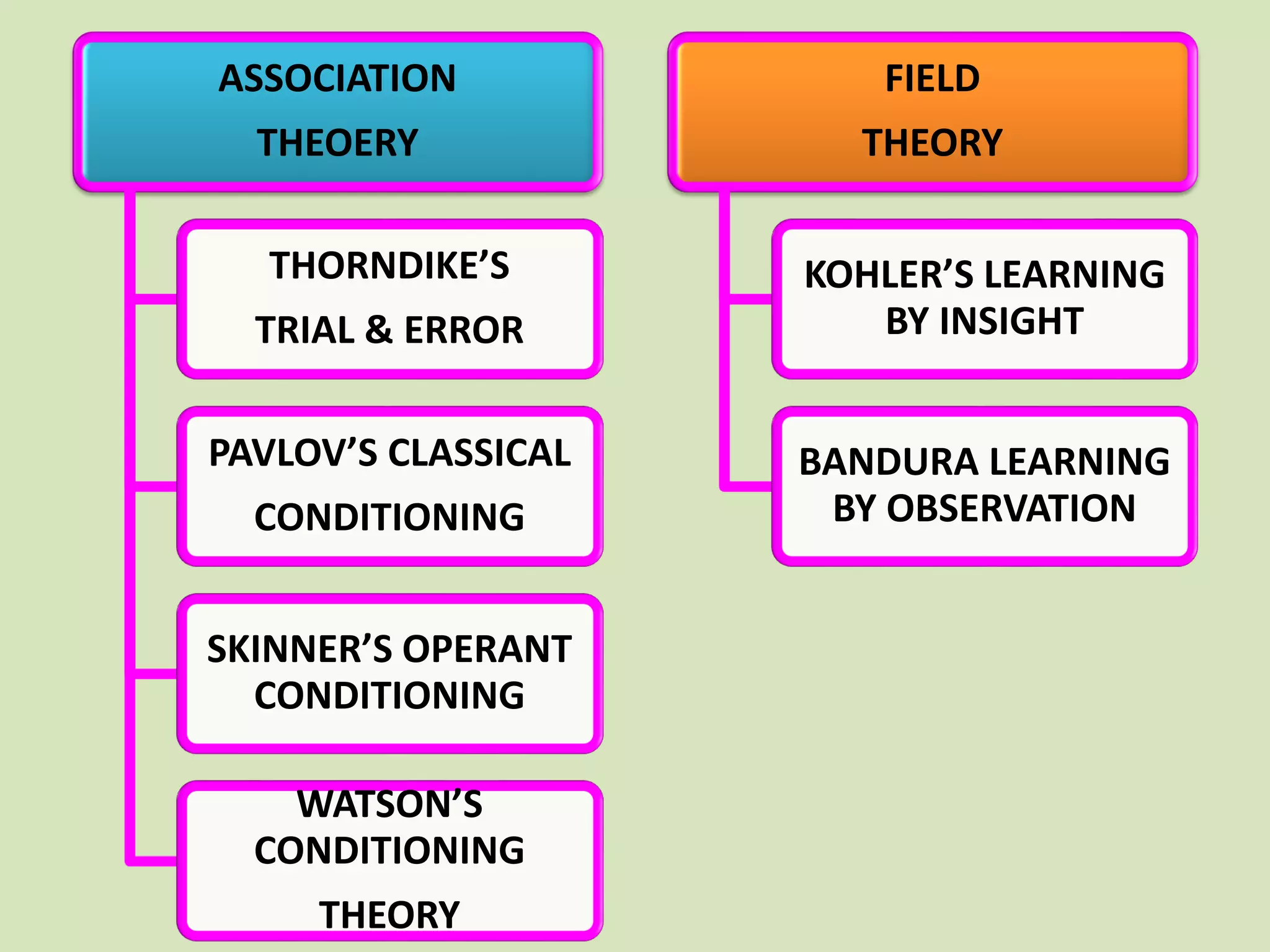
ASSOCIATION
THEOERY
THORNDIKE’S
TRIAL & ERROR
PAVLOV’S CLASSICAL
CONDITIONING
SKINNER’S OPERANT
CONDITIONING
WATSON’S
CONDITIONING
THEORY
FIELD
THEORY
KOHLER’S LEARNING
BY INSIGHT
BANDURA LEARNING
BY OBSERVATION
THORNDIKE’S
TRIAL AND ERROR METHOD
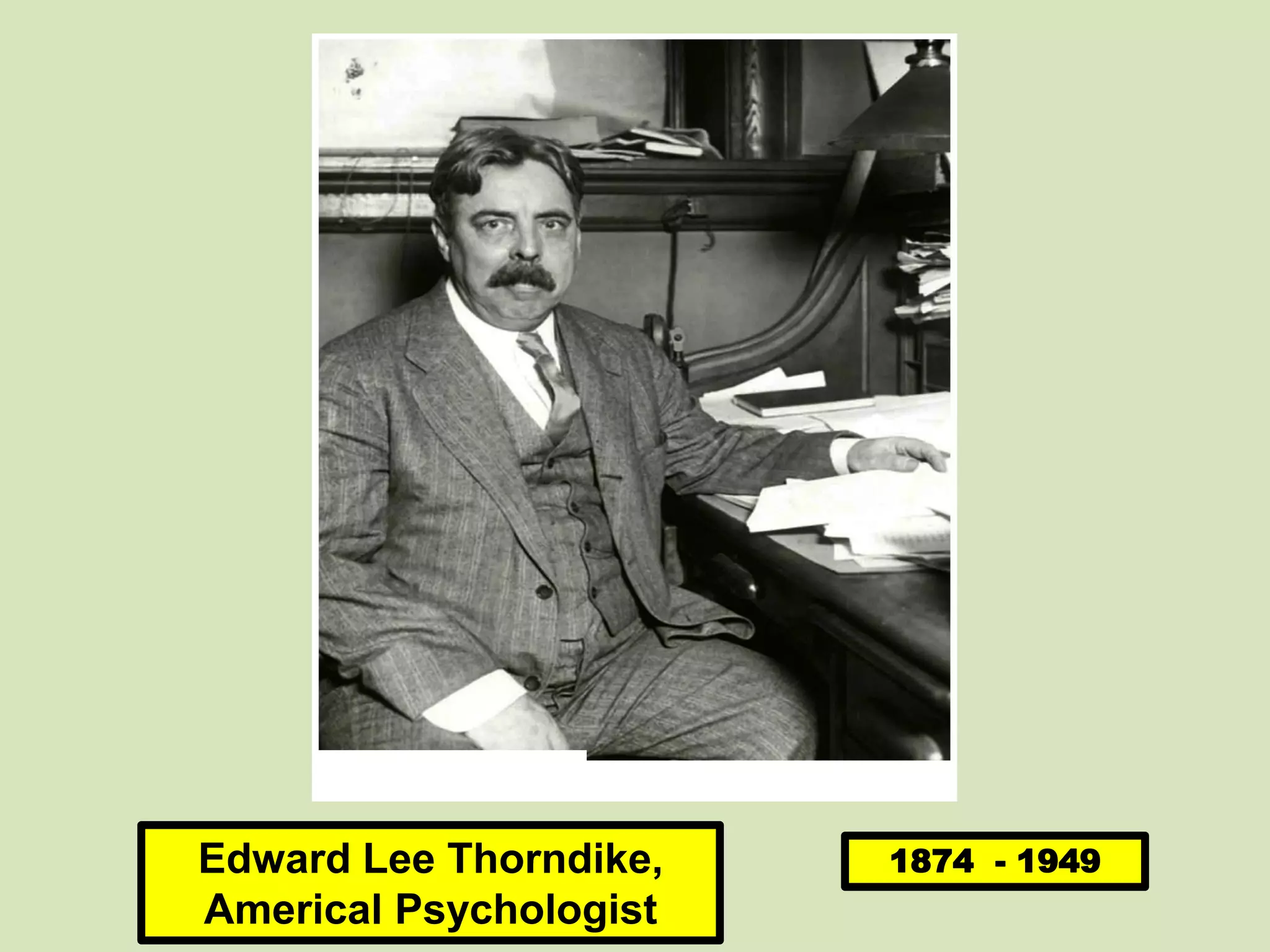
Edward Lee Thorndike,
Americal Psychologist
1874 - 1949
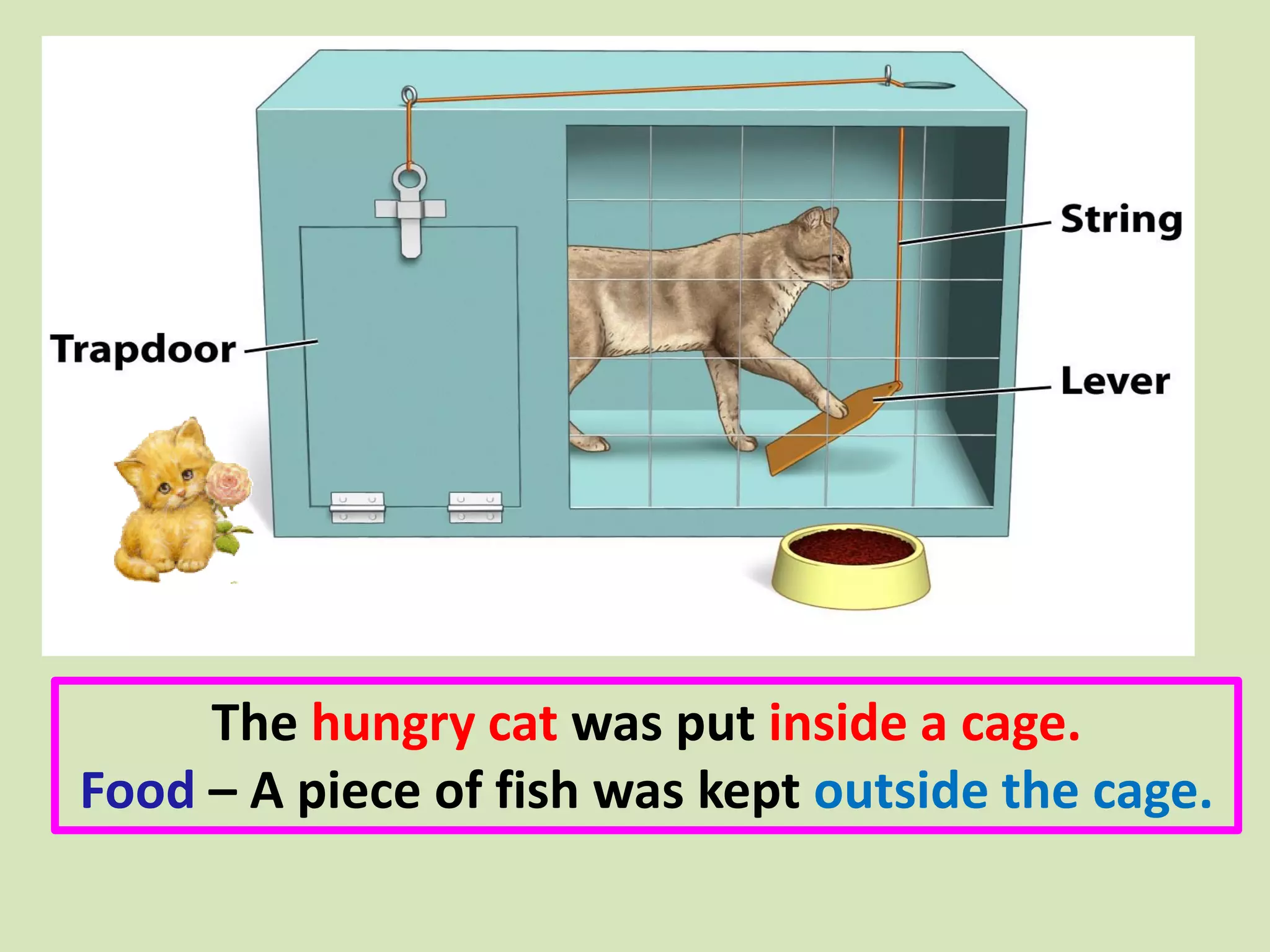
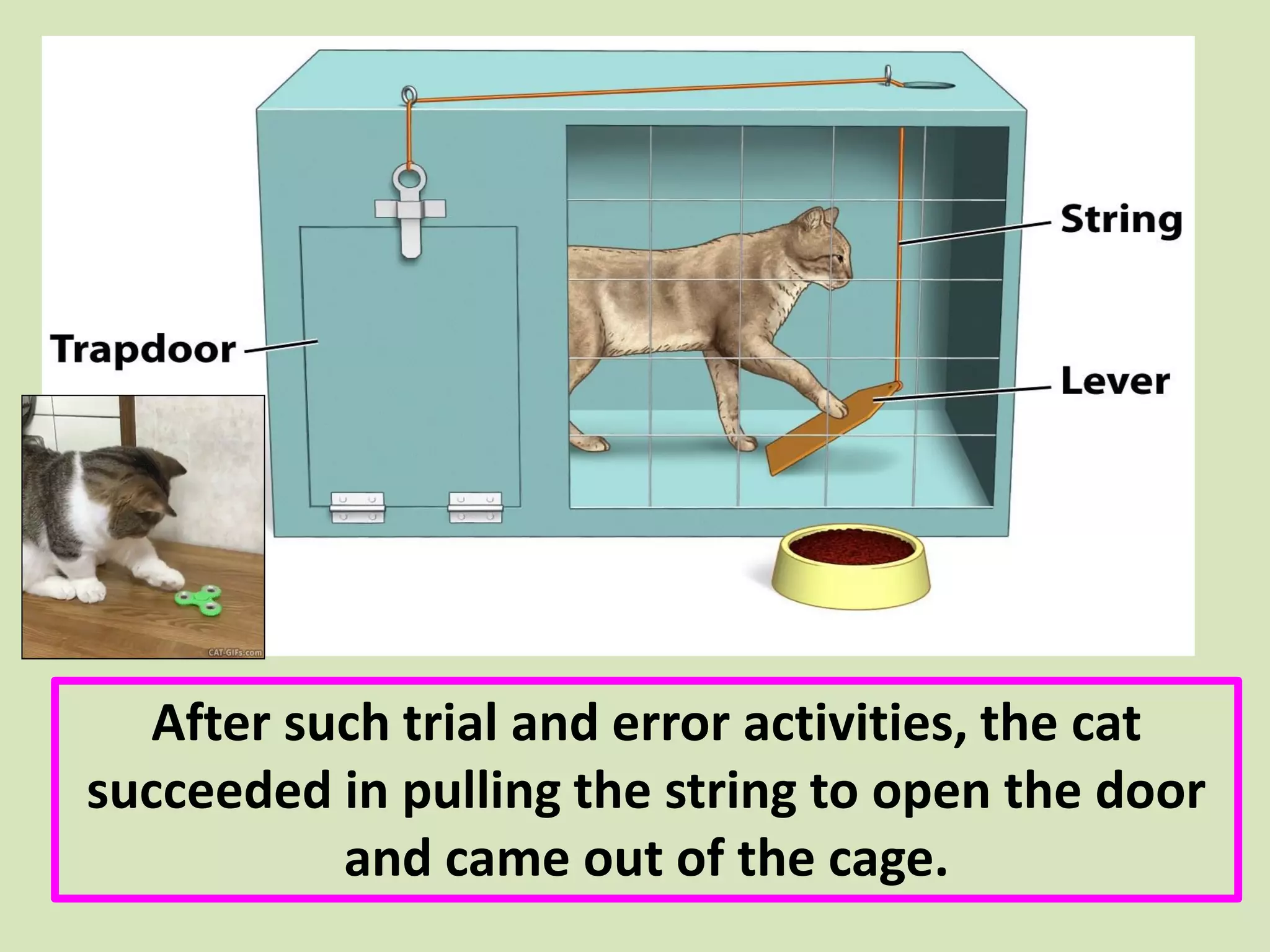
The hungry cat was put inside a cage.
Food – A piece of fish was kept outside the cage.
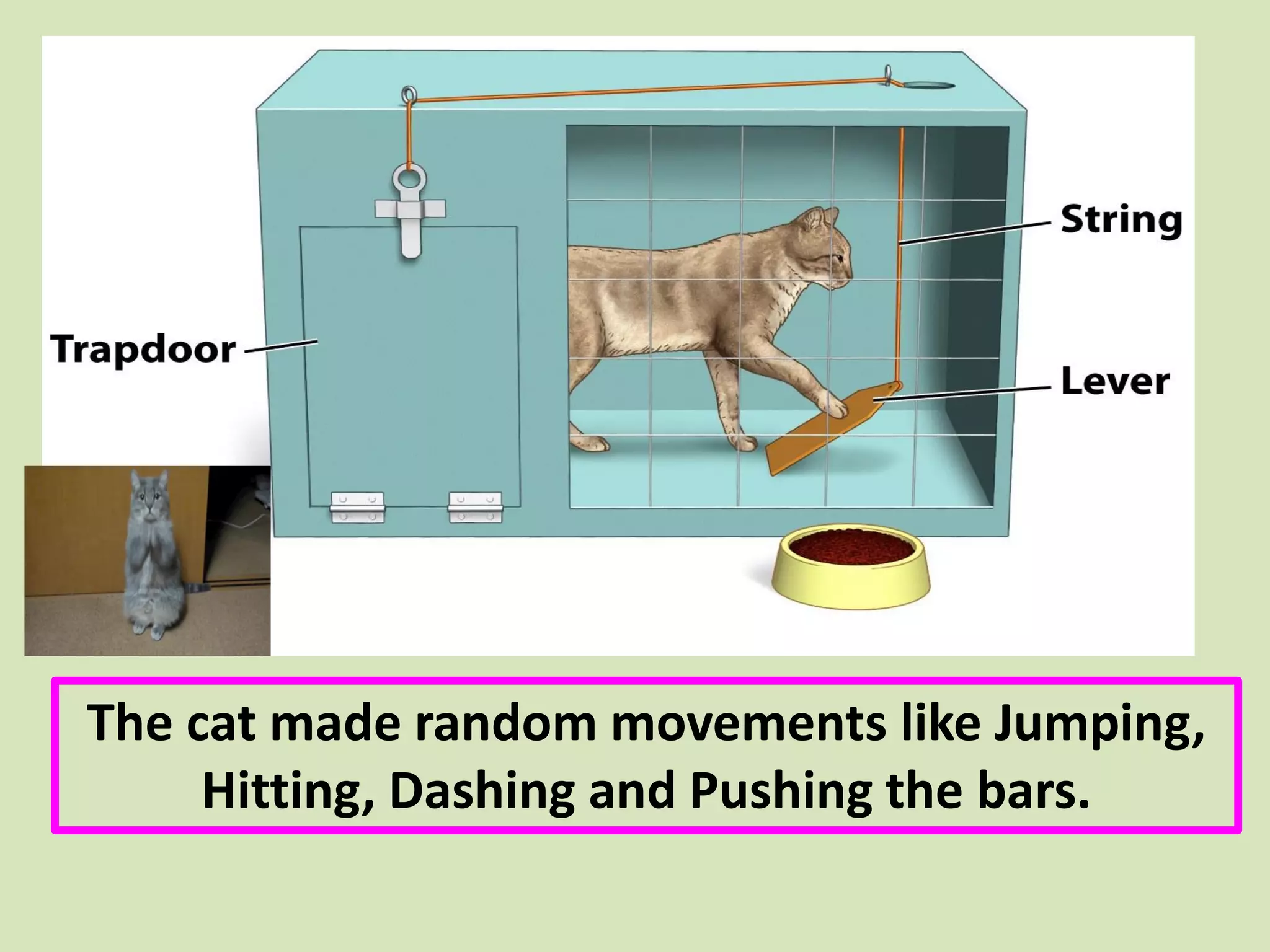
The cat made random movements like Jumping,
Hitting, Dashing and Pushing the bars.
After such trial and error activities, the cat
succeeded in pulling the string to open the door
and came out of the cage.
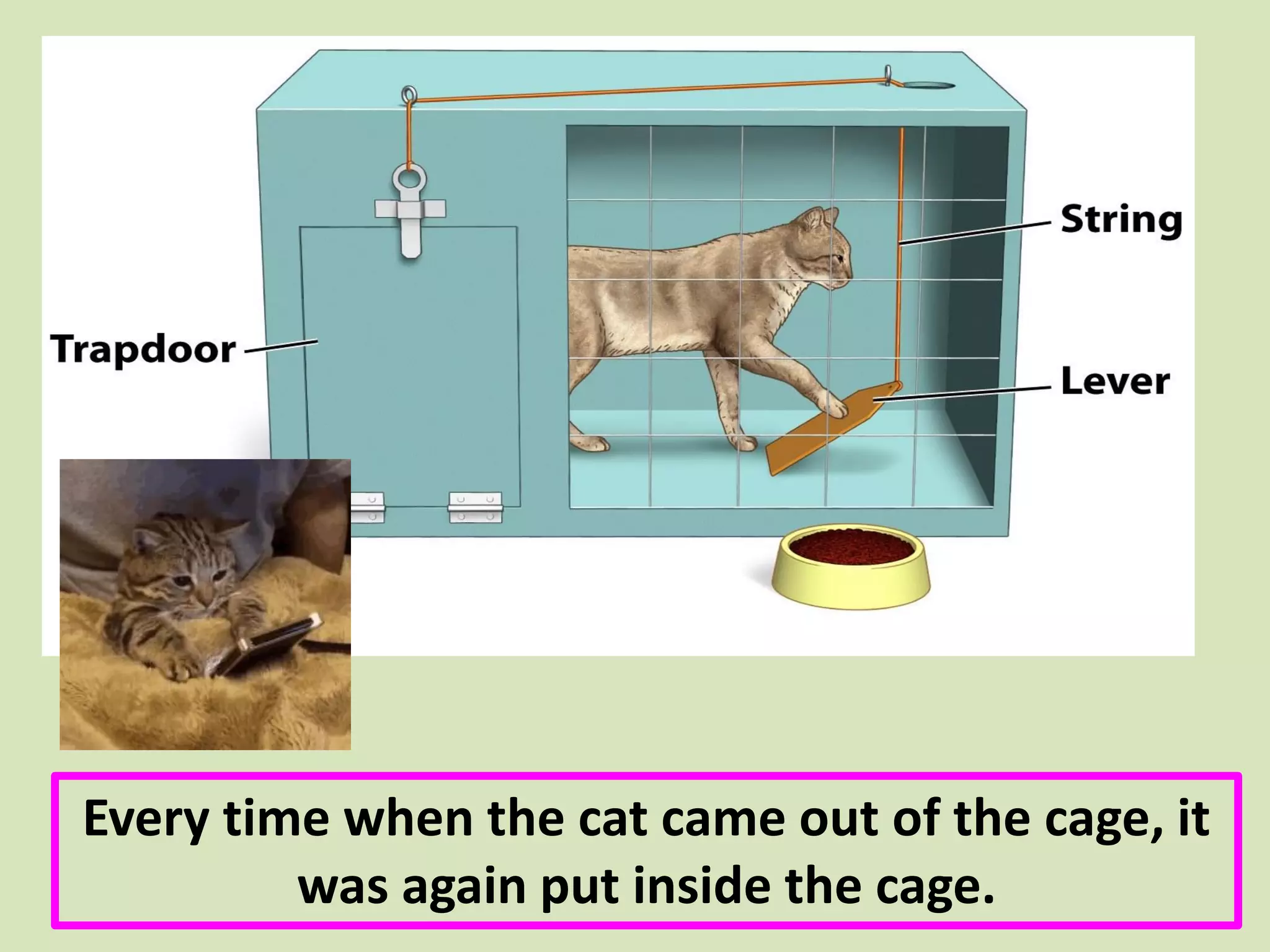
Every time when the cat came out of the cage, it
was again put inside the cage.
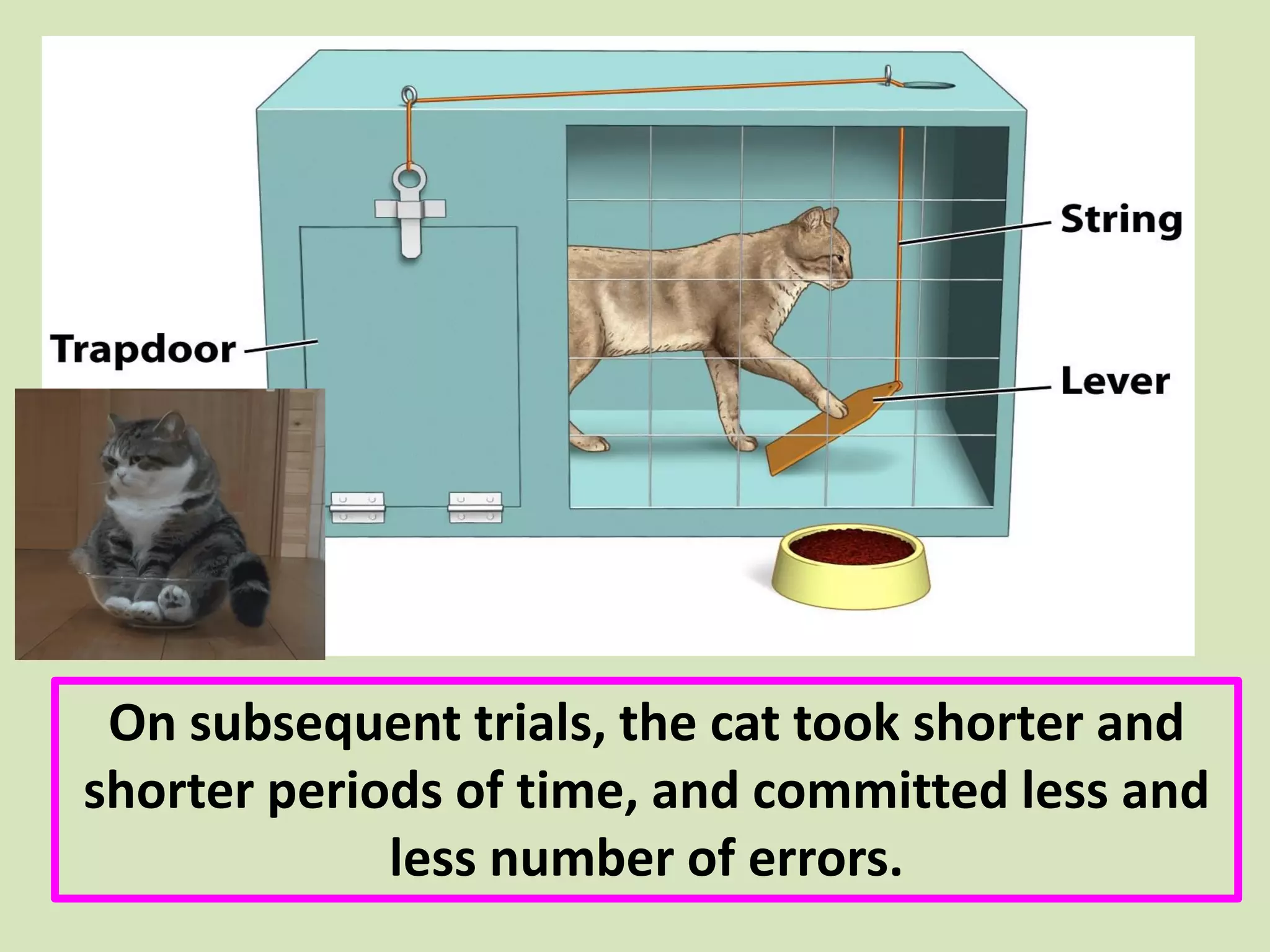
On subsequent trials, the cat took shorter and
shorter periods of time, and committed less and
less number of errors.
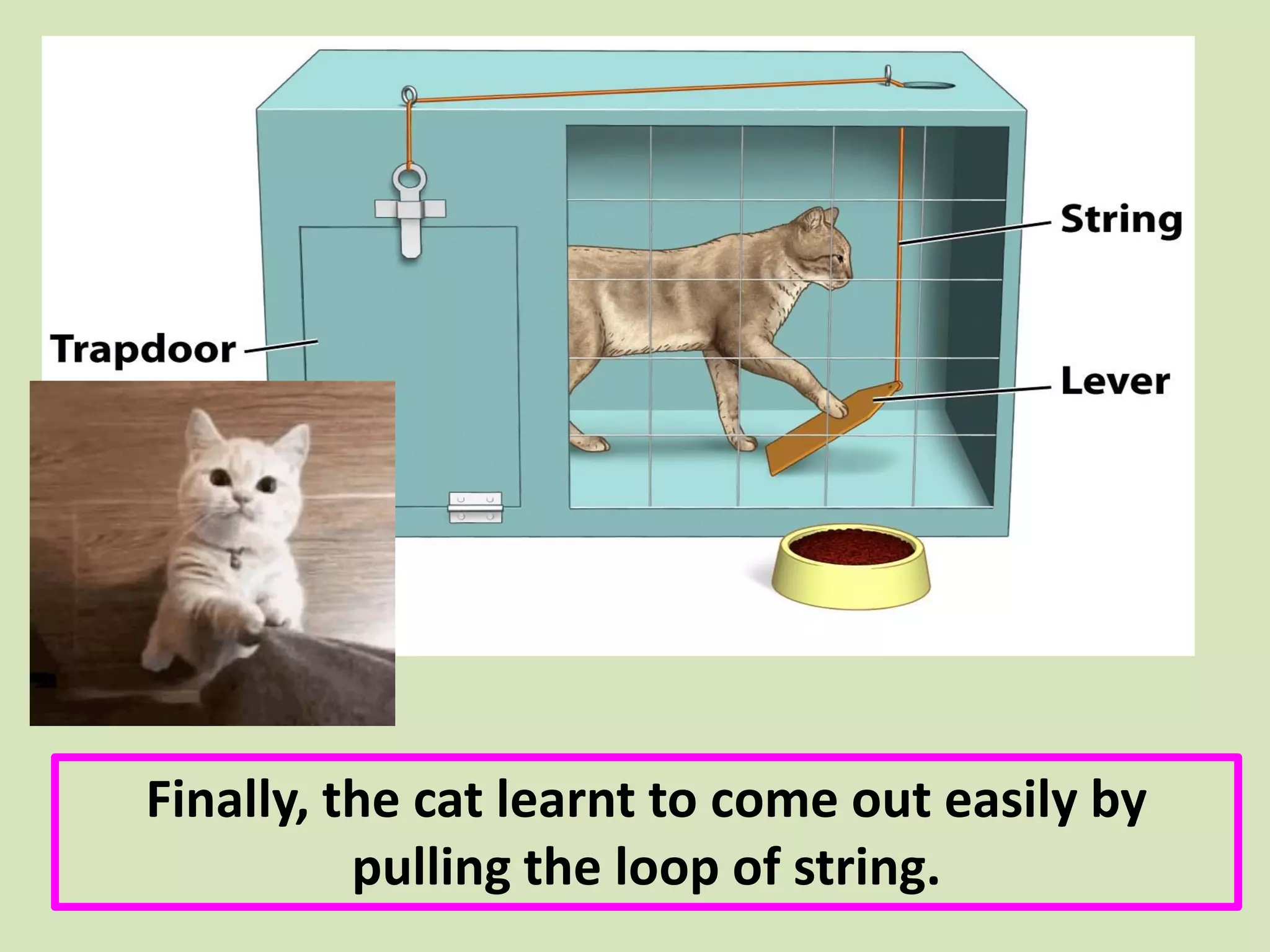
Finally, the cat learnt to come out easily by
pulling the loop of string.
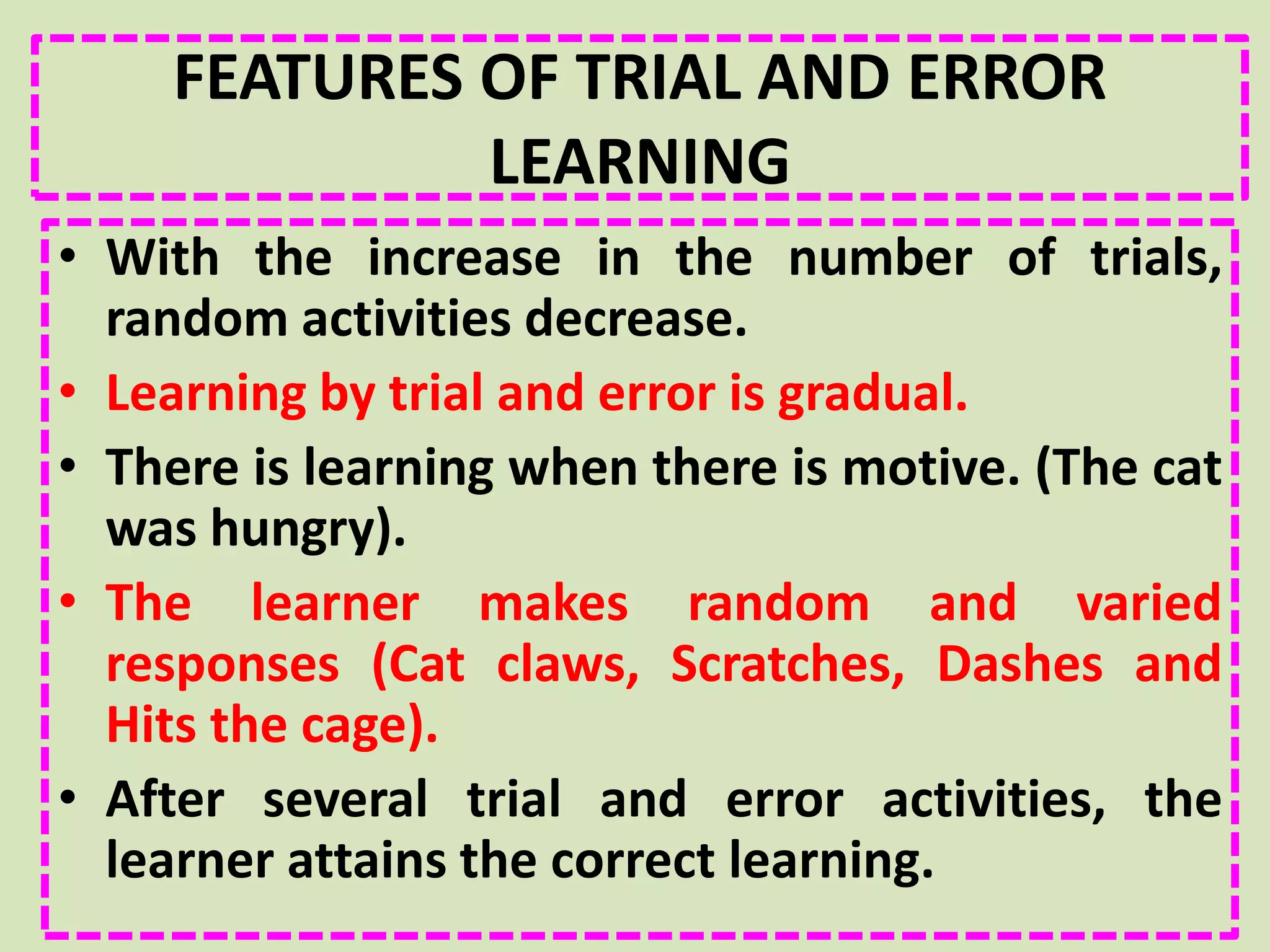
FEATURES OF TRIAL AND ERROR
LEARNING
• With the increase in the number of trials,
random activities decrease.
• Learning by trial and error is gradual.
• There is learning when there is motive. (The cat
was hungry).
• The learner makes random and varied
responses (Cat claws, Scratches, Dashes and
Hits the cage).
• After several trial and error activities, the
learner attains the correct learning.
THORNDIKE’S
LAWS OF LEARNING
• Law of Readiness
Individuals learn the best when they are ready
to learn and understand the reason for
learning.
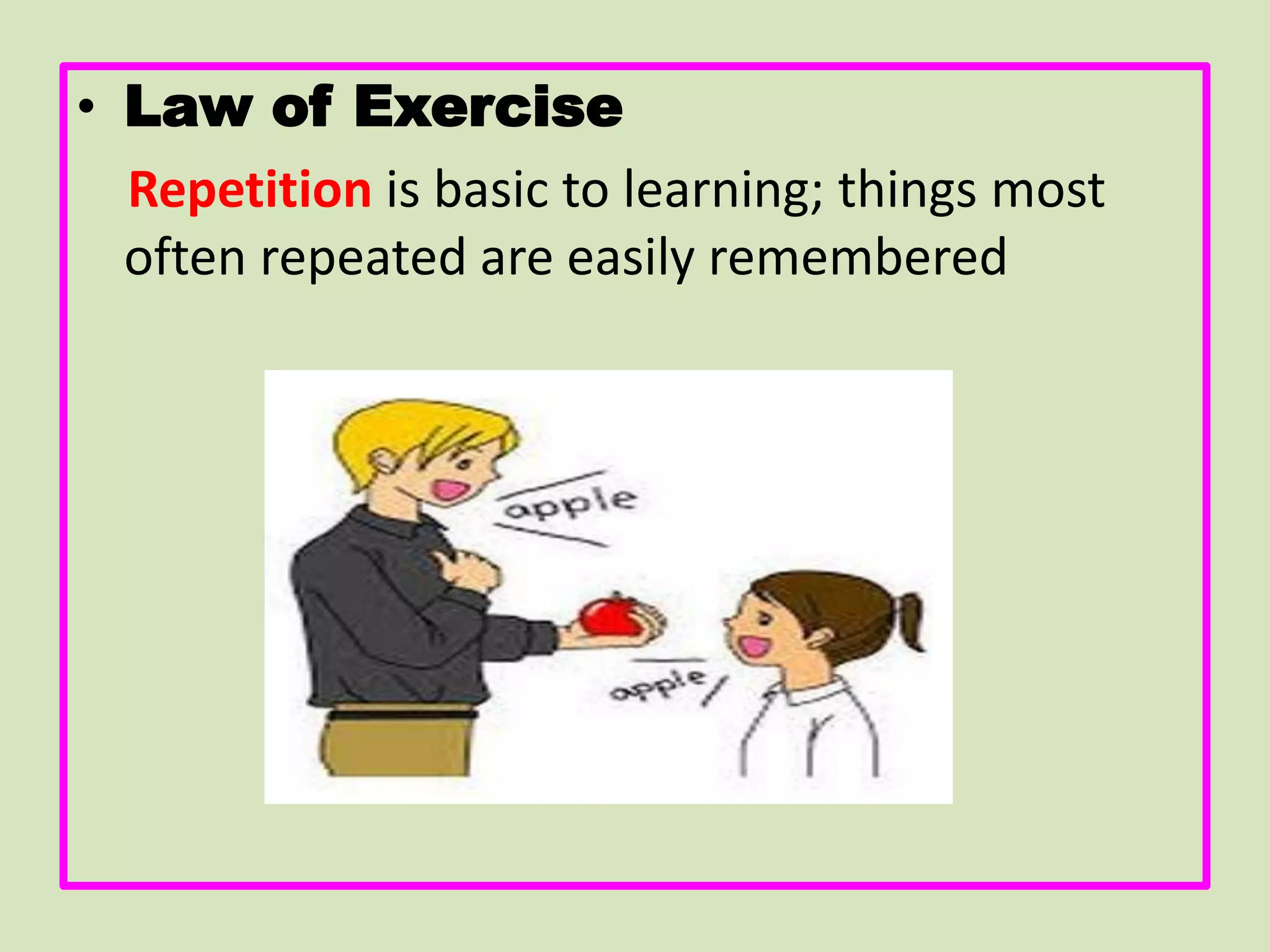
• Law of Exercise
Repetition is basic to learning; things most
often repeated are easily remembered
This law is seen in two perspective
• Law of Use
If we repeat things again and again we
remember things easily
• Law of Disuse
If we loose touch it is difficult to remember
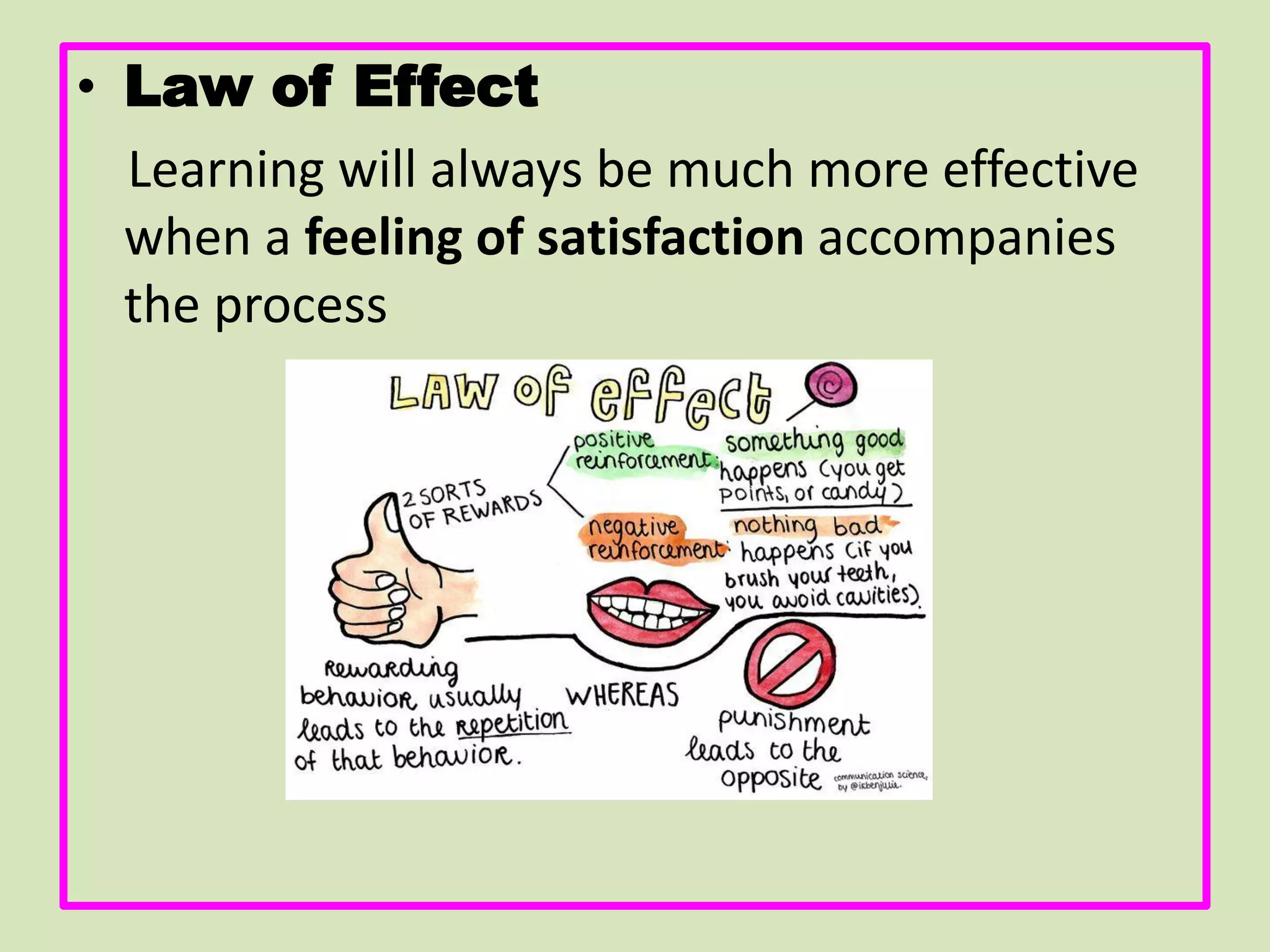
• Law of Effect
Learning will always be much more effective
when a feeling of satisfaction accompanies
the process
SECONDARY LAWS
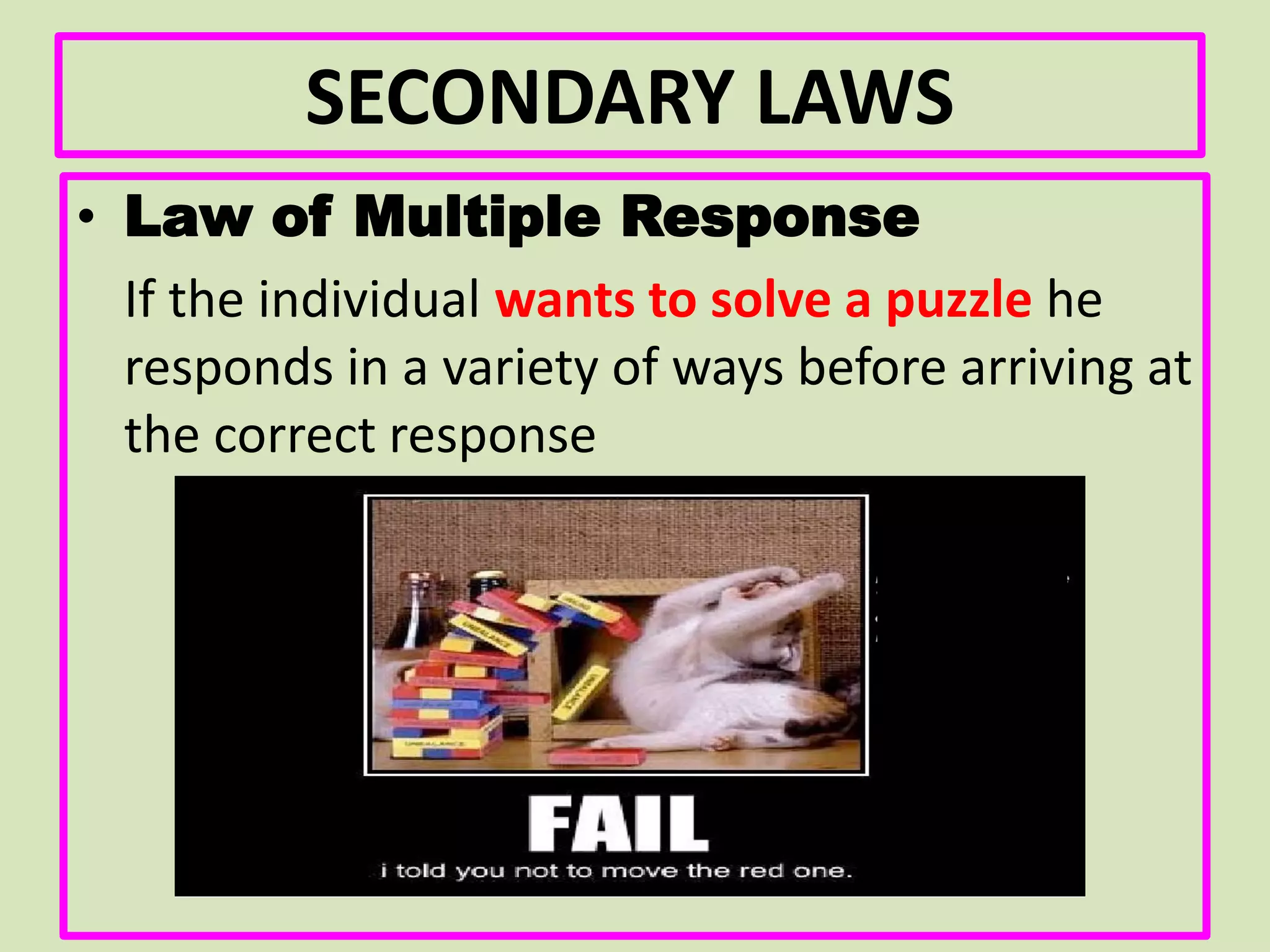
• Law of Multiple Response
If the individual wants to solve a puzzle he
responds in a variety of ways before arriving at
the correct response
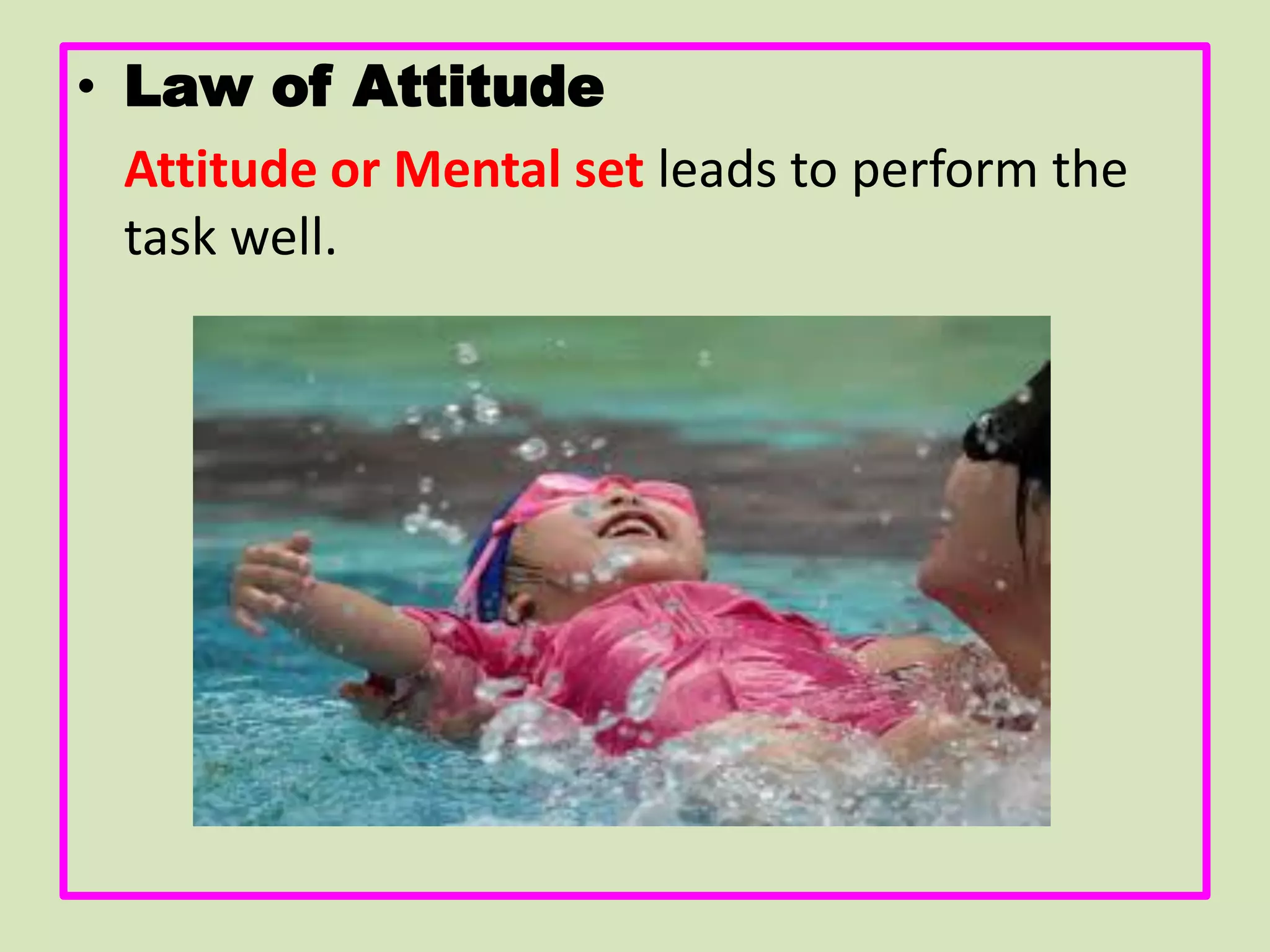
• Law of Attitude
Attitude or Mental set leads to perform the
task well.
EDUCATIONAL
IMPLICATIONS
4. core 3 unit 3 thorndike trial and error

4. core 3 unit 3 thorndike trial and error

  • 1.
    I Year B.Ed- CORE 3 LEARNING AND TEACHING Ms R SRIDEVI Assistant Professor, Pedagogy of Mathematics, Loyola College of Education Chennai 34 UNIT III BEHAVOURIAL THEORIES OF LEARNING Law of effect (Thorndike) / Trial and Error of Method of Learning
  • 2.
    The questions andallotment of marks are as described below: • Type of course : Full course • Type of Questions : Essay type • Questions : 10 • To answer : 7 • Marks : Each carries 10 marks • Total marks : 70 ( 7 x 10 ) • Maximum word : 600 words / 5 sides for each question • Time : 3 hrs
  • 3.
    Unit III BEHAVOURIAL THEORIESOF LEARNING • Learning : Meaning of Learning as defined by behaviourists • Classical Conditioning (Pavlov) • Law of effect (Thorndike) • Operant conditioning and shaping (Skinner) • Social learning (Bandura) • Basic assumptions of behavioural theory • Strengths and Limitations.
  • 4.
    LEARNING THEORIES ASSOCIATION THEORIES •S - R FIELD THEORIES • Cognitive
  • 5.
    ASSOCIATION THEOERY THORNDIKE’S TRIAL & ERROR PAVLOV’SCLASSICAL CONDITIONING SKINNER’S OPERANT CONDITIONING WATSON’S CONDITIONING THEORY FIELD THEORY KOHLER’S LEARNING BY INSIGHT BANDURA LEARNING BY OBSERVATION
  • 6.
  • 7.
    Edward Lee Thorndike, AmericalPsychologist 1874 - 1949
  • 8.
    The hungry catwas put inside a cage. Food – A piece of fish was kept outside the cage.
  • 9.
    The cat maderandom movements like Jumping, Hitting, Dashing and Pushing the bars.
  • 10.
    After such trialand error activities, the cat succeeded in pulling the string to open the door and came out of the cage.
  • 11.
    Every time whenthe cat came out of the cage, it was again put inside the cage.
  • 12.
    On subsequent trials,the cat took shorter and shorter periods of time, and committed less and less number of errors.
  • 13.
    Finally, the catlearnt to come out easily by pulling the loop of string.
  • 14.
    FEATURES OF TRIALAND ERROR LEARNING • With the increase in the number of trials, random activities decrease. • Learning by trial and error is gradual. • There is learning when there is motive. (The cat was hungry). • The learner makes random and varied responses (Cat claws, Scratches, Dashes and Hits the cage). • After several trial and error activities, the learner attains the correct learning.
  • 15.
  • 16.
    • Law ofReadiness Individuals learn the best when they are ready to learn and understand the reason for learning.
  • 17.
    • Law ofExercise Repetition is basic to learning; things most often repeated are easily remembered
  • 18.
    This law isseen in two perspective • Law of Use If we repeat things again and again we remember things easily • Law of Disuse If we loose touch it is difficult to remember
  • 19.
    • Law ofEffect Learning will always be much more effective when a feeling of satisfaction accompanies the process
  • 20.
    SECONDARY LAWS • Lawof Multiple Response If the individual wants to solve a puzzle he responds in a variety of ways before arriving at the correct response
  • 21.
    • Law ofAttitude Attitude or Mental set leads to perform the task well.
  • 22.