3D modeling and Rendering
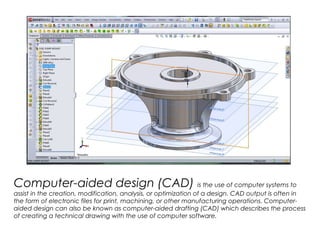
Computer-aided design (CAD) is the use of computer systems to
assist in the creation, modification, analysis, or optimization of a design. CAD output is often in
the form of electronic files for print, machining, or other manufacturing operations. Computer-
aided design can also be known as computer-aided drafting (CAD) which describes the process
of creating a technical drawing with the use of computer software.
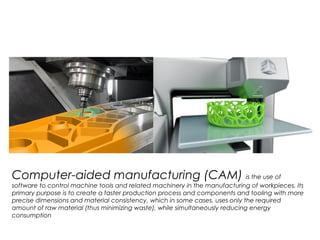
Computer-aided manufacturing (CAM) is the use of
software to control machine tools and related machinery in the manufacturing of workpieces. Its
primary purpose is to create a faster production process and components and tooling with more
precise dimensions and material consistency, which in some cases, uses only the required
amount of raw material (thus minimizing waste), while simultaneously reducing energy
consumption
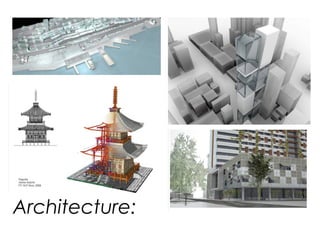
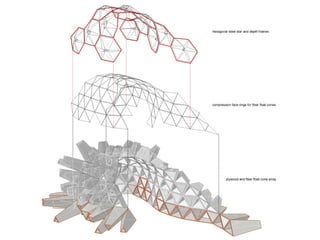
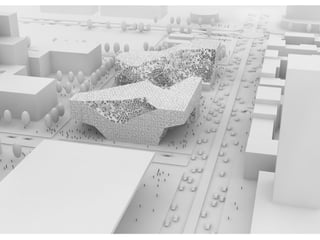
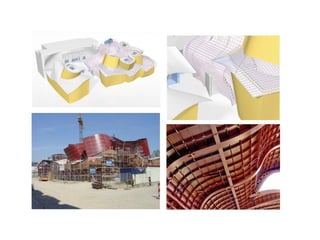
Architecture:
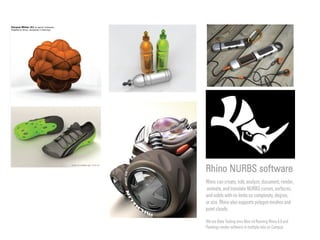
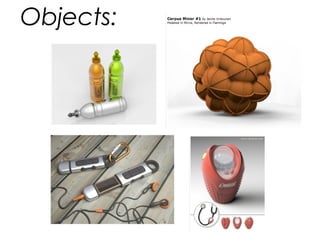
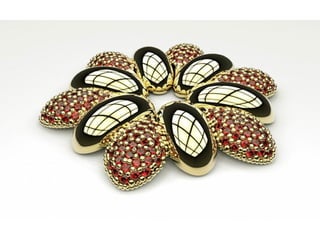
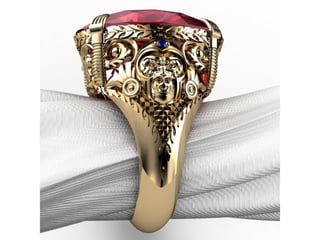
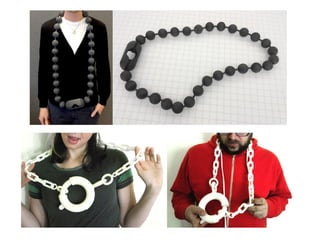
Objects:
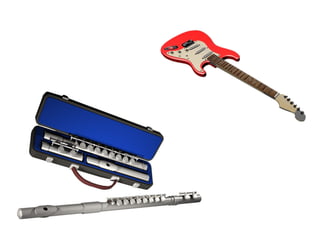
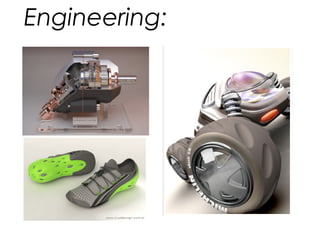
Engineering:
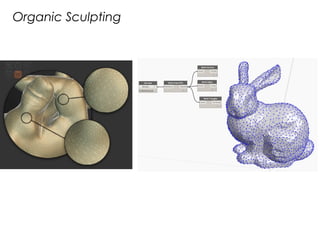
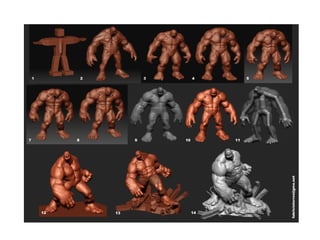
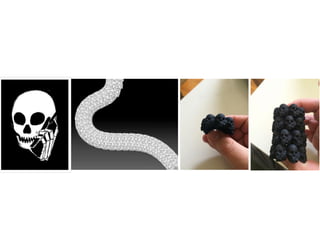
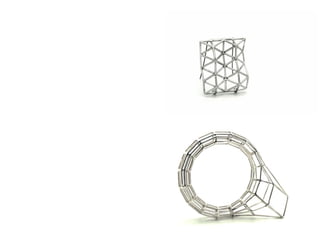
Organic Sculpting
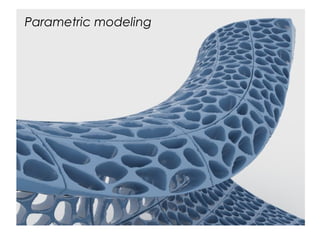
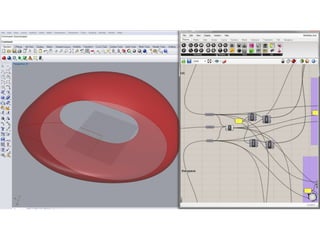
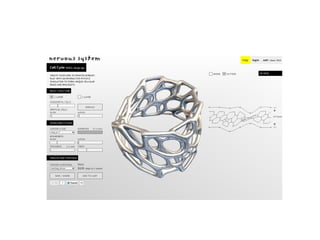
Parametric modeling
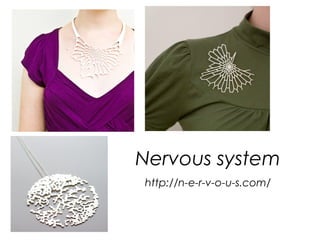
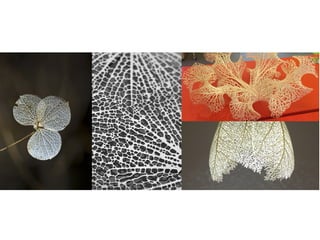
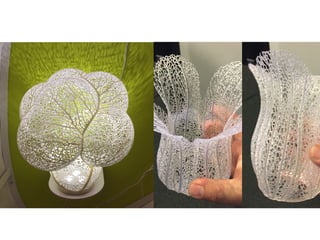
Nervous system
http://n-e-r-v-o-u-s.com/
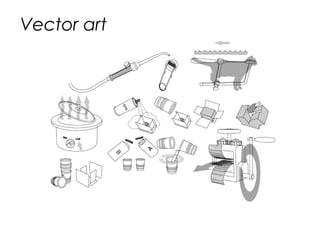
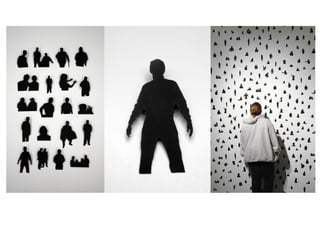
Vector art
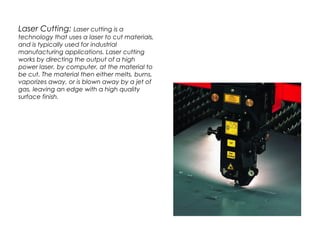
Laser Cutting: Laser cutting is a
technology that uses a laser to cut materials,
and is typically used for industrial
manufacturing applications. Laser cutting
works by directing the output of a high
power laser, by computer, at the material to
be cut. The material then either melts, burns,
vaporizes away, or is blown away by a jet of
gas, leaving an edge with a high quality
surface finish.
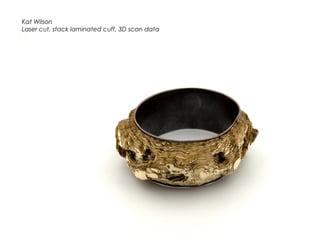
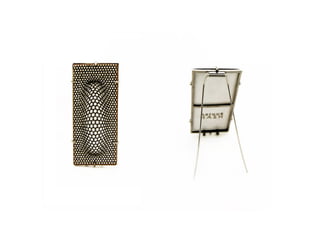
Kat Wilson
Laser cut, stack laminated cuff, 3D scan data
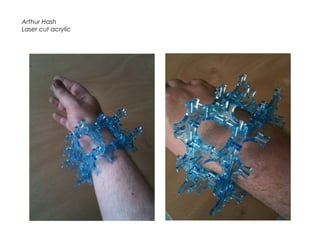
Arthur Hash
Laser cut acrylic
 In 1984, Chuck Hull of 3D Systems Corporation[11]
 developed a prototype system based on a process 
known as stereolithography, in which layers are added by curing photopolymers with ultraviolet light 
lasers. Hull defined the process as a "system for generating three-dimensional objects by creating a 
cross-sectional pattern of the object to be formed,
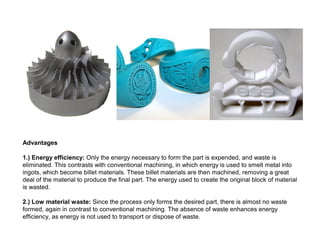
There are presently about 25 different 3D printing technologies. The oldest is probably 
stereolithography. More recent technologies include selective laser sintering, inkjet technologies, 
fused deposition modeling and many variations. All of these technologies take a 3D model, compute 
cross-sections of that model, and then deposit the cross-sections sequentially on top of each other 
until the final geometry is achieved.
To visualize how 3D printing works, consider slicing a ham on a meat slicing machine. The slices are 
cross-sections which can be stacked to reproduce the form of the original ham.
3d printing: STARTED IN THE 80s
Advantages
1.) Energy efficiency: Only the energy necessary to form the part is expended, and waste is 
eliminated. This contrasts with conventional machining, in which energy is used to smelt metal into 
ingots, which become billet materials. These billet materials are then machined, removing a great 
deal of the material to produce the final part. The energy used to create the original block of material 
is wasted.
2.) Low material waste: Since the process only forms the desired part, there is almost no waste 
formed, again in contrast to conventional machining. The absence of waste enhances energy 
efficiency, as energy is not used to transport or dispose of waste.
 
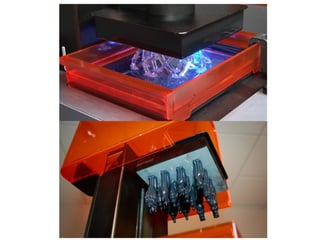
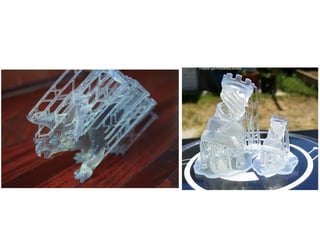
SLA (Stereolithography Apparatus) – Process using photosensitive resins cured by a laser that 
traces the parts cross sectional geometry layer by layer. SLA produces accurate models with a variety 
of material choices.
SLS (Selective Laser Sintering) – Process using a CO2 laser to sinter or fuse a powder material. 

The laser traces the parts cross sectional geometry layer by layer. SLS creates accurate and durable 
parts but finish out of machine is relatively poor.
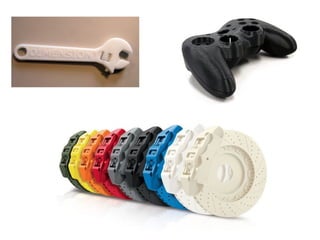
FDM (Fused Deposition Modeling) – Process using molten plastics or wax extruded by a nozzle that 
traces the parts cross sectional geometry layer by layer. FDM creates tough parts that are ideal for 
functional usage.
ZCorp (Z-Corp Three-Dimensional Printing) – Ink-jet based process that prints the parts cross 
sectional geometry on layers of powder spread on top of each other. This process enables models to 
be built quickly and affordably. Models may also be printed in color.
PJET (Polyjet) – This process is similar to stereolithography in that parts are made with a 
photosensitive resin. The difference is in how the resin is applied and cured to build the part. 
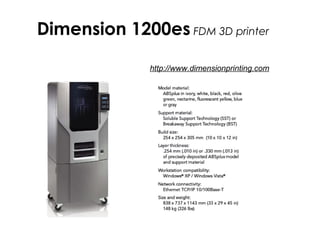
Dimension 1200es FDM 3D printer
http://www.dimensionprinting.com
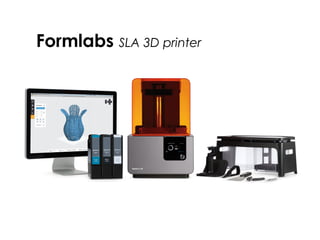
Formlabs SLA 3D printer
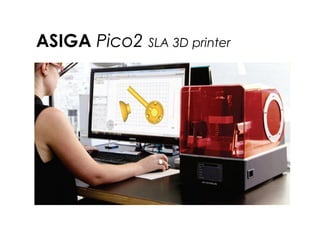
ASIGA Pico2 SLA 3D printer
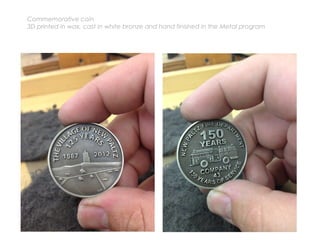
Commemorative coin
3D printed in wax, cast in white bronze and hand finished in the Metal program
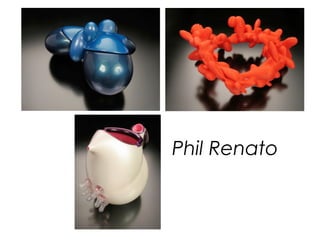
Phil Renato
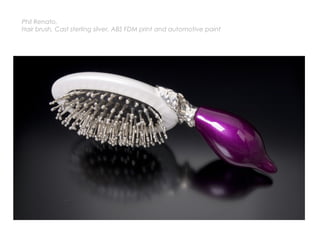
Phil Renato,
Hair brush, Cast sterling silver, ABS FDM print and automotive paint
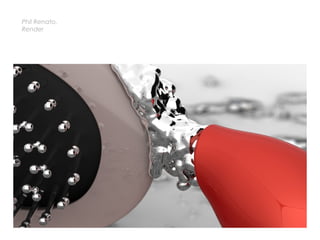
Phil Renato,
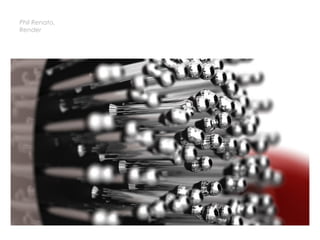
Render
Phil Renato,
Render
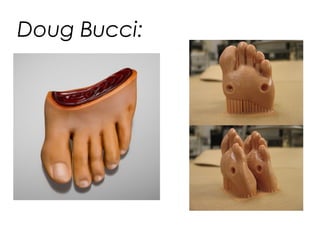
Doug Bucci:
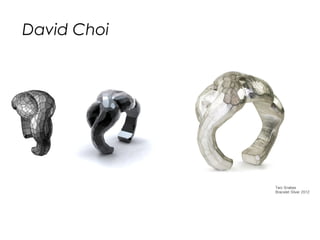
David Choi
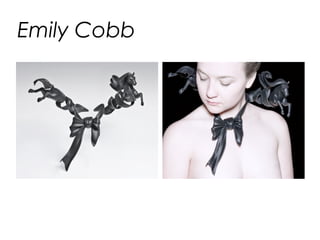
Emily Cobb
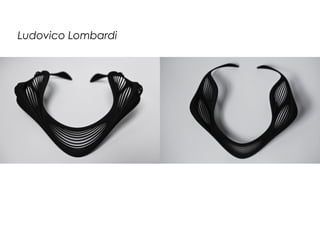
Ludovico Lombardi
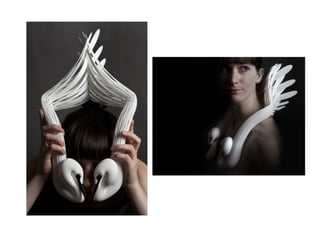
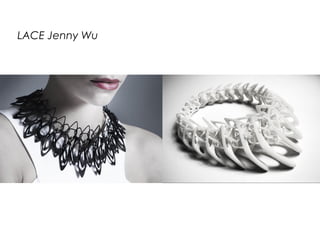
LACE Jenny Wu
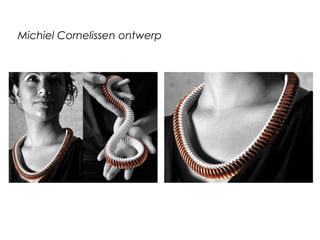
Michiel Cornelissen ontwerp
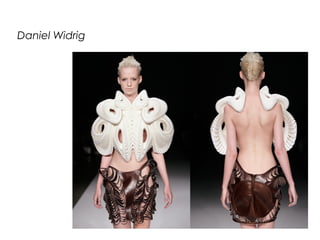
Daniel Widrig
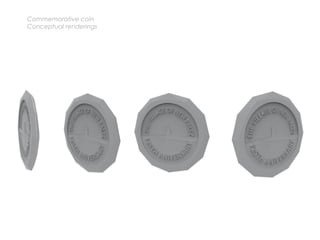
Commemorative coin
Conceptual renderings
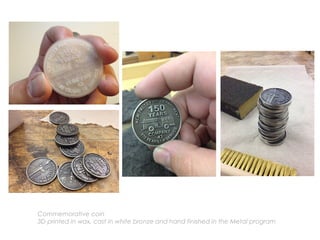
Commemorative coin
3D printed in wax, cast in white bronze and hand finished in the Metal program
end

3dmodeling and rendering