A Technology towards revolution
3D PRINTING
Printing is a process for
reproducing text and images,
typically with ink on paper using a
print machine.
Subtractive Manufacturing
Additive Manufacturing
Casting
Forming
Creates a product by removing
sections from a block of material.
Generates waste through the
excess material that is removed.
Limited design capabilities.
EX: CNC machines
lathe
milling machines etc.
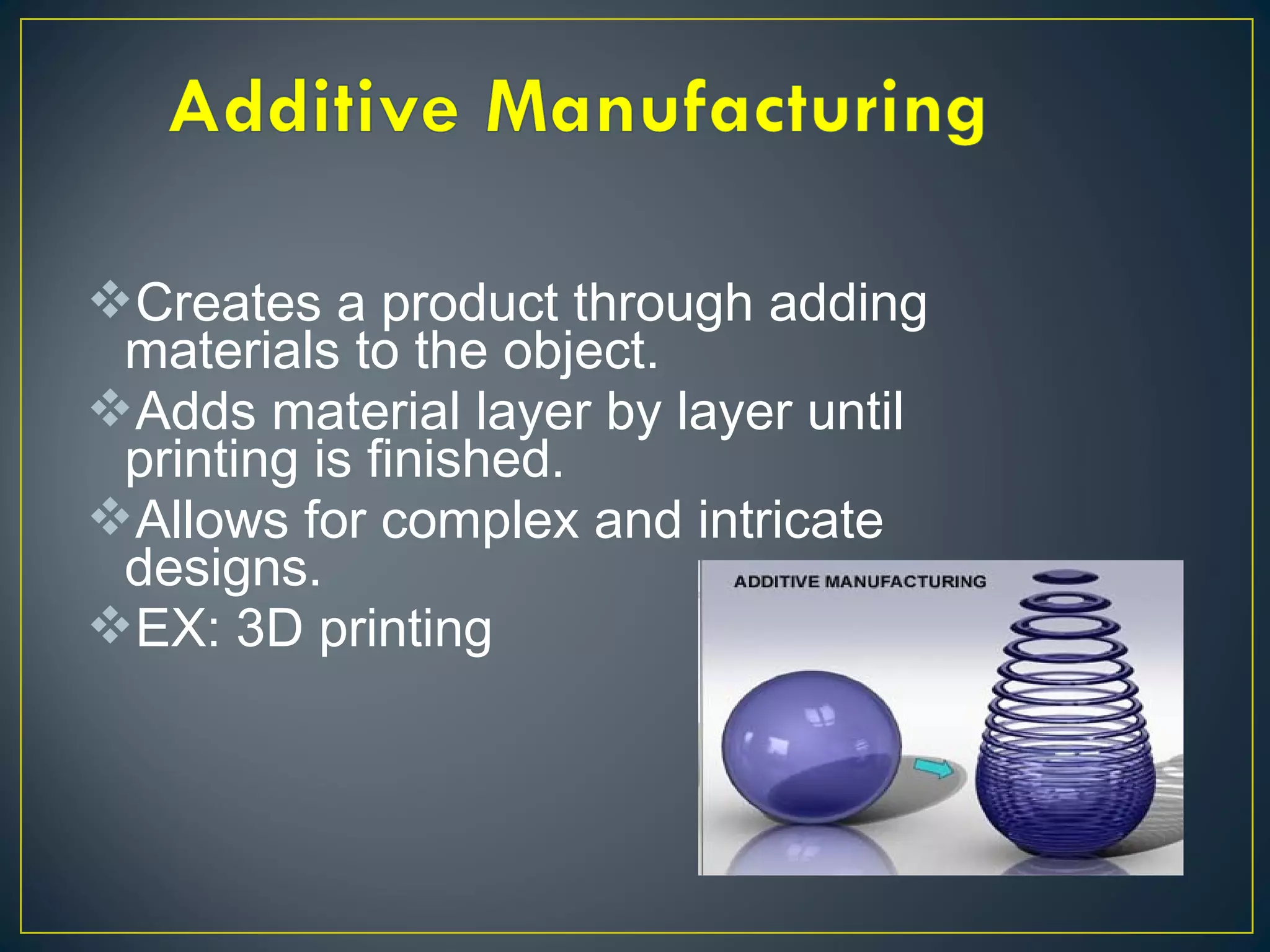
Creates a product through adding
materials to the object.
Adds material layer by layer until
printing is finished.
Allows for complex and intricate
designs.
EX: 3D printing
A method of Additive Manufacturing that
adds material to an object layer by layer
to create the final product.
Selective laser sintering (SLS)
Stereo lithography
Fused deposition modeling (FDM)
Laminated object manufacturing
 Selective laser sintering (SLS)
is an additive manufacturing
technique that uses a high
power laser (for example, a
carbon dioxide laser) to fuse
small particles of plastic, metal
(direct metal laser
sintering),ceramic or glass
powders into a mass that has a
desired 3-dimensional shape
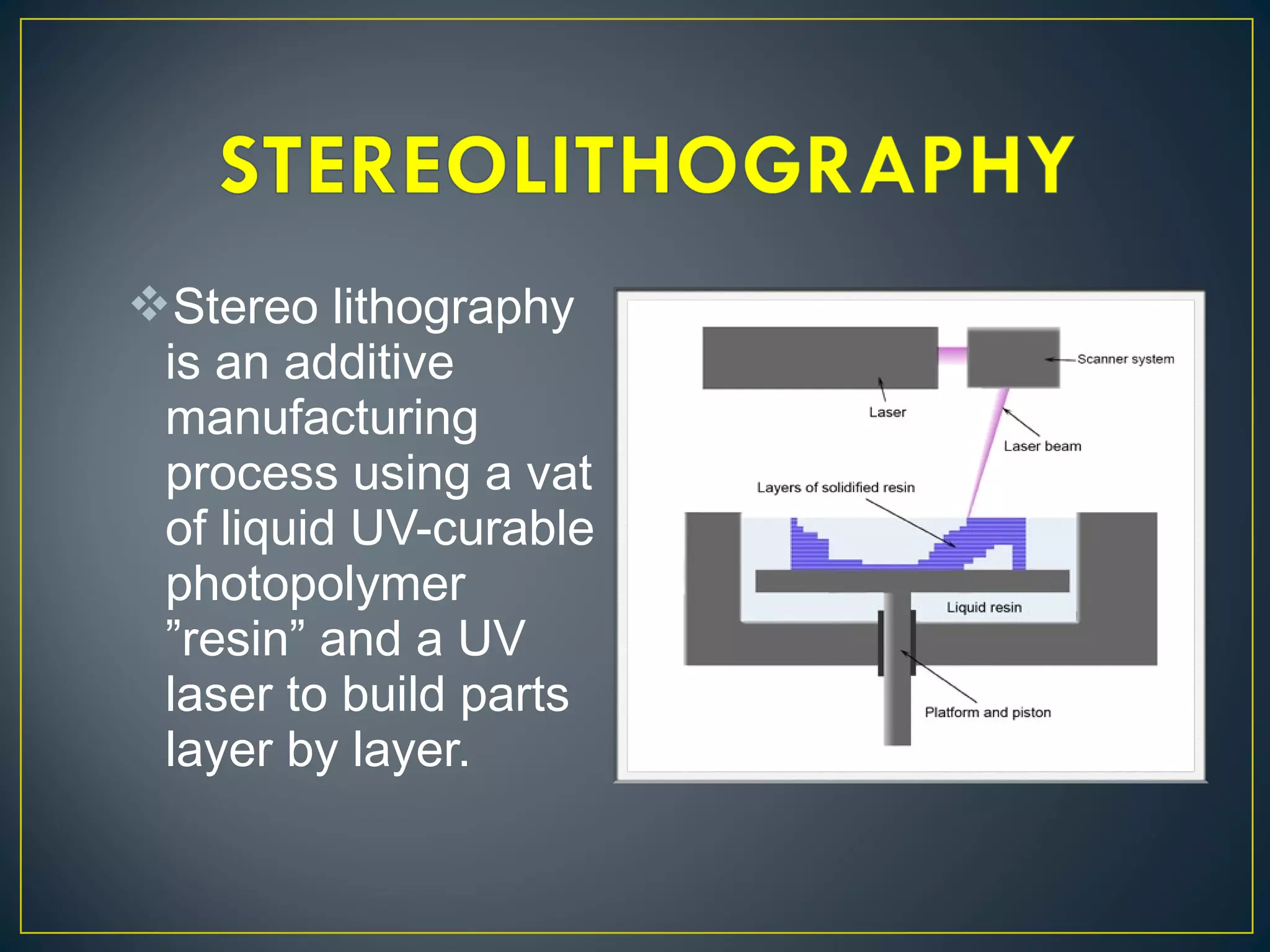
Stereo lithography
is an additive
manufacturing
process using a vat
of liquid UV-curable
photopolymer
”resin” and a UV
laser to build parts
layer by layer.
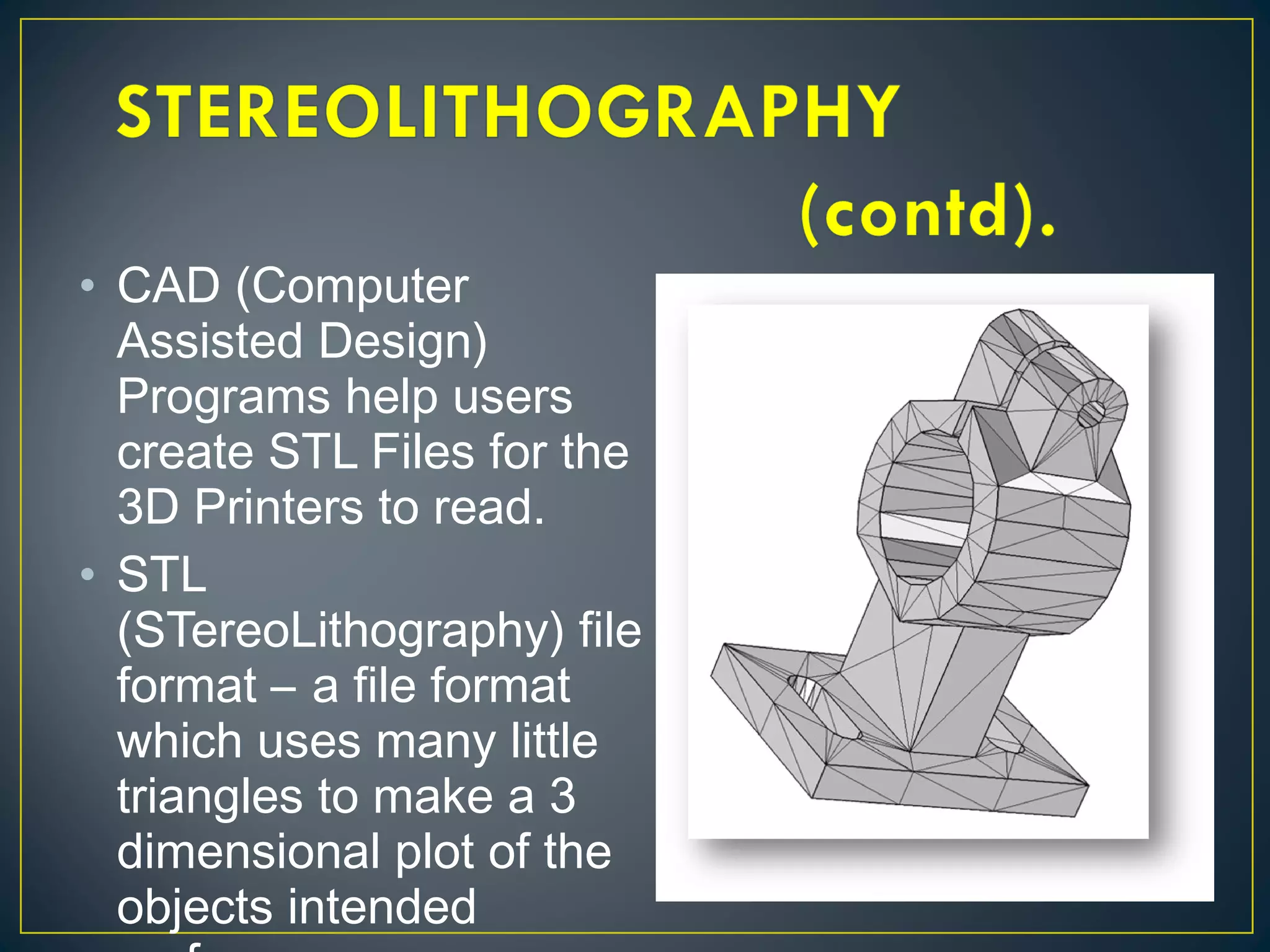
• CAD (Computer
Assisted Design)
Programs help users
create STL Files for the
3D Printers to read.
• STL
(STereoLithography) file
format – a file format
which uses many little
triangles to make a 3
dimensional plot of the
objects intended
Fused deposition
modeling (FDM)
is an additive
manufacturing
technology
commonly used
for modeling,
prototyping, and
production
applications.
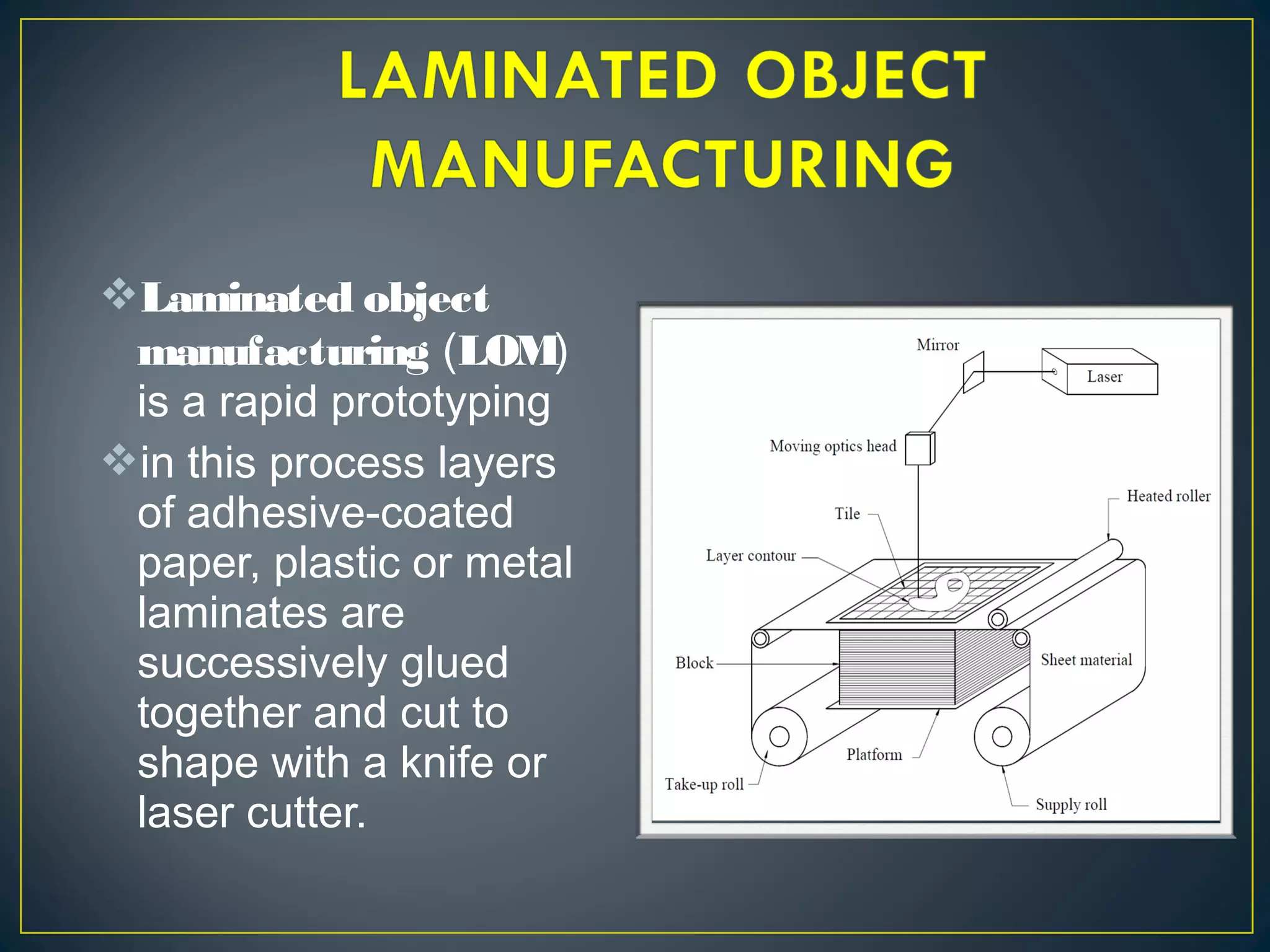
Laminated object
manufacturing (LOM)
is a rapid prototyping
in this process layers
of adhesive-coated
paper, plastic or metal
laminates are
successively glued
together and cut to
shape with a knife or
laser cutter.
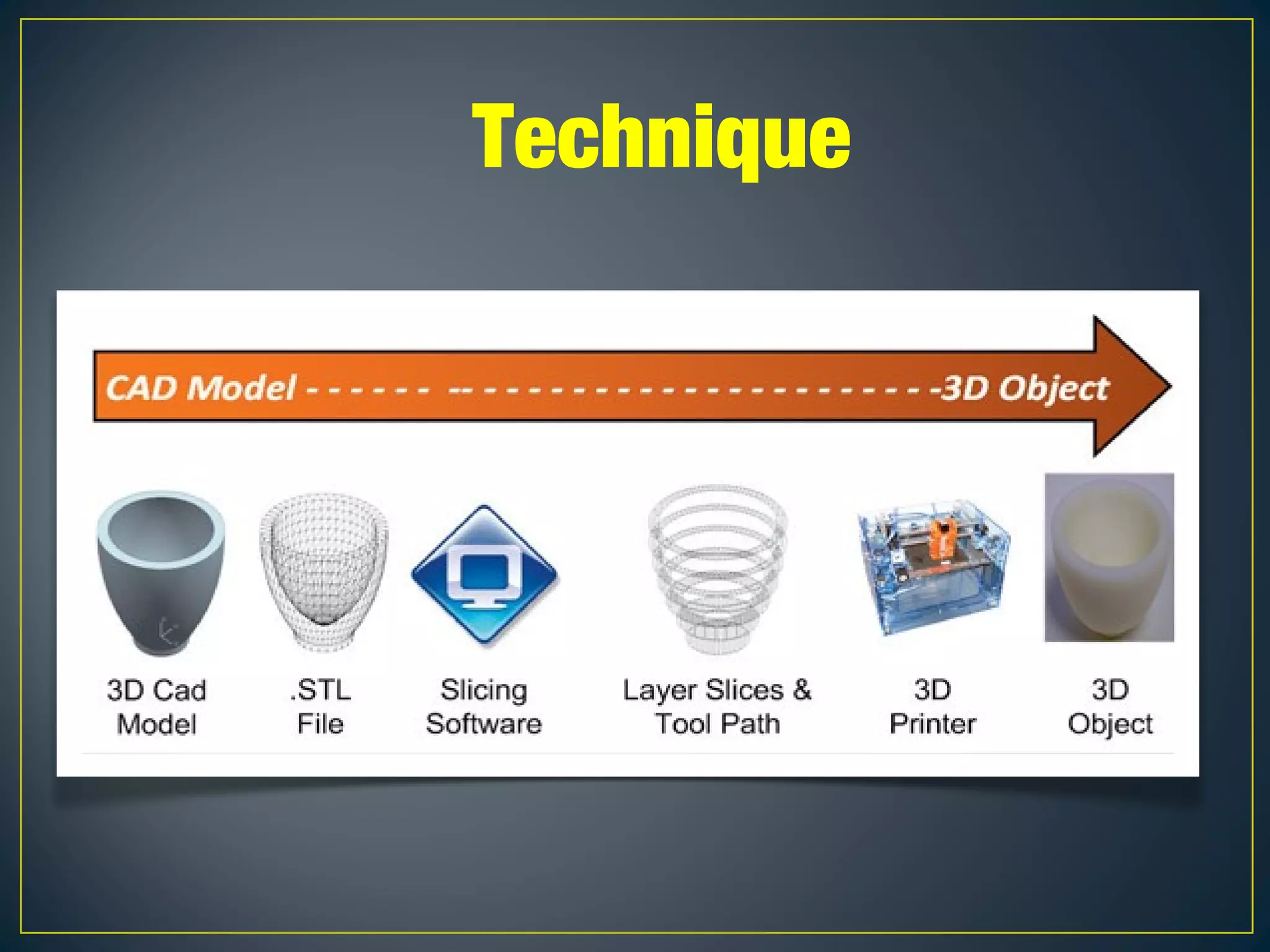
Technique
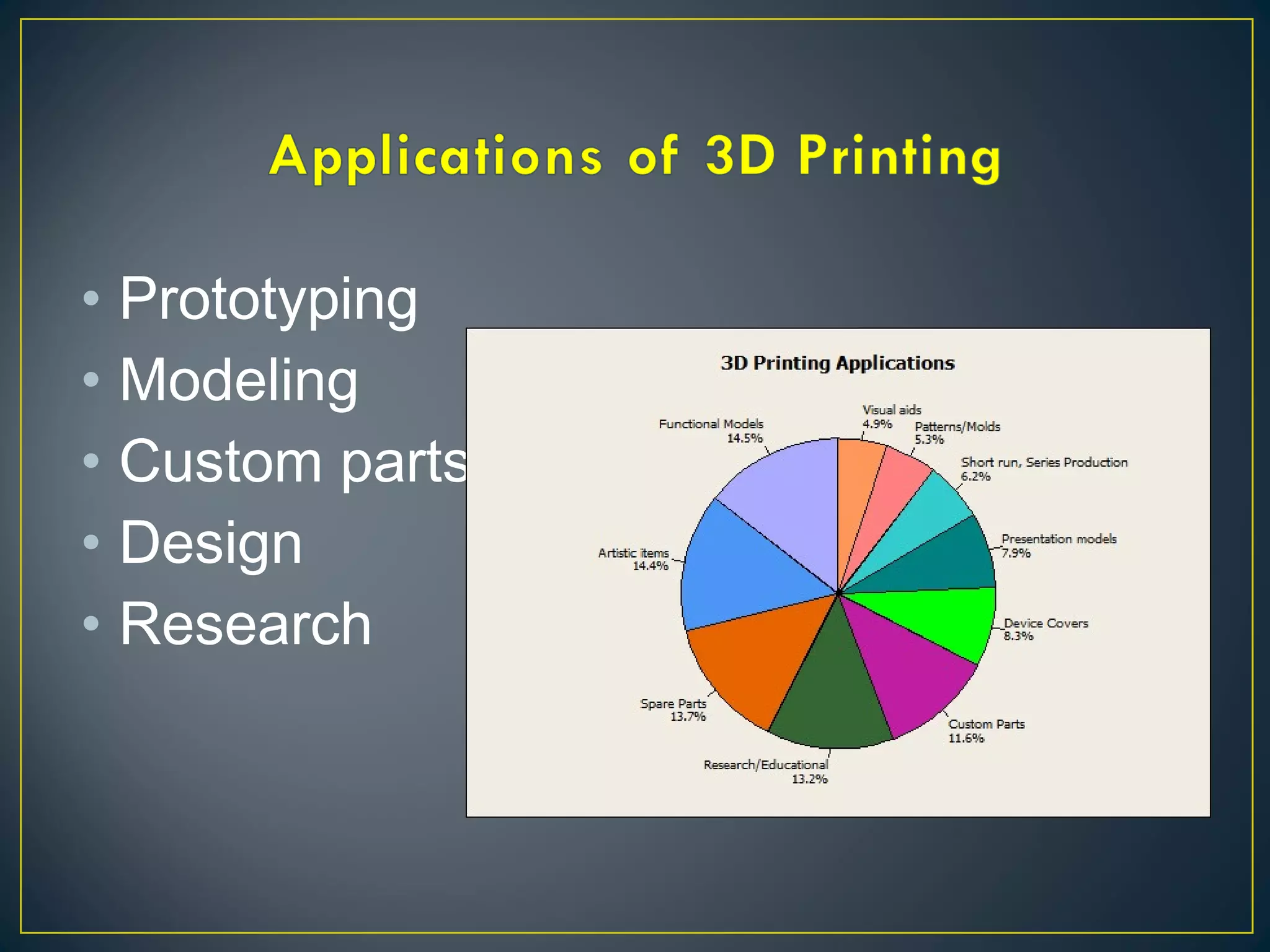
• Prototyping
• Modeling
• Custom parts
• Design
• Research
• 3D printing with non harmful chemicals.
• 3D printing generates almost no waste during
manufacturing, and does not require lubricants.
• 3D Printing can be used to create replacement parts.
• High flexibility in design.
Intellectual property rights of the 3D Printer users.
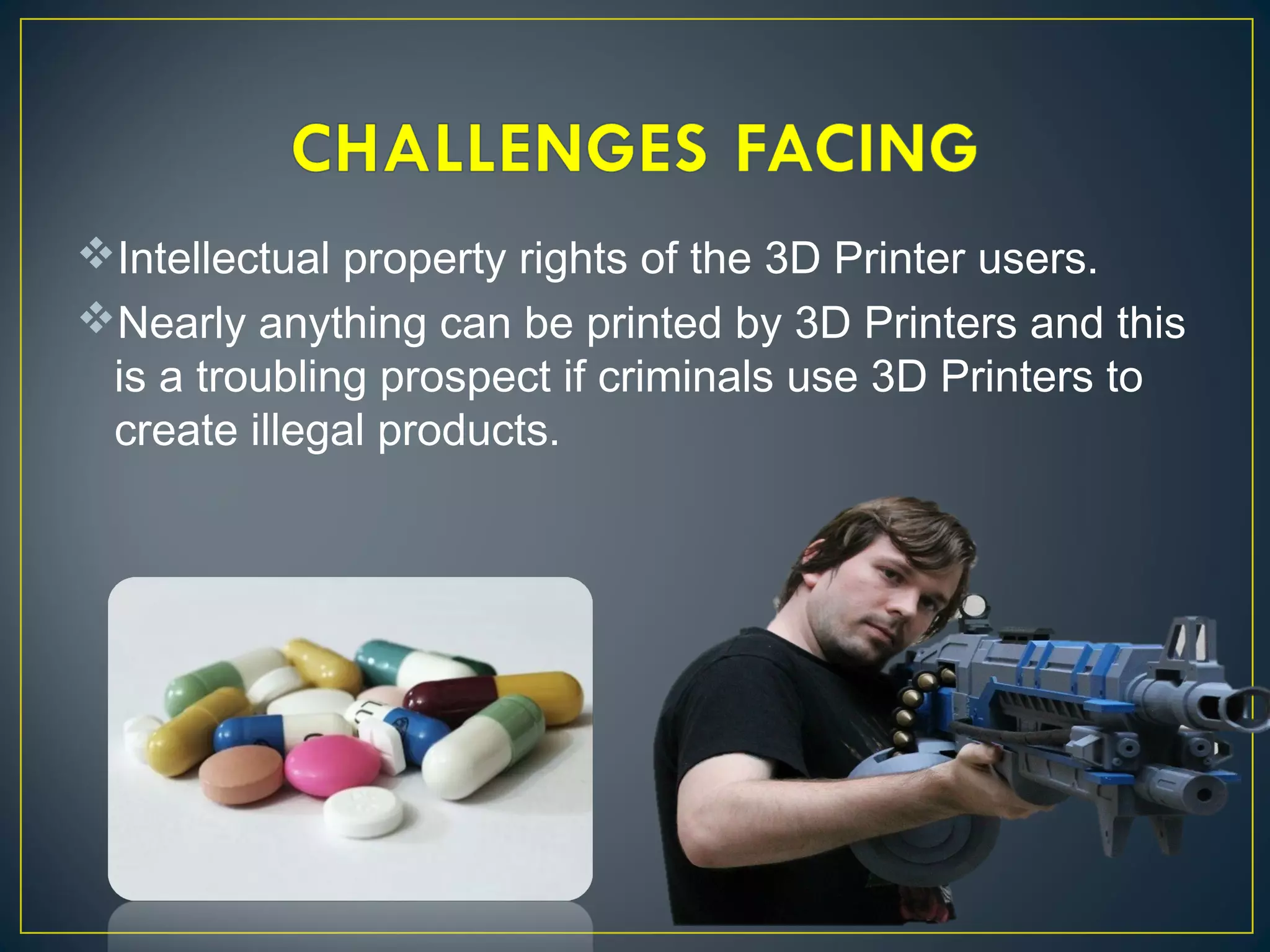
Nearly anything can be printed by 3D Printers and this
is a troubling prospect if criminals use 3D Printers to
create illegal products.
 Nothing communicates ideas faster than
a three-dimensional part or model. With a
3D printer you can bring CAD files and
design ideas to life – right from your
desktop.
3D printing technology by dattatreya

3D printing technology by dattatreya

  • 1.
    A Technology towardsrevolution 3D PRINTING
  • 2.
    Printing is aprocess for reproducing text and images, typically with ink on paper using a print machine.
  • 3.
  • 4.
    Creates a productby removing sections from a block of material. Generates waste through the excess material that is removed. Limited design capabilities. EX: CNC machines lathe milling machines etc.
  • 5.
    Creates a productthrough adding materials to the object. Adds material layer by layer until printing is finished. Allows for complex and intricate designs. EX: 3D printing
  • 6.
    A method ofAdditive Manufacturing that adds material to an object layer by layer to create the final product.
  • 7.
    Selective laser sintering(SLS) Stereo lithography Fused deposition modeling (FDM) Laminated object manufacturing
  • 8.
     Selective lasersintering (SLS) is an additive manufacturing technique that uses a high power laser (for example, a carbon dioxide laser) to fuse small particles of plastic, metal (direct metal laser sintering),ceramic or glass powders into a mass that has a desired 3-dimensional shape
  • 9.
    Stereo lithography is anadditive manufacturing process using a vat of liquid UV-curable photopolymer ”resin” and a UV laser to build parts layer by layer.
  • 10.
    • CAD (Computer AssistedDesign) Programs help users create STL Files for the 3D Printers to read. • STL (STereoLithography) file format – a file format which uses many little triangles to make a 3 dimensional plot of the objects intended
  • 11.
    Fused deposition modeling (FDM) isan additive manufacturing technology commonly used for modeling, prototyping, and production applications.
  • 12.
    Laminated object manufacturing (LOM) isa rapid prototyping in this process layers of adhesive-coated paper, plastic or metal laminates are successively glued together and cut to shape with a knife or laser cutter.
  • 13.
  • 14.
    • Prototyping • Modeling •Custom parts • Design • Research
  • 15.
    • 3D printingwith non harmful chemicals. • 3D printing generates almost no waste during manufacturing, and does not require lubricants. • 3D Printing can be used to create replacement parts. • High flexibility in design.
  • 16.
    Intellectual property rightsof the 3D Printer users. Nearly anything can be printed by 3D Printers and this is a troubling prospect if criminals use 3D Printers to create illegal products.
  • 17.
     Nothing communicatesideas faster than a three-dimensional part or model. With a 3D printer you can bring CAD files and design ideas to life – right from your desktop.