3D BIOPRINTING
Presented by
Anmol Ghotra (RA1711013010050)
OVERVIEW OF PRESENTATION
 Introduction
 Best qualities of this technique
 Steps in Bioprinting
 Bioprinter
 Methods of Bioprinter
 Bioinks
 Bioprinted tissue
 Advantage and Disadvantage
 Conclusion
INTRODUCTION
 3D BIO-PRINTING is the three-dimensional printing
of biological tissue and organs through the layering
of living cells.
 BIO PRINTING is an automated computer aided
layer-by-layer deposition of biological materials for
manufacturing of functional human organs.
BEST QUALITIES OF THIS TECHNIQUE .
 Rapid phototyping
 High precision
 High resulution
 Computer control
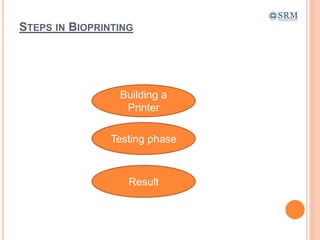
STEPS IN BIOPRINTING
Building a
Printer
Testing phase
Result
BUILDING A BIOPRINTER
 Bio printing aims to build an organ, layer by layer,
using scanners and printers .
 The most important axes, X and Y, were built with 1
sheet of Poly(methyl methacrylate) (PMMA), also
known as acrylic glass, with one stepper motor and
rails to guide the printing head.
 For the Z axis, a different motor is needed since it
had to support the weight of the print head.
TESTING PHASE
 After the building process ,testing phase is
processed. It is mainly to test the three axes and
all the functioning of bio printer.
 Before the biological print process to get started the
bio printer was set to print with the cartridge intact,
with the factory ink it came with.
 This allowed to observe step loss or nozzle firing
malfunction events in order to redefine the timing
parameters and other algorithm parameters to
ensure the system correct functioning.
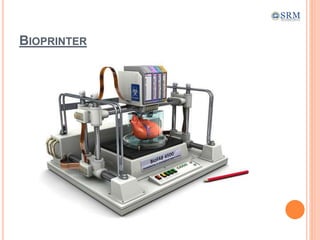
BIOPRINTER
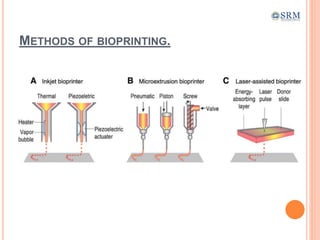
METHODS OF BIOPRINTING.
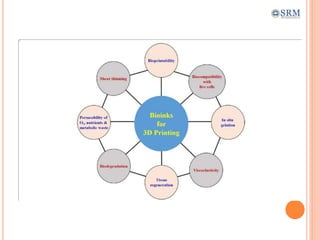
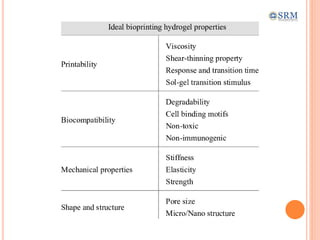
BIOINKS
 Naturally derived hydrogels
 Synthetic derived hydrogels
BIOPRINTED TISSUE
 Neurals
 Skin
 Cartilage
 Bone
 Cardiovascualar
 Muscle
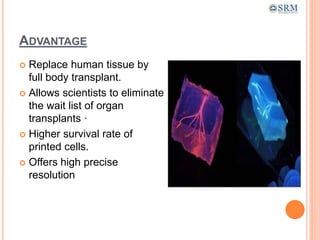
ADVANTAGE
 Replace human tissue by
full body transplant.
 Allows scientists to eliminate
the wait list of organ
transplants ·
 Higher survival rate of
printed cells.
 Offers high precise
resolution
DISSADVANTAGE
 Organ is not sure about
whether they can fit into a
human body .
 3D printers can create
dangerous items, such as guns
and knives.
 Printing capabilities of
complicated tissues
CONCLUSION
 With the continuous growth of the world’s
population , and increase of human life expectancy,
more cases of organ failure and tissue damage
appear .
 Most common bio printing methods were described
and discussed with their characteristics and
limitations.
 In terms of future perspectives for this work, more
bio print testing would be needed to be done to
optimize the bio ink, substrate and the process
parameters.

3D Bioprinting

  • 1.
    3D BIOPRINTING Presented by AnmolGhotra (RA1711013010050)
  • 2.
    OVERVIEW OF PRESENTATION Introduction  Best qualities of this technique  Steps in Bioprinting  Bioprinter  Methods of Bioprinter  Bioinks  Bioprinted tissue  Advantage and Disadvantage  Conclusion
  • 3.
    INTRODUCTION  3D BIO-PRINTINGis the three-dimensional printing of biological tissue and organs through the layering of living cells.  BIO PRINTING is an automated computer aided layer-by-layer deposition of biological materials for manufacturing of functional human organs.
  • 4.
    BEST QUALITIES OFTHIS TECHNIQUE .  Rapid phototyping  High precision  High resulution  Computer control
  • 5.
    STEPS IN BIOPRINTING Buildinga Printer Testing phase Result
  • 6.
    BUILDING A BIOPRINTER Bio printing aims to build an organ, layer by layer, using scanners and printers .  The most important axes, X and Y, were built with 1 sheet of Poly(methyl methacrylate) (PMMA), also known as acrylic glass, with one stepper motor and rails to guide the printing head.  For the Z axis, a different motor is needed since it had to support the weight of the print head.
  • 7.
    TESTING PHASE  Afterthe building process ,testing phase is processed. It is mainly to test the three axes and all the functioning of bio printer.  Before the biological print process to get started the bio printer was set to print with the cartridge intact, with the factory ink it came with.  This allowed to observe step loss or nozzle firing malfunction events in order to redefine the timing parameters and other algorithm parameters to ensure the system correct functioning.
  • 8.
  • 9.
  • 10.
    BIOINKS  Naturally derivedhydrogels  Synthetic derived hydrogels
  • 13.
    BIOPRINTED TISSUE  Neurals Skin  Cartilage  Bone  Cardiovascualar  Muscle
  • 14.
    ADVANTAGE  Replace humantissue by full body transplant.  Allows scientists to eliminate the wait list of organ transplants ·  Higher survival rate of printed cells.  Offers high precise resolution
  • 15.
    DISSADVANTAGE  Organ isnot sure about whether they can fit into a human body .  3D printers can create dangerous items, such as guns and knives.  Printing capabilities of complicated tissues
  • 16.
    CONCLUSION  With thecontinuous growth of the world’s population , and increase of human life expectancy, more cases of organ failure and tissue damage appear .  Most common bio printing methods were described and discussed with their characteristics and limitations.  In terms of future perspectives for this work, more bio print testing would be needed to be done to optimize the bio ink, substrate and the process parameters.