Drug development  in prostate cancer Pr Karim Fizazi, MD, PhD Institut Gustave Roussy Villejuif, France
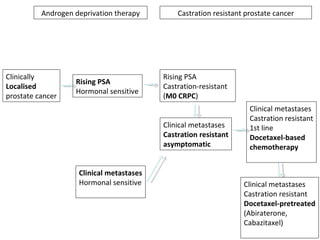
Clinically Localised  prostate cancer Rising PSA Hormonal sensitive Clinical metastases Hormonal sensitive Clinical metastases Castration resistant asymptomatic Clinical metastases Castration resistant Docetaxel-pretreated (Abiraterone,  Cabazitaxel) Clinical metastases Castration resistant 1st line Docetaxel-based  chemotherapy Androgen deprivation therapy Castration resistant prostate cancer Rising PSA Castration-resistant ( M0 CRPC )
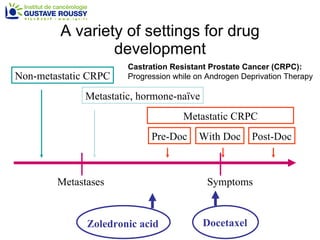
A variety of settings for drug development Metastatic, hormone-naïve Metastatic CRPC Non-metastatic CRPC Metastases Pre-Doc With Doc Post-Doc Symptoms Zoledronic acid Docetaxel Castration Resistant Prostate Cancer (CRPC): Progression while on Androgen Deprivation Therapy
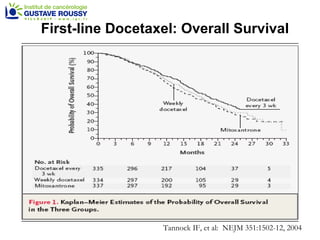
First-line Docetaxel: Overall Survival Tannock IF, et al:  NEJM 351:1502-12, 2004
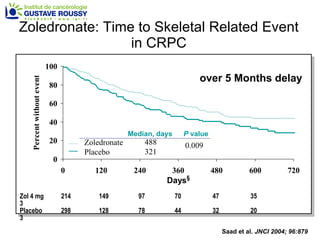
Zoledronate: Time to Skeletal Related Event in CRPC Median, days P  value ZOMETA ®  4 mg 488 .009 Placebo 321 Zol 4 mg 214 149 97 70 47 35 3 Placebo 298 128 78 44 32 20 3 over 5 Months delay Saad et al.  JNCI 2004; 96:879 488 321 Zoledronate Placebo 0.009
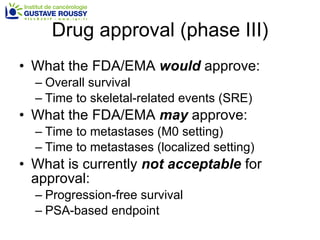
Drug approval (phase III) What the FDA/EMA  would  approve: Overall survival Time to skeletal-related events (SRE) What the FDA/EMA  may  approve: Time to metastases (M0 setting) Time to metastases (localized setting) What is currently  not acceptable  for approval: Progression-free survival PSA-based endpoint
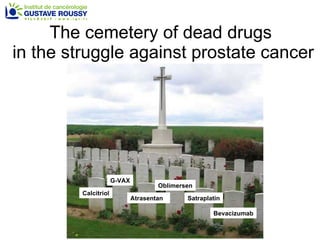
The cemetery of dead drugs  in the struggle against prostate cancer Atrasentan Calcitriol G-VAX Oblimersen Satraplatin Bevacizumab
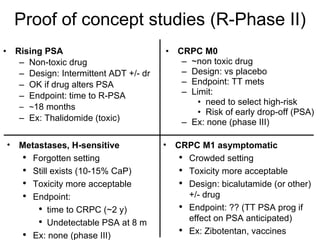
Proof of concept studies (R-Phase II) Rising PSA Non-toxic drug Design: Intermittent ADT +/- dr OK if drug alters PSA Endpoint: time to R-PSA ~ 18 months Ex: Thalidomide (toxic) CRPC M0 ~non toxic drug Design: vs placebo Endpoint: TT mets Limit:  need to select high-risk Risk of early drop-off (PSA) Ex: none (phase III) Metastases, H-sensitive Forgotten setting Still exists (10-15% CaP) Toxicity more acceptable Endpoint:  time to CRPC ( ~2 y) Undetectable PSA at 8 m Ex: none (phase III) CRPC M1 asymptomatic Crowded setting Toxicity more acceptable Design: bicalutamide (or other) +/- drug Endpoint: ?? (TT PSA prog if effect on PSA anticipated) Ex: Zibotentan, vaccines
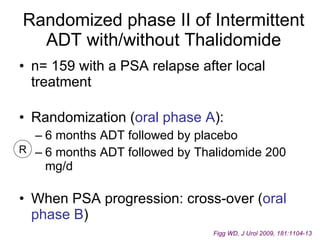
Randomized phase II of Intermittent ADT with/without Thalidomide n= 159 with a PSA relapse after local treatment Randomization ( oral phase A ): 6 months ADT followed by placebo 6 months ADT followed by Thalidomide 200 mg/d When PSA progression: cross-over ( oral phase B ) Primary endpoint: Time to PSA Progression Figg WD, J Urol 2009, 181:1104-13  R
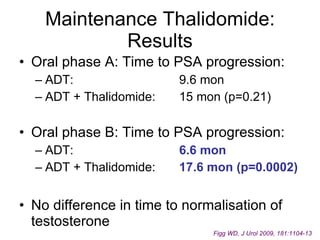
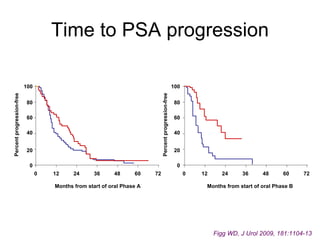
Maintenance Thalidomide: Results Oral phase A: Time to PSA progression: ADT: 9.6 mon ADT + Thalidomide:  15 mon (p=0.21) Oral phase B: Time to PSA progression: ADT: 6.6 mon ADT + Thalidomide:  17.6 mon (p=0.0002) No difference in time to normalisation of testosterone Figg WD, J Urol 2009, 181:1104-13
Time to PSA progression Figg WD, J Urol 2009, 181:1104-13  100 80 60 40 20 0 100 80 60 40 20 0 0 12 24 36 48 60 72 0 12 24 36 48 60 72 Months from start of oral Phase B Months from start of oral Phase A Percent progression-free Percent progression-free
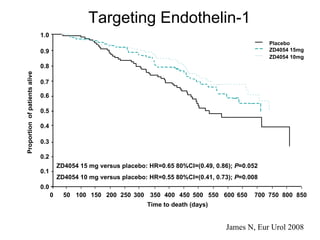
Targeting Endothelin-1 Proportion  of patients alive 0.0 0.1 0.2 0.3 0.4 0.5 0.6 0.7 0.8 0.9 1.0 0 ZD4054 15 mg versus placebo: HR=0.65 80%CI=(0.49, 0.86);  P =0.052 ZD4054 10 mg versus placebo: HR=0.55 80%CI=(0.41, 0.73);  P =0.008 Time to death (days) James N, Eur Urol 2008 50 100 150 200 250 300 350 500 450 400 550 600 650 700 750 800 850 ZD4054 10mg ZD4054 15mg Placebo
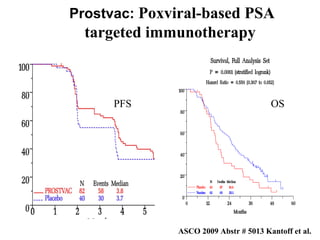
Prostvac:  Poxviral-based PSA targeted immunotherapy Post hoc survival assessment ? ASCO 2009 Abstr # 5013 Kantoff et al. PFS OS
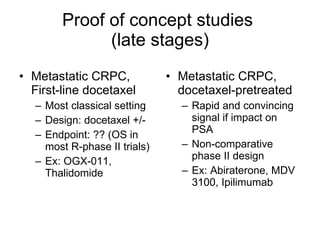
Proof of concept studies  (late stages) Metastatic CRPC, First-line docetaxel Most classical setting Design: docetaxel +/- Endpoint: ?? (OS in most R-phase II trials) Ex: OGX-011, Thalidomide Metastatic CRPC, docetaxel-pretreated Rapid and convincing signal if impact on PSA Non-comparative phase II design Ex: Abiraterone, MDV 3100, Ipilimumab
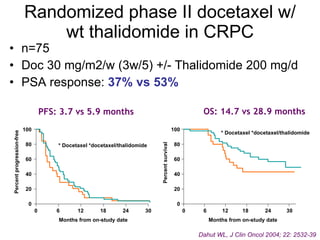
Randomized phase II docetaxel w/wt thalidomide in CRPC n=75 Docetaxel 30 mg/m2/w (3w/5) +/- Thalidomide 200 mg/d PSA response:  37% vs 53% Dahut WL, J Clin Oncol 2004; 22: 2532-39 OS: 14.7 vs 28.9 months PFS: 3.7 vs 5.9 months
Randomized phase II docetaxel w/wt thalidomide in CRPC n=75 Doc 30 mg/m2/w (3w/5) +/- Thalidomide 200 mg/d PSA response:  37% vs 53% Dahut WL, J Clin Oncol 2004; 22: 2532-39 OS: 14.7 vs 28.9 months PFS: 3.7 vs 5.9 months 0 0 Months from on-study date Percent survival Percent progression-free 6 12 18 24 30 20 40 60 80 100 0 20 40 60 80 100 0 6 12 18 24 30 Months from on-study date * Docetaxel *docetaxel/thalidomide * Docetaxel *docetaxel/thalidomide
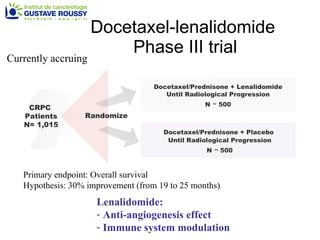
Docetaxel-lenalidomide  Phase III trial Primary endpoint: Overall survival Hypothesis: 30% improvement (from 19 to 25 months) Currently accruing Lenalidomide: Anti-angiogenesis effect Immune system modulation CRPC  Patients N= 1,015 Randomize Docetaxel/Prednisone + Placebo  Until Radiological Progression N  ~  500 Docetaxel/Prednisone + Lenalidomide Until Radiological Progression N  ~  500
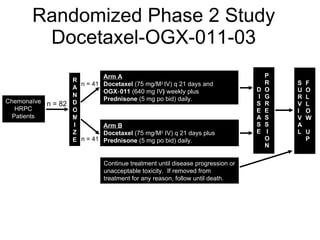
Randomized Phase 2 Study Docetaxel-OGX-011-03 R A N D O M I Z E Arm A Docetaxel  (75 mg/M 2  IV) q 21 days and  OGX‑011  (640 mg   IV )  weekly plus  Prednisone  (5 mg po bid)   daily.  Arm B Docetaxel  (75 mg/M 2  IV) q 21 days plus  Prednisone  (5 mg po bid)   daily.  Continue treatment until disease progression or unacceptable toxicity.  If removed from treatment for any reason, follow until death. P R D O I G S R E E A S S S E  I O N S  F U  O R  L V  L I  O V  W A  L  U P n = 82 n = 41 n = 41 Chemonaïve HRPC Patients
Median for OGX-011:  23.8   95% C.I. [16.2  - .Inf] Median for Std Trt:  16.9  95% C.I. [12.8 - 25.8] 1  Variables predictive of OS on multivariate analysis: PS 0 vs 1 (P < 0.0001), presence of visceral metastasis (P = 0.01) and treatment assignment Unadjusted  HR=0.61  [0.36-1.02], P=0.06  Multivariate analysis 1   HR=0.49  [0.28-0.85], P=0.01 First-Line CRPC Phase 2 Study OGX-011-03:   Kaplan-Meier Survival Curves as of April 2009 Median survival times now final with only one patient lost to follow-up prior to 24 months Treatment completed
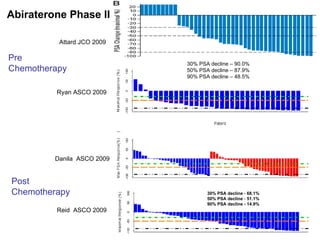
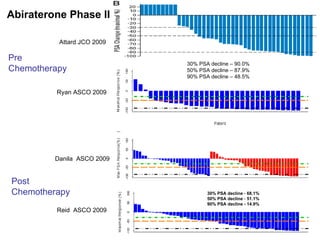
30% PSA decline – 90.0% 50% PSA decline – 87.9% 90% PSA decline – 48.5% 30% PSA decline  -  68.1%  50% PSA decline  -  51.1%  90% PSA decline - 14.9% Abiraterone Phase II Pre Chemotherapy Post Chemotherapy Attard JCO 2009 Ryan ASCO 2009 Danila  ASCO 2009 Reid  ASCO 2009
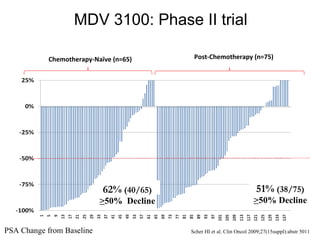
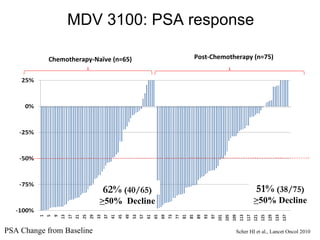
MDV 3100: Phase II trial  Chemotherapy-Naïve (n=65) Post-Chemotherapy (n=75) 62%  (40/65) > 50%  Decline 51%  (38/75) > 50% Decline PSA Change from Baseline Scher HI et al. Clin Oncol 2009;27(15suppl):abstr 5011
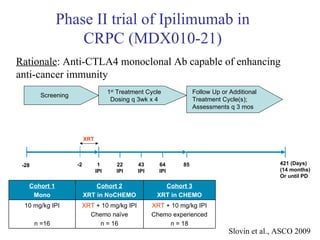
Phase II trial of Ipilimumab in CRPC (MDX010-21) Slovin et al., ASCO 2009 Rationale : Anti-CTLA4 monoclonal Ab capable of enhancing  anti-cancer immunity -28 1 IPI 22 IPI 43 IPI 64 IPI 85 421 (Days) (14 months)  Or until PD -2 Screening 1 st  Treatment Cycle Dosing q 3wk x 4 Follow Up or Additional  Treatment Cycle(s); Assessments q 3 mos XRT XRT  + 10 mg/kg IPI Chemo experienced n = 18 XRT  + 10 mg/kg IPI Chemo naïve n = 16 10 mg/kg IPI n =16 Cohort 3 XRT in CHEMO Cohort 2 XRT in NoCHEMO Cohort 1 Mono
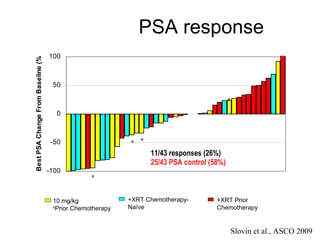
PSA response 11/43 responses (26%) 25/43 PSA control (58%) Slovin et al., ASCO 2009 10 mg/kg a Prior Chemotherapy +XRT Chemotherapy- Na ï ve +XRT Prior  Chemotherapy a a a a
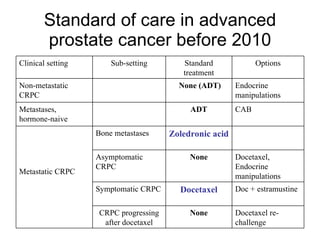
Standard of care in advanced prostate cancer before 2010 Docetaxel re-challenge None CRPC progressing after docetaxel Doc + estramustine Docetaxel Symptomatic CRPC Docetaxel, Endocrine manipulations None Asymptomatic CRPC Zoledronic acid Bone metastases Metastatic CRPC CAB ADT Metastases, hormone-naive Endocrine manipulations None (ADT) Non-metastatic CRPC Options Standard treatment Sub-setting Clinical setting
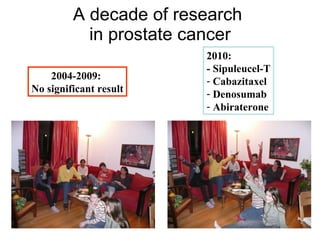
A decade of research  in prostate cancer 2004-2009:  No significant result 2010: - Sipuleucel-T Cabazitaxel Denosumab Abiraterone
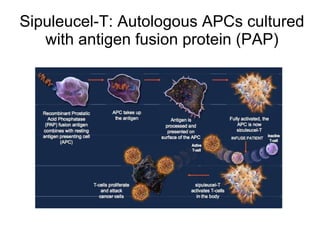
Sipuleucel-T: Autologous APCs cultured with antigen fusion protein (PAP)
Sipuleucel-T autologous vaccine: Overall Survival   p  = 0.032 ( Cox model ) HR = 0.7 8  [95% CI: 0.61, 0.9 8 ] Kantoff PW, NEJM 2010, 363: 411-22 Small EJ, J Clin Oncol 2009; 24: 3089-94 Sipuleucel-T (n = 341) vs Placebo (n=171) Median OS: 25.8 vs 21.7 months
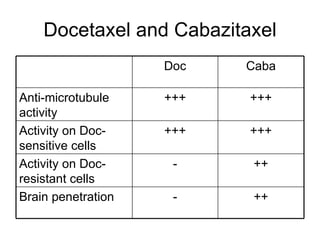
Docetaxel and Cabazitaxel ++ - Brain penetration ++ - Activity on Doc-resistant cells +++ +++ Activity on Doc-sensitive cells +++ +++ Anti-microtubule activity Caba Doc
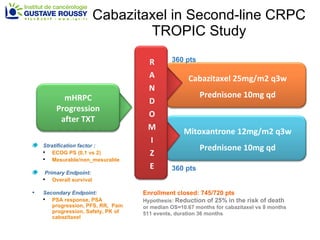
Cabazitaxel in Second-line CRPC TROPIC Study R A N D O M I Z E Mitoxantrone 12mg/m2 q3w Prednisone 10mg qd mHRPC Progression after TXT Cabazitaxel 25mg/m2 q3w Prednisone 10mg qd 360 pts 360 pts R A N D O M I Z E Stratification factor : ECOG PS (0,1 vs 2) Mesurable/non_mesurable Primary Endpoint: Overall survival Secondary Endpoint: PSA response, PSA progression, PFS, RR,  Pain progression, Safety, PK of cabazitaxel Enrollment closed: 745/720 pts Hypothesis:  Reduction of 25%   in the risk of death   or median OS=10.67 months for cabazitaxel vs 8 months 511 events, duration 36 months
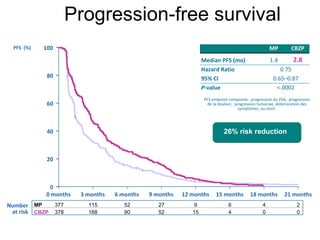
Progression-free survival Number at risk PFS  (%) 80 60 40 20 0 100 0 months 3 months 9 mont h s 15 mont h s 18 mont h s 21 mont h s 6 mont h s 12 mont h s PFS endpoint composite:  progression du PSA,  progression de la douleur,  progression tumorale, deterioration des symptômes, ou mort. 2.8 1.4 Median PFS (mo) 0.65–0.87 95% CI <.0002 P -value 0.75 Hazard Ratio CBZP MP De Bono et al.  Lancet In Press 2010 26% risk reduction MP 377 115 52 27 9 6 4 2 CBZP 378 168 90 52 15 4 0 0
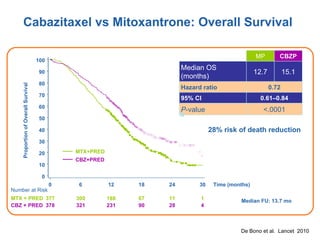
Cabazitaxel vs Mitoxantrone: Overall Survival Median FU: 13.7 mo MTX+PRED CBZ+PRED Proportion of Overall Survival 0 10 20 30 40 50 60 70 80 90 100 0 6 12 18 24 30 377 378 300 321 188 231 67 90 11 28 1 4 Number at Risk MTX + PRED CBZ + PRED 28% risk of death reduction  Time (months) De Bono et al.  Lancet  2010 MP CBZP Median OS  (months) 12.7 15.1 Hazard ratio 0.72 95% CI 0.61–0.84 P -value <.0001
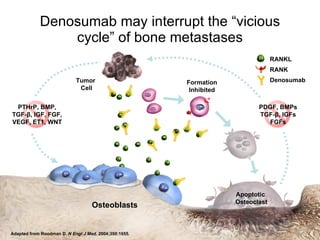
Denosumab may interrupt the “vicious cycle” of bone metastases PDGF, BMPs TGF-β, IGFs FGFs Osteoblasts RANKL RANK Denosumab Tumor  Cell Formation Inhibited Apoptotic  Osteoclast PTHrP, BMP, TGF-β, IGF, FGF, VEGF, ET1, WNT Adapted from Roodman D.  N Engl J Med . 2004;350:1655.
RANKL and OPG Expression in Osteoblasts  When Co-cultured With Prostate Cancer Cells OPG RANKL CTR CTR OSB + 2b OSB + 2a OSB +  LNCaP OSB + PC3 Fizazi et al, Clin Cancer Res 2003;9:2587–2597
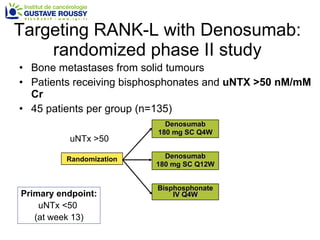
Bone metastases from solid tumours Patients receiving bisphosphonates and  uNTX >50 nM/mM Cr 45 patients per group (n=135)  Targeting RANK-L with Denosumab: randomized phase II study Randomization Denosumab 180 mg SC Q4W Denosumab 180 mg SC Q12W Bisphosphonate IV Q4W Primary endpoint: uNTx <50  (at week 13) uNTx >50
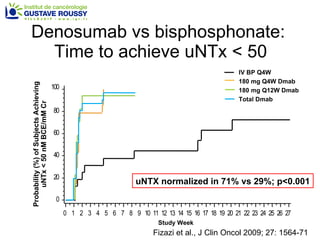
Denosumab vs bisphosphonate:  Time to achieve uNTx < 50 Study Week Probability (%) of Subjects Achieving uNTx < 50 nM BCE/mM Cr IV BP Q4W  180 mg Q4W Dmab 180 mg Q12W Dmab Total Dmab 0 2 0 4 0 6 0 8 0 1 0 0 0 1 2 3 4 5 6 7 8 9 1 0 1 1 1 2 1 3 1 4 1 5 1 6 1 7 1 8 1 9 2 0 2 1 2 2 2 3 2 4 2 5 2 6 2 7 Fizazi et al., J Clin Oncol 2009; 27: 1564-71 uNTX normalized in 71% vs 29%; p<0.001
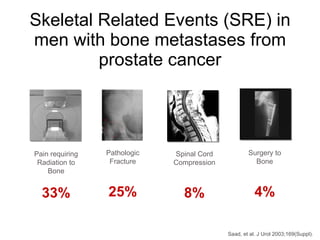
Skeletal Related Events (SRE) in men with bone metastases from prostate cancer Pathologic Fracture 25% Pain requiring Radiation to Bone 33% Surgery to Bone 4% Spinal Cord Compression 8% Saad, et al. J Urol 2003;169(Suppl).
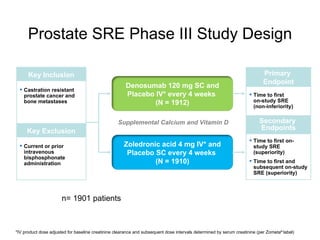
Prostate SRE Phase III Study Design *IV product dose adjusted for baseline creatinine clearance and subsequent dose intervals determined by serum creatinine (per Zometa ®  label) Time to first  on-study SRE  (non-inferiority)  Primary  Endpoint Time to first on-study SRE (superiority) Time to first and subsequent on-study SRE (superiority) Supplemental Calcium and Vitamin D Secondary  Endpoints n= 1901 patients Denosumab 120 mg SC and Placebo IV* every 4 weeks  (N = 1912) Zoledronic acid 4 mg IV* and Placebo SC every 4 weeks  (N = 1910) Castration resistant prostate cancer and bone metastases Key Inclusion Current or prior intravenous bisphosphonate administration Key Exclusion
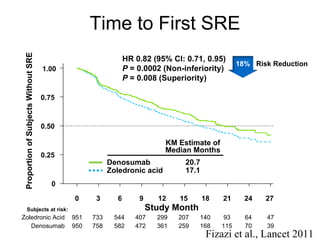
Time to First SRE Subjects at risk: 0 1.00 Proportion of Subjects Without SRE 0 3 6 9 12 15 18 21 24 27 0.25 0.50 0.75 KM Estimate of Median Months Denosumab Zoledronic acid 20.7 17.1 HR 0.82 (95% CI: 0.71, 0.95) P  = 0.0002 (Non-inferiority) P  = 0.008 (Superiority) Study Month Risk Reduction Fizazi et al., Lancet 2011 Zoledronic Acid 951 733 544 407 299 207 140 93 64 47 Denosumab 950 758 582 472 361 259 168 115 70 39 18%
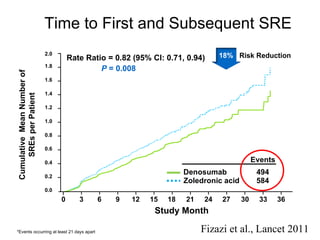
Time to First and Subsequent SRE *Events occurring at least 21 days apart Rate Ratio = 0.82 (95% CI: 0.71, 0.94)  Study Month 0.0 2.0 0 3 6 9 12 15 18 21 24 27 Cumulative  Mean Number of SREs per Patient 30 33 36 0.2 0.6 1.0 1.4 1.8 0.4 0.8 1.2 1.6 Denosumab  Zoledronic acid  584 494 Events P  = 0.008 Risk Reduction Fizazi et al., Lancet 2011 18%
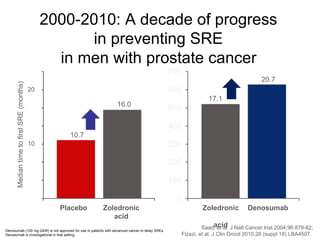
Placebo Median time to first SRE (months) Zoledronic acid Zoledronic  acid Denosumab 10.7 16.0 17.1 20.7 10 20 Saad, et al. J Natl Cancer Inst 2004;96:879-82; Fizazi, et al. J Clin Oncol 2010;28 (suppl 18) LBA4507.  Denosumab (120 mg Q4W) is not approved for use in patients with advanced cancer to delay SREs. Denosumab is investigational in that setting. 2000-2010: A decade of progress  in preventing SRE  in men with prostate cancer
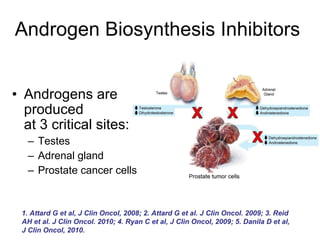
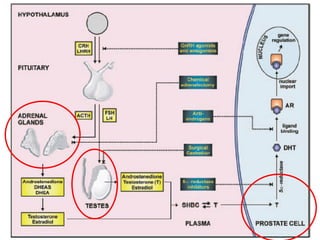
Androgen Biosynthesis Inhibitors Androgens are produced  at 3 critical sites: Testes Adrenal gland Prostate cancer cells 1. Attard G et al, J Clin Oncol, 2008; 2. Attard G et al.  J Clin Oncol. 2009; 3. Reid AH et al. J Clin Oncol. 2010; 4. Ryan C et al, J Clin Oncol, 2009; 5. Danila D et al, J Clin Oncol, 2010.
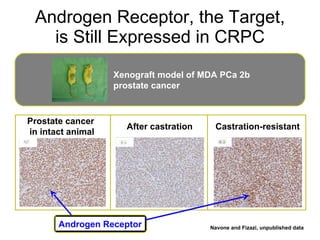
Androgen Receptor, the Target, is Still Expressed in CRPC Prostate cancer  in intact animal After castration Castration-resistant Xenograft model of MDA PCa 2b prostate cancer Navone and Fizazi, unpublished data Androgen Receptor
 
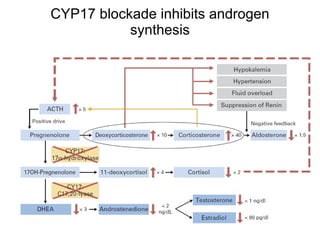
CYP17 blockade inhibits androgen synthesis b
30% PSA decline – 90.0% 50% PSA decline – 87.9% 90% PSA decline – 48.5% 30% PSA decline  -  68.1%  50% PSA decline  -  51.1%  90% PSA decline - 14.9% Abiraterone Phase II Pre Chemotherapy Post Chemotherapy Attard JCO 2009 Ryan ASCO 2009 Danila  ASCO 2009 Reid  ASCO 2009
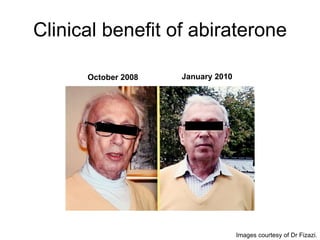
Clinical benefit of abiraterone October 2008 January 2010 Images courtesy of Dr Fizazi.
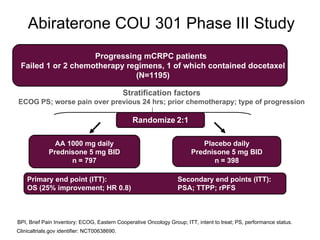
Abiraterone COU 301 Phase III Study AA 1000 mg daily Prednisone 5 mg BID n = 797 Placebo daily Prednisone 5 mg BID n = 398 Randomize   2:1 Progressing mCRPC patients Failed 1 or 2 chemotherapy regimens, 1 of which contained docetaxel (N=1195) Clinicaltrials.gov identifier: NCT00638690. BPI, Brief Pain Inventory; ECOG, Eastern Cooperative Oncology Group; ITT, intent to treat; PS, performance status. Stratification factors ECOG PS; worse pain over previous 24 hrs; prior chemotherapy; type of progression Primary end point (ITT): OS (25% improvement; HR 0.8) Secondary end points (ITT): PSA; TTPP; rPFS
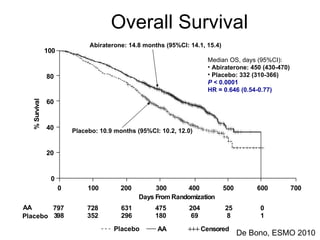
Overall Survival Median OS, days (95%CI): Abiraterone: 450 (430-470) Placebo: 332 (310-366) P  < 0.0001 HR = 0.646 (0.54-0.77) % S u r v i v a l Placebo A A A A C e n s o r e d 7 9 7 0 0 2 0 4 0 6 0 8 0 1 0 0 1 0 0 4 0 0 3 0 0 2 0 0 5 0 0 6 0 0 7 0 0 3 9 8 7 2 8 3 5 2 6 3 1 2 9 6 4 7 5 1 8 0 2 0 4 6 9 2 5 8 0 1 D a y s F r o m R a n d o m i z a t i o n Placebo Abiraterone: 14.8 months (95%CI: 14.1, 15.4) Placebo: 10.9 months (95%CI: 10.2, 12.0) De Bono, ESMO 2010
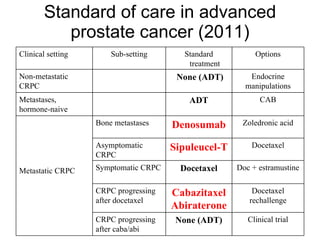
Standard of care in advanced prostate cancer (2011) Clinical trial None (ADT) CRPC progressing after caba/abi Docetaxel rechallenge Cabazitaxel Abiraterone CRPC progressing after docetaxel Doc + estramustine Docetaxel Symptomatic CRPC Docetaxel Sipuleucel-T Asymptomatic CRPC Zoledronic acid Denosumab Bone metastases Metastatic CRPC CAB ADT Metastases, hormone-naive Endocrine manipulations None (ADT) Non-metastatic CRPC Options Standard treatment Sub-setting Clinical setting
The effects of  MDV3100  on the Androgen Receptor are distinct from Bicalutamide Ligand 1 2 Chen, et al. 3 4 DNA POL II HSP 90 LBD HD DBD NTD AR Binding Affinity DHT  ~ 5nM Bicalutamide ~160 nM MDV3100  ~35 nM Nuclear Import DHT:  ++++ Bicalutamide:  ++++ MDV3100:  ++ DNA Binding DHT:  ++++ Bicalutamide:  ++ MDV3100:  - Coactivator recruitment DHT:  ++++ Bicalutamide:  ++ MDV3100:  -
MDV 3100: PSA response  Chemotherapy-Naïve (n=65) Post-Chemotherapy (n=75) 62%  (40/65) > 50%  Decline 51%  (38/75) > 50% Decline PSA Change from Baseline Scher HI et al., Lancet Oncol 2010
Targeting CTLA4: Ipilimumab:  Mr T, CRPC, docetaxel-pretreated Ipilimumab + XRT
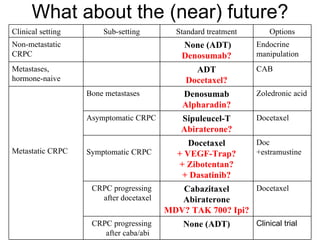
What about the (near) future? Clinical trial None (ADT) CRPC progressing after caba/abi Docetaxel Cabazitaxel Abiraterone MDV? TAK 700? Ipi? CRPC progressing after docetaxel Doc +estramustine Docetaxel + VEGF-Trap? + Zibotentan? + Dasatinib? Symptomatic CRPC Docetaxel Sipuleucel-T Abiraterone? Asymptomatic CRPC Zoledronic acid Denosumab Alpharadin? Bone metastases Metastatic CRPC CAB ADT Docetaxel? Metastases, hormone-naive Endocrine manipulation None (ADT) Denosumab? Non-metastatic CRPC Options Standard treatment Sub-setting Clinical setting
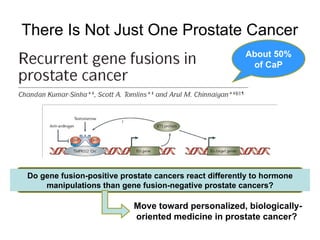
There Is Not Just One Prostate Cancer Move toward personalized, biologically-oriented medicine in prostate cancer?   About 50% of CaP Do gene fusion-positive prostate cancers react differently to hormone manipulations than gene fusion-negative prostate cancers?
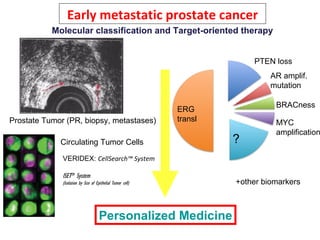
PTEN loss AR amplif. mutation MYC amplification Molecular classification and Target-oriented therapy BRACness ERG  transl ? Early metastatic prostate cancer Prostate Tumor (PR, biopsy, metastases) Circulating Tumor Cells VERIDEX:  CellSearch™ System ISET TM  System  (Isolation by Size of Epithelial Tumor cell) Personalized Medicine +other biomarkers
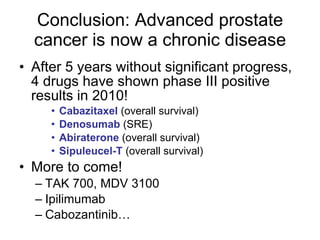
Conclusion: Advanced prostate cancer is now a chronic disease After 5 years without significant progress, 4 drugs have shown phase III positive results in 2010! Cabazitaxel  (overall survival) Denosumab   (SRE) Abiraterone  (overall survival) Sipuleucel-T  (overall survival) More to come! TAK 700, MDV 3100 Ipilimumab Cabozantinib…

ECCLU 2011 - K. Fizazi - Prostate cancer drug development

  • 1.
    Drug development in prostate cancer Pr Karim Fizazi, MD, PhD Institut Gustave Roussy Villejuif, France
  • 2.
    Clinically Localised prostate cancer Rising PSA Hormonal sensitive Clinical metastases Hormonal sensitive Clinical metastases Castration resistant asymptomatic Clinical metastases Castration resistant Docetaxel-pretreated (Abiraterone, Cabazitaxel) Clinical metastases Castration resistant 1st line Docetaxel-based chemotherapy Androgen deprivation therapy Castration resistant prostate cancer Rising PSA Castration-resistant ( M0 CRPC )
  • 3.
    A variety ofsettings for drug development Metastatic, hormone-naïve Metastatic CRPC Non-metastatic CRPC Metastases Pre-Doc With Doc Post-Doc Symptoms Zoledronic acid Docetaxel Castration Resistant Prostate Cancer (CRPC): Progression while on Androgen Deprivation Therapy
  • 4.
    First-line Docetaxel: OverallSurvival Tannock IF, et al: NEJM 351:1502-12, 2004
  • 5.
    Zoledronate: Time toSkeletal Related Event in CRPC Median, days P value ZOMETA ® 4 mg 488 .009 Placebo 321 Zol 4 mg 214 149 97 70 47 35 3 Placebo 298 128 78 44 32 20 3 over 5 Months delay Saad et al. JNCI 2004; 96:879 488 321 Zoledronate Placebo 0.009
  • 6.
    Drug approval (phaseIII) What the FDA/EMA would approve: Overall survival Time to skeletal-related events (SRE) What the FDA/EMA may approve: Time to metastases (M0 setting) Time to metastases (localized setting) What is currently not acceptable for approval: Progression-free survival PSA-based endpoint
  • 7.
    The cemetery ofdead drugs in the struggle against prostate cancer Atrasentan Calcitriol G-VAX Oblimersen Satraplatin Bevacizumab
  • 8.
    Proof of conceptstudies (R-Phase II) Rising PSA Non-toxic drug Design: Intermittent ADT +/- dr OK if drug alters PSA Endpoint: time to R-PSA ~ 18 months Ex: Thalidomide (toxic) CRPC M0 ~non toxic drug Design: vs placebo Endpoint: TT mets Limit: need to select high-risk Risk of early drop-off (PSA) Ex: none (phase III) Metastases, H-sensitive Forgotten setting Still exists (10-15% CaP) Toxicity more acceptable Endpoint: time to CRPC ( ~2 y) Undetectable PSA at 8 m Ex: none (phase III) CRPC M1 asymptomatic Crowded setting Toxicity more acceptable Design: bicalutamide (or other) +/- drug Endpoint: ?? (TT PSA prog if effect on PSA anticipated) Ex: Zibotentan, vaccines
  • 9.
    Randomized phase IIof Intermittent ADT with/without Thalidomide n= 159 with a PSA relapse after local treatment Randomization ( oral phase A ): 6 months ADT followed by placebo 6 months ADT followed by Thalidomide 200 mg/d When PSA progression: cross-over ( oral phase B ) Primary endpoint: Time to PSA Progression Figg WD, J Urol 2009, 181:1104-13 R
  • 10.
    Maintenance Thalidomide: ResultsOral phase A: Time to PSA progression: ADT: 9.6 mon ADT + Thalidomide: 15 mon (p=0.21) Oral phase B: Time to PSA progression: ADT: 6.6 mon ADT + Thalidomide: 17.6 mon (p=0.0002) No difference in time to normalisation of testosterone Figg WD, J Urol 2009, 181:1104-13
  • 11.
    Time to PSAprogression Figg WD, J Urol 2009, 181:1104-13 100 80 60 40 20 0 100 80 60 40 20 0 0 12 24 36 48 60 72 0 12 24 36 48 60 72 Months from start of oral Phase B Months from start of oral Phase A Percent progression-free Percent progression-free
  • 12.
    Targeting Endothelin-1 Proportion of patients alive 0.0 0.1 0.2 0.3 0.4 0.5 0.6 0.7 0.8 0.9 1.0 0 ZD4054 15 mg versus placebo: HR=0.65 80%CI=(0.49, 0.86); P =0.052 ZD4054 10 mg versus placebo: HR=0.55 80%CI=(0.41, 0.73); P =0.008 Time to death (days) James N, Eur Urol 2008 50 100 150 200 250 300 350 500 450 400 550 600 650 700 750 800 850 ZD4054 10mg ZD4054 15mg Placebo
  • 13.
    Prostvac: Poxviral-basedPSA targeted immunotherapy Post hoc survival assessment ? ASCO 2009 Abstr # 5013 Kantoff et al. PFS OS
  • 14.
    Proof of conceptstudies (late stages) Metastatic CRPC, First-line docetaxel Most classical setting Design: docetaxel +/- Endpoint: ?? (OS in most R-phase II trials) Ex: OGX-011, Thalidomide Metastatic CRPC, docetaxel-pretreated Rapid and convincing signal if impact on PSA Non-comparative phase II design Ex: Abiraterone, MDV 3100, Ipilimumab
  • 15.
    Randomized phase IIdocetaxel w/wt thalidomide in CRPC n=75 Docetaxel 30 mg/m2/w (3w/5) +/- Thalidomide 200 mg/d PSA response: 37% vs 53% Dahut WL, J Clin Oncol 2004; 22: 2532-39 OS: 14.7 vs 28.9 months PFS: 3.7 vs 5.9 months
  • 16.
    Randomized phase IIdocetaxel w/wt thalidomide in CRPC n=75 Doc 30 mg/m2/w (3w/5) +/- Thalidomide 200 mg/d PSA response: 37% vs 53% Dahut WL, J Clin Oncol 2004; 22: 2532-39 OS: 14.7 vs 28.9 months PFS: 3.7 vs 5.9 months 0 0 Months from on-study date Percent survival Percent progression-free 6 12 18 24 30 20 40 60 80 100 0 20 40 60 80 100 0 6 12 18 24 30 Months from on-study date * Docetaxel *docetaxel/thalidomide * Docetaxel *docetaxel/thalidomide
  • 17.
    Docetaxel-lenalidomide PhaseIII trial Primary endpoint: Overall survival Hypothesis: 30% improvement (from 19 to 25 months) Currently accruing Lenalidomide: Anti-angiogenesis effect Immune system modulation CRPC Patients N= 1,015 Randomize Docetaxel/Prednisone + Placebo Until Radiological Progression N ~ 500 Docetaxel/Prednisone + Lenalidomide Until Radiological Progression N ~ 500
  • 18.
    Randomized Phase 2Study Docetaxel-OGX-011-03 R A N D O M I Z E Arm A Docetaxel (75 mg/M 2 IV) q 21 days and OGX‑011 (640 mg IV ) weekly plus Prednisone (5 mg po bid) daily. Arm B Docetaxel (75 mg/M 2 IV) q 21 days plus Prednisone (5 mg po bid) daily. Continue treatment until disease progression or unacceptable toxicity. If removed from treatment for any reason, follow until death. P R D O I G S R E E A S S S E I O N S F U O R L V L I O V W A L U P n = 82 n = 41 n = 41 Chemonaïve HRPC Patients
  • 19.
    Median for OGX-011: 23.8 95% C.I. [16.2 - .Inf] Median for Std Trt: 16.9 95% C.I. [12.8 - 25.8] 1 Variables predictive of OS on multivariate analysis: PS 0 vs 1 (P < 0.0001), presence of visceral metastasis (P = 0.01) and treatment assignment Unadjusted HR=0.61 [0.36-1.02], P=0.06 Multivariate analysis 1 HR=0.49 [0.28-0.85], P=0.01 First-Line CRPC Phase 2 Study OGX-011-03: Kaplan-Meier Survival Curves as of April 2009 Median survival times now final with only one patient lost to follow-up prior to 24 months Treatment completed
  • 20.
    30% PSA decline– 90.0% 50% PSA decline – 87.9% 90% PSA decline – 48.5% 30% PSA decline - 68.1% 50% PSA decline - 51.1% 90% PSA decline - 14.9% Abiraterone Phase II Pre Chemotherapy Post Chemotherapy Attard JCO 2009 Ryan ASCO 2009 Danila ASCO 2009 Reid ASCO 2009
  • 21.
    MDV 3100: PhaseII trial Chemotherapy-Naïve (n=65) Post-Chemotherapy (n=75) 62% (40/65) > 50% Decline 51% (38/75) > 50% Decline PSA Change from Baseline Scher HI et al. Clin Oncol 2009;27(15suppl):abstr 5011
  • 22.
    Phase II trialof Ipilimumab in CRPC (MDX010-21) Slovin et al., ASCO 2009 Rationale : Anti-CTLA4 monoclonal Ab capable of enhancing anti-cancer immunity -28 1 IPI 22 IPI 43 IPI 64 IPI 85 421 (Days) (14 months) Or until PD -2 Screening 1 st Treatment Cycle Dosing q 3wk x 4 Follow Up or Additional Treatment Cycle(s); Assessments q 3 mos XRT XRT + 10 mg/kg IPI Chemo experienced n = 18 XRT + 10 mg/kg IPI Chemo naïve n = 16 10 mg/kg IPI n =16 Cohort 3 XRT in CHEMO Cohort 2 XRT in NoCHEMO Cohort 1 Mono
  • 23.
    PSA response 11/43responses (26%) 25/43 PSA control (58%) Slovin et al., ASCO 2009 10 mg/kg a Prior Chemotherapy +XRT Chemotherapy- Na ï ve +XRT Prior Chemotherapy a a a a
  • 24.
    Standard of carein advanced prostate cancer before 2010 Docetaxel re-challenge None CRPC progressing after docetaxel Doc + estramustine Docetaxel Symptomatic CRPC Docetaxel, Endocrine manipulations None Asymptomatic CRPC Zoledronic acid Bone metastases Metastatic CRPC CAB ADT Metastases, hormone-naive Endocrine manipulations None (ADT) Non-metastatic CRPC Options Standard treatment Sub-setting Clinical setting
  • 25.
    A decade ofresearch in prostate cancer 2004-2009: No significant result 2010: - Sipuleucel-T Cabazitaxel Denosumab Abiraterone
  • 26.
    Sipuleucel-T: Autologous APCscultured with antigen fusion protein (PAP)
  • 27.
    Sipuleucel-T autologous vaccine:Overall Survival p = 0.032 ( Cox model ) HR = 0.7 8 [95% CI: 0.61, 0.9 8 ] Kantoff PW, NEJM 2010, 363: 411-22 Small EJ, J Clin Oncol 2009; 24: 3089-94 Sipuleucel-T (n = 341) vs Placebo (n=171) Median OS: 25.8 vs 21.7 months
  • 28.
    Docetaxel and Cabazitaxel++ - Brain penetration ++ - Activity on Doc-resistant cells +++ +++ Activity on Doc-sensitive cells +++ +++ Anti-microtubule activity Caba Doc
  • 29.
    Cabazitaxel in Second-lineCRPC TROPIC Study R A N D O M I Z E Mitoxantrone 12mg/m2 q3w Prednisone 10mg qd mHRPC Progression after TXT Cabazitaxel 25mg/m2 q3w Prednisone 10mg qd 360 pts 360 pts R A N D O M I Z E Stratification factor : ECOG PS (0,1 vs 2) Mesurable/non_mesurable Primary Endpoint: Overall survival Secondary Endpoint: PSA response, PSA progression, PFS, RR, Pain progression, Safety, PK of cabazitaxel Enrollment closed: 745/720 pts Hypothesis: Reduction of 25% in the risk of death or median OS=10.67 months for cabazitaxel vs 8 months 511 events, duration 36 months
  • 30.
    Progression-free survival Numberat risk PFS (%) 80 60 40 20 0 100 0 months 3 months 9 mont h s 15 mont h s 18 mont h s 21 mont h s 6 mont h s 12 mont h s PFS endpoint composite: progression du PSA, progression de la douleur, progression tumorale, deterioration des symptômes, ou mort. 2.8 1.4 Median PFS (mo) 0.65–0.87 95% CI <.0002 P -value 0.75 Hazard Ratio CBZP MP De Bono et al. Lancet In Press 2010 26% risk reduction MP 377 115 52 27 9 6 4 2 CBZP 378 168 90 52 15 4 0 0
  • 31.
    Cabazitaxel vs Mitoxantrone:Overall Survival Median FU: 13.7 mo MTX+PRED CBZ+PRED Proportion of Overall Survival 0 10 20 30 40 50 60 70 80 90 100 0 6 12 18 24 30 377 378 300 321 188 231 67 90 11 28 1 4 Number at Risk MTX + PRED CBZ + PRED 28% risk of death reduction Time (months) De Bono et al. Lancet 2010 MP CBZP Median OS (months) 12.7 15.1 Hazard ratio 0.72 95% CI 0.61–0.84 P -value <.0001
  • 32.
    Denosumab may interruptthe “vicious cycle” of bone metastases PDGF, BMPs TGF-β, IGFs FGFs Osteoblasts RANKL RANK Denosumab Tumor Cell Formation Inhibited Apoptotic Osteoclast PTHrP, BMP, TGF-β, IGF, FGF, VEGF, ET1, WNT Adapted from Roodman D. N Engl J Med . 2004;350:1655.
  • 33.
    RANKL and OPGExpression in Osteoblasts When Co-cultured With Prostate Cancer Cells OPG RANKL CTR CTR OSB + 2b OSB + 2a OSB + LNCaP OSB + PC3 Fizazi et al, Clin Cancer Res 2003;9:2587–2597
  • 34.
    Bone metastases fromsolid tumours Patients receiving bisphosphonates and uNTX >50 nM/mM Cr 45 patients per group (n=135) Targeting RANK-L with Denosumab: randomized phase II study Randomization Denosumab 180 mg SC Q4W Denosumab 180 mg SC Q12W Bisphosphonate IV Q4W Primary endpoint: uNTx <50 (at week 13) uNTx >50
  • 35.
    Denosumab vs bisphosphonate: Time to achieve uNTx < 50 Study Week Probability (%) of Subjects Achieving uNTx < 50 nM BCE/mM Cr IV BP Q4W 180 mg Q4W Dmab 180 mg Q12W Dmab Total Dmab 0 2 0 4 0 6 0 8 0 1 0 0 0 1 2 3 4 5 6 7 8 9 1 0 1 1 1 2 1 3 1 4 1 5 1 6 1 7 1 8 1 9 2 0 2 1 2 2 2 3 2 4 2 5 2 6 2 7 Fizazi et al., J Clin Oncol 2009; 27: 1564-71 uNTX normalized in 71% vs 29%; p<0.001
  • 36.
    Skeletal Related Events(SRE) in men with bone metastases from prostate cancer Pathologic Fracture 25% Pain requiring Radiation to Bone 33% Surgery to Bone 4% Spinal Cord Compression 8% Saad, et al. J Urol 2003;169(Suppl).
  • 37.
    Prostate SRE PhaseIII Study Design *IV product dose adjusted for baseline creatinine clearance and subsequent dose intervals determined by serum creatinine (per Zometa ® label) Time to first on-study SRE (non-inferiority) Primary Endpoint Time to first on-study SRE (superiority) Time to first and subsequent on-study SRE (superiority) Supplemental Calcium and Vitamin D Secondary Endpoints n= 1901 patients Denosumab 120 mg SC and Placebo IV* every 4 weeks (N = 1912) Zoledronic acid 4 mg IV* and Placebo SC every 4 weeks (N = 1910) Castration resistant prostate cancer and bone metastases Key Inclusion Current or prior intravenous bisphosphonate administration Key Exclusion
  • 38.
    Time to FirstSRE Subjects at risk: 0 1.00 Proportion of Subjects Without SRE 0 3 6 9 12 15 18 21 24 27 0.25 0.50 0.75 KM Estimate of Median Months Denosumab Zoledronic acid 20.7 17.1 HR 0.82 (95% CI: 0.71, 0.95) P = 0.0002 (Non-inferiority) P = 0.008 (Superiority) Study Month Risk Reduction Fizazi et al., Lancet 2011 Zoledronic Acid 951 733 544 407 299 207 140 93 64 47 Denosumab 950 758 582 472 361 259 168 115 70 39 18%
  • 39.
    Time to Firstand Subsequent SRE *Events occurring at least 21 days apart Rate Ratio = 0.82 (95% CI: 0.71, 0.94) Study Month 0.0 2.0 0 3 6 9 12 15 18 21 24 27 Cumulative Mean Number of SREs per Patient 30 33 36 0.2 0.6 1.0 1.4 1.8 0.4 0.8 1.2 1.6 Denosumab Zoledronic acid 584 494 Events P = 0.008 Risk Reduction Fizazi et al., Lancet 2011 18%
  • 40.
    Placebo Median timeto first SRE (months) Zoledronic acid Zoledronic acid Denosumab 10.7 16.0 17.1 20.7 10 20 Saad, et al. J Natl Cancer Inst 2004;96:879-82; Fizazi, et al. J Clin Oncol 2010;28 (suppl 18) LBA4507. Denosumab (120 mg Q4W) is not approved for use in patients with advanced cancer to delay SREs. Denosumab is investigational in that setting. 2000-2010: A decade of progress in preventing SRE in men with prostate cancer
  • 41.
    Androgen Biosynthesis InhibitorsAndrogens are produced at 3 critical sites: Testes Adrenal gland Prostate cancer cells 1. Attard G et al, J Clin Oncol, 2008; 2. Attard G et al. J Clin Oncol. 2009; 3. Reid AH et al. J Clin Oncol. 2010; 4. Ryan C et al, J Clin Oncol, 2009; 5. Danila D et al, J Clin Oncol, 2010.
  • 42.
    Androgen Receptor, theTarget, is Still Expressed in CRPC Prostate cancer in intact animal After castration Castration-resistant Xenograft model of MDA PCa 2b prostate cancer Navone and Fizazi, unpublished data Androgen Receptor
  • 43.
  • 44.
    CYP17 blockade inhibitsandrogen synthesis b
  • 45.
    30% PSA decline– 90.0% 50% PSA decline – 87.9% 90% PSA decline – 48.5% 30% PSA decline - 68.1% 50% PSA decline - 51.1% 90% PSA decline - 14.9% Abiraterone Phase II Pre Chemotherapy Post Chemotherapy Attard JCO 2009 Ryan ASCO 2009 Danila ASCO 2009 Reid ASCO 2009
  • 46.
    Clinical benefit ofabiraterone October 2008 January 2010 Images courtesy of Dr Fizazi.
  • 47.
    Abiraterone COU 301Phase III Study AA 1000 mg daily Prednisone 5 mg BID n = 797 Placebo daily Prednisone 5 mg BID n = 398 Randomize 2:1 Progressing mCRPC patients Failed 1 or 2 chemotherapy regimens, 1 of which contained docetaxel (N=1195) Clinicaltrials.gov identifier: NCT00638690. BPI, Brief Pain Inventory; ECOG, Eastern Cooperative Oncology Group; ITT, intent to treat; PS, performance status. Stratification factors ECOG PS; worse pain over previous 24 hrs; prior chemotherapy; type of progression Primary end point (ITT): OS (25% improvement; HR 0.8) Secondary end points (ITT): PSA; TTPP; rPFS
  • 48.
    Overall Survival MedianOS, days (95%CI): Abiraterone: 450 (430-470) Placebo: 332 (310-366) P < 0.0001 HR = 0.646 (0.54-0.77) % S u r v i v a l Placebo A A A A C e n s o r e d 7 9 7 0 0 2 0 4 0 6 0 8 0 1 0 0 1 0 0 4 0 0 3 0 0 2 0 0 5 0 0 6 0 0 7 0 0 3 9 8 7 2 8 3 5 2 6 3 1 2 9 6 4 7 5 1 8 0 2 0 4 6 9 2 5 8 0 1 D a y s F r o m R a n d o m i z a t i o n Placebo Abiraterone: 14.8 months (95%CI: 14.1, 15.4) Placebo: 10.9 months (95%CI: 10.2, 12.0) De Bono, ESMO 2010
  • 49.
    Standard of carein advanced prostate cancer (2011) Clinical trial None (ADT) CRPC progressing after caba/abi Docetaxel rechallenge Cabazitaxel Abiraterone CRPC progressing after docetaxel Doc + estramustine Docetaxel Symptomatic CRPC Docetaxel Sipuleucel-T Asymptomatic CRPC Zoledronic acid Denosumab Bone metastases Metastatic CRPC CAB ADT Metastases, hormone-naive Endocrine manipulations None (ADT) Non-metastatic CRPC Options Standard treatment Sub-setting Clinical setting
  • 50.
    The effects of MDV3100 on the Androgen Receptor are distinct from Bicalutamide Ligand 1 2 Chen, et al. 3 4 DNA POL II HSP 90 LBD HD DBD NTD AR Binding Affinity DHT ~ 5nM Bicalutamide ~160 nM MDV3100 ~35 nM Nuclear Import DHT: ++++ Bicalutamide: ++++ MDV3100: ++ DNA Binding DHT: ++++ Bicalutamide: ++ MDV3100: - Coactivator recruitment DHT: ++++ Bicalutamide: ++ MDV3100: -
  • 51.
    MDV 3100: PSAresponse Chemotherapy-Naïve (n=65) Post-Chemotherapy (n=75) 62% (40/65) > 50% Decline 51% (38/75) > 50% Decline PSA Change from Baseline Scher HI et al., Lancet Oncol 2010
  • 52.
    Targeting CTLA4: Ipilimumab: Mr T, CRPC, docetaxel-pretreated Ipilimumab + XRT
  • 53.
    What about the(near) future? Clinical trial None (ADT) CRPC progressing after caba/abi Docetaxel Cabazitaxel Abiraterone MDV? TAK 700? Ipi? CRPC progressing after docetaxel Doc +estramustine Docetaxel + VEGF-Trap? + Zibotentan? + Dasatinib? Symptomatic CRPC Docetaxel Sipuleucel-T Abiraterone? Asymptomatic CRPC Zoledronic acid Denosumab Alpharadin? Bone metastases Metastatic CRPC CAB ADT Docetaxel? Metastases, hormone-naive Endocrine manipulation None (ADT) Denosumab? Non-metastatic CRPC Options Standard treatment Sub-setting Clinical setting
  • 54.
    There Is NotJust One Prostate Cancer Move toward personalized, biologically-oriented medicine in prostate cancer? About 50% of CaP Do gene fusion-positive prostate cancers react differently to hormone manipulations than gene fusion-negative prostate cancers?
  • 55.
    PTEN loss ARamplif. mutation MYC amplification Molecular classification and Target-oriented therapy BRACness ERG transl ? Early metastatic prostate cancer Prostate Tumor (PR, biopsy, metastases) Circulating Tumor Cells VERIDEX: CellSearch™ System ISET TM System (Isolation by Size of Epithelial Tumor cell) Personalized Medicine +other biomarkers
  • 56.
    Conclusion: Advanced prostatecancer is now a chronic disease After 5 years without significant progress, 4 drugs have shown phase III positive results in 2010! Cabazitaxel (overall survival) Denosumab (SRE) Abiraterone (overall survival) Sipuleucel-T (overall survival) More to come! TAK 700, MDV 3100 Ipilimumab Cabozantinib…

Editor's Notes

  • #31 There was also a significant improvement in PFS with cabazitaxel with an hazard ratio of 0.74. PFS was in this study a composite end-point which takes into account PSA progression, pain progression, tumor progression, symptom deterioration or death. TROPIC slide deck. Slide24
  • #38 Changes in renal function drive dose adjustments for zoledronic acid
  • #39 Efficacy analyses are vs. the most potent bisphosphonate used in clinical practice, and the only one approved for use in prostate cancer bone metastasis. This is NOT a comparison vs. placebo, as has been done in Novartis registration trial The primary endpoint is represented on a Kaplan Meier curve. Denosumab was superior to zoledronic acid and reduced the risk of a first on-study SRE by 18% with a confidence interval from 0.71 to 0.95. The P value was equal to 0.0002 for noninferiority and equal to 0.008 for superiority. The median time to first on-study SRE was 20.7 months for denosumab and was 17.1 months for zoledronic acid, a 3.6 mo difference . The 2 most common components of SREs were fractures and radiation to bone. 727 subjects experienced a first on-study SRE; subject incidence was 341 (35.9%) in the denosumab arm and 386 (40.6%) in the zoledronic acid arm.
  • #40 For the secondary endpoint of time to first and subsequent SRE (multiple event analysis) denosumab was also superior to zoledronic acid and reduced the risk of multiple events by 18% (rate ratio: 0.82; 95% CI: 0.71–0.94; P=0.004). Only events which were at least 21 days apart from each other were counted, matching a similar analysis reported for zoledronic acid in its registration trial (Saad et. al., JNCI 2004)
  • #48 This was a phase III, multinational, multicenter, randomized, double-blind, placebo-controlled study conducted at 147 sites in the United States/Europe/Australia/Canada comparing the efficacy and safety of AA plus prednisone with placebo plus prednisone in men with mCRPC who had failed 1 or 2 chemotherapy regimens, one of which contained docetaxel. Subjects were randomized in a 2:1 ratio to receive AA plus prednisone or placebo plus prednisone, respectively, and were stratified according to Eastern Cooperative Oncology Group (ECOG) performance status (PS; 0-1 vs 2), worst pain over the past 24 hours on the Brief Pain Inventory (BPI)-Short Form (0-3 [absent] vs 4-10 [present]), prior chemotherapy regimens (1 v. 2), and type of progression (PSA only vs radiographic progression with or without PSA progression). Subjects could receive treatment until documented disease progression (of all 3 types including 1) PSA progression, 2) radiographic progression, and 3) symptomatic or clinical progression) or unacceptable toxicity. Efficacy analysis set: ITT (intent-to-treat). Primary efficacy end point: overall survival (OS). Secondary efficacy end points: prostate‑specific antigen (PSA) response rate, time to PSA progression, and radiographic progression-free survival. To determine whether AA, a potent and selective CYP17/lyase inhibitor, is a safe and effective treatment for patients with CRPC post-chemotherapy Specific objectives To determine whether AA plus prednisone is more effective than placebo plus prednisone AA plus prednisone is safe