Breast Cancer 101:
                         an overview of therapy
                                                  Tiffany A. Traina, MD
                                       Breast Cancer Medicine Service
                                                               April 2011


The following material is intended for MSKCC internal medicine housestaff teaching purposes only. The
slides are courtesy of Dr. Tiffany Traina and were updated for the LibGuide in 2011-2012   .
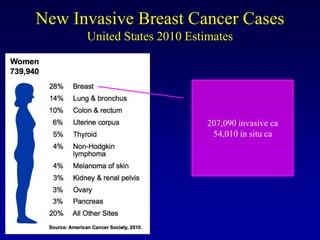
New Invasive Breast Cancer Cases
      United States 2010 Estimates


                             207,090 invasive ca
                              54,010 in situ ca
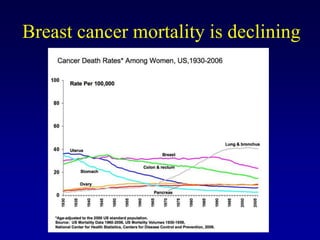
Breast cancer mortality is declining
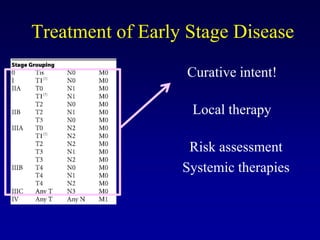
Treatment of Early Stage Disease
                  Curative intent!

                   Local therapy

                   Risk assessment
                  Systemic therapies
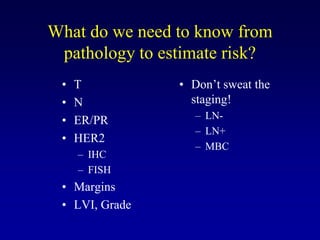
What do we need to know from
 pathology to estimate risk?
 •   T          • Don’t sweat the
 •   N            staging!
 •   ER/PR        – LN-
                  – LN+
 •   HER2
                  – MBC
     – IHC
     – FISH
 • Margins
 • LVI, Grade
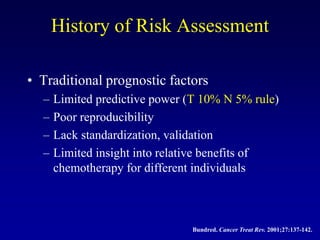
History of Risk Assessment

• Traditional prognostic factors
  –   Limited predictive power (T 10% N 5% rule)
  –   Poor reproducibility
  –   Lack standardization, validation
  –   Limited insight into relative benefits of
      chemotherapy for different individuals


                               Bundred. Cancer Treat Rev. 2001;27:137-142.

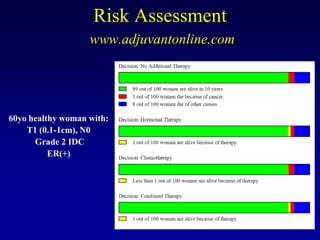
Risk Assessment
                   www.adjuvantonline.com


60yo healthy woman with:
    T1 (0.1-1cm), N0
      Grade 2 IDC
          ER(+)
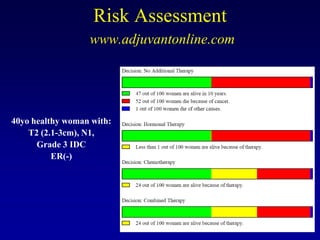
Risk Assessment
                  www.adjuvantonline.com


40yo healthy woman with:
    T2 (2.1-3cm), N1,
      Grade 3 IDC
          ER(-)
Why we need better
        risk assessment tools?
• Only 15% of LN(-) patients recur BUT
  – 50% of these patients receive chemotherapy!
• Rationale for predictive/prognostic
  technologies:
  – Avoid Over-treatment
  – Avoid Under-treatment
• Potential economic benefits
Oncotype DX™
• 21 gene RT-PCR assay on FFPE tumor
• Prognostic:
   – Estimates risk of breast cancer recurrence
• Predictive:
   – What added benefit from chemotherapy
• ER(+), Lymph node (-) cancers
• “Recurrence score”= risk of recurrence in 10yrs
• Some data for its use in LN(+), but too early to
  change practice (Albain SABCS 2007)
                     Paik et al, NEJM 2004 Dec 30;351(27):2817-26.
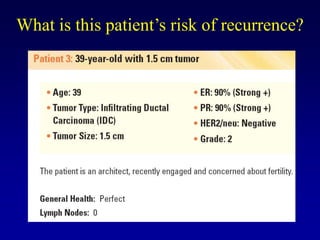
What is this patient’s risk of recurrence?
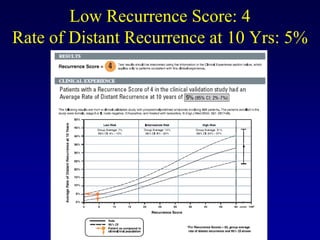
Low Recurrence Score: 4
Rate of Distant Recurrence at 10 Yrs: 5%
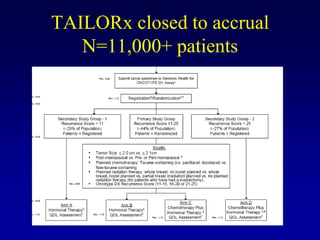
TAILORx closed to accrual
   N=11,000+ patients
Early Stage Breast Cancer
         Systemic Therapy
• Endocrine therapy
  – Tamoxifen
  – Aromatase Inhibitors
• Chemotherapy
  – Anthracycline-based
  – Anthracycline- & Taxane-based
• Biologic therapy
  – Trastuzumab
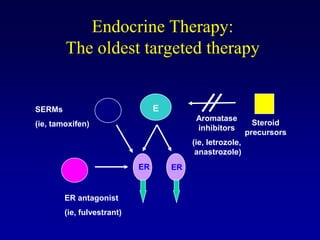
Endocrine Therapy:
        The oldest targeted therapy


SERMs                            E
                                           Aromatase
(ie, tamoxifen)                                               Steroid
                                           inhibitors
                                                            precursors
                                          (ie, letrozole,
                                           anastrozole)
                            ER       ER


        ER antagonist
        (ie, fulvestrant)
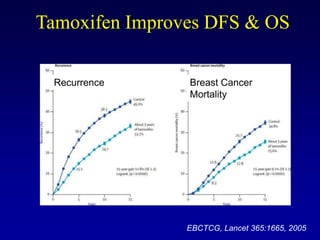
Tamoxifen Improves DFS & OS

 Recurrence     Breast Cancer
                Mortality


                EBCTCG, Lancet 365:1665, 2005
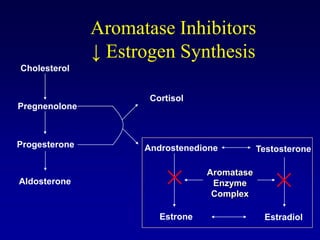
Aromatase Inhibitors
               ↓ Estrogen Synthesis
Cholesterol


                      Cortisol
Pregnenolone


Progesterone         Androstenedione          Testosterone

                                  Aromatase
Aldosterone                        Enzyme
                                   Complex

                        Estrone                Estradiol
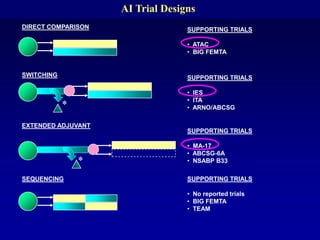
AI Trial Designs
DIRECT COMPARISON                 SUPPORTING TRIALS

                                  • ATAC
                                  • BIG FEMTA


SWITCHING                         SUPPORTING TRIALS

                                  • IES
                                  • ITA
            *                     • ARNO/ABCSG

EXTENDED ADJUVANT
                                  SUPPORTING TRIALS

                                  • MA-17
                                  • ABCSG-6A
                *                 • NSABP B33

SEQUENCING                        SUPPORTING TRIALS

                                  • No reported trials
                                  • BIG FEMTA
                                  • TEAM
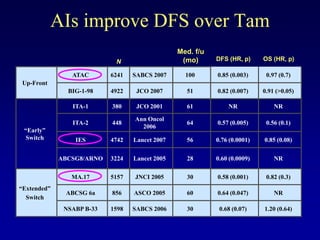
AIs improve DFS over Tam
                                                Med. f/u
                            N                    (mo)      DFS (HR, p)     OS (HR, p)

                ATAC       6241   SABCS 2007      100      0.85 (0.003)     0.97 (0.7)
 Up-Front
               BIG-1-98    4922    JCO 2007       51       0.82 (0.007)    0.91 (>0.05)

                ITA-1      380     JCO 2001       61           NR              NR

                                  Ann Oncol
                ITA-2      448                    64       0.57 (0.005)     0.56 (0.1)
                                    2006
 “Early”
  Switch         IES       4742   Lancet 2007     56       0.76 (0.0001)   0.85 (0.08)

             ABCSG8/ARNO   3224   Lancet 2005     28       0.60 (0.0009)       NR

                MA.17      5157   JNCI 2005       30       0.58 (0.001)     0.82 (0.3)
“Extended”
              ABCSG 6a     856    ASCO 2005       60       0.64 (0.047)        NR
  Switch
              NSABP B-33   1598   SABCS 2006      30        0.68 (0.07)    1.20 (0.64)
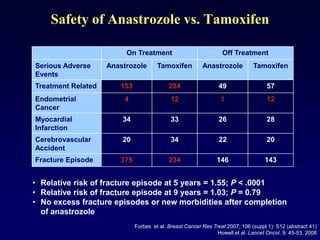
Safety of Anastrozole vs. Tamoxifen
                         On Treatment                            Off Treatment
Serious Adverse     Anastrozole       Tamoxifen          Anastrozole          Tamoxifen
Events
Treatment Related      153                 284                  49                  57
Endometrial             4                   12                  1                   12
Cancer
Myocardial              34                  33                  26                  28
Infarction
Cerebrovascular         20                  34                  22                  20
Accident
Fracture Episode       375                 234                 146                 143


• Relative risk of fracture episode at 5 years = 1.55; P < .0001
• Relative risk of fracture episode at 9 years = 1.03; P = 0.79
• No excess fracture episodes or new morbidities after completion
  of anastrozole
                             Forbes et al. Breast Cancer Res Treat 2007; 106 (suppl 1): S12 (abstract 41)
                                                               Howell et al. Lancet Oncol. 9: 45-53, 2008
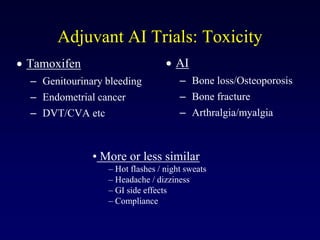
Adjuvant AI Trials: Toxicity
Tamoxifen                          AI
– Genitourinary bleeding            – Bone loss/Osteoporosis
– Endometrial cancer                – Bone fracture
– DVT/CVA etc                       – Arthralgia/myalgia


             • More or less similar
                – Hot flashes / night sweats
                – Headache / dizziness
                – GI side effects
                – Compliance
Chemotherapy
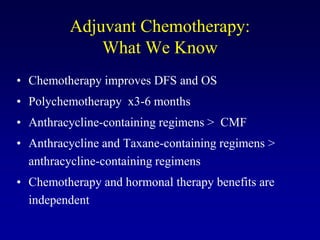
Adjuvant Chemotherapy:
             What We Know
• Chemotherapy improves DFS and OS
• Polychemotherapy x3-6 months
• Anthracycline-containing regimens > CMF
• Anthracycline and Taxane-containing regimens >
  anthracycline-containing regimens
• Chemotherapy and hormonal therapy benefits are
  independent
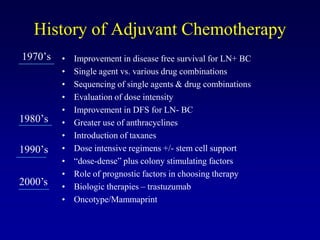
History of Adjuvant Chemotherapy
1970’s   •   Improvement in disease free survival for LN+ BC
         •   Single agent vs. various drug combinations
         •   Sequencing of single agents & drug combinations
         •   Evaluation of dose intensity
         •   Improvement in DFS for LN- BC
1980’s   •   Greater use of anthracyclines
         •   Introduction of taxanes
1990’s   •   Dose intensive regimens +/- stem cell support
         •   “dose-dense” plus colony stimulating factors
         •   Role of prognostic factors in choosing therapy
2000’s   •   Biologic therapies – trastuzumab
         •   Oncotype/Mammaprint
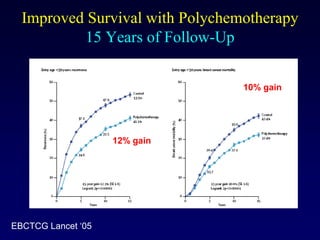
Improved Survival with Polychemotherapy
          15 Years of Follow-Up


                                 10% gain


                    12% gain


EBCTCG Lancet „05
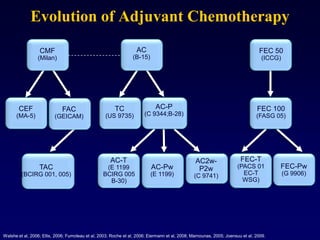
Evolution of Adjuvant Chemotherapy
                  CMF             =                                AC                     =                                     FEC 50
                 (Milan)                                         (B-15)                                                          (ICCG)


       CEF                   FAC                        TC                  AC-P                                               FEC 100
      (MA-5)             (GEICAM)                  (US 9735)           (C 9344;B-28)                                           (FASG 05)


                                                     AC-T                                       AC2w-                  FEC-T
                  TAC                              (E 1199                AC-Pw                  P2w                 (PACS 01          FEC-Pw
         (BCIRG 001, 005)                         BCIRG 005               (E 1199)              (C 9741)               EC-T               (G 9906)
                                                    B-30)                                                              WSG)


Walshe et al, 2006; Ellis, 2006; Fumoleau et al, 2003; Roche et al, 2006; Eiermann et al, 2008; Mamounas, 2005; Joensuu et al, 2009.
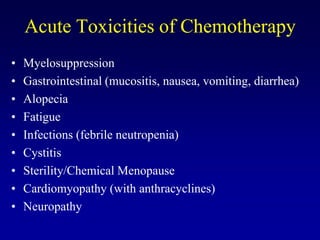
Acute Toxicities of Chemotherapy
•   Myelosuppression
•   Gastrointestinal (mucositis, nausea, vomiting, diarrhea)
•   Alopecia
•   Fatigue
•   Infections (febrile neutropenia)
•   Cystitis
•   Sterility/Chemical Menopause
•   Cardiomyopathy (with anthracyclines)
•   Neuropathy
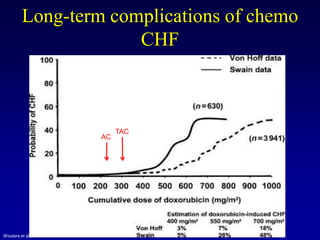
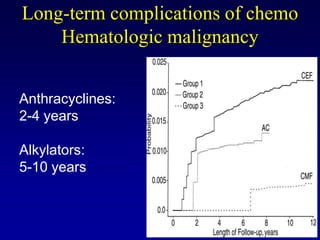
Long-term complications of chemo
                      CHF


                            TAC
                       AC


Wouters et al, 2005.
Long-term complications of chemo
    Hematologic malignancy


Anthracyclines:
2-4 years

Alkylators:
5-10 years
CMF
What is CMF?
• Cyclophosphamide, Methotrexate, 5FU
• 1st regimen to show improved DFS and OS
  in adjuvant treatment of breast cancer
• Well-tolerated:
  – fatigue, mild nausea or diarrhea
• Use has diminished with data showing
  benefit of anthracycline-based therapy

                               EBCTCG. Lancet 352:930-942, 1998
                               EBCTCG Lancet 2005
When we consider CMF?

• Low-risk breast cancer
  – Lymph node (-)
  – ER/PR (+)
  – HER2/neu “normal”
• Elderly patients
• Cardiac dysfunction
• Prior anthracycline
Anthracyclines
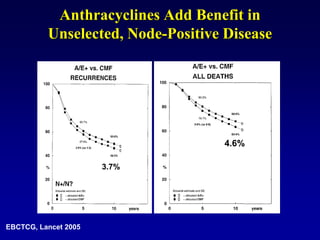
Anthracyclines Add Benefit in
          Unselected, Node-Positive Disease


                                    4.6%

                      3.7%


EBCTCG, Lancet 2005
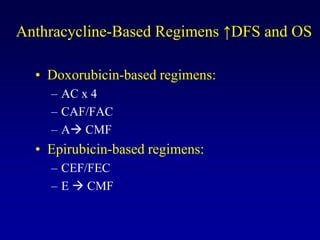
Anthracycline-Based Regimens ↑DFS and OS

  • Doxorubicin-based regimens:
    – AC x 4
    – CAF/FAC
    – A CMF
  • Epirubicin-based regimens:
    – CEF/FEC
    – E  CMF
What is Role of Taxanes in the
      Adjuvant Setting?
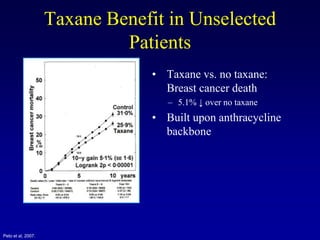
Taxane Benefit in Unselected
                             Patients
                                 • Taxane vs. no taxane:
                                   Breast cancer death
                                    – 5.1% ↓ over no taxane
                                 • Built upon anthracycline
                                   backbone


Peto et al, 2007.
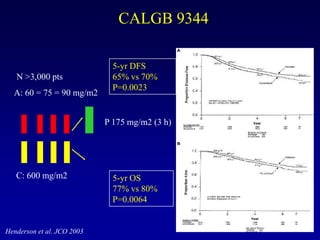
CALGB 9344

                              5-yr DFS
   N >3,000 pts               65% vs 70%
                              P=0.0023
  A: 60 = 75 = 90 mg/m2


                            P 175 mg/m2 (3 h)


   C: 600 mg/m2               5-yr OS
                              77% vs 80%
                              P=0.0064


Henderson et al. JCO 2003
Dose-Dense Chemotherapy
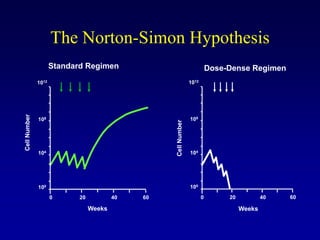
The Norton-Simon Hypothesis
                     Standard Regimen                                       Dose-Dense Regimen
              1012                                               1012
Cell Number


              108                                                108


                                                   Cell Number
              104                                                104


              100                                                100
                     0      20           40   60                        0        20           40   60

                                 Weeks                                                Weeks
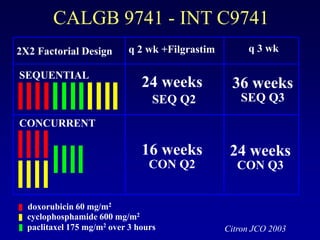
CALGB 9741 - INT C9741
2X2 Factorial Design        q 2 wk +Filgrastim        q 3 wk

SEQUENTIAL
                               24 weeks           36 weeks
                                  SEQ Q2            SEQ Q3

CONCURRENT

                               16 weeks           24 weeks
                                 CON Q2             CON Q3


  doxorubicin 60 mg/m2
  cyclophosphamide 600 mg/m2
  paclitaxel 175 mg/m2 over 3 hours              Citron JCO 2003
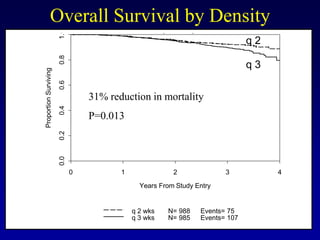
Overall Survival by Density
                         Overall Survival
                                                      By Density


                       1.0
                                                                                 q2
                       0.8
                                                                                 q3
Proportion Surviving
                       0.6


                                 31% reduction in mortality
                       0.4


                                 P=0.013
                       0.2
                       0.0


                             0          1                 2               3           4

                                              Years From Study Entry


                                            q 2 wks     N= 988     Events= 75
                                            q 3 wks     N= 985     Events= 107
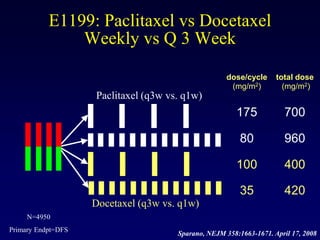
E1199: Paclitaxel vs Docetaxel
               Weekly vs Q 3 Week

                                                     dose/cycle     total dose
                                                      (mg/m2)         (mg/m2)
                    Paclitaxel (q3w vs. q1w)
                                                        175            700

                                                         80            960

                                                        100            400

                                                         35            420
                    Docetaxel (q3w vs. q1w)
     N=4950
Primary Endpt=DFS
                                      Sparano, NEJM 358:1663-1671. April 17, 2008
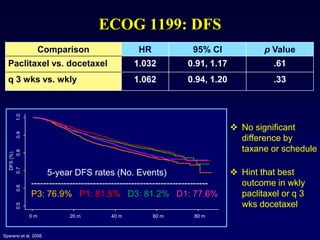
ECOG 1199: DFS
                    Comparison                   HR                95% CI             p Value
  Paclitaxel vs. docetaxel                      1.032            0.91, 1.17              .61
  q 3 wks vs. wkly                              1.062            0.94, 1.20              .33
        1.0


                                                                               No significant
        0.9


                                                                                difference by
                                                                                taxane or schedule
         0.8
    DFS (%)
   0.7


                    5-year DFS rates (No. Events)                              Hint that best
               ------------------------------------------------------------     outcome in wkly
        0.6


               P3: 76.9% P1: 81.5% D3: 81.2% D1: 77.6%                          paclitaxel or q 3
                                                                                wks docetaxel
        0.5


               0m          20 m         40 m          60 m         80 m


Sparano et al, 2008.
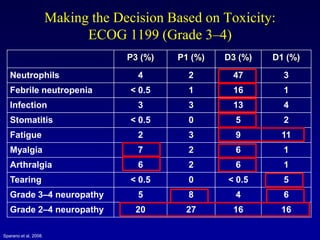
Making the Decision Based on Toxicity:
                             ECOG 1199 (Grade 3–4)
                                    P3 (%)   P1 (%)   D3 (%)   D1 (%)
   Neutrophils                        4        2       47        3
   Febrile neutropenia               < 0.5     1       16        1
   Infection                          3        3       13        4
   Stomatitis                        < 0.5     0        5        2
   Fatigue                            2        3        9       11
   Myalgia                            7        2        6        1
   Arthralgia                         6        2        6        1
   Tearing                           < 0.5     0      < 0.5      5
   Grade 3–4 neuropathy               5        8        4        6
   Grade 2–4 neuropathy               20      27       16       16

Sparano et al, 2008.
Do we need anthracyclines?
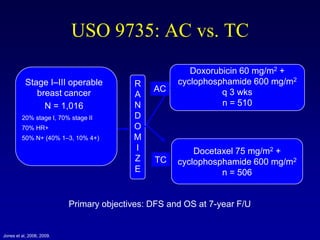
USO 9735: AC vs. TC
                                                        Doxorubicin 60 mg/m2 +
           Stage I–III operable           R          cyclophosphamide 600 mg/m2
              breast cancer                    AC              q 3 wks
                                          A
                N = 1,016                 N                    n = 510
         20% stage I, 70% stage II        D
         70% HR+                          O
         50% N+ (40% 1–3, 10% 4+)         M
                                          I              Docetaxel 75 mg/m2 +
                                          Z    TC    cyclophosphamide 600 mg/m2
                                          E                    n = 506


                           Primary objectives: DFS and OS at 7-year F/U


Jones et al, 2006, 2009.
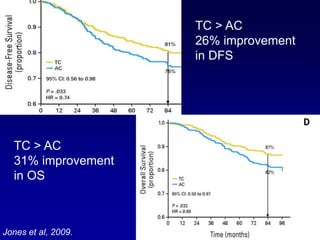
TC > AC
                     26% improvement
                     in DFS


  TC > AC
  31% improvement
  in OS


Jones et al, 2009.
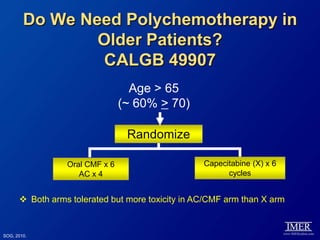
Do We Need Polychemotherapy in
                Older Patients?
                CALGB 49907
                                  Age > 65
                                (~ 60% > 70)

                                 Randomize

                 Oral CMF x 6                     Capecitabine (X) x 6
                    AC x 4                              cycles


       Both arms tolerated but more toxicity in AC/CMF arm than X arm


SOG, 2010.
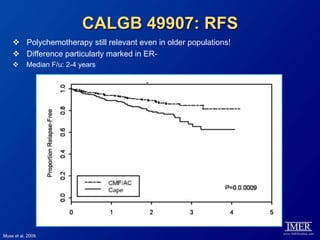
CALGB 49907: RFS
     Polychemotherapy still relevant even in older populations!
     Difference particularly marked in ER-
          Median F/u: 2-4 years


Muss et al, 2009.
Trastuzumab in the Treatment
  of Her2(+) Breast Cancer
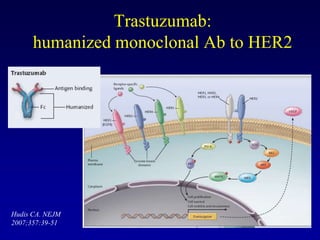
Trastuzumab:
      humanized monoclonal Ab to HER2


Hudis CA. NEJM
2007;357:39-51
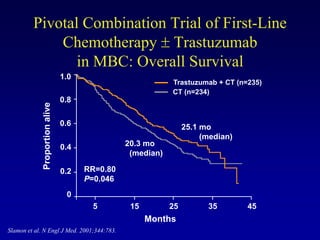
Pivotal Combination Trial of First-Line
             Chemotherapy Trastuzumab
                in MBC: Overall Survival
                                1.0
                                                            Trastuzumab + CT (n=235)
                                                            CT (n=234)
                                0.8
             Proportion alive


                                0.6                              25.1 mo
                                                                      (median)
                                0.4             20.3 mo
                                                 (median)

                                0.2   RR=0.80
                                      P=0.046
                                 0
                                       5         15         25         35        45
                                                      Months
Slamon et al. N Engl J Med. 2001;344:783.
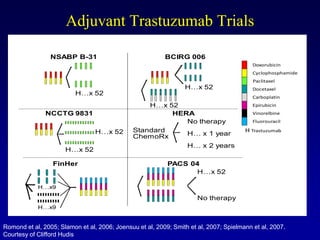
Adjuvant Trastuzumab Trials
                  Anthracyclines and Adjuvant Trastuzumab
                 NSABP B-31                               BCIRG 006
                                                                                          Doxorubicin
                                                                                          Cyclophosphamide
                                                                                          Paclitaxel
                                                                 H…x 52                   Docetaxel
                          H…x 52
                                                                                          Carboplatin
                                                  H…x 52                                  Epirubicin
               NCCTG 9831                              HERA                               Vinorelbine
                                                          No therapy                      Fluorouracil

                                 H…x 52       Standard                                 H Trastuzumab
                                              ChemoRx     H… x 1 year
                                                          H… x 2 years
                      H…x 52

                 FinHer                                    PACS 04
                                                                 H…x 52

            H…x9

                                                                      No therapy
            H…x9


Romond et al, 2005; Slamon et al, 2006; Joensuu et al, 2009; Smith et al, 2007; Spielmann et al, 2007.
Courtesy of Clifford Hudis
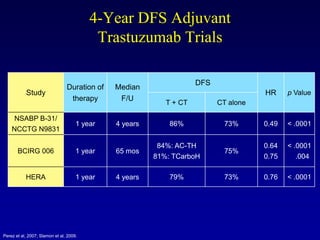
4-Year DFS Adjuvant
                                          Trastuzumab Trials

                                                                    DFS
                                Duration of   Median
           Study                                                                     HR     p Value
                                 therapy       F/U
                                                           T + CT         CT alone

     NSABP B-31/
                                     1 year   4 years       86%             73%      0.49   < .0001
    NCCTG N9831

                                                         84%: AC-TH                  0.64   < .0001
       BCIRG 006                     1 year   65 mos                        75%
                                                        81%: TCarboH                 0.75      .004

           HERA                      1 year   4 years       79%             73%      0.76   < .0001


Perez et al, 2007; Slamon et al, 2009.
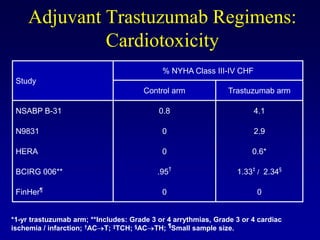
Adjuvant Trastuzumab Regimens:
              Cardiotoxicity
                                            % NYHA Class III-IV CHF
 Study
                                       Control arm              Trastuzumab arm

 NSABP B-31                                0.8                         4.1

 N9831                                      0                          2.9

 HERA                                       0                          0.6*

 BCIRG 006**                               .95†                   1.33‡ / 2.34§

 FinHer¶                                    0                           0


*1-yr trastuzumab arm; **Includes: Grade 3 or 4 arrythmias, Grade 3 or 4 cardiac
ischemia / infarction; †AC T; ‡TCH; §AC TH; ¶Small sample size.
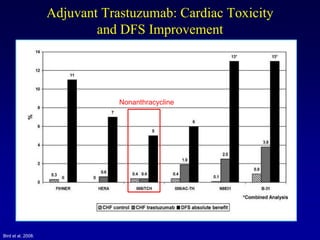
Adjuvant Trastuzumab: Cardiac Toxicity
                            and DFS Improvement


                                Nonanthracycline


Bird et al, 2008.
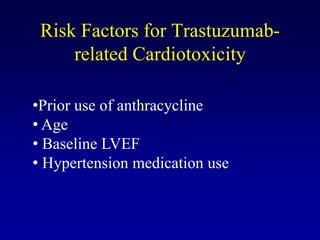
Risk Factors for Trastuzumab-
     related Cardiotoxicity

•Prior use of anthracycline
• Age
• Baseline LVEF
• Hypertension medication use
Metastatic Breast Cancer

         Lots of drugs work,
but we haven’t cured breast cancer yet
Chemo that “works” in breast cancer
 • Taxanes                              •   Irinotecan
     – paclitaxel, docetaxel, nab-      •   Etoposide
       paclitaxel
                                        •   Continuous infusion 5FU
 • Anthracyclines
                                        •   Cis- or Carboplatin
     –
         doxorubicin, epirubicin, lip
         osomal dox                     Biologics plus Chemo:
 •   Capecitabine                           – HER2+
 •   Ixabepilone                                • Trastuzumab
                                                • Lapatinib
 •   Vinorelbine
                                            – AntiVEGF
 •   Gemcitabine                                • Bevacizumab
 •   Eribulin
Basic concepts for MBC
• Goals are palliative so minimize toxicity while
  improving response & survival
• For ER/PR+ MBC  start with and use hormones
  as long as possible
   – Tam, letrozole, anastrozole, exemestane, fulvestrant…
   – Exception is rapidly progressing visceral mets
• Single, sequential agent therapy over
  combinations
   – Combinations = better response, more toxicity, not
     necessarily longer survival than using same drugs in
     sequence
Triple Negative and Basal-like
        Breast Cancer
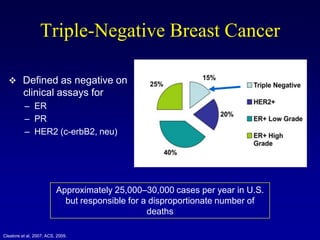
Triple-Negative Breast Cancer

   Defined as negative on
          clinical assays for
          – ER
          – PR
          – HER2 (c-erbB2, neu)


                          Approximately 25,000–30,000 cases per year in U.S.
                            but responsible for a disproportionate number of
                                                 deaths

Cleatore et al, 2007; ACS, 2009.
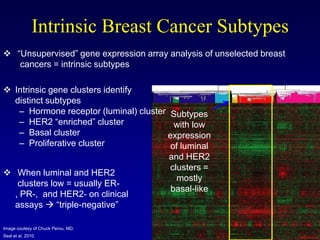
Intrinsic Breast Cancer Subtypes
 “Unsupervised” gene expression array analysis of unselected breast
   cancers = intrinsic subtypes

 Intrinsic gene clusters identify
  distinct subtypes
   – Hormone receptor (luminal) cluster Subtypes
   – HER2 “enriched” cluster             with low
   – Basal cluster                     expression
   – Proliferative cluster              of luminal          ER-negative
                                       and HER2              subtypes
                                       clusters =
 When luminal and HER2
                                         mostly
   clusters low = usually ER-
                                       basal-like
  , PR-, and HER2- on clinical
  assays  “triple-negative”

Image coutesy of Chuck Perou, MD.
Seal et al, 2010.
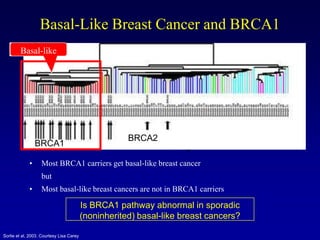
Basal-Like Breast Cancer and BRCA1
        Basal-like


                                                      BRCA2
                 BRCA1                                                 = BRCA1+T et = BRCA2+
                                                                          Sorlie    al. PNAS 03

             •     Most BRCA1 carriers get basal-like breast cancer
                   but
             •     Most basal-like breast cancers are not in BRCA1 carriers

                                          Is BRCA1 pathway abnormal in sporadic
                                          (noninherited) basal-like breast cancers?

Sorlie et al, 2003. Courtesy Lisa Carey
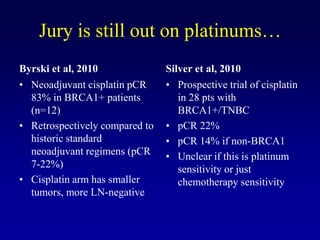
Jury is still out on platinums…
Byrski et al, 2010              Silver et al, 2010
• Neoadjuvant cisplatin pCR     • Prospective trial of cisplatin
  83% in BRCA1+ patients           in 28 pts with
  (n=12)                           BRCA1+/TNBC
• Retrospectively compared to   • pCR 22%
  historic standard             • pCR 14% if non-BRCA1
  neoadjuvant regimens (pCR     • Unclear if this is platinum
  7-22%)                           sensitivity or just
• Cisplatin arm has smaller        chemotherapy sensitivity
  tumors, more LN-negative
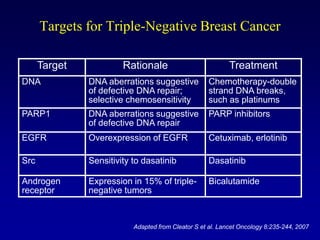
Targets for Triple-Negative Breast Cancer

      Target            Rationale                           Treatment
DNA            DNA aberrations suggestive            Chemotherapy-double
               of defective DNA repair;              strand DNA breaks,
               selective chemosensitivity            such as platinums
PARP1          DNA aberrations suggestive            PARP inhibitors
               of defective DNA repair
EGFR           Overexpression of EGFR                Cetuximab, erlotinib

Src            Sensitivity to dasatinib              Dasatinib

Androgen       Expression in 15% of triple-          Bicalutamide
receptor       negative tumors


                           Adapted from Cleator S et al. Lancet Oncology 8:235-244, 2007
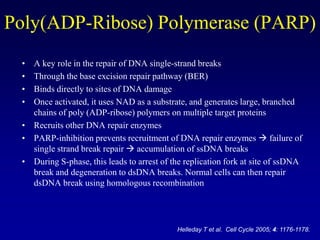
Poly(ADP-Ribose) Polymerase (PARP)
 • A key role in the repair of DNA single-strand breaks
 • Through the base excision repair pathway (BER)
 • Binds directly to sites of DNA damage
 • Once activated, it uses NAD as a substrate, and generates large, branched
   chains of poly (ADP-ribose) polymers on multiple target proteins
 • Recruits other DNA repair enzymes
 • PARP-inhibition prevents recruitment of DNA repair enzymes  failure of
   single strand break repair  accumulation of ssDNA breaks
 • During S-phase, this leads to arrest of the replication fork at site of ssDNA
   break and degeneration to dsDNA breaks. Normal cells can then repair
   dsDNA break using homologous recombination


                                            Helleday T et al. Cell Cycle 2005; 4: 1176-1178.
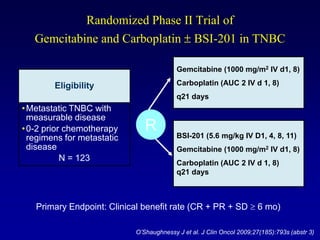
Randomized Phase II Trial of
   Gemcitabine and Carboplatin BSI-201 in TNBC

                                          Gemcitabine (1000 mg/m2 IV d1, 8)

        Eligibility                       Carboplatin (AUC 2 IV d 1, 8)
                                          q21 days
• Metastatic TNBC with
  measurable disease
• 0-2 prior chemotherapy       R          BSI-201 (5.6 mg/kg IV D1, 4, 8, 11)
  regimens for metastatic
  disease                                 Gemcitabine (1000 mg/m2 IV d1, 8)
           N = 123
                                          Carboplatin (AUC 2 IV d 1, 8)
                                          q21 days


   Primary Endpoint: Clinical benefit rate (CR + PR + SD               6 mo)

                            O’Shaughnessy J et al. J Clin Oncol 2009;27(18S):793s (abstr 3)
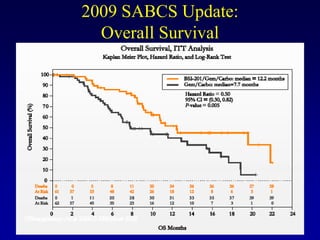
2009 SABCS Update:
                         Overall Survival


O’Shaughnessy J et al. SABCS 2009;(abstr 3122)
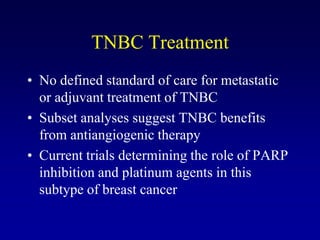
TNBC Treatment
• No defined standard of care for metastatic
  or adjuvant treatment of TNBC
• Subset analyses suggest TNBC benefits
  from antiangiogenic therapy
• Current trials determining the role of PARP
  inhibition and platinum agents in this
  subtype of breast cancer

Breast cancer overview

  • 1.
    Breast Cancer 101: an overview of therapy Tiffany A. Traina, MD Breast Cancer Medicine Service April 2011 The following material is intended for MSKCC internal medicine housestaff teaching purposes only. The slides are courtesy of Dr. Tiffany Traina and were updated for the LibGuide in 2011-2012 .
  • 2.
    New Invasive BreastCancer Cases United States 2010 Estimates 207,090 invasive ca 54,010 in situ ca
  • 3.
  • 4.
    Treatment of EarlyStage Disease Curative intent! Local therapy Risk assessment Systemic therapies
  • 5.
    What do weneed to know from pathology to estimate risk? • T • Don’t sweat the • N staging! • ER/PR – LN- – LN+ • HER2 – MBC – IHC – FISH • Margins • LVI, Grade
  • 6.
    History of RiskAssessment • Traditional prognostic factors – Limited predictive power (T 10% N 5% rule) – Poor reproducibility – Lack standardization, validation – Limited insight into relative benefits of chemotherapy for different individuals Bundred. Cancer Treat Rev. 2001;27:137-142.
  • 7.
    Risk Assessment www.adjuvantonline.com 60yo healthy woman with: T1 (0.1-1cm), N0 Grade 2 IDC ER(+)
  • 8.
    Risk Assessment www.adjuvantonline.com 40yo healthy woman with: T2 (2.1-3cm), N1, Grade 3 IDC ER(-)
  • 9.
    Why we needbetter risk assessment tools? • Only 15% of LN(-) patients recur BUT – 50% of these patients receive chemotherapy! • Rationale for predictive/prognostic technologies: – Avoid Over-treatment – Avoid Under-treatment • Potential economic benefits
  • 10.
    Oncotype DX™ • 21gene RT-PCR assay on FFPE tumor • Prognostic: – Estimates risk of breast cancer recurrence • Predictive: – What added benefit from chemotherapy • ER(+), Lymph node (-) cancers • “Recurrence score”= risk of recurrence in 10yrs • Some data for its use in LN(+), but too early to change practice (Albain SABCS 2007) Paik et al, NEJM 2004 Dec 30;351(27):2817-26.
  • 11.
    What is thispatient’s risk of recurrence?
  • 12.
    Low Recurrence Score:4 Rate of Distant Recurrence at 10 Yrs: 5%
  • 13.
    TAILORx closed toaccrual N=11,000+ patients
  • 14.
    Early Stage BreastCancer Systemic Therapy • Endocrine therapy – Tamoxifen – Aromatase Inhibitors • Chemotherapy – Anthracycline-based – Anthracycline- & Taxane-based • Biologic therapy – Trastuzumab
  • 15.
    Endocrine Therapy: The oldest targeted therapy SERMs E Aromatase (ie, tamoxifen) Steroid inhibitors precursors (ie, letrozole, anastrozole) ER ER ER antagonist (ie, fulvestrant)
  • 16.
    Tamoxifen Improves DFS& OS Recurrence Breast Cancer Mortality EBCTCG, Lancet 365:1665, 2005
  • 17.
    Aromatase Inhibitors ↓ Estrogen Synthesis Cholesterol Cortisol Pregnenolone Progesterone Androstenedione Testosterone Aromatase Aldosterone Enzyme Complex Estrone Estradiol
  • 18.
    AI Trial Designs DIRECTCOMPARISON SUPPORTING TRIALS • ATAC • BIG FEMTA SWITCHING SUPPORTING TRIALS • IES • ITA * • ARNO/ABCSG EXTENDED ADJUVANT SUPPORTING TRIALS • MA-17 • ABCSG-6A * • NSABP B33 SEQUENCING SUPPORTING TRIALS • No reported trials • BIG FEMTA • TEAM
  • 19.
    AIs improve DFSover Tam Med. f/u N (mo) DFS (HR, p) OS (HR, p) ATAC 6241 SABCS 2007 100 0.85 (0.003) 0.97 (0.7) Up-Front BIG-1-98 4922 JCO 2007 51 0.82 (0.007) 0.91 (>0.05) ITA-1 380 JCO 2001 61 NR NR Ann Oncol ITA-2 448 64 0.57 (0.005) 0.56 (0.1) 2006 “Early” Switch IES 4742 Lancet 2007 56 0.76 (0.0001) 0.85 (0.08) ABCSG8/ARNO 3224 Lancet 2005 28 0.60 (0.0009) NR MA.17 5157 JNCI 2005 30 0.58 (0.001) 0.82 (0.3) “Extended” ABCSG 6a 856 ASCO 2005 60 0.64 (0.047) NR Switch NSABP B-33 1598 SABCS 2006 30 0.68 (0.07) 1.20 (0.64)
  • 20.
    Safety of Anastrozolevs. Tamoxifen On Treatment Off Treatment Serious Adverse Anastrozole Tamoxifen Anastrozole Tamoxifen Events Treatment Related 153 284 49 57 Endometrial 4 12 1 12 Cancer Myocardial 34 33 26 28 Infarction Cerebrovascular 20 34 22 20 Accident Fracture Episode 375 234 146 143 • Relative risk of fracture episode at 5 years = 1.55; P < .0001 • Relative risk of fracture episode at 9 years = 1.03; P = 0.79 • No excess fracture episodes or new morbidities after completion of anastrozole Forbes et al. Breast Cancer Res Treat 2007; 106 (suppl 1): S12 (abstract 41) Howell et al. Lancet Oncol. 9: 45-53, 2008
  • 21.
    Adjuvant AI Trials:Toxicity Tamoxifen AI – Genitourinary bleeding – Bone loss/Osteoporosis – Endometrial cancer – Bone fracture – DVT/CVA etc – Arthralgia/myalgia • More or less similar – Hot flashes / night sweats – Headache / dizziness – GI side effects – Compliance
  • 22.
  • 23.
    Adjuvant Chemotherapy: What We Know • Chemotherapy improves DFS and OS • Polychemotherapy x3-6 months • Anthracycline-containing regimens > CMF • Anthracycline and Taxane-containing regimens > anthracycline-containing regimens • Chemotherapy and hormonal therapy benefits are independent
  • 24.
    History of AdjuvantChemotherapy 1970’s • Improvement in disease free survival for LN+ BC • Single agent vs. various drug combinations • Sequencing of single agents & drug combinations • Evaluation of dose intensity • Improvement in DFS for LN- BC 1980’s • Greater use of anthracyclines • Introduction of taxanes 1990’s • Dose intensive regimens +/- stem cell support • “dose-dense” plus colony stimulating factors • Role of prognostic factors in choosing therapy 2000’s • Biologic therapies – trastuzumab • Oncotype/Mammaprint
  • 25.
    Improved Survival withPolychemotherapy 15 Years of Follow-Up 10% gain 12% gain EBCTCG Lancet „05
  • 26.
    Evolution of AdjuvantChemotherapy CMF = AC = FEC 50 (Milan) (B-15) (ICCG) CEF FAC TC AC-P FEC 100 (MA-5) (GEICAM) (US 9735) (C 9344;B-28) (FASG 05) AC-T AC2w- FEC-T TAC (E 1199 AC-Pw P2w (PACS 01 FEC-Pw (BCIRG 001, 005) BCIRG 005 (E 1199) (C 9741) EC-T (G 9906) B-30) WSG) Walshe et al, 2006; Ellis, 2006; Fumoleau et al, 2003; Roche et al, 2006; Eiermann et al, 2008; Mamounas, 2005; Joensuu et al, 2009.
  • 27.
    Acute Toxicities ofChemotherapy • Myelosuppression • Gastrointestinal (mucositis, nausea, vomiting, diarrhea) • Alopecia • Fatigue • Infections (febrile neutropenia) • Cystitis • Sterility/Chemical Menopause • Cardiomyopathy (with anthracyclines) • Neuropathy
  • 28.
    Long-term complications ofchemo CHF TAC AC Wouters et al, 2005.
  • 29.
    Long-term complications ofchemo Hematologic malignancy Anthracyclines: 2-4 years Alkylators: 5-10 years
  • 30.
  • 31.
    What is CMF? •Cyclophosphamide, Methotrexate, 5FU • 1st regimen to show improved DFS and OS in adjuvant treatment of breast cancer • Well-tolerated: – fatigue, mild nausea or diarrhea • Use has diminished with data showing benefit of anthracycline-based therapy EBCTCG. Lancet 352:930-942, 1998 EBCTCG Lancet 2005
  • 32.
    When we considerCMF? • Low-risk breast cancer – Lymph node (-) – ER/PR (+) – HER2/neu “normal” • Elderly patients • Cardiac dysfunction • Prior anthracycline
  • 33.
  • 34.
    Anthracyclines Add Benefitin Unselected, Node-Positive Disease 4.6% 3.7% EBCTCG, Lancet 2005
  • 35.
    Anthracycline-Based Regimens ↑DFSand OS • Doxorubicin-based regimens: – AC x 4 – CAF/FAC – A CMF • Epirubicin-based regimens: – CEF/FEC – E  CMF
  • 36.
    What is Roleof Taxanes in the Adjuvant Setting?
  • 37.
    Taxane Benefit inUnselected Patients • Taxane vs. no taxane: Breast cancer death – 5.1% ↓ over no taxane • Built upon anthracycline backbone Peto et al, 2007.
  • 38.
    CALGB 9344 5-yr DFS N >3,000 pts 65% vs 70% P=0.0023 A: 60 = 75 = 90 mg/m2 P 175 mg/m2 (3 h) C: 600 mg/m2 5-yr OS 77% vs 80% P=0.0064 Henderson et al. JCO 2003
  • 39.
  • 40.
    The Norton-Simon Hypothesis Standard Regimen Dose-Dense Regimen 1012 1012 Cell Number 108 108 Cell Number 104 104 100 100 0 20 40 60 0 20 40 60 Weeks Weeks
  • 41.
    CALGB 9741 -INT C9741 2X2 Factorial Design q 2 wk +Filgrastim q 3 wk SEQUENTIAL 24 weeks 36 weeks SEQ Q2 SEQ Q3 CONCURRENT 16 weeks 24 weeks CON Q2 CON Q3 doxorubicin 60 mg/m2 cyclophosphamide 600 mg/m2 paclitaxel 175 mg/m2 over 3 hours Citron JCO 2003
  • 42.
    Overall Survival byDensity Overall Survival By Density 1.0 q2 0.8 q3 Proportion Surviving 0.6 31% reduction in mortality 0.4 P=0.013 0.2 0.0 0 1 2 3 4 Years From Study Entry q 2 wks N= 988 Events= 75 q 3 wks N= 985 Events= 107
  • 43.
    E1199: Paclitaxel vsDocetaxel Weekly vs Q 3 Week dose/cycle total dose (mg/m2) (mg/m2) Paclitaxel (q3w vs. q1w) 175 700 80 960 100 400 35 420 Docetaxel (q3w vs. q1w) N=4950 Primary Endpt=DFS Sparano, NEJM 358:1663-1671. April 17, 2008
  • 44.
    ECOG 1199: DFS Comparison HR 95% CI p Value Paclitaxel vs. docetaxel 1.032 0.91, 1.17 .61 q 3 wks vs. wkly 1.062 0.94, 1.20 .33 1.0  No significant 0.9 difference by taxane or schedule 0.8 DFS (%) 0.7 5-year DFS rates (No. Events)  Hint that best ------------------------------------------------------------ outcome in wkly 0.6 P3: 76.9% P1: 81.5% D3: 81.2% D1: 77.6% paclitaxel or q 3 wks docetaxel 0.5 0m 20 m 40 m 60 m 80 m Sparano et al, 2008.
  • 45.
    Making the DecisionBased on Toxicity: ECOG 1199 (Grade 3–4) P3 (%) P1 (%) D3 (%) D1 (%) Neutrophils 4 2 47 3 Febrile neutropenia < 0.5 1 16 1 Infection 3 3 13 4 Stomatitis < 0.5 0 5 2 Fatigue 2 3 9 11 Myalgia 7 2 6 1 Arthralgia 6 2 6 1 Tearing < 0.5 0 < 0.5 5 Grade 3–4 neuropathy 5 8 4 6 Grade 2–4 neuropathy 20 27 16 16 Sparano et al, 2008.
  • 46.
    Do we needanthracyclines?
  • 47.
    USO 9735: ACvs. TC Doxorubicin 60 mg/m2 + Stage I–III operable R cyclophosphamide 600 mg/m2 breast cancer AC q 3 wks A N = 1,016 N n = 510 20% stage I, 70% stage II D 70% HR+ O 50% N+ (40% 1–3, 10% 4+) M I Docetaxel 75 mg/m2 + Z TC cyclophosphamide 600 mg/m2 E n = 506 Primary objectives: DFS and OS at 7-year F/U Jones et al, 2006, 2009.
  • 48.
    TC > AC 26% improvement in DFS TC > AC 31% improvement in OS Jones et al, 2009.
  • 49.
    Do We NeedPolychemotherapy in Older Patients? CALGB 49907 Age > 65 (~ 60% > 70) Randomize Oral CMF x 6 Capecitabine (X) x 6 AC x 4 cycles  Both arms tolerated but more toxicity in AC/CMF arm than X arm SOG, 2010.
  • 50.
    CALGB 49907: RFS  Polychemotherapy still relevant even in older populations!  Difference particularly marked in ER-  Median F/u: 2-4 years Muss et al, 2009.
  • 51.
    Trastuzumab in theTreatment of Her2(+) Breast Cancer
  • 52.
    Trastuzumab: humanized monoclonal Ab to HER2 Hudis CA. NEJM 2007;357:39-51
  • 53.
    Pivotal Combination Trialof First-Line Chemotherapy Trastuzumab in MBC: Overall Survival 1.0 Trastuzumab + CT (n=235) CT (n=234) 0.8 Proportion alive 0.6 25.1 mo (median) 0.4 20.3 mo (median) 0.2 RR=0.80 P=0.046 0 5 15 25 35 45 Months Slamon et al. N Engl J Med. 2001;344:783.
  • 54.
    Adjuvant Trastuzumab Trials Anthracyclines and Adjuvant Trastuzumab NSABP B-31 BCIRG 006 Doxorubicin Cyclophosphamide Paclitaxel H…x 52 Docetaxel H…x 52 Carboplatin H…x 52 Epirubicin NCCTG 9831 HERA Vinorelbine No therapy Fluorouracil H…x 52 Standard H Trastuzumab ChemoRx H… x 1 year H… x 2 years H…x 52 FinHer PACS 04 H…x 52 H…x9 No therapy H…x9 Romond et al, 2005; Slamon et al, 2006; Joensuu et al, 2009; Smith et al, 2007; Spielmann et al, 2007. Courtesy of Clifford Hudis
  • 55.
    4-Year DFS Adjuvant Trastuzumab Trials DFS Duration of Median Study HR p Value therapy F/U T + CT CT alone NSABP B-31/ 1 year 4 years 86% 73% 0.49 < .0001 NCCTG N9831 84%: AC-TH 0.64 < .0001 BCIRG 006 1 year 65 mos 75% 81%: TCarboH 0.75 .004 HERA 1 year 4 years 79% 73% 0.76 < .0001 Perez et al, 2007; Slamon et al, 2009.
  • 56.
    Adjuvant Trastuzumab Regimens: Cardiotoxicity % NYHA Class III-IV CHF Study Control arm Trastuzumab arm NSABP B-31 0.8 4.1 N9831 0 2.9 HERA 0 0.6* BCIRG 006** .95† 1.33‡ / 2.34§ FinHer¶ 0 0 *1-yr trastuzumab arm; **Includes: Grade 3 or 4 arrythmias, Grade 3 or 4 cardiac ischemia / infarction; †AC T; ‡TCH; §AC TH; ¶Small sample size.
  • 57.
    Adjuvant Trastuzumab: CardiacToxicity and DFS Improvement Nonanthracycline Bird et al, 2008.
  • 58.
    Risk Factors forTrastuzumab- related Cardiotoxicity •Prior use of anthracycline • Age • Baseline LVEF • Hypertension medication use
  • 59.
    Metastatic Breast Cancer Lots of drugs work, but we haven’t cured breast cancer yet
  • 60.
    Chemo that “works”in breast cancer • Taxanes • Irinotecan – paclitaxel, docetaxel, nab- • Etoposide paclitaxel • Continuous infusion 5FU • Anthracyclines • Cis- or Carboplatin – doxorubicin, epirubicin, lip osomal dox Biologics plus Chemo: • Capecitabine – HER2+ • Ixabepilone • Trastuzumab • Lapatinib • Vinorelbine – AntiVEGF • Gemcitabine • Bevacizumab • Eribulin
  • 61.
    Basic concepts forMBC • Goals are palliative so minimize toxicity while improving response & survival • For ER/PR+ MBC  start with and use hormones as long as possible – Tam, letrozole, anastrozole, exemestane, fulvestrant… – Exception is rapidly progressing visceral mets • Single, sequential agent therapy over combinations – Combinations = better response, more toxicity, not necessarily longer survival than using same drugs in sequence
  • 62.
    Triple Negative andBasal-like Breast Cancer
  • 63.
    Triple-Negative Breast Cancer  Defined as negative on clinical assays for – ER – PR – HER2 (c-erbB2, neu) Approximately 25,000–30,000 cases per year in U.S. but responsible for a disproportionate number of deaths Cleatore et al, 2007; ACS, 2009.
  • 64.
    Intrinsic Breast CancerSubtypes  “Unsupervised” gene expression array analysis of unselected breast cancers = intrinsic subtypes  Intrinsic gene clusters identify distinct subtypes – Hormone receptor (luminal) cluster Subtypes – HER2 “enriched” cluster with low – Basal cluster expression – Proliferative cluster of luminal ER-negative and HER2 subtypes clusters =  When luminal and HER2 mostly clusters low = usually ER- basal-like , PR-, and HER2- on clinical assays  “triple-negative” Image coutesy of Chuck Perou, MD. Seal et al, 2010.
  • 65.
    Basal-Like Breast Cancerand BRCA1 Basal-like BRCA2 BRCA1 = BRCA1+T et = BRCA2+ Sorlie al. PNAS 03 • Most BRCA1 carriers get basal-like breast cancer but • Most basal-like breast cancers are not in BRCA1 carriers Is BRCA1 pathway abnormal in sporadic (noninherited) basal-like breast cancers? Sorlie et al, 2003. Courtesy Lisa Carey
  • 66.
    Jury is stillout on platinums… Byrski et al, 2010 Silver et al, 2010 • Neoadjuvant cisplatin pCR • Prospective trial of cisplatin 83% in BRCA1+ patients in 28 pts with (n=12) BRCA1+/TNBC • Retrospectively compared to • pCR 22% historic standard • pCR 14% if non-BRCA1 neoadjuvant regimens (pCR • Unclear if this is platinum 7-22%) sensitivity or just • Cisplatin arm has smaller chemotherapy sensitivity tumors, more LN-negative
  • 67.
    Targets for Triple-NegativeBreast Cancer Target Rationale Treatment DNA DNA aberrations suggestive Chemotherapy-double of defective DNA repair; strand DNA breaks, selective chemosensitivity such as platinums PARP1 DNA aberrations suggestive PARP inhibitors of defective DNA repair EGFR Overexpression of EGFR Cetuximab, erlotinib Src Sensitivity to dasatinib Dasatinib Androgen Expression in 15% of triple- Bicalutamide receptor negative tumors Adapted from Cleator S et al. Lancet Oncology 8:235-244, 2007
  • 68.
    Poly(ADP-Ribose) Polymerase (PARP) • A key role in the repair of DNA single-strand breaks • Through the base excision repair pathway (BER) • Binds directly to sites of DNA damage • Once activated, it uses NAD as a substrate, and generates large, branched chains of poly (ADP-ribose) polymers on multiple target proteins • Recruits other DNA repair enzymes • PARP-inhibition prevents recruitment of DNA repair enzymes  failure of single strand break repair  accumulation of ssDNA breaks • During S-phase, this leads to arrest of the replication fork at site of ssDNA break and degeneration to dsDNA breaks. Normal cells can then repair dsDNA break using homologous recombination Helleday T et al. Cell Cycle 2005; 4: 1176-1178.
  • 69.
    Randomized Phase IITrial of Gemcitabine and Carboplatin BSI-201 in TNBC Gemcitabine (1000 mg/m2 IV d1, 8) Eligibility Carboplatin (AUC 2 IV d 1, 8) q21 days • Metastatic TNBC with measurable disease • 0-2 prior chemotherapy R BSI-201 (5.6 mg/kg IV D1, 4, 8, 11) regimens for metastatic disease Gemcitabine (1000 mg/m2 IV d1, 8) N = 123 Carboplatin (AUC 2 IV d 1, 8) q21 days Primary Endpoint: Clinical benefit rate (CR + PR + SD 6 mo) O’Shaughnessy J et al. J Clin Oncol 2009;27(18S):793s (abstr 3)
  • 70.
    2009 SABCS Update: Overall Survival O’Shaughnessy J et al. SABCS 2009;(abstr 3122)
  • 71.
    TNBC Treatment • Nodefined standard of care for metastatic or adjuvant treatment of TNBC • Subset analyses suggest TNBC benefits from antiangiogenic therapy • Current trials determining the role of PARP inhibition and platinum agents in this subtype of breast cancer

Editor's Notes

  • #14 This is the schema of the TAILORx trial. The eligible patients for this trial are N–, ER+ and are candidates for chemotherapy (ie, patients who do not have comorbid conditions that would preclude them from receiving chemotherapy and who are willing to take it if recommended).The fact that the Breast Cancer Intergroup is stratifying patients for the TAILORx trial by the Oncotype DX™ assay demonstrates that this assay is widely accepted and validated in the study population. Treatment will be based on the results of the assay.Patients will be stratified as follows:Patients with a Recurrence Score below 11 will receive hormonal therapy alone. Patients with a Recurrence Score between 11 and 25 will be randomized to either hormonal therapy alone or hormonal therapy + chemotherapy. This is the primary study group. This corresponds approximately to a risk of recurrence at 10 years of 10%-20%. Patients with a Recurrence Score greater than 25 will receive chemotherapy + hormonal therapy.Since this trial has a dealer’s choice–type design, individual investigators can select the type of hormonal therapy and chemotherapy from a list included in the protocol.The groups in this trial do not correspond to the low-, intermediate-, and high-risk cutoffs found on the Oncotype DX™ report. However, the cutoffs for the TAILORx trialwere picked for different reasons from those involved with the selection of cutoffs for the validation trial and the Oncotype DX™ report. The cutoffs in the study were selected to correspond with specific risk levels. For instance, it was felt that it was not ethical to deprive a women of chemotherapy if she had a risk level above 20%.
  • #22 Ongoing trials exploring 10 years of AI Extension of MA-17Bias obviously is that you’re selecting for patients who have already tolerated 10 years of endocrine therapy and have not yet recurred
  • #23 When to use it?When to use CMF?What are the anthracycline-based regimens?What is the role of taxanes?What is dose-dense chemotherapy?What are the available standard adjuvant chemotherapy regimens?
  • #26 Unselected populationBenefits appear greater in women &lt;50 yo and for those with LN-positive diseaseProbably speaks to the biology of the cancerBetter survival BUT also risks…
  • #27 In general, anthracycline and taxane containing regimens appear superior to non- A and –T containing regimensCan we better determine which women will benefit from adj chemotherapyAre there certain subgroups of patients who have greater benefit1990s The TaxanesBuilding upon the backbone of anthracyclines, the taxanescontinued to improveupon adjuvant breast cancer treatmentoutcomesFrom CMF:BCIRG 001: Docetaxel replaced 5FU. TAC x6 &gt; FAC x6 in DFS and OSFROM AC:Adding Taxol to ACCALGB 9344 showed addition of Taxol 175 q3 to AC improved DFS and OSNSABP B28 confirmedimproved DFS when Tq3 added to AC. No OS difference, but thismightbe due to concurrent tam use and the lowerrisk nature of this trials’ participantsCALGB 9741 concept of dose density: q2w issuperior to q3w in terms of DFS and OSECOG 1199 lookedatschedule as well as drug; ACq3x4 weekly/q3, taxol or doce. Weekly Taxol superior in terms of DFS/OS. Doce q3 superior to q3 Taxol in terms of DFS.Continuing the trend, PACS01 showed the addition of Doce x3 to FEC3 wasbetterthan FEC6 in DFS and OSGEICAM 9906 compared FECx6 vs FECx4 weekly taxol. DFS wasimprovedwithweekly Taxol.Eliminating AnthracyclineTC vs. ACx4  N=1000, 50% LN+  TC&gt;AC in terms of DFS and OSLet’s look atsome of theseregimens more closelyAnd reviewsome of the unanswered questions!
  • #35 In the 2005 update of the overview, there is a ~5% mortality benefit to the addition of anthracyclines in unselected patients with LN+ breast cancer.
  • #47 Are the benefits from taxanes enough to be able to abandon use of anthracyclines given risk of cardiac toxicity and leukemia?
  • #67 BRCAness about TNBC and BSBC