B.PHARM. 5th SEMESTER
PHARMACOGNOSY ANDPHYTOCHEMISTRY-II
BP504T.
UNIT-III
Isolation, Identification and Analysis of
Phytoconstituents
Resins: Podophyllotoxins, Curcumin
RESINS: Definition, classification,
properties and test for identification
DEFINITION
• Resins are solid or semi-solid, amorphous
products derived from natural living sources and
are mostly from the plant origin (exception is
shellac that is obtained from the secretions of
insect).
• Resins are secondary metabolites produced by
higher plants and are oxidative products of
terpenes.
• Obtained as exudates from plants and considered
as end product of metabolism.
• Resins are produced and stored in the
schizogenous glands or cavities of the plants.
PROPERTIES:
•These are more or less solid, hard,
transparent, or translucent materials which
come in market as an unorganized drug.
•Soften and melt on heating.
•Resins are insoluble in most polar and
nonpolar solvents like water and petroleum
ether, but dissolve completely in alcohol,
solvent ether, benzene, or chloroform.
TYPES:
•Normal or physiological resin: resins that
are pre-formed in the plants and making
injury to the plants can increase their
yield (Example: resin of Pinus)
•Abnormal or pathological resin: resins
that are found in the plants Only when
injury or incision is made (Examples:
benzoin, Tolu balsam)
CLASSIFICATION:
• On the basis of their formation
• On the basis of their chemical nature.
• On the basis of occurrence with other secondary
metabolites.
1. On the basis of their formation :
• Physiological resins: These are formed as a normal
product of metabolism without making injury to the
plants
• Pathological Resins: Formed as a result of wound,
injury or abnormal circumstances (benzoin, colophony,
balsams, aloe resin etc.)
2. On the basis of their chemical nature:
• Resin acids – resinolic acids
• Ester resins
• Resin alcohols – resinols
• Resin phenols – resinotannols
• Resenes
Resin Acids: Resin acids are the carboxylic acid group containing resinous
substances. They are soluble in aqueous solution of alkali producing frothy
solution.
Examples: Colophony and myrrh (abietic acid and commiphoric acid).
Resin Esters: This group contains esters as the chief constituents of the resins
Examples: Benzoin and Storax, Benzoin contains benzyl benzoate, Storax contains
cinnamyl cinnamate
Resin Alcohols: They occurs as in free state or as esters.
Example: Balsam of peru with peru resinotannol.
Resin Phenols: Resin phenols or resinotannols are also high
molecular weight compounds which occur in free states or as esters.
Example: The Resinotannol are found in balsam of Peru as
peruresinotannol, in Tolu balsam as toluresinotannol and in benzoin
as siaresinotannols.
Resenes: Chemically inert resin products are generally termed as
resenes. They are generally found in free state and never form esters
or other derivatives.
Example: Asafoetida is an resene containing drug.
3. On the basis of occurrence with other secondary
metabolites.
• Oleoresins: Naturally occurring mixtures of a volatile
oil and a resin
• Gum resins: Resin associated with gum
• Oleo-gum resins: A naturally occurring mix of volatile
oil, gums / mucilagenous compound with a resin
• Glycoresins: Resins in combination with sugar
compounds via Glycosidal linkages
• Balsams: Resins in combination with benzoic or
cinnamic acid either free or combined
1. Oleo-resins: Oleoresins are the homogenous mixture of resin with volatile oils.
The oleoresins posses an essence due to volatile oils.
Examples: ginger.
Gum Resins: Gum resins are the naturally occurring mixture of resins with gums.
Examples: Colophony
Gluco-resins: Resins sometimes get combined with sugars.
Example: Jalap
Oleo-gum Resins. Oleo-gum resins are the naturally occurring mixtures of resin,
volatile oil, and gum.
The example includes myrrh and asafoetida
Balsams: Balsams are the naturally occurring resinous mixtures which contain a
high proportion of aromatic balsamic acids such as Benzoic acid, Cinnamic acid,
and their esters.
Examples: balsam of Peru, balsam of Tolu, benzoin, and storax.
ISOLATION
By extracting the drug with alcohol and precipitating resins
present in concentrated extract by addition of large
proportion of water (e.g. Jalap, Podophyllum).
By distillation for separation of oils (e.g. Colophony)
By heating the plant parts (e.g. Guacum)
As plant exudates by making incision (e.g. Myrrh,
Asafoetida, Balsams)
By processing the incrustations (e.g. Shellac)
METHODS OF EXTRACTION/ ISOLATION:
1. Method – A
Powdered drug
Extract the resin with alcohol
Filter
Concentrate
Concentrate the extract with excess of water, shake
Resins get precipitate
2. Method – B
Powdered drug containing oleo-resin,
percolate the powdered drug with non-polar
solvent (e.g. acetone, chloroform)
Extract
Steam distillation
Oleo-resin Volatile oils
CHEMICAL TESTS:
• HCl TEST: Formation of pink color Presence of resins
• FeCl3 TEST: Greenish blue color Presence of resins
APPLICATIONS:
• Resins are local irritant and hence act as local
cathartics. (e.g. Jalap).
• As anti cancer (Eg: Podophyllum)
• In bronchial asthma (e.g. Cannabis)
• Used externally as mild antiseptic in the form of
tinctures (Benzoin), ointment and plasters (Turpentine
and Colophony)
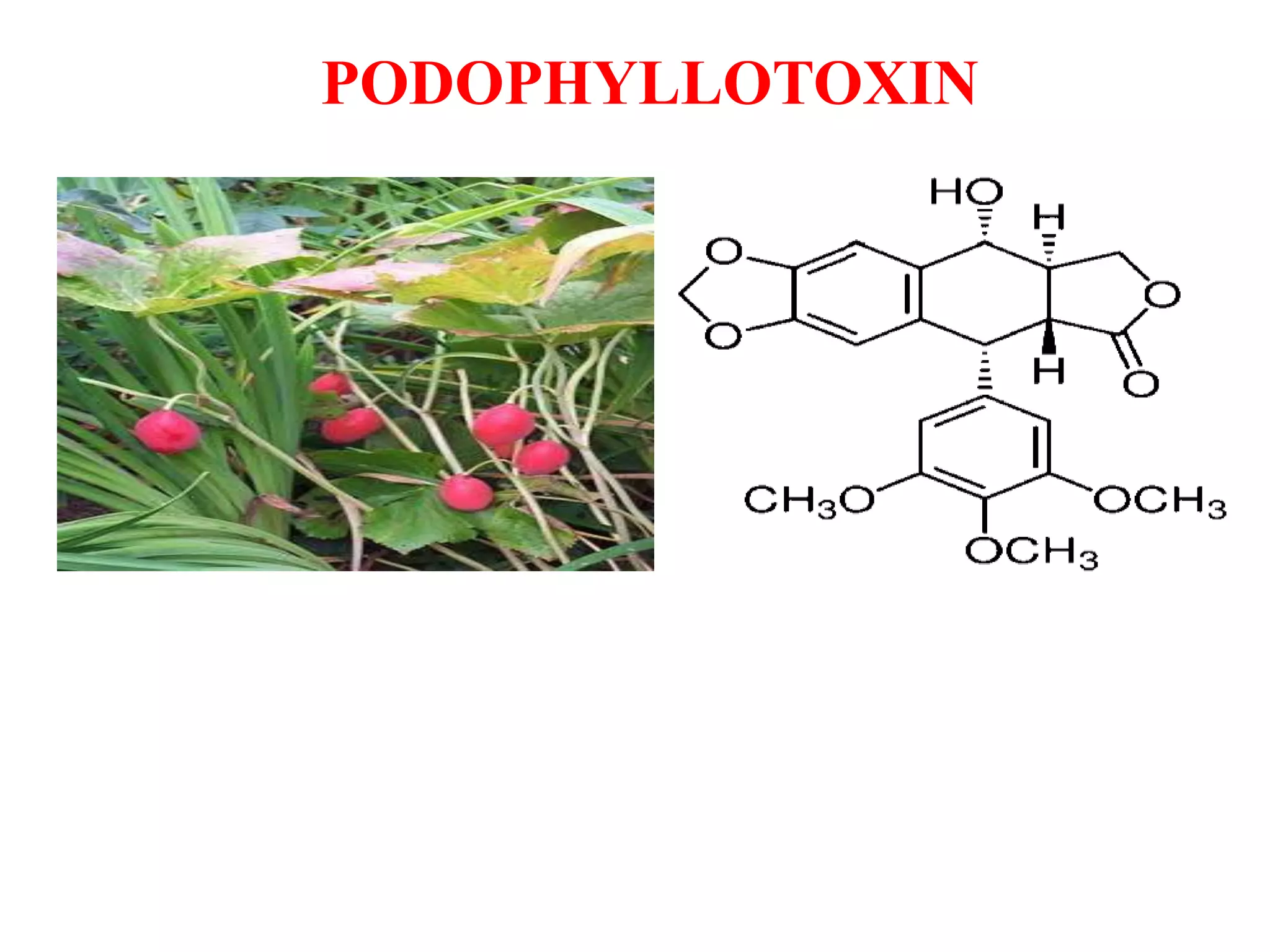
PODOPHYLLOTOXIN
PODOPHYLLOTOXIN
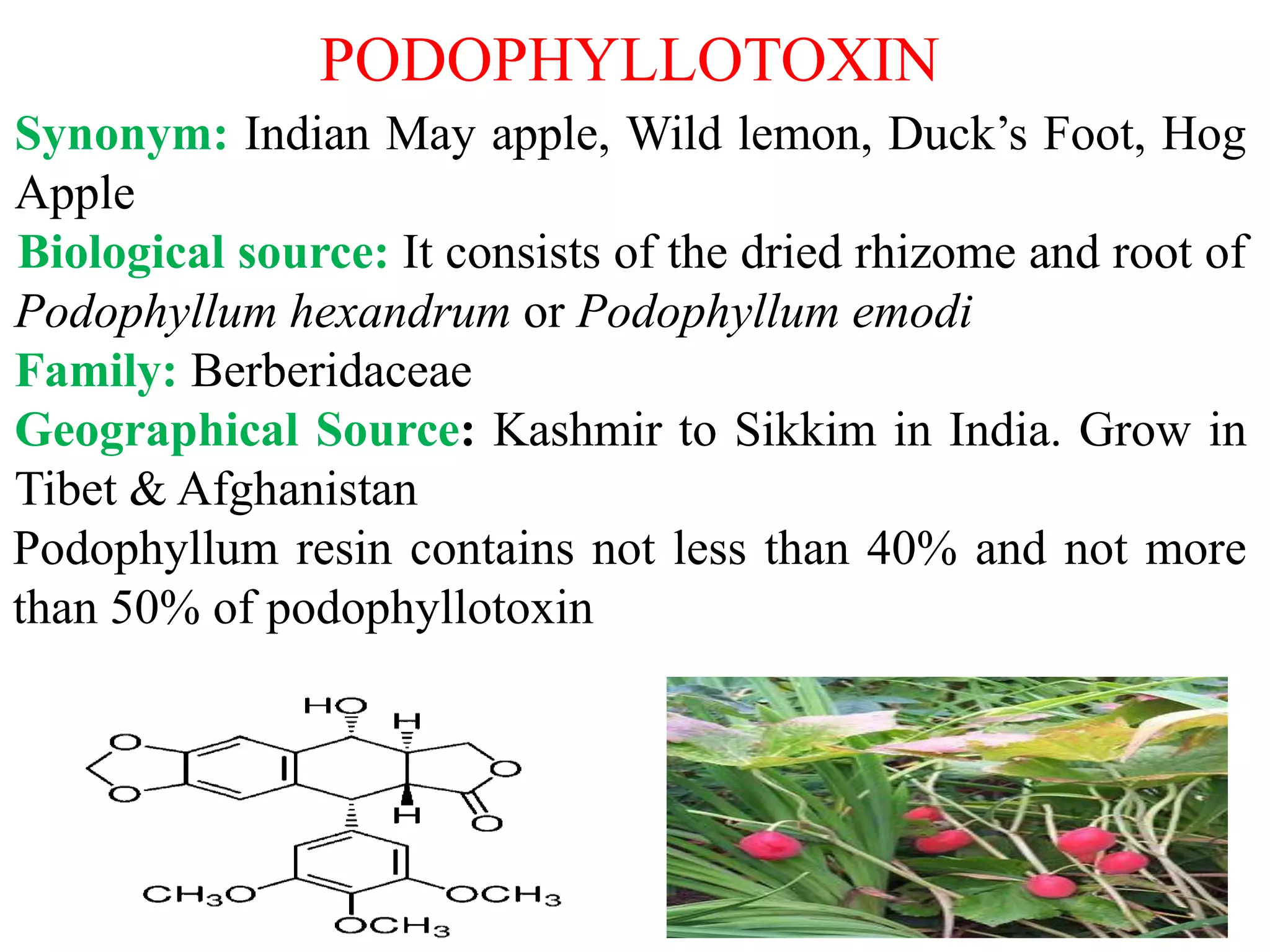
Synonym: Indian May apple, Wild lemon, Duck’s Foot, Hog
Apple
Biological source: It consists of the dried rhizome and root of
Podophyllum hexandrum or Podophyllum emodi
Family: Berberidaceae
Geographical Source: Kashmir to Sikkim in India. Grow in
Tibet & Afghanistan
Podophyllum resin contains not less than 40% and not more
than 50% of podophyllotoxin
Continue….
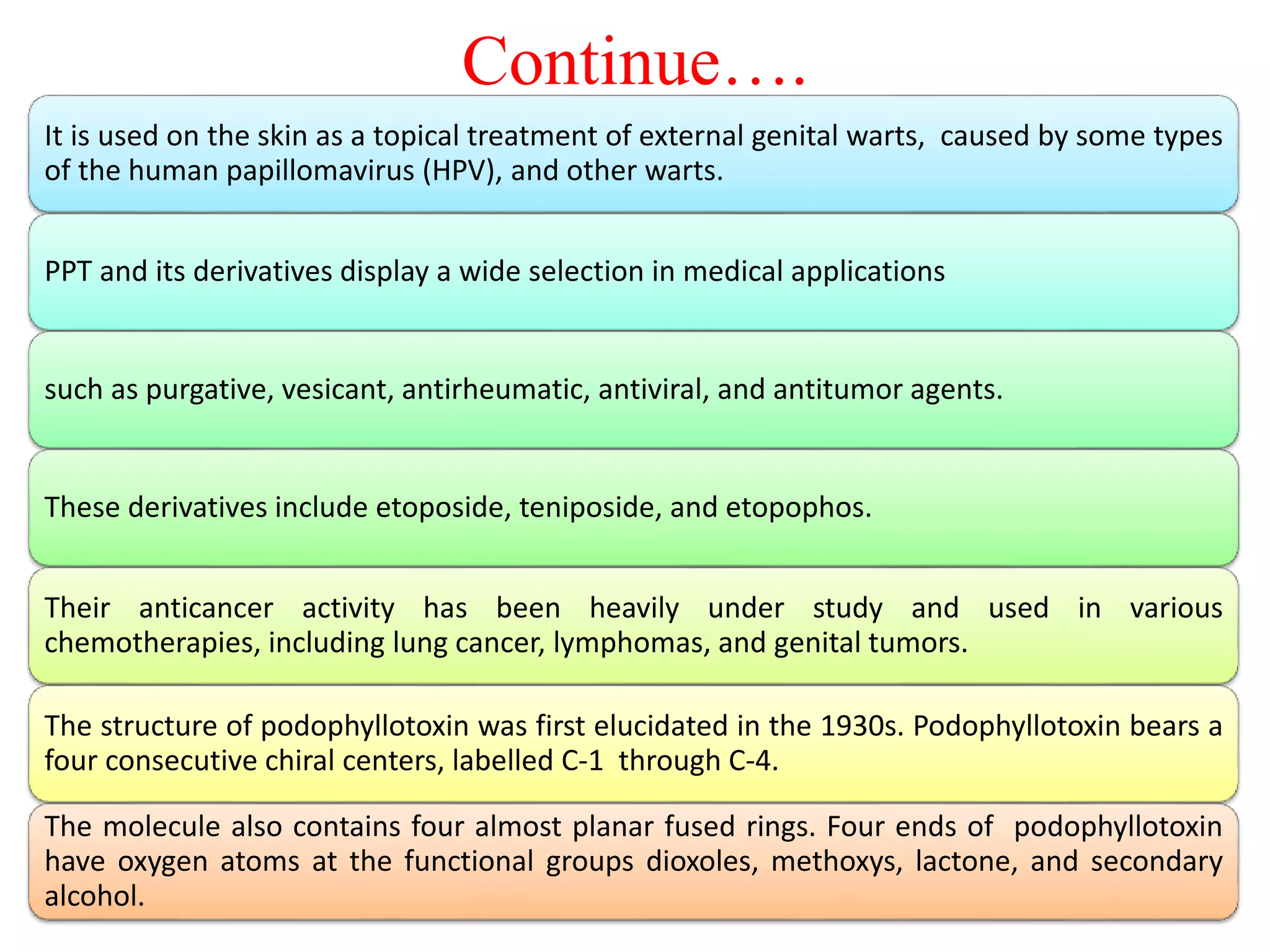
It is used on the skin as a topical treatment of external genital warts, caused by some types
of the human papillomavirus (HPV), and other warts.
PPT and its derivatives display a wide selection in medical applications
such as purgative, vesicant, antirheumatic, antiviral, and antitumor agents.
These derivatives include etoposide, teniposide, and etopophos.
Their anticancer activity has been heavily under study and used in various
chemotherapies, including lung cancer, lymphomas, and genital tumors.
The structure of podophyllotoxin was first elucidated in the 1930s. Podophyllotoxin bears a
four consecutive chiral centers, labelled C-1 through C-4.
The molecule also contains four almost planar fused rings. Four ends of podophyllotoxin
have oxygen atoms at the functional groups dioxoles, methoxys, lactone, and secondary
alcohol.
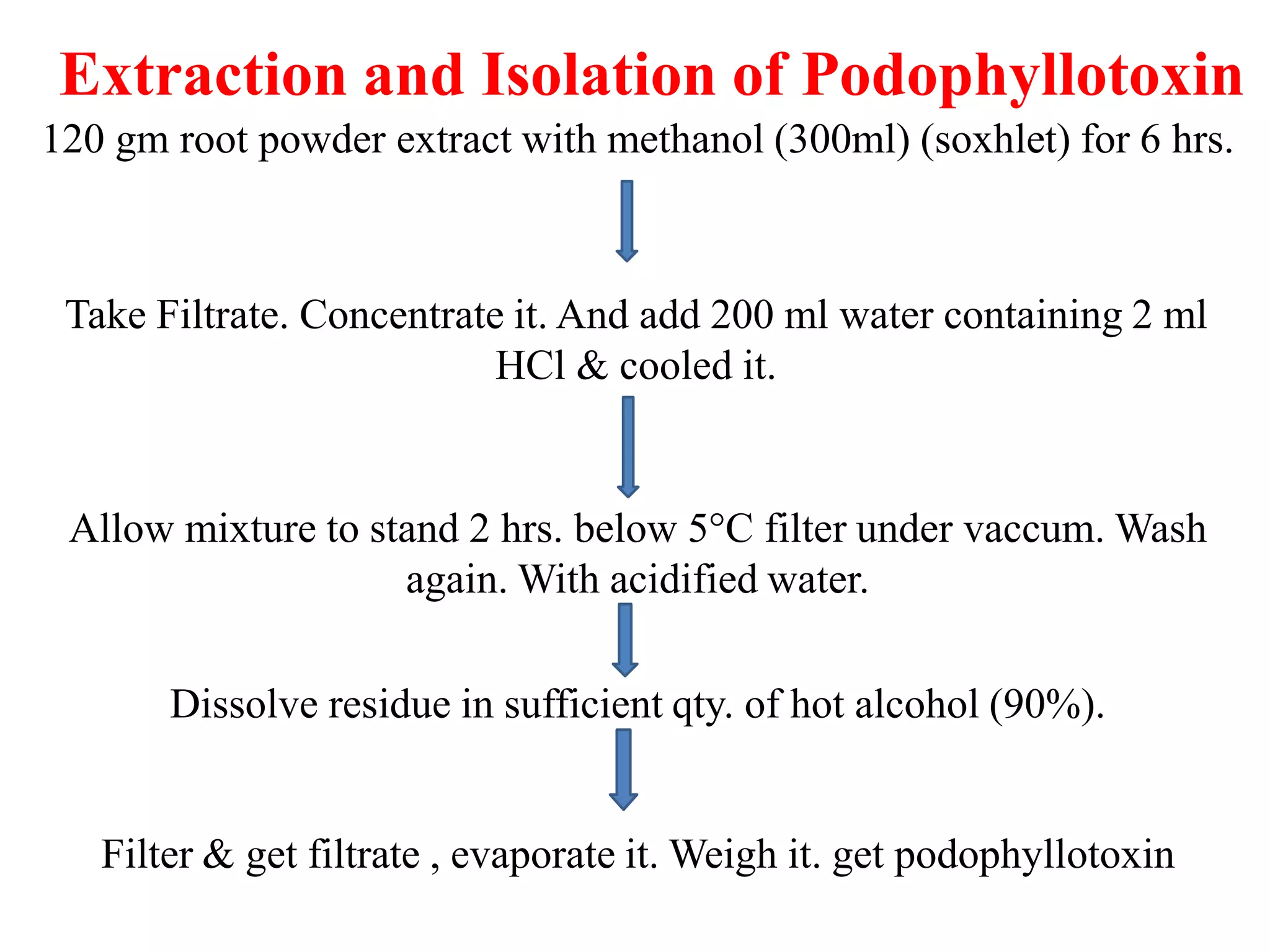
Extraction and Isolation of Podophyllotoxin
120 gm root powder extract with methanol (300ml) (soxhlet) for 6 hrs.
Take Filtrate. Concentrate it. And add 200 ml water containing 2 ml
HCl & cooled it.
Allow mixture to stand 2 hrs. below 5°C filter under vaccum. Wash
again. With acidified water.
Dissolve residue in sufficient qty. of hot alcohol (90%).
Filter & get filtrate , evaporate it. Weigh it. get podophyllotoxin
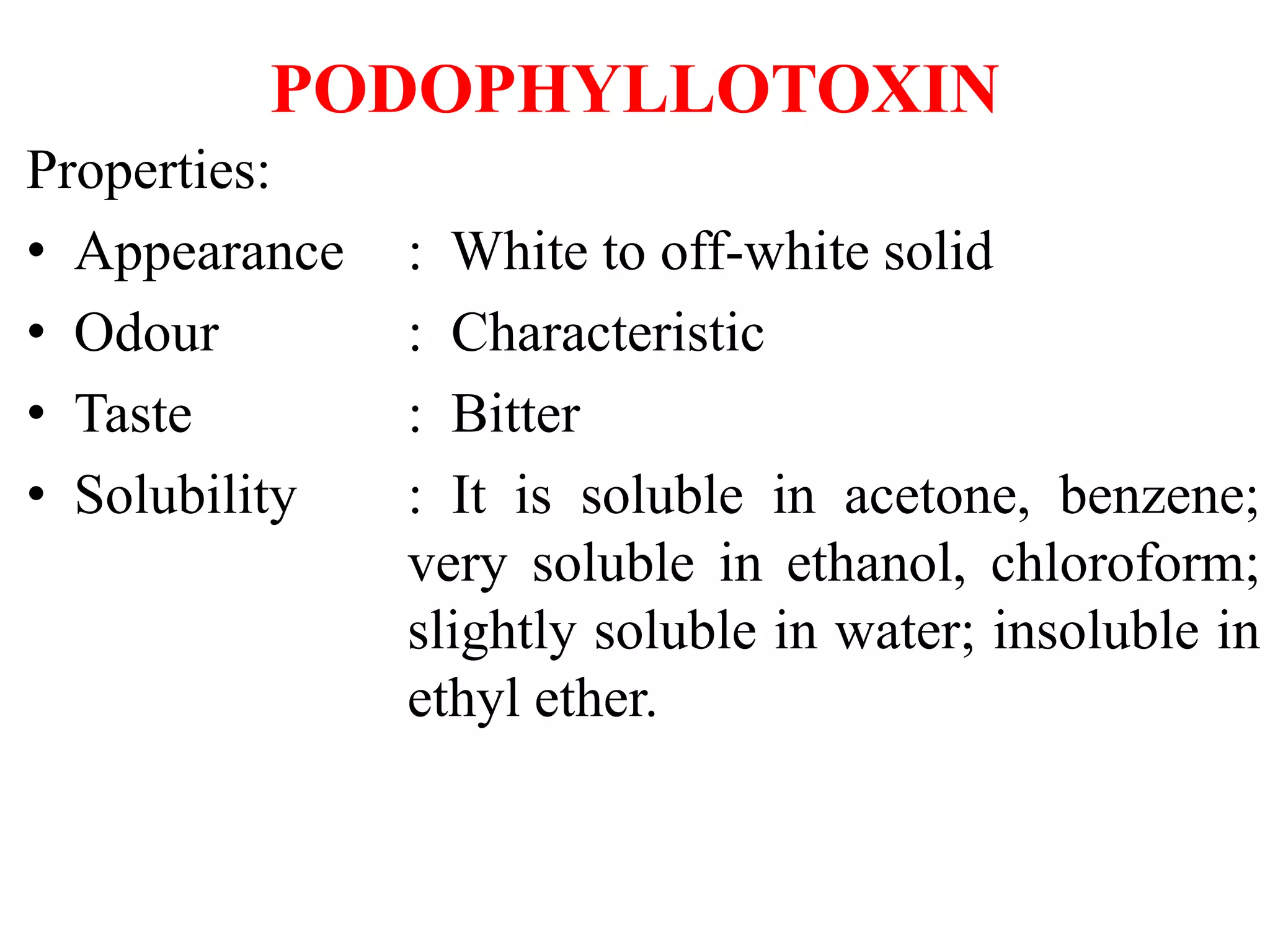
PODOPHYLLOTOXIN
Properties:
• Appearance : White to off-white solid
• Odour : Characteristic
• Taste : Bitter
• Solubility : It is soluble in acetone, benzene;
very soluble in ethanol, chloroform;
slightly soluble in water; insoluble in
ethyl ether.
Identification test
Macerate 0.5g of the drug with 10 ml of alcohol & filter +0.5 ml
Copper acetate brown ppts
Alcoholic ext. + 5 ml 1N KOH stiff jelly is produce.
Sample drug + 50% H2SO4 → violet-blue color
Analysis:
HPLC: performed on Thermo Finnigan HPLC machine
with pump system with 966-photodiode detector, at
283nm.
Satisfactory result get with E. Merck RP-18 column with
diod array detector & auto –injector
Mobile Phase: methenol:water (60:40) (for 30 min)
At flow rate 0.8 ml/min.
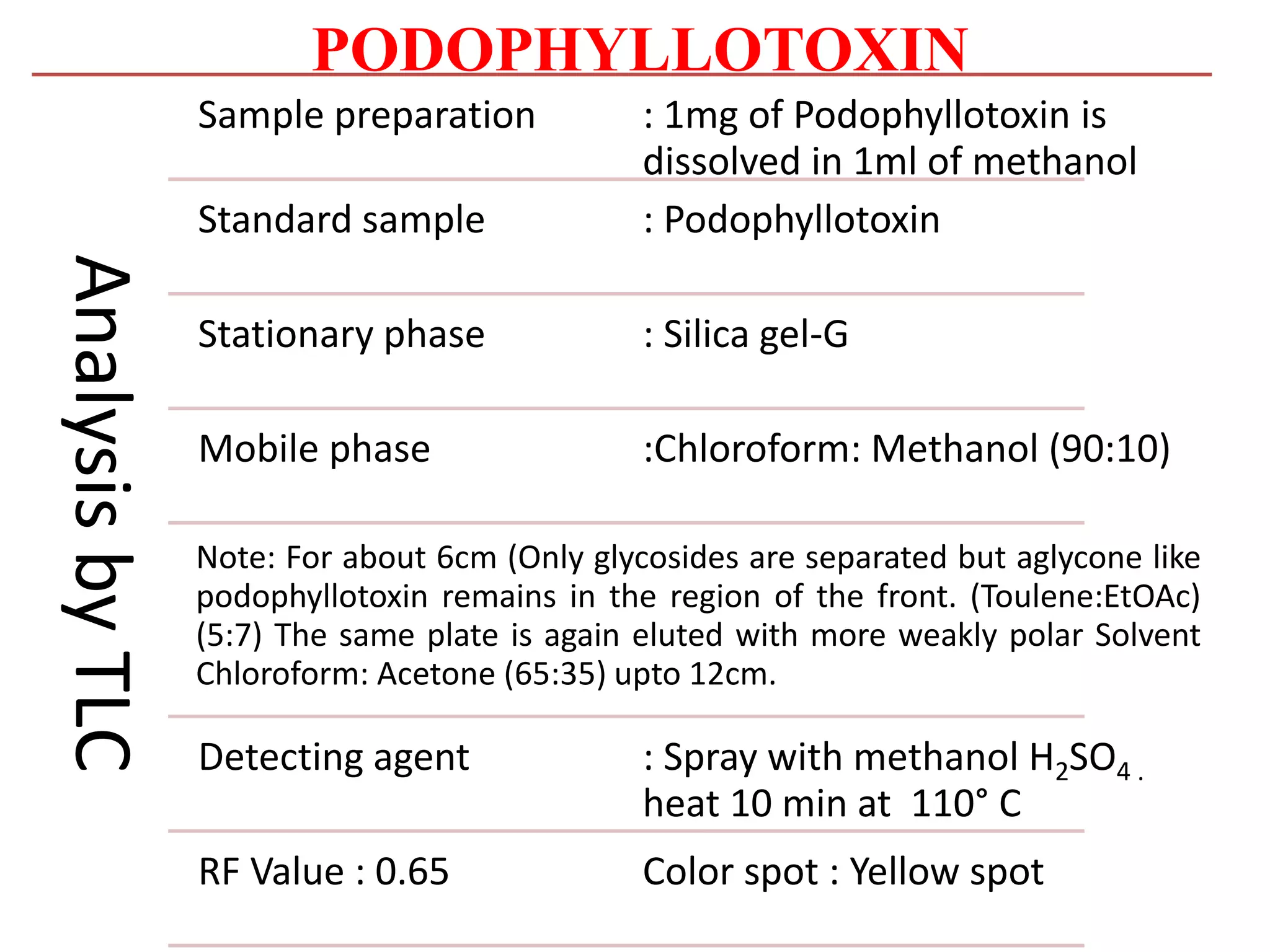
PODOPHYLLOTOXIN
Analysis
by
TLC
Sample preparation : 1mg of Podophyllotoxin is
dissolved in 1ml of methanol
Standard sample : Podophyllotoxin
Stationary phase : Silica gel-G
Mobile phase :Chloroform: Methanol (90:10)
Note: For about 6cm (Only glycosides are separated but aglycone like
podophyllotoxin remains in the region of the front. (Toulene:EtOAc)
(5:7) The same plate is again eluted with more weakly polar Solvent
Chloroform: Acetone (65:35) upto 12cm.
Detecting agent : Spray with methanol H2SO4 .
heat 10 min at 110° C
RF Value : 0.65 Color spot : Yellow spot
PODOPHYLLOTOXIN
Analysis
by
HPLC
Method : Isocratic
Stationary phase : C18 column
Mobile phase : Methanol: water
(6:4) at flow rate
0.8ml/min.
Detection : Photodiode
detector at 283nm
Adverse Effects
The most common side effects near the application site are skin
reactions, including
• Burning
• Redness
• Pain
• Itching
• Swelling.
• Application can be immediately followed by burning or
itching.
• Small sores, itching and peeling skin can also follow.
Neither podophyllin resin nor podophyllotoxin lotions or gels are
used during pregnancy because these medications can be harmful
to the fetus.
PODOPHYLLOTOXIN
Utilization:
• Podophyllotoxin and its derivatives are used as
cathartic, purgative, antiviral agent, vesicant,
antihelminthic, and antitumor agents (anti-
proliferative agent).
Storage condition:
• It should be store in well closed and air-tight
containers protected from light and in cool
place.
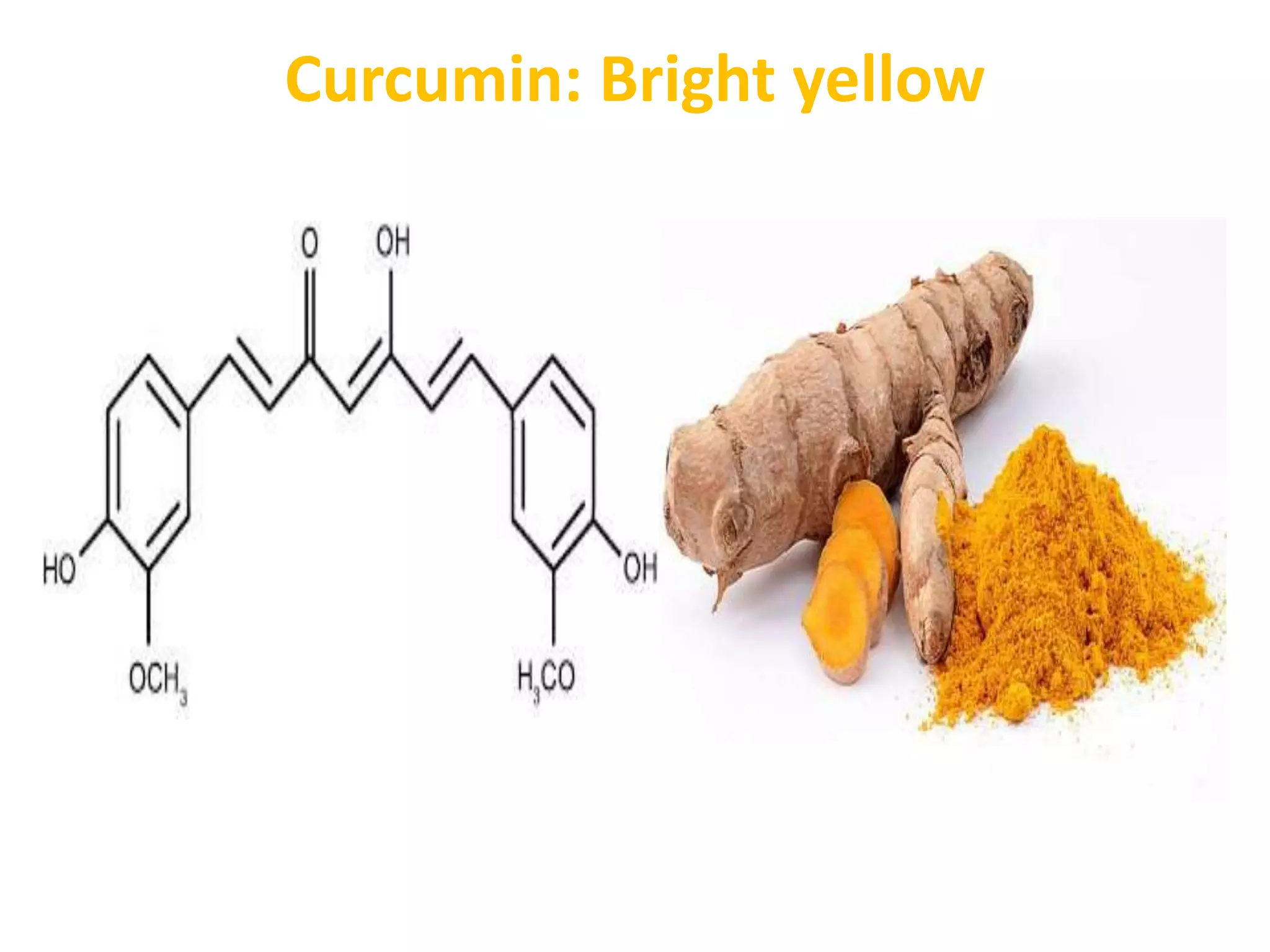
Curcumin: Bright yellow
Curcumin
Biological source: Curcumin or Curcuminoids are the diaryl
hepnoid compounds obtained from the dried rhizomes of Turmeric,
Curcuma longa.
Family: Zingiberaceae.
Curcumin is the major colouring principle present upto 5% in the
rhizomes. It is a mixture of curcumin, monodesmethoxycurcumin
and bisdesmethoxycurcumin
The Indian Solid Gold
Curcuminoids give turmeric its characteristic yellow colour.
Curcumin (C12 H20O6 ): is an orange-yellow crystalline powder which
is the most active.
component of turmeric, which makes up 2-5% of the spice.
Curcumin has been shown to be a diferuloylmethane.
It is hydrophobic in nature and is soluble in dimethylsulfoxide,
acetone, ethanol and oil.
It is also referred to as Indian saffron, yellow ginger, yellow root,
kacha haldi, ukon or natural yellow 3
Chemical Composition
• Insoluble in water & ether
• Soluble in ethanol, dimethyl sulfoxide &
acetone
• Has a melting point of 183°C
• Molecular formulaC
:12 H20O6
• Molecular weight: 368.37g/mol
• Turmeric contains curcumin along with other
constituents known as
“curcuminoids”
Curcumin (Curcumin I)
Demethoxycurcumin (Curcumin II)
Bisdemethoxycurcumin (Curcumin III)
Cyclocurcumin
• Commercial curcumin contains curcumin I
(~77%), curcumin II (~17%) & curcumin III (~3%)
• Curcumin has a brilliant yellow hue at pH 2.5
& takes a red hue at pH>7
Curcumin
It is recrystallized from hot ethanol to yield orange red needles.
The acetone extract is distilled off and dried the crystals of
curcumin.
Then marc is extracted with acetone for 2hrs.
Filtered it and discarded n-hexane extract.
Turmeric powder is extracted with n-hexane for 2hrs.
Method 1
Curcumin can be obtained by different processes.
Curcumin
Benzene portion is transferred to separating funnel and 0.1%
NaOH solution is added, shacked slowly.
This residue is dissolved in sufficient quantity of benzene.
Alcoholic extract is filtered and concentrated under reduced
pressure to semisolid residue.
Turmeric powder is extracted with pure alcohol by Soxhlet
extractor until colouring matter is removed.
Method 2
The extract is filtered and evaporated the filtrate to get crystal
of pure curcumin
The extract is concentrated with continious stirring; lumpy mass
of resin will be separated out.
Combined alkali layer and acidify with HCl, yellow colour
precipitate is formed.
The alkali layer is separated and repeated it twice.
Curcumin
Curcumin
Properties:
• Appearance : Orange yellow crystalline powder
• Odour : Characteristic
• Taste : Slightly pungent bitter
• Solubility : Insoluble in water and ether, but soluble
in alcohol
Identification by chemical test:
• Sample is treated with acetic anhydride and conc. H2SO4, it gives
violet color. When this test is observed under UV light, red
fluorescence is seen
• Powered drug + sulphuric acid gives Crimson colour
• The aqueous solution of turmeric + boric acid gives reddish brown
colour which on addition of alkali changes to greenish blue
Curcumin
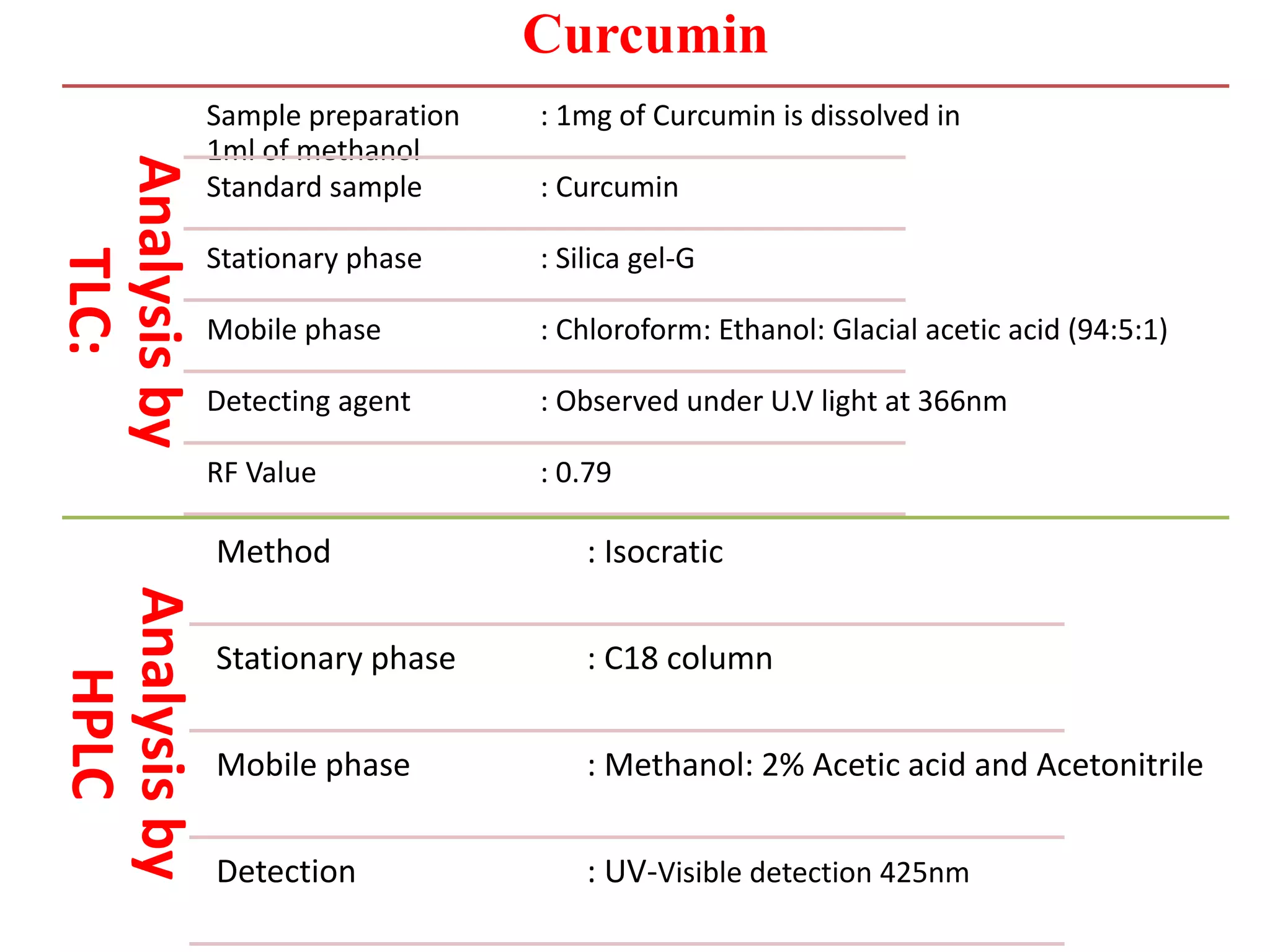
Analysis
by
TLC:
Sample preparation : 1mg of Curcumin is dissolved in
1ml of methanol
Standard sample : Curcumin
Stationary phase : Silica gel-G
Mobile phase : Chloroform: Ethanol: Glacial acetic acid (94:5:1)
Detecting agent : Observed under U.V light at 366nm
RF Value : 0.79
Analysis
by
HPLC
Method : Isocratic
Stationary phase : C18 column
Mobile phase : Methanol: 2% Acetic acid and Acetonitrile
Detection : UV-Visible detection 425nm
HPLC
MEDICINAL PROPERTIES OF CURCUMIN
Curcumin
Storage condition:
• It should be store in well closed and air-tight
containers protected from light and in cool place.

3.4 D-Resins-Podophyllotoxin-Curcumin.pptx

  • 1.
    B.PHARM. 5th SEMESTER PHARMACOGNOSYANDPHYTOCHEMISTRY-II BP504T. UNIT-III Isolation, Identification and Analysis of Phytoconstituents Resins: Podophyllotoxins, Curcumin
  • 2.
  • 3.
    DEFINITION • Resins aresolid or semi-solid, amorphous products derived from natural living sources and are mostly from the plant origin (exception is shellac that is obtained from the secretions of insect). • Resins are secondary metabolites produced by higher plants and are oxidative products of terpenes. • Obtained as exudates from plants and considered as end product of metabolism. • Resins are produced and stored in the schizogenous glands or cavities of the plants.
  • 4.
    PROPERTIES: •These are moreor less solid, hard, transparent, or translucent materials which come in market as an unorganized drug. •Soften and melt on heating. •Resins are insoluble in most polar and nonpolar solvents like water and petroleum ether, but dissolve completely in alcohol, solvent ether, benzene, or chloroform.
  • 5.
    TYPES: •Normal or physiologicalresin: resins that are pre-formed in the plants and making injury to the plants can increase their yield (Example: resin of Pinus) •Abnormal or pathological resin: resins that are found in the plants Only when injury or incision is made (Examples: benzoin, Tolu balsam)
  • 6.
    CLASSIFICATION: • On thebasis of their formation • On the basis of their chemical nature. • On the basis of occurrence with other secondary metabolites. 1. On the basis of their formation : • Physiological resins: These are formed as a normal product of metabolism without making injury to the plants • Pathological Resins: Formed as a result of wound, injury or abnormal circumstances (benzoin, colophony, balsams, aloe resin etc.)
  • 7.
    2. On thebasis of their chemical nature: • Resin acids – resinolic acids • Ester resins • Resin alcohols – resinols • Resin phenols – resinotannols • Resenes Resin Acids: Resin acids are the carboxylic acid group containing resinous substances. They are soluble in aqueous solution of alkali producing frothy solution. Examples: Colophony and myrrh (abietic acid and commiphoric acid). Resin Esters: This group contains esters as the chief constituents of the resins Examples: Benzoin and Storax, Benzoin contains benzyl benzoate, Storax contains cinnamyl cinnamate
  • 8.
    Resin Alcohols: Theyoccurs as in free state or as esters. Example: Balsam of peru with peru resinotannol. Resin Phenols: Resin phenols or resinotannols are also high molecular weight compounds which occur in free states or as esters. Example: The Resinotannol are found in balsam of Peru as peruresinotannol, in Tolu balsam as toluresinotannol and in benzoin as siaresinotannols. Resenes: Chemically inert resin products are generally termed as resenes. They are generally found in free state and never form esters or other derivatives. Example: Asafoetida is an resene containing drug.
  • 9.
    3. On thebasis of occurrence with other secondary metabolites. • Oleoresins: Naturally occurring mixtures of a volatile oil and a resin • Gum resins: Resin associated with gum • Oleo-gum resins: A naturally occurring mix of volatile oil, gums / mucilagenous compound with a resin • Glycoresins: Resins in combination with sugar compounds via Glycosidal linkages • Balsams: Resins in combination with benzoic or cinnamic acid either free or combined
  • 10.
    1. Oleo-resins: Oleoresinsare the homogenous mixture of resin with volatile oils. The oleoresins posses an essence due to volatile oils. Examples: ginger. Gum Resins: Gum resins are the naturally occurring mixture of resins with gums. Examples: Colophony Gluco-resins: Resins sometimes get combined with sugars. Example: Jalap Oleo-gum Resins. Oleo-gum resins are the naturally occurring mixtures of resin, volatile oil, and gum. The example includes myrrh and asafoetida Balsams: Balsams are the naturally occurring resinous mixtures which contain a high proportion of aromatic balsamic acids such as Benzoic acid, Cinnamic acid, and their esters. Examples: balsam of Peru, balsam of Tolu, benzoin, and storax.
  • 11.
    ISOLATION By extracting thedrug with alcohol and precipitating resins present in concentrated extract by addition of large proportion of water (e.g. Jalap, Podophyllum). By distillation for separation of oils (e.g. Colophony) By heating the plant parts (e.g. Guacum) As plant exudates by making incision (e.g. Myrrh, Asafoetida, Balsams) By processing the incrustations (e.g. Shellac)
  • 12.
    METHODS OF EXTRACTION/ISOLATION: 1. Method – A Powdered drug Extract the resin with alcohol Filter Concentrate Concentrate the extract with excess of water, shake Resins get precipitate
  • 13.
    2. Method –B Powdered drug containing oleo-resin, percolate the powdered drug with non-polar solvent (e.g. acetone, chloroform) Extract Steam distillation Oleo-resin Volatile oils
  • 14.
    CHEMICAL TESTS: • HClTEST: Formation of pink color Presence of resins • FeCl3 TEST: Greenish blue color Presence of resins APPLICATIONS: • Resins are local irritant and hence act as local cathartics. (e.g. Jalap). • As anti cancer (Eg: Podophyllum) • In bronchial asthma (e.g. Cannabis) • Used externally as mild antiseptic in the form of tinctures (Benzoin), ointment and plasters (Turpentine and Colophony)
  • 15.
  • 16.
    PODOPHYLLOTOXIN Synonym: Indian Mayapple, Wild lemon, Duck’s Foot, Hog Apple Biological source: It consists of the dried rhizome and root of Podophyllum hexandrum or Podophyllum emodi Family: Berberidaceae Geographical Source: Kashmir to Sikkim in India. Grow in Tibet & Afghanistan Podophyllum resin contains not less than 40% and not more than 50% of podophyllotoxin
  • 17.
    Continue…. It is usedon the skin as a topical treatment of external genital warts, caused by some types of the human papillomavirus (HPV), and other warts. PPT and its derivatives display a wide selection in medical applications such as purgative, vesicant, antirheumatic, antiviral, and antitumor agents. These derivatives include etoposide, teniposide, and etopophos. Their anticancer activity has been heavily under study and used in various chemotherapies, including lung cancer, lymphomas, and genital tumors. The structure of podophyllotoxin was first elucidated in the 1930s. Podophyllotoxin bears a four consecutive chiral centers, labelled C-1 through C-4. The molecule also contains four almost planar fused rings. Four ends of podophyllotoxin have oxygen atoms at the functional groups dioxoles, methoxys, lactone, and secondary alcohol.
  • 18.
    Extraction and Isolationof Podophyllotoxin 120 gm root powder extract with methanol (300ml) (soxhlet) for 6 hrs. Take Filtrate. Concentrate it. And add 200 ml water containing 2 ml HCl & cooled it. Allow mixture to stand 2 hrs. below 5°C filter under vaccum. Wash again. With acidified water. Dissolve residue in sufficient qty. of hot alcohol (90%). Filter & get filtrate , evaporate it. Weigh it. get podophyllotoxin
  • 19.
    PODOPHYLLOTOXIN Properties: • Appearance :White to off-white solid • Odour : Characteristic • Taste : Bitter • Solubility : It is soluble in acetone, benzene; very soluble in ethanol, chloroform; slightly soluble in water; insoluble in ethyl ether.
  • 20.
    Identification test Macerate 0.5gof the drug with 10 ml of alcohol & filter +0.5 ml Copper acetate brown ppts Alcoholic ext. + 5 ml 1N KOH stiff jelly is produce. Sample drug + 50% H2SO4 → violet-blue color Analysis: HPLC: performed on Thermo Finnigan HPLC machine with pump system with 966-photodiode detector, at 283nm. Satisfactory result get with E. Merck RP-18 column with diod array detector & auto –injector Mobile Phase: methenol:water (60:40) (for 30 min) At flow rate 0.8 ml/min.
  • 21.
    PODOPHYLLOTOXIN Analysis by TLC Sample preparation :1mg of Podophyllotoxin is dissolved in 1ml of methanol Standard sample : Podophyllotoxin Stationary phase : Silica gel-G Mobile phase :Chloroform: Methanol (90:10) Note: For about 6cm (Only glycosides are separated but aglycone like podophyllotoxin remains in the region of the front. (Toulene:EtOAc) (5:7) The same plate is again eluted with more weakly polar Solvent Chloroform: Acetone (65:35) upto 12cm. Detecting agent : Spray with methanol H2SO4 . heat 10 min at 110° C RF Value : 0.65 Color spot : Yellow spot
  • 22.
    PODOPHYLLOTOXIN Analysis by HPLC Method : Isocratic Stationaryphase : C18 column Mobile phase : Methanol: water (6:4) at flow rate 0.8ml/min. Detection : Photodiode detector at 283nm
  • 23.
    Adverse Effects The mostcommon side effects near the application site are skin reactions, including • Burning • Redness • Pain • Itching • Swelling. • Application can be immediately followed by burning or itching. • Small sores, itching and peeling skin can also follow. Neither podophyllin resin nor podophyllotoxin lotions or gels are used during pregnancy because these medications can be harmful to the fetus.
  • 24.
    PODOPHYLLOTOXIN Utilization: • Podophyllotoxin andits derivatives are used as cathartic, purgative, antiviral agent, vesicant, antihelminthic, and antitumor agents (anti- proliferative agent). Storage condition: • It should be store in well closed and air-tight containers protected from light and in cool place.
  • 25.
  • 26.
    Curcumin Biological source: Curcuminor Curcuminoids are the diaryl hepnoid compounds obtained from the dried rhizomes of Turmeric, Curcuma longa. Family: Zingiberaceae. Curcumin is the major colouring principle present upto 5% in the rhizomes. It is a mixture of curcumin, monodesmethoxycurcumin and bisdesmethoxycurcumin
  • 27.
    The Indian SolidGold Curcuminoids give turmeric its characteristic yellow colour. Curcumin (C12 H20O6 ): is an orange-yellow crystalline powder which is the most active. component of turmeric, which makes up 2-5% of the spice. Curcumin has been shown to be a diferuloylmethane. It is hydrophobic in nature and is soluble in dimethylsulfoxide, acetone, ethanol and oil. It is also referred to as Indian saffron, yellow ginger, yellow root, kacha haldi, ukon or natural yellow 3
  • 28.
    Chemical Composition • Insolublein water & ether • Soluble in ethanol, dimethyl sulfoxide & acetone • Has a melting point of 183°C • Molecular formulaC :12 H20O6 • Molecular weight: 368.37g/mol • Turmeric contains curcumin along with other constituents known as “curcuminoids” Curcumin (Curcumin I) Demethoxycurcumin (Curcumin II) Bisdemethoxycurcumin (Curcumin III) Cyclocurcumin • Commercial curcumin contains curcumin I (~77%), curcumin II (~17%) & curcumin III (~3%) • Curcumin has a brilliant yellow hue at pH 2.5 & takes a red hue at pH>7
  • 29.
    Curcumin It is recrystallizedfrom hot ethanol to yield orange red needles. The acetone extract is distilled off and dried the crystals of curcumin. Then marc is extracted with acetone for 2hrs. Filtered it and discarded n-hexane extract. Turmeric powder is extracted with n-hexane for 2hrs. Method 1 Curcumin can be obtained by different processes.
  • 30.
    Curcumin Benzene portion istransferred to separating funnel and 0.1% NaOH solution is added, shacked slowly. This residue is dissolved in sufficient quantity of benzene. Alcoholic extract is filtered and concentrated under reduced pressure to semisolid residue. Turmeric powder is extracted with pure alcohol by Soxhlet extractor until colouring matter is removed. Method 2
  • 31.
    The extract isfiltered and evaporated the filtrate to get crystal of pure curcumin The extract is concentrated with continious stirring; lumpy mass of resin will be separated out. Combined alkali layer and acidify with HCl, yellow colour precipitate is formed. The alkali layer is separated and repeated it twice. Curcumin
  • 32.
    Curcumin Properties: • Appearance :Orange yellow crystalline powder • Odour : Characteristic • Taste : Slightly pungent bitter • Solubility : Insoluble in water and ether, but soluble in alcohol Identification by chemical test: • Sample is treated with acetic anhydride and conc. H2SO4, it gives violet color. When this test is observed under UV light, red fluorescence is seen • Powered drug + sulphuric acid gives Crimson colour • The aqueous solution of turmeric + boric acid gives reddish brown colour which on addition of alkali changes to greenish blue
  • 33.
    Curcumin Analysis by TLC: Sample preparation :1mg of Curcumin is dissolved in 1ml of methanol Standard sample : Curcumin Stationary phase : Silica gel-G Mobile phase : Chloroform: Ethanol: Glacial acetic acid (94:5:1) Detecting agent : Observed under U.V light at 366nm RF Value : 0.79 Analysis by HPLC Method : Isocratic Stationary phase : C18 column Mobile phase : Methanol: 2% Acetic acid and Acetonitrile Detection : UV-Visible detection 425nm
  • 35.
  • 36.
  • 37.
    Curcumin Storage condition: • Itshould be store in well closed and air-tight containers protected from light and in cool place.