Downloaded 13 times






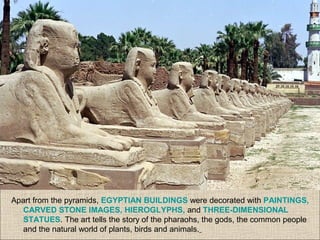

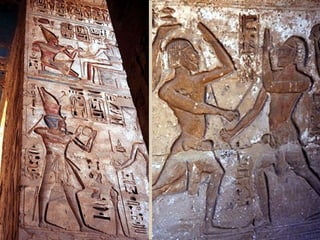














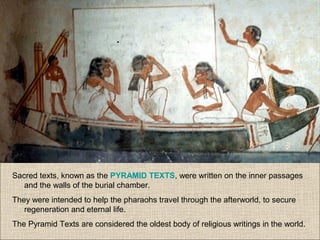




![Around 450 B.C., the Greek historian HERODOTUS documented the art of
MUMMIFICATION.
As much of the brain as it is possible is extracted throughAs much of the brain as it is possible is extracted through
the nostrils with an iron hook, and what the hook cannotthe nostrils with an iron hook, and what the hook cannot
reach is dissolved with drugs. Next, the flank is slit open . . .reach is dissolved with drugs. Next, the flank is slit open . . .
and the entire contents of the abdomen removed. Theand the entire contents of the abdomen removed. The
cavity is then thoroughly cleansed and washed out . . . Thencavity is then thoroughly cleansed and washed out . . . Then
it is filled with pure crushed myrrh, cassia, and all otherit is filled with pure crushed myrrh, cassia, and all other
aromatic substances, except frankincense. [The incision] isaromatic substances, except frankincense. [The incision] is
sewn up, and then the body is placed in natron, coveredsewn up, and then the body is placed in natron, covered
entirely for 70 days, never longer. When this period . . . isentirely for 70 days, never longer. When this period . . . is
ended, the body is washed and then wrapped from the headended, the body is washed and then wrapped from the head
to the feet in linen which has been cut into strips andto the feet in linen which has been cut into strips and
smeared on the underside with gum which is commonlysmeared on the underside with gum which is commonly
used by the Egyptians in the place of glueused by the Egyptians in the place of glue.. -- Herodotus](https://image.slidesharecdn.com/3-170521102346/85/3-ancient-egypt-54-320.jpg)
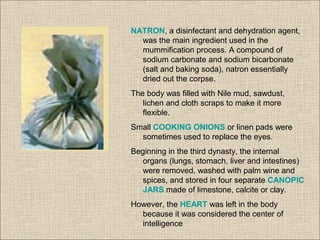


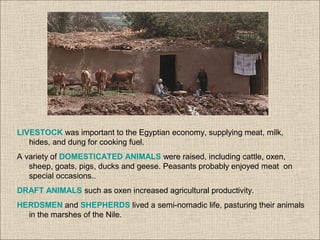


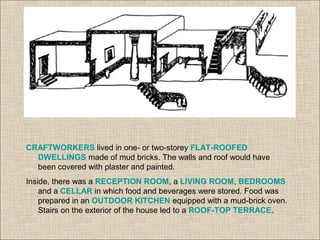


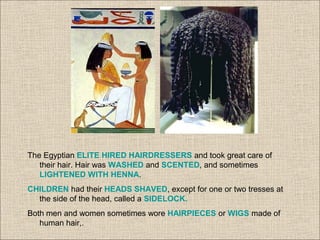


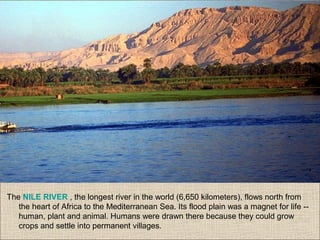
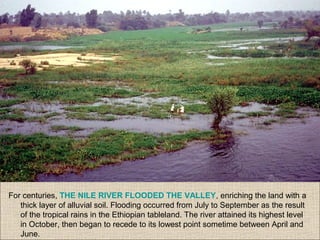
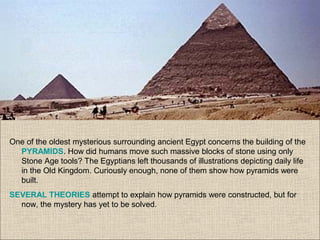
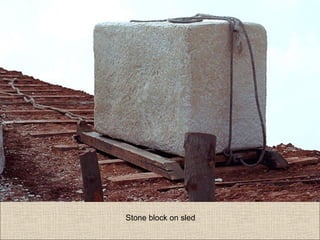
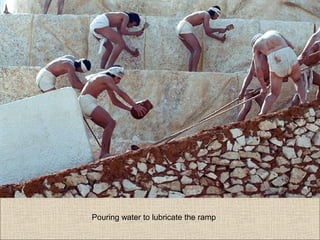
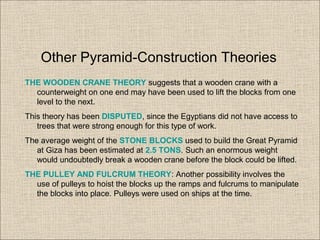
The Nile River was essential to the development of ancient Egyptian civilization, providing fertile land for agriculture. Its predictable annual flooding enriched the soil and allowed Egyptians to develop permanent settlements along its banks. The river also served as the primary transportation route, connecting all parts of Egypt. Cut off from outside influences by deserts, Egyptian culture evolved uniquely with a focus on religion, the pharaoh's divine rule, and grand architecture like the pyramids and temples built from stone. While the exact methods are unknown, it is believed the pyramids were constructed using ramps and lever systems requiring a large workforce of laborers and artisans. Egyptian society was highly stratified but opportunities existed for social mobility through professions like scribe.


![Ancient Egypt [PDF]](https://cdn.slidesharecdn.com/ss_thumbnails/ancientegyptpowerpointfull-150914165252-lva1-app6891-thumbnail.jpg?width=640&height=640&fit=bounds)


