2016 ESC Guidelines for
the management of atrial
fibrillation
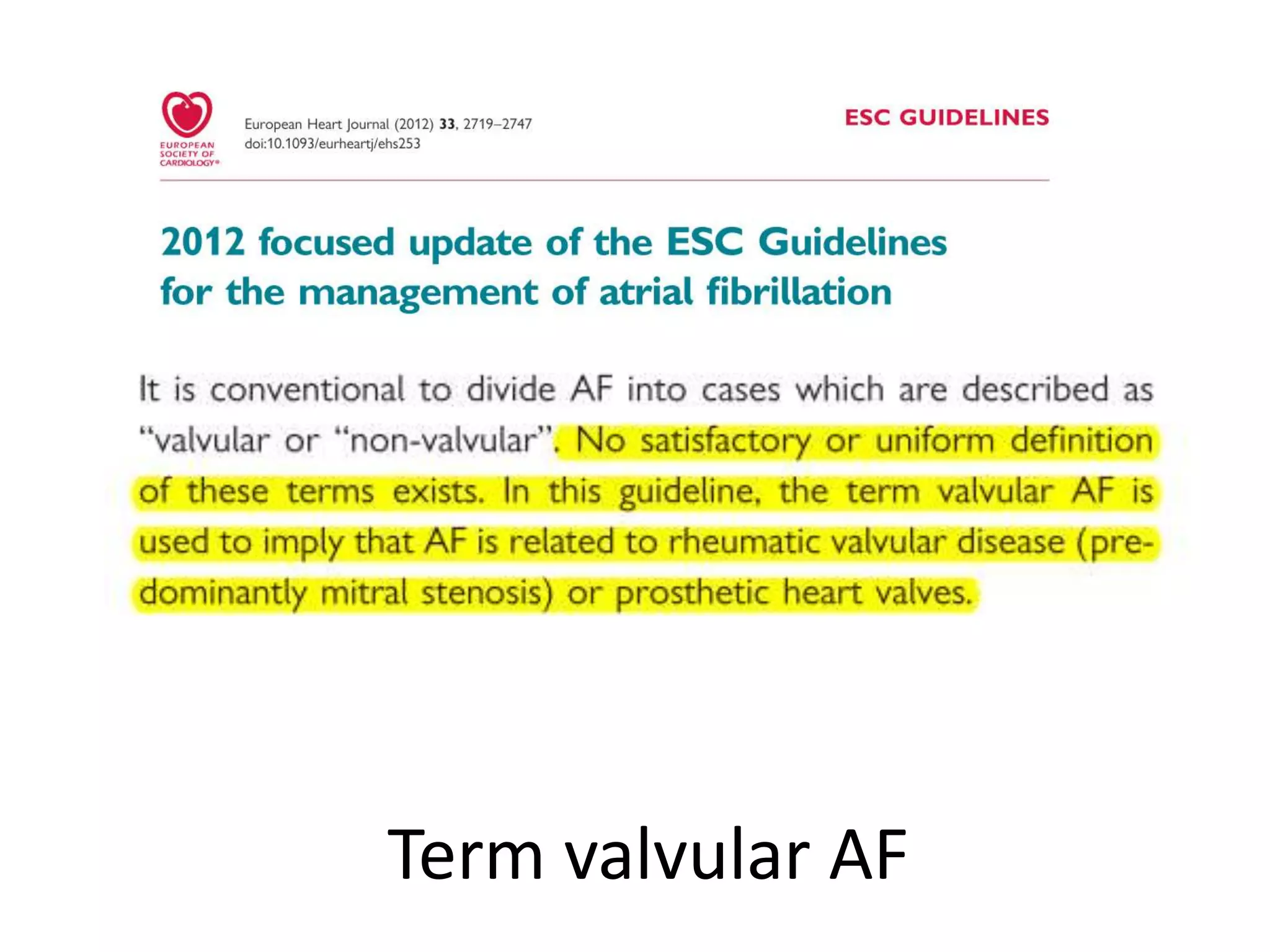
Valvular AF ?
Term valvular AF
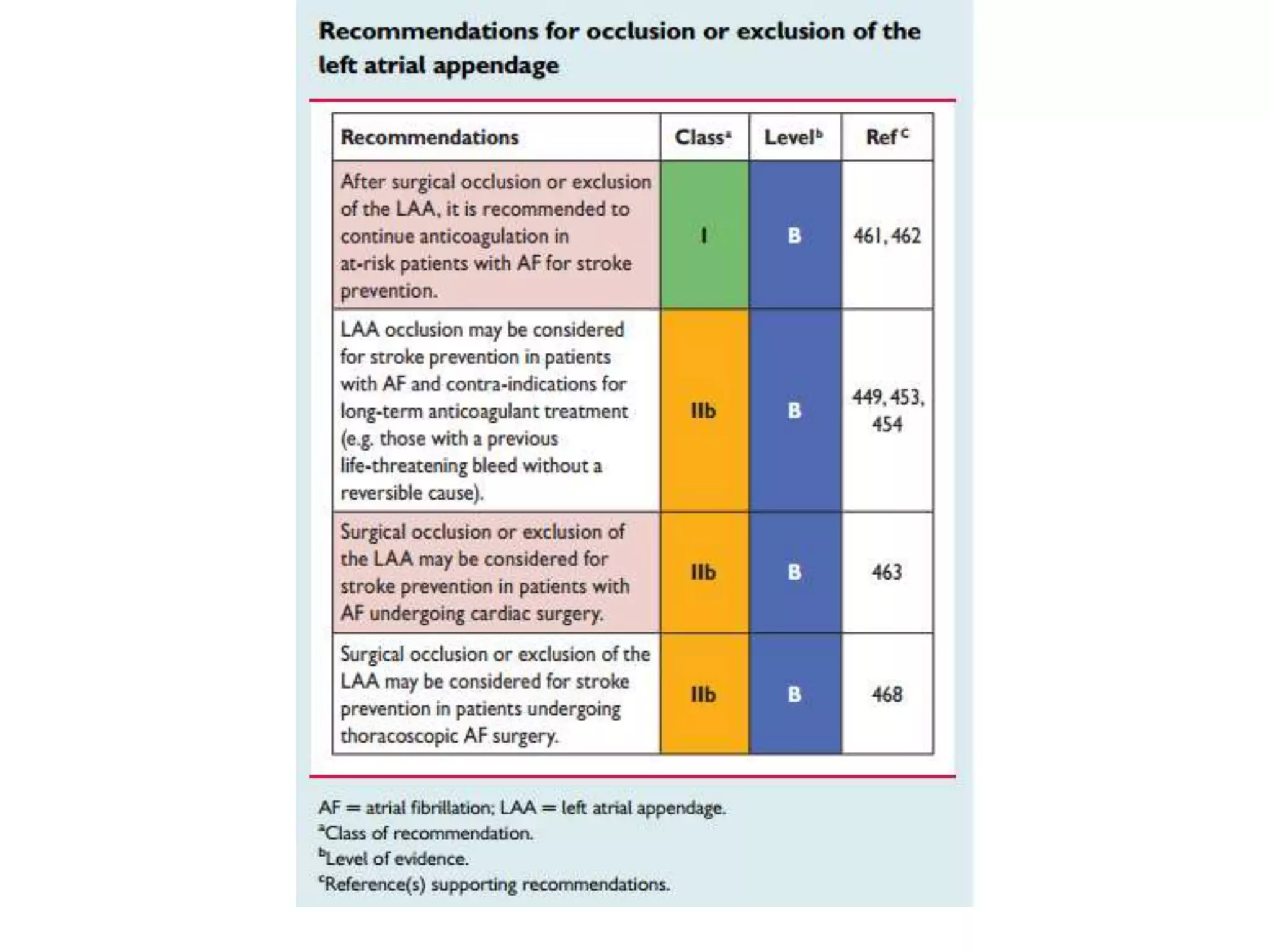
1. Stroke prevention in atrial
fibrillation
Characteristics of approved Non-vitamin K
antagonist oral anticoagulants compared
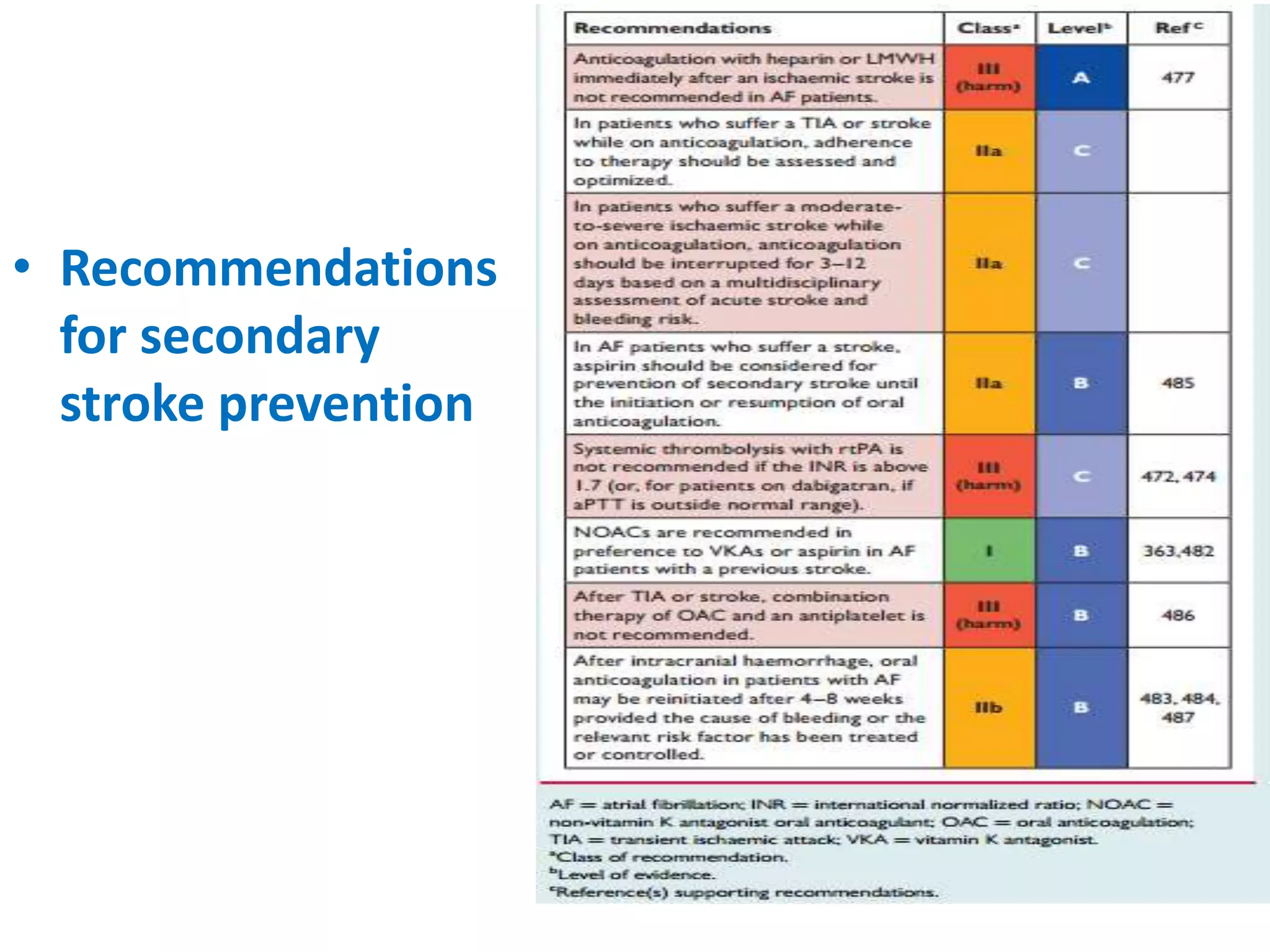
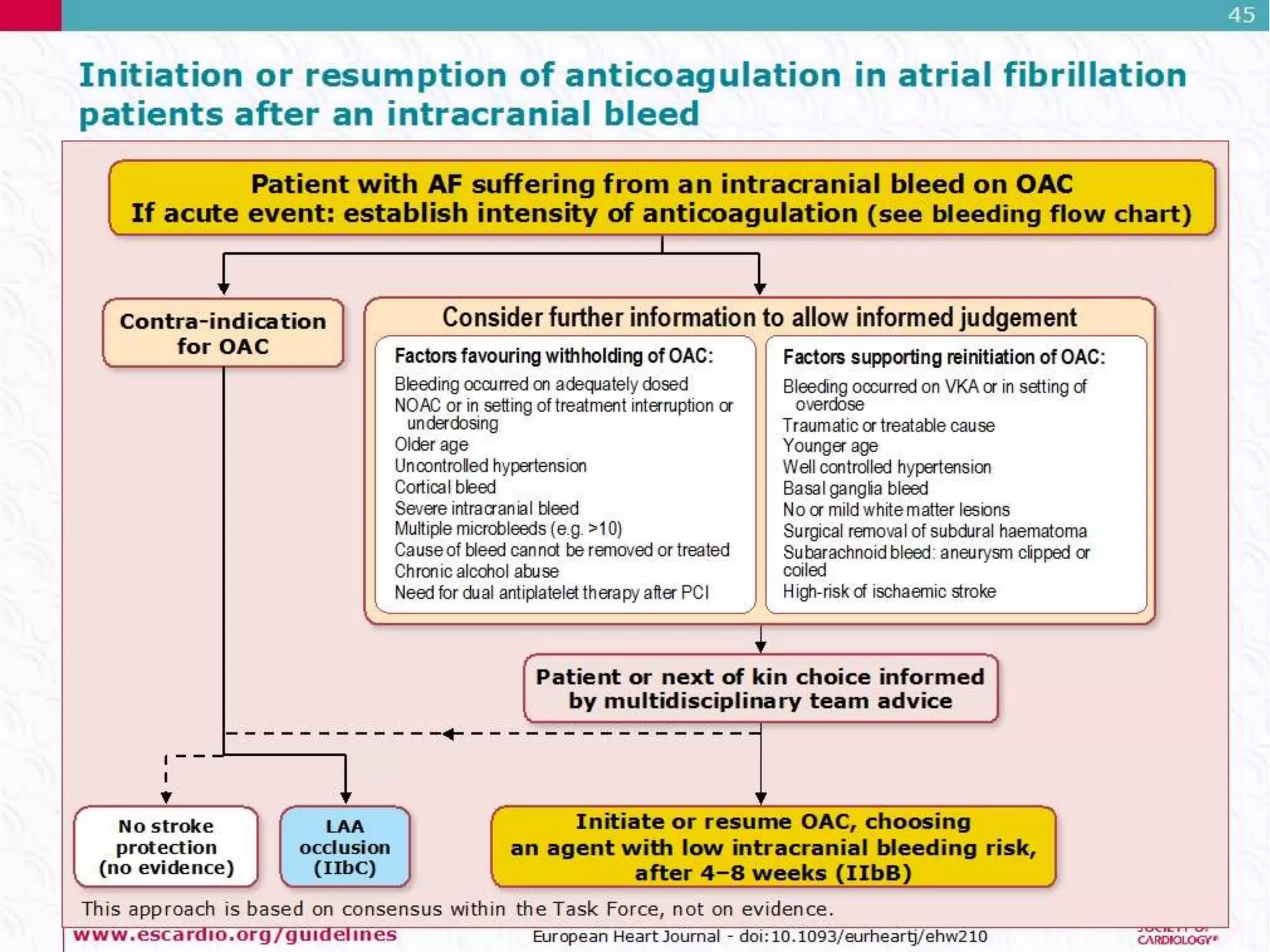
Secondary stroke
prevention
• Recommendations
for secondary
stroke prevention
Recommendations for
management of bleeding
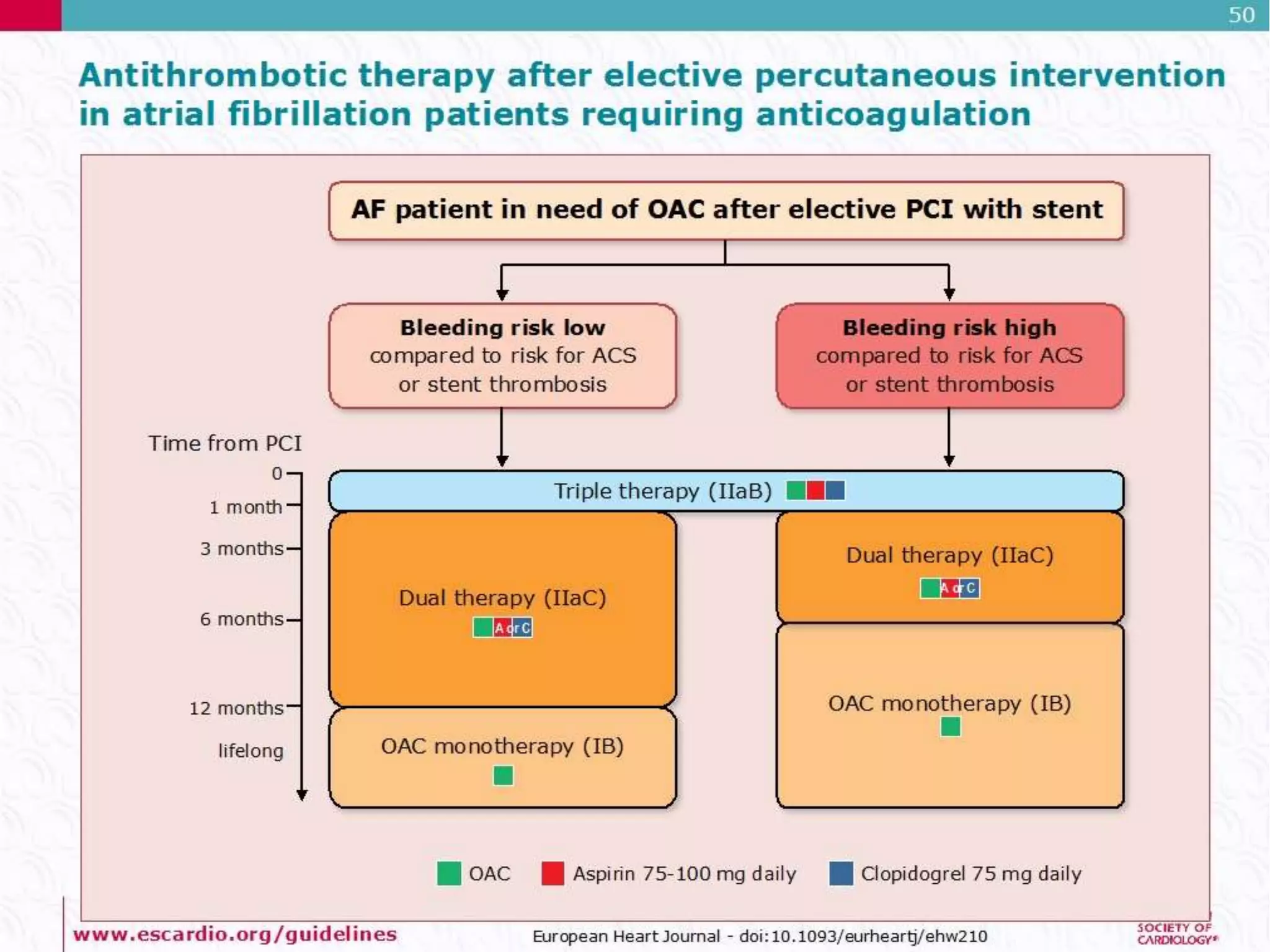
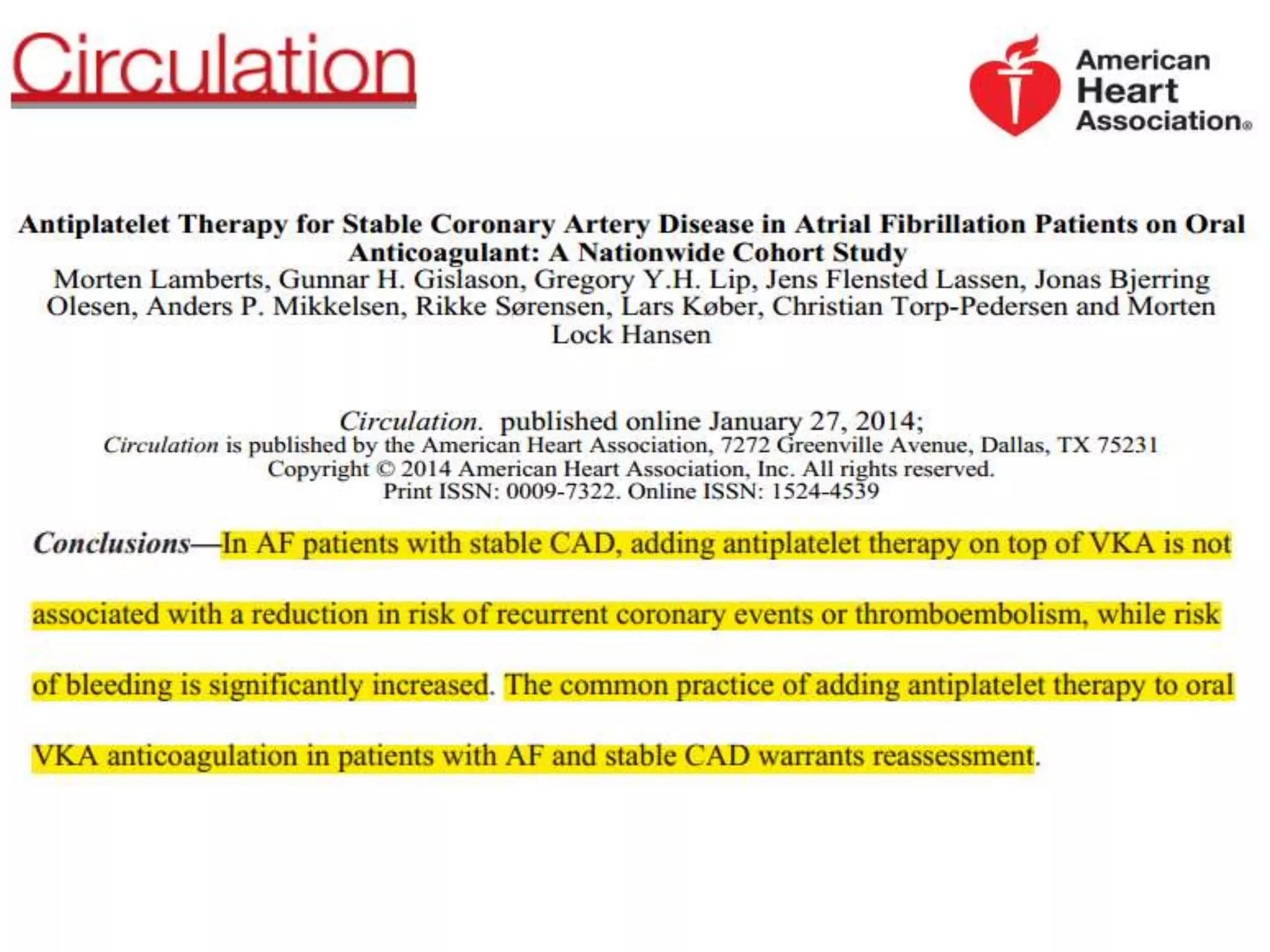
Combination therapy with oral
anticoagulants and antiplatelets
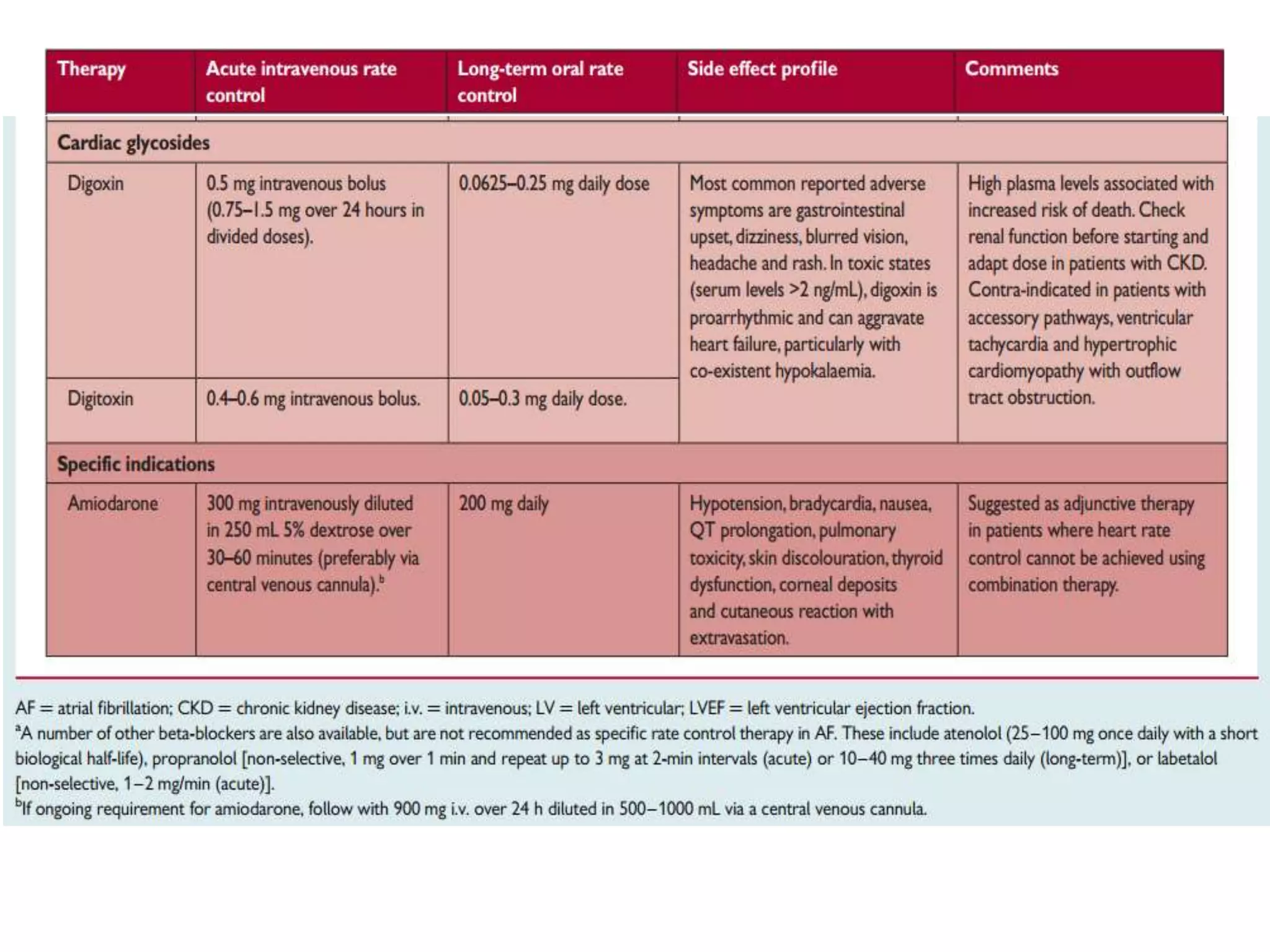
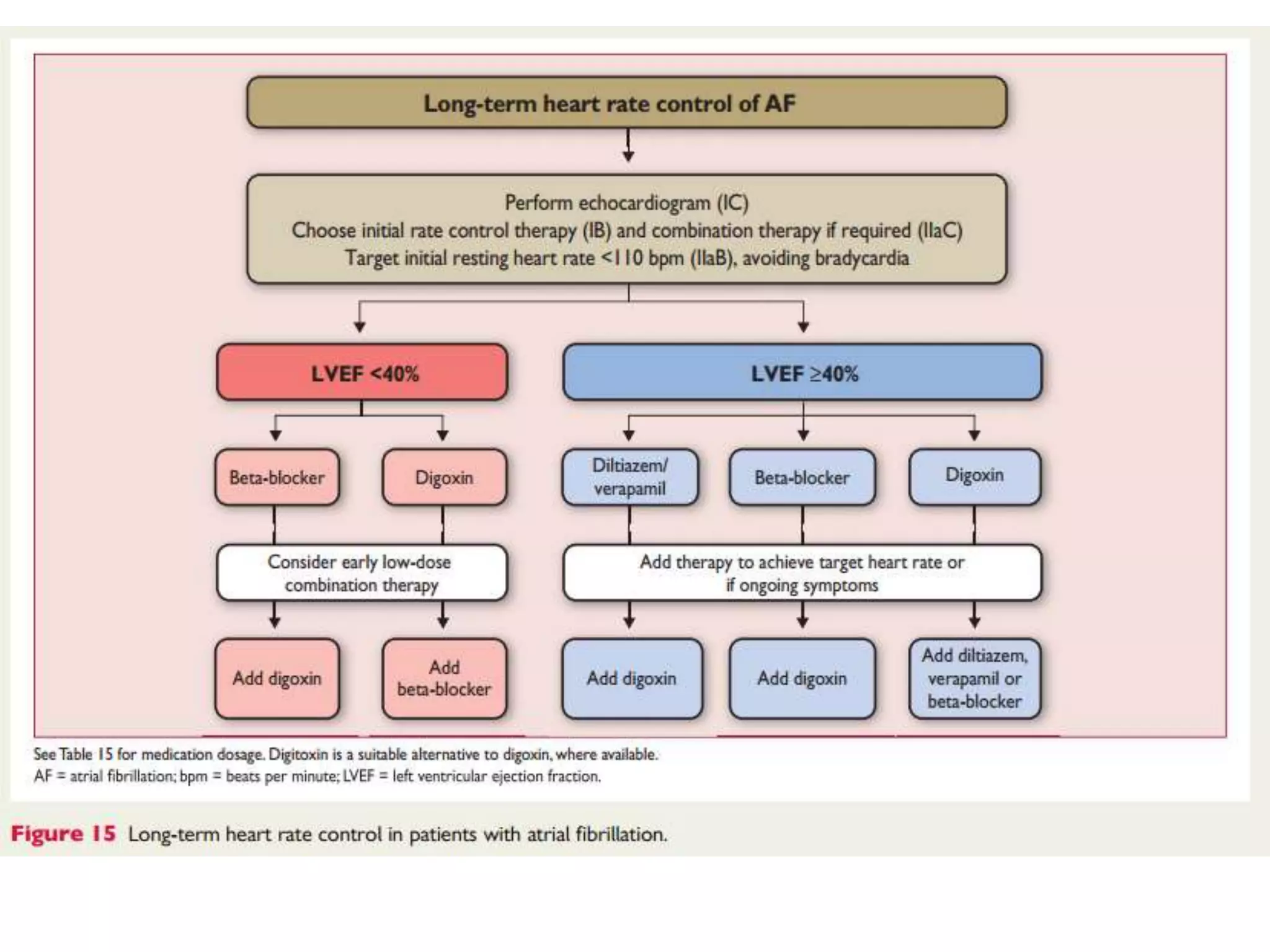
2.Rate control therapy in atrial
fibrillation
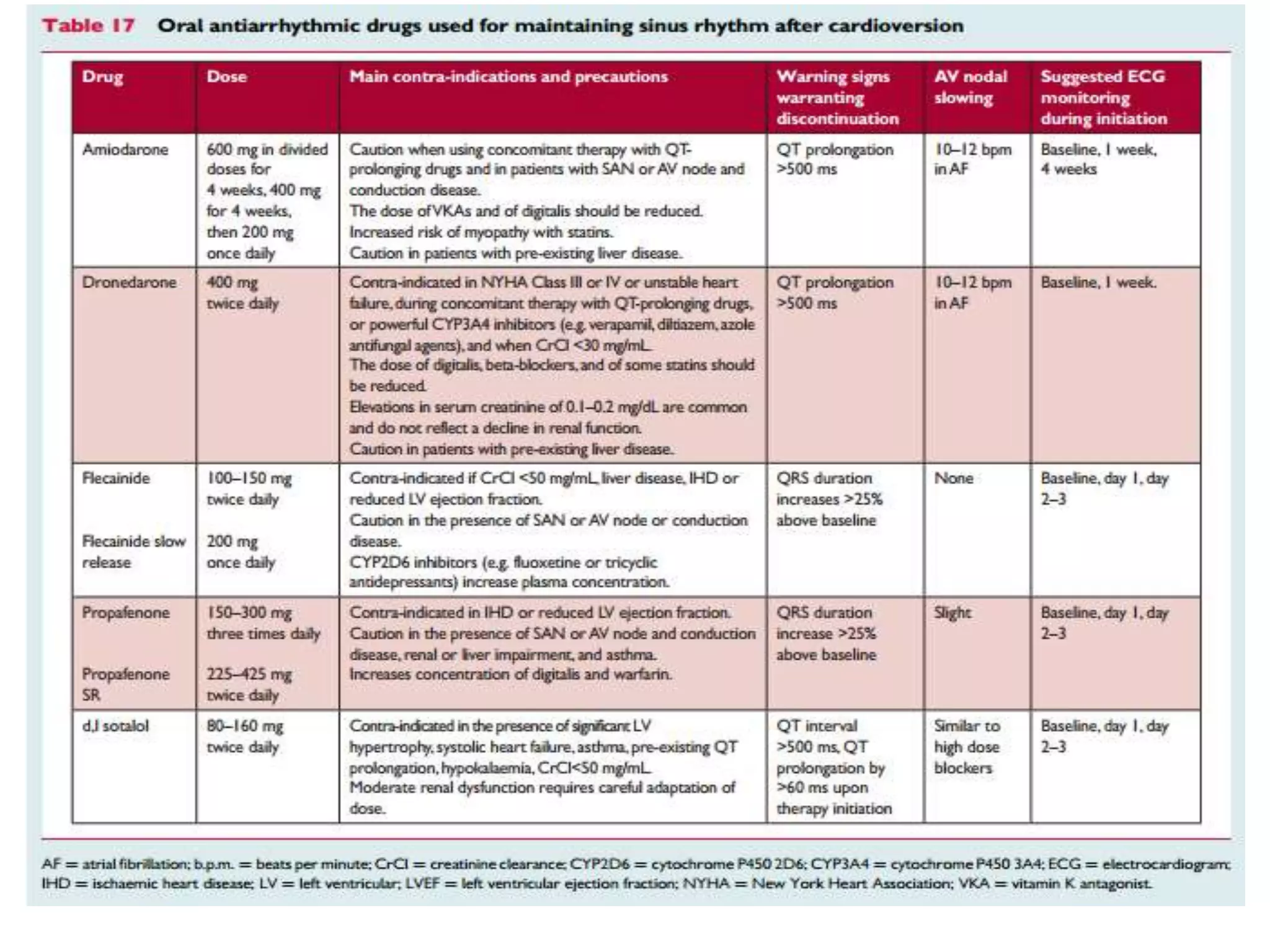
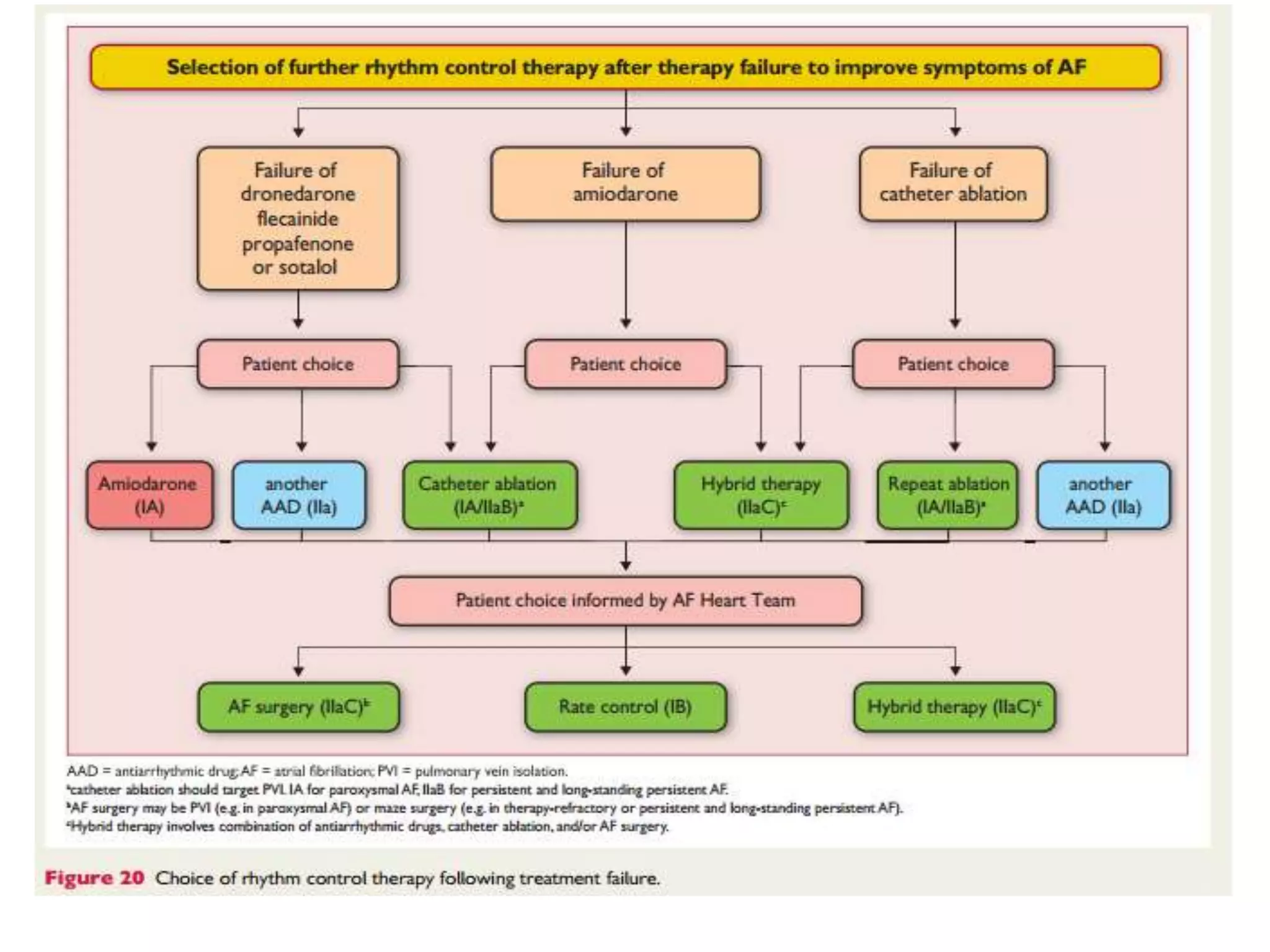
3. Rhythm control therapy in
atrial fibrillation
Rhythm control management of recent onset atrial fibrillation
Initiation of long term rhythm control therapy in symptomatic
patients with atrial fibrillation
Wolff–Parkinson–White syndrome
Patients with pre-excitation and AF are at risk of rapid conduction across the accessory
pathway, resulting in a fast ventricular rate, possible ventricular fibrillation, and
sudden death. In AF patients with evidence of an antegrade accessory pathway,
catheter ablation of the pathway is recommended. This procedure is safe and effective
and may be considered as a prophylactic treatment strategy. In AF patients surviving a
sudden death event with evidence of an accessory pathway, urgent catheter ablation
of the pathway is recommended. A documented short pre-excited RR interval ( < 250
ms) during spontaneous or induced AF is one of the risk markers for sudden death in
Wolff–Parkinson–White syndrome (WPW) syndrome, in addition to a history of
symptomatic tachycardia, the presence of multiple accessory pathways, and Ebstein’s
anomaly. Intravenous procainamide, propafenone, or ajmaline can be used to acutely
slow ventricular rate, whereas digoxin, verapamil, and diltiazem are contraindicated.
Intravenous amiodarone should be used with caution, as there are case reports of
accelerated ventricular rhythms and ventricular fibrillation in patients with preexcited
AF receiving intravenous amiodarone infusion.
Atrial fibrillation
Atrial fibrillation
Atrial fibrillation
Atrial fibrillation
Atrial fibrillation

Atrial fibrillation

  • 1.
    2016 ESC Guidelinesfor the management of atrial fibrillation
  • 5.
  • 6.
  • 10.
    1. Stroke preventionin atrial fibrillation
  • 12.
    Characteristics of approvedNon-vitamin K antagonist oral anticoagulants compared
  • 16.
  • 18.
  • 20.
  • 23.
    Combination therapy withoral anticoagulants and antiplatelets
  • 28.
    2.Rate control therapyin atrial fibrillation
  • 33.
    3. Rhythm controltherapy in atrial fibrillation
  • 34.
    Rhythm control managementof recent onset atrial fibrillation
  • 37.
    Initiation of longterm rhythm control therapy in symptomatic patients with atrial fibrillation
  • 40.
    Wolff–Parkinson–White syndrome Patients withpre-excitation and AF are at risk of rapid conduction across the accessory pathway, resulting in a fast ventricular rate, possible ventricular fibrillation, and sudden death. In AF patients with evidence of an antegrade accessory pathway, catheter ablation of the pathway is recommended. This procedure is safe and effective and may be considered as a prophylactic treatment strategy. In AF patients surviving a sudden death event with evidence of an accessory pathway, urgent catheter ablation of the pathway is recommended. A documented short pre-excited RR interval ( < 250 ms) during spontaneous or induced AF is one of the risk markers for sudden death in Wolff–Parkinson–White syndrome (WPW) syndrome, in addition to a history of symptomatic tachycardia, the presence of multiple accessory pathways, and Ebstein’s anomaly. Intravenous procainamide, propafenone, or ajmaline can be used to acutely slow ventricular rate, whereas digoxin, verapamil, and diltiazem are contraindicated. Intravenous amiodarone should be used with caution, as there are case reports of accelerated ventricular rhythms and ventricular fibrillation in patients with preexcited AF receiving intravenous amiodarone infusion.

Editor's Notes

  • #8 reappraisal :Đánh giá lại