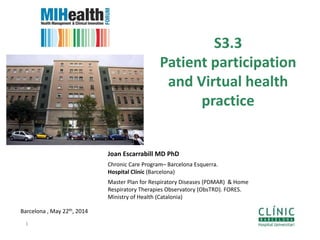

S3.3
Patient participation
and Virtual health
practice
Barcelona , May 22th, 2014
1
Joan Escarrabill MD PhD
Chronic Care Program– Barcelona Esquerra.
Hospital Clínic (Barcelona)
Master Plan for Respiratory Diseases (PDMAR) & Home
Respiratory Therapies Observatory (ObsTRD). FORES.
Ministry of Health (Catalonia)
2
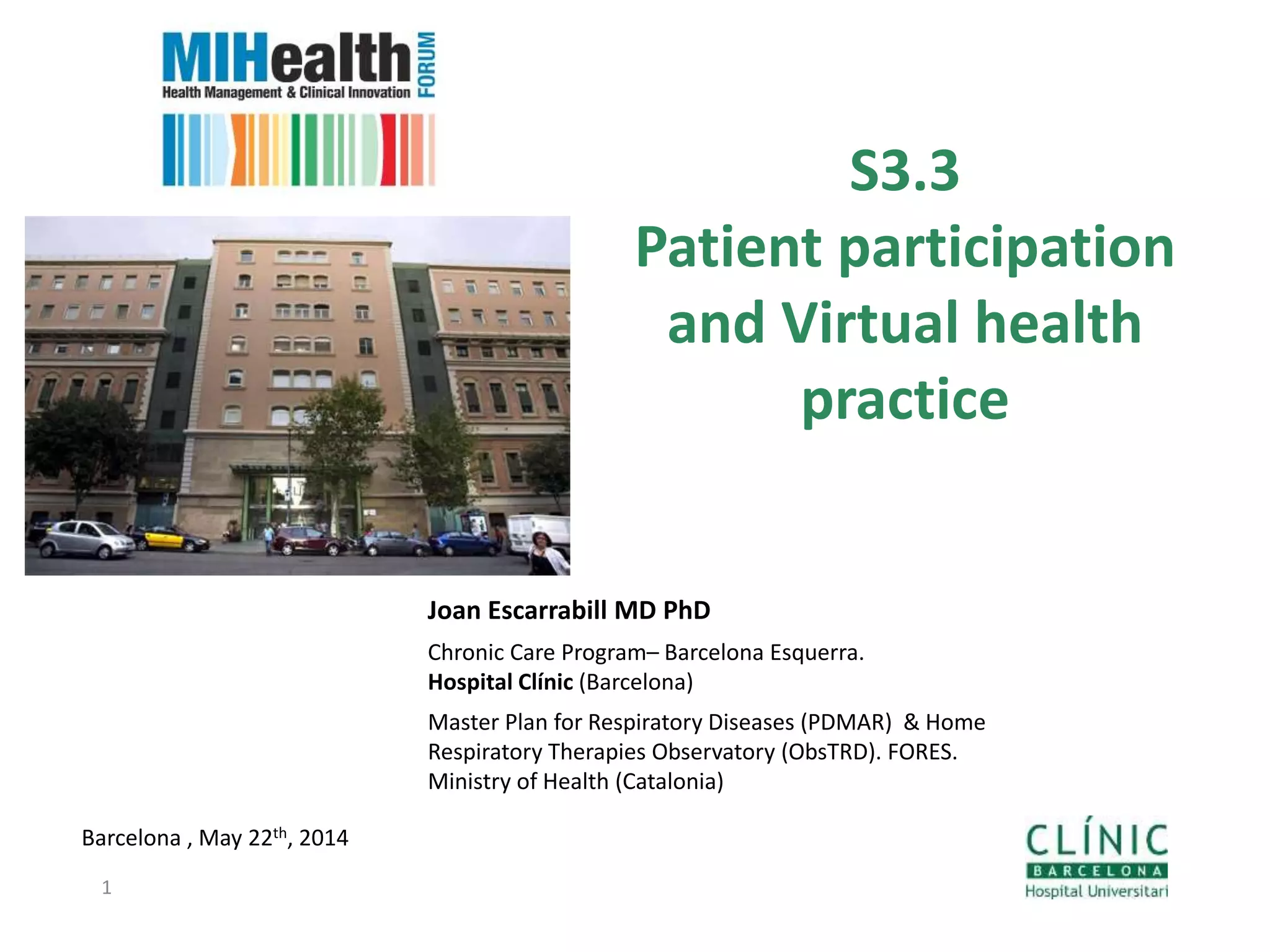
The doctor’s visit (1663)
Jan Steen (1626-1679)
The doctor (1891)
Sir Samuel Luke Fildes (1842-1927)
A Fortunate Man (1997)
John Berger (1926- )
Episodic office-based model
Health care in digital age
3
Cycle
 Ageing and chronic diseases
 Consumer driven models
 Economic constraints
4
Nothing is so dear and
precious as time
F. Rabelais (1494-1553)
Time
5
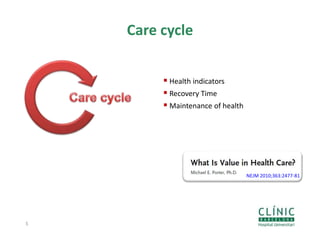
 Health indicators
 Recovery Time
 Maintenance of health
NEJM 2010;363:2477-81
Care cycle
6
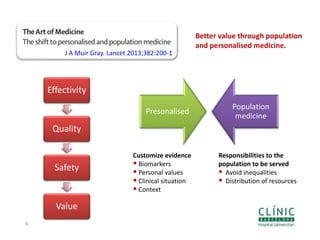
Better value through population
and personalised medicine.
J A Muir Gray. Lancet 2013;382:200-1
Effectivity
Quality
Safety
Value
Presonalised
Population
medicine
Customize evidence
 Biomarkers
 Personal values
 Clinical situation
 Context
Responsibilities to the
population to be served
 Avoid inequalities
 Distribution of resources
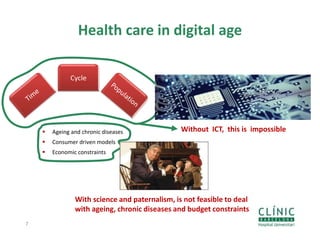
Health care in digital age
7
Cycle
 Ageing and chronic diseases
 Consumer driven models
 Economic constraints
Without ICT, this is impossible
With science and paternalism, is not feasible to deal
with ageing, chronic diseases and budget constraints
8
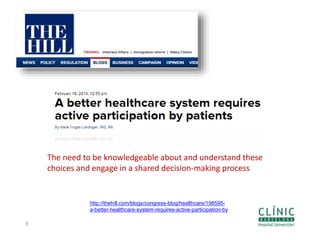
The need to be knowledgeable about and understand these
choices and engage in a shared decision-making process
http://thehill.com/blogs/congress-blog/healthcare/198595-
a-better-healthcare-system-requires-active-participation-by
9
Shared Decision Making
• Patients have to be informed
• Patients have to spend some time to consider their goals
and concerns.
• Interaction with their health care providers
10
11
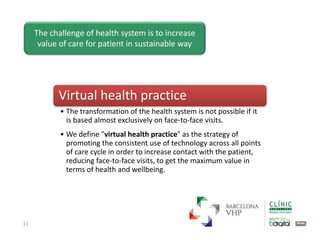
The challenge of health system is to increase
value of care for patient in sustainable way
Virtual health practice
• The transformation of the health system is not possible if it
is based almost exclusively on face-to-face visits.
• We define "virtual health practice" as the strategy of
promoting the consistent use of technology across all points
of care cycle in order to increase contact with the patient,
reducing face-to-face visits, to get the maximum value in
terms of health and wellbeing.
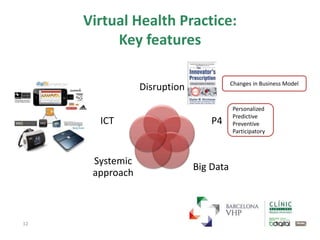
Virtual Health Practice:
Key features
Disruption
P4
Big Data
Systemic
approach
ICT
12
Changes in Business Model
Personalized
Predictive
Preventive
Participatory
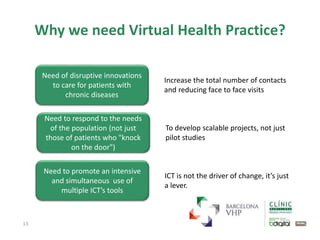
13
Need of disruptive innovations
to care for patients with
chronic diseases
Increase the total number of contacts
and reducing face to face visits
Need to respond to the needs
of the population (not just
those of patients who "knock
on the door")
To develop scalable projects, not just
pilot studies
Need to promote an intensive
and simultaneous use of
multiple ICT’s tools
ICT is not the driver of change, it’s just
a lever.
Why we need Virtual Health Practice?
14
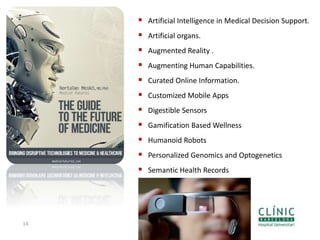
 Artificial Intelligence in Medical Decision Support.
 Artificial organs.
 Augmented Reality .
 Augmenting Human Capabilities.
 Curated Online Information.
 Customized Mobile Apps
 Digestible Sensors
 Gamification Based Wellness
 Humanoid Robots
 Personalized Genomics and Optogenetics
 Semantic Health Records
15
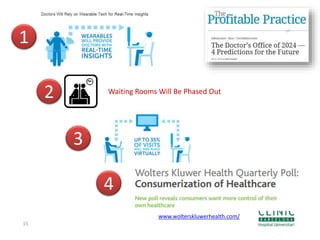
1
2 Waiting Rooms Will Be Phased Out
3
4
www.wolterskluwerhealth.com/
16
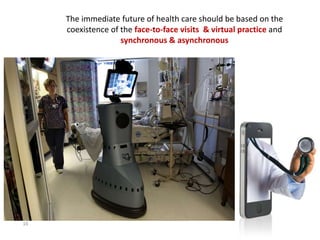
The immediate future of health care should be based on the
coexistence of the face-to-face visits & virtual practice and
synchronous & asynchronous
17
18
1
2
3
4
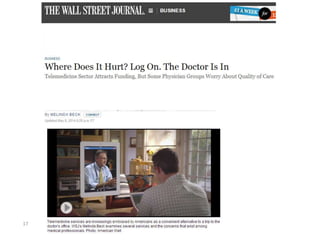
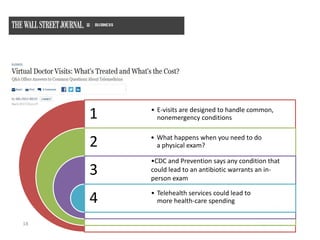
• E-visits are designed to handle common,
nonemergency conditions
• What happens when you need to do
a physical exam?
•CDC and Prevention says any condition that
could lead to an antibiotic warrants an in-
person exam
• Telehealth services could lead to
more health-care spending
19
20
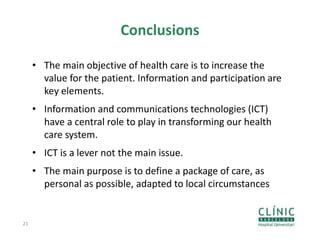
Conclusions
• The main objective of health care is to increase the
value for the patient. Information and participation are
key elements.
• Information and communications technologies (ICT)
have a central role to play in transforming our health
care system.
• ICT is a lever not the main issue.
• The main purpose is to define a package of care, as
personal as possible, adapted to local circumstances
21

20140522 mi health (2)

  • 1.
    S3.3 Patient participation and Virtualhealth practice Barcelona , May 22th, 2014 1 Joan Escarrabill MD PhD Chronic Care Program– Barcelona Esquerra. Hospital Clínic (Barcelona) Master Plan for Respiratory Diseases (PDMAR) & Home Respiratory Therapies Observatory (ObsTRD). FORES. Ministry of Health (Catalonia)
  • 2.
    2 The doctor’s visit(1663) Jan Steen (1626-1679) The doctor (1891) Sir Samuel Luke Fildes (1842-1927) A Fortunate Man (1997) John Berger (1926- ) Episodic office-based model
  • 3.
    Health care indigital age 3 Cycle  Ageing and chronic diseases  Consumer driven models  Economic constraints
  • 4.
    4 Nothing is sodear and precious as time F. Rabelais (1494-1553) Time
  • 5.
    5  Health indicators Recovery Time  Maintenance of health NEJM 2010;363:2477-81 Care cycle
  • 6.
    6 Better value throughpopulation and personalised medicine. J A Muir Gray. Lancet 2013;382:200-1 Effectivity Quality Safety Value Presonalised Population medicine Customize evidence  Biomarkers  Personal values  Clinical situation  Context Responsibilities to the population to be served  Avoid inequalities  Distribution of resources
  • 7.
    Health care indigital age 7 Cycle  Ageing and chronic diseases  Consumer driven models  Economic constraints Without ICT, this is impossible With science and paternalism, is not feasible to deal with ageing, chronic diseases and budget constraints
  • 8.
    8 The need tobe knowledgeable about and understand these choices and engage in a shared decision-making process http://thehill.com/blogs/congress-blog/healthcare/198595- a-better-healthcare-system-requires-active-participation-by
  • 9.
    9 Shared Decision Making •Patients have to be informed • Patients have to spend some time to consider their goals and concerns. • Interaction with their health care providers
  • 10.
  • 11.
    11 The challenge ofhealth system is to increase value of care for patient in sustainable way Virtual health practice • The transformation of the health system is not possible if it is based almost exclusively on face-to-face visits. • We define "virtual health practice" as the strategy of promoting the consistent use of technology across all points of care cycle in order to increase contact with the patient, reducing face-to-face visits, to get the maximum value in terms of health and wellbeing.
  • 12.
    Virtual Health Practice: Keyfeatures Disruption P4 Big Data Systemic approach ICT 12 Changes in Business Model Personalized Predictive Preventive Participatory
  • 13.
    13 Need of disruptiveinnovations to care for patients with chronic diseases Increase the total number of contacts and reducing face to face visits Need to respond to the needs of the population (not just those of patients who "knock on the door") To develop scalable projects, not just pilot studies Need to promote an intensive and simultaneous use of multiple ICT’s tools ICT is not the driver of change, it’s just a lever. Why we need Virtual Health Practice?
  • 14.
    14  Artificial Intelligencein Medical Decision Support.  Artificial organs.  Augmented Reality .  Augmenting Human Capabilities.  Curated Online Information.  Customized Mobile Apps  Digestible Sensors  Gamification Based Wellness  Humanoid Robots  Personalized Genomics and Optogenetics  Semantic Health Records
  • 15.
    15 1 2 Waiting RoomsWill Be Phased Out 3 4 www.wolterskluwerhealth.com/
  • 16.
    16 The immediate futureof health care should be based on the coexistence of the face-to-face visits & virtual practice and synchronous & asynchronous
  • 17.
  • 18.
    18 1 2 3 4 • E-visits aredesigned to handle common, nonemergency conditions • What happens when you need to do a physical exam? •CDC and Prevention says any condition that could lead to an antibiotic warrants an in- person exam • Telehealth services could lead to more health-care spending
  • 19.
  • 20.
  • 21.
    Conclusions • The mainobjective of health care is to increase the value for the patient. Information and participation are key elements. • Information and communications technologies (ICT) have a central role to play in transforming our health care system. • ICT is a lever not the main issue. • The main purpose is to define a package of care, as personal as possible, adapted to local circumstances 21