Visiting Researcher
Brocher Foundation
April 2015
Sabine E. Wildevuur
Head Creative Care Lab
Waag Society
Researcher, VU University A’dam
Towards ‘smart’ health care?
Using e-health to manage
chronic diseases in a person-
centred approach of care
Biography Sabine E. Wildevuur
•  Head Creative Care Lab Waag Society
•  Co-organiser Mobiles For Good-Challenge, Vodafone F (NL)
•  Researcher VU University ‘ICT-enabled PCC’ Amsterdam (NL)
•  Author ‘Connect: Design for an Empathic Society’ (2013)
•  Head Internet Unit, United Nations Environment Progr., Nairobi (Kenia)
•  Content Manager eHealth & Lifestyle, Medic Info (NL)
•  Founder Like Wildfire, Science & New Media
•  Editor in Chief NL, Planet Medica, Brussels (BE)
•  Author ‘Invisible Vision: Could Science learn from the Arts?’ (2009)
•  Reuters Fellow Medical Journalism, Green College, Oxford (UK)
•  Medical journalist, weekly of Royal Dutch Medical Association
•  Medicine and Communication Science, University of Amsterdam (NL)
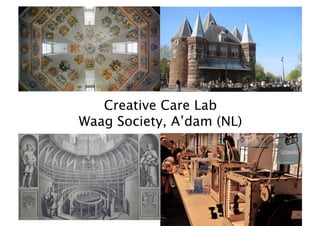
Creative Care Lab 

Waag Society, A’dam (NL)
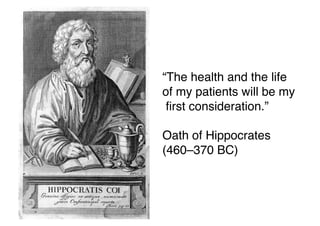
“The health and the life
of my patients will be my
first consideration.”
Oath of Hippocrates
(460–370 BC)
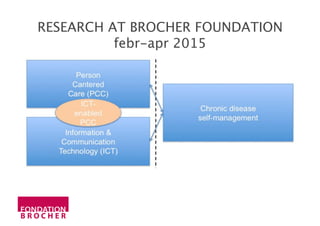
RESEARCH AT BROCHER FOUNDATION

febr-apr 2015
4 HEALTHCARE PROFESSIONALS
& PATIENTS

# HealthPatch by Vital Connect
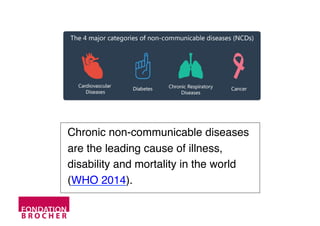
Chronic non-communicable diseases
are the leading cause of illness,
disability and mortality in the world
(WHO 2014).
SCIENCE FICTION?

# STAR TRACK ‘TRICORDER’ (1966)

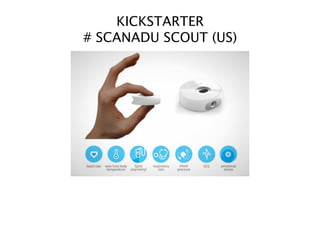
KICKSTARTER

# SCANADU SCOUT (US)
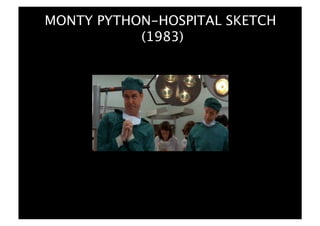
MONTY PYTHON-HOSPITAL SKETCH

(1983)

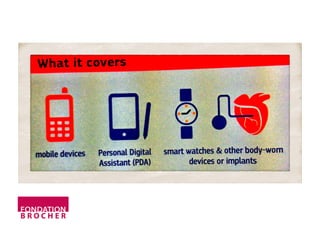
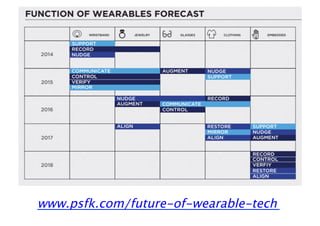
www.psfk.com/future-of-wearable-tech
4 HEALTHCARE PROFESSIONALS
& PATIENTS

# HealthPatch by Vital Connect
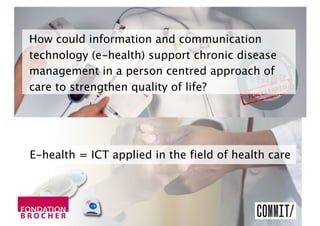
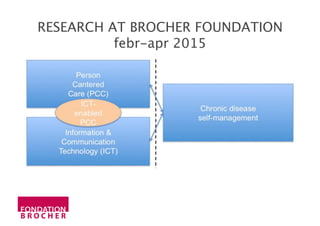
E-health = ICT applied in the field of health care
How could information and communication
technology (e-health) support chronic disease
management in a person centred approach of
care to strengthen quality of life?
Person-centered care is a term
used for healthcare and social
services which reflect the
individual’s unique preferences,
values and needs, identified and
agreed upon in partnership with
the physician.
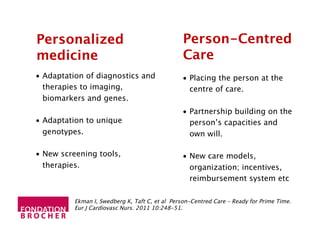
Personalized
medicine
•  Adaptation of diagnostics and
therapies to imaging,
biomarkers and genes.
•  Adaptation to unique
genotypes.
•  New screening tools,
therapies.
•  Placing the person at the
centre of care.
•  Partnership building on the
person’s capacities and
own will.
•  New care models,
organization; incentives,
reimbursement system etc
Person-Centred
Care
Ekman I, Swedberg K, Taft C, et al Person-Centred Care – Ready for Prime Time.
Eur J Cardiovasc Nurs. 2011 10:248-51.
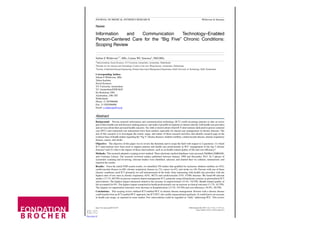
Review
Information and Communication Technology–Enabled
Person-Centered Care for the “Big Five” Chronic Conditions:
Scoping Review
Sabine E Wildevuur1,2
, MSc; Lianne WL Simonse3
, PhD,MSc
1
Talma Institute, Social Sciences, VU University Amsterdam, Amsterdam, Netherlands
2
Institute for Art, Science and Technology, Creative Care Lab, Waag Society, Amsterdam, Netherlands
3
Faculty of Industrial Design Engineering, Product Innovation Management Department, Delft University of Technology, Delft, Netherlands
Corresponding Author:
Sabine E Wildevuur, MSc
Talma Institute
Social Sciences
VU University Amsterdam
VU Amsterdam/FSW/SOC
De Boelelaan 1081
Amsterdam, 1081 HV
Netherlands
Phone: 31 205986888
Fax: 31 0205986800
Email: s.wildevuur@vu.nl
Abstract
Background: Person-centered information and communication technology (ICT) could encourage patients to take an active
part in their health care and decision-making process, and make it possible for patients to interact directly with health care providers
and services about their personal health concerns. Yet, little is known about which ICT interventions dedicated to person-centered
care (PCC) and connected-care interactions have been studied, especially for shared care management of chronic diseases. The
aim of this research is to investigate the extent, range, and nature of these research activities and identify research gaps in the
evidence base of health studies regarding the “big 5” chronic diseases: diabetes mellitus, cardiovascular disease, chronic respiratory
disease, cancer, and stroke.
Objective: The objective of this paper was to review the literature and to scope the field with respect to 2 questions: (1) which
ICT interventions have been used to support patients and health care professionals in PCC management of the big 5 chronic
diseases? and (2) what is the impact of these interventions, such as on health-related quality of life and cost efficiency?
Methods: This research adopted a scoping review method. Three electronic medical databases were accessed: PubMed, EMBASE,
and Cochrane Library. The research reviewed studies published between January 1989 and December 2013. In 5 phases of
systematic scanning and reviewing, relevant studies were identified, selected, and charted then we collated, summarized, and
reported the results.
Results: From the initial 9380 search results, we identified 350 studies that qualified for inclusion: diabetes mellitus (n=103),
cardiovascular disease (n=89), chronic respiratory disease (n=73), cancer (n=67), and stroke (n=18). Persons with one of these
chronic conditions used ICT primarily for self-measurement of the body when interacting with health care providers with the
highest rates of use seen in chronic respiratory (63%, 46/73) and cardiovascular (53%, 47/89) diseases. We found 60 relevant
studies (17.1%, 60/350) on person-centered shared management ICT, primarily using telemedicine systems as personalized ICT
interventions. The highest impact measured related to the increase in empowerment (15.4%, 54/350). Health-related quality of
life accounted for 8%. The highest impact connected to health professionals was an increase in clinical outcome (11.7%, 41/350).
The impacts on organization outcomes were decrease in hospitalization (12.3%, 43/350) and cost efficiency (10.9%, 38/350).
Conclusions: This scoping review outlined ICT-enabled PCC in chronic disease management. Persons with a chronic disease
could benefit from an ICT-enabled PCC approach, but ICT-PCC also yields organizational paybacks. It could lead to an increase
in health care usage, as reported in some studies. Few interventions could be regarded as “fully” addressing PCC. This review
J Med Internet Res 2015 | vol. 17 | iss. 3 | e77 | p.1http://www.jmir.org/2015/3/e77/
(page number not for citation purposes)
Wildevuur & SimonseJOURNAL OF MEDICAL INTERNET RESEARCH
XSL•FO
RenderX
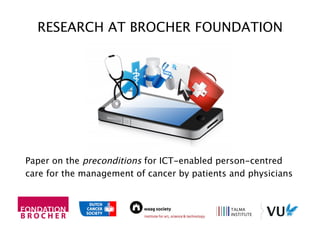
RESEARCH AT BROCHER FOUNDATION
Paper on the preconditions for ICT-enabled person-centred
care for the management of cancer by patients and physicians
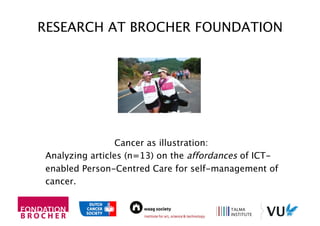
Cancer as illustration:
Analyzing articles (n=13) on the affordances of ICT-
enabled Person-Centred Care for self-management of
cancer.
RESEARCH AT BROCHER FOUNDATION

febr-apr 2015
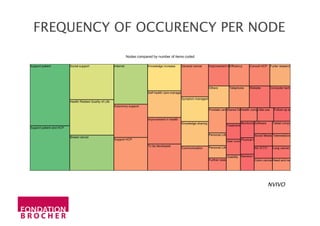
FREQUENCY OF OCCURENCY PER NODE
NVIVO
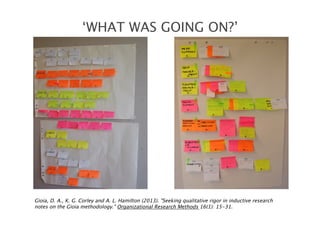
‘WHAT WAS GOING ON?’
Gioia, D. A., K. G. Corley and A. L. Hamilton (2013). "Seeking qualitative rigor in inductive research
notes on the Gioia methodology." Organizational Research Methods 16(1): 15-31.
“However, in the sample of articles we studied,
neither the partnership (between the patient
and the health care professional) nor the
narrative of the patient was dealt with.
We considered both important ingredients for
a person-centered approach of care
(Ekman, Swedberg et al. 2011).”
NOW BUSY WRITING THE FINDINGS
© WILDEVUUR SE, THOMESE GCF, FERGUSON JE,
Thank you for your attention

“Technology cannot replace
human involvement” 


Towards 'smart' healthcare?

  • 1.
    Visiting Researcher Brocher Foundation April2015 Sabine E. Wildevuur Head Creative Care Lab Waag Society Researcher, VU University A’dam Towards ‘smart’ health care? Using e-health to manage chronic diseases in a person- centred approach of care
  • 2.
    Biography Sabine E.Wildevuur •  Head Creative Care Lab Waag Society •  Co-organiser Mobiles For Good-Challenge, Vodafone F (NL) •  Researcher VU University ‘ICT-enabled PCC’ Amsterdam (NL) •  Author ‘Connect: Design for an Empathic Society’ (2013) •  Head Internet Unit, United Nations Environment Progr., Nairobi (Kenia) •  Content Manager eHealth & Lifestyle, Medic Info (NL) •  Founder Like Wildfire, Science & New Media •  Editor in Chief NL, Planet Medica, Brussels (BE) •  Author ‘Invisible Vision: Could Science learn from the Arts?’ (2009) •  Reuters Fellow Medical Journalism, Green College, Oxford (UK) •  Medical journalist, weekly of Royal Dutch Medical Association •  Medicine and Communication Science, University of Amsterdam (NL)
  • 3.
    Creative Care Lab
 Waag Society, A’dam (NL)
  • 4.
    “The health andthe life of my patients will be my first consideration.” Oath of Hippocrates (460–370 BC)
  • 5.
    RESEARCH AT BROCHERFOUNDATION
 febr-apr 2015
  • 7.
    4 HEALTHCARE PROFESSIONALS &PATIENTS
 # HealthPatch by Vital Connect Chronic non-communicable diseases are the leading cause of illness, disability and mortality in the world (WHO 2014).
  • 9.
    SCIENCE FICTION?
 # STARTRACK ‘TRICORDER’ (1966)

  • 10.
  • 11.
  • 13.
  • 15.
    4 HEALTHCARE PROFESSIONALS &PATIENTS
 # HealthPatch by Vital Connect E-health = ICT applied in the field of health care How could information and communication technology (e-health) support chronic disease management in a person centred approach of care to strengthen quality of life?
  • 16.
    Person-centered care isa term used for healthcare and social services which reflect the individual’s unique preferences, values and needs, identified and agreed upon in partnership with the physician.
  • 17.
    Personalized medicine •  Adaptation ofdiagnostics and therapies to imaging, biomarkers and genes. •  Adaptation to unique genotypes. •  New screening tools, therapies. •  Placing the person at the centre of care. •  Partnership building on the person’s capacities and own will. •  New care models, organization; incentives, reimbursement system etc Person-Centred Care Ekman I, Swedberg K, Taft C, et al Person-Centred Care – Ready for Prime Time. Eur J Cardiovasc Nurs. 2011 10:248-51.
  • 19.
    Review Information and CommunicationTechnology–Enabled Person-Centered Care for the “Big Five” Chronic Conditions: Scoping Review Sabine E Wildevuur1,2 , MSc; Lianne WL Simonse3 , PhD,MSc 1 Talma Institute, Social Sciences, VU University Amsterdam, Amsterdam, Netherlands 2 Institute for Art, Science and Technology, Creative Care Lab, Waag Society, Amsterdam, Netherlands 3 Faculty of Industrial Design Engineering, Product Innovation Management Department, Delft University of Technology, Delft, Netherlands Corresponding Author: Sabine E Wildevuur, MSc Talma Institute Social Sciences VU University Amsterdam VU Amsterdam/FSW/SOC De Boelelaan 1081 Amsterdam, 1081 HV Netherlands Phone: 31 205986888 Fax: 31 0205986800 Email: s.wildevuur@vu.nl Abstract Background: Person-centered information and communication technology (ICT) could encourage patients to take an active part in their health care and decision-making process, and make it possible for patients to interact directly with health care providers and services about their personal health concerns. Yet, little is known about which ICT interventions dedicated to person-centered care (PCC) and connected-care interactions have been studied, especially for shared care management of chronic diseases. The aim of this research is to investigate the extent, range, and nature of these research activities and identify research gaps in the evidence base of health studies regarding the “big 5” chronic diseases: diabetes mellitus, cardiovascular disease, chronic respiratory disease, cancer, and stroke. Objective: The objective of this paper was to review the literature and to scope the field with respect to 2 questions: (1) which ICT interventions have been used to support patients and health care professionals in PCC management of the big 5 chronic diseases? and (2) what is the impact of these interventions, such as on health-related quality of life and cost efficiency? Methods: This research adopted a scoping review method. Three electronic medical databases were accessed: PubMed, EMBASE, and Cochrane Library. The research reviewed studies published between January 1989 and December 2013. In 5 phases of systematic scanning and reviewing, relevant studies were identified, selected, and charted then we collated, summarized, and reported the results. Results: From the initial 9380 search results, we identified 350 studies that qualified for inclusion: diabetes mellitus (n=103), cardiovascular disease (n=89), chronic respiratory disease (n=73), cancer (n=67), and stroke (n=18). Persons with one of these chronic conditions used ICT primarily for self-measurement of the body when interacting with health care providers with the highest rates of use seen in chronic respiratory (63%, 46/73) and cardiovascular (53%, 47/89) diseases. We found 60 relevant studies (17.1%, 60/350) on person-centered shared management ICT, primarily using telemedicine systems as personalized ICT interventions. The highest impact measured related to the increase in empowerment (15.4%, 54/350). Health-related quality of life accounted for 8%. The highest impact connected to health professionals was an increase in clinical outcome (11.7%, 41/350). The impacts on organization outcomes were decrease in hospitalization (12.3%, 43/350) and cost efficiency (10.9%, 38/350). Conclusions: This scoping review outlined ICT-enabled PCC in chronic disease management. Persons with a chronic disease could benefit from an ICT-enabled PCC approach, but ICT-PCC also yields organizational paybacks. It could lead to an increase in health care usage, as reported in some studies. Few interventions could be regarded as “fully” addressing PCC. This review J Med Internet Res 2015 | vol. 17 | iss. 3 | e77 | p.1http://www.jmir.org/2015/3/e77/ (page number not for citation purposes) Wildevuur & SimonseJOURNAL OF MEDICAL INTERNET RESEARCH XSL•FO RenderX
  • 20.
    RESEARCH AT BROCHERFOUNDATION Paper on the preconditions for ICT-enabled person-centred care for the management of cancer by patients and physicians
  • 21.
    Cancer as illustration: Analyzingarticles (n=13) on the affordances of ICT- enabled Person-Centred Care for self-management of cancer. RESEARCH AT BROCHER FOUNDATION
  • 22.
    RESEARCH AT BROCHERFOUNDATION
 febr-apr 2015
  • 23.
    FREQUENCY OF OCCURENCYPER NODE NVIVO
  • 24.
    ‘WHAT WAS GOINGON?’ Gioia, D. A., K. G. Corley and A. L. Hamilton (2013). "Seeking qualitative rigor in inductive research notes on the Gioia methodology." Organizational Research Methods 16(1): 15-31.
  • 25.
    “However, in thesample of articles we studied, neither the partnership (between the patient and the health care professional) nor the narrative of the patient was dealt with. We considered both important ingredients for a person-centered approach of care (Ekman, Swedberg et al. 2011).” NOW BUSY WRITING THE FINDINGS © WILDEVUUR SE, THOMESE GCF, FERGUSON JE,
  • 26.
    Thank you foryour attention
 “Technology cannot replace human involvement”