Deploying and Debugging
Educational Games Using e-
   Learning Standards
    Baltasar Fernandez-Manjon
      Angel del Blanco, Javier
   Torrente, Angel Serrano, Ivan
          Martinez-Ortiz

                            balta@fdi.ucm.es
Introduction


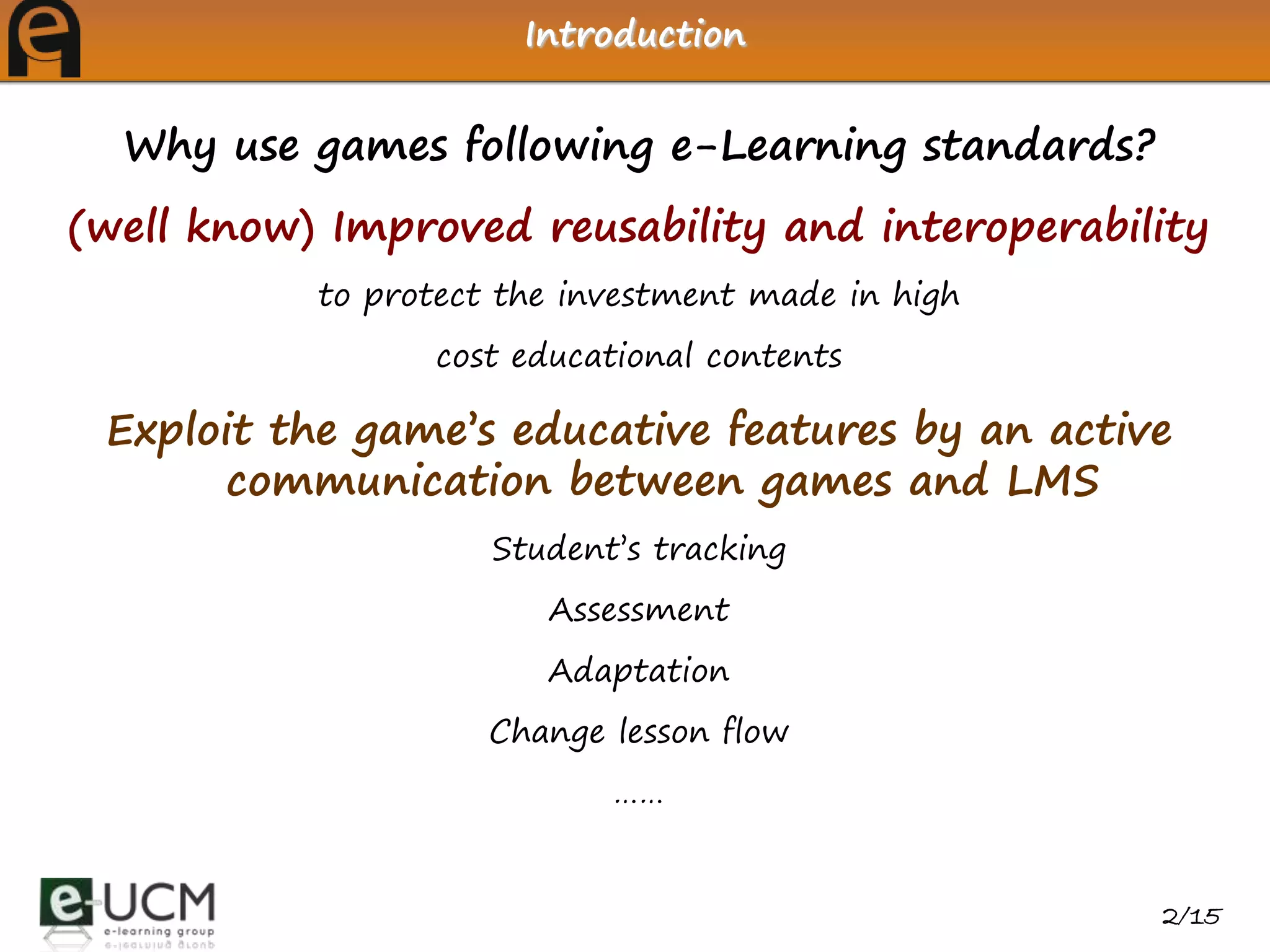
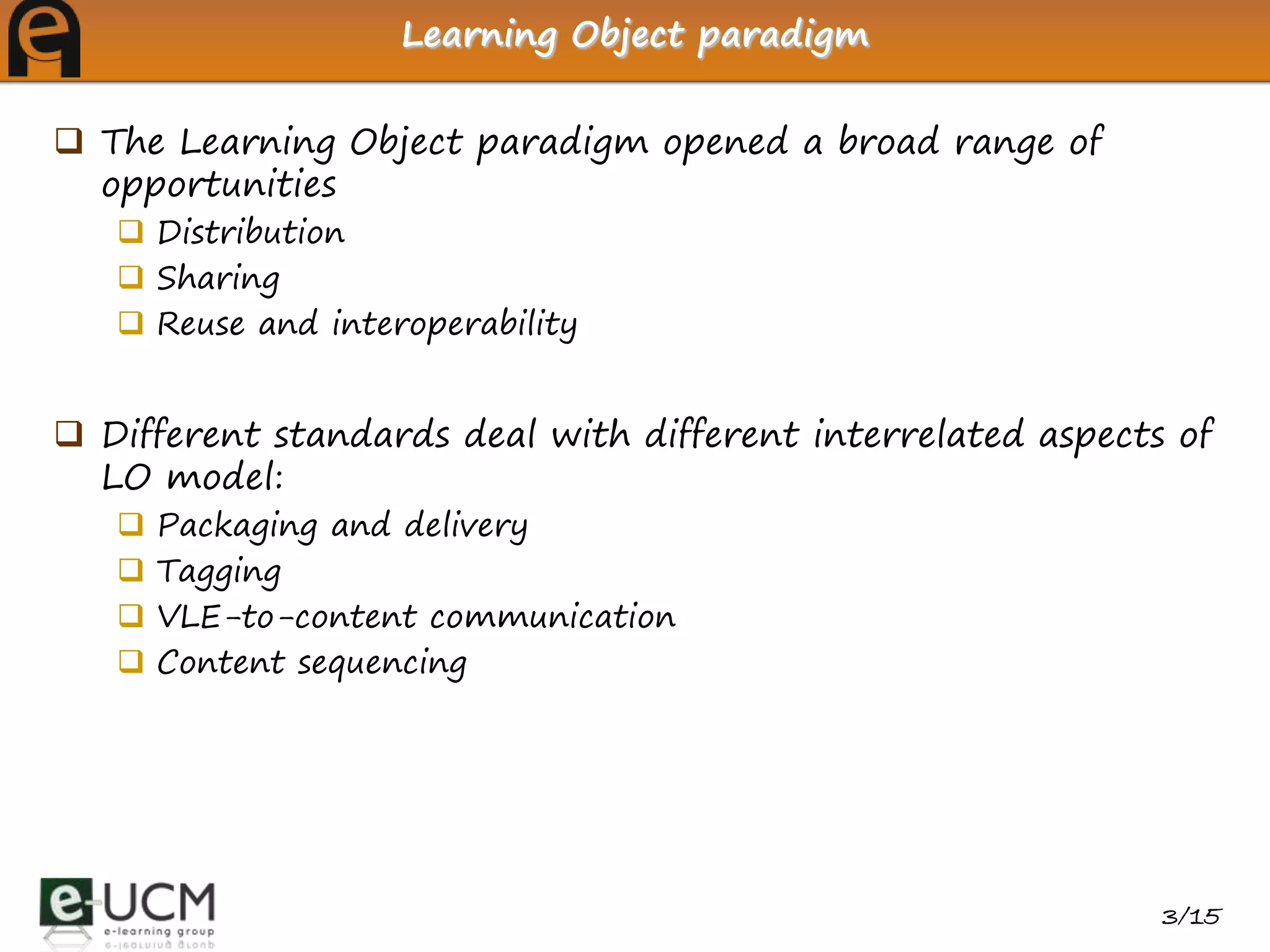
 Games are effective tools for teaching-learning
 New trends in the serious games research trying to take more
  advantage of their potential:
      New game mechanics
      Learning analytics with games
      Apply e-Learning standards in games
      ….


                                                           1/15
Introduction


  Why use games following e-Learning standards?
(well know) Improved reusability and interoperability
           to protect the investment made in high
                 cost educational contents

 Exploit the game’s educative features by an active
      communication between games and LMS
                     Student’s tracking
                        Assessment
                        Adaptation
                     Change lesson flow
                            ……


                                                    2/15
Learning Object paradigm


 The Learning Object paradigm opened a broad range of
  opportunities
    Distribution
    Sharing
    Reuse and interoperability


 Different standards deal with different interrelated aspects of
  LO model:
      Packaging and delivery
      Tagging
      VLE-to-content communication
      Content sequencing


                                                              3/15
[

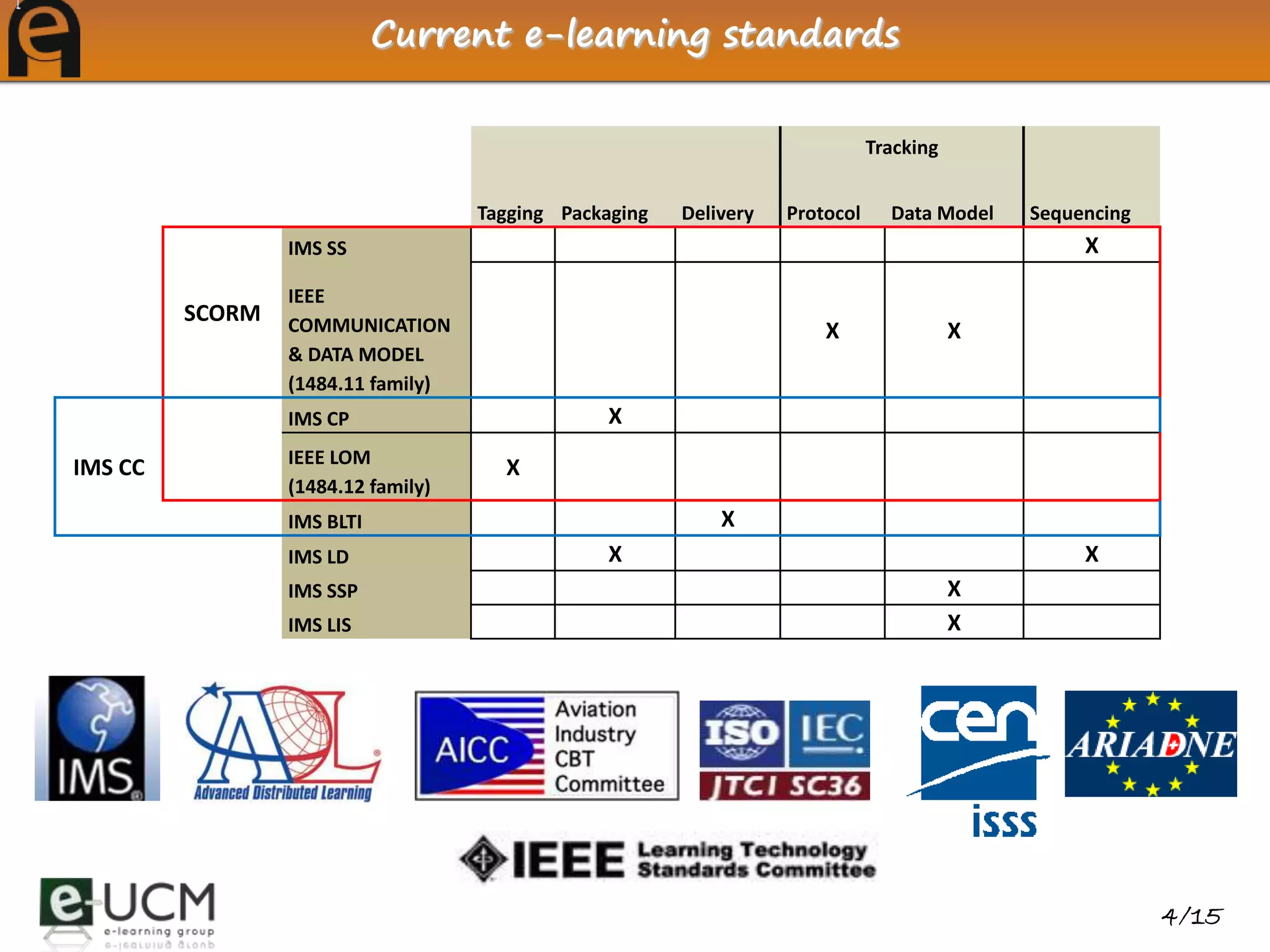
                                Current e-learning standards


                                                                                  Tracking


                                        Tagging Packaging   Delivery   Protocol     Data Model   Sequencing
                     IMS SS                                                                           X

                     IEEE
             SCORM   COMMUNICATION                                         X                 X
                     & DATA MODEL
                     (1484.11 family)
                     IMS CP                          X
                     IEEE LOM
    IMS CC                                X
                     (1484.12 family)
                     IMS BLTI                                   X
                     IMS LD                          X                                                X
                     IMS SSP                                                                 X
                     IMS LIS                                                                 X


                                                                                                              4/15
Problems


                 So… let’s do it!!

 It’s technical complex process…
   Create XML documents to add metadata and content
    structure
   Add specific XSD and DTD files
   Package together
   Execute games in web environments
   There are not a wide accepted standard that cover all the
    features


                                                          5/15
Problems


 … and even more when the content will
  send/receive data
    Follow the selected communication channel
    Implement the API in the game
    Know the standard data model
    Study how the sent data can modify the lesson flow
 Besides, there are not a standard that deals with the game
  integration in particular

   So teachers and educators with limited technical background can
     not participate….


        …so tools that ease the process are needed
     allowing to introduce experts in that matter

                                                                 6/15
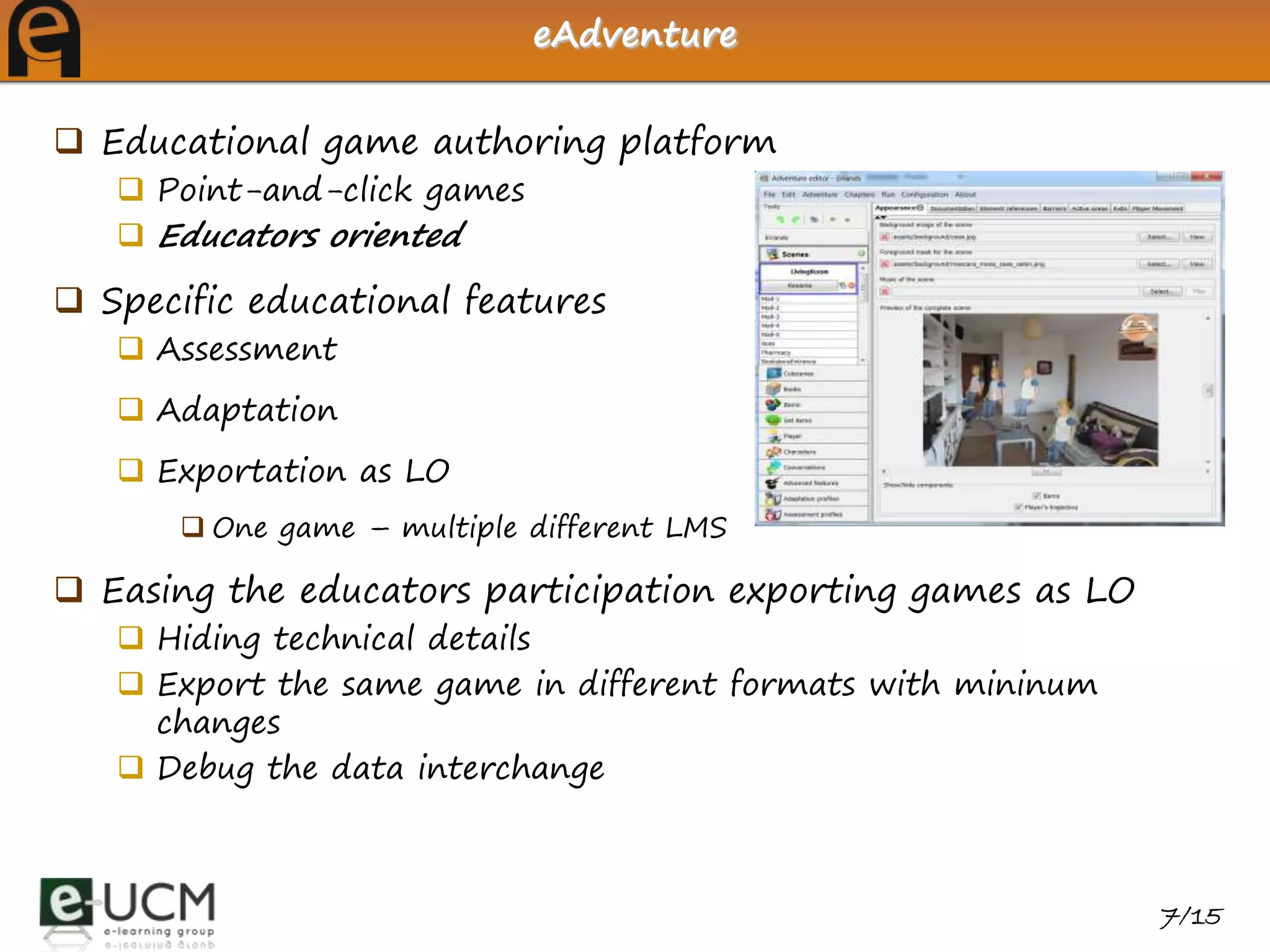
eAdventure


 Educational game authoring platform
    Point-and-click games
    Educators oriented

 Specific educational features
    Assessment
    Adaptation
    Exportation as LO
        One game – multiple different LMS

 Easing the educators participation exporting games as LO
    Hiding technical details
    Export the same game in different formats with mininum
     changes
    Debug the data interchange


                                                              7/15
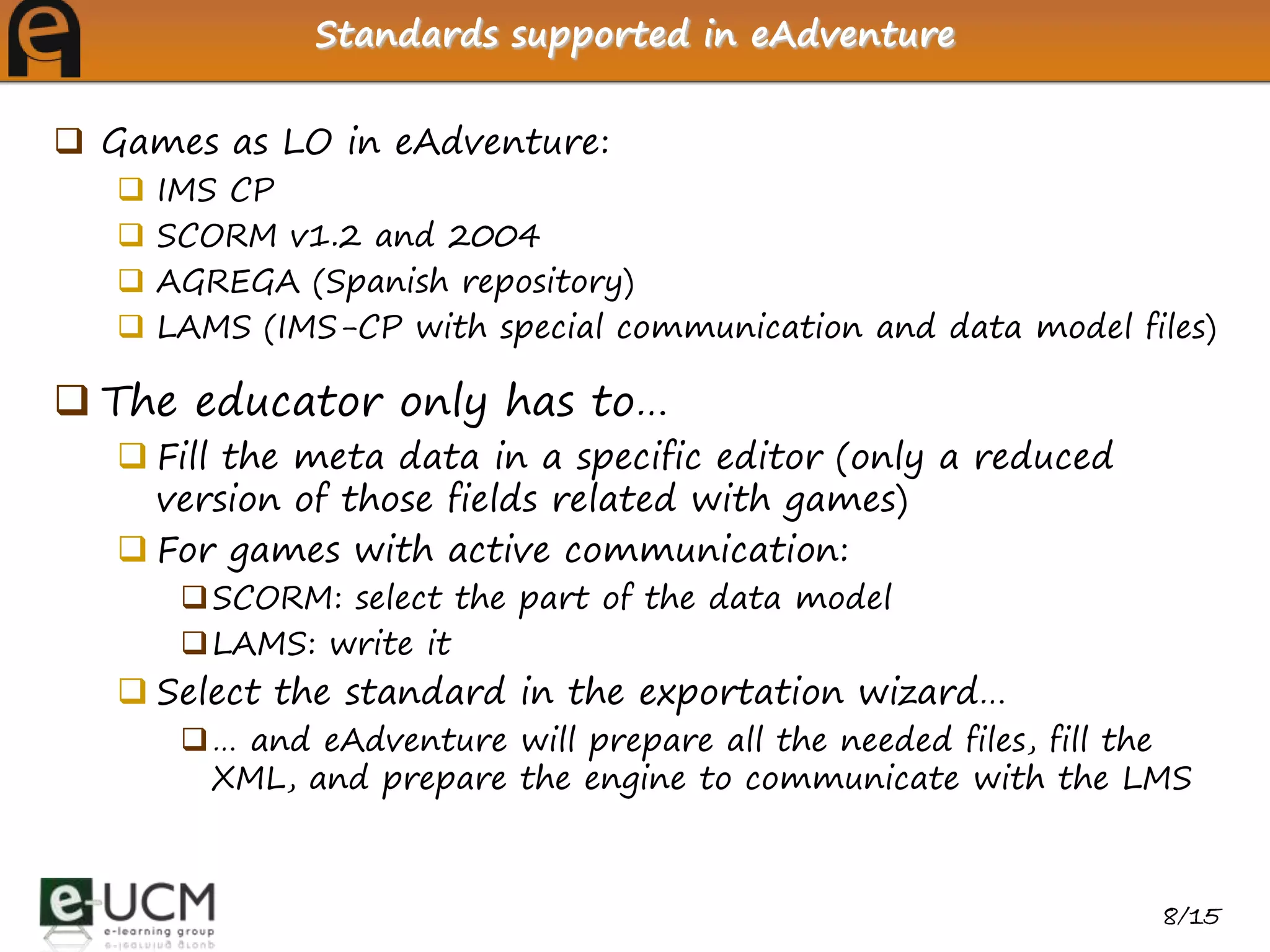
Standards supported in eAdventure


 Games as LO in eAdventure:
      IMS CP
      SCORM v1.2 and 2004
      AGREGA (Spanish repository)
      LAMS (IMS-CP with special communication and data model files)

 The educator only has to…
    Fill the meta data in a specific editor (only a reduced
     version of those fields related with games)
    For games with active communication:
         SCORM: select the part of the data model
         LAMS: write it
    Select the standard in the exportation wizard…
         … and eAdventure will prepare all the needed files, fill the
          XML, and prepare the engine to communicate with the LMS


                                                                    8/15
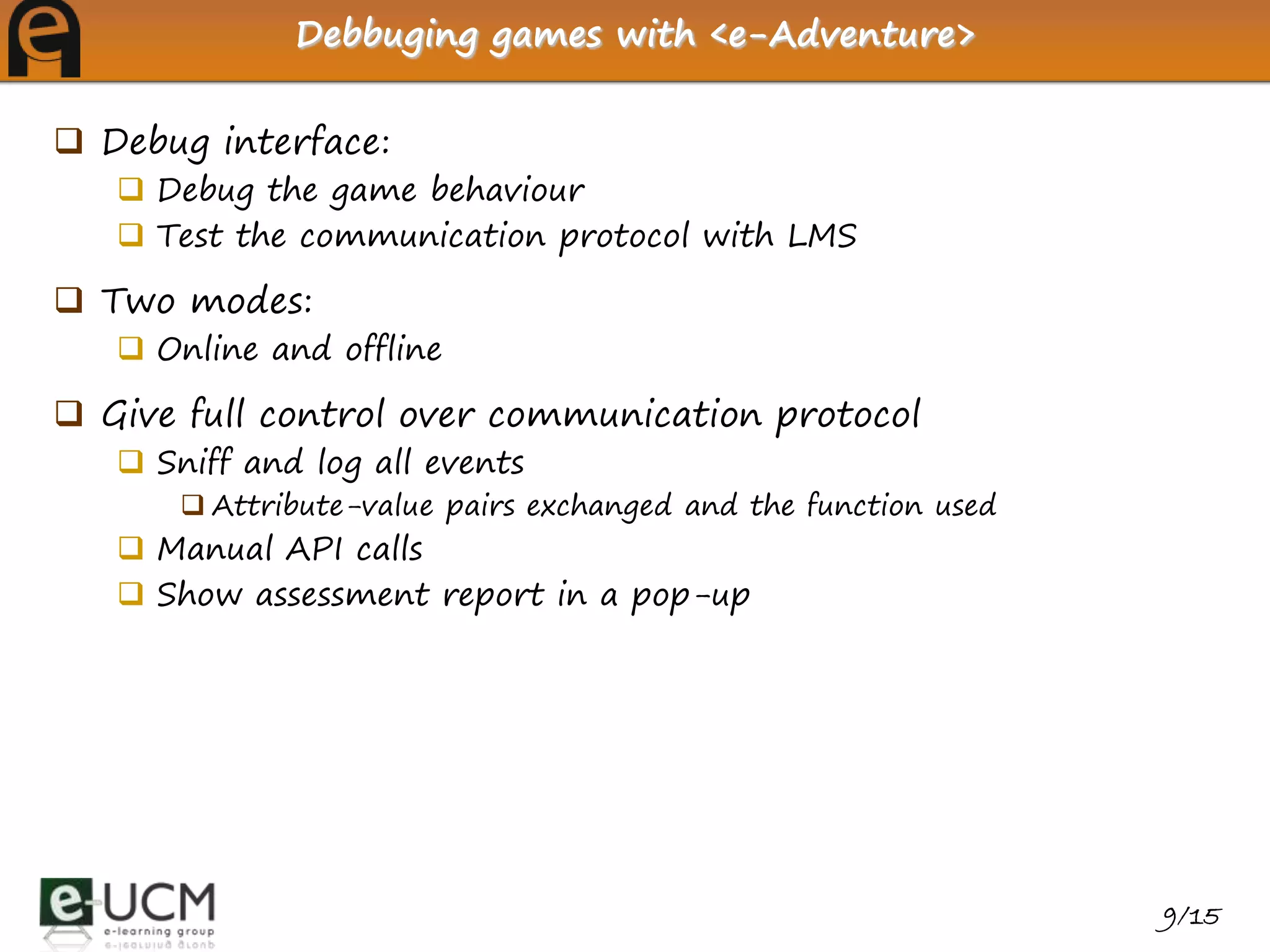
Debbuging games with <e-Adventure>


 Debug interface:
    Debug the game behaviour
    Test the communication protocol with LMS

 Two modes:
    Online and offline

 Give full control over communication protocol
    Sniff and log all events
        Attribute-value pairs exchanged and the function used
    Manual API calls
    Show assessment report in a pop-up


                                                                 9/15
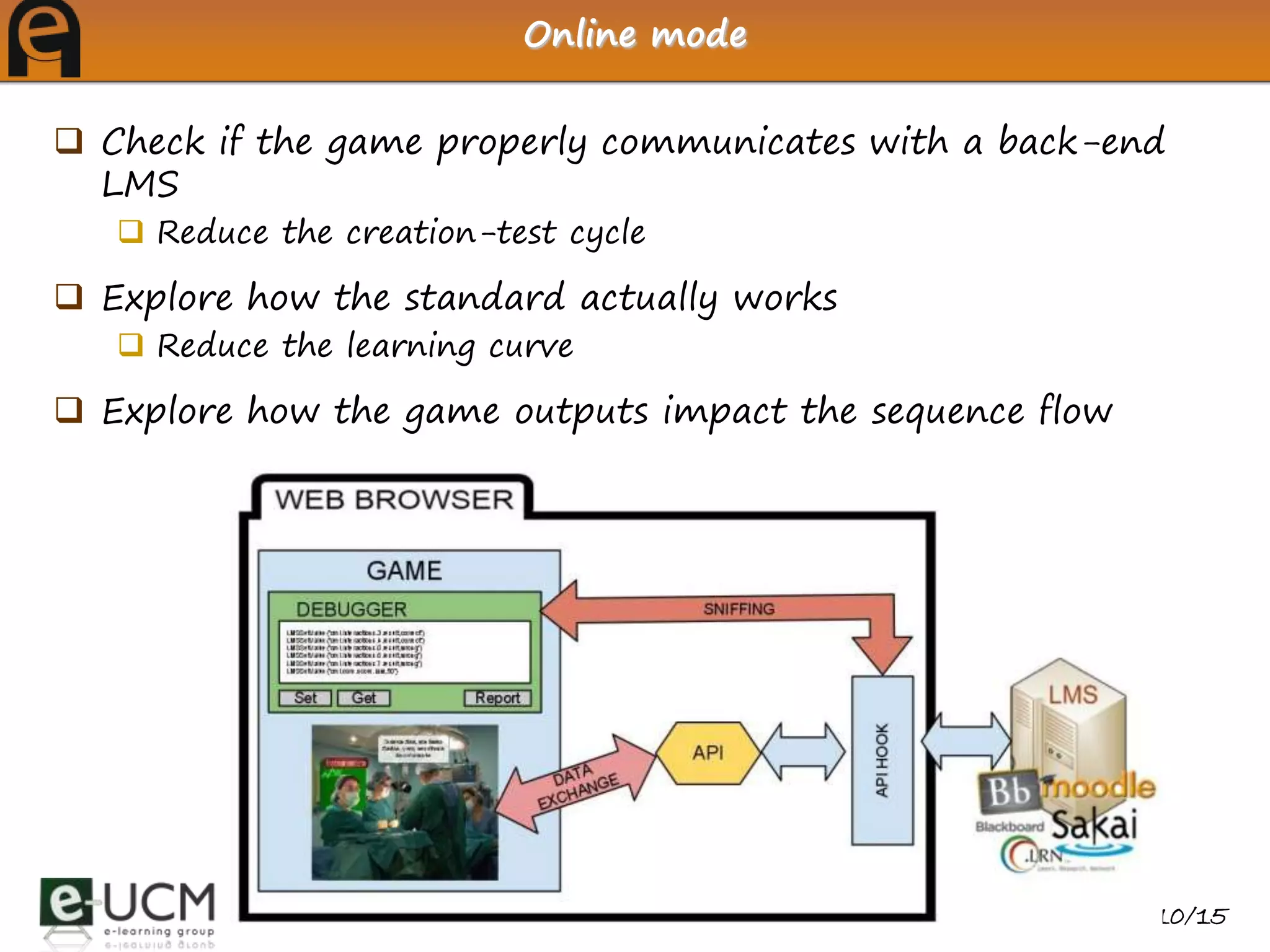
Online mode


 Check if the game properly communicates with a back-end
  LMS
    Reduce the creation-test cycle

 Explore how the standard actually works
    Reduce the learning curve

 Explore how the game outputs impact the sequence flow


                                                          10/15
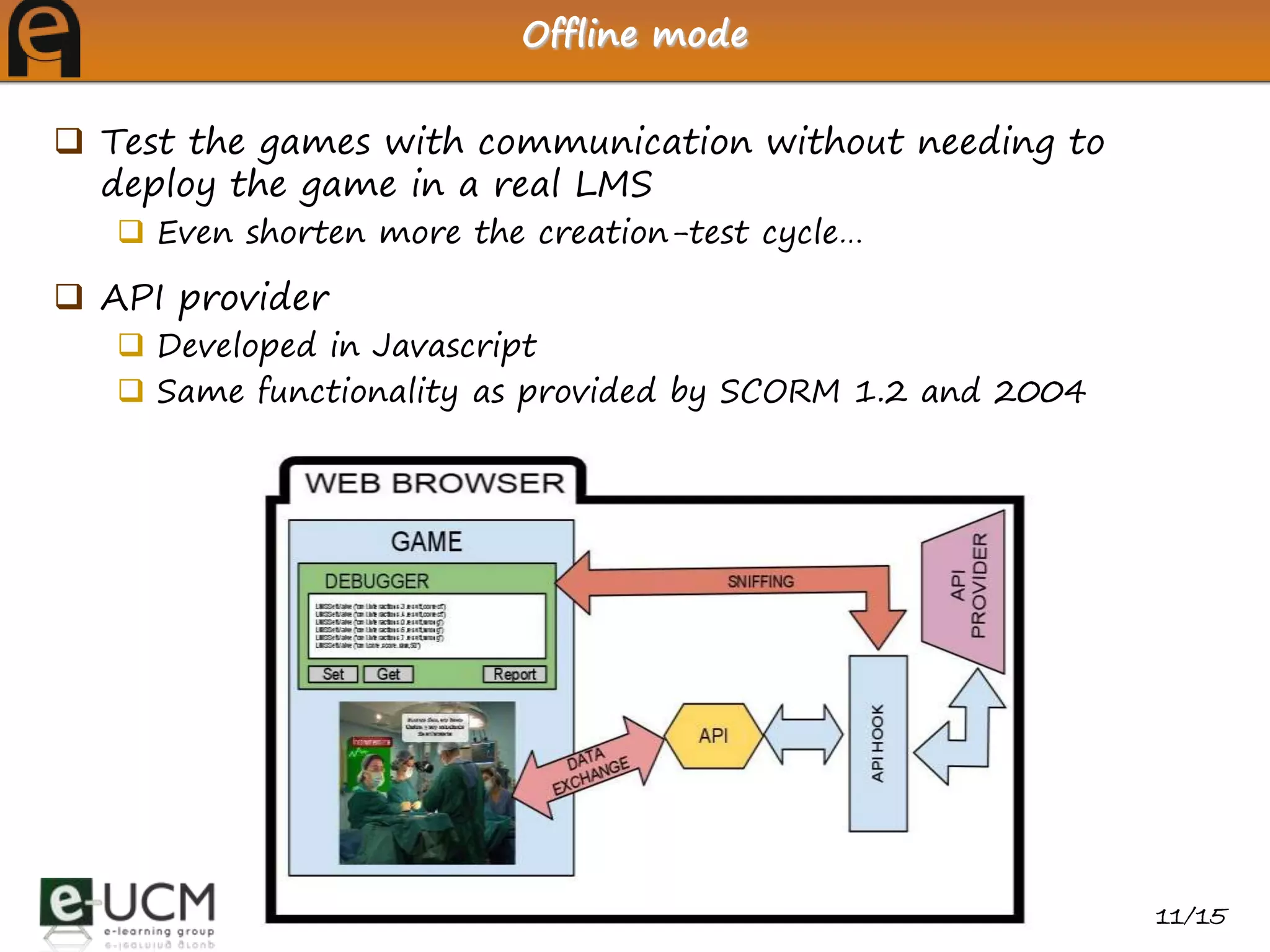
Offline mode


 Test the games with communication without needing to
  deploy the game in a real LMS
    Even shorten more the creation-test cycle…

 API provider
    Developed in Javascript
    Same functionality as provided by SCORM 1.2 and 2004


                                                            11/15
Case study


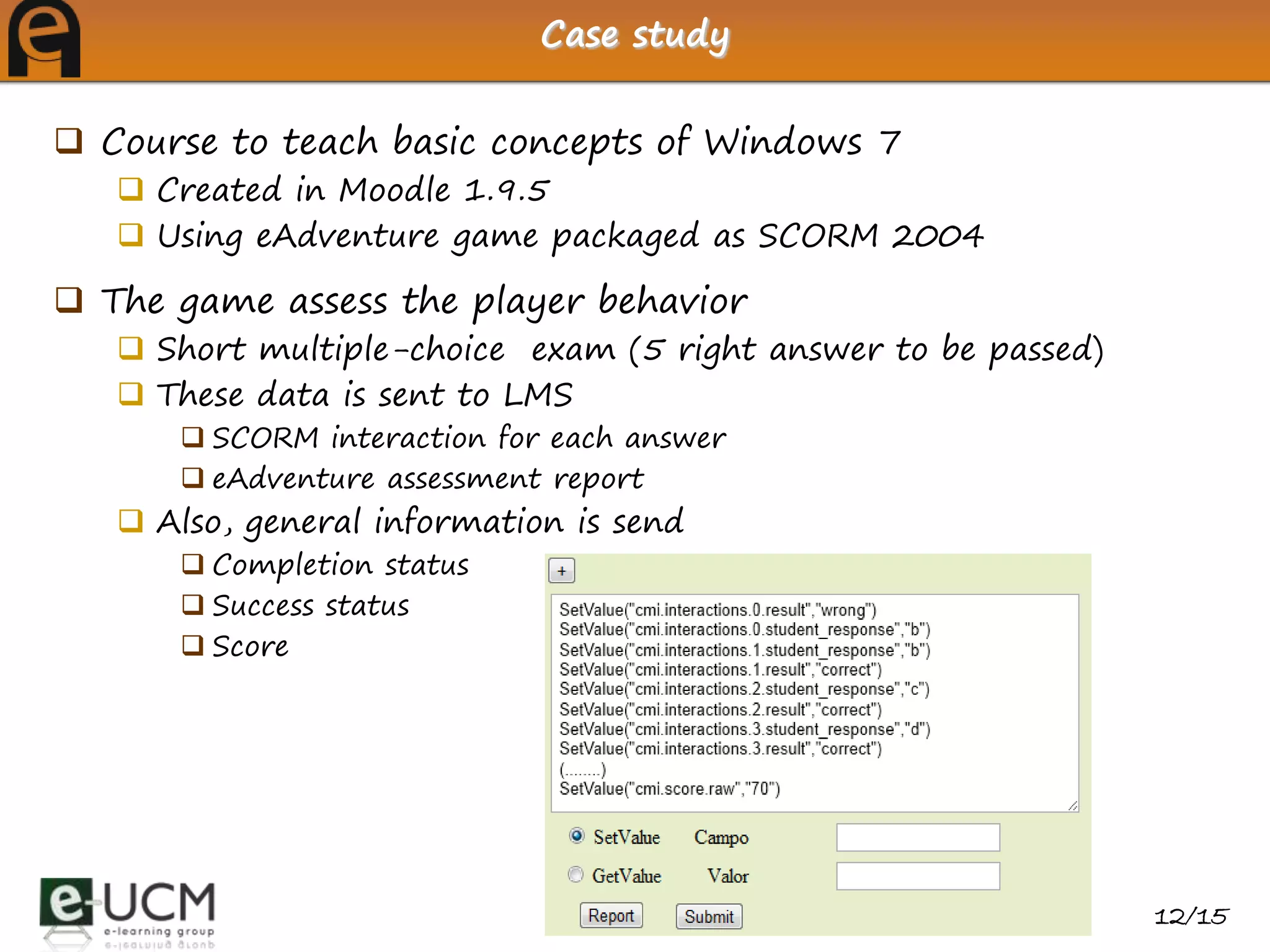
 Course to teach basic concepts of Windows 7
    Created in Moodle 1.9.5
    Using eAdventure game packaged as SCORM 2004

 The game assess the player behavior
    Short multiple-choice exam (5 right answer to be passed)
    These data is sent to LMS
       SCORM interaction for each answer
       eAdventure assessment report
    Also, general information is send
       Completion status
       Success status
       Score


                                                                12/15
Case Study


 The course was used to train professionals in e-Learning
    How SCORM actually works
    How SCORM module in Moodle 1.9.5
    How the information that the game produces can be retrieved
     from the LMS
    What are the more appropriate fields in the SCORM data model
     for tracking students' interaction in games


                                                              13/15
Conclusions


 New GBL research lines
    Connect games and LMS and make the most of the data
     exchanged

 e-Learning standards in games
    Not obvious
    Work in progress… (ADL, Rusticci TinCan, etc…)

 How eAdventure tries to face it
    Reduce the technical barriers
    Ease the standard understanding (high level UI)
    Provide tools for debugging the communication
       Analyze and understand game packages developed by other authors

 The debugger will be available soon in the next eAdventure
  release!!


                                                                    14/15
Questions


Open Code of e-Adventure at

  www.sourceforge.net

More info
  http://e-adventure.e-ucm.es
  http://www.e-ucm.es


 Youtube channel
  http://www.youtube.com/user/eAdventureUCM


                                          15/15

2012 04-19 (educon2012) emadrid ucm deploying and debugging educational games using e-learning standards

  • 1.
    Deploying and Debugging EducationalGames Using e- Learning Standards Baltasar Fernandez-Manjon Angel del Blanco, Javier Torrente, Angel Serrano, Ivan Martinez-Ortiz balta@fdi.ucm.es
  • 2.
    Introduction  Games areeffective tools for teaching-learning  New trends in the serious games research trying to take more advantage of their potential:  New game mechanics  Learning analytics with games  Apply e-Learning standards in games  …. 1/15
  • 3.
    Introduction Whyuse games following e-Learning standards? (well know) Improved reusability and interoperability to protect the investment made in high cost educational contents Exploit the game’s educative features by an active communication between games and LMS Student’s tracking Assessment Adaptation Change lesson flow …… 2/15
  • 4.
    Learning Object paradigm The Learning Object paradigm opened a broad range of opportunities  Distribution  Sharing  Reuse and interoperability  Different standards deal with different interrelated aspects of LO model:  Packaging and delivery  Tagging  VLE-to-content communication  Content sequencing 3/15
  • 5.
    [ Current e-learning standards Tracking Tagging Packaging Delivery Protocol Data Model Sequencing IMS SS X IEEE SCORM COMMUNICATION X X & DATA MODEL (1484.11 family) IMS CP X IEEE LOM IMS CC X (1484.12 family) IMS BLTI X IMS LD X X IMS SSP X IMS LIS X 4/15
  • 6.
    Problems So… let’s do it!!  It’s technical complex process…  Create XML documents to add metadata and content structure  Add specific XSD and DTD files  Package together  Execute games in web environments  There are not a wide accepted standard that cover all the features 5/15
  • 7.
    Problems  … andeven more when the content will send/receive data  Follow the selected communication channel  Implement the API in the game  Know the standard data model  Study how the sent data can modify the lesson flow  Besides, there are not a standard that deals with the game integration in particular So teachers and educators with limited technical background can not participate…. …so tools that ease the process are needed allowing to introduce experts in that matter 6/15
  • 8.
    eAdventure  Educational gameauthoring platform  Point-and-click games  Educators oriented  Specific educational features  Assessment  Adaptation  Exportation as LO  One game – multiple different LMS  Easing the educators participation exporting games as LO  Hiding technical details  Export the same game in different formats with mininum changes  Debug the data interchange 7/15
  • 9.
    Standards supported ineAdventure  Games as LO in eAdventure:  IMS CP  SCORM v1.2 and 2004  AGREGA (Spanish repository)  LAMS (IMS-CP with special communication and data model files)  The educator only has to…  Fill the meta data in a specific editor (only a reduced version of those fields related with games)  For games with active communication:  SCORM: select the part of the data model  LAMS: write it  Select the standard in the exportation wizard…  … and eAdventure will prepare all the needed files, fill the XML, and prepare the engine to communicate with the LMS 8/15
  • 10.
    Debbuging games with<e-Adventure>  Debug interface:  Debug the game behaviour  Test the communication protocol with LMS  Two modes:  Online and offline  Give full control over communication protocol  Sniff and log all events  Attribute-value pairs exchanged and the function used  Manual API calls  Show assessment report in a pop-up 9/15
  • 11.
    Online mode  Checkif the game properly communicates with a back-end LMS  Reduce the creation-test cycle  Explore how the standard actually works  Reduce the learning curve  Explore how the game outputs impact the sequence flow 10/15
  • 12.
    Offline mode  Testthe games with communication without needing to deploy the game in a real LMS  Even shorten more the creation-test cycle…  API provider  Developed in Javascript  Same functionality as provided by SCORM 1.2 and 2004 11/15
  • 13.
    Case study  Courseto teach basic concepts of Windows 7  Created in Moodle 1.9.5  Using eAdventure game packaged as SCORM 2004  The game assess the player behavior  Short multiple-choice exam (5 right answer to be passed)  These data is sent to LMS  SCORM interaction for each answer  eAdventure assessment report  Also, general information is send  Completion status  Success status  Score 12/15
  • 14.
    Case Study  Thecourse was used to train professionals in e-Learning  How SCORM actually works  How SCORM module in Moodle 1.9.5  How the information that the game produces can be retrieved from the LMS  What are the more appropriate fields in the SCORM data model for tracking students' interaction in games 13/15
  • 15.
    Conclusions  New GBLresearch lines  Connect games and LMS and make the most of the data exchanged  e-Learning standards in games  Not obvious  Work in progress… (ADL, Rusticci TinCan, etc…)  How eAdventure tries to face it  Reduce the technical barriers  Ease the standard understanding (high level UI)  Provide tools for debugging the communication  Analyze and understand game packages developed by other authors  The debugger will be available soon in the next eAdventure release!! 14/15
  • 16.
    Questions Open Code ofe-Adventure at www.sourceforge.net More info http://e-adventure.e-ucm.es http://www.e-ucm.es  Youtube channel http://www.youtube.com/user/eAdventureUCM 15/15