Playing Together: Establishing an Interdisciplinary, Interinstitutional Gaming Initiative Mike Reese Assistant Director, CER Joan Freedman Director, DMC
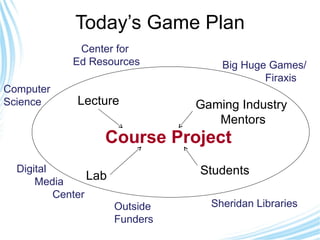
Today’s Game Plan Lab Course Project Gaming Industry  Mentors Digital Media Center Computer  Science Center for  Ed Resources Sheridan Libraries Outside  Funders Big Huge Games/ Firaxis Lecture Students
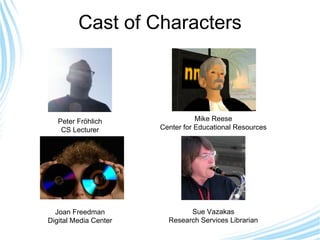
Cast of Characters Peter Fröhlich CS Lecturer Mike Reese Center for Educational Resources Joan Freedman Digital Media Center Sue Vazakas Research Services Librarian
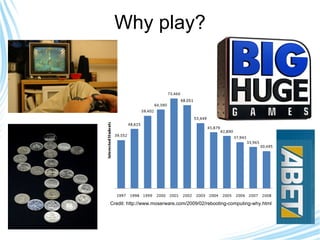
Why play? Credit: http://www.moserware.com/2009/02/rebooting-computing-why.html
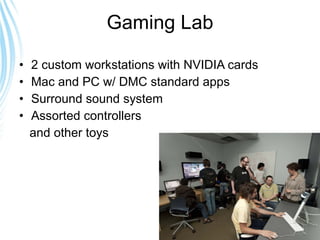
Gaming Lab 2 custom workstations with NVIDIA cards Mac and PC w/ DMC standard apps Surround sound system Assorted controllers  and other toys
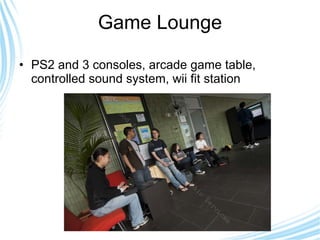
Game Lounge PS2 and 3 consoles, arcade game table, controlled sound system, wii fit station
Challenges Pre-course Design Conversations  Structure of Game Project Format of Labs Schedule of topics Balancing Student Teams R&D:  NMC, local schools, industry
Structure of Course Lecture (3 X 1hr) Lab (DMC) (1 1 / 4  hrs/week) Industry Mentors Students from many disciplines and schools (JHU, MICA)
Student Assessments Biography/Introduction  Blog entries  Game reviews Course project – make a game Alpha, Beta, Gold presentations Optional Mentor feedback Lab attendance pARTy demo
Course Project Assignment Game must be/include Fun A game Levels Graphics Sound
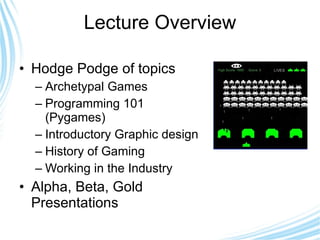
Lecture Overview Hodge Podge of topics Archetypal Games Programming 101 (Pygames) Introductory Graphic design History of Gaming Working in the Industry Alpha, Beta, Gold Presentations
Lab sections Ten teams of four 2 programmers, 2 artists Handpicked/Skills Survey Lab sections met 1x a week Mon or Wed, noon – 1:15 pm Grouped by team when possible MICA students  all together
Lab Objectives Expose programmers to media making techniques Expose artists to new tools Introduce new workspace and tools Staff Hardware and software Work and play spaces
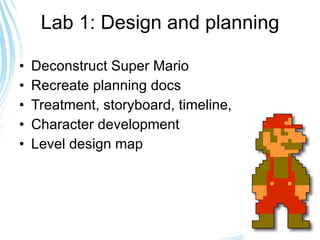
Lab 1: Design and planning Deconstruct Super Mario Recreate planning docs Treatment, storyboard, timeline,  Character development Level design map
Lab 2:Game rules and play Group makes game with physical props Writes rules and explanation Another group plays game Gives feedback
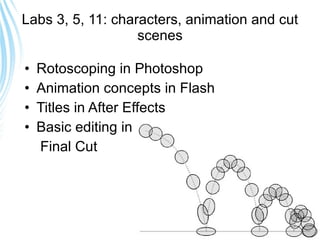
Labs 3, 5, 11: characters, animation and cut scenes Rotoscoping in Photoshop  Animation concepts in Flash Titles in After Effects Basic editing in  Final Cut
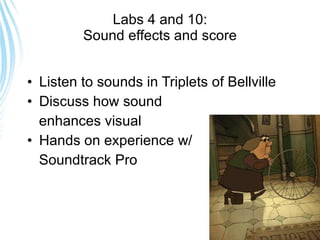
Labs 4 and 10: Sound effects and score Listen to sounds in Triplets of Bellville Discuss how sound  enhances visual  Hands on experience w/ Soundtrack Pro
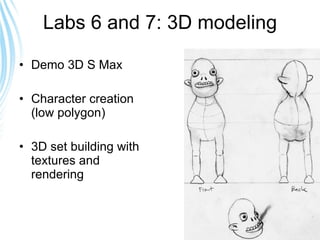
Labs 6 and 7: 3D modeling Demo 3D S Max Character creation (low polygon) 3D set building with textures and rendering
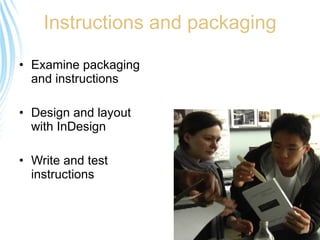
Instructions and packaging Examine packaging and instructions Design and layout with InDesign Write and test instructions
http://www.vimeo.com/5295315 Want to see some of the games?
Evaluation Activities Course evaluations Online surveys Focus groups Mentor surveys
Student Feedback Students Likes “ We got to make games – that was cool!” “ Our mentor was amazing!” “ Humbling what CS can do.” / “Artist are amazing!” “ We played games - valuable research! And no, I'm not just saying that, it was. :)”
Student Feedback Lecture Finalize syllabus  Assign more homework (really!) Allow for specialization (offer two courses) “ People didn’t learn enough to master anything, rather just enough to make one a Jack of all trades. ”
Student Feedback Course Project “ We need more deadlines for project.” “ We did not understand it [grading] – it seemed totally random.” Stipulate development framework “ We learned more from each other than the teachers.” “ There was a lot of disconnect, a language barrier [b/w artist and programmers].”
Student Feedback Lab Focus on labs more than lecture Lengthen lab meetings Include more hands-on activities Allow for team meetings Use open curriculum
Future Plans Sustainability - Tuition dollars Lab Changes Post course Recruiting Session Partnership with other schools
Discussion Is a gaming program a legitimate curriculum to support in higher education?

Jhu Gaming Initiatives

  • 1.
    Playing Together: Establishingan Interdisciplinary, Interinstitutional Gaming Initiative Mike Reese Assistant Director, CER Joan Freedman Director, DMC
  • 2.
    Today’s Game PlanLab Course Project Gaming Industry Mentors Digital Media Center Computer Science Center for Ed Resources Sheridan Libraries Outside Funders Big Huge Games/ Firaxis Lecture Students
  • 3.
    Cast of CharactersPeter Fröhlich CS Lecturer Mike Reese Center for Educational Resources Joan Freedman Digital Media Center Sue Vazakas Research Services Librarian
  • 4.
    Why play? Credit:http://www.moserware.com/2009/02/rebooting-computing-why.html
  • 5.
    Gaming Lab 2custom workstations with NVIDIA cards Mac and PC w/ DMC standard apps Surround sound system Assorted controllers and other toys
  • 6.
    Game Lounge PS2and 3 consoles, arcade game table, controlled sound system, wii fit station
  • 7.
    Challenges Pre-course DesignConversations Structure of Game Project Format of Labs Schedule of topics Balancing Student Teams R&D: NMC, local schools, industry
  • 8.
    Structure of CourseLecture (3 X 1hr) Lab (DMC) (1 1 / 4 hrs/week) Industry Mentors Students from many disciplines and schools (JHU, MICA)
  • 9.
    Student Assessments Biography/Introduction Blog entries Game reviews Course project – make a game Alpha, Beta, Gold presentations Optional Mentor feedback Lab attendance pARTy demo
  • 10.
    Course Project AssignmentGame must be/include Fun A game Levels Graphics Sound
  • 11.
    Lecture Overview HodgePodge of topics Archetypal Games Programming 101 (Pygames) Introductory Graphic design History of Gaming Working in the Industry Alpha, Beta, Gold Presentations
  • 12.
    Lab sections Tenteams of four 2 programmers, 2 artists Handpicked/Skills Survey Lab sections met 1x a week Mon or Wed, noon – 1:15 pm Grouped by team when possible MICA students all together
  • 13.
    Lab Objectives Exposeprogrammers to media making techniques Expose artists to new tools Introduce new workspace and tools Staff Hardware and software Work and play spaces
  • 14.
    Lab 1: Designand planning Deconstruct Super Mario Recreate planning docs Treatment, storyboard, timeline, Character development Level design map
  • 15.
    Lab 2:Game rulesand play Group makes game with physical props Writes rules and explanation Another group plays game Gives feedback
  • 16.
    Labs 3, 5,11: characters, animation and cut scenes Rotoscoping in Photoshop Animation concepts in Flash Titles in After Effects Basic editing in Final Cut
  • 17.
    Labs 4 and10: Sound effects and score Listen to sounds in Triplets of Bellville Discuss how sound enhances visual Hands on experience w/ Soundtrack Pro
  • 18.
    Labs 6 and7: 3D modeling Demo 3D S Max Character creation (low polygon) 3D set building with textures and rendering
  • 19.
    Instructions and packagingExamine packaging and instructions Design and layout with InDesign Write and test instructions
  • 20.
  • 21.
    Evaluation Activities Courseevaluations Online surveys Focus groups Mentor surveys
  • 22.
    Student Feedback StudentsLikes “ We got to make games – that was cool!” “ Our mentor was amazing!” “ Humbling what CS can do.” / “Artist are amazing!” “ We played games - valuable research! And no, I'm not just saying that, it was. :)”
  • 23.
    Student Feedback LectureFinalize syllabus Assign more homework (really!) Allow for specialization (offer two courses) “ People didn’t learn enough to master anything, rather just enough to make one a Jack of all trades. ”
  • 24.
    Student Feedback CourseProject “ We need more deadlines for project.” “ We did not understand it [grading] – it seemed totally random.” Stipulate development framework “ We learned more from each other than the teachers.” “ There was a lot of disconnect, a language barrier [b/w artist and programmers].”
  • 25.
    Student Feedback LabFocus on labs more than lecture Lengthen lab meetings Include more hands-on activities Allow for team meetings Use open curriculum
  • 26.
    Future Plans Sustainability- Tuition dollars Lab Changes Post course Recruiting Session Partnership with other schools
  • 27.
    Discussion Is agaming program a legitimate curriculum to support in higher education?

Editor's Notes