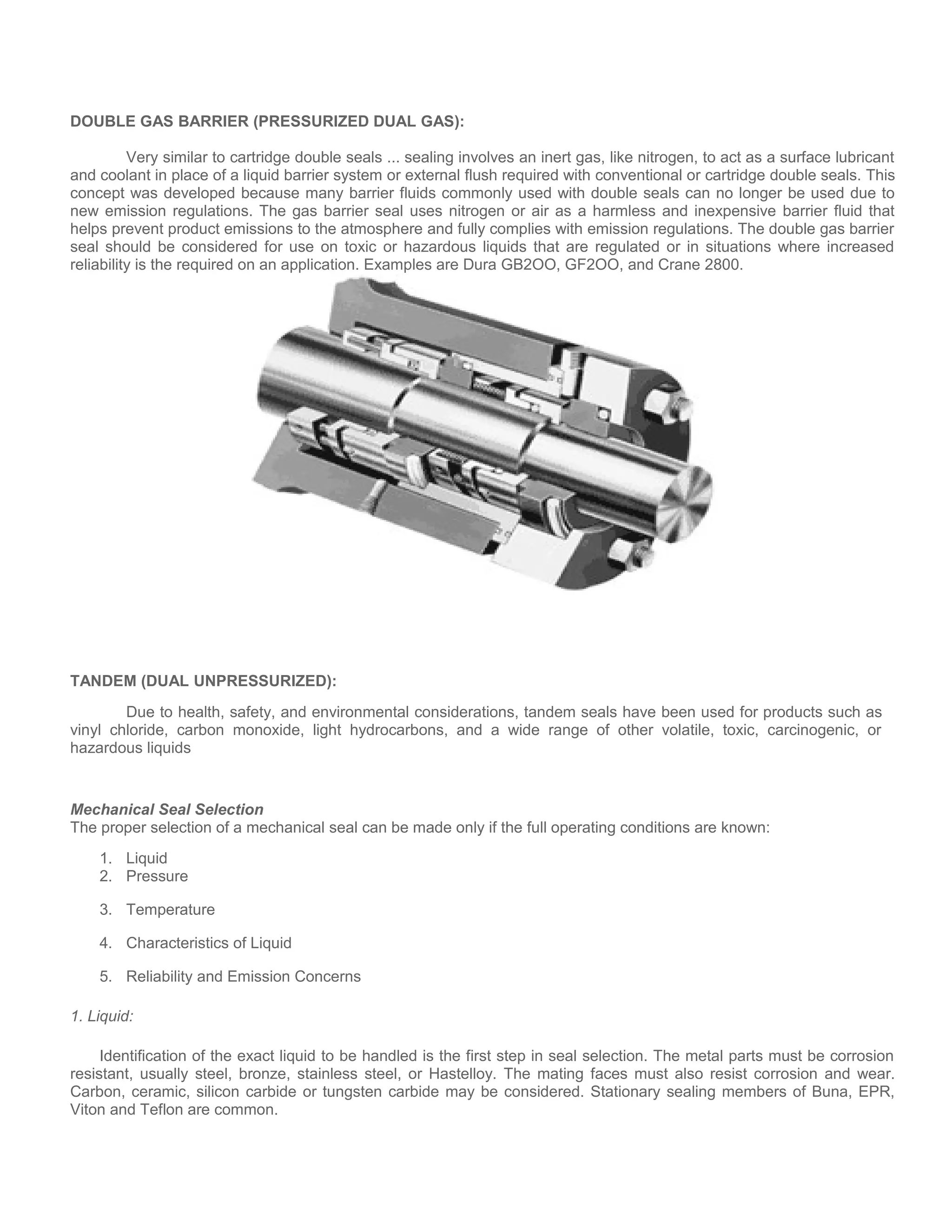
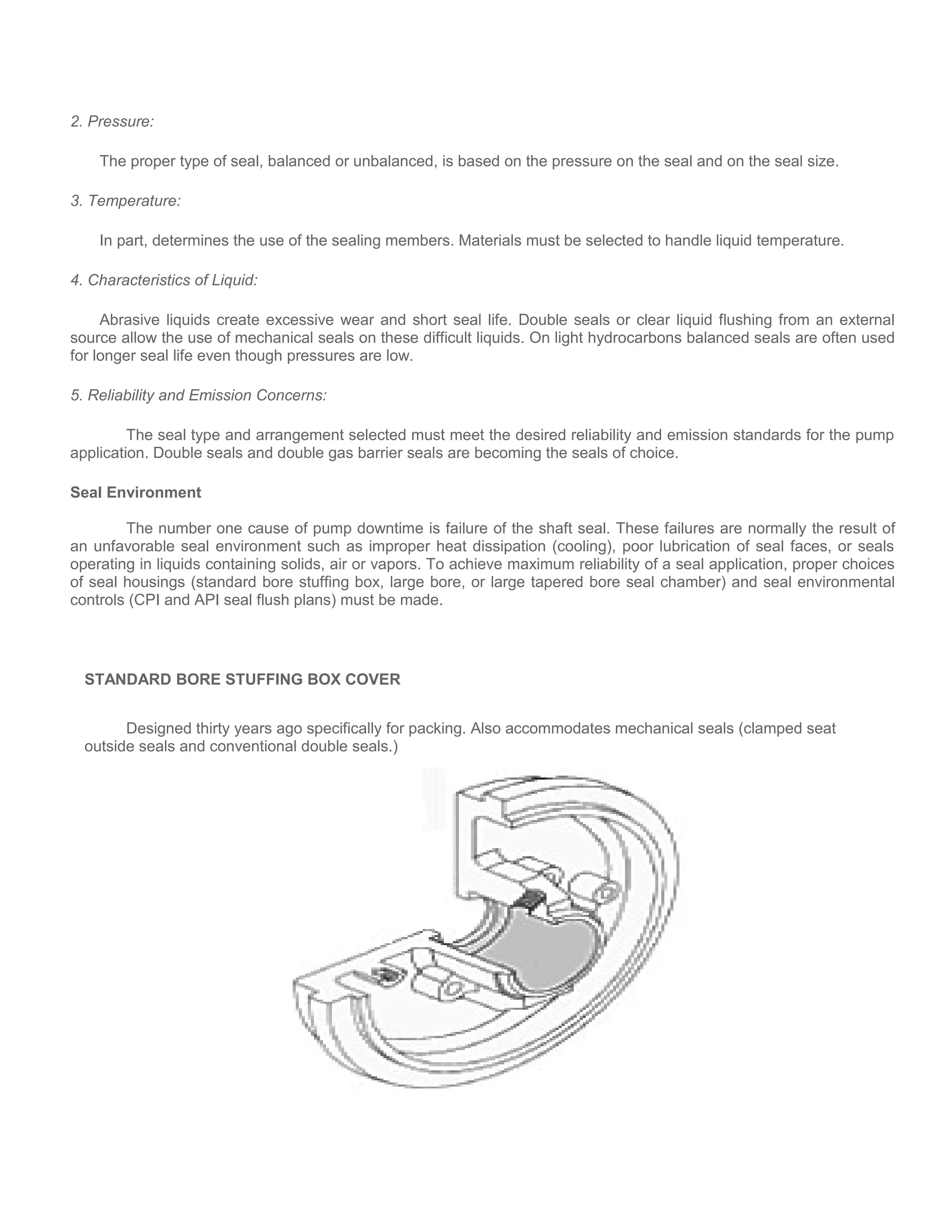
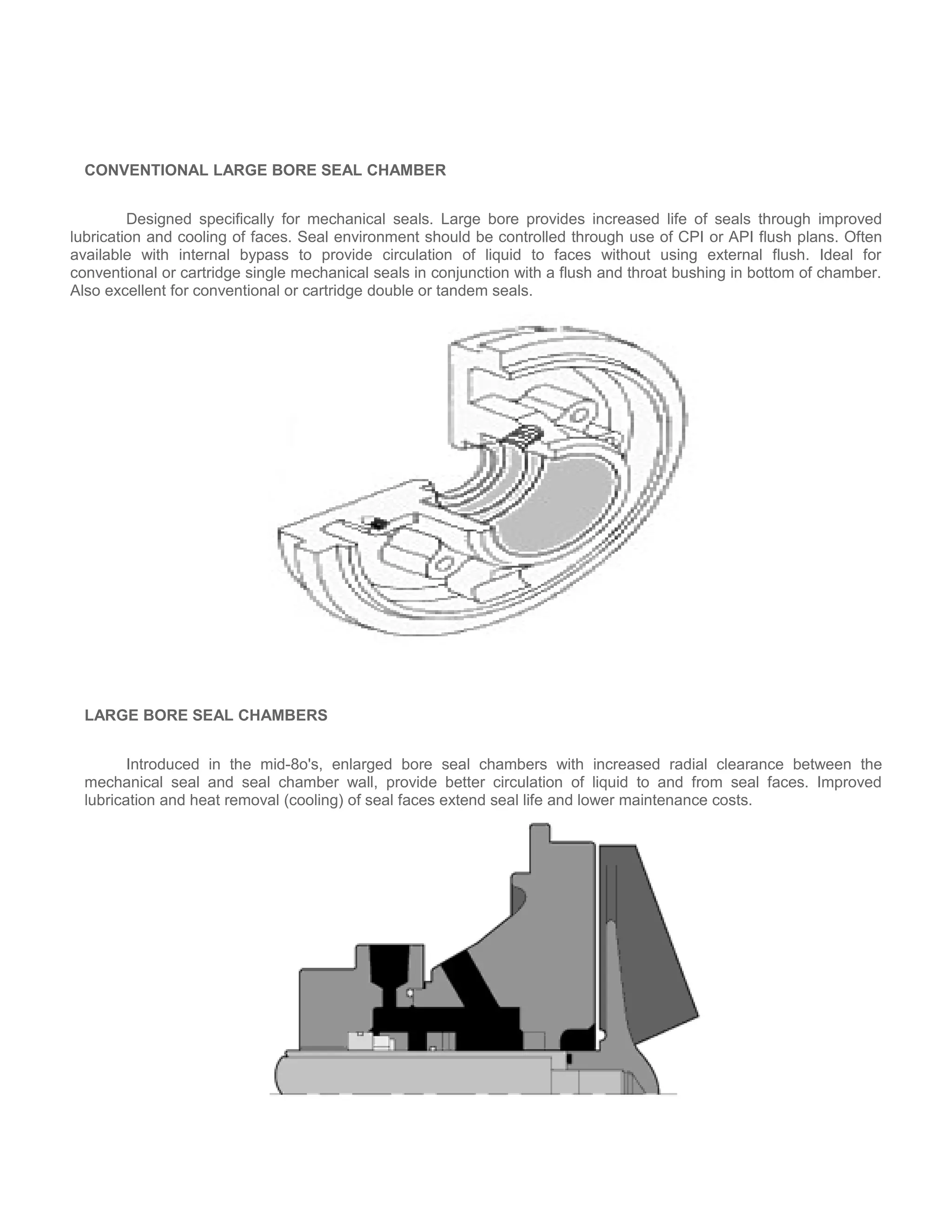
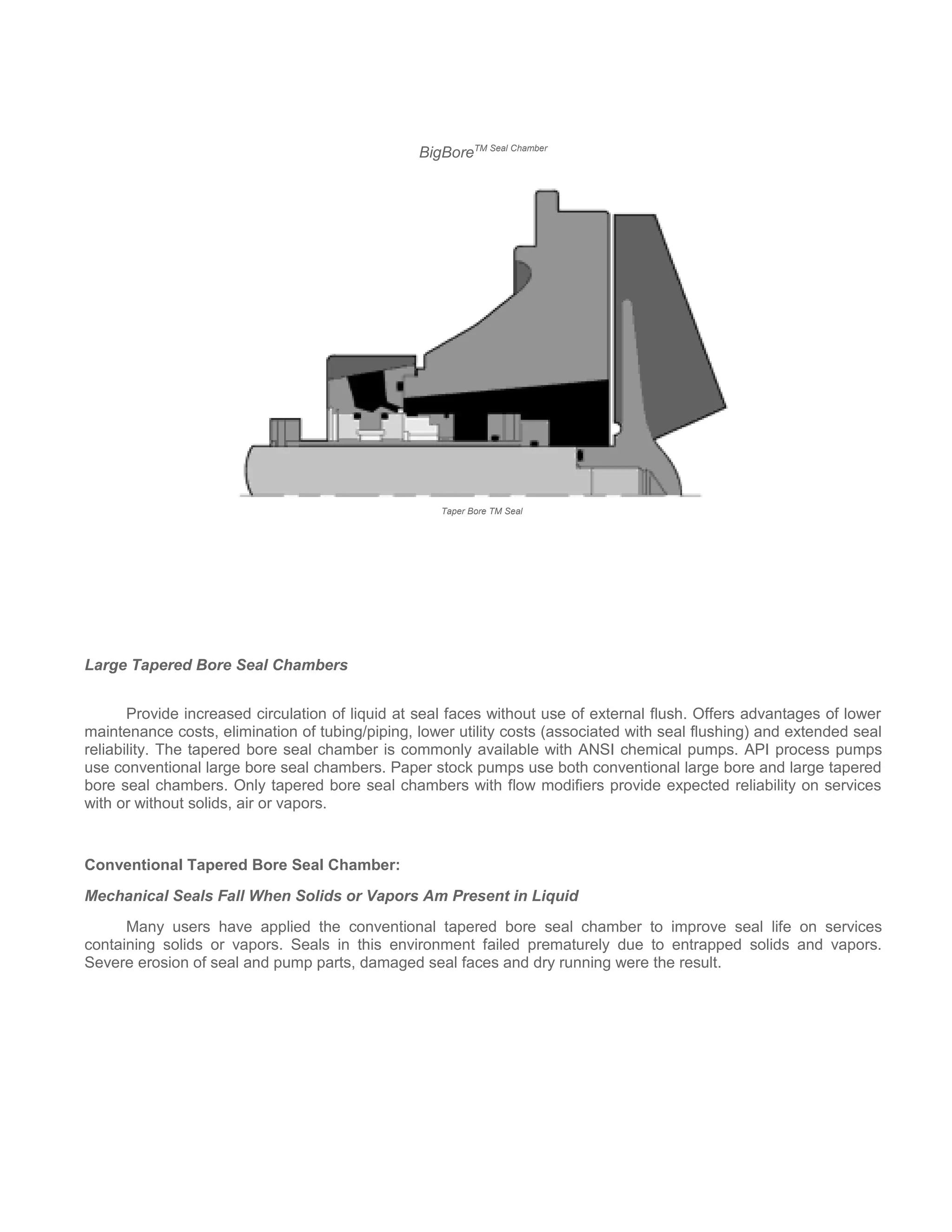
Mechanical seals provide a running seal between rotating and stationary parts in pumps. They have advantages over conventional packing such as reduced leakage to meet environmental standards, lower maintenance costs, and ability to seal higher pressures. The basic components of a mechanical seal are the primary seal faces (one stationary, one rotating), secondary seals, and hardware. Seals work by creating a tight sealing contact between flat faces, and can be classified by type (pusher, unbalanced, etc.) and arrangement (single, double, cartridge). Proper seal selection requires considering the liquid, pressure, temperature, liquid characteristics, and reliability/emission needs.
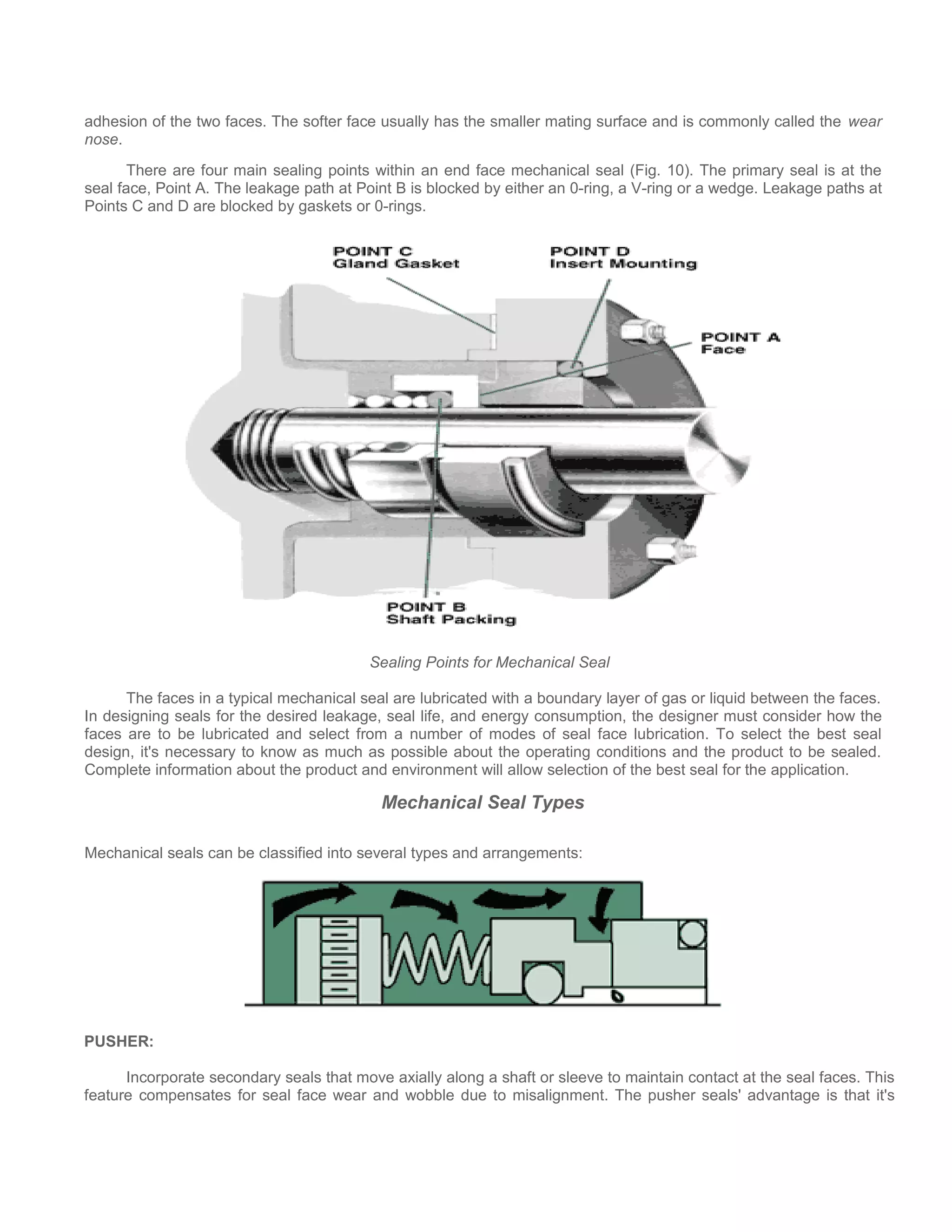
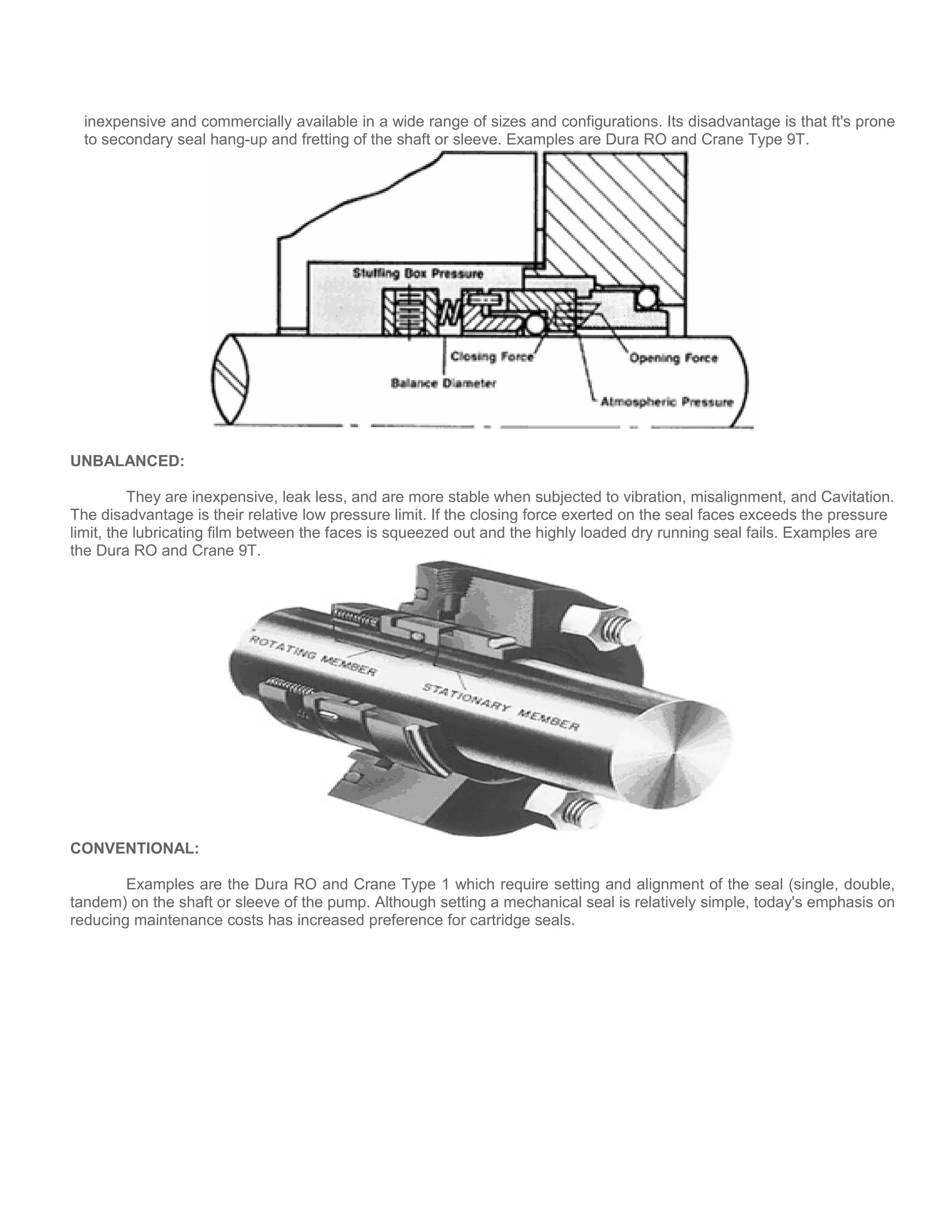
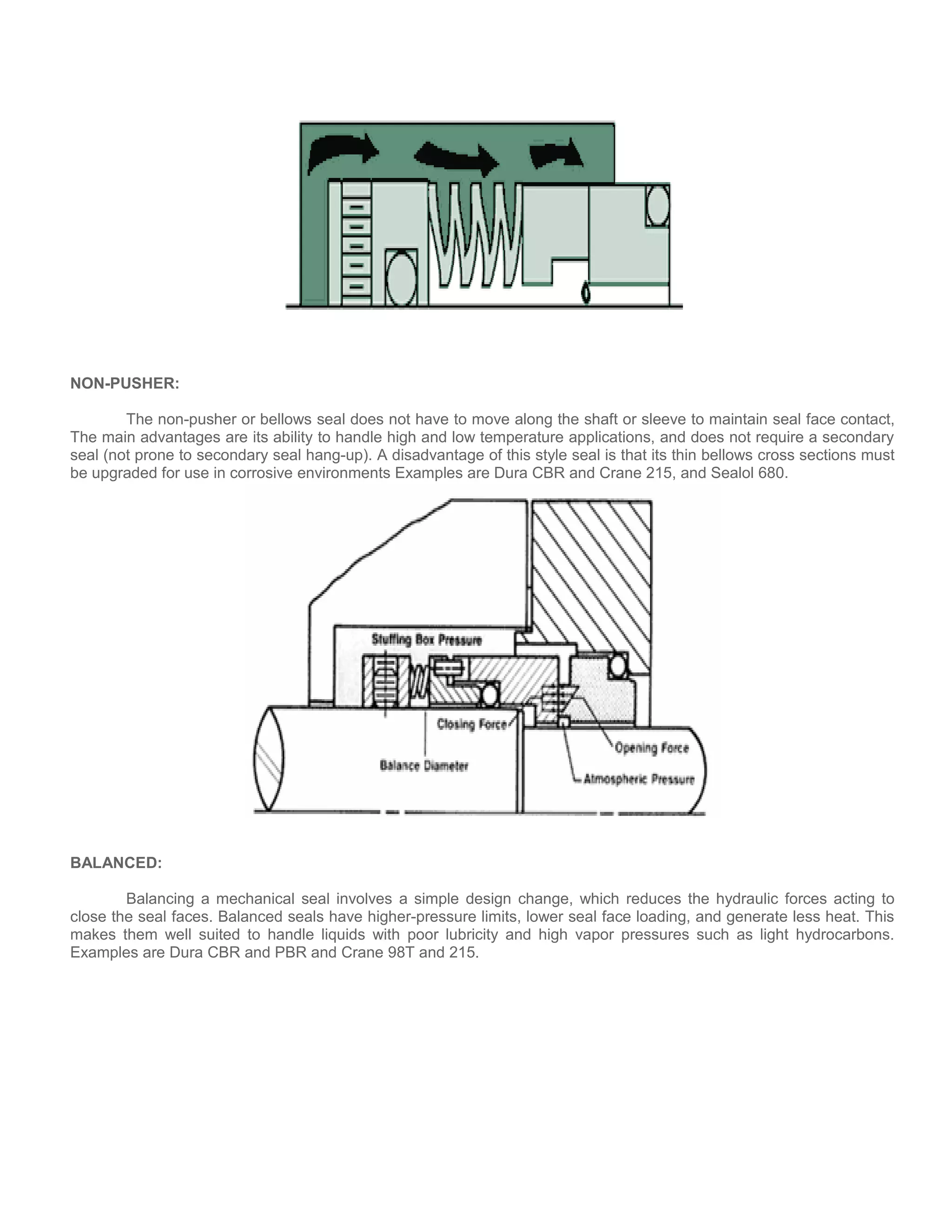
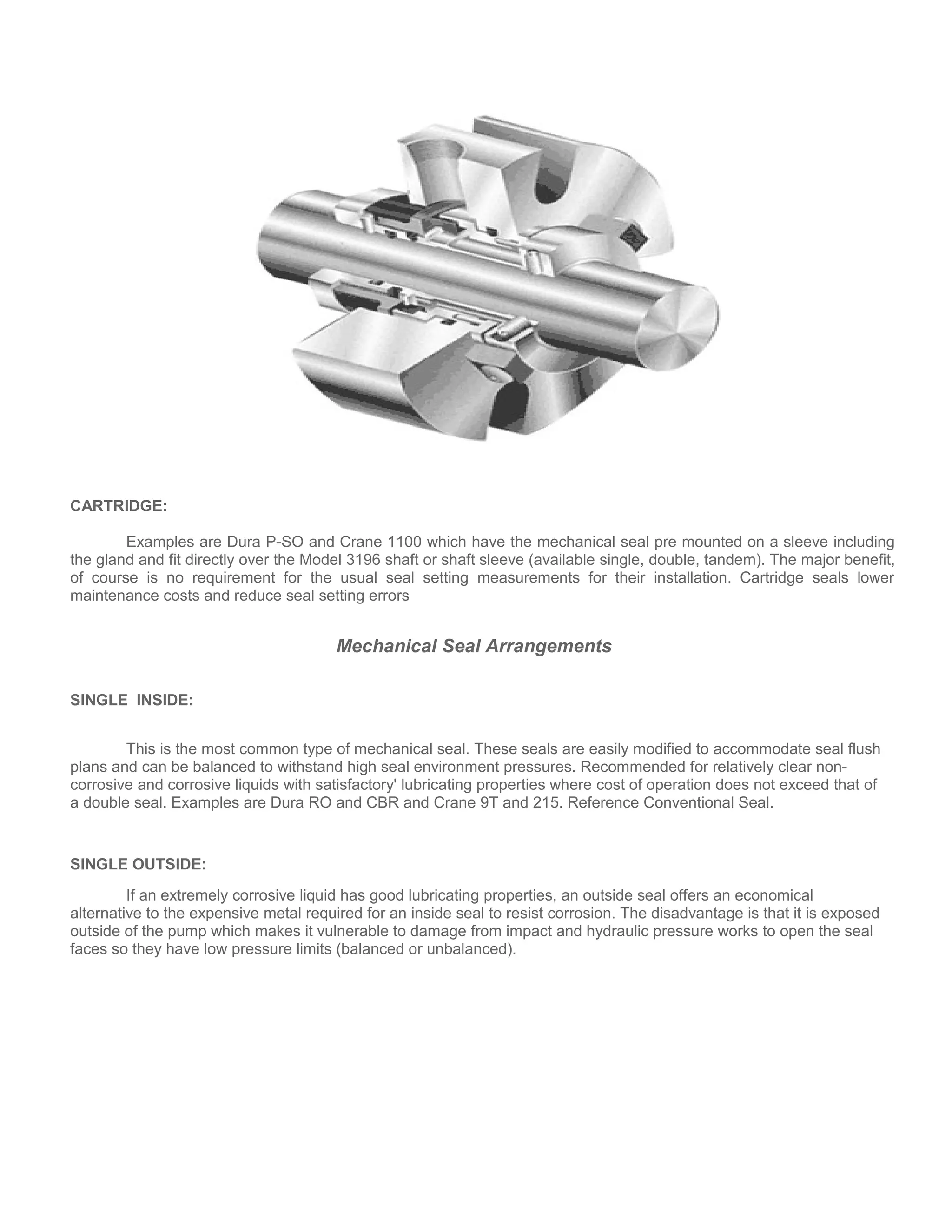
![DOUBLE (DUAL PRESSURIZED):
This arrangement is recommended for liquids that are not compatible with a single mechanical seal (i.e. liquids
that are toxic, hazardous [regulated by the EPA], have suspended abrasives, or corrosives which require costly
materials). The advantages of the double seal are that it can have five times the life of a single seal in severe
environments. Also, the metal inner seal parts are never exposed to the liquid product being pumped, so viscous,
abrasive, or thermosetting liquids are easily sealed without a need for expensive metallurgy. In addition, recent testing
has shown that double seal life is virtually unaffected by process upset conditions during pump operation. A significant
advantage of using a double seal over a single seal. The final decision between choosing a double or single seal comes
down to the initial cost to purchase the seal, cost of operation of the seal, and environmental and user plant emission
standards for leakage from seals. Examples are Dura double RO and X-200 and Crane double 811T.](https://image.slidesharecdn.com/1-141227041121-conversion-gate02/75/1-seal-mechanical-seal-6-2048.jpg)