AM09 403
AUTO CHASSIS
SYLLABUS
MODULE-I MODULE-III MODULE-IVMODULE-II
• POWER
PLANT
• CHASSIS
• FRAMES
• FRONT AXLES
• STEERING
SYSTEMS
• SUSPENSION
• DRIVE LINE
• BRAKES
• WHEELS
• TYRES
AUTOMOBILE ENGINEERING
• Automobile engineering is a branch of engineering which deals
with everything about automobiles and practices to propel them.
• Automobile is a vehicle driven by an internal combustion engine
and it is used for transportation of passengers and goods on the
ground.
• Examples : Car, jeep, bus, truck, scooter, etc.
MAIN COMPONENTS OF THE
AUTOMOBILE
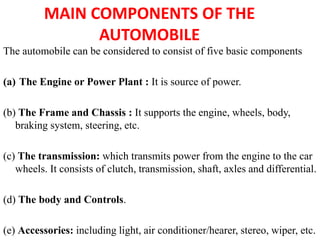
The automobile can be considered to consist of five basic components
(a) The Engine or Power Plant : It is source of power.
(b) The Frame and Chassis : It supports the engine, wheels, body,
braking system, steering, etc.
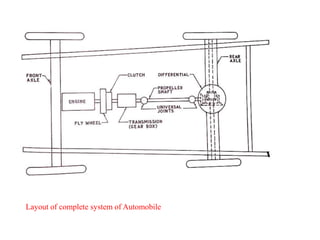
(c) The transmission: which transmits power from the engine to the car
wheels. It consists of clutch, transmission, shaft, axles and differential.
(d) The body and Controls.
(e) Accessories: including light, air conditioner/hearer, stereo, wiper, etc.
Layout of complete system of Automobile
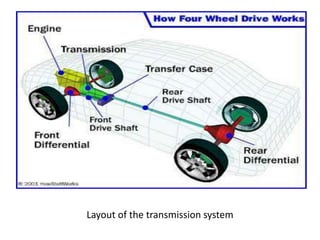
Layout of the transmission system
Engine or Power Plant
• The engine is the power plant of the vehicle.
• In general, internal combustion engine with petrol or diesel fuel is
used to run a vehicle.
• An engine may be either a two-stroke engine or a four-stroke
engine.
• An engine consists of a cylinder, piston, valves, valve operating
mechanism, carburettor (or MPFI in modern cars), fan, fuel feed
pump and oil pump, etc.
• Besides this, an engine requires ignition system for burning fuel in
the engine cylinder.
THEPOWERPLANT
• Gas turbines also have been used in
vehicles
• Now, electric batteries for propelling
the vehicle
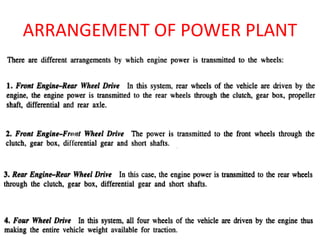
ARRANGEMENT OF POWER PLANT
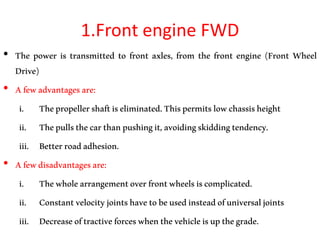
1.Front engine FWD
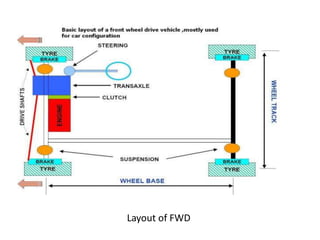
• The power is transmitted to front axles, from the front engine (Front Wheel
Drive)
• Afewadvantagesare:
i. Thepropellershaftiseliminated.Thispermitslowchassisheight
ii. Thepullsthecarthanpushingit,avoidingskiddingtendency.
iii. Betterroadadhesion.
• Afewdisadvantagesare:
i. Thewholearrangementoverfrontwheelsiscomplicated.
ii. Constantvelocityjointshavetobeusedinsteadofuniversaljoints
iii. Decreaseoftractiveforceswhenthevehicleisupthegrade.
Layout of FWD
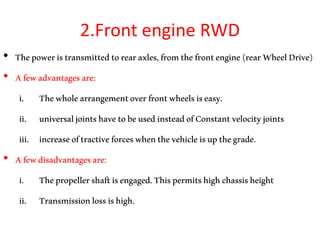
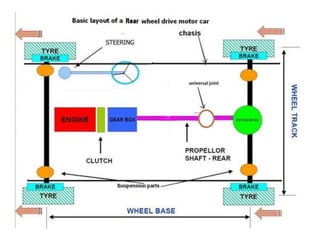
2.Front engine RWD
• Thepoweristransmittedtorearaxles,fromthefrontengine(rearWheelDrive)
• Afewadvantagesare:
i. Thewholearrangementoverfrontwheelsiseasy.
ii. universaljointshavetobeusedinsteadofConstantvelocityjoints
iii. increaseoftractiveforceswhenthevehicleisupthegrade.
• Afewdisadvantagesare:
i. Thepropellershaftisengaged.Thispermitshighchassisheight
ii. Transmissionlossishigh.
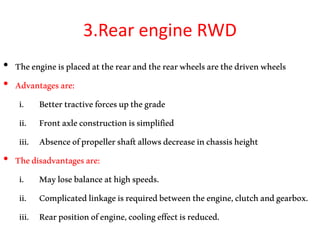
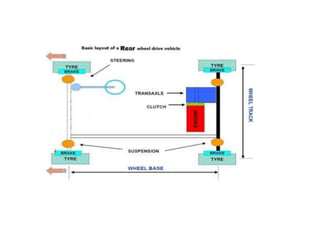
3.Rear engine RWD
• Theengineisplacedattherearandtherearwheelsarethedrivenwheels
• Advantagesare:
i. Bettertractiveforcesupthegrade
ii. Frontaxleconstructionissimplified
iii. Absenceofpropellershaftallowsdecreaseinchassisheight
• Thedisadvantagesare:
i. Maylosebalanceathighspeeds.
ii. Complicatedlinkageisrequiredbetweentheengine,clutchandgearbox.
iii. Rearpositionofengine,coolingeffectisreduced.
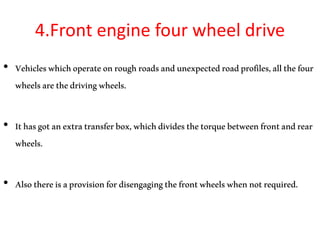
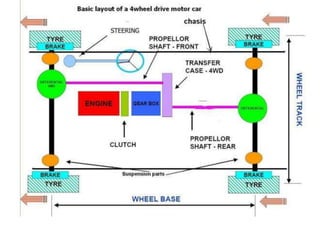
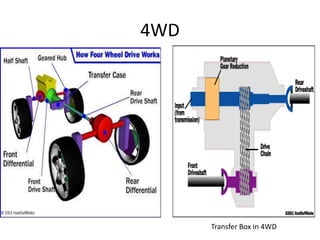
4.Front engine four wheel drive
• Vehicleswhichoperateonroughroadsandunexpectedroadprofiles,allthefour
wheelsarethedrivingwheels.
• Ithasgotanextratransferbox,whichdividesthetorquebetweenfrontandrear
wheels.
• Alsothereisaprovisionfordisengagingthefrontwheelswhennotrequired.
4WD
Transfer Box in 4WD
ADVANTAGE OF 4WD
• Themainadvantageofthe4WDisthatwhenanywheelsfallintoaditch
orahole,theycanbedrivenoutwiththehelpofotherwheelsorpower
beingdeliveredtothesamewheel
• Butthisadvantagecanonlyatthecostofextrafuelconsumption.
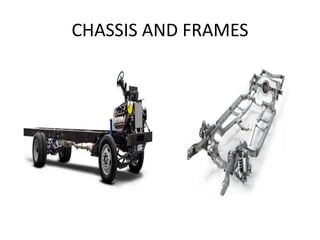
CHASSIS AND FRAMES
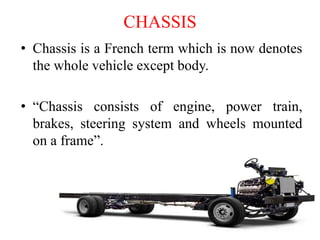
CHASSIS
• Chassis is a French term which is now denotes
the whole vehicle except body.
• “Chassis consists of engine, power train,
brakes, steering system and wheels mounted
on a frame”.
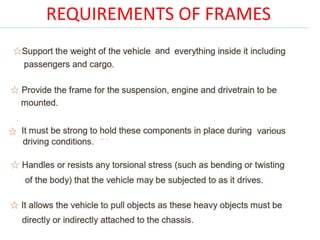
REQUIREMENTS OF FRAMES
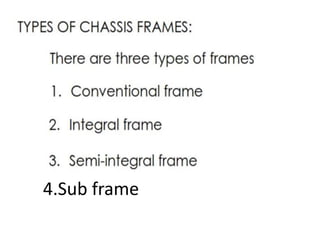
4.Sub frame
1.power plant and locations

1.power plant and locations

  • 1.
  • 2.
    SYLLABUS MODULE-I MODULE-III MODULE-IVMODULE-II •POWER PLANT • CHASSIS • FRAMES • FRONT AXLES • STEERING SYSTEMS • SUSPENSION • DRIVE LINE • BRAKES • WHEELS • TYRES
  • 3.
    AUTOMOBILE ENGINEERING • Automobileengineering is a branch of engineering which deals with everything about automobiles and practices to propel them. • Automobile is a vehicle driven by an internal combustion engine and it is used for transportation of passengers and goods on the ground. • Examples : Car, jeep, bus, truck, scooter, etc.
  • 4.
    MAIN COMPONENTS OFTHE AUTOMOBILE The automobile can be considered to consist of five basic components (a) The Engine or Power Plant : It is source of power. (b) The Frame and Chassis : It supports the engine, wheels, body, braking system, steering, etc. (c) The transmission: which transmits power from the engine to the car wheels. It consists of clutch, transmission, shaft, axles and differential. (d) The body and Controls. (e) Accessories: including light, air conditioner/hearer, stereo, wiper, etc.
  • 5.
    Layout of completesystem of Automobile
  • 6.
    Layout of thetransmission system
  • 7.
    Engine or PowerPlant • The engine is the power plant of the vehicle. • In general, internal combustion engine with petrol or diesel fuel is used to run a vehicle. • An engine may be either a two-stroke engine or a four-stroke engine. • An engine consists of a cylinder, piston, valves, valve operating mechanism, carburettor (or MPFI in modern cars), fan, fuel feed pump and oil pump, etc. • Besides this, an engine requires ignition system for burning fuel in the engine cylinder.
  • 8.
    THEPOWERPLANT • Gas turbinesalso have been used in vehicles • Now, electric batteries for propelling the vehicle
  • 9.
  • 10.
    1.Front engine FWD •The power is transmitted to front axles, from the front engine (Front Wheel Drive) • Afewadvantagesare: i. Thepropellershaftiseliminated.Thispermitslowchassisheight ii. Thepullsthecarthanpushingit,avoidingskiddingtendency. iii. Betterroadadhesion. • Afewdisadvantagesare: i. Thewholearrangementoverfrontwheelsiscomplicated. ii. Constantvelocityjointshavetobeusedinsteadofuniversaljoints iii. Decreaseoftractiveforceswhenthevehicleisupthegrade.
  • 11.
  • 12.
    2.Front engine RWD •Thepoweristransmittedtorearaxles,fromthefrontengine(rearWheelDrive) • Afewadvantagesare: i. Thewholearrangementoverfrontwheelsiseasy. ii. universaljointshavetobeusedinsteadofConstantvelocityjoints iii. increaseoftractiveforceswhenthevehicleisupthegrade. • Afewdisadvantagesare: i. Thepropellershaftisengaged.Thispermitshighchassisheight ii. Transmissionlossishigh.
  • 14.
    3.Rear engine RWD •Theengineisplacedattherearandtherearwheelsarethedrivenwheels • Advantagesare: i. Bettertractiveforcesupthegrade ii. Frontaxleconstructionissimplified iii. Absenceofpropellershaftallowsdecreaseinchassisheight • Thedisadvantagesare: i. Maylosebalanceathighspeeds. ii. Complicatedlinkageisrequiredbetweentheengine,clutchandgearbox. iii. Rearpositionofengine,coolingeffectisreduced.
  • 16.
    4.Front engine fourwheel drive • Vehicleswhichoperateonroughroadsandunexpectedroadprofiles,allthefour wheelsarethedrivingwheels. • Ithasgotanextratransferbox,whichdividesthetorquebetweenfrontandrear wheels. • Alsothereisaprovisionfordisengagingthefrontwheelswhennotrequired.
  • 18.
  • 19.
    ADVANTAGE OF 4WD •Themainadvantageofthe4WDisthatwhenanywheelsfallintoaditch orahole,theycanbedrivenoutwiththehelpofotherwheelsorpower beingdeliveredtothesamewheel • Butthisadvantagecanonlyatthecostofextrafuelconsumption.
  • 20.
  • 21.
    CHASSIS • Chassis isa French term which is now denotes the whole vehicle except body. • “Chassis consists of engine, power train, brakes, steering system and wheels mounted on a frame”.
  • 23.
  • 24.