Trouble shooting in GearBox
Location of Gearbox
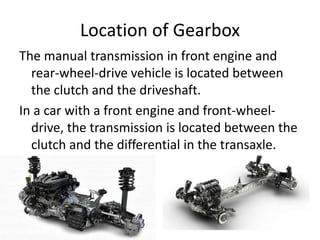
The manual transmission in front engine and
rear-wheel-drive vehicle is located between
the clutch and the driveshaft.
In a car with a front engine and front-wheel-
drive, the transmission is located between the
clutch and the differential in the transaxle.
Purpose of transmission
• Provides speed and torque conversion.
• Facilitates change of direction of output
shaft for reversing
• Gearbox are used to reduce load on the
engine by manipulating torque and speed.
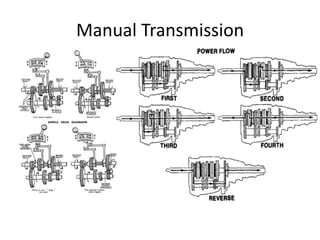
Manual Transmission
Gear lubricants
Need:
–Lubricate, prevent wear
–Reduce friction
–Protect against rust and corrosion
–Clean & Cool.
Additive:
EP(Extreme-pressure), to increase the load-carrying
capacity.
Examples:
SAE 75W, 75W-80, 80W-90, 85W-95, 90 or 140.
Diagnosis
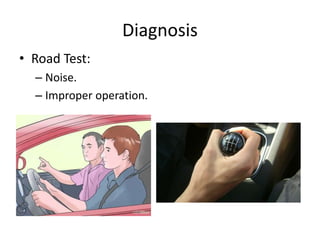
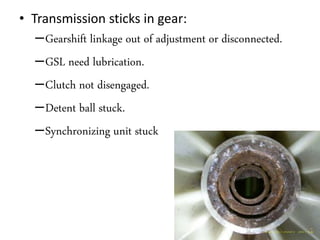
• Road Test:
– Noise.
– Improper operation.
Trouble-Diagnosis
• Hard shifting into gear
–Gearshift linkage out of adjustment.
–GSL need lubrication.
–Clutch not disengaging
–Excess clutch pedal free play
–Synchronizer tight on shaft splines
–Gear teeth battered
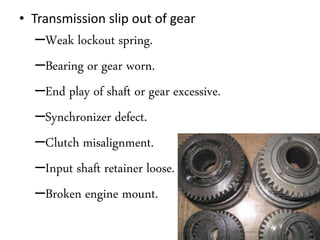
• Transmission sticks in gear:
–Gearshift linkage out of adjustment or disconnected.
–GSL need lubrication.
–Clutch not disengaged.
–Detent ball stuck.
–Synchronizing unit stuck
• Transmission slip out of gear
–Weak lockout spring.
–Bearing or gear worn.
–End play of shaft or gear excessive.
–Synchronizer defect.
–Clutch misalignment.
–Input shaft retainer loose.
–Broken engine mount.
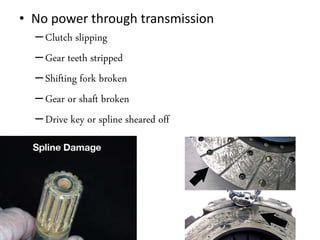
• No power through transmission
–Clutch slipping
–Gear teeth stripped
–Shifting fork broken
–Gear or shaft broken
–Drive key or spline sheared off
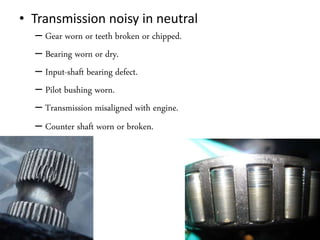
• Transmission noisy in neutral
– Gear worn or teeth broken or chipped.
– Bearing worn or dry.
– Input-shaft bearing defect.
– Pilot bushing worn.
– Transmission misaligned with engine.
– Counter shaft worn or broken.
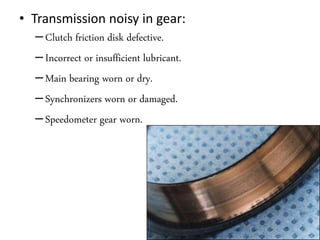
• Transmission noisy in gear:
–Clutch friction disk defective.
–Incorrect or insufficient lubricant.
–Main bearing worn or dry.
–Synchronizers worn or damaged.
–Speedometer gear worn.
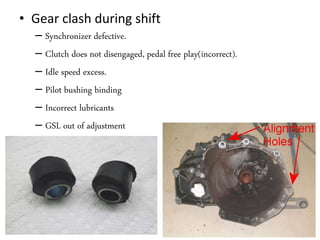
• Gear clash during shift
– Synchronizer defective.
– Clutch does not disengaged, pedal free play(incorrect).
– Idle speed excess.
– Pilot bushing binding
– Incorrect lubricants
– GSL out of adjustment
• Transmission noisy in reverse
– Reverse idler gear or bushing worn or damaged.
– Reverse gear or shaft worn or damaged.
– Counter gear worn or damaged.
– Shift mechanism damaged.
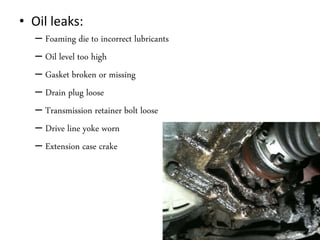
• Oil leaks:
– Foaming die to incorrect lubricants
– Oil level too high
– Gasket broken or missing
– Drain plug loose
– Transmission retainer bolt loose
– Drive line yoke worn
– Extension case crake
Service
• Remove shift lever
• Rise the vehicle
• Mark(reinstallation) the rear axle flange and drive shaft.
Remove driveshaft.
• Drain the lubricants from the transmission.
• remove the sensor cable adopter.
• Disconnect the drive shaft.
• Support the engine with jack. Remove the transmission.
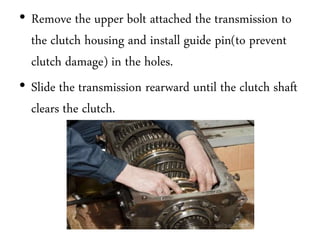
• Remove the upper bolt attached the transmission to
the clutch housing and install guide pin(to prevent
clutch damage) in the holes.
• Slide the transmission rearward until the clutch shaft
clears the clutch.

Trouble shooting in gear box

  • 1.
  • 2.
    Location of Gearbox Themanual transmission in front engine and rear-wheel-drive vehicle is located between the clutch and the driveshaft. In a car with a front engine and front-wheel- drive, the transmission is located between the clutch and the differential in the transaxle.
  • 3.
    Purpose of transmission •Provides speed and torque conversion. • Facilitates change of direction of output shaft for reversing • Gearbox are used to reduce load on the engine by manipulating torque and speed.
  • 4.
  • 5.
    Gear lubricants Need: –Lubricate, preventwear –Reduce friction –Protect against rust and corrosion –Clean & Cool. Additive: EP(Extreme-pressure), to increase the load-carrying capacity. Examples: SAE 75W, 75W-80, 80W-90, 85W-95, 90 or 140.
  • 6.
    Diagnosis • Road Test: –Noise. – Improper operation.
  • 7.
    Trouble-Diagnosis • Hard shiftinginto gear –Gearshift linkage out of adjustment. –GSL need lubrication. –Clutch not disengaging –Excess clutch pedal free play –Synchronizer tight on shaft splines –Gear teeth battered
  • 8.
    • Transmission sticksin gear: –Gearshift linkage out of adjustment or disconnected. –GSL need lubrication. –Clutch not disengaged. –Detent ball stuck. –Synchronizing unit stuck
  • 9.
    • Transmission slipout of gear –Weak lockout spring. –Bearing or gear worn. –End play of shaft or gear excessive. –Synchronizer defect. –Clutch misalignment. –Input shaft retainer loose. –Broken engine mount.
  • 10.
    • No powerthrough transmission –Clutch slipping –Gear teeth stripped –Shifting fork broken –Gear or shaft broken –Drive key or spline sheared off
  • 11.
    • Transmission noisyin neutral – Gear worn or teeth broken or chipped. – Bearing worn or dry. – Input-shaft bearing defect. – Pilot bushing worn. – Transmission misaligned with engine. – Counter shaft worn or broken.
  • 12.
    • Transmission noisyin gear: –Clutch friction disk defective. –Incorrect or insufficient lubricant. –Main bearing worn or dry. –Synchronizers worn or damaged. –Speedometer gear worn.
  • 13.
    • Gear clashduring shift – Synchronizer defective. – Clutch does not disengaged, pedal free play(incorrect). – Idle speed excess. – Pilot bushing binding – Incorrect lubricants – GSL out of adjustment
  • 14.
    • Transmission noisyin reverse – Reverse idler gear or bushing worn or damaged. – Reverse gear or shaft worn or damaged. – Counter gear worn or damaged. – Shift mechanism damaged.
  • 15.
    • Oil leaks: –Foaming die to incorrect lubricants – Oil level too high – Gasket broken or missing – Drain plug loose – Transmission retainer bolt loose – Drive line yoke worn – Extension case crake
  • 16.
    Service • Remove shiftlever • Rise the vehicle • Mark(reinstallation) the rear axle flange and drive shaft. Remove driveshaft. • Drain the lubricants from the transmission. • remove the sensor cable adopter. • Disconnect the drive shaft. • Support the engine with jack. Remove the transmission.
  • 17.
    • Remove theupper bolt attached the transmission to the clutch housing and install guide pin(to prevent clutch damage) in the holes. • Slide the transmission rearward until the clutch shaft clears the clutch.