STRESS AT WORKPLACE


        There is more to life than increasing
         its speed. ~Mohandas K. Gandhi
Compiled By:
Sandeep Amin
WHAT IS
                 STRESS
• Stress is the “wear and tear” our
  minds and bodies experience as we
  attempt to cope with our continually
  changing environment
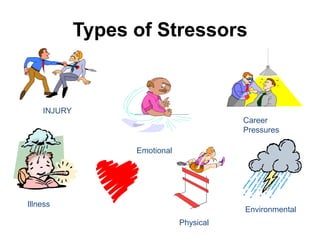
Types of Stressors


    INJURY
                                          Career
                                          Pressures

                   Emotional


Illness
                                          Environmental
                               Physical
SOURCES OF STRESS
Environment factors                         Personal factors
Economic uncertainty                         Family Problems
Political uncertainty                       Economic Problems
Technological change                          Personality
                        Organizational factors
                             Task factors
                            Role demands
                         Interpersonal demand
SYMPTOMS OF STRESS
• Emotional effects- Those who suffer from this effect
   are likely to show mood swings and erratic behaviors.
   E.g are as follows :
1. Feeling of anxiety & depression
2. Feeling of physical & psychological tension –
   frustration, mood swings etc
• Physiological effects – when human body is placed
   under physiological stress then it creates certain
   hormones called adrenaline and cortisol
1. Changes in heart rate ,
2. Blood pressure level,
3. Metabolism        ,
4. Slowing down of digestion etc.
• Cognitive effects- This type of effect
   occurs due to mental overload, it lead to
   cause inability to make sound decisions in
   individuals .E.g. are as follows :
1. Poor concentrations
2. Short term memory capacity
• Behavioral effects – Stress affect the
   behavior by eating less food, increasing
   intake of caffeine, alcohol , cigarettes. E.g.
   :
• Disrupted sleep patterns
• Absenteeism
• Reduced work performance
STRESS MANAGEMENT
                TECHNIQUES
• Relaxation & meditation – It is the most
  effective method to relieve stress, deep
  breathing exercise , raj yoga meditation ,
  Vipassana meditation etc

• EXERCISE – Regular exercise , swimming,
  Eating Healthy food , Listening Music , Going
  out with friends or family
• Creative visualization – it is an effective
  technique for dealing with stress, it is based
  on imaginary condition
• Cognitive behavioral techniques – The essence
  of this technique is to replace negative and
  irrational thoughts with positive and rational
  thoughts
Employees under High
Sl. No.   High Stress Zone                               Low Stress Zone
                              Stress
                              Civil Engineers,
          Construction Cos.                          Central Govt.
                              Architects,
1.        & Developers of                            Offices (Except
                              Contractors, Technicia
          Projects                                   key Ministries)
                              ns

                              Chief Engineer Officers,
          Shipping            Second Engineer
2.                                                       Govt. Schools
          Companies           Officer, Masters in
                              various Deptts

                              Branch Manager, Mktg.
                                                    Govt. funded
                              Manager, Sales
3.        Banks                                     Institutions/Bodi
                              Executives, Customer
                                                    es
                              Care Executives

          Government                                     State Govt.
4.                            Doctors, Nurses
          Hospitals                                      Offices
ANTI- STRESS THERAPY


            BANG
            HEAD
            HERE

   REPEAT UNTIL STRESS IS GONE OR
       YOU ARE UNCONSCIOUS
Organizational
        Development
• OD is a collection of change methods
  that try to improve organizational
  effectiveness & employee well- being
Underlying values
• Respect for people – Individual are perceived
  as responsible , conscientious & caring
• Trust & support - organizations is
  characterized by trust authenticity, openness
  & supportive climate
• Power Equalization - Organizations
  deemphasize hierarchical authority & control
• Confrontation – Problems Should be openly
  confronted, not swept under the rug

• Participation - The more engaged in the
  decision they are , the more people affected
  by a change will be committed to
  implementing them
Six OD Techniques
         Sensitivity Training
– Training groups (T-groups) seek to change behavior
  through unstructured group interaction
– Provides increased awareness of others and self
– Increases empathy with others, listening skills,
  openness, and tolerance for others
Survey Feedback
• Small meeting to feedback survey result
• Meetings used to formulate change
• Managers conduct meetings to indicate
  commitment
Process Consultation
• Meeting in which a consultant assists a
  client
• Include workflow, informal relationships
  among unit member & formal
  communication channels
• Improve organizational effectiveness by
  dealing with interpersonal problem & in
  emphasizing involvement
Team Building
•   Improved Group Process
•   Communication
•   Goal clarification
•   Role clarification
•   Task oriented
Intergroup development

• IT seeks to change groups attitudes,
  stereotypes & perceptions about each other

• Focus on differences among occupations,
  department or division within an organization
Appreciative inquiry
• Identify problem or set of problem then look
  for a solution
• Identifying unique qualities & special
  strengths of an organization which member
  can build on to improve performance
• Process consists four steps
  discovery , dreaming ,
  design & destiny
Stress At Workplace

Stress At Workplace

  • 1.
    STRESS AT WORKPLACE There is more to life than increasing its speed. ~Mohandas K. Gandhi Compiled By: Sandeep Amin
  • 2.
    WHAT IS STRESS • Stress is the “wear and tear” our minds and bodies experience as we attempt to cope with our continually changing environment
  • 3.
    Types of Stressors INJURY Career Pressures Emotional Illness Environmental Physical
  • 4.
    SOURCES OF STRESS Environmentfactors Personal factors Economic uncertainty Family Problems Political uncertainty Economic Problems Technological change Personality Organizational factors Task factors Role demands Interpersonal demand
  • 5.
    SYMPTOMS OF STRESS •Emotional effects- Those who suffer from this effect are likely to show mood swings and erratic behaviors. E.g are as follows : 1. Feeling of anxiety & depression 2. Feeling of physical & psychological tension – frustration, mood swings etc • Physiological effects – when human body is placed under physiological stress then it creates certain hormones called adrenaline and cortisol 1. Changes in heart rate , 2. Blood pressure level, 3. Metabolism , 4. Slowing down of digestion etc.
  • 6.
    • Cognitive effects-This type of effect occurs due to mental overload, it lead to cause inability to make sound decisions in individuals .E.g. are as follows : 1. Poor concentrations 2. Short term memory capacity • Behavioral effects – Stress affect the behavior by eating less food, increasing intake of caffeine, alcohol , cigarettes. E.g. : • Disrupted sleep patterns • Absenteeism • Reduced work performance
  • 7.
    STRESS MANAGEMENT TECHNIQUES • Relaxation & meditation – It is the most effective method to relieve stress, deep breathing exercise , raj yoga meditation , Vipassana meditation etc • EXERCISE – Regular exercise , swimming, Eating Healthy food , Listening Music , Going out with friends or family
  • 8.
    • Creative visualization– it is an effective technique for dealing with stress, it is based on imaginary condition • Cognitive behavioral techniques – The essence of this technique is to replace negative and irrational thoughts with positive and rational thoughts
  • 9.
    Employees under High Sl.No. High Stress Zone Low Stress Zone Stress Civil Engineers, Construction Cos. Central Govt. Architects, 1. & Developers of Offices (Except Contractors, Technicia Projects key Ministries) ns Chief Engineer Officers, Shipping Second Engineer 2. Govt. Schools Companies Officer, Masters in various Deptts Branch Manager, Mktg. Govt. funded Manager, Sales 3. Banks Institutions/Bodi Executives, Customer es Care Executives Government State Govt. 4. Doctors, Nurses Hospitals Offices
  • 11.
    ANTI- STRESS THERAPY BANG HEAD HERE REPEAT UNTIL STRESS IS GONE OR YOU ARE UNCONSCIOUS
  • 12.
    Organizational Development • OD is a collection of change methods that try to improve organizational effectiveness & employee well- being
  • 13.
    Underlying values • Respectfor people – Individual are perceived as responsible , conscientious & caring • Trust & support - organizations is characterized by trust authenticity, openness & supportive climate • Power Equalization - Organizations deemphasize hierarchical authority & control
  • 14.
    • Confrontation –Problems Should be openly confronted, not swept under the rug • Participation - The more engaged in the decision they are , the more people affected by a change will be committed to implementing them
  • 15.
    Six OD Techniques Sensitivity Training – Training groups (T-groups) seek to change behavior through unstructured group interaction – Provides increased awareness of others and self – Increases empathy with others, listening skills, openness, and tolerance for others
  • 16.
    Survey Feedback • Smallmeeting to feedback survey result • Meetings used to formulate change • Managers conduct meetings to indicate commitment
  • 17.
    Process Consultation • Meetingin which a consultant assists a client • Include workflow, informal relationships among unit member & formal communication channels • Improve organizational effectiveness by dealing with interpersonal problem & in emphasizing involvement
  • 18.
    Team Building • Improved Group Process • Communication • Goal clarification • Role clarification • Task oriented
  • 19.
    Intergroup development • ITseeks to change groups attitudes, stereotypes & perceptions about each other • Focus on differences among occupations, department or division within an organization
  • 20.
    Appreciative inquiry • Identifyproblem or set of problem then look for a solution • Identifying unique qualities & special strengths of an organization which member can build on to improve performance • Process consists four steps discovery , dreaming , design & destiny