JOB BURNOUT
“The Disease of Our Civilization”
Arianna Huffington
ARTA and FERNANDO
What is burnout?
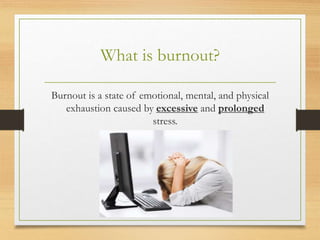
Burnout is a state of emotional, mental, and physical
exhaustion caused by excessive and prolonged
stress.
Objectives
You will learn about
3 Questions
• What causes burnout?
• What maintains burnout?
• How can we avoid or overcome burnout?
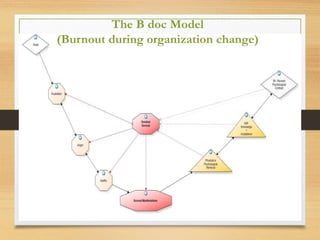
The B doc Model
(Burnout during organization change)
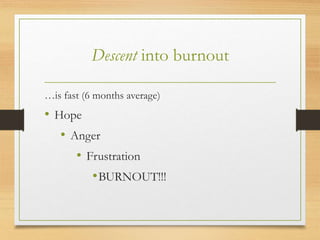
Descent into burnout
…is fast (6 months average)
• Hope
• Anger
• Frustration
•BURNOUT!!!
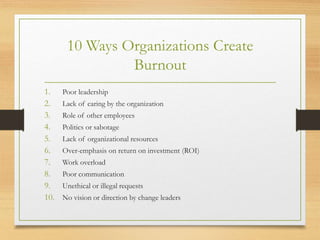
10 Ways Organizations Create
Burnout
1. Poor leadership
2. Lack of caring by the organization
3. Role of other employees
4. Politics or sabotage
5. Lack of organizational resources
6. Over-emphasis on return on investment (ROI)
7. Work overload
8. Poor communication
9. Unethical or illegal requests
10. No vision or direction by change leaders
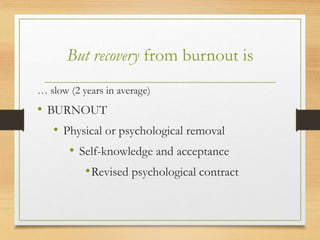
But recovery from burnout is
… slow (2 years in average)
• BURNOUT
• Physical or psychological removal
• Self-knowledge and acceptance
•Revised psychological contract
Why it’s so tough to recover?
The burnout triumvirate
• Personality
• Over-achiever, “star” employee
• Physical symptoms
• Fatigue, irritability
• Inability to concentrate
• Chronic/acute disease
• Organization
• Leadership, culture policies
As future leaders…
• When you go to leadership and management
positions, remember the HUMANITY of your
workforce!
• Keep the human in human resources!
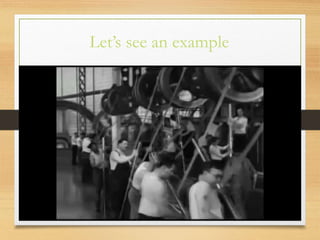
Let’s see an example

Job burnout

  • 1.
    JOB BURNOUT “The Diseaseof Our Civilization” Arianna Huffington ARTA and FERNANDO
  • 2.
    What is burnout? Burnoutis a state of emotional, mental, and physical exhaustion caused by excessive and prolonged stress.
  • 3.
    Objectives You will learnabout 3 Questions • What causes burnout? • What maintains burnout? • How can we avoid or overcome burnout?
  • 4.
    The B docModel (Burnout during organization change)
  • 5.
    Descent into burnout …isfast (6 months average) • Hope • Anger • Frustration •BURNOUT!!!
  • 6.
    10 Ways OrganizationsCreate Burnout 1. Poor leadership 2. Lack of caring by the organization 3. Role of other employees 4. Politics or sabotage 5. Lack of organizational resources 6. Over-emphasis on return on investment (ROI) 7. Work overload 8. Poor communication 9. Unethical or illegal requests 10. No vision or direction by change leaders
  • 7.
    But recovery fromburnout is … slow (2 years in average) • BURNOUT • Physical or psychological removal • Self-knowledge and acceptance •Revised psychological contract
  • 8.
    Why it’s sotough to recover? The burnout triumvirate • Personality • Over-achiever, “star” employee • Physical symptoms • Fatigue, irritability • Inability to concentrate • Chronic/acute disease • Organization • Leadership, culture policies
  • 9.
    As future leaders… •When you go to leadership and management positions, remember the HUMANITY of your workforce! • Keep the human in human resources!
  • 10.