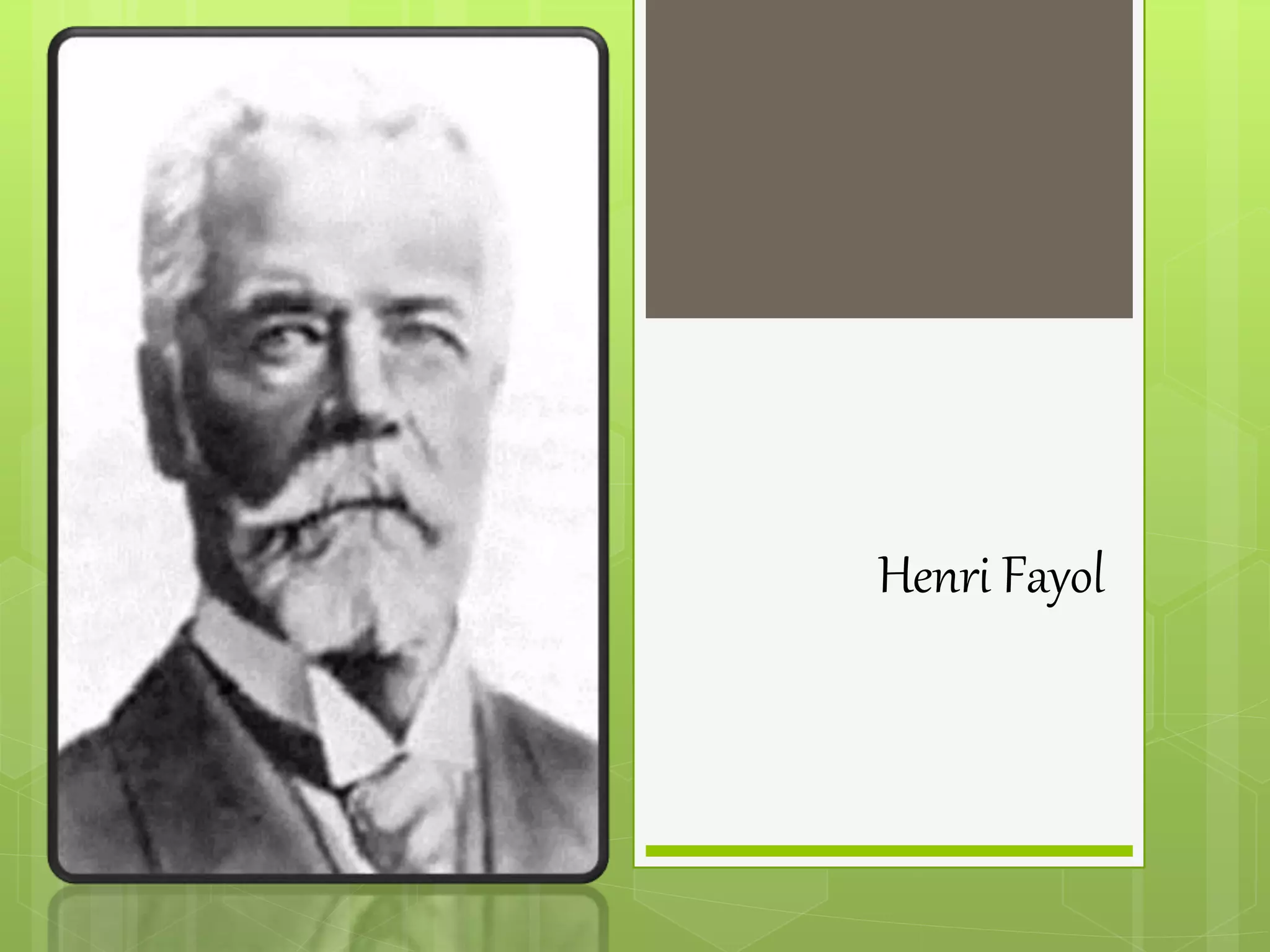
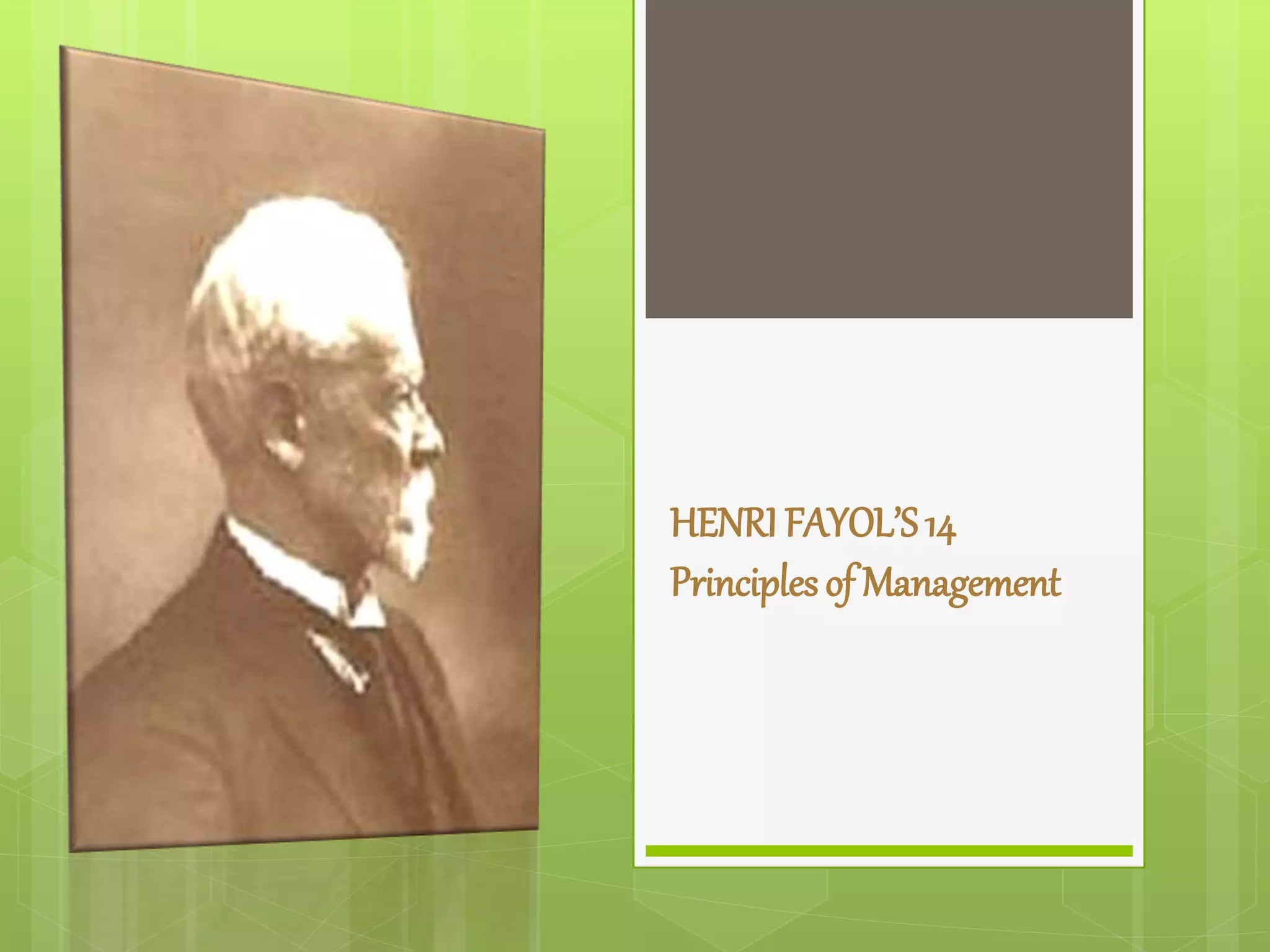
Henri Fayol
Henri Fayol
(Istanbul, 29 July 1841 – Paris, 19 November
1925) was a French mining engineer and
director of mines who developed a general
theory of business administration that is often
called Fayolism. He and his colleagues
developed this theory independently of
scientific management but roughly
contemporaneously. Like his
contemporary, Frederick Winslow Taylor, he is
widely acknowledged as a founder of modern
management methods.
Fayol was born in 1841 in a suburb of Istanbul, Ottoman Empire. His
father (an engineer) was appointed superintendent of works to build
Galata Bridge, which bridged the Golden Horn.[1] The family
returned to France in 1847, where Fayol graduated from the mining
academy "École Nationale Supérieure des Mines" in Saint-Étienne in
1860.
In 1860 at the age of nineteen Fayol started the mining company
named "Compagnie de Commentry-Fourchambault-Decazeville" in
Commentry as the mining engineer. In 1888 he became managing
director, when the mine company employed over 10,000 people,
and held that position over 30 years until 1918. By 1900 the company
was one of the largest producers of iron and steel in France and was
regarded as a vital industry.
Based largely on his own management experience, he developed his
concept of administration. In 1916 he published these experience in
the book "Administration Industrielle et Générale", at about the same
time as Frederick Winslow Taylor published his Principles of Scientific
Management
Biography
Work
Fayol's work became more generally
known with the 1949 publication
of General and industrial administration,
the English translation of the 1916 article
"Administration industrielle et générale".
In this work Fayol presented his theory of
management, known as Fayolism. Before
that Fayol had written several articles
on mining engineering, starting in the
1870s, and some preliminary papers on
administration.
Mining engineering
Starting in the 1870s, Fayol wrote a series of
articles on mining subjects, such as on the
spontaneous heating of coal (1879), the
formation of coal beds (1887),
the sedimentationof the Commentry, and on
plant fossils (1890),
His first articles were published in the
French Bulletin de la Société de l'Industrie
minérale, and beginning in the early 1880s in
the Comptes rendus de l'Académie des
sciences, the proceedings of the French
Academy of Sciences.
Fayolism
Fayol's work was one of the
first comprehensive statements
of a general theory of
management. He proposed
that there were five primary
functions of management and
fourteen principles of
management.
Functions of management
1.To planning
2.To organize
3.To staffing
4.To command or direct
5.To coordinate
6.To control
HENRI FAYOL’S14
Principles of Management
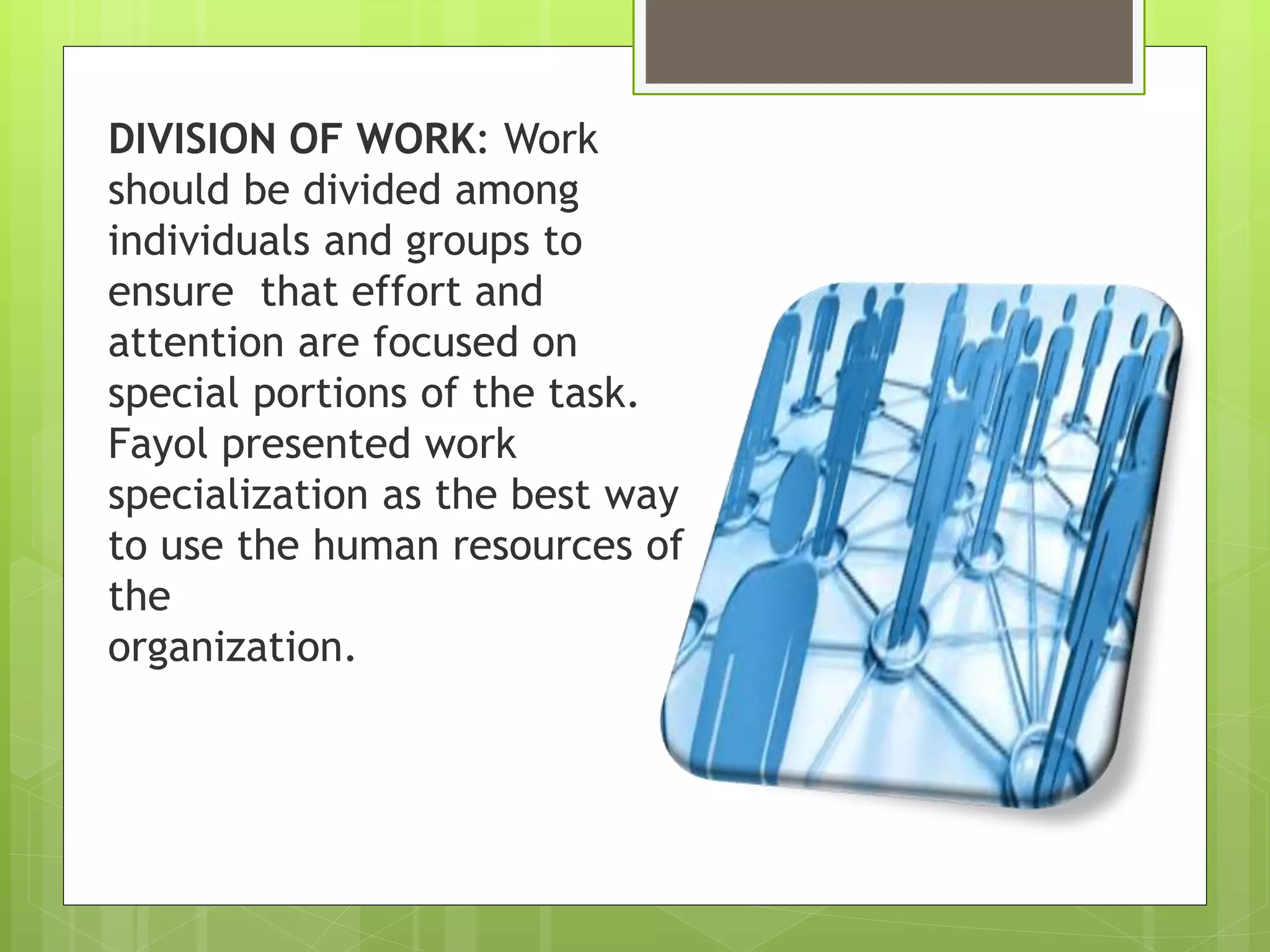
DIVISION OF WORK: Work
should be divided among
individuals and groups to
ensure that effort and
attention are focused on
special portions of the task.
Fayol presented work
specialization as the best way
to use the human resources of
the
organization.
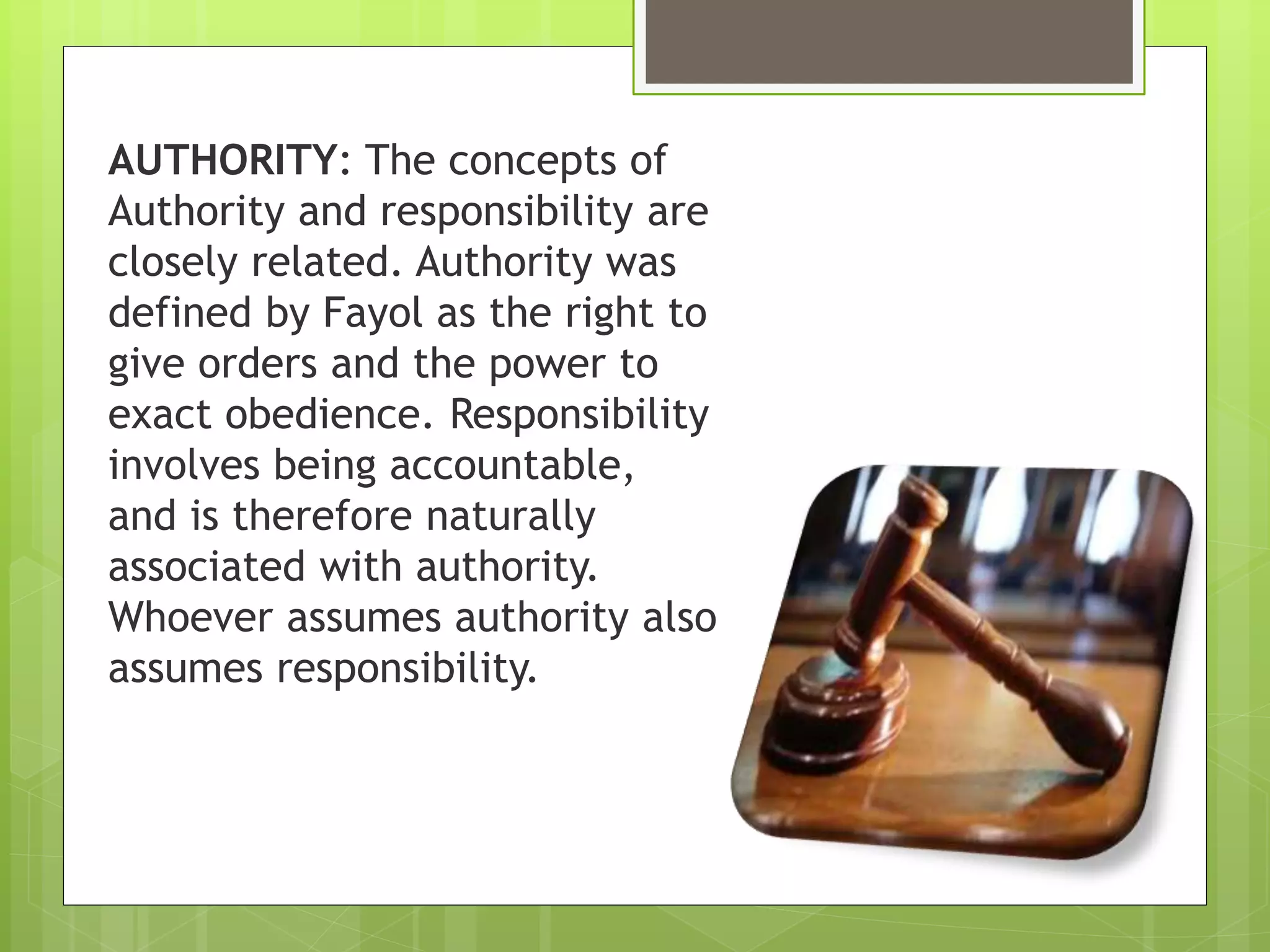
AUTHORITY: The concepts of
Authority and responsibility are
closely related. Authority was
defined by Fayol as the right to
give orders and the power to
exact obedience. Responsibility
involves being accountable,
and is therefore naturally
associated with authority.
Whoever assumes authority also
assumes responsibility.
DISCIPLINE: A
successful organization
requires the common
effort of workers.
Penalties should be
applied judiciously to
encourage this common
effort.
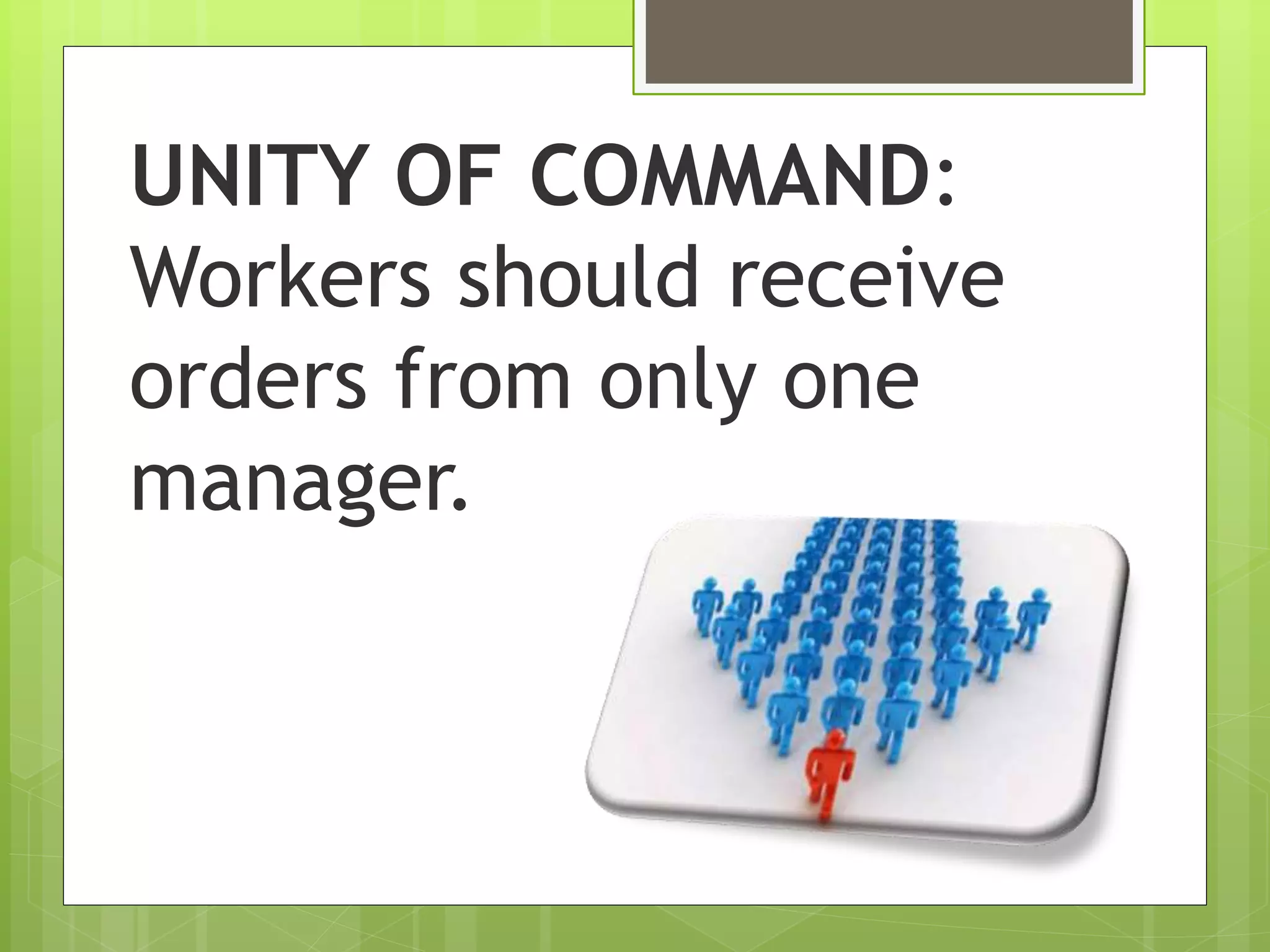
UNITY OF COMMAND:
Workers should receive
orders from only one
manager.
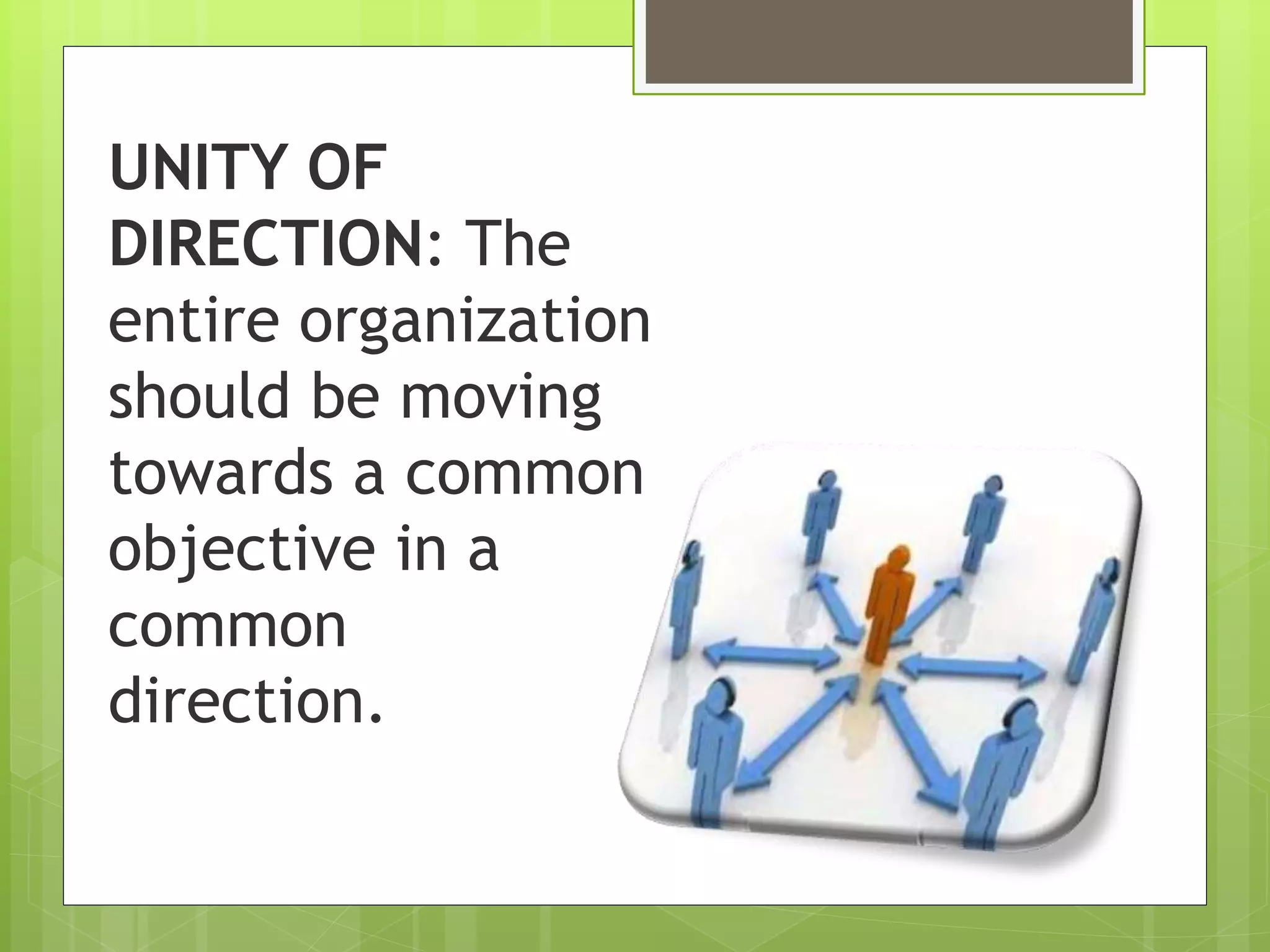
UNITY OF
DIRECTION: The
entire organization
should be moving
towards a common
objective in a
common
direction.
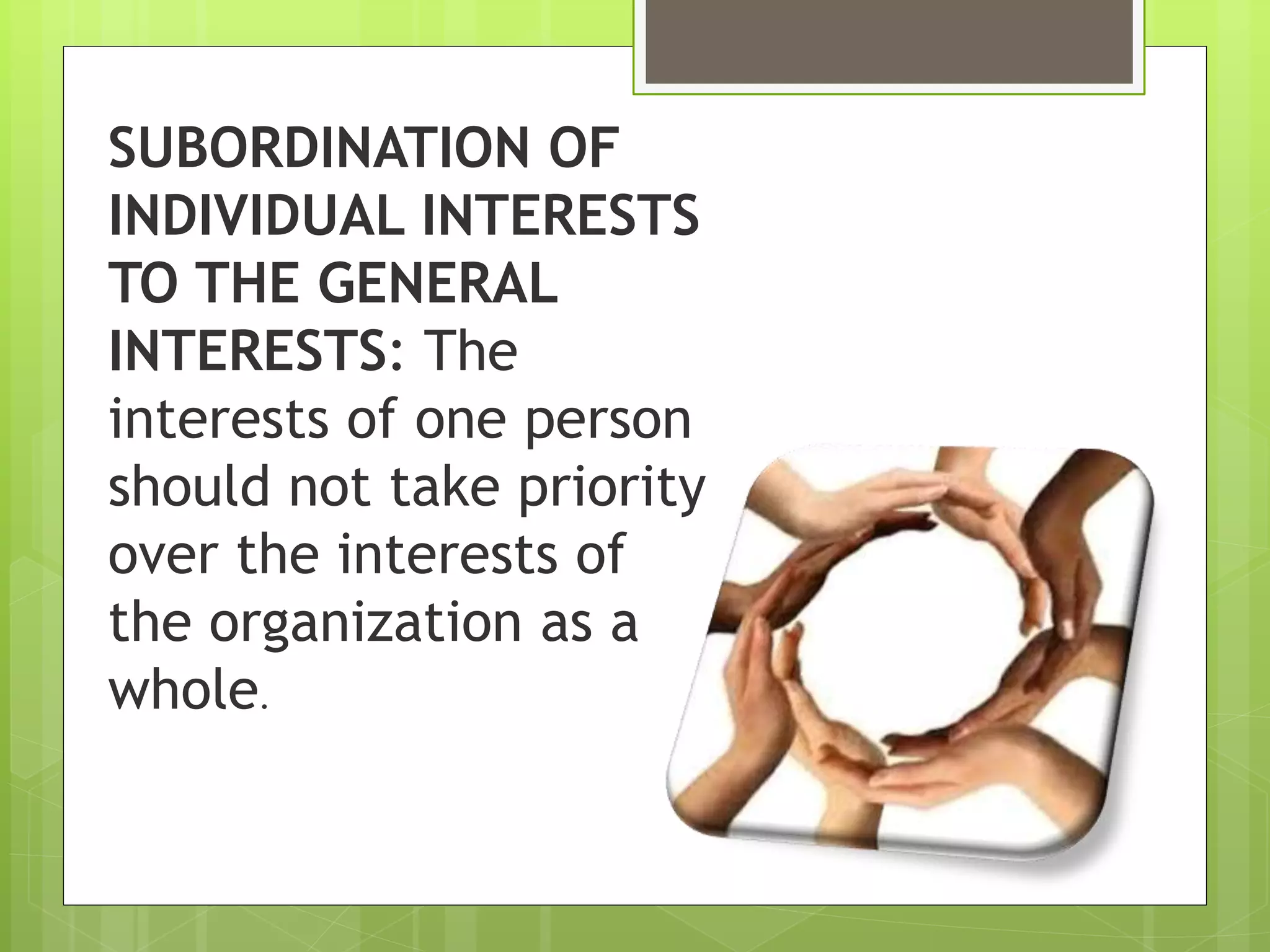
SUBORDINATION OF
INDIVIDUAL INTERESTS
TO THE GENERAL
INTERESTS: The
interests of one person
should not take priority
over the interests of
the organization as a
whole.
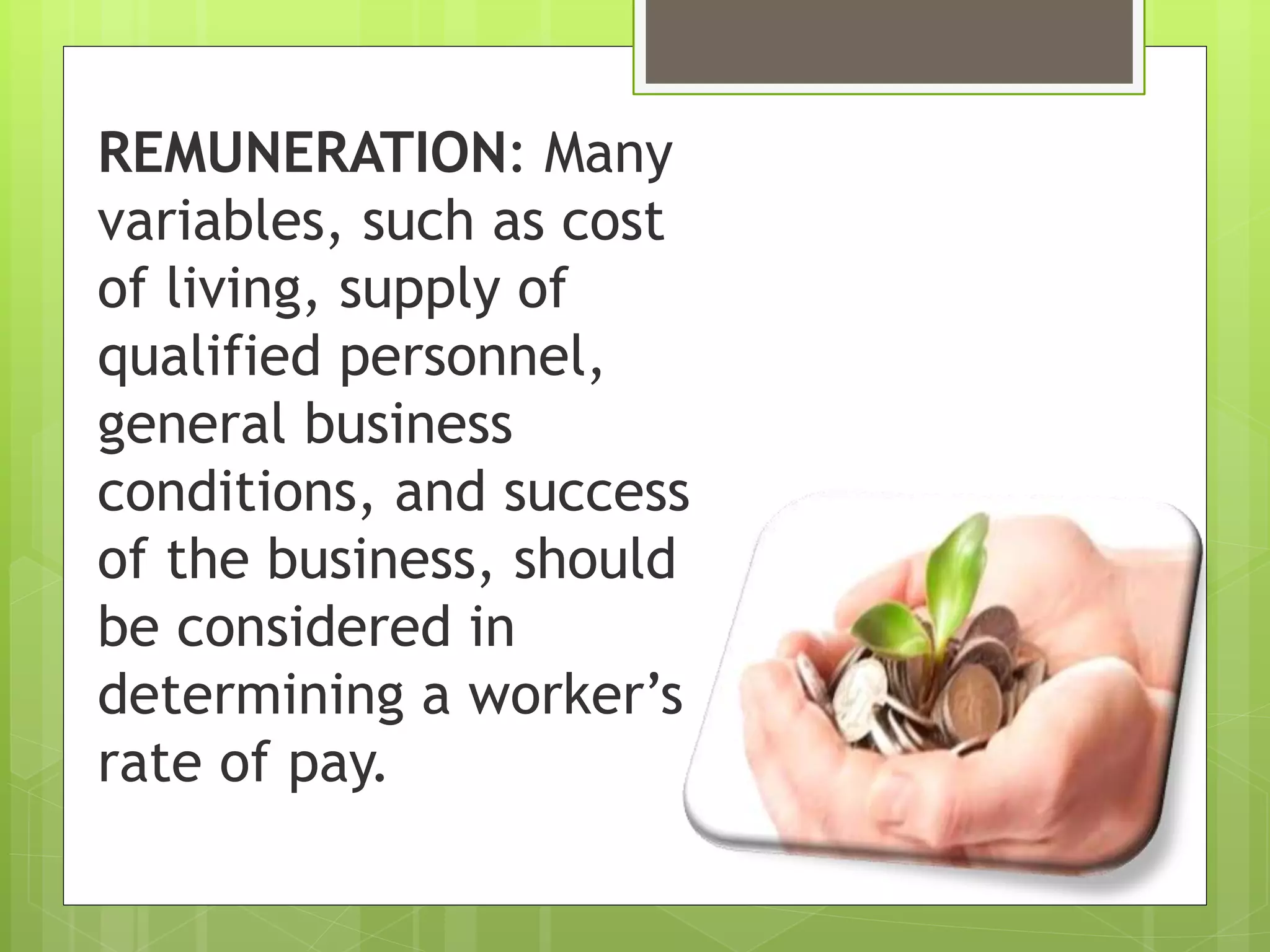
REMUNERATION: Many
variables, such as cost
of living, supply of
qualified personnel,
general business
conditions, and success
of the business, should
be considered in
determining a worker’s
rate of pay.
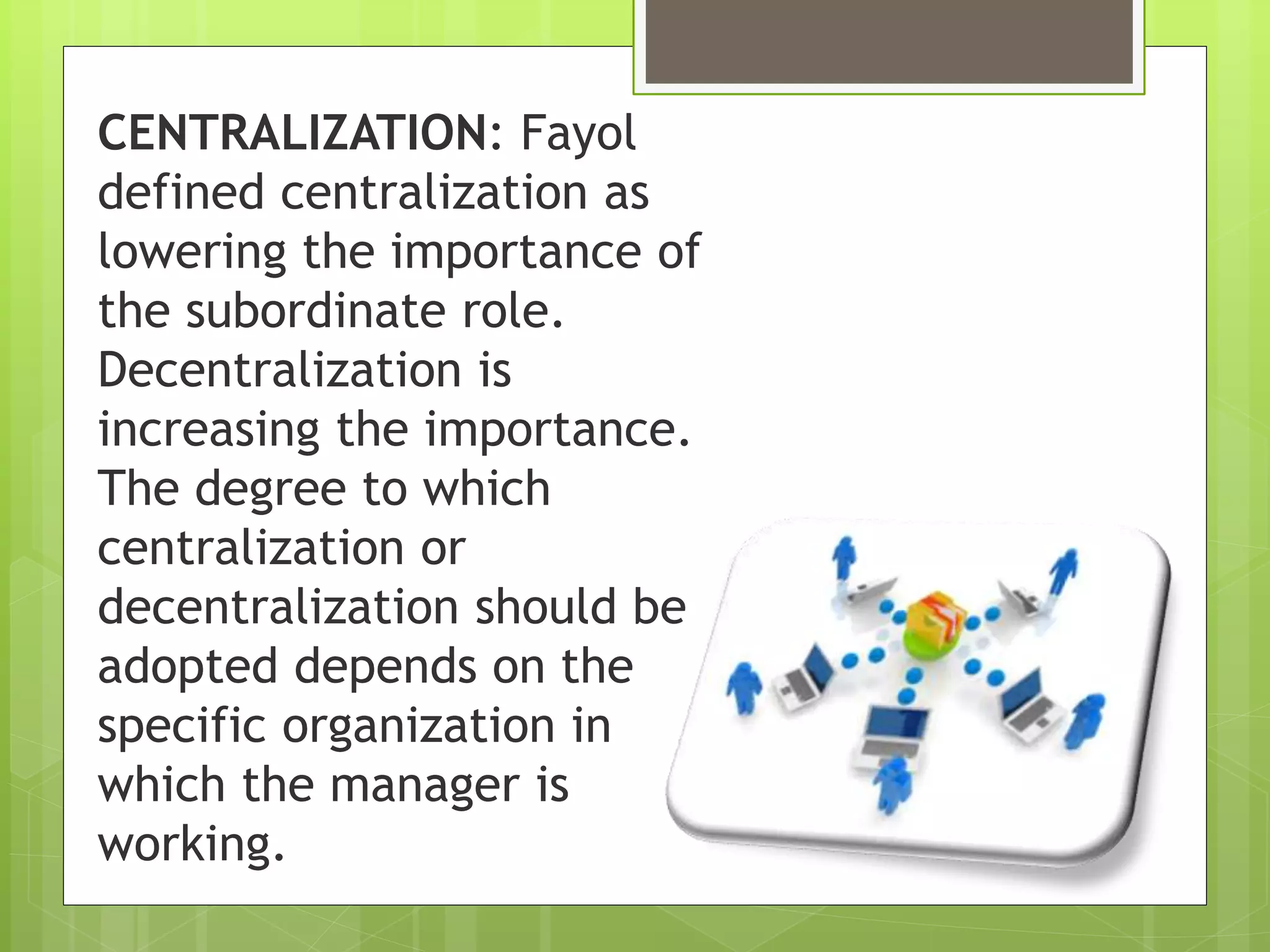
CENTRALIZATION: Fayol
defined centralization as
lowering the importance of
the subordinate role.
Decentralization is
increasing the importance.
The degree to which
centralization or
decentralization should be
adopted depends on the
specific organization in
which the manager is
working.
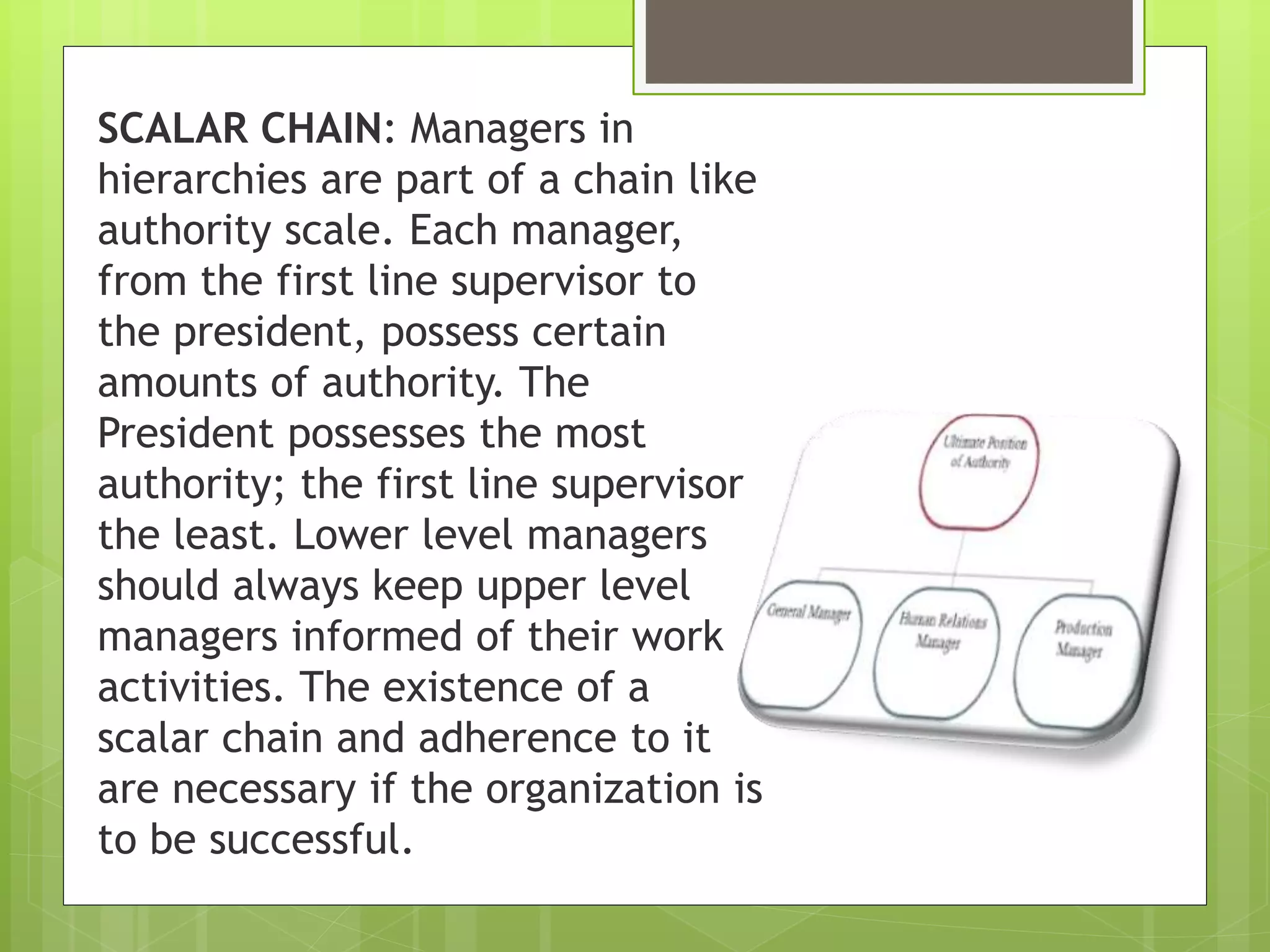
SCALAR CHAIN: Managers in
hierarchies are part of a chain like
authority scale. Each manager,
from the first line supervisor to
the president, possess certain
amounts of authority. The
President possesses the most
authority; the first line supervisor
the least. Lower level managers
should always keep upper level
managers informed of their work
activities. The existence of a
scalar chain and adherence to it
are necessary if the organization is
to be successful.
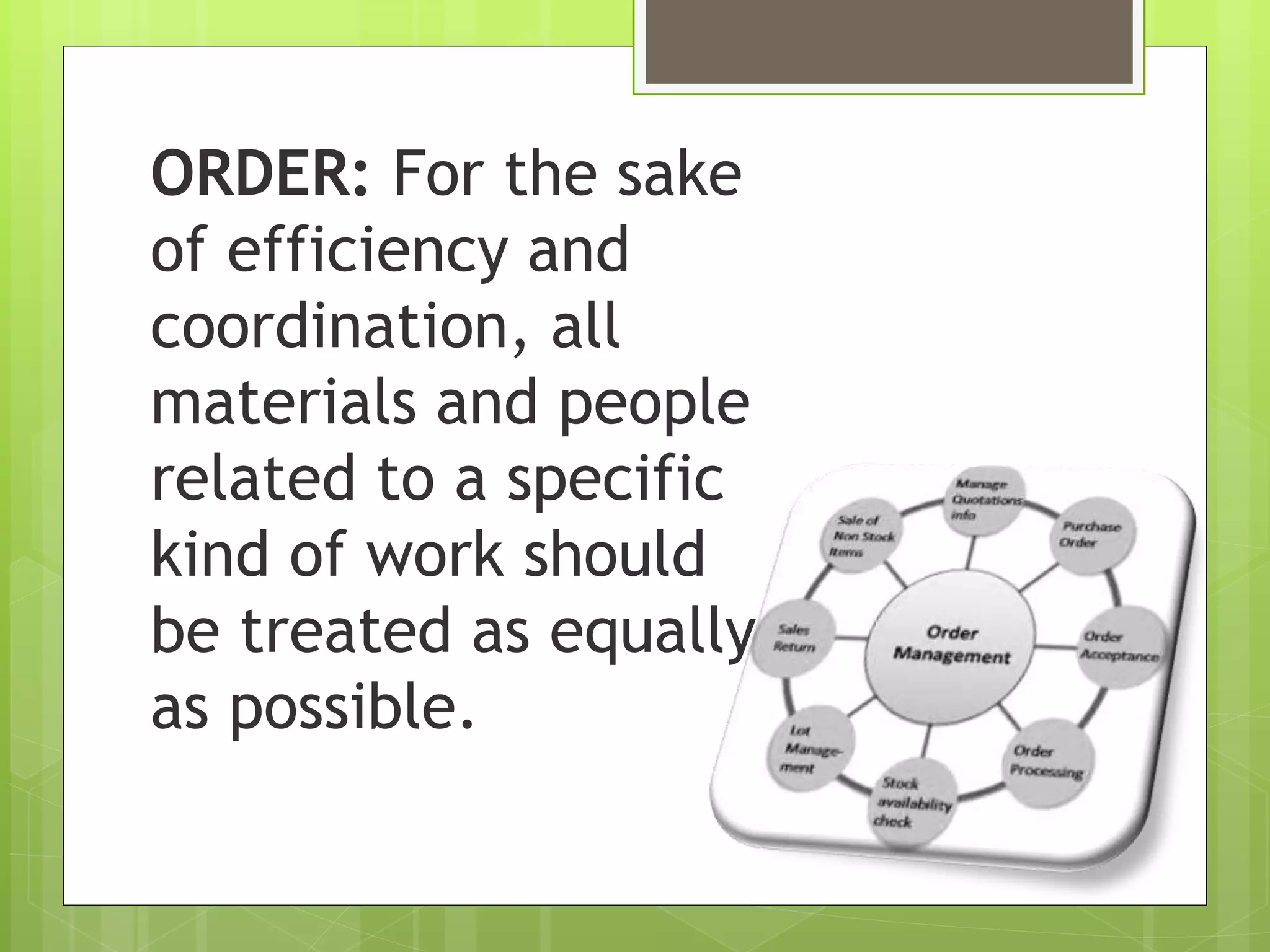
ORDER: For the sake
of efficiency and
coordination, all
materials and people
related to a specific
kind of work should
be treated as equally
as possible.
EQUITY: All
employees should
be treated as
equally as
possible.
STABILITY OF TENURE OF
PERSONNEL: Retaining
productive employees
should always be a high
priority of management.
Recruitment and Selection
Costs, as well as increased
product-reject rates are
usually associated with
hiring new workers.
INITIATIVE: Management
should take steps to
encourage worker
initiative, which is defined
as new or additional work
activity undertaken
through self
direction.
ESPIRIT DE CORPS:
Management should
encourage harmony and
general good feelings
among employees.

14 principles of management by Henri Fayol

  • 1.
  • 2.
    Henri Fayol (Istanbul, 29July 1841 – Paris, 19 November 1925) was a French mining engineer and director of mines who developed a general theory of business administration that is often called Fayolism. He and his colleagues developed this theory independently of scientific management but roughly contemporaneously. Like his contemporary, Frederick Winslow Taylor, he is widely acknowledged as a founder of modern management methods.
  • 3.
    Fayol was bornin 1841 in a suburb of Istanbul, Ottoman Empire. His father (an engineer) was appointed superintendent of works to build Galata Bridge, which bridged the Golden Horn.[1] The family returned to France in 1847, where Fayol graduated from the mining academy "École Nationale Supérieure des Mines" in Saint-Étienne in 1860. In 1860 at the age of nineteen Fayol started the mining company named "Compagnie de Commentry-Fourchambault-Decazeville" in Commentry as the mining engineer. In 1888 he became managing director, when the mine company employed over 10,000 people, and held that position over 30 years until 1918. By 1900 the company was one of the largest producers of iron and steel in France and was regarded as a vital industry. Based largely on his own management experience, he developed his concept of administration. In 1916 he published these experience in the book "Administration Industrielle et Générale", at about the same time as Frederick Winslow Taylor published his Principles of Scientific Management Biography
  • 4.
    Work Fayol's work becamemore generally known with the 1949 publication of General and industrial administration, the English translation of the 1916 article "Administration industrielle et générale". In this work Fayol presented his theory of management, known as Fayolism. Before that Fayol had written several articles on mining engineering, starting in the 1870s, and some preliminary papers on administration.
  • 5.
    Mining engineering Starting inthe 1870s, Fayol wrote a series of articles on mining subjects, such as on the spontaneous heating of coal (1879), the formation of coal beds (1887), the sedimentationof the Commentry, and on plant fossils (1890), His first articles were published in the French Bulletin de la Société de l'Industrie minérale, and beginning in the early 1880s in the Comptes rendus de l'Académie des sciences, the proceedings of the French Academy of Sciences.
  • 6.
    Fayolism Fayol's work wasone of the first comprehensive statements of a general theory of management. He proposed that there were five primary functions of management and fourteen principles of management.
  • 7.
    Functions of management 1.Toplanning 2.To organize 3.To staffing 4.To command or direct 5.To coordinate 6.To control
  • 8.
  • 9.
    DIVISION OF WORK:Work should be divided among individuals and groups to ensure that effort and attention are focused on special portions of the task. Fayol presented work specialization as the best way to use the human resources of the organization.
  • 10.
    AUTHORITY: The conceptsof Authority and responsibility are closely related. Authority was defined by Fayol as the right to give orders and the power to exact obedience. Responsibility involves being accountable, and is therefore naturally associated with authority. Whoever assumes authority also assumes responsibility.
  • 11.
    DISCIPLINE: A successful organization requiresthe common effort of workers. Penalties should be applied judiciously to encourage this common effort.
  • 12.
    UNITY OF COMMAND: Workersshould receive orders from only one manager.
  • 13.
    UNITY OF DIRECTION: The entireorganization should be moving towards a common objective in a common direction.
  • 14.
    SUBORDINATION OF INDIVIDUAL INTERESTS TOTHE GENERAL INTERESTS: The interests of one person should not take priority over the interests of the organization as a whole.
  • 15.
    REMUNERATION: Many variables, suchas cost of living, supply of qualified personnel, general business conditions, and success of the business, should be considered in determining a worker’s rate of pay.
  • 16.
    CENTRALIZATION: Fayol defined centralizationas lowering the importance of the subordinate role. Decentralization is increasing the importance. The degree to which centralization or decentralization should be adopted depends on the specific organization in which the manager is working.
  • 17.
    SCALAR CHAIN: Managersin hierarchies are part of a chain like authority scale. Each manager, from the first line supervisor to the president, possess certain amounts of authority. The President possesses the most authority; the first line supervisor the least. Lower level managers should always keep upper level managers informed of their work activities. The existence of a scalar chain and adherence to it are necessary if the organization is to be successful.
  • 18.
    ORDER: For thesake of efficiency and coordination, all materials and people related to a specific kind of work should be treated as equally as possible.
  • 19.
    EQUITY: All employees should betreated as equally as possible.
  • 20.
    STABILITY OF TENUREOF PERSONNEL: Retaining productive employees should always be a high priority of management. Recruitment and Selection Costs, as well as increased product-reject rates are usually associated with hiring new workers.
  • 21.
    INITIATIVE: Management should takesteps to encourage worker initiative, which is defined as new or additional work activity undertaken through self direction.
  • 22.
    ESPIRIT DE CORPS: Managementshould encourage harmony and general good feelings among employees.