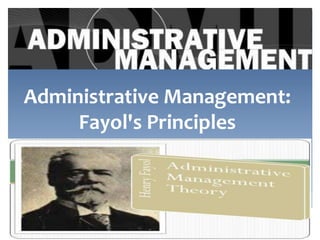
Administrative Management:
Fayol's Principles
 Administrative management is the process of
managing information through people. This usually
involves performing the storage and distribution of
information to those within an organisation.
 Represent top level management pretaining
thinking and planning functions.
 It performs the function of formulatin of
vision,mission and stratagies.
ADMINISTRATIVE MANAGEMENT
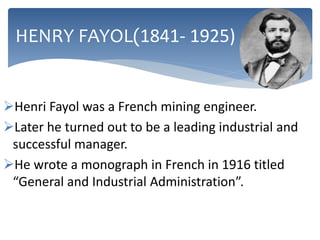
Henri Fayol was a French mining engineer.
Later he turned out to be a leading industrial and
successful manager.
He wrote a monograph in French in 1916 titled
“General and Industrial Administration”.
HENRY FAYOL(1841- 1925)
 He is considered as the Father of
Administrative Management Theory.
 Developed a general theory of business
administration that is often called Fayolism.
 Fayolism- a theory of management that analyzed
and synthesized the role of management in
organizations.
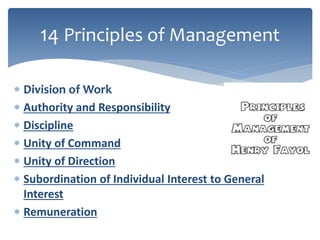
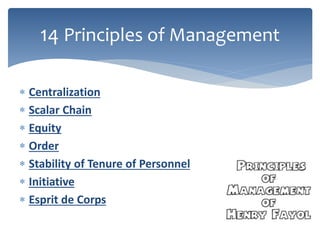
14 Principles of Management
 Division of Work
 Authority and Responsibility
 Discipline
 Unity of Command
 Unity of Direction
 Subordination of Individual Interest to General
Interest
 Remuneration
 Centralization
 Scalar Chain
 Equity
 Order
 Stability of Tenure of Personnel
 Initiative
 Esprit de Corps
14 Principles of Management
Work should be divided among individuals and
groups.
 When employees are specialized, output can
increase because they become increasingly skilled
and efficient.
It produces more and better work with the same
effort.
Fayol said that work specialization is the best way
to use the human resources of the organisation.
Division of Work
 Authority was defined by Fayol as the right to give
orders and the power to exact obedience. Responsibility
involves being accountable, and is therefore naturally
associated with authority.
 Managers must have the authority to give orders, but
they must also keep in mind that with authority comes
responsibility.
 Responsibility is closely related to authority and it arises
wherever authority is exercised
Authority and Responsibility
 Discipline means obedience to authority, observance
of the rules and norms of performance, respect for
agreements, sincere efforts for completing the given
job, respect for the superiors and the organization,
etc.
 The best means of maintaining discipline are good
supervisors at all levels, clear and fair agreements
between the employees and the employer, and
judicious application of penalties.
Discipline
 Each employee should receive instructions
about a particular work from one superior
only.
 If there were to be more than one superiors,
the employee would be confused due to
conflict in instructions.
Unity of Command
 Teams with the same objective should be
working under the direction of one manager,
using one plan.
 Fayol advocates "One head and one plan"
which means that group efforts on a
particular plan be led and directed by a single
person.
 This enables effective co-ordination
of individual efforts and energy.
Unity of Direction
 First priority to general intrest.
 An individual is always interested in maximizing his
own satisfaction through more money, recognition,
status, etc. It is very often against the general interest
of the organisation.
 The interests of one employee should not be allowed
to become more important than those of the group.
Subordination of Individual Interest to
General Interest
 According to Fayol wage-rates and method of
their payment should be fair, proper and
satisfactory.
 Fair remuneration increases workers’ efficiency and
boost their morale.
 It also plays a vital role in making the relations of the
employees and the management better.
Fair Remuneration to employees
 Fayol defined centralization as lowering the role and
importance of the subordinate role.
 Decentralization is increasing the importance of
subordinate.
 According to Fayol should be proper and effective
adjustment between centralization and
decentralization inorder to achieve maximum
objectives of the business.
Centralization & Decentralization
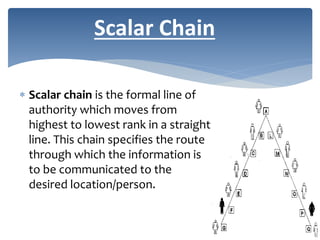
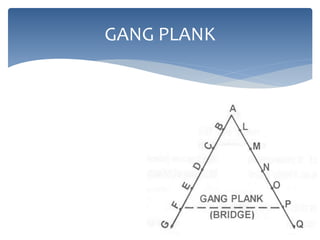
 Scalar chain is the formal line of
authority which moves from
highest to lowest rank in a straight
line. This chain specifies the route
through which the information is
to be communicated to the
desired location/person.
Scalar Chain
 Fayol emphasized that every information in the
organization must flow according to this chain to
facilitate clear communication of orders of the
superiors and feelings of the subordinates.
 It consumes a lot of time to pass information.
GANG PLANK
 “right place for everything and right man at
right place”
 There should be proper, systematic and orderly
arrangement of physical and social factors, such
as land, raw materials, tools and equipments and
employees respectively.
 There should be an orderliness in work through
suitable organization of men and materials.
Order
Management should treat all its employees as
equally as possible.
Managers should be free from all prejudices,
personal likes or dislikes.
It ensures healthy industrial relations between
management and labour.
This will create loyalty and devotion among the
employees.
EQUITY
Workers should be assured of the security of job by
the management.
This is important to motivate them and extract better
work from them.
If they fear for job security, their morale will be low
and they cannot give efficient work.
Also, they will not have any sense of attachment to
the organization and they will always be on the
lookout for a job elsewhere.
Stability of Tenure of Personnel
 Under this principle, the successful management
provides an opportunity to its employees to suggest
their new ideas,experiences and more convenient
methods of work
 Employees should be given the necessary level of
freedom to create and carry out plans.
 Employees should be encouraged to make all kinds
of suggestions to conceive and carry out their plans.
INITIATIVE
 This term means team spirit.
 Harmony and unity among the employees is a
great source of strength to the organization.
 To achieve this, the motto of divide and rule
should be avoided. And, verbal communication
should be used for removing
misunderstandings.
ESPRIT DE CORPS
Thank you

Administrative management: fayol principles of management

  • 1.
  • 2.
     Administrative managementis the process of managing information through people. This usually involves performing the storage and distribution of information to those within an organisation.  Represent top level management pretaining thinking and planning functions.  It performs the function of formulatin of vision,mission and stratagies. ADMINISTRATIVE MANAGEMENT
  • 3.
    Henri Fayol wasa French mining engineer. Later he turned out to be a leading industrial and successful manager. He wrote a monograph in French in 1916 titled “General and Industrial Administration”. HENRY FAYOL(1841- 1925)
  • 4.
     He isconsidered as the Father of Administrative Management Theory.  Developed a general theory of business administration that is often called Fayolism.  Fayolism- a theory of management that analyzed and synthesized the role of management in organizations.
  • 5.
    14 Principles ofManagement  Division of Work  Authority and Responsibility  Discipline  Unity of Command  Unity of Direction  Subordination of Individual Interest to General Interest  Remuneration
  • 6.
     Centralization  ScalarChain  Equity  Order  Stability of Tenure of Personnel  Initiative  Esprit de Corps 14 Principles of Management
  • 7.
    Work should bedivided among individuals and groups.  When employees are specialized, output can increase because they become increasingly skilled and efficient. It produces more and better work with the same effort. Fayol said that work specialization is the best way to use the human resources of the organisation. Division of Work
  • 8.
     Authority wasdefined by Fayol as the right to give orders and the power to exact obedience. Responsibility involves being accountable, and is therefore naturally associated with authority.  Managers must have the authority to give orders, but they must also keep in mind that with authority comes responsibility.  Responsibility is closely related to authority and it arises wherever authority is exercised Authority and Responsibility
  • 9.
     Discipline meansobedience to authority, observance of the rules and norms of performance, respect for agreements, sincere efforts for completing the given job, respect for the superiors and the organization, etc.  The best means of maintaining discipline are good supervisors at all levels, clear and fair agreements between the employees and the employer, and judicious application of penalties. Discipline
  • 10.
     Each employeeshould receive instructions about a particular work from one superior only.  If there were to be more than one superiors, the employee would be confused due to conflict in instructions. Unity of Command
  • 11.
     Teams withthe same objective should be working under the direction of one manager, using one plan.  Fayol advocates "One head and one plan" which means that group efforts on a particular plan be led and directed by a single person.  This enables effective co-ordination of individual efforts and energy. Unity of Direction
  • 12.
     First priorityto general intrest.  An individual is always interested in maximizing his own satisfaction through more money, recognition, status, etc. It is very often against the general interest of the organisation.  The interests of one employee should not be allowed to become more important than those of the group. Subordination of Individual Interest to General Interest
  • 13.
     According toFayol wage-rates and method of their payment should be fair, proper and satisfactory.  Fair remuneration increases workers’ efficiency and boost their morale.  It also plays a vital role in making the relations of the employees and the management better. Fair Remuneration to employees
  • 14.
     Fayol definedcentralization as lowering the role and importance of the subordinate role.  Decentralization is increasing the importance of subordinate.  According to Fayol should be proper and effective adjustment between centralization and decentralization inorder to achieve maximum objectives of the business. Centralization & Decentralization
  • 15.
     Scalar chainis the formal line of authority which moves from highest to lowest rank in a straight line. This chain specifies the route through which the information is to be communicated to the desired location/person. Scalar Chain
  • 16.
     Fayol emphasizedthat every information in the organization must flow according to this chain to facilitate clear communication of orders of the superiors and feelings of the subordinates.  It consumes a lot of time to pass information.
  • 17.
  • 18.
     “right placefor everything and right man at right place”  There should be proper, systematic and orderly arrangement of physical and social factors, such as land, raw materials, tools and equipments and employees respectively.  There should be an orderliness in work through suitable organization of men and materials. Order
  • 19.
    Management should treatall its employees as equally as possible. Managers should be free from all prejudices, personal likes or dislikes. It ensures healthy industrial relations between management and labour. This will create loyalty and devotion among the employees. EQUITY
  • 20.
    Workers should beassured of the security of job by the management. This is important to motivate them and extract better work from them. If they fear for job security, their morale will be low and they cannot give efficient work. Also, they will not have any sense of attachment to the organization and they will always be on the lookout for a job elsewhere. Stability of Tenure of Personnel
  • 21.
     Under thisprinciple, the successful management provides an opportunity to its employees to suggest their new ideas,experiences and more convenient methods of work  Employees should be given the necessary level of freedom to create and carry out plans.  Employees should be encouraged to make all kinds of suggestions to conceive and carry out their plans. INITIATIVE
  • 22.
     This termmeans team spirit.  Harmony and unity among the employees is a great source of strength to the organization.  To achieve this, the motto of divide and rule should be avoided. And, verbal communication should be used for removing misunderstandings. ESPRIT DE CORPS
  • 23.