1
HPE and Needs
Assessment
Hirotaka Onishi MD, MHPE
International Research Center for Medical Education
Graduate School of Medicine, University of Tokyo
What is a Curriculum?
 Schedule of classes or lectures?
 Syllabus?
 Lecture contents?
2
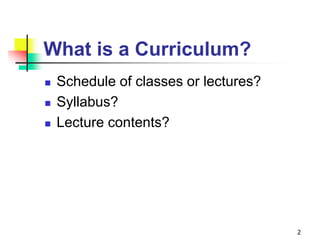
Curriculum Viewpoints
 Not only schedule or program but also what
learners learned should be considered
Manifest curriculum
Hidden curriculum
What teachers
like to teach
What learners
actually learned
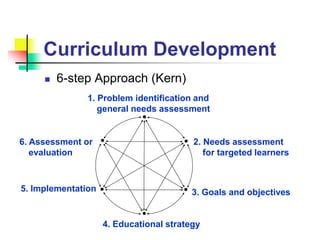
Curriculum Development
 6-step Approach (Kern)
1. Problem identification and
general needs assessment
2. Needs assessment
for targeted learners
3. Goals and objectives
4. Educational strategy
5. Implementation
6. Assessment or
evaluation
●
●
●
●
●
●
1. Problem Identification
Health Needs and Curriculum
 What is the curriculum of a health care
professional school (faculty) for?
 Educators’ obligation
 To meet the needs of learners, patients,
and society
 To develop the curriculum by a logical and
systematic approach
 Strong linkage of health professional
education and public health
Policy Level
 Any policy of MoHE?
 Mission or vision of medical schools?
 Mission-based curriculum development
6
Data Analysis
 Information gathering
 Qualitative: Focus group, interview, etc
 Quantitative: Questionnaire, etc
 Analyzing the collected information
 Qualitative: Semantic categorization
 Quantitative: Statistical analysis
7
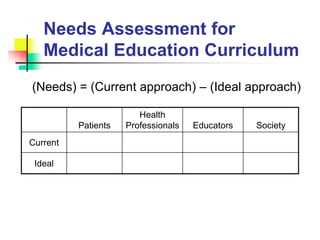
Needs Assessment for
Medical Education Curriculum
(Needs) = (Current approach) – (Ideal approach)
Patients
Health
Professionals Educators Society
Current
Ideal
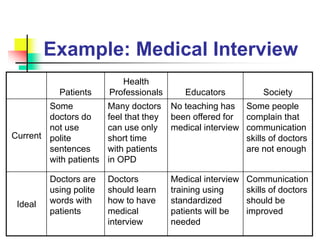
Example: Medical Interview
9
Patients
Health
Professionals Educators Society
Current
Some
doctors do
not use
polite
sentences
with patients
Many doctors
feel that they
can use only
short time
with patients
in OPD
No teaching has
been offered for
medical interview
Some people
complain that
communication
skills of doctors
are not enough
Ideal
Doctors are
using polite
words with
patients
Doctors
should learn
how to have
medical
interview
Medical interview
training using
standardized
patients will be
needed
Communication
skills of doctors
should be
improved
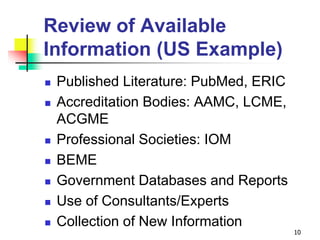
Review of Available
Information (US Example)
 Published Literature: PubMed, ERIC
 Accreditation Bodies: AAMC, LCME,
ACGME
 Professional Societies: IOM
 BEME
 Government Databases and Reports
 Use of Consultants/Experts
 Collection of New Information
10
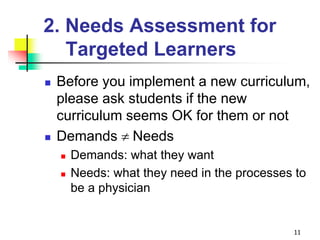
2. Needs Assessment for
Targeted Learners
 Before you implement a new curriculum,
please ask students if the new
curriculum seems OK for them or not
 Demands Needs
 Demands: what they want
 Needs: what they need in the processes to
be a physician
11
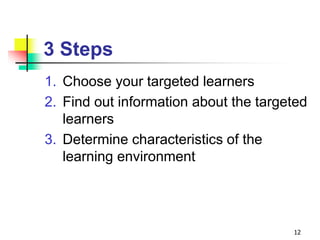
3 Steps
1. Choose your targeted learners
2. Find out information about the targeted
learners
3. Determine characteristics of the
learning environment
12
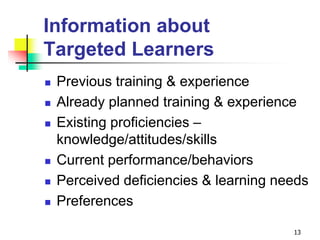
Information about
Targeted Learners
 Previous training & experience
 Already planned training & experience
 Existing proficiencies –
knowledge/attitudes/skills
 Current performance/behaviors
 Perceived deficiencies & learning needs
 Preferences
13
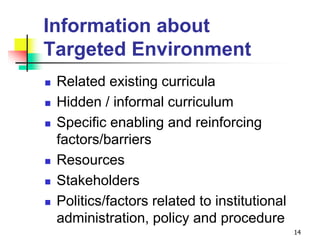
Information about
Targeted Environment
 Related existing curricula
 Hidden / informal curriculum
 Specific enabling and reinforcing
factors/barriers
 Resources
 Stakeholders
 Politics/factors related to institutional
administration, policy and procedure
14

14 04 needs assessment

  • 1.
    1 HPE and Needs Assessment HirotakaOnishi MD, MHPE International Research Center for Medical Education Graduate School of Medicine, University of Tokyo
  • 2.
    What is aCurriculum?  Schedule of classes or lectures?  Syllabus?  Lecture contents? 2
  • 3.
    Curriculum Viewpoints  Notonly schedule or program but also what learners learned should be considered Manifest curriculum Hidden curriculum What teachers like to teach What learners actually learned
  • 4.
    Curriculum Development  6-stepApproach (Kern) 1. Problem identification and general needs assessment 2. Needs assessment for targeted learners 3. Goals and objectives 4. Educational strategy 5. Implementation 6. Assessment or evaluation ● ● ● ● ● ●
  • 5.
    1. Problem Identification HealthNeeds and Curriculum  What is the curriculum of a health care professional school (faculty) for?  Educators’ obligation  To meet the needs of learners, patients, and society  To develop the curriculum by a logical and systematic approach  Strong linkage of health professional education and public health
  • 6.
    Policy Level  Anypolicy of MoHE?  Mission or vision of medical schools?  Mission-based curriculum development 6
  • 7.
    Data Analysis  Informationgathering  Qualitative: Focus group, interview, etc  Quantitative: Questionnaire, etc  Analyzing the collected information  Qualitative: Semantic categorization  Quantitative: Statistical analysis 7
  • 8.
    Needs Assessment for MedicalEducation Curriculum (Needs) = (Current approach) – (Ideal approach) Patients Health Professionals Educators Society Current Ideal
  • 9.
    Example: Medical Interview 9 Patients Health ProfessionalsEducators Society Current Some doctors do not use polite sentences with patients Many doctors feel that they can use only short time with patients in OPD No teaching has been offered for medical interview Some people complain that communication skills of doctors are not enough Ideal Doctors are using polite words with patients Doctors should learn how to have medical interview Medical interview training using standardized patients will be needed Communication skills of doctors should be improved
  • 10.
    Review of Available Information(US Example)  Published Literature: PubMed, ERIC  Accreditation Bodies: AAMC, LCME, ACGME  Professional Societies: IOM  BEME  Government Databases and Reports  Use of Consultants/Experts  Collection of New Information 10
  • 11.
    2. Needs Assessmentfor Targeted Learners  Before you implement a new curriculum, please ask students if the new curriculum seems OK for them or not  Demands Needs  Demands: what they want  Needs: what they need in the processes to be a physician 11
  • 12.
    3 Steps 1. Chooseyour targeted learners 2. Find out information about the targeted learners 3. Determine characteristics of the learning environment 12
  • 13.
    Information about Targeted Learners Previous training & experience  Already planned training & experience  Existing proficiencies – knowledge/attitudes/skills  Current performance/behaviors  Perceived deficiencies & learning needs  Preferences 13
  • 14.
    Information about Targeted Environment Related existing curricula  Hidden / informal curriculum  Specific enabling and reinforcing factors/barriers  Resources  Stakeholders  Politics/factors related to institutional administration, policy and procedure 14

Editor's Notes