Curriculum Development for
Medical Education:
A Six Step Approach
Section 1: Problem Identification
David Kern
Patricia Thomas
Donna Howard
Eric Bass
John Hopkins University Press , 1998
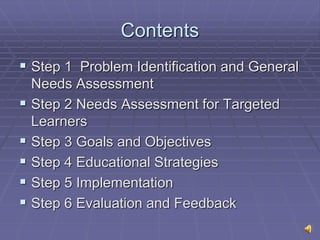
Contents
 Step 1 Problem Identification and General
Needs Assessment
 Step 2 Needs Assessment for Targeted
Learners
 Step 3 Goals and Objectives
 Step 4 Educational Strategies
 Step 5 Implementation
 Step 6 Evaluation and Feedback
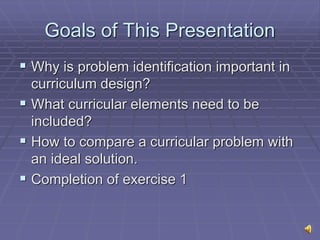
Goals of This Presentation
 Why is problem identification important in
curriculum design?
 What curricular elements need to be
included?
 How to compare a curricular problem with
an ideal solution.
 Completion of exercise 1
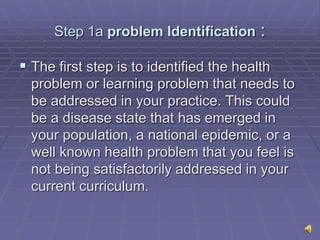
Step 1a problem Identification :
 The first step is to identified the health
problem or learning problem that needs to
be addressed in your practice. This could
be a disease state that has emerged in
your population, a national epidemic, or a
well known health problem that you feel is
not being satisfactorily addressed in your
current curriculum.
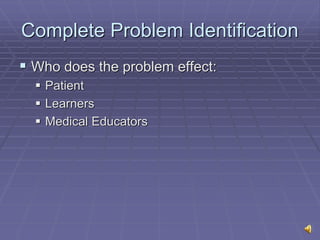
Complete Problem Identification
 Who does the problem effect:
 Patient
 Learners
 Medical Educators
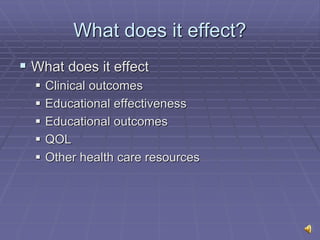
What does it effect?
 What does it effect
 Clinical outcomes
 Educational effectiveness
 Educational outcomes
 QOL
 Other health care resources
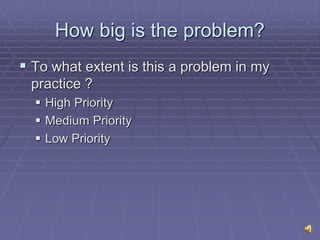
How big is the problem?
 To what extent is this a problem in my
practice ?
 High Priority
 Medium Priority
 Low Priority
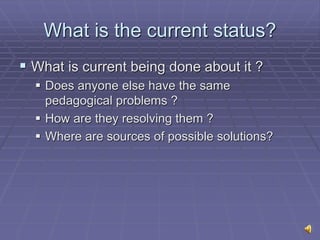
What is the current status?
 What is current being done about it ?
 Does anyone else have the same
pedagogical problems ?
 How are they resolving them ?
 Where are sources of possible solutions?
Are there barriers to solution?
 What are the barriers to problem
resolution?
 Time ,
 Personnel
 Money
 Knowledge
 Community issues
KNOWING THERE IS A PROBLEM WITH
YOUR CURRICULUM IS NOT ENOUGH ,
ONE MUST KNOW THE CIRCUMSTANCES
THAT MAKES IT A PROBLEM
Step 1b : ideal solution
 Now if you have unlimited resources ,
students, faculty, instructional materials,
time and money, how would you best
solve this curricular problem?
 This step will give you the basic idea of
resources that you will need to solve the
problem, even if all of them are not within
your reach.
General Needs Assessment
 The difference between the actual and
ideal curriculum model is the general
needs assessment, it will provide an idea
of your needed resources
Exercise 1
 Identify one curricular problem you are
experiencing, including:
 Who does the problem effect ?
 What is the extent of the problem?
 Have other medical educators faced and
solved the same problem?
 What are the barriers to successful solution?

Curriculum development for_medical_education_ch1_ (1)

  • 1.
    Curriculum Development for MedicalEducation: A Six Step Approach Section 1: Problem Identification David Kern Patricia Thomas Donna Howard Eric Bass John Hopkins University Press , 1998
  • 2.
    Contents  Step 1Problem Identification and General Needs Assessment  Step 2 Needs Assessment for Targeted Learners  Step 3 Goals and Objectives  Step 4 Educational Strategies  Step 5 Implementation  Step 6 Evaluation and Feedback
  • 3.
    Goals of ThisPresentation  Why is problem identification important in curriculum design?  What curricular elements need to be included?  How to compare a curricular problem with an ideal solution.  Completion of exercise 1
  • 4.
    Step 1a problemIdentification :  The first step is to identified the health problem or learning problem that needs to be addressed in your practice. This could be a disease state that has emerged in your population, a national epidemic, or a well known health problem that you feel is not being satisfactorily addressed in your current curriculum.
  • 5.
    Complete Problem Identification Who does the problem effect:  Patient  Learners  Medical Educators
  • 6.
    What does iteffect?  What does it effect  Clinical outcomes  Educational effectiveness  Educational outcomes  QOL  Other health care resources
  • 7.
    How big isthe problem?  To what extent is this a problem in my practice ?  High Priority  Medium Priority  Low Priority
  • 8.
    What is thecurrent status?  What is current being done about it ?  Does anyone else have the same pedagogical problems ?  How are they resolving them ?  Where are sources of possible solutions?
  • 9.
    Are there barriersto solution?  What are the barriers to problem resolution?  Time ,  Personnel  Money  Knowledge  Community issues KNOWING THERE IS A PROBLEM WITH YOUR CURRICULUM IS NOT ENOUGH , ONE MUST KNOW THE CIRCUMSTANCES THAT MAKES IT A PROBLEM
  • 10.
    Step 1b :ideal solution  Now if you have unlimited resources , students, faculty, instructional materials, time and money, how would you best solve this curricular problem?  This step will give you the basic idea of resources that you will need to solve the problem, even if all of them are not within your reach.
  • 11.
    General Needs Assessment The difference between the actual and ideal curriculum model is the general needs assessment, it will provide an idea of your needed resources
  • 12.
    Exercise 1  Identifyone curricular problem you are experiencing, including:  Who does the problem effect ?  What is the extent of the problem?  Have other medical educators faced and solved the same problem?  What are the barriers to successful solution?