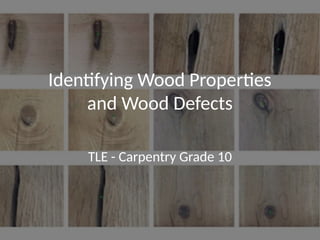
Identifying Wood Properties
and Wood Defects
TLE - Carpentry Grade 10
Introduction
In this lesson, you will:
- Identify properties of wood
- Recognize wood defects
- Learn to select good quality
wood for formwork
- Understand how defects affect
construction
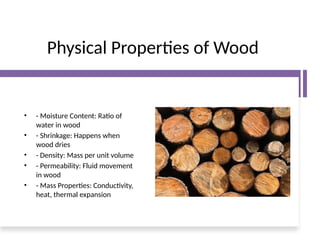
Physical Properties of Wood
• - Moisture Content: Ratio of
water in wood
• - Shrinkage: Happens when
wood dries
• - Density: Mass per unit volume
• - Permeability: Fluid movement
in wood
• - Mass Properties: Conductivity,
heat, thermal expansion
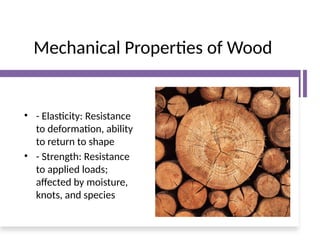
Mechanical Properties of Wood
• - Elasticity: Resistance
to deformation, ability
to return to shape
• - Strength: Resistance
to applied loads;
affected by moisture,
knots, and species
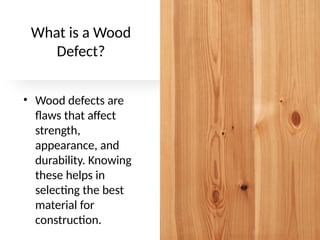
What is a Wood
Defect?
• Wood defects are
flaws that affect
strength,
appearance, and
durability. Knowing
these helps in
selecting the best
material for
construction.
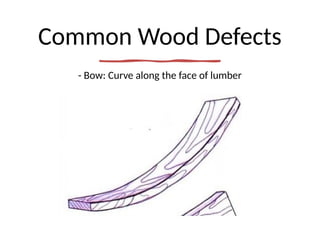
Common Wood Defects
- Bow: Curve along the face of lumber
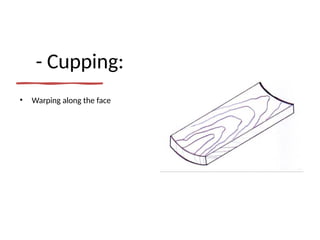
- Cupping:
• Warping along the face
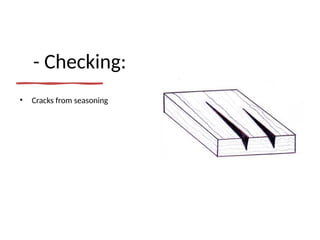
- Checking:
• Cracks from seasoning
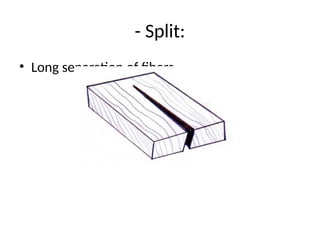
- Split:
• Long separation of fibers
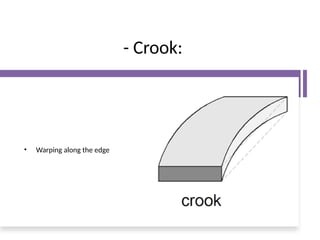
- Crook:
• Warping along the edge
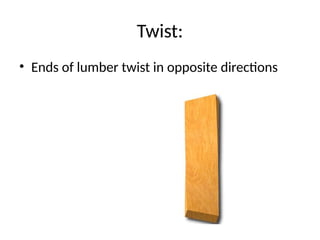
Twist:
• Ends of lumber twist in opposite directions
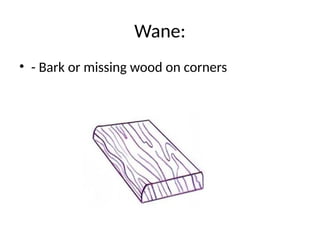
Wane:
• - Bark or missing wood on corners
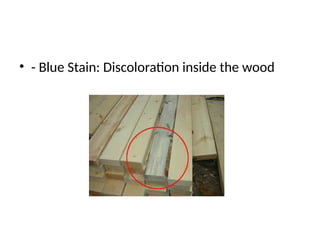
• - Blue Stain: Discoloration inside the wood
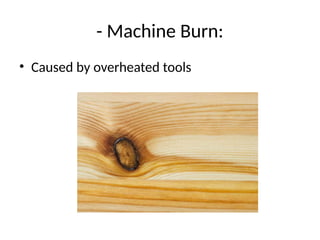
- Machine Burn:
• Caused by overheated tools
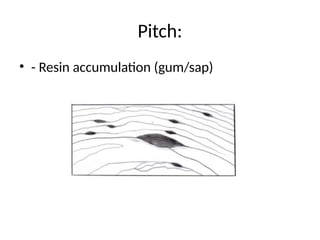
Pitch:
• - Resin accumulation (gum/sap)
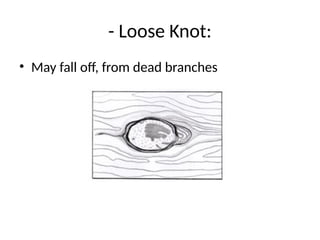
- Loose Knot:
• May fall off, from dead branches
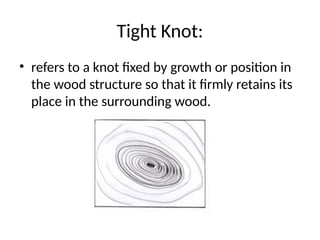
Tight Knot:
• refers to a knot fixed by growth or position in
the wood structure so that it firmly retains its
place in the surrounding wood.
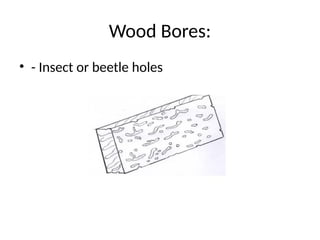
Wood Bores:
• - Insect or beetle holes
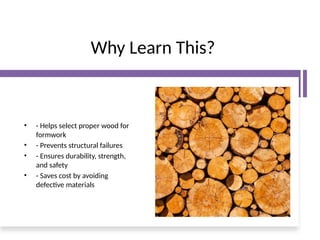
Why Learn This?
• - Helps select proper wood for
formwork
• - Prevents structural failures
• - Ensures durability, strength,
and safety
• - Saves cost by avoiding
defective materials
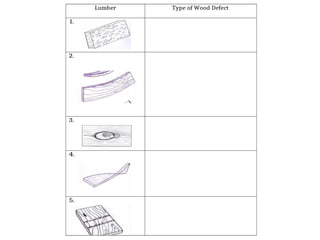
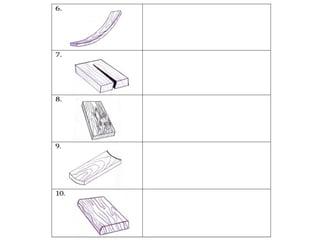
Activity 3: Reject Me Not!
• Directions: Study the illustration presented in
each item. In the first column are the
illustrations of lumber; and in the second
column, you need to write the type of wood
defect you observe in the first column. Write
your answers on your Activity Notebook
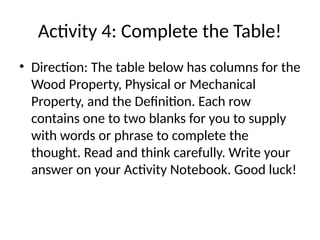
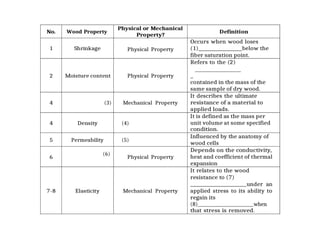
Activity 4: Complete the Table!
• Direction: The table below has columns for the
Wood Property, Physical or Mechanical
Property, and the Definition. Each row
contains one to two blanks for you to supply
with words or phrase to complete the
thought. Read and think carefully. Write your
answer on your Activity Notebook. Good luck!
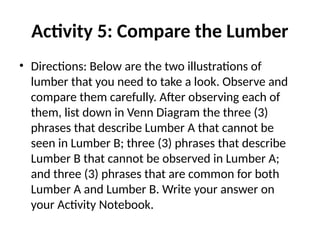
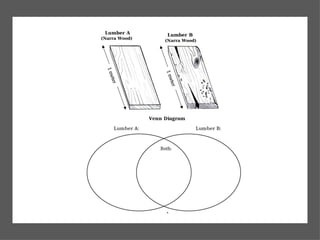
Activity 5: Compare the Lumber
• Directions: Below are the two illustrations of
lumber that you need to take a look. Observe and
compare them carefully. After observing each of
them, list down in Venn Diagram the three (3)
phrases that describe Lumber A that cannot be
seen in Lumber B; three (3) phrases that describe
Lumber B that cannot be observed in Lumber A;
and three (3) phrases that are common for both
Lumber A and Lumber B. Write your answer on
your Activity Notebook.
CARPENTRY 10Wood_Properties_Defects.pptx

CARPENTRY 10Wood_Properties_Defects.pptx

  • 1.
    Identifying Wood Properties andWood Defects TLE - Carpentry Grade 10
  • 2.
    Introduction In this lesson,you will: - Identify properties of wood - Recognize wood defects - Learn to select good quality wood for formwork - Understand how defects affect construction
  • 3.
    Physical Properties ofWood • - Moisture Content: Ratio of water in wood • - Shrinkage: Happens when wood dries • - Density: Mass per unit volume • - Permeability: Fluid movement in wood • - Mass Properties: Conductivity, heat, thermal expansion
  • 4.
    Mechanical Properties ofWood • - Elasticity: Resistance to deformation, ability to return to shape • - Strength: Resistance to applied loads; affected by moisture, knots, and species
  • 5.
    What is aWood Defect? • Wood defects are flaws that affect strength, appearance, and durability. Knowing these helps in selecting the best material for construction.
  • 6.
    Common Wood Defects -Bow: Curve along the face of lumber
  • 7.
    - Cupping: • Warpingalong the face
  • 8.
    - Checking: • Cracksfrom seasoning
  • 9.
    - Split: • Longseparation of fibers
  • 10.
    - Crook: • Warpingalong the edge
  • 11.
    Twist: • Ends oflumber twist in opposite directions
  • 12.
    Wane: • - Barkor missing wood on corners
  • 13.
    • - BlueStain: Discoloration inside the wood
  • 14.
    - Machine Burn: •Caused by overheated tools
  • 15.
    Pitch: • - Resinaccumulation (gum/sap)
  • 16.
    - Loose Knot: •May fall off, from dead branches
  • 17.
    Tight Knot: • refersto a knot fixed by growth or position in the wood structure so that it firmly retains its place in the surrounding wood.
  • 18.
    Wood Bores: • -Insect or beetle holes
  • 19.
    Why Learn This? •- Helps select proper wood for formwork • - Prevents structural failures • - Ensures durability, strength, and safety • - Saves cost by avoiding defective materials
  • 20.
    Activity 3: RejectMe Not! • Directions: Study the illustration presented in each item. In the first column are the illustrations of lumber; and in the second column, you need to write the type of wood defect you observe in the first column. Write your answers on your Activity Notebook
  • 23.
    Activity 4: Completethe Table! • Direction: The table below has columns for the Wood Property, Physical or Mechanical Property, and the Definition. Each row contains one to two blanks for you to supply with words or phrase to complete the thought. Read and think carefully. Write your answer on your Activity Notebook. Good luck!
  • 25.
    Activity 5: Comparethe Lumber • Directions: Below are the two illustrations of lumber that you need to take a look. Observe and compare them carefully. After observing each of them, list down in Venn Diagram the three (3) phrases that describe Lumber A that cannot be seen in Lumber B; three (3) phrases that describe Lumber B that cannot be observed in Lumber A; and three (3) phrases that are common for both Lumber A and Lumber B. Write your answer on your Activity Notebook.