Pumsak Thamviriyarak,MD.
  Orthopaedics Department
        Khonkaen Hospital
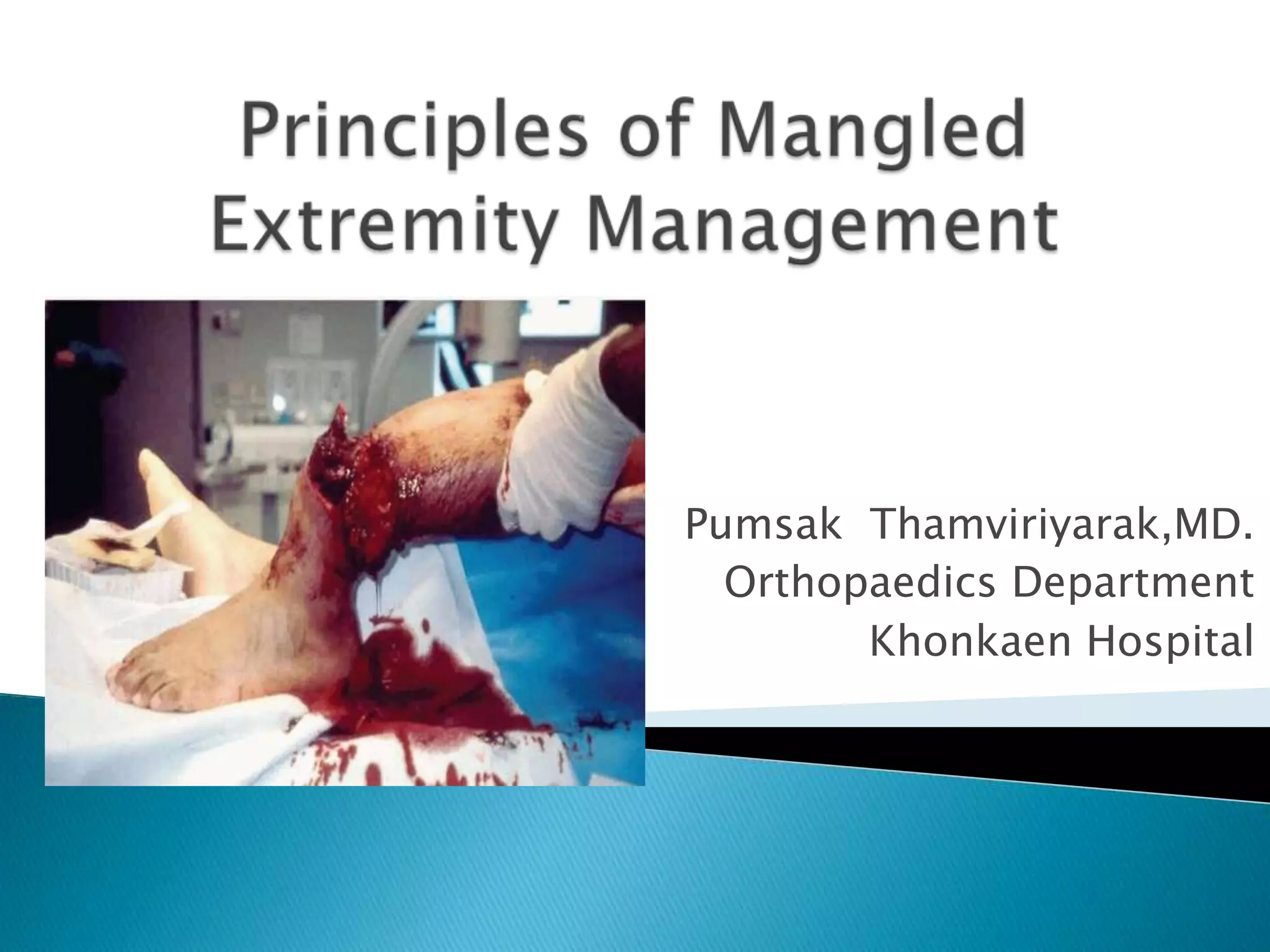
   Mangled extremity
    ◦ An injury to an extremity so severe that salvage is
      often questionable and amputation is a possible
      outcome
   High energy force
    ◦ Degloved skin
    ◦ Soft tissue disrupted
    ◦ Extensive comminuted fracture
   Motor vehicle accident
   Hippocrates (400BC)
    ◦ Amputation
    ◦ Very high mortality rate
   Celsus (25 BC)
    ◦ wound management with removal of FB and
      hemostasis
   Ambroise Pare (1540)
    ◦ Basic principles of amputation
    ◦ Phantom pain
    ◦ Stump revision
   Pierre-Joseph Desault (1770)
    ◦ coined “debridement”
   Incidence of post treatment osteomyelitis 80%
    WWI 1914  25% WW II 1939 (ATB / aseptic
    technique)
   Korean War 1950
    ◦ 62% amputation  artery repair  13%
   Nowaday
    ◦ Multiple complex reconstruction technique
    ◦ Development of ATB
    ◦ Microsurgery
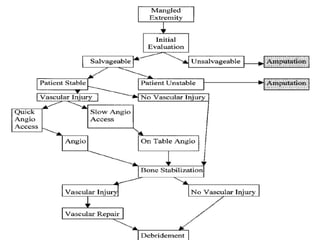
   Initial Evaluation
    ◦   ATLS principle
    ◦   Evaluate perfusion of injured limb
    ◦   ATB and Tetanus prophylaxis
    ◦   Removed gross contamination
    ◦   Reduction of Fracture and Joint+Splint
         Check distal neurovascular before and after
    ◦ Look for Compartment syndrome
    ◦ Plain film: 2 orthogonal views
   Vascular Assessment
    ◦ Hard signs
      pulsatile bleeding
      rapidly expanding hematoma
      classic signs of obvious arterial occlusion
          Pulselessness
          Pallor
          Paresthesia
          Pain
          Paralysis
          Poikilothermia
   Vascular Assessment
    ◦ Soft signs
      history of arterial bleeding
      nonexpanding hematoma
      a pulse deficit without ischemia
      neurological deficit originating in a nerve adjacent to a
       named artery
      the proximity of a penetrating wound, fracture, or
       dislocation near to a named artery
   Vascular Assessment
    ◦ Limb deformities + decrease pulse : Reduction and
      reevaluate
    ◦ Arterial Pressure Indices(API)
      <0.9 suspected vascular inj
   patient with a pulseless but perfused limb
    ◦ Stable Fracture
      Vascular repair before EF
    ◦ Unstable Fracture
      EF before vascular repair
   Ischemic limb
    ◦ Temporary intraluminal vascular shunting first
    ◦ Debridement+EF
    ◦ Vascular repair
   Fasciotomy in all pts prevent compartment
    syndrome
   Placed Tourniquet but not inflate (Inflate
    when bloody field)-prevent further ischemic
    injury
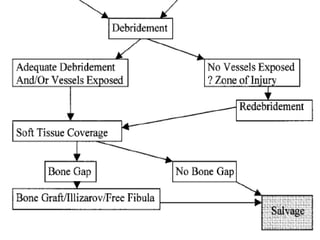
   irrigation and debridement -most important
    step
   Zone of injuries
    ◦ central zone of necrotic tissue-non viable tissue
    ◦ zone of marginal stasis+/-viable tissue
    ◦ the periphery zone of the injury
   Extend open wound and remove all necrotic
    tissue in central zone
   Serial debridement require(zone of marginal
    stasis)
   Prevents ongoing soft tissue damage
   Promotes wound healing
   Thought to protect against infection
   Most managed with temporizing external
    fixation
    ◦   applied relatively quickly
    ◦   without the use of fluoroscopy
    ◦   providing excellent stability and alignment
    ◦   allows for redisplacement of the fracture fragments
        for a more thorough evaluation and débridement of
        the soft tissues during any repeat procedures
   thought to enhance oxygen delivery to
    injured tissues affected by vascular disruption
    – Improve wound healing
   most beneficial in the peripheral zone of
    injury
   Principle
    ◦ Type of Flap coverage
      Local rotational flap : beware for flap necrosis from
       initial trauma(may be in zone of injury)
      Free flap
    ◦ Timing :controversial
      >7d increase infection rate
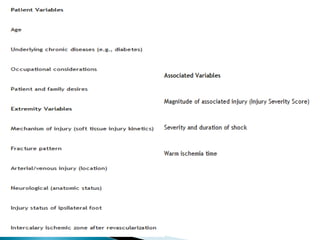
   Variables
    ◦ Patient Variables
    ◦ Extremities Variables
    ◦ Associated Variables
   Survivability : Amputation when
      severely injured extremity with an irreparable vascular injury
      prolonged warm ischemia (longer than 6 hours)
      critically injured with significant hemodynamic instability
   Plantar sensation
    ◦ Before 1980, believed that absent plantar sensation
      was a reason to amputate a limb
      Chronic complications
    ◦ Now , the study concluded that plantar sensation
      should not be included as a factor in the decision
      making for limb salvage in lower extremity trauma
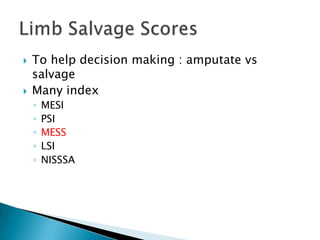
   To help decision making : amputate vs
    salvage
   Many index
    ◦   MESI
    ◦   PSI
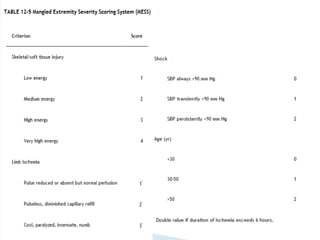
    ◦   MESS
    ◦   LSI
    ◦   NISSSA
   Amputation threshold ≥7
   Only prediction not indication
   Cautiously decision base on clinical
   Functional outcome of the patients with foot
    injuries was significantly worse than that of
    the patients without foot injuries
   amputation may indeed be a better long-term
    option
   Delayed bone healing
    ◦ Delayed union
    ◦ Nonunion
   Infection
    ◦ Osteomyelitis
   Flap necrosis
   Imagination is more
    important than
    knowledge

12 rw principles of mangled extremity management

  • 1.
    Pumsak Thamviriyarak,MD. Orthopaedics Department Khonkaen Hospital
  • 2.
    Mangled extremity ◦ An injury to an extremity so severe that salvage is often questionable and amputation is a possible outcome  High energy force ◦ Degloved skin ◦ Soft tissue disrupted ◦ Extensive comminuted fracture  Motor vehicle accident
  • 3.
    Hippocrates (400BC) ◦ Amputation ◦ Very high mortality rate  Celsus (25 BC) ◦ wound management with removal of FB and hemostasis  Ambroise Pare (1540) ◦ Basic principles of amputation ◦ Phantom pain ◦ Stump revision
  • 4.
    Pierre-Joseph Desault (1770) ◦ coined “debridement”  Incidence of post treatment osteomyelitis 80% WWI 1914  25% WW II 1939 (ATB / aseptic technique)  Korean War 1950 ◦ 62% amputation  artery repair  13%  Nowaday ◦ Multiple complex reconstruction technique ◦ Development of ATB ◦ Microsurgery
  • 5.
    Initial Evaluation ◦ ATLS principle ◦ Evaluate perfusion of injured limb ◦ ATB and Tetanus prophylaxis ◦ Removed gross contamination ◦ Reduction of Fracture and Joint+Splint  Check distal neurovascular before and after ◦ Look for Compartment syndrome ◦ Plain film: 2 orthogonal views
  • 6.
    Vascular Assessment ◦ Hard signs  pulsatile bleeding  rapidly expanding hematoma  classic signs of obvious arterial occlusion  Pulselessness  Pallor  Paresthesia  Pain  Paralysis  Poikilothermia
  • 7.
    Vascular Assessment ◦ Soft signs  history of arterial bleeding  nonexpanding hematoma  a pulse deficit without ischemia  neurological deficit originating in a nerve adjacent to a named artery  the proximity of a penetrating wound, fracture, or dislocation near to a named artery
  • 8.
    Vascular Assessment ◦ Limb deformities + decrease pulse : Reduction and reevaluate ◦ Arterial Pressure Indices(API)  <0.9 suspected vascular inj
  • 9.
    patient with a pulseless but perfused limb ◦ Stable Fracture  Vascular repair before EF ◦ Unstable Fracture  EF before vascular repair  Ischemic limb ◦ Temporary intraluminal vascular shunting first ◦ Debridement+EF ◦ Vascular repair  Fasciotomy in all pts prevent compartment syndrome
  • 10.
    Placed Tourniquet but not inflate (Inflate when bloody field)-prevent further ischemic injury  irrigation and debridement -most important step  Zone of injuries ◦ central zone of necrotic tissue-non viable tissue ◦ zone of marginal stasis+/-viable tissue ◦ the periphery zone of the injury
  • 11.
    Extend open wound and remove all necrotic tissue in central zone  Serial debridement require(zone of marginal stasis)
  • 12.
    Prevents ongoing soft tissue damage  Promotes wound healing  Thought to protect against infection  Most managed with temporizing external fixation ◦ applied relatively quickly ◦ without the use of fluoroscopy ◦ providing excellent stability and alignment ◦ allows for redisplacement of the fracture fragments for a more thorough evaluation and débridement of the soft tissues during any repeat procedures
  • 13.
    thought to enhance oxygen delivery to injured tissues affected by vascular disruption – Improve wound healing  most beneficial in the peripheral zone of injury
  • 14.
    Principle ◦ Type of Flap coverage  Local rotational flap : beware for flap necrosis from initial trauma(may be in zone of injury)  Free flap ◦ Timing :controversial  >7d increase infection rate
  • 15.
    Variables ◦ Patient Variables ◦ Extremities Variables ◦ Associated Variables  Survivability : Amputation when  severely injured extremity with an irreparable vascular injury  prolonged warm ischemia (longer than 6 hours)  critically injured with significant hemodynamic instability
  • 17.
    Plantar sensation ◦ Before 1980, believed that absent plantar sensation was a reason to amputate a limb  Chronic complications ◦ Now , the study concluded that plantar sensation should not be included as a factor in the decision making for limb salvage in lower extremity trauma
  • 18.
    To help decision making : amputate vs salvage  Many index ◦ MESI ◦ PSI ◦ MESS ◦ LSI ◦ NISSSA
  • 20.
    Amputation threshold ≥7  Only prediction not indication  Cautiously decision base on clinical
  • 21.
    Functional outcome of the patients with foot injuries was significantly worse than that of the patients without foot injuries  amputation may indeed be a better long-term option
  • 22.
    Delayed bone healing ◦ Delayed union ◦ Nonunion  Infection ◦ Osteomyelitis  Flap necrosis
  • 27.
    Imagination is more important than knowledge

Editor's Notes

  • #9 API1.Identified Post. Tibiala.,DorsalisPedis a. ใช้ Doppler2.พัน cuff proximal ต่อ vessels วัด ankle systolic pressure3.เอาค่าที่ได้เทียบกับข้างปกติต้อง&gt;0.9
  • #19 MESI,PSI : ใช้ subjective variable ทำให้มีความคลาดเคลื่อนในการประเมินได้สูงMESS ใช้ได้ดีใน LE ส่วน UE มี collateral circulation มากกว่าทำให้ MESS คลาดเคลื่อนได้