13. Project Procurement
Management
Project Procurement Management
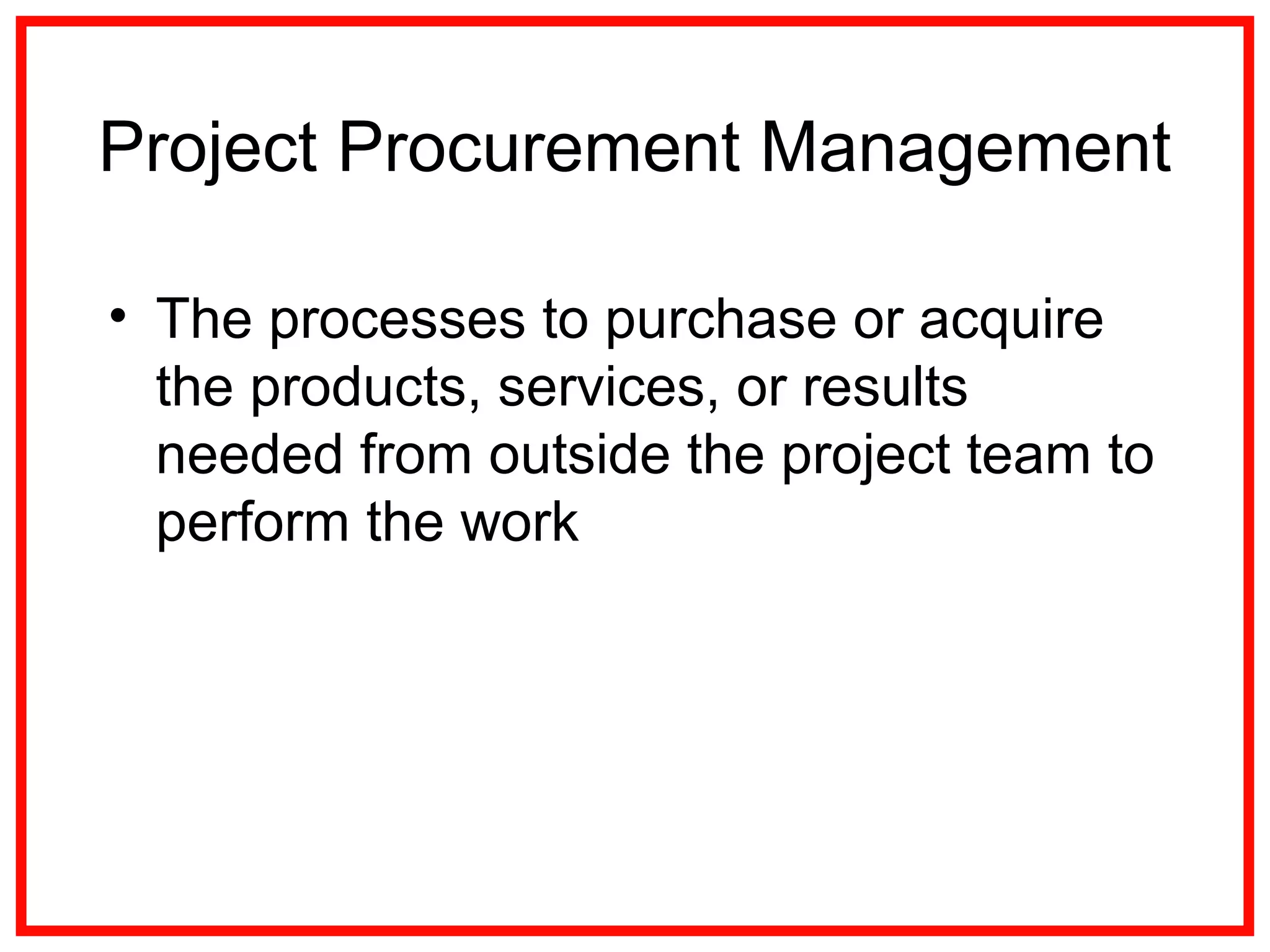
• The processes to purchase or acquire
the products, services, or results
needed from outside the project team to
perform the work
Why Procurement Management?
• All projects will need to acquire some
resources from outside
• Not understanding the different ways to
contract could result in unnecessary risk for
the project
How Do We Manage Procurement?
• Four processes
– Plan Procurements
– Conduct Procurements
– Administer Procurements
– Close Procurements
Conduct
Procurements
Administer
Procurements
Plan
Procurements
Close
Procurements
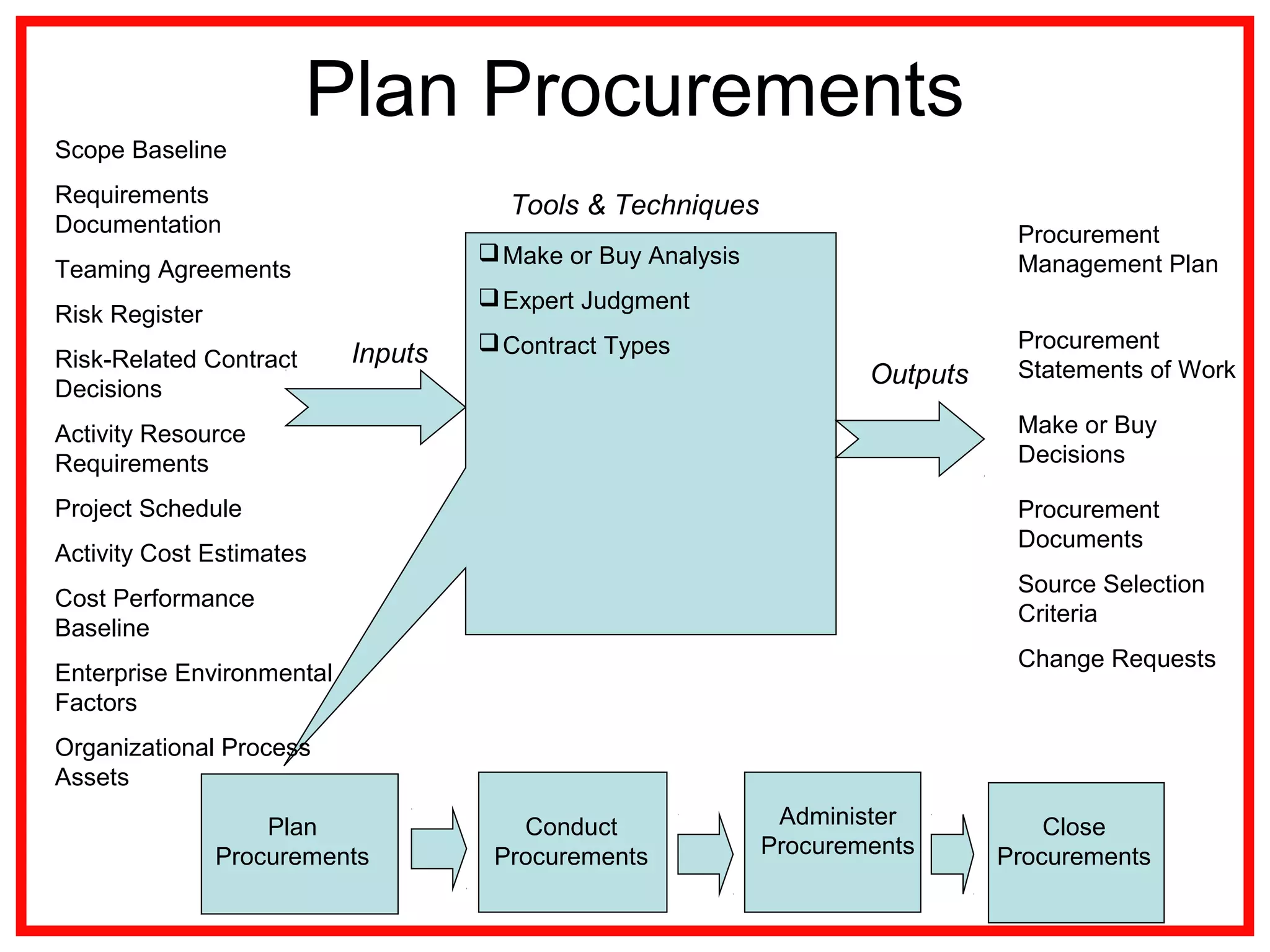
Plan Procurements
Scope Baseline
Requirements
Documentation
Teaming Agreements
Risk Register
Risk-Related Contract
Decisions
Activity Resource
Requirements
Project Schedule
Activity Cost Estimates
Cost Performance
Baseline
Enterprise Environmental
Factors
Organizational Process
Assets
Make or Buy Analysis
Expert Judgment
Contract TypesInputs
Outputs
Tools & Techniques
Procurement
Management Plan
Procurement
Statements of Work
Procurement
Documents
Source Selection
Criteria
Change Requests
Make or Buy
Decisions
Conduct
Procurements
Administer
Procurements
Plan
Procurements
Close
Procurements
Contract Types
• Fixed Price (Lump Sum) Contracts
• Cost-Reimbursable Contracts
– Cost Plus Fee (CPF)
• Cost Plus Percentage of Cost (CPPC)
– Cost Plus Fixed Fee (CPFF)
– Cost Plus Incentive Fee (CPIF)
• Time and Material (T&M) Contracts
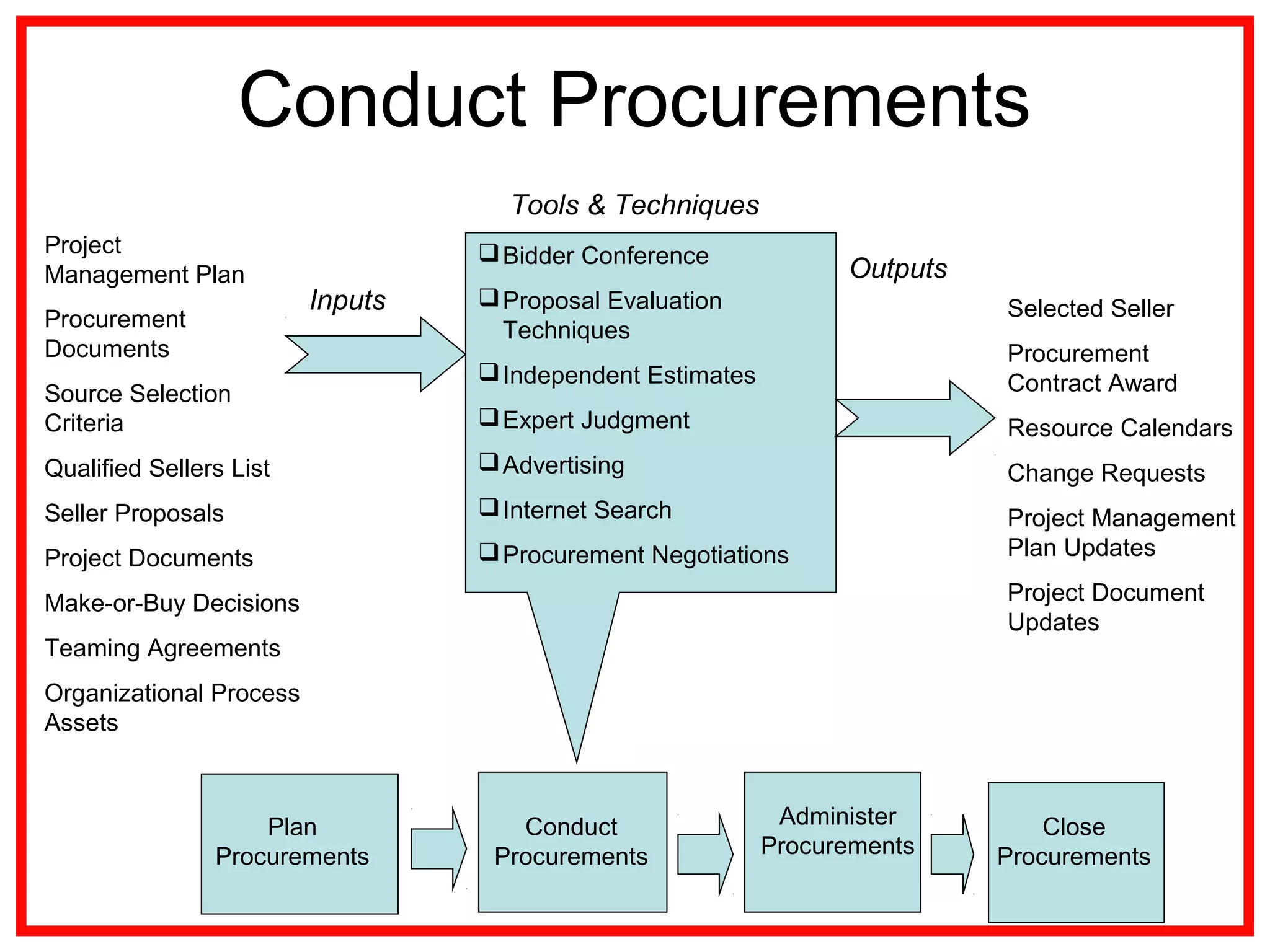
Conduct Procurements
Project
Management Plan
Procurement
Documents
Source Selection
Criteria
Qualified Sellers List
Seller Proposals
Project Documents
Make-or-Buy Decisions
Teaming Agreements
Organizational Process
Assets
Bidder Conference
Proposal Evaluation
Techniques
Independent Estimates
Expert Judgment
Advertising
Internet Search
Procurement Negotiations
Inputs
Outputs
Tools & Techniques
Selected Seller
Procurement
Contract Award
Resource Calendars
Change Requests
Project Management
Plan Updates
Project Document
Updates
Conduct
Procurements
Administer
Procurements
Plan
Procurements
Close
Procurements
Types of Scopes of Work
• Performance
– What the project wants, how accomplished
and project needs defined by seller
• Functional or Detailed
– Defines what end product should be as
well as minimum requirements
• Design
– Defines exactly what is required and how
to accomplish it
Procurement Documents
• Request for Proposal (RFP)
– Asks for the price and how/who will do the
work
• Invitation for Bid (IFB)
– One simple price to do the work
• Request for Quotation (RFQ)
– Price per unit quote
Negotiating Tactics
• Attacks – Argue a point
• Personal Insults –
Attack other sides
negotiator
• Good Guy/Bad Guy
• Deadline – The offer
stands until…
• Lying
• Limited Authority – I
need to check with____
These are all tactics, but not necessarily good tactics!
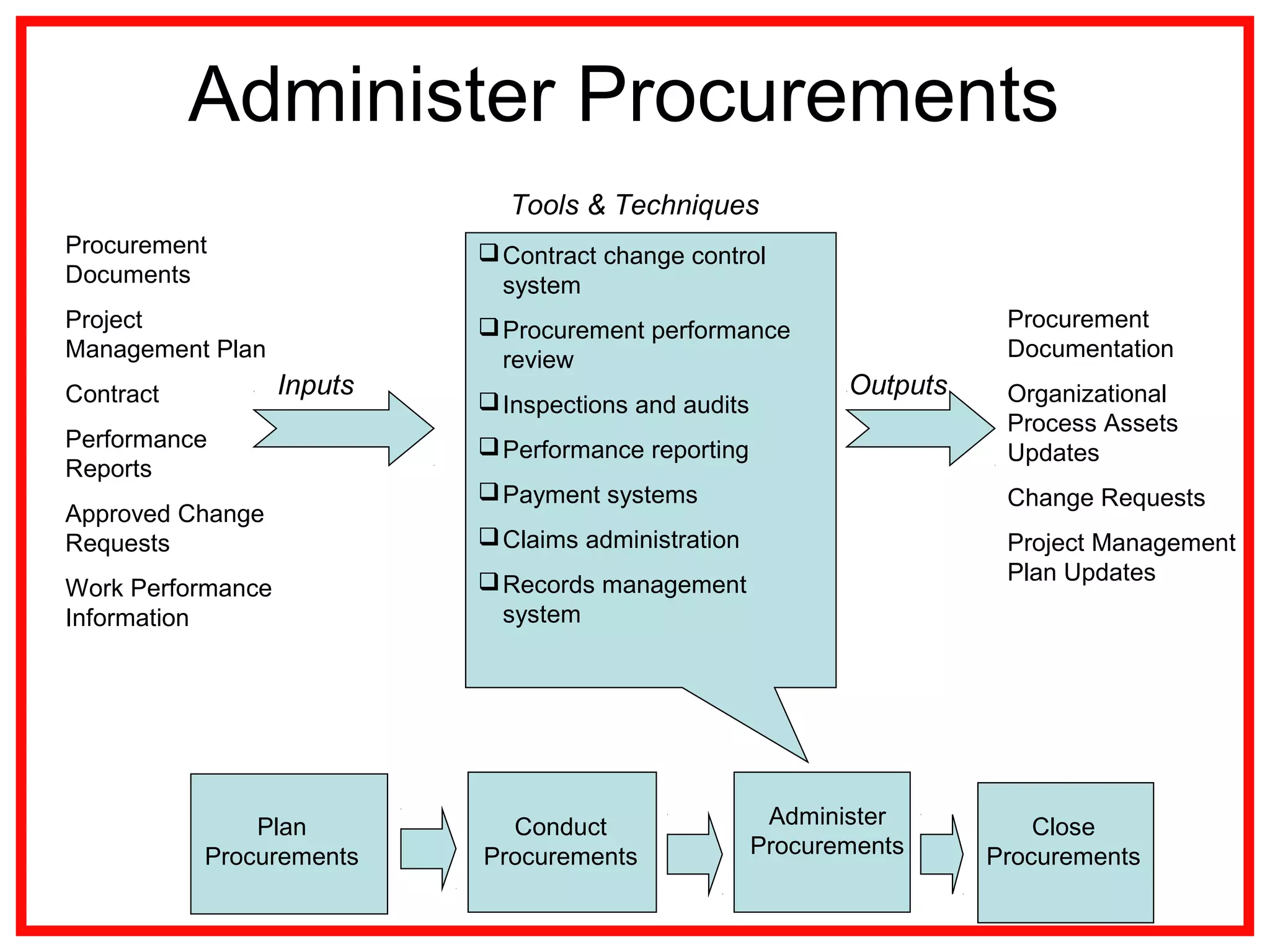
Administer Procurements
Procurement
Documents
Project
Management Plan
Contract
Performance
Reports
Approved Change
Requests
Work Performance
Information
Contract change control
system
Procurement performance
review
Inspections and audits
Performance reporting
Payment systems
Claims administration
Records management
system
Inputs Outputs
Tools & Techniques
Procurement
Documentation
Organizational
Process Assets
Updates
Change Requests
Project Management
Plan Updates
Conduct
Procurements
Administer
Procurements
Plan
Procurements
Close
Procurements
Contract Closure
Project
Management Plan
Procurement
Documentation
Procurement audits
Negotiated Settlements
Records management
system
Inputs OutputsTools & Techniques
Closed
Procurements
Organizational
Process Assets
Updates
Conduct
Procurements
Administer
Procurements
Plan
Procurements
Close
Procurements
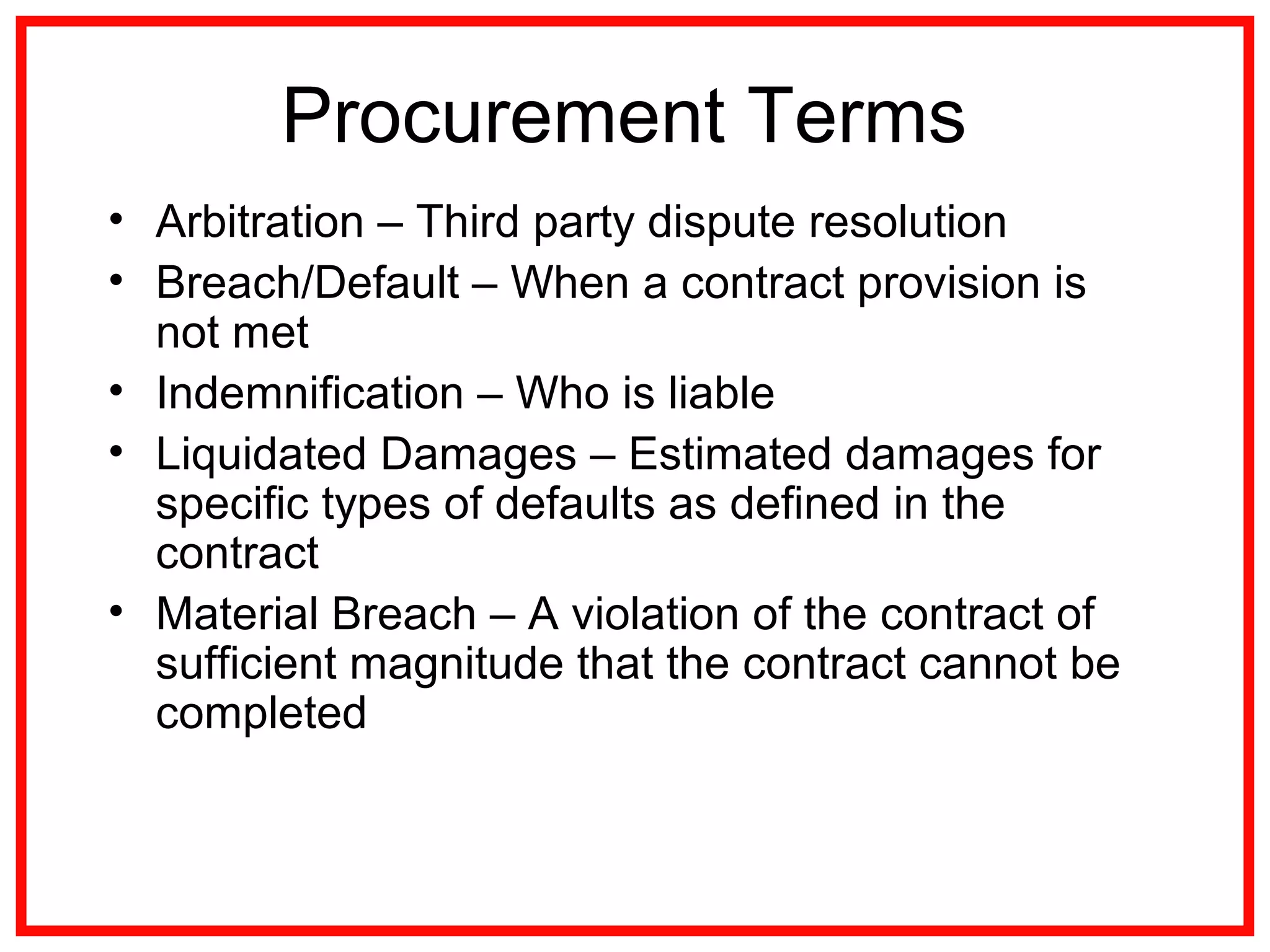
Procurement Terms
• Arbitration – Third party dispute resolution
• Breach/Default – When a contract provision is
not met
• Indemnification – Who is liable
• Liquidated Damages – Estimated damages for
specific types of defaults as defined in the
contract
• Material Breach – A violation of the contract of
sufficient magnitude that the contract cannot be
completed
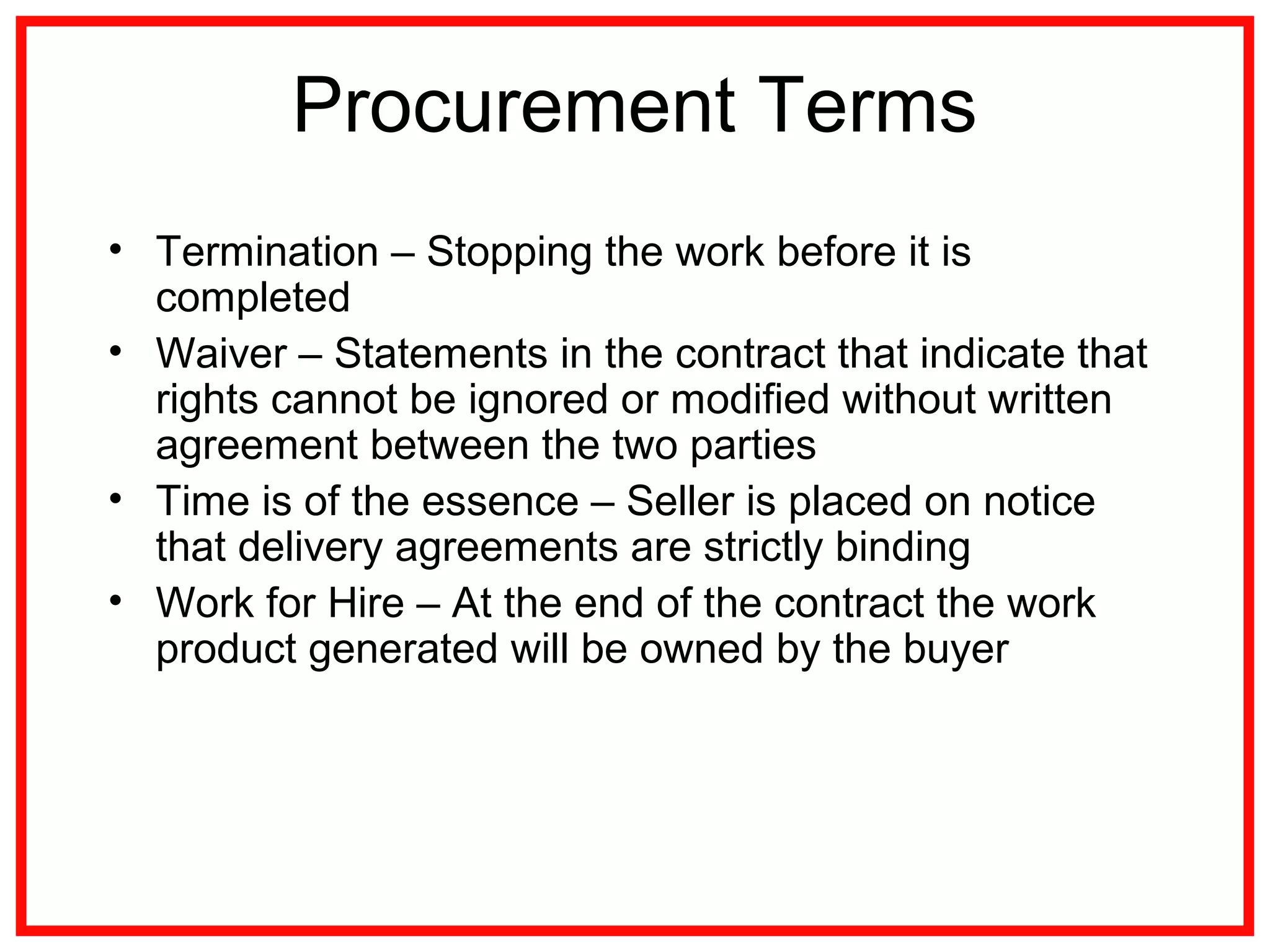
Procurement Terms
• Termination – Stopping the work before it is
completed
• Waiver – Statements in the contract that indicate that
rights cannot be ignored or modified without written
agreement between the two parties
• Time is of the essence – Seller is placed on notice
that delivery agreements are strictly binding
• Work for Hire – At the end of the contract the work
product generated will be owned by the buyer

13. Project Procurement Management

  • 1.
  • 2.
    Project Procurement Management •The processes to purchase or acquire the products, services, or results needed from outside the project team to perform the work
  • 3.
    Why Procurement Management? •All projects will need to acquire some resources from outside • Not understanding the different ways to contract could result in unnecessary risk for the project
  • 4.
    How Do WeManage Procurement? • Four processes – Plan Procurements – Conduct Procurements – Administer Procurements – Close Procurements Conduct Procurements Administer Procurements Plan Procurements Close Procurements
  • 5.
    Plan Procurements Scope Baseline Requirements Documentation TeamingAgreements Risk Register Risk-Related Contract Decisions Activity Resource Requirements Project Schedule Activity Cost Estimates Cost Performance Baseline Enterprise Environmental Factors Organizational Process Assets Make or Buy Analysis Expert Judgment Contract TypesInputs Outputs Tools & Techniques Procurement Management Plan Procurement Statements of Work Procurement Documents Source Selection Criteria Change Requests Make or Buy Decisions Conduct Procurements Administer Procurements Plan Procurements Close Procurements
  • 6.
    Contract Types • FixedPrice (Lump Sum) Contracts • Cost-Reimbursable Contracts – Cost Plus Fee (CPF) • Cost Plus Percentage of Cost (CPPC) – Cost Plus Fixed Fee (CPFF) – Cost Plus Incentive Fee (CPIF) • Time and Material (T&M) Contracts
  • 7.
    Conduct Procurements Project Management Plan Procurement Documents SourceSelection Criteria Qualified Sellers List Seller Proposals Project Documents Make-or-Buy Decisions Teaming Agreements Organizational Process Assets Bidder Conference Proposal Evaluation Techniques Independent Estimates Expert Judgment Advertising Internet Search Procurement Negotiations Inputs Outputs Tools & Techniques Selected Seller Procurement Contract Award Resource Calendars Change Requests Project Management Plan Updates Project Document Updates Conduct Procurements Administer Procurements Plan Procurements Close Procurements
  • 8.
    Types of Scopesof Work • Performance – What the project wants, how accomplished and project needs defined by seller • Functional or Detailed – Defines what end product should be as well as minimum requirements • Design – Defines exactly what is required and how to accomplish it
  • 9.
    Procurement Documents • Requestfor Proposal (RFP) – Asks for the price and how/who will do the work • Invitation for Bid (IFB) – One simple price to do the work • Request for Quotation (RFQ) – Price per unit quote
  • 10.
    Negotiating Tactics • Attacks– Argue a point • Personal Insults – Attack other sides negotiator • Good Guy/Bad Guy • Deadline – The offer stands until… • Lying • Limited Authority – I need to check with____ These are all tactics, but not necessarily good tactics!
  • 11.
    Administer Procurements Procurement Documents Project Management Plan Contract Performance Reports ApprovedChange Requests Work Performance Information Contract change control system Procurement performance review Inspections and audits Performance reporting Payment systems Claims administration Records management system Inputs Outputs Tools & Techniques Procurement Documentation Organizational Process Assets Updates Change Requests Project Management Plan Updates Conduct Procurements Administer Procurements Plan Procurements Close Procurements
  • 12.
    Contract Closure Project Management Plan Procurement Documentation Procurementaudits Negotiated Settlements Records management system Inputs OutputsTools & Techniques Closed Procurements Organizational Process Assets Updates Conduct Procurements Administer Procurements Plan Procurements Close Procurements
  • 13.
    Procurement Terms • Arbitration– Third party dispute resolution • Breach/Default – When a contract provision is not met • Indemnification – Who is liable • Liquidated Damages – Estimated damages for specific types of defaults as defined in the contract • Material Breach – A violation of the contract of sufficient magnitude that the contract cannot be completed
  • 14.
    Procurement Terms • Termination– Stopping the work before it is completed • Waiver – Statements in the contract that indicate that rights cannot be ignored or modified without written agreement between the two parties • Time is of the essence – Seller is placed on notice that delivery agreements are strictly binding • Work for Hire – At the end of the contract the work product generated will be owned by the buyer